Page 184

Get your finances sorted in 2026: Save money

Source: Radio New Zealand

Whether you’re cringing when you look at your bank statements or just want to put aside a bit more next year, there are a few ways you can save. @heyjasperai

Is organising your money life on your New Year’s resolution list in 2026? In this five-part series, money correspondent Susan Edmunds guides you through the basics. Catch up on Day One: Set a Budget. Next up: Saving money.

Saving money is probably near the top of people’s New Year’s resolution lists.

We’ve just got through Christmas, when children’s present wishlists tend to stretch even the most lenient of budgets, and there’s the extra costs associated with Christmas parties and maybe catering for friends and family on the day.

Whether you’re cringing when you look at your bank statements or just want to put aside a bit more next year, there are a few ways you could do it.

Channel your inner Marie Kondo

Sorted’s personal finance spokesperson Tom Hartmann says people should think about the home organisation guru Marie Kondo if they’re looking for ways to save.

Kondo talks about only holding on to things that “spark joy”.

“We can do the same thing with the things we spend money on,” Hartmann said. “For example with your subscriptions – there’s no way you get the same level of happiness from all the things you subscribe to. For me Spotify is up the top, I’d rate that a five out of five but Netflix is lower down.”

He recommends rating the things you spend your money on between one and five out of five and cutting or reducing the things that are a two or a one.

“It makes it easier to cut things back and you don’t end up feeling deprived because you keep the things that really give you joy – ice creams for the kids, for me that’s way up high.

“Often it’s the cheap and cheerful things that end up staying in the budget.”

Match your spending with saving

This requires a bit more money, but can be really effective.

The idea is that if you spot something you want to buy, you only make the purchase if you can put the same amount of money into investments or savings.

If you want some jeans for $200, you have to also put $200 into Sharesies, for example.

This slows your spending a lot but also means you have some saving happening at the same time.

Pay yourself first

Don’t decide you’ll wait until the end of your pay cycle and save whatever is left over. Put the money into savings as soon as it arrives in your account.

“Set up an automatic transfer to take money out of your account each payday and put it in an account that is not shown on your internet banking. Send it to an account in a different bank to keep it even more out of sight. You will be surprised at how even a small amount saved each week will quickly grow,” said financial coach Liz Koh.

It’s that aspect of paying yourself first that makes KiwiSaver so successful. If you can channel that same “out of sight, out of mind” approach into other savings, you might be surprised at how fast the balance can grow.

Emma Heaps, financial wellbeing programme manager at Westpac, said people should not be afraid to start small.

“If you’ve found it a challenge to put savings away regularly, start small instead of trying try to start big. Even if it’s just a dollar a day for a week or a month, if you keep that up you’re creating a habit that will most likely stick, and over time you can increase the amount and frequency you’re putting money into saving.

“Do that for about 90 days and that habit will stick around for long time.”

BNZ general manager of everyday banking Louisa Powell said people should consider a term deposit if they would not need their money immediately.

“While you’ll have limited access to these funds, you could earn more interest than in a regular savings account – it’s about making your money work as hard as you do. Another great tip is to choose compounding interest on your term deposit so you can earn interest on you interest.

“Consider your savings across different accounts based on your goals. Having separate accounts for different timeframes – like short-term expenses versus longer-term savings – means you can choose accounts with features that match each purpose.”

Round up

Your bank might offer you the ability to round up your transactions and put the difference into savings.

You can often choose how much you want to round up, whether that’s to the nearest $1, $2 or more. That might mean if you buy a coffee for $5.50, for example, the transaction is rounded to $6 and the difference saved. Even small amounts add up this way.

There are other apps, such as Feijoa, which automate “rounding up” by sending the difference to your KiwiSaver account.

No spend

If you’re feeling really motivated you might choose to have a “no spend” month, week or even day of the week. This means that for that period of time, you resolve to not spend anything. This could take some planning – but it’s not effective if it just means you shift your spending to other times.

There are Facebook groups that provide support and tips for people working on these challenges. That could be a good place to start if you need more motivation.

Don’t forget to track your success and celebrate milestones along the way – it can help you stay motivated.

Sign up for Money with Susan Edmunds, a weekly newsletter covering all the things that affect how we make, spend and invest money.

– Published by EveningReport.nz and AsiaPacificReport.nz, see: MIL OSI in partnership with Radio New Zealand


Manage My Health data breach ransom deadline arrives

Source: Radio New Zealand

The hackers, calling themselves ‘Kazu’, posted on Sunday morning that unless the company paid a ransom within 48 hours, they would leak more than 400,000 files in their possession. Supplied

  • The day of a deadline for a ransom demand in the massive Manage My Health data leak has arrived.
  • It is believed the deadline expires at 5.37am New Zealand time.
  • It comes as communication from the country’s largest patient portal is criticised by a former intelligence officer.

The deadline has arrived for the ransom being demanded after hundreds of thousands of medical files were stolen from the country’s largest patient portal.

Manage My Health is still grappling with the massive data breach affecting more than 120,000 of its users.

Health Minister Simeon Brown said the government had a long-standing position that ransoms should not be paid.

Manage My Health said late on Monday, ahead of the deadline, that any ransom demand was a matter for Police.

It said it would not be making any comment about a ransom while an investigation was ongoing.

The platform said it was sincerely sorry for pain and anxiety caused to health providers and patients.

“We acknowledge we could have done a better job at communication,” it said in a statement.

“However, our priority was to secure patient data and work on the accuracy of all information before providing it to practices and patients.”

It said it would be publishing daily updates with all the information it was able to share.

Simeon Brown, speaking after announcing an urgent review into the breach, said he had raised communication with the platform.

“I spoke to the CEO last week, made my expectations incredibly clear around the need for Manage My Health to be clear and transparent with its communications to the public and its users and to work closely with agencies and to make sure that they are following their advice,” he told RNZ.

Brown described the data disappearing as “pretty unacceptable”.

Health Minister Simeon Brown. RNZ / Mark Papalii

Luke Hogan, a senior technical manager who works at Intellium, said he could not see Manage My Health recovering.

“I don’t know how they’re going to come back from this, it’s a bit tough,” he said.

“For me it’s really, really disappointing that basic cyber security has not been taken seriously.

“From my perspective, health data is right up there with financial data, some of the most critical data that needs to be protected,” he said.

“It’s just very, very disappointing and a little bit shocking as an IT professional to hear that this has happened”.

Will ransom be paid?

While Manage My Health would not be drawn on the ransom, a former intelligence officer said in general they should not be paid.

Antony Grasso had also worked at the Government Communications Headquarters (GCHQ), the United Kingdom’s intelligence, security and cyber agency.

He himself was a Manage My Health user.

“I personally would advise not to, even if it was my own data that was going to get released, which it may be,” he said.

“It’s a tough call without giving the full context but the general rule is not to pay the ransom, that’s the general rule.

“I mean, you’re bargaining with effectively criminals or thieves, and there’s no honour amongst thieves, we know that, and they may release it anyway and it also means we’re a soft touch.”

Grasso said he had not seen Manage My Health take many tangible actions after the breach.

“You know, just as a general bod on the street, I don’t feel like they will necessarily have had a good plan for the response,” he said.

“I haven’t seen a lot of transparency and I haven’t seen a lot of action that I would expect for a company that’s holding that much private information.”

Grasso hoped security companies used by the platform would be dumped and have nothing to do with it in the future.

“Because clearly, somebody’s dropped the ball.”

‘Rumours for some time’ – Deputy Privacy Commissioner

Deputy Privacy Commissioner Liz MacPherson told RNZ she believed issues had surfaced in the past.

“As I understand it there have been rumours for some time but the issue we’ve got is that there are white knight hackers and others out there who do raise these issues, quite often it’s very difficult to know whether these people are actually hackers themselves or whether they are white knights, so it’s difficult to police,” she said.

A white knight is a hacker who acts with good intentions to get vulnerabilities fixed.

“So as I understand it, these issues have been drawn to Manage My Health in the past and I think to some media outlets as well,” MacPherson said.

Liz MacPherson. RNZ / Dom Thomas

She said the Office was irked by widespread complacency around cyber security.

“The frustration for us at the Office of the Privacy Commissioner is that we continue to see complacency from, and this is across the board… a continuation of the ‘it’ll happen to somebody else, not to me’ type approach,” she said.

“And you have to ask the question, is the lack of a penalty regime part of that?”

MacPherson said fines in Australia used to be around $3.3 million but had risen significantly.

“So the major breaches risk fines of up to greater than $50m AUD, which is three times the financial gain from the breach, or 30 percent of the company’s turnover.

“I guess what I’m saying to you is that we didn’t even have the lower level fines that they had, which were around 2 to $3 million,” she said.

“We don’t have any penalties, we do not have a civil penalty rating.”

What Manage My Health says

Manage My Health, in its latest update, said it wanted to reassure the public that its team had been working tirelessly through the holiday period.

“Secondly, we have been working as part of a cross-sector group to implement processes to begin communication with affected practices and patients,” it said.

“We acknowledge that this delay has been a cause for concern.”

The platform said it welcomed the review launched by the Health Minister and it would fully cooperate.

It said its international team was monitoring known data leak websites and was prepared to issue takedown notices immediately if any stolen information was posted.

It had also obtained a High Court injunction preventing third parties from accessing data posted as a result of the cyber attack.

The High Court in Wellington has confirmed to RNZ it received an application for an injunction.

Sign up for Ngā Pitopito Kōrero, a daily newsletter curated by our editors and delivered straight to your inbox every weekday.

– Published by EveningReport.nz and AsiaPacificReport.nz, see: MIL OSI in partnership with Radio New Zealand

The Housemaid is dark, sexy and seriously satisfying

Source: Radio New Zealand

Based on a bestselling novel by Freida McFadden, The Housemaid is a dark, sexy and satisfying thriller with plenty of twists to enjoy along the way.

Millie (Sydney Sweeney) applies for a job as a housemaid for the wealthy Winchester family.

We first meet her as she pulls up to the grand Winchester house in her run-down car – a gated mansion with echoes of the sinister and mysterious Manderley in Hitchcock’s Rebecca. What secrets might be contained behind these gates? Millie is about to find out.

This video is hosted on Youtube.

Top spots to take a dip around Aotearoa

Source: Radio New Zealand

If you could choose anywhere in Aotearoa to have a swim, where would you pick? For Nicola McCloy, author of Jump In – An Insider’s Guide to New Zealand’s Best Beaches, Lakes, Rivers, Pools and Hot Springs, the answer is easy.

Hands down her absolute favourite place to go for a swim is Te Hāwere-a-Maki – Goat Island, McCloy told RNZ’s Summer Times.

Located within Cape Rodney-Okakari Point Marine Reserve, about 80km north of Auckland, Goat Island is thought to have been the first gazetted marine reserve in the world, she says.

“It all came about because Auckland University set up a marine laboratory up there in the 1960s and recognised that, because there’s so many different marine environments within that small area, recognised the degradation that was happening and decided that the best way to study the area was to protect it,” she says.

Goat Island north of Auckland.

– Published by EveningReport.nz and AsiaPacificReport.nz, see: MIL OSI in partnership with Radio New Zealand

Coroner wants internet restrictions, after teen dies imitating online acts

Source: Radio New Zealand

Australia has recently imposed a social media ban for under-16 users. RNZ

A coroner is calling for restrictions on the internet, after a teenager accidentally died, while imitating acts he saw online.

An inquest by coroner Michael Robb found the Bay of Plenty teen had become interested in violent pornography and had made “troubling” internet searches the day before his death in 2024.

He was found dead, after disappearing overnight, and Robb believed he had attempted to imitate what he had seen on the internet.

“I consider he [was] in some way endeavouring to mirror what he had seen in the internet searches in some kind of experimental or exploration context,” Robb’s report said.

The coroner referenced Australia’s recent decision to ban children under 16 from accessing social media platforms and that the New Zealand government was discussing a similar bill.

“It does not appear to have been his accessing or ability to access social media platforms, but rather the open access to the internet that is available to any person, child or adult, who has access to any internet-enabled device.”

Robb said the teen’s death “highlights the need for internet access restrictions being imposed, where a youth might access the internet” and that parental controls on residential modems didn’t go far enough.

“While controls can be applied to the device, the risk remains that tech-savvy youth can work around this,” he said.

“I acknowledge it can be difficult to imagine what the potential harms are, what might be searched, what might spark interest in the young, but in my view, [the teenager’s] avoidable death represents an example of the dangers of open internet access.

“It represents the reality that the consequences can ultimately lead to the preventable loss of a young life.”

Sign up for Ngā Pitopito Kōrero, a daily newsletter curated by our editors and delivered straight to your inbox every weekday.

– Published by EveningReport.nz and AsiaPacificReport.nz, see: MIL OSI in partnership with Radio New Zealand

2026 ‘the year of rebuilding confidence’ in housing market, economist predicts

Source: Radio New Zealand

RNZ

Property values continued to dip last year, but lower mortgage interest rates and signs of an economic recovery point to a possible change of direction for 2026.

Despite gains early in 2025, house values fell in seven of the past nine months, falling 1 percent nationwide according to property data firm Cotality NZ’s latest Home Value Index (HVI).

The median house price is now $808,430 – only a slight change from a year ago, but a drop of -17.6 percent from the 2022 peak, HVI figures showed.

Kelvin Davidson, Cotality chief property economist, said it had been a “year of conflicting forces”, with multiple factors pulling in different directions to leave values broadly flat.

Increased property listings and the weak economy offset lower mortgage rates, while increased housing stock further moderated values, he said.

Some areas reached new peaks, especially in provincial markets – Southland hit record median values in December, and places like New Plymouth and Queenstown saw increases, reflecting wider economic factors including strong farming returns, he said.

“Property in provincial towns and cities … has been more resilient. I wouldn’t say it’s booming, but it definitely hasn’t fallen as far as other parts of the country and it perhaps showed a bit of renewed growth.”

Auckland and Wellington ‘subdued’

Auckland and Wellington’s markets remained weak, with the decline from the heady highs of 2022 exceeding 20 percent.

“What goes up must come down. There were big booms in Auckland and Wellington – and elsewhere too, of course, but housing affordability did get pretty stretched in those markets.”

Prices fell by 0.2 percent nationally last month. Auckland remained sluggish (down 0.6 percent), as part of an overall drop of 2.6 percent for the year. Hamilton was down 0.7 percent (a 1.2 percent annual change), Wellington fell by 0.4 percent in December, a 2 percent annual drop.

Meanwhile, Christchurch recorded a modest 0.2 percent rise in December and an annual increase of 2.6 percent, while Tauranga, New Plymouth and Dunedin all increased by 0.5 percent in December (1 percent, 0 percent and -0.3 percent annual change respectively).

The supply of townhouses had dampened prices to an extent in Auckland, while the impact of large scale job losses in the public service resonated in Wellington, with the underlying economy “subdued” in both cities, he said.

“Wellington’s still got that public sector malaise going on. You walk around central Wellington and the mood’s perhaps a bit downbeat – reflecting public sector cutbacks, tight budgets – the central city is battling along.”

The median house price in Auckland was $1,047,044, followed closely by Tauranga on $935,174, Wellington’s median was $785,790, Hamilton’s $717,495, the median value in Christchurch was $683,360 and Dunedin’s $612,171.

Auckland remained “a key weak spot”, with each of its sub-markets underperforming the national average.

North Shore, where values had dropped 18.4 percent since 2022, was the only part of Tāmaki Makaurau where median values had fallen less than 20 percent since the peak.

Wellington’s sub-markets, such as Hutt Valley, Porirua and Kāpiti Coast, also took steep hits, dropping 23 percent or more from the 2022 peak.

Election year uncertainty around regulation – including loan-to-value and debt-to-income ratios – and talk of a capital gains tax could see prices remain muted, Davidson said.

Cotality chief property economist Kelvin Davidson. SUPPLIED

Provincial prices prove punchier

Prices in the provinces and the southern reaches of the country were more resilient.

The Southland region’s three districts had seen median values peak in December – Southland was up by 0.5 percent to an average median house price of $597,000, Gore was up 0.6 percent to $448,432, and Invercargill increased 0.5 percent to $520,464.

Parts of Canterbury also edged to new records.

Davidson said there was not a dramatic split between property value performance in main centres versus the provinces, but “there’s no doubt that the general vibe is still stronger in say Invercargill or New Plymouth versus Auckland or Wellington”.

The proposed overhaul of the Resource Management Act could reinforce a shift in supply, with the townhouse construction pipeline ramping up in some areas, he said.

While there could be pockets of oversupply, mostly increased supply was reducing pre-existing shortfalls.

“It’s not caused us to go into oversupply, it’s really just reducing under-supply … we need more dwellings of all different types to cater for changing societal needs, smaller households and those sort of things.”

Further, intensification and increased supply in Auckland and Christchurch were helping to keep a lid on prices, he said.

Cautious optimism as cost of living stifles confidence

Davidson said the outlook for this year was cautiously optimistic – the report forecast a potential 5 percent rise in property values, as people refixed mortgages and the economy showed signs of recovery.

“You’re looking at 40 to 50 percent of mortgages going to see a rate change pretty shortly and it should be downwards – that cash will start to come through.

“On the other side, you have to acknowledge inflation. The rate of change of prices might have slowed down, but that doesn’t mean prices are falling or things are suddenly cheaper – it still costs a lot to live.

“It takes a little bit longer to feed through into growth in the overall economy, because people are battling to keep up with day-to-day necessities.”

Davidson was confident the economic recovery would eventuate, with the September quarter showing 1.1 percent GDP growth.

The “largest macro headwind” was the sluggish labour market.

A drop in unemployment would do the most to give people more confidence, as even those unaffected by redundancies were likely to be cautious about spending if those around them were losing their jobs.

“All in all, 2026 may well be a stronger year for the housing market than 2025 – despite the headwinds. It’s the year of rebuilding confidence,” Davidson said.

In 2024, prices dropped by 3.9 percent on the previous year.

Sign up for Ngā Pitopito Kōrero, a daily newsletter curated by our editors and delivered straight to your inbox every weekday.

– Published by EveningReport.nz and AsiaPacificReport.nz, see: MIL OSI in partnership with Radio New Zealand

Johannesburg has failed its informal traders: policies are in place, but action is needed

Source: The Conversation (Au and NZ) – By Mamokete Modiba, Senior Researcher, Gauteng City-Region Observatory

Johannesburg’s inner city is a bustling hub of economic life – a dense, dynamic web of informal traders, adjacent businesses and other users. Informal trading remains an essential survival strategy for many households. It is also a key source of affordable goods and services.

Managing this activity, however, is not straightforward. The city authorities face legitimate pressures to maintain order, safety, hygiene and accessibility in highly contested urban spaces. At the same time, they have a mandate to support livelihoods and encourage inclusive economic participation.

Balancing these objectives is complex. But, as urban planners and researchers, we believe it’s possible and necessary. It needs to be done in a way that recognises the realities of both municipal constraints. These include budgets, conflicting political pressures and traders’ contributions. Traders generate local economic activity and provide convenient, affordable goods and services.

Johannesburg’s informal trading sector should not be viewed as a problem to eliminate. Rather, it should be managed effectively. The focus for the city should be on improving how this is done.

The city has a chequered history of managing informal traders. In October 2025, Johannesburg authorities removed informal traders from De Villiers Street in the heart of the city’s central business district. The city went on to expand the operation to other inner-city areas and townships to promote “order” and “cleanliness”.

This approach was reminiscent of the 2013 Operation Clean Sweep, which disrupted livelihoods and increased urban inequality and violence. After the events in 2025, the Gauteng High Court ruled in favour of traders who took the city to court. But the court’s ruling has not been implemented.


Read more:
Africa’s city planners must look to the global south for solutions: Johannesburg and São Paulo offer useful insights


The city’s 2022 informal trading policy provides a roadmap for a different approach. It provides a structured framework that includes:

  • recognising informal traders as essential contributors to the urban economy

  • setting out clear procedures for registration, spatial planning, permit processes and trader support.

Its strength lies in offering a coherent, rights-based approach that can bring transparency and fairness to how trading spaces are allocated and managed. But its success hinges on implementation that is transparent, inclusive and responsive.

A durable solution

In our view, Johannesburg can turn contested spaces into engines of shared prosperity by:

  • investing in adequate infrastructure

  • promoting collaboration among traders, property owners, municipal authorities and other affected stakeholders

  • enforcing regulations that protect livelihoods instead of punishing them.

A durable solution requires systematic reforms grounded in provisions of the city’s 2022 informal trading policy. This emphasises co-management by various stakeholders. Among them are officials from various relevant departments, municipal-owned entities and the informal traders.

But laws and regulations have to be updated.

By-laws passed in 2012 are still being used to regulate the sector. This is even though a new policy was adopted in 2022.

Updated by-laws would enable the city to reflect the policy’s developmental orientation. This includes its focus on supporting livelihoods and expanding access to jobs and entrepreneurial opportunities. It also includes creating a conducive regulatory and management environment for informal traders.


Read more:
Johannesburg’s produce market has supplied the informal sector for decades: a refresh is due


The policy adopted in 2022 contains several important provisions that support more effective management of informal trading. Key elements include:

1) Informal trading plans.

A comprehensive, independently conducted census of all traders – registered and unregistered – will form the evidence base for this plan. This will enable the city to understand the full scale and distribution of informal trading.

The city must make enough suitable trading sites available. This expanded access would help accommodate more traders legally and reduce pressure on overcrowded locations. Throughout the process, the city must balance the need to demarcate trading sites with:

  • the principle of minimal relocation to protect livelihoods

  • ensuring that pavements, transport routes and other public amenities remain accessible to all.

2) Appropriate infrastructure and services.

Ensuring that informal traders have adequate services supports their livelihoods and also contributes to cleaner, safer, and more attractive streets for all users. All informal trading environments in the inner city would benefit from access to better infrastructure. This includes water, electricity, street lighting, storage, improved sidewalks, trading shelters and ablution facilities.


Read more:
Smart cities start with people, not technology: lessons from Westbury, Johannesburg


3) Clear articulation of traders’ rights and responsibilities.

The greatest responsibility rests with the city to transform informal trading management. But the policy also makes clear that informal traders themselves have important responsibilities to ensure the system works effectively.

Once allocated trading sites, traders are expected to:

  • operate only within designated areas

  • avoid restricted or prohibited spaces

  • help to maintain order

  • conduct their business in line with applicable regulations, policies and by-laws

  • play an active role in maintaining the cleanliness and upkeep of their trading spaces

  • work collaboratively with the City, neighbouring businesses and other local stakeholders.

The plan also envisages the establishment of an independent informal trade forum, an informal trading task team and a dedicated informal trade unit. Urgent action is needed to constitute these structures.

Next steps

The City has an opportunity to shift from reactive, enforcement-driven approaches to a proactive, developmental model that values informal trading as a central part of Johannesburg’s economy and identity.

There are key next steps that need to be taken.

Firstly, fully operationalising the commitments of the 2022 policy by updating by-laws.

Secondly, by completing a transparent and comprehensive census of all traders. This needs to include involving them meaningfully in decisions about management processes.

Alongside this, the city should prioritise investment in adequate infrastructure and strengthen communication and collaboration platforms. It also needs to establish the dedicated structures envisioned in the policy.

Together, these actions can build an enabling system that protects livelihoods, reduces conflict, and supports a vibrant, inclusive and economically resilient inner city.

The Conversation

Mamokete Modiba previously received funding from the National Research Foundation and Tiso Foundation.

Sarah Charlton previously received funding from the National Research Foundation and various UK & European research grant funders. .

Claire Benit-Gbaffou and Tanya Zack do not work for, consult, own shares in or receive funding from any company or organisation that would benefit from this article, and have disclosed no relevant affiliations beyond their academic appointment.

ref. Johannesburg has failed its informal traders: policies are in place, but action is needed – https://theconversation.com/johannesburg-has-failed-its-informal-traders-policies-are-in-place-but-action-is-needed-270911

With the Gaza genocide, the world changed – sovereignty died and thuggery became a system

COMMENTARY: By Sameer Barghouthi

The road from Beijing to Taiwan no longer seems impossible.

Nothing appears to prevent Moscow — should it decide — from abducting the Ukrainian president from the heart of Kyiv.

There is no longer any real immunity protecting political leadership anywhere, including Iranian leaders. The reason is not international chaos.

The reason is Gaza.

Gaza: The moment of great exposure
Gaza is not a passing war, nor a limited regional conflict.

Gaza is the moment when the international system collapsed entirely.

In Gaza, the following fell:

  • International law;
  • The concept of sovereignty;
  • The neutrality of international institutions; and
  • The claim of Western values

A people were annihilated before the eyes of the world. Hospitals, schools, and United Nations facilities were destroyed. Children were killed. Starvation was used as a weapon.

And yet — no one was held accountable.

When the killer walks free in Gaza
Israel’s impunity in Gaza was not a detail; it was a dangerous precedent. A clear message reached every capital:

Do whatever you want, as long as you are protected by the United States. From that moment, red lines collapsed:

  • Sovereignty was no longer protected;
  • Leaders lost immunity;
  • Agreements lost meaning; and
  • International courts lost relevance

If the annihilation of a besieged city is possible, what prevents the kidnapping of a president, the assassination of a leader, or the toppling of an entire state?

America: From guardian of order to sponsor of crime
The United States is no longer a mediator or even a biased partner.

It has become the political guarantor of crime. It has:

  • Provided cover;
  • Supplied weapons;
  • Used the veto;
  • Obstructed accountability; and
  • And legitimised extermination

Then it has continued speaking of “international order” and “human rights” as if Gaza had never happened.

The end of the illusion of immunity
After Gaza, one truth has become clear to every world leader:

  • The United Nations does not protect;
  • Conventions do not save;
  • International law does not shield;
  • The only immunity that remains today is power; and
  • Those who do not possess it are potential targets.

This is why China is recalculating, Russia deals with law pragmatically, Iran understands that Western guarantees are an illusion, and many states are stepping out from under the American cloak.

Gaza was not the exception. It was the official declaration of the collapse of the global order.

In the age of American–Israeli thuggery:

  • Sovereignty has fallen;
  • Law has died;
  • Power has become the only source of legitimacy; and
  • Those without power are denied the right to live.

Sameer Barghouthi is an emeritus professor at Al-Quds University, Jerusalem, Palestine. This article was first published by Qatar Tribune.

Article by AsiaPacificReport.nz

Fiji journalists condemn police over lack of courthouse security after another reporter attacked

Pacific Media Watch

The Fijian Media Association (FMA) has demanded better police protection after a  journalist working for the state broadcaster Fiji Broadcasting Corporation (FBC) was violently attacked outside a courthouse

In a statement today, the FMA again called for police to be more vigilant in managing security and threats outside the Suva High Court in the capital after another Fijian journalist was violently attacked by a convicted murderer leaving under police guard.

Journalist Apenisa Waqairadovu of the FBC suffered injuries to his arms and hands after he was attacked by Sairusi Ceinaturaga, who had just been convicted of murdering the one-year-old child of his de facto partner, the FMA stated.

After his conviction, Ceinaturaga walked out of the courtroom in handcuffs, followed a metre or two behind by a police officer who was outrun and scrambled to catch up when Ceinaturaga chased the journalist.

Ceinaturaga threatened Waqairadovu, swore and ran after him before pushing him down the stairs.

“This has been happening too often to journalists outside the courtroom, and we do not see any improved process despite our repeated calls for stronger security and protection,” the FMA stated.

“We have been consistently calling for urgent action from police to protect media workers — even after another convicted murderer Tevita Kapawale tried to attack journalists outside the courthouse in August.

‘Physical threats every year’
“Journalists have faced physical threats every year while covering court cases, and the Fiji Police Force’s repeated failure to provide adequate security for media personnel is unacceptable.

“The media plays a vital role in ensuring transparency and accountability in our justice system. Journalists have the right to report on matters of public interest without fear of violence or intimidation.”

The FMA is now demanding the Fiji Police Force immediately implement proper security protocols for court proceedings, including secure perimeters during prisoner transport and adequate police presence to protect journalists from violent offenders — the same call it made following the August incident.

The FMA says police must do better and relook at how they provide security at the courthouse.

“In the past officers would surround the accused person and escort him out, not let them just walk out with officers strolling at the back.

#Fiji: Apenisa Waqairadovu, a reporter for the public broadcaster #FBC, was physically assaulted today by a convicted individual after a court hearing — a recurring problem in the country. We call on the authorities to strengthen protection measures for journalists at courthouses.

— RSF (@rsf.org) November 25, 2025 at 6:36 PM

“In this case the journalist kept their distance but was still chased down and attacked and this is totally unacceptable.”

The FMA said reporters covered court stories in order to inform the public and to ensure that justice was served under the law.

“We are again urging the public to appreciate and understand the role journalists play in providing the coverage of how justice and the rule of law is administered in this country.”

Article by AsiaPacificReport.nz

Tel Aviv offers to train Australian police officers in Israel after Bondi

Asia Pacific Report

The Israeli government has offered to train senior Australian police officers in Israel as part of efforts to combat terrorism and antisemitism, reports OnePath Network.

In a letter to Australia’s Home Affairs Minister Tony Burke, Israel’s Diaspora Affairs Minister Amichai Chikli said his government was “ready and willing to assist” following the Bondi beach massacre on December 14 which killed 15 civilians.

“We bring extensive experience in combating radical Islamic terrorism and antisemitism,” Chikli wrote.

“We would welcome the opportunity to host and train senior Australian police officers and security personnel in Israel, sharing our expertise and best practices in countering terrorism and antisemitism.”

This comes amid growing public scrutiny over the handling of the Bondi attack and broader concerns around antisemitism and Islamophobia in Australia.

The Israeli offer has sparked criticism. Writing on social media, handala.bds said: “Might as well rollout the red carpet for Mossad [Israeli secret service]”.

Juju_b.22 asked about the Israeli training offer: “To commit genoc1de?”

Adam_h_y_k asked: “Train them in what? The Hannibal directive?”

Article by AsiaPacificReport.nz

Tolaga Bay farmer back at square one after weekend storm

Source: Radio New Zealand

A rain gauge measured 215mm of rain falling over a 12-hour period in the area during the weekend. Supplied

A Tolaga Bay farmer is “back at square one” just months after completing repairs to damage to his property from storms that hit four years ago.

A low pressure system brought heavy rain and thunderstorms to northern parts of the country over the weekend – causing surface flooding and felling trees, as well as stranding travellers and forcing the evacuation of up to 30 campers in Tolaga Bay.

Greg Shelton – who is also the area manager for Tolaga Bay Civil Defence – said it would take him at least three days to assess the extent of damage to his property.

But Federated Farmers said – while some farms had suffered significant damage – others would be welcoming a break in near drought conditions ahead of the storms.

‘Pretty damn hard’

Shelton said his farm was cut off and suffered extensive damage during intense localised downpours.

He said a rain gauge near his property – about 8 kms east of Tolaga Bay – had measured 215 mms of rain falling over a 12 hour period during the weekend.

He estimated more than half of that fell during an hour and a half of severe thunderstorms on Saturday night.

“Other farms around here were recording half or a quarter of that so unfortunately we got caught in that weather bomb. We got hit particularly hard for an hour and a half and that’s really what did the most of the damage,” Shelton said.

Shelton said his farm was “back at square one” just months after completing repairs following damage to his property during storms in March 2022.

“We’re dealing with most fences down, roads that need a lot attention. The main access road is a narrow pathway now to get vehicles in and out. Then we sit down and look at animal health issues and then boundary fences and try to prioritise everything.

“It is huge, there’s a lot of mud, a lot of logs, a lot of debris in them and it’s just a case of ‘we’ve been here before’ we just take a breath and try to prioritise things which is pretty damn hard,” Shelton said.

He estimated this storm’s repairs could take up to a year to complete.

“We know this will take all winter. We’re a steep hill country property. We have to fly gear out by helicopters – we just don’t get to a repair job by lunchtime,” Shelton said.

Shelton said he was “a possum caught in the headlights” on Sunday morning but he was grateful for the help of his son and his family to keep him grounded as they faced the task ahead.

He said the weekend’s events were the first time in nearly 40 years involvement in the local Civil Defence that he was unable to be a part of setting up the community’s emergency centre.

“The Uawa/Tolaga Bay Civil Defence team stood up and they had young people come on board and I can’t praise them enough,” he said.

‘Some people get hammered, some people get saved’

Federated Farmers Gisborne and Wairoa provincial president Charlie Reynolds said he was aware some farmers had been hit hard by the weather while others would have welcomed the rain.

He said the rain over the New Year break and last weekend was the first significant rainfall in the area since October.

“We were gearing up with MPI [Ministry for Primary Industries] to declare a drought. A lot of people were getting pretty worried.

“The first lot of rain – just before New Year’s Eve – just soaked into the ground which was brilliant. This second lot has filled the dams and tanks. It’s one of those mixed bags – some people get hammered some people get saved,” Reynolds said.

Community volunteers step up

Ūawa deputy Civil Defence officer Nori Parata said the area had generally fared relatively well as the direction of the weather system had limited the weather’s impact on the levels of the Hikuwai River.

She said nearly 40 people were still forced to take shelter in the Tolaga Bay Area School’s gymnasium on Saturday night – the majority being campers from low lying parts of the nearby Tolaga Bay Top 10 Camp.

Parata said the number of evacuees from the camp could have been higher but rising waters cut of the route between the camp and school.

“We were very pleased the camp operators took action when they did – at around 8.30 pm – while it was still light. If they had waited a couple of hours it would have been a very different situation. It would have been drama, the rain was torrential,” Parata said.

Parata said the she was grateful to local volunteers who sprang into action to set up mattresses and bedding and prepare the kitchen at the school for evacuees to use.

“They are a well oiled machine and they work well together. We had TV, we had packs of cards, there was a jovial atmosphere. When we gave them access to the wi-fi, the teenagers all cheered.”

She said State Highway 35 was been reopened to traffic ahead of 9 am on Sunday morning and evacuees were able to leave the gymnasium later that day.

Shelton said the community was getting used to preparing for adverse weather events as soon as forecasts showed severe weather on the way.

“This is going to be a norm unfortunately. Warmer water temperatures, warmer atmosphere, cooler ground temperatures, it’s a recipe for more events like this weather localised or throughout the Cape. We are going to get more of them I’m afraid,” Shelton said.

Sign up for Ngā Pitopito Kōrero, a daily newsletter curated by our editors and delivered straight to your inbox every weekday.

– Published by EveningReport.nz and AsiaPacificReport.nz, see: MIL OSI in partnership with Radio New Zealand
ManageMyHealth hack: New Zealand’s worst cybersecurity incidents

Source: Radio New Zealand

The attack on ManageMyHealth is one of several recent cybersecurity hacks. Pixabay/shafin_protic

A ransom hack on New Zealand’s largest health portal is being billed as one of the country’s biggest cybersecurity incidents, but how does it compare?

The hackers have threatened to release more than 400,000 documents stolen from about 126,000 ManageMyHealth patients if the private company failed to pay $60,000 by 5am Tuesday.

The breach has prompted a government review of what happened, looking into whether security protections were sufficient, and any improvements that should be made.

ManageMyHealth is seeking an injunction on the patient information being used publicly, and working to notify those affected.

The company is also working with Health NZ, the Ministry, the Privacy Commissioner and General Practice to minimise ongoing risk.

The National Cyber Security Centre (NCSC)’s latest Cyber Threat Report in December identified increasing commercialisation of cybercrime, with known weaknesses and unpatched vulnerabilities in New Zealand “providing threat actors with easy access”.

More than 40 percent of incidents NCSC dealt with in the 2024/25 year had links criminal or financially motivations, compared to about 25 percent with suspected links to state-sponsored actors. About 34 percent could not be linked to either.

The number of criminal or financially motivated attacks more than doubled compared to the previous year, and financial losses rose from more than $26.9m to $21.6m.

The agency, which provides cybersecurity services to all New Zealanders, advises not paying ransoms to hackers.

“Unfortunately, many of those who pay do not get their data back or their systems unlocked, and sometimes they are extorted further with the threat of releasing sensitive data.”

The report said AI had only added to the threat – with attackers no longer needing advanced technical skills to launch convincing and scalable attacks.

“The scale and speed of AI-driven attacks could overwhelm traditional security teams, especially if basic cyber hygiene is lacking. Still, automation benefits both sides: rapid detection and response must outpace automated attacks to remain effective,” the report said.

RNZ / Andrew McRae

Waikato DHB

One of the most notorious attacks affecting New Zealand specifically, the Waikato District Health Board (DHB) incident received significant media attention due to its clear effect on local hospitals.

The attack paralysed services at five hospitals on 18 May 2021, after hackers brought down the District Health Board (DHB)’s 611 servers and – six weeks later – leaked private data from more than 4000 patients and employees on the dark web.

As with the ManageMyHealth attack, the hackers used ransomware – software which threatens to shut down access and/or steal data unless a ransom is paid – to shut down all phones and internal systems other than email.

Staff were still having to use manual workarounds in some areas three months later, when the DHB was still trying to figure out how big the patient backlog would be.

The DHB had been warned just months earlier about its outdated security provisions, including clinical devices still running Windows XP – which had not been supported for five years – behind on security patches, and too few staff to manage upgrades.

A report later found the DHB was up to date with patching, and that software vulnerabilities did not play a role in the incident. However, much of that report’s insights into how well set up the DHB was prior to the incident, and details of the attack, were redacted.

Tonga Health System, 2025

Tonga’s health system was taken down for nearly a month in June last year by hackers demanding $1 million.

The ransom was not paid and Tonga got help from Australia to restore their system, asking patients for weeks to bring in handwritten notes instead of relying on their own records.

Case study

In an example that never hit the headlines, the NCSC’s report illustrated how strong security and quick responses could be effective in combating ransomware attacks by highlighting another case in the health sector.

“Many of the organisation’s servers and endpoint devices had been encrypted, and a large amount of data was stolen,” the report said.

“The organisation’s IT provider helped it to take initial remediation steps, which included changing credentials, updating accounts, and deploying extra security measures.”

The report said the NCSC had found a lack of multi-factor authentication (MFA) – where a user provides two or more verifications, like a password as well as a phone access code – had allowed a hacker to gain access.

“Fortunately, the organisation had completed system backups just one hour before the ransomware activity occurred. By restoring from these recent backups, it was able to successfully recover its systems and quickly return to normal operations.”

The report said such frequent backups were what allowed the organisation to recover so fast, but having MFA would have prevented the attack.

Wikimedia

WannaCry attack 2017

The WannaCry attack in May 2017 was notable for its breadth.

Locking down more than 300,000 computers in more than 150 countries, the attackers demanded US$300 for each machine affected.

WannaCry was named after the ransomware used to prevent people from accessing their files.

Most of those affected were thought to have not paid the hackers, and reports suggested those who paid were not rewarded with access to their documents.

The UK’s health service was particularly affected, with nearly 20,000 hospital appointments cancelled.

In New Zealand, perhaps one of the biggest effects was the shutdown of Lyttelton Port as a precaution.

Afterward, Counties Manukau DHB reported significant challenges and gaps in how medical device computers were managed, which experts warned would be widespread and it would be a challenge for DHBs.

The United States pinned the blame on North Korea.

Sebastian Kahnert/dpa-Zentralbild/dpa via AFP

Qantas

Moving away from health data, New Zealanders were also caught up in the breach that affected 5.7 million Qantas customers in mid-2025.

The Australian airline in October revealed the extent of the attack, which stole data from about 40 companies worldwide in June.

Details taken included customer records including name, email address and frequent flyer details.

Thankfully, no credit card, personal financial information, passport details or Qantas frequent flyer account passwords and logins were thought to have been taken.

Nissan cyber attack 2024

About 100,000 customers from carmaker Nissan’s Australian and New Zealand arms were affected by a hack in March 2024, with copies of documents including driver licences, passports, tax files and medicare cards.

At least some of the stolen data was published on the dark web.

Latitude Financial, 2023

In March 2023, Australian financial services firm Latitude announced on the Australian stock exchange that it had been hit by an attack.

Initially believed to affect just 330,000 people, Latitude eventually confirmed the attack affected more than 14 million documents in what was believed to have been the biggest data breach in New Zealand at the time.

More than a million New Zealand driver licence numbers, 90,000 personal bank account numbers, details from 34,000 passports, and details relating to the company’s Gem Visa credit cards were thought to have been taken.

A ransom was demanded, but was not paid.

RNZ / Anneke Smith

Mercury IT, 2022

An attack in 2022 saw Health NZ and the Ministry of Justice lose access to health and coronial files.

The data – about 14,500 coronial files, 4000 post mortem reports, about 8500 bereavement care records, and about 5500 Cardiac and Inherited Disease Registry records dating back as far as 2018 – was held by external provider Mercury IT.

The NCSC’s latest annual report identifies such “supply chain hack” attacks targeting third-party suppliers and services as an increasing trend.

“This approach works where the third party may not adhere to the same security standards as the target organisation, or where actors are prepared to put in the effort to compromise the third party because it is key to unlocking access to one or more valuable targets,” the report said.

At the time, Mercury said it immediately reported the attack to government authorities after learning about it on 30 November.

The Ministry of Justice and Health NZ said there was no evidence of any unauthorised access or downloading of the files, but an official said it could not be ruled out.

Squirrel, 2024

Another example of a supply chain hack, mortgage broking and investment firm Squirrel was targeted in an attack exposing about 600 peer-to-peer investors’ passport or drivers’ licence details.

The company said the attack had hit a third-party system used for registering investors, which was held for 30 days.

“The data that was exposed was people’s name, date of birth and ID number… there was no Squirrel info or any more personal info exposed,” founder John Bolton said.

AA Traveller

The AA Traveller website in May 2022 reported names, addresses, contact details and expired credit card numbers from hundreds of thousands of customers had been stolen the previous August.

The breach affected customers who had used the website between 2003 and 2018.

A further 30,000 people who took an online AA Travel New Zealand survey in 2010 had also been exposed to risk of being hacked by an overseas account.

Senior Minister Judith Collins. Supplied

China accused of hacking NZ Parliament

Senior Minister Judith Collins – who has responsibility for the GCSB and SIS spy agencies – revealed in March 2024 the Parliamentary Service and Parliamentary Counsel Office had been allegedly targeted in 2021 by a group called APT40.

“Fortunately, in this instance, the NCSC worked with the impacted organisations to contain the activity and remove the actor shortly after they were able to access the network,” she told reporters.

Collins’ announcement followed one in 2021 by her predecessor Andrew Little, who said the GCSB had uncovered links between APT40 and the Chinese government.

He said at the time Chinese state-sponsored hackers had been identified as being responsible for an attack targeting Microsoft Exchange email software.

China’s embassy has maintained the accusations linking it to hacking in New Zealand are “groundless and irresponsible”.

RNZ / Angus Dreaver

NZX attack in 2020

The New Zealand stock exchange came under repeated Distributed Denial of Service (DDoS) attacks in August 2020, bringing trading to a halt.

Public-facing NZX servers were taken down for nearly a week, and trading had to be intermittently halted for four days in a row.

Such attacks coordinate large volumes of internet traffic to a target to overwhelm servers and networks.

They have also been used as leverage to try to get a ransom in return for the hackers halting their attacks.

Logo of the American cybersecurity software company CrowdStrike. SEBASTIEN LAPEYRERE / AFP

Crowdstrike

An event described as the biggest IT meltdown the world had ever seen was less deliberate attack, more unintentional glitch.

The Crowdstrike incident in mid-2024 saw errant code in a security update bring down services including airlines, healthcare, shipping, finance, TV and transport networks around the world.

New Zealand was affected, including with internet services going down, but largely escaped some of the worst impacts.

Sign up for Ngā Pitopito Kōrero, a daily newsletter curated by our editors and delivered straight to your inbox every weekday.

– Published by EveningReport.nz and AsiaPacificReport.nz, see: MIL OSI in partnership with Radio New Zealand

‘Well prepared’ boaties left stranded after breakdown off Fiordland coast

Source: Radio New Zealand

The men were equipped with lifejackets, two forms of communication and had not drunk any alcohol. 123RF

The rescue of two men stranded on a boat in Fiordland has prompted warnings to other boaties about the need to be prepared.

The pair were on a fishing and diving trip south of Milford Sound when their 6.4 metre recreational boat broke down on Saturday night.

Emergency SOS messages from their phones were picked up by the iPhone Emergency Comms Centre in the Netherlands, which then alerted New Zealand Police.

Marine VHF radio broadcasts were then put out by Maritime NZ every hour, requesting assistance from any potential vessels in the area.

These broadcasts went unanswered until Sunday morning, when a boatie heard the call for help.

At the time, police and family members were arranging a float plane to fly replacement batteries to the stranded men.

But the fisherman and his three passengers went to the pair’s rescue and were able to tow the stricken vessel about 50 kilometres back to Milford Sound.

Invercargill Police search and rescue coordinator Sergeant Dougall Henderson said the men were equipped with lifejackets, two forms of communication and had not drunk any alcohol.

“Although the boys were well prepared… the incident highlights how difficult assistance can be if you have a mechanical failure or emergency situation,” he said.

“It is a timely reminder of the golden rules of boating particularly in isolated areas like Fiordland.”

Police outlined outlined several key guidelines for boaties.

They included: always wearing lifejackets; ensuring two forms of communication on board, including a Personal Locator Beacon (PLB) or Emergency Position-Indicating Radio Beacon (EPIRB); checking the weather forecast, avoiding alcohol; ensuring others know where you are headed; and ensuring you had an auxiliary motor.

Sign up for Ngā Pitopito Kōrero, a daily newsletter curated by our editors and delivered straight to your inbox every weekday.

– Published by EveningReport.nz and AsiaPacificReport.nz, see: MIL OSI in partnership with Radio New Zealand

Radar to be used in search for tramper missing for a week

Source: Radio New Zealand

Graham Garnett, 66, was meant to return on 30 December. Supplied / NZ Police

Sections of Kahurangi National Park in the Upper South Island will be closed while rescue teams use radar technology to find a tramper who has gone missing in the area.

Graham Garnett, 66, was expected to return from a tramp in the Baton/Ellis River area on 30 December, but has not.

Garnett is about 177cm tall, approximately 100kg, and has grey hair.

Sergeant Jonny Evans said police will be using a radar tomorrow, and has asked the public to steer clear of the search areas.

The following areas in the Baton Valley will be closed tomorrow:

  • Wilkinson Track
  • Baton Saddle
  • Loveridge Spur Route
  • Cowin Spur Track
  • Wharepapa Arthur Range – from Mount Star through to the twins
  • Walking track to Flanagans Hut

Evans said the search will involve the use of Recco detecting equipment.

“We are keen to hear from anyone who we haven’t spoken with yet, who was in the Baton/Ellis River area from the afternoon of 26 December, particularly anyone who was around Flanagan’s Hut,” said Evans.

Further south, police are also still looking for 20-year-old Connor Purvis, who has not been seen since he went to climb Mt Huxley on Tuesday last week.

Sign up for Ngā Pitopito Kōrero, a daily newsletter curated by our editors and delivered straight to your inbox every weekday.

– Published by EveningReport.nz and AsiaPacificReport.nz, see: MIL OSI in partnership with Radio New Zealand

Before toppling Maduro, the US spent decades pressuring Venezuelan leaders over its oil wealth

Source: The Conversation (Au and NZ) – By James Trapani, Associate Lecturer of History and International Relations, Western Sydney University

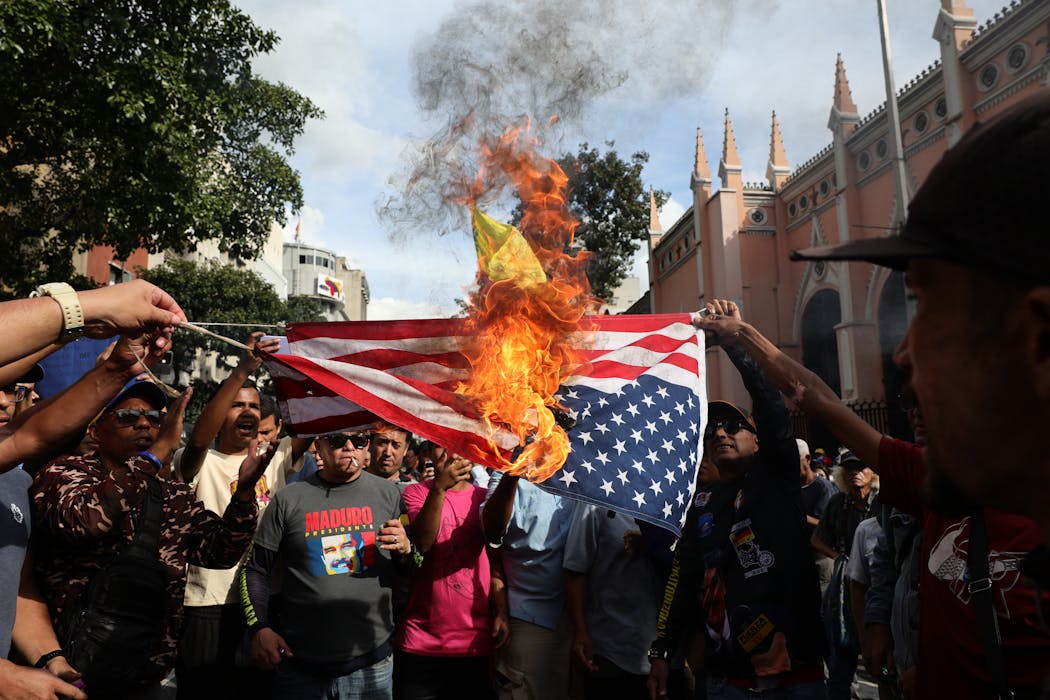
After US special forces swooped into Caracas to seize Venezuelan President Nicolás Maduro and topple his government, US President Donald Trump said the United States will now “run” Venezuela, including its abundant oil resources.

US companies were poised to invest billions to upgrade Venezuela’s crumbling oil infrastructure, he said, and “start making money for the country”. Venezuela has the world’s largest oil reserves – outpacing Saudi Arabia with 303 billion barrels, or about 20% of global reserves.

If this does eventuate – and that’s a very big “if” – it would mark the end of an adversarial relationship that began nearly 30 years ago.

Yes, the Trump administration’s military action in Venezuela was in many ways unprecedented. But it was not surprising given Venezuela’s vast oil wealth and the historic relations between the US and Venezuela under former President Hugo Chávez and Maduro.


A long history of US investment

Venezuela is a republic of around 30 million people on the northern coast of South America, about twice the size of California. During much of the early 20th century, it was considered the wealthiest country in South America due to its oil reserves.

Venezuela’s location in South America.
Wikimedia Commons

Foreign companies, including those from the US, invested heavily in the growth of Venezuelan oil and played a heavy hand in its politics. In the face of US opposition, however, Venezuelan leaders began asserting more control over their main export resource. Venezuela was a key figure in the formation of the Organisation of Petroleum Exporting Countries (OPEC) in 1960, and it nationalised much of its oil industry in 1976.

This negatively impacted US companies like ExxonMobil and has fuelled the recent claims by the Trump administration that Venezuela “stole” US oil.


Economic prosperity, however, did not follow for most Venezuelans. The mismanagement of the oil industry led to a debt crisis and International Monetary Fund (IMF) intervention in 1988. Caracas erupted in protests in February 1989 and the government sent the military to crush the uprising. An estimated 300 people were killed, according to official totals, but the real figure could be 10 times higher.

In the aftermath, Venezuelan society became further split between the wealthy, who wanted to work with the US, and the working class, who sought autonomy from the US. This division has defined Venezuelan politics ever since.

Chávez’s rise to power

Hugo Chávez began his career as a military officer. In the early 1980s, he formed the socialist “Revolutionary Bolivarian Movement-200” within the army and began giving rousing lectures against the government.

Then, after the 1989 riots, Chávez’s recruitment efforts increased dramatically and he began planning the overthrow of Venezuela’s government. In February 1992, he staged a failed coup against the pro-US president, Carlos Andrés Pérez. While he was imprisoned, his group staged another coup attempt later in the year that also failed. Chavez was jailed for two years, but emerged as the leading presidential candidate in 1998 on a socialist revolutionary platform.

Chávez became a giant of both Venezuelan and Latin American politics. His revolution evoked the memory of Simón Bolívar, the great liberator of South America from Spanish colonialism. Not only was Chávez broadly popular in Venezuela for his use of oil revenue to subsidise government programs for food, health and education, he was well-regarded in like-minded regimes in the region due to his generosity.

Most notably, Chávez provided Cuba with billions of dollars worth of oil in exchange for tens of thousands of Cuban doctors working in Venezuelan health clinics.

He also set a precedent of standing up to the US and to the IMF at global forums, famously calling then-US President George W Bush “the devil” at the UN General Assembly in 2006.

US accused of fomenting a coup

Unsurprisingly, the US was no fan of Chávez.

After hundreds of thousands of opposition protesters took to the streets in April 2002, Chavez was briefly ousted in a coup by dissident military officers and opposition figures, who installed a new president, businessman Pedro Carmona. Chávez was arrested, the Bush administration promptly recognised Carmona as president, and the The New York Times editorial page celebrated the fall of a “would-be dictator”.

Chavez swept back into power just two days later, however, on the backs of legions of supporters filling the streets. And the Bush administration immediately faced intense scrutiny for its possible role in the aborted coup.

While the US denied involvement, questions lingered for years about whether the government had advance knowledge of the coup and tacitly backed his ouster. In 2004, newly classified documents showed the CIA was aware of the plot, but it was unclear how much advance warning US officials gave Chavez himself.

US pressure continues on Maduro

Maduro, a trade unionist, was elected to the National Assembly in 2000 and quickly joined Chávez’s inner circle. He rose to the office of vice president in 2012 and, following Chávez’s death the following year, won his first election by a razor-thin margin.

But Maduro is not Chávez. He did not have the same level of support among the working class, the military or across the region. Venezuela’s economic conditions worsened and inflation skyrocketed.

And successive US administrations continued to put pressure on Maduro. Venezuela was hit with sanctions in both the Obama and first Trump presidency, and the US and its allies refused to recognise Maduro’s win in the 2018 election and again in 2024.

Isolated from much of the world, Maduro’s government became dependent on selling oil to China as its sole economic outlet. Maduro also claims to have thwarted several coup and assassination attempts allegedly involving the US and domestic opposition, most notably in April 2019 and May 2020 during Trump’s first term.


US officials have denied involvement in any coup plots; reporting also found no evidence of US involvement in the 2020 failed coup.

Now, Trump has successfully removed Maduro in a much more brazen operation, with no attempts at deniability. It remains to be seen how Venezuelans and other Latin American nations will respond to the US actions, but one thing is certain: US involvement in Venezuelan politics will continue, as long as it has financial stakes in the country.

James Trapani does not work for, consult, own shares in or receive funding from any company or organisation that would benefit from this article, and has disclosed no relevant affiliations beyond their academic appointment.

ref. Before toppling Maduro, the US spent decades pressuring Venezuelan leaders over its oil wealth – https://theconversation.com/before-toppling-maduro-the-us-spent-decades-pressuring-venezuelan-leaders-over-its-oil-wealth-272679

Trump’s intervention in Venezuela: the 3 warnings for the world

Source: The Conversation (Au and NZ) – By Donald Rothwell, Professor of International Law, Australian National University

The January 3 US military operation in Venezuela seizing President Nicolás Maduro and his wife, Cilia Adela Flores de Maduro, was in equal measure audacious and illegal under international law.

It’s even more breathtaking that the Trump administration now says it “will run” Venezuela on an interim basis. The US will also seek to control the country’s vast oil interests.

Irrespective of its contested domestic politics and the chequered record of the Maduro regime, Venezuela remains a recognised sovereign state under international law. This includes permanent sovereignty over its natural resources. Any US seizure of Venezuelan oil would be a further violation of international law.

But the US hasn’t tried to justify its strikes with international law. Instead, the Trump administration is using domestic laws to ignore global rules entirely. It’s a new strategy, but one with no international legal basis, regardless of how you slice it.

Making the international domestic

Both the first and second Trump administrations have shown animosity towards the Maduro regime.

The US government has consistently raised two key issues: the role Venezuela has played in illegal Latin American migrants entering the US, and support for the flow of drugs into the US.

Both were major issues during the 2024 US presidential election campaign and are key planks of the Trump MAGA movement.

The legitimacy of the Maduro regime has also been called into question. There were disputed election outcomes in 2018 and 2024.

However, the legitimacy or otherwise of the Maduro regime is not a legal basis for a military intervention.

Rather, the Trump administration is relying on US domestic laws to justify its actions in Venezuela. A 2020 US grand jury indictment of Maduro and his wife for drug trafficking underpins the legal argument.

That Maduro has been paraded before television cameras in New York like any other detained prisoner further emphasises the importance of US domestic law in this matter. It’s unprecedented for a foreign head of state to be arrested in their presidential compound, detained and legally processed in the US within the space of 24 hours.

Maduro and his wife will eventually face trial on various criminal charges. That Nicolás Maduro is the Venezuelan president and therefore entitled to head of state immunity from criminal prosecution before a US court will presumably be set aside as the Trump administration does not recognise the legitimacy of his presidency.

Likewise, US courts will probably not bother themselves too much with the manner of Maduro’s arrest via US extra-territorial law enforcement in a foreign state.

In the normal course of events, once the US grand jury indictment had been released, Maduro’s extradition could have been sought via a US arrest warrant.

The Trump administration likely assumed any such extradition request would have been ignored. So, instead, it used the US military to enter Maduro’s Caracas compound to facilitate his arrest by Department of Justice officials.

Law enforcement or law breaking?

At the core of how the Trump administration has advanced its legal campaign against Venezuela and the Maduro regime has been its reliance on US law.

Starting in September, the US began targeting small boats linked to the Venezuelan drug trade through military strikes at sea.

The US justified these, in part, on the basis of extra-territorial enforcement of US laws against known cartels shipping drugs throughout the Caribbean to American entry points.


Read more:
Tracking the US build-up in the Caribbean


In December, the US Coast Guard began to pursue and seize oil tankers subject to US sanctions. This conduct was also justified on the basis of US law, with the sanctioned tankers being stopped and seized in waters off the Venezuelan coast on the high seas.

US law enforcement has now been extended to the seizure, arrest and detention of the Maduros.

By relying on the argument that the US is enforcing its own laws, the Trump administration provides itself with a domestic legal basis for its actions, no matter what international law may have to say.

This is a clear case of US exceptionalism towards international law, of which there is a long history. It reflects a US view that its own laws prevail over all other law. According to the US, international law should not unduly limit its ability to advance its national interests.

It’s also based on an assumption that any international opprobium it may encounter can be managed or safely ignored.

The 3 things to watch

There are three immediate regional and global lessons from these events.

First, the Trump administration has shown a vast capacity to sanction whomever it chooses based on domestic political whims. Individuals, entities and corporations have all been targeted through presidential executive orders, laws and force. Many will be on high alert.

Second, while the cumulative US actions against Venezuela violate the United Nations Charter, the UN will be virtually powerless to constrain the US. This is due to the veto powers held by the permanent members of its Security Council, not to mention Trump’s disdain for the UN generally.

Third, US allies and partners need to be very aware of the ramifications of this exceptional US law enforcement practice.

If, down the line, the US military encounters a more robust response than it did in Venezuela, it could trigger NATO treaty obligations for European countries and Canada, and ANZUS treaty obligations for Australia.

So, if the US continues down this road, there’s every chance the consequences of its interventionism could be felt by many around the world.

Donald Rothwell receives funding from Australian Research Council.

ref. Trump’s intervention in Venezuela: the 3 warnings for the world – https://theconversation.com/trumps-intervention-in-venezuela-the-3-warnings-for-the-world-272696

How to make this summer the one you learn to surf

Source: Radio New Zealand

With more than 15,000km of coastline, it’s no surprise that surfing is a hugely popular pastime in Aotearoa.

One place where people come from all around the world to learn is at Auckland’s Muriwai Surf School located at the famous West Coast beach.

– Published by EveningReport.nz and AsiaPacificReport.nz, see: MIL OSI in partnership with Radio New Zealand

Woman charged with bringing 22kgs of meth into the country in her checked luggage

Source: Radio New Zealand

The woman had arrived at Auckland International Airport from Singapore. (File photo) RNZ / Samuel Rillstone

A woman has been charged with bringing more than 20 kilograms of meth into the country in her checked luggage.

The 33-year-old was arrested at Auckland International airport on Sunday.

Court documents claim she arrived on a flight from Singapore with roughly 22 kilograms of methamphetamine.

She had been charged with importing a class A controlled drug.

The maximum sentence was life imprisonment.

Court documents show the woman was both unemployed and had no fixed abode.

She was expected to appear in Manukau District Court on Monday afternoon.

Sign up for Ngā Pitopito Kōrero, a daily newsletter curated by our editors and delivered straight to your inbox every weekday.

– Published by EveningReport.nz and AsiaPacificReport.nz, see: MIL OSI in partnership with Radio New Zealand

Christchurch cordon lifted after bomb squad called in

Source: Radio New Zealand

RNZ / REECE BAKER

Cordons have been removed from a Christchurch property where an item of concern was found this morning.

Police were called to St Barnabas Street in Fendalton at about 9.15am on Monday.

The Defence Force explosive bomb disposal team recovered the item, and it will be disposed of.

Sign up for Ngā Pitopito Kōrero, a daily newsletter curated by our editors and delivered straight to your inbox every weekday.

– Published by EveningReport.nz and AsiaPacificReport.nz, see: MIL OSI in partnership with Radio New Zealand

Police seek to identify people after ‘mass disorder’ on Auckland’s K’ Road

Source: Radio New Zealand

Supplied / NZ Police

Police investigating a mass disorder incident that occurred on Karangahape Road in Auckland just after Christmas are appealing for the public’s assistance in identifying the people pictured in several CCTV images.

At about 3.40am on 28 December, emergency services were called to the disorder involving about 50 people.

Auckland City Detective Senior Sergeant Mark Greaves said the police investigation remains ongoing into three serious assaults on and around Karangahape Road during the incident.

“One person has been arrested, however we would like help identifying the others pictured in these images.

“I’m asking anyone who knows who they are to please get in touch.”

Police are seeking to identify several individuals after a disorder involving about 50 people on Auckland’s Karangahape Road on 28 December. Supplied / NZ Police

One male is wearing black pants, a blue and black hunting and fishing jacket and a black cap with white writing.

The second male is wearing a white shirt with a beige hat.

Supplied / NZ Police

“Someone knows who these people are and we are urging them to speak to us,” Greaves said.

Anyone who recognises these men or who has information about the incident is asked to contact police.

People can report information online or call 105 and quote file number 251228/4774. Information can also be provided anonymously via Crime Stoppers on 0800 555 111.

Sign up for Ngā Pitopito Kōrero, a daily newsletter curated by our editors and delivered straight to your inbox every weekday.

– Published by EveningReport.nz and AsiaPacificReport.nz, see: MIL OSI in partnership with Radio New Zealand

Christmas was less than two weeks ago. Is it too soon for hot cross buns?

Source: Radio New Zealand

Move over, chocolate Santas and candy canes, Easter treats are on the way.

It may be just a couple of weeks since Christmas – and 12 weeks until Easter – but hot cross buns are already on sale at some New Zealand supermarkets.

“Each year our customers tell us it’s never too early for hot cross buns, and the numbers back that up,” says Woolworths’ merchandise manager for bakery Michael Whorskey.

If that sounds a bit premature, consider this: some supermarkets in Aotearoa sell ‘uncrossed’ fruit buns year-round. In Australia, hot cross buns have been on sale since Boxing Day.

Whorskey says Woolworths’ decision to put the buns on sale from 5 January is influenced by consistent customer demand for the traditional Easter treat.

“We sold more than 1.7 million in-store baked units last season, with traditional dried fruit still reigning supreme, so we’re responding to what customers clearly want rather than the calendar.”

The chain will be selling a dozen different varieties of hot cross buns – from fruitless to a cream cheese-filled cinnabon style – with five cents from every packet sold going to children’s charity KidsCan.

A Foodstuffs South Island spokesperson says that while the spicy scent of hot cross buns has been wafting through the bakeries of some stores already, supply and demand will start to heat up more in February.

“While Easter is definitely the most popular time, some customers don’t like to let a celebration or date on the calendar stand between them and their favourite hot cross bun, so some of our stores make smaller quantities year-round,” the spokesperson says.

Wellington’s Nada Bakery took top prize at the 2025 Baking NZ Great Hot Cross Bun Competition. Owner and baker Michael Gray says customers have been asking about hot cross buns since December, but he’s holding out on producing them until February.

“People always want something different and to move on to the next thing, they don’t want to wait.

“We wanted to clear Christmas and get a bit of breathing space for our team and to the public before we started hot cross buns.”

Gray says hot cross buns represent an important chunk of income for bakeries, so he can understand why some of his competitors, including supermarkets, might want to get in early.

Baking NZ president Bernie Sugrue says he thinks three months ahead of Easter is a respectable time to start making hot cross buns.

“It’s a bit like florists and Valentine’s Day. Bakeries don’t have Black Friday or Boxing Day sales, so they want to get in there with hot cross buns.”

– Published by EveningReport.nz and AsiaPacificReport.nz, see: MIL OSI in partnership with Radio New Zealand

ER Report: A Roundup of Significant Articles on EveningReport.nz for January 5, 2026

ER Report: Here is a summary of significant articles published on EveningReport.nz on January 5, 2026.

As Trump rewrites the rules in Venezuela, NZ faces a foreign policy reckoning
Source: The Conversation (Au and NZ) – By Robert G. Patman, Professor of International Relations, University of Otago Getty Images Donald Trump’s seemingly reckless and probably illegal attempt at regime change in Venezuela highlights the need for New Zealand to rethink its current stance toward the United States. Since taking office, the National-led coalition government

More than 250,000 Australians don’t have access to a vet – new research
Source: The Conversation (Au and NZ) – By Bronwyn Orr, Veterinarian, James Cook University Mike Kilcoyne/Unsplash Imagine walking your dog on a warm summer day. They’ve just run off the path to sniff in some long grass, maybe eat some kangaroo poo. Suddenly, there is a yelp and you see a snake slither away. With

Labor and Albanese take a hit in post-Bondi Resolve poll
Source: The Conversation (Au and NZ) – By Adrian Beaumont, Election Analyst (Psephologist) at The Conversation; and Honorary Associate, School of Mathematics and Statistics, The University of Melbourne Despite fallout from the expenses scandal and Bondi, Labor still holds a 54–46 lead in Resolve, but Anthony Albanese’s ratings have slumped. Newspoll analysis has One Nation’s

US attack on Venezuela ‘clearly illegal’ under UN charter, says former NZ prime minister Helen Clark
RNZ News There is no doubt that Donald Trump’s attack on Venezuela was illegal, former prime minister and UN leader Helen Clark says. Over the weekend, the US attacked the Venezuelan capital Caracas and captured the South American nation’s president and his wife, citing alleged drug offences. Nicolás Maduro is now being held in a

Drownings are surging in Australia. AI can help
Source: The Conversation (Au and NZ) – By Michelle O’Shea, Senior Lecturer, School of Business, Western Sydney University Eduardo Filgueiras/Unsplash This year, Australian drowning deaths reached their worst level in three decades. Tragically, 357 drownings were reported between July 1 2024 and June 30 2025, with many more non-fatal incidents. Australian drowning fatalities have surged

Autocrats have long lists of political enemies. This is how Donald Trump has tried to silence his
Source: The Conversation (Au and NZ) – By Justin Bergman, International Affairs Editor, The Conversation The list of people Donald Trump has punished or threatened to punish since returning to office is long. It includes the likes of James Comey, Letitia James, John Bolton, as well as members of the opposition, such as Adam Schiff,

What is ‘oatzempic’? Does it actually work for weight loss?
Source: The Conversation (Au and NZ) – By Lauren Ball, Professor of Community Health and Wellbeing, The University of Queensland Łukasz Rawa/Unsplash If you’ve spent any time on TikTok or Instagram lately, you may have seen people blending oats with water or juice and calling it “oatzempic.” The name is a nod to Ozempic, a

With thousands of feral horses gone, Kosciuszko’s fragile ecosystems are slowly recovering
Source: The Conversation (Au and NZ) – By David M Watson, Professor in Ecology, Charles Sturt University Author supplied , CC BY-ND In Kosciuszko National Park in Australia’s alpine region, the landscape is slowly changing. Patches of native vegetation cropped bald by horses are regrowing. Some long-eroded creek banks look less compacted along the edges.

Can office culture survive the work-from-home revolution? Yes, but you can’t force the fun
Source: The Conversation (Au and NZ) – By Barbara Plester, Senior Lecturer, Management and International Business, University of Auckland, Waipapa Taumata Rau Getty Images Groaning your way back into the new work year? It’s an occupational hazard after the holiday break, of course, but these days there is the consolation (for some) of hybrid working.

Why can’t we admit to not enjoying a bad holiday?
Source: The Conversation (Au and NZ) – By Samuel Cornell, PhD Candidate in Public Health & Community Medicine, School of Population Health, UNSW Sydney Jan Kohl/Unsplash Everyone always loves a holiday – at least, that’s how we portray them. Holidays present a chance to unwind, relax and decompress from life’s day-to-day struggles. But they don’t

Just joined a dating app? Here’s how to look after yourself and handle rejection
Source: The Conversation (Au and NZ) – By Megan Willis, Associate Professor, School of Behavioural and Health Sciences, Australian Catholic University Designecologist/ Pexels As the New Year rolls around, dating apps often see a surge in new sign-ups. Some are dipping their toes in for the first time, while others are rejoining with renewed hope

Trump’s gift-wrapped Maduro package has done the world a favour – revealing what a lie US foreign policy really is
Kidnap, murder, torture, brutality, subversion, treachery, and barbarism, writes Adrian Blackburn reflecting on US President Donald Trump’s New Year present to the world. COMMENTARY: By Adrian Blackburn Blatantly, boastfully, bullyingly, shamelessly, Trump overnight threw open to the world’s eyes the cruel reality of US foreign policy. He has brought out from the shadows the ugly

The US has invaded countries and deposed leaders before. Its military action against Venezuela feels different
Source: The Conversation (Au and NZ) – By Juan Zahir Naranjo Cáceres, PhD Candidate, Political Science, International Relations and Constitutional Law, University of the Sunshine Coast In the early hours of Saturday morning, US special forces captured Venezuelan President Nicolás Maduro from his home in Caracas and flew him out of the country. US President

The US has invaded countries and deposed leaders before. This time feels different
Source: The Conversation (Au and NZ) – By Juan Zahir Naranjo Cáceres, PhD Candidate, Political Science, International Relations and Constitutional Law, University of the Sunshine Coast In the early hours of Saturday morning, US special forces captured Venezuelan President Nicolás Maduro from his home in Caracas and flew him out of the country. US President

Were the US actions in Venezuela legal under international law? An expert explains
Source: The Conversation (Au and NZ) – By Sarah Heathcote, Honorary Associate Professor in International Law, Australian National University United States President Donald Trump has said the US will “run” Venezuela until a new government is installed, following the US military intervention in the country’s capital, Caracas. American forces have seized Venezuela’s president, Nicolás Maduro,

ER Report: A Roundup of Significant Articles on EveningReport.nz for January 4, 2026
ER Report: Here is a summary of significant articles published on EveningReport.nz on January 4, 2026.

Woman charged with allegedly bringing 22kgs of meth into the country in her checked luggage

Source: Radio New Zealand

The woman had arrived at Auckland International Airport from Singapore. (File photo) RNZ / Samuel Rillstone

A woman has been charged with allegedly bringing more than 20 kilograms of meth into the country in her checked luggage.

The 33-year-old was arrested at Auckland International airport on Sunday.

Court documents claimed she arrived on a flight from Singapore with roughly 22 kilograms of methamphetamine.

She had been charged with importing a class A controlled drug.

The maximum sentence was life imprisonment.

Court documents show the woman was both unemployed and had no fixed abode.

She was expected to appear in Manukau District Court on Monday afternoon.

Sign up for Ngā Pitopito Kōrero, a daily newsletter curated by our editors and delivered straight to your inbox every weekday.

– Published by EveningReport.nz and AsiaPacificReport.nz, see: MIL OSI in partnership with Radio New Zealand

Stuff files court injunction over Neighbourly data breach on dark web

Source: Radio New Zealand

Data from the Neighbourly website has been stolen. Screenshot

The Stuff-owned website Neighbourly – at the centre of a major cyber breach – has headed to court to try to stop the stolen information spreading.

The High Court at Auckland has confirmed it has received and accepted an application for an injunction.

The site was taken down for a time on New Year’s Day after the breach was found.

Information including names, email addresses, posts and messages has purportedly surfaced for sale on the dark web.

Cyber security experts say it is particularly concerning that GPS data from Neighbourly has also been taken. One said it could put lives at risk.

A court date has not yet been set.

It comes at the same time that the ManageMyHealth website was struck by a hacker attack that includes patient information.

The hackers, calling themselves “Kazu”, posted on Sunday morning that unless the company paid a ransom within 48 hours, they would leak more than 400,000 files in their possession.

Sign up for Ngā Pitopito Kōrero, a daily newsletter curated by our editors and delivered straight to your inbox every weekday.

– Published by EveningReport.nz and AsiaPacificReport.nz, see: MIL OSI in partnership with Radio New Zealand

Ruatiti homicide: No charges laid following deaths of Brendon and Trina Cole

Source: Radio New Zealand

Brendon and Trina Cole were found dead at a rural property in Ruatiti. SUPPLIED

No charges have been laid in relation to a homicide investigation in the central North Island where a couple were found dead.

It has been more than three weeks since since 56-year-old Brendon Leigh Cole and 54-year-old Trina Michelle Cole were found at a rural property in Ruatiti, west of Ruapehu, on 13 December.

A person of interest handed himself into police on Christmas Day.

The 29-year-old man was arrested on an active warrant, and appeared in Whanganui District Court on Boxing Day.

Police said no charges have been laid in relation to the deaths, and the homicide investigation was ongoing.

They said there were no significant updates.

Sign up for Ngā Pitopito Kōrero, a daily newsletter curated by our editors and delivered straight to your inbox every weekday.

– Published by EveningReport.nz and AsiaPacificReport.nz, see: MIL OSI in partnership with Radio New Zealand

Tonga’s Cabinet line-up announced for new parliament term

Source: Radio New Zealand

Lord Fakafanua receives appointment confirmation from King Tupou VI at the Royal Palace in Nuku’alofa, Tonga. 18 December 2025 Tonga Prime Minister’s Office

The inner circle of Tonga’s legislative assembly has been confirmed, with new prime minister Lord Fakafanua announcing his selection of cabinet ministers on Monday afternoon.

Fakafanua will take on the police, fire and emergency services portfolios for his government, as well as disaster management, climate change and communications.

He has named Dr Viliami Latu as his deputy. Among his portfolios are justice and economic development.

Crown Prince Tupouto’a Ulukalala returns as the minister in charge of foreign affairs and defence. He has been appointed from outside of parliament, which is permitted under Tonga’s constitution.

Former prime minister Hu’akavameiliku Siaosi Sovaleni is also back at the decision-making table as fourth in the cabinet line-up. He has picked up the health and public enterprises portfolios.

Dr Taniela Fusimalohi, who was former prime minister Dr ‘Aisake Eke’s deputy prime minister, has also made it into cabinet as Minister for Lands, Survey, Planning and Natural Resources.

King Tupou VI has already appointed Fakafanua’s ministers to cabinet, according to Monday’s Tonga parliament announcement. This is a formal process enshrined in Tonga’s constitution.

The appointment of the King’s son, the Crown Prince, to parliament increases the size of the size of the legislative assembly, which has a base of 26 elected representatives from the general election. According to the constitution, up to four ministers can be appointed to Cabinet from outside parliament.

The only woman elected to Tonga’s parliament, Fane Fituafe, has also been named as a cabinet minister. Fituafe, who is a new MP, takes on a range of portfolios including women, social affairs and employment.

Monday’s cabinet announcement concludes the parliamentary election process that began with Tonga’s general election voting day on 20 November last year.

Twenty-six representatives (17 peoples’ representatives and nine nobles’ representatives) were elected by voters on that day – making up the country’s legislative assembly or parliament.

Following this, the group then conducted a vote for prime minister on 15 December, with Fakafanua winning over his predecessor Dr ‘Aisake Eke 16 votes to 10. Fakafanua was then formally appointed by the King to the office of prime minister, in keeping with Tonga’s constitution.

The King also appointed Lord Vaea as the speaker of the new parliament, and Lord Tu’iha’angana as his deputy. Both speaker positions can only be held by nobles’ representatives.

Cabinet lineup:

1. Lord Fakafanua

Prime Minister

Minister for Meteorology, Energy, Information, Disaster Management, Environment, Communications and Climate Change (MEIDECC)

Minister for Police, Fire and Emergency Services, and Prisons

2. Dr Viliami Latu

Deputy Prime Minister

Minister for Justice

Minister for Trade and Economic Development

3. Crown Prince Tupouto’a ‘Ulukalala

Minister for His Majesty’s Diplomatic Services

Minister for His Majesty’s Armed Forces

4. Hu’akavameiliku Siaosi Sovaleni

Minister for Public Enterprises

Minister for Health

5. Lataifaingata’a Tangimana

Minister for Finance & National Planning

6. Semisi Sika

Minister for Tourism

Minister for Infrastructure

7. Dr Taniela Fusimalohi

Minister for Lands, Survey, Planning and Natural Resources

8. Dr Mo’ale ‘Otunuku

Minister for Education and Training

9. Sevenitini Toumo’ua

Minister for Customs and Inland Revenue

10. Viliami Sisifa

Minister for Agriculture, Food and Forests

Minister for Fisheries

11. Fane Fituafe

Minister for Internal Affairs, Employment, Women, Social Protection, Youth and Sports.

– Published by EveningReport.nz and AsiaPacificReport.nz, see: MIL OSI in partnership with Radio New Zealand

Cricket Ashes live: Australia v England, test 5, day 2

Source: Radio New Zealand

Follow all the action from Sydney Cricket Ground as England put on strong first inninngs in the final Ashes test.

England enjoyed one of their better days of the series on Sunday, with a 154-run stand between Joe Root and Harry Brook helping them to 211 for 3 before the opening day was brought to a premature end.

Australia have already won the 5-match series 3-1.

Sign up for Ngā Pitopito Kōrero, a daily newsletter curated by our editors and delivered straight to your inbox every weekday.

– Published by EveningReport.nz and AsiaPacificReport.nz, see: MIL OSI in partnership with Radio New Zealand

Couple surprised to find kiwi trying to have a sleepover

Source: Radio New Zealand

The kiwi was ushered outside where it ran off (file image). supplied

A couple staying with friends near Whangārei Heads has been surprised by a special guest over the holidays after finding a kiwi in the sleepout they were staying in.

The pair had left the doors open to cool down the room.

As they were getting ready for bed they spotted a little brown kiwi tucked in the corner.

The bird was carefully picked up and placed outside where it ran off into the dark.

One of the people involved posted what happened on social media, describing the experience as wonderful.

“I fetched the others who likewise thought I was joking!” he wrote.

“The kiwi was very calm, although I suspect the light would have blinded him. I carefully ushered him into a place where I carefully picked him up and placed him outside, where he scooted off into the night.”

Forest and Bird regional conservation manager for Waikato and Taranaki Elvisa van der Leden told RNZ she believed the kiwi might have been a lost juvenile.

“[Kiwi] have terrible eyesight,” she said.

“They navigate more with their sense of smell…”

It was more likely there was bush near the sleepout where the kiwi was found, van der Leden said, and that it just wandered into the house not realising it wasn’t outside anymore, rather than the bird actively seeking shelter inside.

Getting instructions from experts was important when dealing with a wild kiwi or other animal, she said.

“You can transfer germs or disease onto them without realising it, and they can do the same back to you.”

“Waiting for a [Department of Conservation] ranger to provide instructions is always the best thing to do as the first point of call.”

Van der Leden said it was very easy to accidentally hurt kiwi.

“They have a very specific biology, their ribcage area is actually quite vulnerable so it requires trained experts to handle them without harming them,” she said.

Department of Conservation biodiversity liasion Jess Scrimgeour said it was best to let kiwi find their own way out.

“Clear the way out and you can gently usher the bird if needed. Give it space if it seems stressed.”

She was urging people not to pick up kiwi.

“They have under-developed wing and chest muscles and lack a sternum (breastbone). This makes them particularly vulnerable to crushing injuries,” she said.

Sign up for Ngā Pitopito Kōrero, a daily newsletter curated by our editors and delivered straight to your inbox every weekday.

– Published by EveningReport.nz and AsiaPacificReport.nz, see: MIL OSI in partnership with Radio New Zealand

Four deadly crashes in a day

Source: Radio New Zealand

RNZ / REECE BAKER

Four people have died in a series of separate crashes in 24 hours.

Emergency services were called to a two-vehicle crash on State Highway 24 in Waikato, south of Matamata at 9.45am.

“One person died at the scene, no further injuries were reported,” police said.

“The road remains closed, with diversions in place. Motorists are advised to expect delays.”

Meanwhile, a person was killed in a crash on Roche Street in Wanaka.

Police were called to the scene about 10.45am.

“An area of Roche Street remains closed while a scene examination is completed.”

Earlier on Monday, another person died in a crash on Jones Road in Rolleston.

Police also reported on Monday that a person died in a crash in Auckland’s Papatoetoe late Sunday night.

The official holiday road toll ended at 6am on Monday with seven provisional deaths.

Sign up for Ngā Pitopito Kōrero, a daily newsletter curated by our editors and delivered straight to your inbox every weekday.

– Published by EveningReport.nz and AsiaPacificReport.nz, see: MIL OSI in partnership with Radio New Zealand

As Trump rewrites the rules in Venezuela, NZ faces a foreign policy reckoning

Source: The Conversation (Au and NZ) – By Robert G. Patman, Professor of International Relations, University of Otago

Getty Images

Donald Trump’s seemingly reckless and probably illegal attempt at regime change in Venezuela highlights the need for New Zealand to rethink its current stance toward the United States.

Since taking office, the National-led coalition government has steadily reoriented foreign policy towards Washington. However, the US military operation of January 3 to capture President Nicolás Maduro has exposed the very real limitations of that strategy.

Trump’s intervention in Venezuela had been foreshadowed by a military buildup and series of deadly US attacks on alleged drug boats in the Caribbean and eastern Pacific since September 2025.

But Trump now openly talks about US companies participating in the revival of the country’s oil industry, which will allow access to the world’s largest known oil reserves.

The US will “run” Venezuela, Trump says, until there are conditions for a “safe transition of power”. What that means in reality remains to be seen.

Foreign Minister Winston Peters’ statement that New Zealand “expects all parties to act in accordance with international law” seems optimistic given what has happened so far.

A new Monroe Doctrine

US intervention in Venezuela is largely consistent with the Trump administration’s National Security Strategy, published in December last year.

Among other things, the strategy indicated the US wished to reestablish its dominance in the Western Hemisphere – a sort of updated version of the Monroe Doctrine, the 19th century US strategy of dividing the world into spheres of influence overseen by great powers.

But the intervention in Venezuela sets a grave precedent in the context of contemporary international law and security.

Unilaterally removing Maduro from power is an act of war and apparently violates US federal as well as international law.

Under the US Constitution, only Congress has the power to declare war. But there is little evidence the president briefed members of Congress about regime change in Venezuela.

At the same time, Trump’s intervention is at odds with the United Nations Charter. This prohibits interference in the domestic affairs of a sovereign state unless there is a threat to international peace and security. In the case of Venezuela, there clearly was not.

Trump’s application of the “might is right” approach to Venezuela may also create more problems than it solves, particularly if there is resistance to US efforts to govern the country.

While many Venezuelans are understandably elated by the departure of a dictator, this could quickly turn to anger if and when the Trump administration’s intention to “run” the country on its own terms becomes apparent.

Indifference not an option

Above all, there is a very real risk Trump’s unilateral intervention in Venezuela will encourage similar actions elsewhere.

Trump has sent mixed signals about Vladimir Putin’s illegal invasion of Ukraine, and his antipathy to Europe favours a peace deal on Russian terms.

But would the US administration be equally relaxed about China invading Taiwan? It’s a prospect that could be increased by the example of another superpower showing scant regard for the territorial integrity of a smaller state in its neighbourhood.

For such reasons, New Zealand cannot be indifferent to the events in Venezuela, and will soon have to make it clear where it stands.

The government’s initial response – that it is “concerned by and actively monitoring developments in Venezuela and expects all parties to act in accordance with international law” – seemed to fall short in this respect.

Certainly, since the end of World War II, all New Zealand governments have firmly supported a rules-based system of international relations embodied in norms of multilateralism and institutions such as the United Nations.

The second Trump administration has consistently demonstrated a disregard, even contempt, for the New Zealand worldview.

A moment of reckoning

Nevertheless, New Zealand has followed Britain, Australia and other liberal democracies in adopting a low-key, accommodating approach toward Washington’s “America First” agenda.

This has meant the government has pulled its punches on a number of key international issues during the past 12 months – including refraining from publicly expressing solidarity with allies such as Canada and Denmark faced with territorial threats from the Trump administration.

The government has also had little to say about Israel’s violation of international law in Gaza and the West Bank, has refused to recognise a Palestinian state, and has been reluctant to publicly question Trump’s trade protectionism.

But it was clear, even before the intervention in Venezuela, that this “wait and see” approach by New Zealand and other democracies failed to moderate the policies of Trump’s populist, radical-right administration.

New Zealand now faces a moment of reckoning in its foreign policy.

It can continue to prioritise closer alignment with an administration that wants the world to be run by great powers through spheres of regional influence.

Or it can stand up for a more inclusive, rules-based approach to international affairs where all states matter, including middle and small powers.

But it cannot credibly do both.

The Conversation

Robert G. Patman does not work for, consult, own shares in or receive funding from any company or organisation that would benefit from this article, and has disclosed no relevant affiliations beyond their academic appointment.

ref. As Trump rewrites the rules in Venezuela, NZ faces a foreign policy reckoning – https://theconversation.com/as-trump-rewrites-the-rules-in-venezuela-nz-faces-a-foreign-policy-reckoning-272680

Christchurch properties cordoned off as bomb squad called in

Source: Radio New Zealand

RNZ / REECE BAKER

Cordons are in place around a Christchurch property where an ‘item of concern’ has been found.

Police were called to St Barnabas Street in Fendalton at about 9.15am on Monday.

The Defence Force explosive bomb disposal team is also responding.

Sign up for Ngā Pitopito Kōrero, a daily newsletter curated by our editors and delivered straight to your inbox every weekday.

– Published by EveningReport.nz and AsiaPacificReport.nz, see: MIL OSI in partnership with Radio New Zealand

More than 250,000 Australians don’t have access to a vet – new research

Source: The Conversation (Au and NZ) – By Bronwyn Orr, Veterinarian, James Cook University

Mike Kilcoyne/Unsplash

Imagine walking your dog on a warm summer day. They’ve just run off the path to sniff in some long grass, maybe eat some kangaroo poo. Suddenly, there is a yelp and you see a snake slither away. With panic rising, you realise the clock is now ticking to get your dog to the vet.

However, you live more than an hour’s drive from the local vet. If you live along the coast of Queensland, and the snake was a coastal taipan, your dog might be dead before you even get to the vet.

You, like more than 250,000 other Australians, live in a veterinary care desert.

In new research published in the Australian Veterinary Journal, colleagues and I map exactly where those care deserts are in Australia.

This isn’t just a problem in an emergency. Research in both human and animal health shows people are less likely to seek preventative care if they live more than an hour from services, and their health suffers because of it.

Vets aren’t just for pets

We found the Northern Territory to be the worst-affected jurisdiction, with more than 20% of the population living in a care desert. Additionally, rural and regional areas, particularly those with large First Nations populations, were significantly underserved.

To map these areas, we used openly available data from sources such as Overture Maps, Google Places, OpenStreetMap and Global Human Settlement Layer. Using public data means these methods can be applied anywhere in the world to find similar gaps in care.

It’s not surprising Australia has numerous veterinary care deserts scattered across the country.

Our large land mass and uneven population spread makes accessing veterinary care genuinely challenging, and we’re not alone. Similar countries such as Canada have found veterinary care deserts increase inequity among human populations, risk animal welfare and threaten biosecurity.

This is because veterinarians don’t just treat pets and livestock. They act as early alert systems, detecting the first signs of exotic or emergency animal diseases.

They also help treat wildlife, often for free, and play an active role in preventing food-borne diseases.

Following the money

However, unlike Canada, the Australian veterinary industry primarily operates within a free market.

Partly in response to the inaccessibility of veterinary services in certain areas, several Canadian provincial governments have developed schemes to support rural veterinary clinics.

These schemes help subsidise travel to remote areas, or partially pay the cost of veterinary care for rural landholders. However, in Australia, with the exception of a few relatively minor schemes such as NABSnet, the veterinary industry is not subsidised.

This means veterinary clinics open where there are enough paying customers – generally in towns with populations greater than 5,000 people. Many of our veterinary care deserts were identified in towns smaller than this figure, or in extremely remote or low socioeconomic regions.

Not a petty issue

What is the answer then? It seems likely that without market intervention, accessibility to veterinary services will worsen. This is due to a number of factors.

Ageing rural practitioners, challenges associated with rural living and the decreasing use of veterinarians by the livestock industry all contribute.

Solutions must focus on improving equity and accessibility. Selecting from, and training in, rural areas could see more vets work there.

Innovations such as telemedicine might also help, by reducing the tyranny of distance. Alternatively, councils and state governments could explore subsidies for rural veterinary services, similar to those used in Canada, the United States, New Zealand or the United Kingdom.

Our research shows it’s possible to determine where the most severe shortages of veterinarians lie in Australia, and around the world.

While researchers can continue to track the accessibility of veterinary services over time, and model the impact of any shortages, it’s up to policy makers to decide if the accessibility of veterinary services is a public policy issue.

It’s certainly an animal health and welfare issue – and one that many other countries around the world have decided is important enough to tackle.

The Conversation

Bronwyn Orr was previously the President of the Australian Veterinary Association (2022–2023) and was awarded a Churchill Fellowship in 2023–2024 to study veterinary workforce issues in Australia and overseas.

ref. More than 250,000 Australians don’t have access to a vet – new research – https://theconversation.com/more-than-250-000-australians-dont-have-access-to-a-vet-new-research-269284

No doctors overnight in Wellington urgent care clinic

Source: Radio New Zealand

The urgent care clinic at Porirua’s Kenepuru Hospital was without a doctor overnight (file image). Google Maps

The urgent care clinic at Porirua’s Kenepuru Hospital was without a doctor overnight due to what Health NZ has called “unforeseen circumstances”.

The agency posted on social media that there was no doctor at the accident and medical clinic between 10.30pm on Sunday and 7am on Monday.

“During this time, nurses will assess whether patients are safe to wait until the following morning, when they can see a GP or return to the Kenepuru Accident & Medical Clinic, or if they need to go to ED,” it said.

“If you need emergency care, please visit Wellington Regional Hospital ED or the Hutt Hospital ED as you normally would.”

Were you affected? Get in touch: lauren.crimp@rnz.co.nz

Kenepuru Hospital services around 120,000 people in Porirua, Tawa, and the Kāpiti Coast.

In 2024, Health NZ signed a contract with telehealth company Emergency Consult to provide advice overnight if there was no doctor on site.

The agency said telehealth was optional for patients, and would only be offered in the accident and medical clinic if it was clinically appropriate.

The community rallied against the changes, telling a Labour Party-run public meeting that they needed a 24-hour service.

RNZ has approached Health NZ for comment.

Sign up for Ngā Pitopito Kōrero, a daily newsletter curated by our editors and delivered straight to your inbox every weekday.

– Published by EveningReport.nz and AsiaPacificReport.nz, see: MIL OSI in partnership with Radio New Zealand

Dunedin bottle store’s plans to open earlier quashed

Source: Radio New Zealand

123RF

Plans to open a Dunedin bottle store earlier in the day have been quashed after being told it would have been inappropriate in the student quarter.

Bottle O Cumberland applied to increase its off-licence hours to 9am until 10pm at night each day.

Currently, it opens at 10am and the closing times vary.

But the applicant, Brendan McCarthy, amended the application to close by 9pm at a district licensing committee hearing in November after being opposed by the University of Otago Proctor, police, a Ministry of Health delegate, the Chief Licensing Inspector, and a member of the public.

The committee decided to renew the licence, but retain the original opening time.

“The committee has considered the matters presented and does not consider it appropriate to extend the opening hours, given the location of the premises is in an area of high alcohol-related harm,” the committee said.

“The committee is satisfied that the premises is run safely and responsibly.”

The licence is due for renewal in 2028.

Sign up for Ngā Pitopito Kōrero, a daily newsletter curated by our editors and delivered straight to your inbox every weekday.

– Published by EveningReport.nz and AsiaPacificReport.nz, see: MIL OSI in partnership with Radio New Zealand

Labor and Albanese take a hit in post-Bondi Resolve poll

Source: The Conversation (Au and NZ) – By Adrian Beaumont, Election Analyst (Psephologist) at The Conversation; and Honorary Associate, School of Mathematics and Statistics, The University of Melbourne

Despite fallout from the expenses scandal and Bondi, Labor still holds a 54–46 lead in Resolve, but Anthony Albanese’s ratings have slumped. Newspoll analysis has One Nation’s surge concentrated with voters of lower educational attainment.

A special national Resolve poll for Nine newspapers, conducted after the Bondi attacks on December 17–20 from a sample of 1,010 (well below the normal Resolve sample size of 1,800), gave Labor a 54–46 lead by respondent preferences, a one-point gain for the Coalition since the regular early December Resolve poll.

Primary votes were 32% Labor (down three), 28% Coalition (up two), 16% One Nation (up two), 12% Greens (up one), 8% independents (steady) and 4% others (down two). By 2025 election preference flows, Labor would have led by under 54–46, about a 2.5-point gain for the Coalition.

Albanese’s net approval slumped 15 points to -9, the lowest it has been in this poll since the May election, with 49% giving him a poor rating and 40% a good rating. Sussan Ley’s net approval also fell seven points to -4. Albanese led Ley as preferred PM by 38–30 (41–26 in early December).

There had been stories about the expenses scandal in the week before the Bondi attacks, and the Morgan poll below had Labor dropping on the expenses scandal. It’s not clear whether Albanese and Labor were damaged by the expenses, Bondi or both.

By 46–29, respondents in Resolve thought the federal government’s response to Bondi was weak rather than strong. By 37–30, they thought social cohesion was good rather than poor.

By 72–9, respondents thought there had been a rise in racism in Australia as a result of the Israel-Gaza conflict (69–12 when this question was last asked in January 2025). By 55–13, they thought there had been more antisemitism than Islamophobia in recent months (54–9 last January).

On gun laws, 76% wanted them to be toughened, 10% kept as they are and just 6% thought they should be relaxed. Four of five proposals for toughening gun laws had over 80% support, with “restrict gun licences to Australian citizens” the exception at 72% support.

Asked to pick two priorities for the government, 49% selected preventing terrorism, 45% tackling crime generally, 35% restricting access to guns, 33% preventing extremism, 29% tackling antisemitism and 26% tackling hate speech.

By 66–9, respondents thought Australia needs stronger laws to ban hate speech on the basis of religion and faith. The most popular proposal for tackling antisemitism was tougher immigration screening to identify antisemitic views (76–7 support). Holding a Royal Commission was at 48–17 support.

In the small New South Wales subsample of around 300 voters, Labor Premier Chris Minns’ net likeability jumped eight points since November to +22.

In a post-Bondi YouGov national poll that was conducted December 15–22 from a sample of 1,509, 44% wanted personal guns like those used in the attacks made illegal, 48% wanted tighter gun laws and just 8% wanted no change to gun laws. By 81–19, respondents thought Ahmed al Ahmed, who disarmed one of the Bondi gunmen, deserved to be made Australian of the Year.

Labor slides in Morgan poll after expenses scandal

Morgan released its November 17 to December 14 national poll broken into two periods. For the first three weeks, November 17 to December 7, Labor had a 56–44 lead, similar to the 56.5–43.5 Labor lead in October to November.

For the last week, December 8–14 with a one-week sample of 1,574, Labor’s lead dropped to 54.5–45.5 by respondent preferences, a 1.5-point gain for the Coalition from weeks 1–3.

Primary votes were 30.5% Labor (down 2.5), 27.5% Coalition (up 1.5), 17% One Nation (up two), 13% Greens (down 0.5) and 12% for all Others (down 0.5). By 2025 election preference flows, Labor would have led by about 53–47, the lowest Labor lead by this measure of any poll since the last election.

The Redbridge poll suggested Labor had not been damaged by the expenses claims, but this poll contradicts that. All interviews were conducted before the Bondi attacks.


Read more:
Labor maintains dominant lead in Redbridge poll despite expenses claims


The full four-week poll had a sample of 4,862. In state and demographic breakdowns, the Coalition regained the lead in Queensland by 50.5–49.5, but Labor led in the other five states. Labor led by 58.5–41.5 with women and 52.5–47.5 with men.

Labor led by 69.5–30.5 with those aged 18–34 and by 58.5–41.5 with those aged 35–49. The Coalition made its biggest gains with those aged 50–64 to lead by 50.5–49.5, a 4.5-point swing to the Coalition. The Coalition led with those aged 65 and over by 54.5–45.5. One Nation’s highest support was with those aged 50–64 (20.5%) and they had 22% in Queensland.

Newspoll aggregate data for September to November

The Australian released aggregate data for the three national Newspolls conducted between September 29 and November 20 on December 26. The total sample size was 3,774, with Labor holding an overall 57–43 lead. These polls were taken before the expenses scandal and Bondi.

Labor led by 58–42 in NSW, (a two-point gain for the Coalition since the September quarter Newspoll aggregate according to The Poll Bludger), 60–40 in Victoria (a two-point gain for Labor), 52–48 in Queensland (a one-point gain for Labor), 56–44 in Western Australia (a two-point gain for Labor) and 58–42 in South Australia (a three-point gain for Labor).

Among those without a tertiary education, primary votes were 30% Labor (down two), 26% Coalition (down six), 20% One Nation (up nine) and 14% Greens (up one), for an unchanged 53–47 Labor lead. With TAFE educated, primary votes were 35% Labor (down two), 24% Coalition (down one), 19% One Nation (up seven) and 9% Greens (steady) for a 54–46 Labor lead (a three-point gain for the Coalition).

However, with the university educated, primary votes were 41% Labor (up three), 26% Coalition (down three), 13% Greens (down two) and 6% One Nation (up one), for a 62–38 Labor lead (a two-point gain for Labor).

Resolve likeabilty poll

Resolve’s poll of net likeability of federal politicians was taken in early December, before Bondi and the expenses scandal. Only two politicians had negative net likeability: Lidia Thorpe (-12) and Barnaby Joyce (-4).

Net likeability of prominent Labor politicians were Chris Bowen (net zero), Murray Watt (+4), Jim Chalmers (+5), Richard Marles (+6), Tony Burke (+7), Tanya Plibersek (+9) and Penny Wong (+11). David Pocock and Jacqui Lambie were on top with both at +15. Greens leader Larissa Waters was at +5.

One Nation leader Pauline Hanson’s net likeability increased 16 points since December 2024 to +3, but was down five points since November. Joyce’s net likeability was up 18 since December 2024 and up four since November. Thorpe’s net likeability surged 29 points since December 2024.

Only one politician suffered a fall in net likeability since December 2024: Liberal Jacinta Price was down five points to +3.

Adrian Beaumont does not work for, consult, own shares in or receive funding from any company or organisation that would benefit from this article, and has disclosed no relevant affiliations beyond their academic appointment.

ref. Labor and Albanese take a hit in post-Bondi Resolve poll – https://theconversation.com/labor-and-albanese-take-a-hit-in-post-bondi-resolve-poll-272266

Meet the Puzzleman of New Zealand

Source: Radio New Zealand

A quirky shop run by Northland’s Puzzleman is itself something of a puzzle.

How does a small business, selling a niche product in an out-of-the-way town of a few hundred souls, survive for half a century – especially in these tough economic times?

Louis “Puzzleman” Toorenburg has a simple answer.

Toorenburg with the Nintendo Challenge Dice, the puzzle that sparked his obsession.

RNZ / Peter de Graaf

Government orders review into ManageMyHealth data breach

Source: Radio New Zealand

Health Minister Simeon Brown. RNZ / Mark Papalii

Health Minister Simeon Brown has commissioned a review by the Ministry of Health into the response to the cyber security breach involving patient information on ManageMyHealth.

In a statement, Brown said patient data is incredibly personal and whether it is held by a public agency or a private company, it must be protected to the highest of standards.

“I have decided to commission the Ministry of Health to lead a review of the ManageMyHealth and Health New Zealand’s response.”

The minister has written to the Director-General of Health asking that the review will commence by the end of the month.

ManageMyHealth had identified all the patients who have had their health records stolen – but cannot yet say when they will all be told.

The group, calling themselves “Kazu”, have threatened to release more than 400,000 unless a ransom is paid.

A spokesperson for ManageMyHealth said it had identified all those affected, and hoped to have an update later in the week once all the communications with GPs and affected patients had been coordinated with the Ministry of Health, Health NZ, Privacy Commissioner and GPNZ.

“We are not waiting to determine who is affected – we know.”

The company was working to provide “a timeframe for communications” by Tuesday.

Because the health documents originated from multiple sources, there were many different agencies with obligations under the Privacy Act and the Health Information Privacy Code to notify affected individuals.

“This requires coordination to ensure we meet our legal obligations and do not create confusion for patients by having different organisations contact them separately about the same incident.”

Meanwhile, an independent forensic investigation was currently underway, and it would “not be appropriate to comment” on specific technical matters while that was ongoing.

“What we can confirm is that we became aware of this incident on 30 December when we were notified by a partner, and we notified the relevant authorities that same day. The specific vulnerability that allowed unauthorised access has been identified, patched, and independently verified by external cybersecurity specialists.”

‘Big wakeup call’

Brown earlier said the cyber breach of the country’s largest patient information portal was a “big wakeup call”, telling Morning Report he was incredibly concerned.

“It’s a deeply serious situation,” he said.

“I’ve been briefed a number of times by health officials who are working very closely with ManageMyHealth in regard to the notification process.”

He said ManageMyHealth was also working with the Privacy Commissioner and the National Cyber Security Centre, who were providing them with advice around the notification process.

Brown said his expectation was that they do it as quickly as possible, but they also had to do it accurately as well, and in compliance with the Privacy Act.

“There’s a number of processes they have to go through. My expectation is that they do that as quickly as possible so that patients who have had data breached are aware of that and of what data has been breached,” he said.

Brown said the advice he’s received was that the cyber hackers had only released a very small portion of data as part of their attempt in order to receive a ransom payment.

There was a forensic process underway at the moment to go through and identify who’s been impacted and then the process of notification, which is what Manage My Health was doing, he said.

Brown said the group were using hacked information in order to receive a financial reward, but they did not know where they were operating from.

“The reality is that here is a big wakeup call in terms of the protection of private health data and their need for that to be held in the most secure form possible so that patients can have confidence in how it is being used,” he said.

Sign up for Ngā Pitopito Kōrero, a daily newsletter curated by our editors and delivered straight to your inbox every weekday.

– Published by EveningReport.nz and AsiaPacificReport.nz, see: MIL OSI in partnership with Radio New Zealand

Person dies after single-vehicle crash closes road in Rolleston

Source: Radio New Zealand

A person has died after a crash in Rolleston on Monday.

Emergency services were called to the single-vehicle crash on Jones Road shortly after 7.45am.

The driver died at the scene.

Jones Road remained closed.

Motorists were advised to avoid the area and expect delays.

Sign up for Ngā Pitopito Kōrero, a daily newsletter curated by our editors and delivered straight to your inbox every weekday.

– Published by EveningReport.nz and AsiaPacificReport.nz, see: MIL OSI in partnership with Radio New Zealand

Summer returns: Temperatures could reach 30s this week

Source: Radio New Zealand

Warmer, more settled weather should give rain-soaked parts of the country a chance to dry out following a weekend of heavy rainfalls and flooding in northern regions, MetService says.

At the weekend, a low pressure system brought heavy rain and thunderstorms to northern parts of the country causing surface flooding and powercuts in some areas.

Meteorologist Mmathapelo Makgabutlane said temperatures across the country would return to “more summer like” levels this week.

“A nice summery and warm week ahead. Temperatures in the low to mid 20s for most of the country – even the high 20s and possibly in the 30s – by the end of the week and that’s particularly for eastern parts of the country,” Makgabutlane said

Makgabutlane said a ridge of high pressure would keep conditions stable – with partly cloudy skies – for much of the week although a front could bring some rain to the lower South Island as the week progressed.

“Midweek we do have a front that passes the lower part of the South Island, so some rain expected down there, and then later on this week we could see a picking up in the winds as well,” Makgabutlane said.

She said the low pressure system responsible for much of the rain over the weekend was moving away to the northeast of the country and the summery conditions should give some of the worst affected parts of the country time to dry out.

“This week in the eastern North Island – especially Hawke’s Bay and Tai Rāwhiti /Gisborne – the first part of the week we will see much drier conditions. We will still have the odd shower moving through but hopefully nothing as heavy as what we saw over the weekend,” Makgabutlane said.

She said the end of the week would see a new weather system bringing an increase in wind and rain to the South Island.

“At this point it does like there could be a bit of rain on the way especially for the South Island and then eventually reaching the North Island early next week.

“So – for this week – we enjoy the warm and summery temperatures,” Makgabutlane said.

Sign up for Ngā Pitopito Kōrero, a daily newsletter curated by our editors and delivered straight to your inbox every weekday.

– Published by EveningReport.nz and AsiaPacificReport.nz, see: MIL OSI in partnership with Radio New Zealand

US attack on Venezuela ‘clearly illegal’ under UN charter, says former NZ prime minister Helen Clark

RNZ News

There is no doubt that Donald Trump’s attack on Venezuela was illegal, former prime minister and UN leader Helen Clark says.

Over the weekend, the US attacked the Venezuelan capital Caracas and captured the South American nation’s president and his wife, citing alleged drug offences.

Nicolás Maduro is now being held in a federal jail in New York City, and is expected to appear in court this week.

This image was posted on US President Donald Trump’s Truth Social account on 3 January 2026, showing Venezuela’s President Nicolás Maduro onboard the USS Iwo Jima after the US military kidnapped him. Image: X@TruthTrumpPost

Speaking to RNZ’s Morning Report, Clark said there was no argument for the steps the US had taken.

“Article 24 of the UN Charter says states must refrain from using military force against each other and respect their sovereignty.

“There is a case for Maduro appearing before a court — that should be the International Criminal Court — on charges for crimes against humanity and there’s quite a long list of those that have been documented by various UN bodies over the years but this operation by the US . . .  is illegal.”

There was not an argument to be made that removing Maduro was in the security interests on the US, she said.

‘Not self-defence’
“There’s no evidence that the US was able to act in self-defence because it was not about to be attacked by Venezuela. So the self-defence argument does not apply at all.”

While some people in Venezuela were celebrating Maduro’s capture in the hopes it would create more stability, Clark said this might not be the case.

“The worry with the president of other such interventions, when you take out a leader of an apparatus and then if you try to dismantle that apparatus by external forces, as was the case with Iraq — and I suppose, to some extent, with Libya — is that you create more instability and chaos,” Clark said.

“We don’t really know at this point what the US’s even short-term, let alone medium-term plans are. There’s been, effectively a warning by President Trump this morning that if the acting president, Ms Rodriguez, doesn’t play ball, she will ‘pay a price even bigger than Maduro’.

“What does this mean? Will she be literally, physically taken out? Killed? So this is a very unstable, unpredictable, uncertain situation at the moment.”

On Sunday, Foreign Affairs Minister Winston Peters made the first public statement from New Zealand on the situation.

“New Zealand is concerned by and actively monitoring developments in Venezuela and expects all parties to act in accordance with international law,” Peters said in a post on X (formerly Twitter), using the official Minister of Foreign Affairs account.

NZ ‘stands with Venezuelan people’
“New Zealand stands with the Venezuelan people in their pursuit of a fair, democratic and prosperous future.

Clark said the statement was a “good start”.

New Zealand was known for following and upholding international law and Peters’ statement was consistent with the country’s long-held position, she said.

On Sunday, international relations Professor Robert Patman of the University of Otago described the US’ military actions against Venezuela as an “audacious move”.

“It’s a direct challenge for countries like New Zealand, which support the view that international relations should be based on rules, procedures and laws,” he told RNZ’s Worldwatch.

Patman said while many would be pleased to see Maduro gone, that did not mean they would be happy the US “violated Venezuela’s sovereignty”.

He believed New Zealand’s response to the US action in Venezuela should be firm and robust.

This article is republished under a community partnership agreement with RNZ.

Article by AsiaPacificReport.nz