The top of the south is experiencing high fire danger due to the hot and dry weather. File photo.RNZ / Tracy Neal
Bans and restrictions on outdoor fires are coming into force across the top of the South Island as the risk of wildfire intensifies.
Fire and Emergency (FENZ) has confirmed that its Marlborough South zone will move into a prohibited fire season from 8am Wednesday.
This zone covers land south of the Wairau River, including the flat land from the eastern side of SH1 between Tuamarina and Raringi, except the Royal New Zealand Airforce land at Woodbourne.
The region north of the Wairau would also move into a restricted season, meaning permits were required for all open fires.
Permits that had been issued for open fires in parts of Marlborough that are moving into a prohibited fire season would be voided once the shift happens.
FENZ district manager Grant Haywood said the top of the south was experiencing high fire danger due to the hot and dry weather.
“Fires will start and spread very easily and will be more challenging for our fire-fighters to contain and put out in these conditions,” he said.
“If anyone sees signs of smoke, please call 111 immediately.”
Fire restrictions were also being introduced further west with the Coastal, Waimea and Nelson North zones moving into a restricted season on Wednesday morning.
This covered Nelson, Richmond, Brightwater, Mapua, Motueka and stretched across to the Mt Arthur range in the west.
Most of the remaining areas of the Tasman district were already under a restricted fire season, leaving most of the top of the South Island under fire bans or restrictions.
Farmers, orchardists, contractors and forestry managers were being urged to check the sites of any old fires to ensure they were fully extinguished.
Holidaymakers and local residents had a part to play in helping prevent fires, Haywood said.
“[Monday’s] fire in the dunes at Tahunanui Beach showed just how quickly a fire can take hold, and how much damage it can cause,” he said.
“Ninety-seven percent of wildfires in New Zealand are caused by humans, and it only takes one spark.”
FENZ said activities like welding and grinding should not be carried out near dry vegetation.
Parking a car in long grass could also cause a fire if the hot exhaust came into contact with the grass.
Sign up for Ngā Pitopito Kōrero, a daily newsletter curated by our editors and delivered straight to your inbox every weekday.
– Published by EveningReport.nz and AsiaPacificReport.nz, see: MIL OSI in partnership with Radio New Zealand
A rubbish truck blaze on an Auckland’s south-western motorway has forced two lanes to close.
Police said the truck spilled its load near the Lambie Drive off-ramp onto the motorway after it caught fire.
The two left lanes have been shut down, as well as the off-ramp itself.
The truck driver dumped his load which was on fire.Supplied / Checkpoint Watch Auckland
Smoke is also affecting visibility in the area.
The lanes are set to be closed for some time while debris is cleared.
Drivers are being urged to avoid the area.
SH20 LAMBIE DR NORTHBOUND – FIRE – 2:36PM, JAN 13
Due to a fire after Lambie Dr, the left two Northbound lanes are blocked and the Lambie Dr off-ramp is closed. Follow directions of emergency services. ^JS pic.twitter.com/3xkc00U1Jr
— NZ Transport Agency – Auckland & Northland (@nztaaklnth) January 13, 2026
Sign up for Ngā Pitopito Kōrero, a daily newsletter curated by our editors and delivered straight to your inbox every weekday.
– Published by EveningReport.nz and AsiaPacificReport.nz, see: MIL OSI in partnership with Radio New Zealand
Some 125,000 patients were affected by the ransomware attack on Manage My Health, in which hundreds of thousands of medical files were stolen and the hackers demanded US$60,000 (NZD$105,000) to prevent their release.
Then on Monday, oncology provider Canopy Health confirmed it, too, had been breached – but its attack occurred in mid-2025.
MyIndici is another platform used by doctors to share information and test results with patients and allow them to book appointments.
A spokesperson from Valentia Technologies, the developer of the practice management solution Indici, and the associated patient portal MyIndici, said security and privacy had always been a top priority.
GPs using MyIndici did not use ManageMyHealth as a patient portal, they said.
MFA had been available for some time, they said. “There is no connection between its introduction and the recent ManageMyHealth data breach.”
“In the first half of 2025, a message was displayed on the myindici apps and portal advising users that MFA was available, and encouraging them to activate it.”
MFA was made compulsory in October 2025.
Angus Chambers from the General Practice Owners Association said there were a number of patient portals available for GPs to choose between, and practices tended to use whichever software was most compatible with their overall practice management system.
Dr Angus Chambers. (File photo) Photo: Supplied
GP network The Doctors, which consisted of more than 50 clinics around the country, ran its own portal built by a company called Webtools. According to the FAQ section of its website, the app supported two-factor authentication, including face and fingerprint recognition.
Further down the FAQs, in a note to “address some common questions about the recent Manage My Health cybersecurity incident”, it clarified its systems were unrelated to Manage My Health.
“They are completely separate companies with different systems, technology, and operating models.”
“Centrik is maintained by a local development team and is regularly updated. The platform undergoes routine testing by independent cybersecurity specialists.
“Your app supports two-factor authentication for added protection. Where available, you can also use face or fingerprint recognition to log in securely.”
Callum McMenamin, a web standards consultant who worked on government website security, told Morning Report, two-factor authentication was essential for modern security.
“It’s just too risky not to,” he said – and it would need to be mandatory across all accounts for it to be effective.
Sign up for Ngā Pitopito Kōrero, a daily newsletter curated by our editors and delivered straight to your inbox every weekday.
– Published by EveningReport.nz and AsiaPacificReport.nz, see: MIL OSI in partnership with Radio New Zealand
Misinformation and conspiratorial thinking are long-running concerns, while narcissism has become TikTok’s favourite armchair diagnosis.
Research shows the two concepts, though seemingly separate, may actually be closely linked.
In my new research published in the Journal of Personality and Individual Differences, more than 600 people completed surveys, and the findings show higher scores on measures of narcissism were linked to belief in conspiracy theories and misinformation.
Importantly, this result held true regardless of how educated the participants were.
Head vs heart
Scholarly evidence shows people with lower levels of education are more likely to believe in conspiracy theories. But that’s only part of the story.
We also know that historically, conspiracy theories have done well in times of uncertainty, including during war, economic downturn and widespread hardship (such as the COVID pandemic).
A prominent explanation for this is that conspiracy beliefs serve underlying psychological needs. These include providing answers when things are unclear or uncertain, providing a sense of control by identifying a powerful group to take action against, and for social reasons, such as showing others which political groups you belong to and signalling loyalty to those groups.
I wanted to find out when educated people might also “fall down the rabbit hole”, and learn more about which psychological needs lead them to do so.
The research
Over two studies, 660 adults were asked to complete a series of questionnaires to measure narcissistic traits. These included:
having a sense of superiority or entitlement (grandiosity)
needing to be unique (wanting to be special and stand out from others)
and a need for “cognitive closure”: a desire for concrete answers and viewing things as black and white.
The participants then answered how much they believed in certain conspiracy theories. One example put to them was: “the assassination of John F. Kennedy was not committed by the lone gunman, Lee Harvey Oswald, but was rather a detailed, organised conspiracy to kill the President”.
They also attempted to distinguish true statements from misinformation, including “Ebola Virus Caused by US Nuclear Weapons Testing, New Study Says”.
The participants had varying levels of education, ranging from high school or less through to having a masters or doctorate. They also had a variety of political beliefs.
People who scored higher in narcissistic traits were more accepting of conspiracy theories and misinformation.
Importantly, this was true regardless of how educated the person was.
The results showed these traits might offset the differences linked to education. When these traits were above average, highly educated people were just as likely to endorse these beliefs as those without any formal education.
Why might this be?
Education often provides people with skills in evaluating evidence, critical thinking and a shared understanding of how we can find truth.
However, humans are quite good at “motivated reasoning”: using reasoning skills to come to pleasing conclusions because we want to believe something.
This type of reasoning is often linked to unfounded beliefs – those without evidence. When people feel superior to experts, want to feel special, or need a concrete answer during uncertain times, they might use their reasoning to hold certain beliefs despite a lack of evidence.
My research suggests educated people are not immune to this.
What can we do with this information?
It’s important to recognise there’s a variety of factors that determine people’s beliefs and which ones they hold most dear. These include the above personality traits and thinking styles, as well as factors like identity, how people view themselves and show support for the groups they belong to.
These findings suggest even highly educated people can be resistant to changing their mind if underlying psychological needs are threatened. It’s important to keep these in mind when discussing controversial topics. This is true whether talking with friends, family, or those with opposing political views to our own.
We should also take into consideration our own motivations and needs, and how these might influence our points of view. Doing so might help in finding common ground and improve social discourse on a larger scale.
Tylor Cosgrove does not work for, consult, own shares in or receive funding from any company or organisation that would benefit from this article, and has disclosed no relevant affiliations beyond their academic appointment.
The fire on Waitara Rd had burned through 22 hectares of bush.FIRE AND EMERGENCY NZ / SUPPLIED
A large fire that burned through 22 hectares of pine forest and native bush in Hawke’s Bay is thought to be contained.
A Fire and Emergency spokesperson said fire crews left the Te Haroto site overnight and returned on Tuesday morning to assist forestry contractors.
Pan Pac, the forestry company that manages the majority of the land, said the fire had been contained by Monday morning.
Around 40 people were working to locate and extinguish hotspots on Tuesday, a Pan Pac spokesperson said.
“If weather conditions allow, a thermal drone will be used to assess the area tonight. There is a low chance of a flare-up given ground and weather conditions on site.”
“At this stage, we are not sure what caused the fire. FENZ had a fire investigator at the site this morning who will review the scene and determine the cause.”
They said the area of the fire zone that affected their property was around 16 hectares, with actual crop damage likely to be less than that.
The forest area was a second rotation forest that had been replanted in 2013 and fully pruned, they said.
The forestry company had closed its forests for recreation, hunting and operations over the weekend due to the forecast weather conditions.
The spokesperson said Pan Pac wanted to thank the FENZ staff and volunteers and Pan Pac staff and contractors who responded to the fire under extreme weather conditions on Sunday.
“Pan Pac was able to work closely with FENZ and their teams to provide a rapid and effective response with water points nearby, along with trained and experienced staff and contractors and supporting firefighting equipment.”
Sign up for Ngā Pitopito Kōrero, a daily newsletter curated by our editors and delivered straight to your inbox every weekday.
– Published by EveningReport.nz and AsiaPacificReport.nz, see: MIL OSI in partnership with Radio New Zealand
When the former Labour-led government unveiled the Pae Ora (Healthy Futures) reforms in 2022, it billed them as the biggest shakeup of New Zealand’s health system in a generation.
The sweeping overhaul promised to end chronic fragmentation and narrow postcode-based gaps in care, and to tackle long-standing health inequities.
Three years on – and with a change in government – what can we say that it delivered?
We explored this question in a soon-to-be-published analysis and found that the picture is mixed. While national co-ordination has improved crisis response and planning, everyday access to primary care – especially GP appointments – has become harder for many people.
The shift in political direction has also revealed a deeper lesson: structural reform can build capacity, but without durable political consensus and clear accountability, any gains in equity remain fragile.
What did the reforms actually change?
The reforms replaced 20 district health boards with a single national organisation, Health New Zealand, and created a Māori Health Authority to embed Treaty-based governance and commissioning.
It was a major milestone in New Zealand, recognising Māori leadership in the health system and te Tiriti partnership. The aim was straightforward. A more centralised system could plan better, respond faster in crises and deliver more consistent services across the country.
In some respects, we found the reforms have worked. Central co-ordination has strengthened winter planning, workforce pay equity, procurement, and the ability to move patients and resources across regions during periods of pressure.
During major weather events and seasonal surges, such as Cyclone Gabrielle in 2023, the health system has been better able to function as a single, coordinated entity rather than a collection of disconnected local services.
Nonetheless, these improvements have not translated into better access to everyday primary care, leaving a gap that is now at the centre of public concern.
General practice has become the front line test of whether the reforms are working, and the 2024 decision to disband the Māori Health Authority has added a further stress test of the system’s resilience.
According to the 2025 Health Quality & Safety Commission survey, around one in five adults could not get care from their regular GP or nurse when they needed. This was mainly due to long waits, staff shortages or clinic closures.
Delays at the primary care level push more people into emergency departments, increasing pressure on hospitals. Low-income groups, especially Māori and Pacific communities, are particularly affected, reflecting the ongoing inequities the reforms aimed to address.
While some health indicators have improved after the reforms, access to primary care remains uneven, with affordability and availability continuing to determine who receives timely treatment.
These figures make GP access a key indicator of whether the system is delivering on its promises.
More specifically, this pattern exposes a key limitation of the reforms: centralisation can improve coordination, but it does not guarantee accessibility, affordability or a sustainable funding model for general practice.
In other words, the levers that shape people’s everyday experience of the system were never fully addressed.
Why GP access remains the real test
Those issues sit largely outside the structural changes of 2022 reforms, yet they shape how people experience the health system day to day.
Equity was meant to be a central defining feature of the reforms, particularly through the establishment of the Māori Health Authority.
The objective was to provide authority to Māori people in health policy-making, commissioning services, and shaping their priorities. However, the decision to disestablish the Māori Health Authority in 2024 highlighted a core challenge in New Zealand’s health reforms.
Supporters argue that a single system improves efficiency and clarity. Critics argue it shows equity was never securely embedded but remained politically contingent.
The Waitangi Tribunal found the Crown failed to meet its Treaty obligations in the way the authority was revoked.
Regardless of one’s political stance, the removal of this authority exposes a deeper problem: reforms based on contested governance, without broad political backing, are always at risk of being reversed.
Consequently, the change of government has exposed how fragile reform can be when it lacks bipartisan backing and durable accountability mechanisms. When governance arrangements shift with each election cycle, continuity suffers, and so does public trust.
None of this means the 2022 reforms were misguided. They responded to real and well-documented problems.
The pre-reform system was more fragmented, inconsistent and often confusing for patients and providers alike. Centralisation has reduced duplication and improved national oversight in ways that were difficult under the old model.
However, the past three years show that structural reform alone does not guarantee equity or access. Health systems transform slowly, and outcomes are shaped more by funding, workforce capacity, incentives and political stability than by organisational charts.
For most New Zealanders, the success of the reforms will not be judged by how well agencies align at the centre, but by whether they can see a GP when they need one, afford that visit, and avoid ending up in hospital as a result.
On that measure, the reforms remain unfinished, and their future now depends as much on politics as on policy.
The authors do not work for, consult, own shares in or receive funding from any company or organisation that would benefit from this article, and have disclosed no relevant affiliations beyond their academic appointment.
Source: The Conversation (Au and NZ) – By Ari Chand, Senior Lecturer in Illustration and Animation, Adelaide University ; University of Newcastle
Like a Photon Creative
Adapting the much beloved and best-selling picture book series The Pout-Pout Fish is no easy feat.
Staying core to the source material, the new Australian animated movie follows surly Mr Fish (Nick Offerman) as he goes on a journey with youthful and bombastic leafy sea dragon Pip (Nina Oyama) to have a wish granted by the mysterious Shimmer (Jordan Sparks).
The film is one of emotional self-discovery. It uses a classic narrative structure that introduces obstacles, a wide variety of side characters, and moments of doubt before arriving at an optimistic outcome for the whole reef.
Expanding this slim narrative into a feature-length animated film is an ambitious undertaking that reveals both the strengths and limitations of the film’s approach to storytelling, design and emotional landscape.
World-class Aussie-mation
This production marks a significant outcome for Australian animation, with a theatrical release to over 2,000 cinemas in the United States.
The film is produced by woman-run Like a Photon Creative, the studio behind The Lost Tiger (2025), The Sloth Lane (2024) and Scarygirl (2023). Founded in Brisbane in 2014, the studio focuses on family-oriented feature films and original intellectual property, combining technically sophisticated computer-generated pipelines with narrative and character design.
The studio recently opened an office in Ireland to strengthen its international offerings. This will enable international co-production, larger-scale workflows and round-the-clock production capacity.
Since 2018, the studio has produced eight animated theatrical feature films sold in over 179 territories; two television series; 75 digital picture books; and five apps. They have pumped over A$52 million through the screen economy in Queensland.
A simple tale
The Pout-Pout Fish is a classic tale of curmudgeon meets youthful eternal optimist.
The story allows for emotional literacy into how individuals have different temperaments. It frames emotional change as something that occurs through connection, empathy and self-recognition. The supporting characters play a key role in this expansion.
From the well-meaning but misguided sea creatures who encourage Mr. Fish to “cheer up” to those who simply accept him as he is, the film subtly critiques the ways adults and peers often respond to visible sadness.
But plot and core message gets a little lost with so many different characters and multiple plot lines on the go. Conflict remains minimal, stakes are low, and the film is content to move steadily toward reassurance rather than tension.
The Pout-Pout Fish is a classic tale of curmudgeon meets youthful eternal optimist. Like a Photon Creative
It relies heavily on dialogue to move the plot along. This may lose some younger viewers. In a landscape increasingly interested in representing complex inner lives, The Pout Pout Fish feels conservative in its ambitions.
Older viewers will notice the film’s reluctance to push beyond familiar structures or to trust young audiences with emotional uncertainty.
Animation polish
Visually, The Pout-Pout Fish exemplifies contemporary mainstream animation polish. The underwater world is rendered in bright, saturated colours, with rounded coral formations and softly glowing environments.
Computer-generated animation has increasingly developed a particular look and feel. This identifiable visual language is shaped by shared tools, pipelines and commercial pressures.
This look prioritises surface polish, volumetric lighting, cinematic depth of field and recognisable character design – often at the expense of diversity in style.
Characters have oversized and expressive eyes that prioritise children being able to read emotions quickly. Although highly effective and commercially successful, this approach can flatten stylistic diversity, encouraging homogeneity across studios.
Characters have oversized and expressive eyes that prioritise children being able to read emotions quickly. Like a Photon Creative
Cultural expectations have emerged to further establish this homogeneous look, with audiences and children perhaps used to a particular feel.
The film borrows an aesthetic from a number of Disney and Pixar titles, leaning into the the underwater legacy established by Finding Nemo (2003) and Shark Tale (2004), created over 20 years ago.
Aussie accents on the silver Screen
The film uses both Australian actors and world-class voice talent.
The film includes elements of “Australian-ness”, similar to the “British-ness” on both individual and national identity permeating Aardman Studio’s stop-motion Wallace & Grommit and Shaun the Sheep.
The creators attempted to internationalise the film with side characters who have French and Latin American accents, but the general accent mish-mash becomes a little confusing with an American lead.
It feels the film is trying to bridge the gap between the domestic and international markets. Choices seem to prioritise international legibility and commercial circulation over local specificity.
This reflects a broader tendency in Australian animation to sometimes smooth out national markers to pursue exports.
From an industry perspective, the strategy can be effective. American accents reduce the perceived cultural distance for international audiences and align the film with familiar modes of US children’s animation familiar to the Disney, Pixar and Sony Animation audiences.
Like A Photon Creative is consolidating its position as a leading force in contemporary 3D animation, capable of competing confidently on the global stage while retaining creative authorship and independence.
The Pout Pout Fish is in Australian cinemas now.
Ari Chand does not work for, consult, own shares in or receive funding from any company or organisation that would benefit from this article, and has disclosed no relevant affiliations beyond their academic appointment.
Jan, a New Zealander in her 50s, is in a marriage that she left years ago. Her husband likely has no idea.
When I say left, I mean she tapped out emotionally with the marriage intact on paper. They never go on holiday together or set new goals. She likes hiking, but he never comes. They don’t have a joint hobby to gather around, and the kids have grown up. Their conversations centre on household logistics and are never deep.
“He’s a great guy. He really is. Got lots of good qualities. It’s just sort of, I think it’s just stagnated.”
About 70 percent of divorces in New Zealand are initiated by women.
Lucija Ros/Unsplash
– Published by EveningReport.nz and AsiaPacificReport.nz, see: MIL OSI in partnership with Radio New Zealand
The police are also investigating a nearby car fire to determine if the two incidents were linked.123RF
The police are asking residents in the Palmerston North suburb of Highbury for CCTV footage after a man was shot yesterday afternoon.
Emergency services were called to Marriner Street after gunshots were heard at about 3.15pm on Monday.
“The victim was located with gunshot-related injuries,” Detective Senior Sergeant David Thompson said.
“He was taken to Palmerston North Hospital in a very serious condition and underwent surgery. Due to his injuries, he has been flown to Wellington Hospital where he is in intensive care, awaiting further treatment.”
The police are investigating a car fire on Karere Road to determine if the two incidents were linked.
The car fire was reported a short time after the shooting, Thompson said.
Thompson said the police were looking to identify vehicles that arrived and then left around the time of the shooting on Marriner Street and the car fire on Karere Road.
“We ask members of the public who live in the area and have CCTV cameras to contact us. The manner of driving following these incidents would have attracted attention, and if you saw any vehicle driving at speed or erratically, please let us know.”
He said the proximity of the shooting to a playground was worrying.
“This area is very public, but it is especially concerning to see it happen so close to a children’s playground.
“Violence like this is unacceptable and we need the community’s help to locate those involved. What members of the public have witnessed will be the key to identifying who is responsible and why it happened.”
Anyone with information can make a report to Police via 105.police.govt.nz(link is external), clicking “Update report”, or by calling 105. Please use the reference number 260112/5190.
Information can also be supplied anonymously through Crime Stoppers(link is external), on 0800 555 111.
Sign up for Ngā Pitopito Kōrero, a daily newsletter curated by our editors and delivered straight to your inbox every weekday.
– Published by EveningReport.nz and AsiaPacificReport.nz, see: MIL OSI in partnership with Radio New Zealand
The owner of a small town store in coastal Northland has been left with a fractured shoulder after an alleged assault by a customer in broad daylight.
Dallas Gurney, once the boss of short-lived news station Today FM, was left with a fractured shoulder after being pushed off the deck of the Whananaki General Store which he runs and owns with his wife Donna Gurney.
Gurney said the incident, which happened on Sunday evening, had shown the need for more police in the large Northland area.
The attack had come “out of the blue”, Gurney said in a post on the website of his community radio station Whananaki FM.
Dallas Gurney was pushed off the deck of his Whananaki Store from behind.DALLAS GURNEY / SUPPLIED
“What happened was I was pushed off our deck. It was an impressive shove that sent me a couple of metres into the air before landing on the concrete.
“They were part of a wider group these two scumbags, including their own kids which was pretty sad. They were very, very drunk which I didn’t realise straight away.”
Gurney said the two men had been swearing at loud volumes so he asked them to “keep it civil” as it was a family store.
“One of them told me to f… off, so I told them they needed to leave now. Then – someone who I now know to be his twin brother – came around behind me and pushed me off the deck.”
Gurney said the group then took their food and headed off laughing at what they had done.
“While I was on the phone with 111 they were joking with each other about finishing me off.”
Gurney said police were unable to attend until Monday as they were too busy, despite the group staying in a tent just a few hundred metres from the store.
A local officer had stopped by on Monday, Gurney said, and he wanted to make it clear he had “no beef” with the police.
He said police knew who the alleged offenders were and he would leave it with them to decide what happened next.
Gurney had seen a doctor on Tuesday and his arm was now in a sling as he had fractured one of the bones in his shoulder.
He thanked everyone at the shop who came to his aid and said to any customers who were present he was “incredibly sorry”.
“This is not Whananaki behaviour… Your night was spoiled and this behaviour is so counter to the family atmosphere we have tried to nurture at the store the rest of the time.
“Please do come back another time so we can shout you tea to make up for it.”
He believed the two men involved would have some regret for what happened.
“I wonder how powerful they’re feeling today and if they’re still laughing at what they did to me. I expect not.”
Whangārei-Kaipara Area Commander Inspector Maria Nordstrom confirmed police were investigating the alleged assault. She said a serious firearms incident was reported at the same time which meant police could not immediately dispatch a unit to Whananaki.
“As police we must prioritise our demands with calls for service, prioritising events based on risk at that time.
“A decision was made based on priority and the risk posed to the wider community to deploy staff to the Dargaville incident.”
Nordstorm said a local officer went to the scene on Monday and took a statement from Gurney and they were now working to speak with those involved.
“I have spoken with the victim today to provide him reassurance that this matter will be dealt with.”
Sign up for Ngā Pitopito Kōrero, a daily newsletter curated by our editors and delivered straight to your inbox every weekday.
– Published by EveningReport.nz and AsiaPacificReport.nz, see: MIL OSI in partnership with Radio New Zealand
Police have recovered two bodies from the Waikato River.
Hamilton City Area Commander Inspector Neil Faulkner said they found a person dead in the Waikato River, believed to be missing 25-year-old man Teananga Tiotia.
Police and divers have been conducting a search of the river since Tiotia was reported missing on Saturday.
Police said the body was located just before 10am and Tiotia’s family have been notified.
The formal identification process is underway, and his death has been referred to the Coroner.
While searching for Tiotia, officers also found a body inside of a vehicle in the river.
They believe it to be missing 39-year-old man Aydan Brown.
Brown went missing from the Hamilton suburb of Chartwell in August of last year.
Police said a formal identification was underway and Brown’s death was referred to the Coroner.
Sign up for Ngā Pitopito Kōrero, a daily newsletter curated by our editors and delivered straight to your inbox every weekday.
– Published by EveningReport.nz and AsiaPacificReport.nz, see: MIL OSI in partnership with Radio New Zealand
Moana Pasifika Miracle Faillagi scores his third try during the Super Rugby Pacific match, Moana Pasifika v Hurricanes, North Harbour Stadium, Auckland.Michael Thomas/ActionPress
The first player to sign a Super Rugby contract straight from Samoan club rugby, Miracle Fai’ilagi, will lead Moana Pasifika for the 2026 Super Rugby Pacific season.
He has gone on to become a Manu Samoa representative.
“I’m truly grateful for this opportunity and I just give praise to God,” Faiilagi said.
“It’s his plan that I’m here. God put me in this position and it’s a role that I’m ready to step into and give it my best.
“It’s an honour and a privilege to lead this team. I’m not only leading the boys and this whole organisation, but I’m leading Pasifika people.
“When Tana asked me to be captain I went away and gathered information from previous leaders, especially Ardie and Jimmy Lay.”
Fai’ilagi hails from the villages of Vailele and Uafato in Samoa.
Growing up he played for Vailele Rugby Club, on the tough gravel and a cricket pitch in the village.
“Looking back, I was just a kid from the islands that wanted to make the most of the opportunity and back in the Islands we hardly get these opportunities,” Fai’ilagi said.
“For the kids back in the islands I hope this encourages them to keep pursuing their dreams in whatever field that they’re trying to reach. Just keep believing in themselves, put God first and do the hard work.”
The galvanising loose forward was named the Moana Pasifika Niu Rookie of the Year and scored five tries in his debut season, including two spectacular tries against the Reds at Apia Park in Moana Pasifika’s first-ever game in Samoa.
His breakout maiden campaign put the competition on notice and led Fai’ilagi to represent Manu Samoa at the 2023 Rugby World Cup.
He missed most of the 2024 Super Rugby season with injury, but returned to Moana Pasifika in 2025 with vengeance. It was arguably his best campaign yet.
Fai’ilagi scored eight tries, including a hat-trick in Moana Pasifika’s win over the Hurricanes. In 13 appearances Faiilagi also recorded 766 carry metres and 31 tackle breaks.
He also won the Moana Pasifika Attacking Player of the Year Award, alongside Kyren Taumoefolau.
Head Coach Fa’alogo Tana Umaga said Fai’ilagi represented “a true Moana man”.
“He is someone who puts in the hard work, leads through action and embraces his culture and values. We’re confident that he will lead the team well and do it in his unique way. He’s resilient and can empower the team through his presence and professionalism. There is also a wealth of experience in our team to support him.”
Umaga said Fai’ilagi’s journey from playing in the village in Samoa to now leading a Super Rugby team was inspiring for Pasifika people.
“Many young Pasifika kids will be able to see themselves in Miracle and know that they can one day be where he is.
“It wasn’t easy, but Miracle took his chance and is reaping the rewards of his hard work. We’re really proud to have him leading us into the new season.”
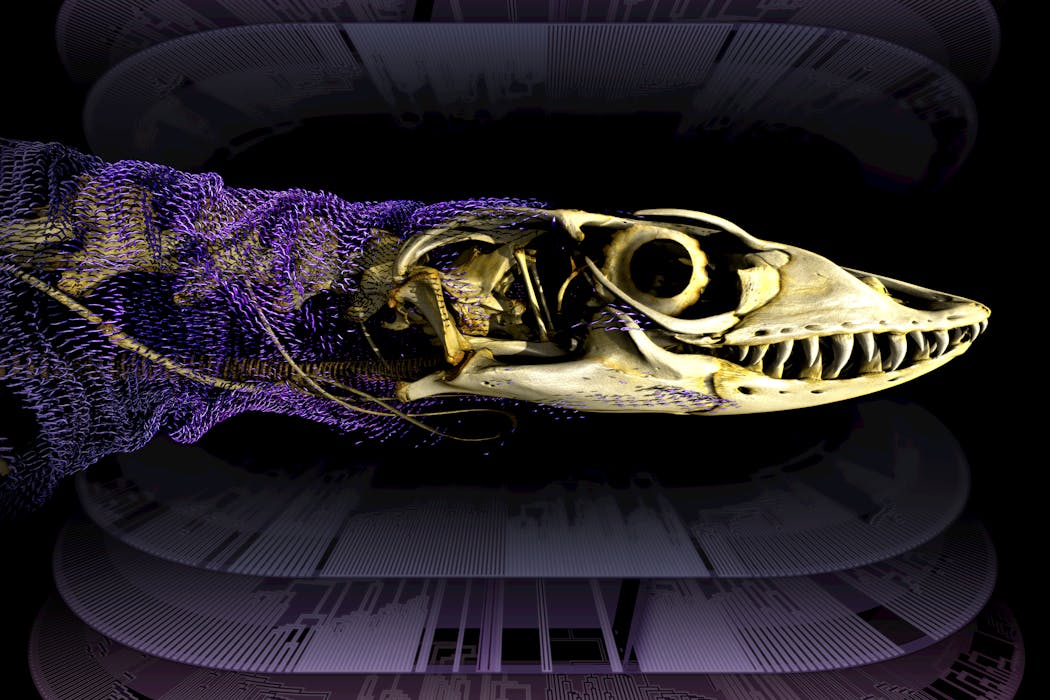
Rosenberg’s goanna (WAM R95408) with skin bones visible in purple.Roy Ebel
Our bones did not begin deep inside the body. They started in the skin, not long after the first complex animals took shape.
Ever since, skin bones have remained a recurring motif in evolution. Yet we still know surprisingly little about them. Why do they keep reappearing in groups as varied as turtles, crocodiles, lizards, snakes and even dinosaurs? And was there a single ancestor with skin bones that gave rise to them all?
In a new study published in the Biological Journal of the Linnean Society, we explored this question. We combined fossil evidence with modern computational tools to reconstruct 320 million years of reptile skin bone evolution.
What we found concludes a centuries-long debate: skin bones have indeed independently evolved across multiple lizard lineages. In the process, we also traced a unique evolutionary comeback in one of their most iconic groups – goannas.
This may seem counterintuitive, since vertebrates are literally defined by the fact that they have backbones. However, their bony internal skeleton didn’t evolve until 50 million years later.
Throughout evolutionary history, the skin’s ability to form bony tissue has resurfaced again and again. Fish scales are one example.
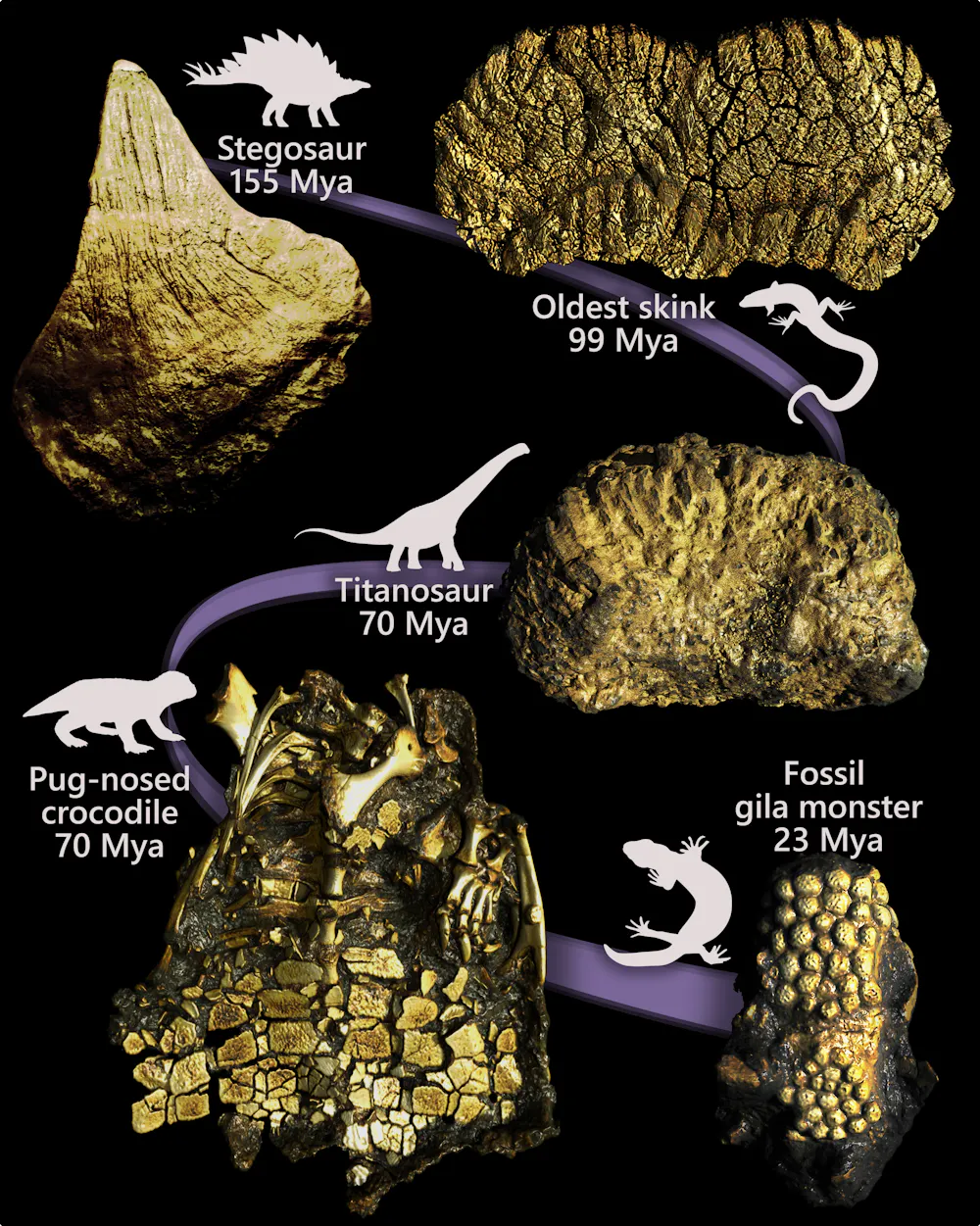
The fossil record reveals a rich diversity of bony armour plates. Stegosaurus dorsal plate by Tim
Evanson (2013) via Wikimedia Commons. CT data provided by Joseph Groenke (2025, UA 8679), Edward Stanley (2024, GRS 51036), Matthew Colbert and Jessie Maisano (2019, TMM 45888-1), and Jessie Maisano and Richard Ketcham (1999, TMM 40635-230), via MorphoSource and DigiMorph.
Another example is osteoderms – the skin bones of land-dwelling animals. After they left the water in the distant past, osteoderms may have helped animals adapt to terrestrial life.
Beyond that, the picture becomes less clear. Osteoderms vanished in most lineages, yet they kept reappearing, especially in reptiles. To understand how this happened, we needed to piece together a complex evolutionary puzzle.
A story told by bones
Imagine arriving at the scene of a bank robbery long after it happened. There’s no perfect witness. You speak to dozens of people – one saw the getaway car, another noticed the robber’s jacket. Someone else heard the alarm.
Each story is incomplete, and some even contradict one another. But as you collect more accounts, certain details begin to align. Eventually, a coherent picture emerges.
That is how we approached the mystery of skin bones in reptiles. Our witnesses were 643 living and extinct species. Each was related to the others in some way and offered a unique perspective. We kept investigating until their stories began to converge.
While skin bone plates are well studied in crocodylians (shown here in a gharial, in purple), their presence in lizards and snakes has long remained poorly understood. CT data provided by Jaimi Gray (2022, UF 33421) via MorphoSource.
We found that most lizards first evolved osteoderms during the Late Jurassic and Early Cretaceous, more than 100 million years ago. At that time, some of the most iconic dinosaurs roamed the Earth, including the towering Brachiosaurus, the fierce Allosaurus, and the plate-backed Stegosaurus.
The climate and ecosystems were changing rapidly, creating new challenges and opportunities. Armour may have helped lizards survive predators, cope with harsh environments, or move into new habitats.
After those early bursts of osteoderm evolution, the pace slowed, and most groups have held onto their skin bones ever since.
With one major exception.
The goanna comeback
The ancestors of monitor lizards, also known in Australia as goannas, lost osteoderms entirely – likely because their active lifestyle and efficient bodies functioned better without the additional weight.
But when their descendants reached Australia about 20 million years ago, something remarkable happened: they grew them back.
We can pinpoint this re-evolution to the Miocene period, when Australia’s climate was becoming drier. Skin bones may have helped reduce water loss and likely offered protection in open, arid landscapes.
Strikingly, goannas are the only known lizard lineage to reacquire osteoderms after losing them. This challenges Dollo’s law, which holds that once a complex trait disappears, it cannot re-evolve.
Although they look similar, the shingleback lizard (top) and the beaded lizard (bottom) did not inherit their striking bony skin armour (purple) from a shared ancestor. CT data provided by Edward Stanley (2018, 2022, UF 87304, UF 153328) via MorphoSource.
Settling a century-old debate
Early in the 20th century, researchers assumed lizards inherited osteoderms from a common ancestor.
Later that view gave way to the idea that these bone plates evolved independently between select groups. Debates about the underlying evolutionary mechanisms followed, even at the molecular level, but these discussions raced ahead without anchoring the origin of osteoderms in a clear evolutionary timeline leading to today’s reptiles.
Our study provides this foundation, and we’re proud that it’s been published in the same journal in which Charles Darwin first shared his groundbreaking ideas. In many ways, our work is a synthesis of past and present.
Fossil evidence helped us resolve a longstanding question, but only modern computing made it possible to narrow thousands of evolutionary scenarios, each informed by trait data for hundreds of species, into a single, coherent story.
Including these glass lizards, several distantly related ‘worm lizards’ have skin bone plates covering their bodies. We now know these evolved independently. CT data provided by Sydney Decker (2025, CMC 27120, OSUM R685) via MorphoSource.
The evidence is clear: osteoderms evolved multiple times, independently, across different lizard lineages over hundreds of millions of years. Now that we know this, scientists will be able to investigate the genetic and developmental mechanisms behind them.
Among lizards, goannas stand out as the only lineage known to have lost this armour, only to regain it in a remarkable evolutionary twist. This pattern fits seamlessly among other evolutionary oddities found in Australia, where marsupials reign and mammals lay eggs.
It also shows that evolution rarely follows a straight path, instead meandering through the ever-changing conditions on our planet.
Roy Ebel receives a Higher Degree Research stipend and scholarship through the Australian Government Research Training Program.
Firearms Safety Authority executive director Angela BrazierRNZ / Anneke Smith
The executive director of the Firearms Safety Authority says she believes she’s been “targeted” by police leadership, including the police commissioner, and says her reputation is now “shit”.
In an exclusive interview with RNZ, Angela Brazier says she’s “pissed off” with police for not publicly backing her what she has labelled as “unsubstantiated” allegations against her.
She also says the police watchdog’s report into how police handled allegations of sexual offending by former deputy commissioner Jevon McSkimming was “inaccurate” and says she did nothing wrong.
Her decision to retire was brought on by a combination of different things, including how she had been treated by police, Brazier says.
The Government announced in November that a new specialist firearms regulatory agency will be created, replacing the FSA. It will be headed by an independent chief executive appointed by the governor-general who would report solely to the firearms minister.
She said she would not be applying for the new role; “My reputation is shit now”, something she holds police “wholly” responsible for.
“I don’t think I’ve been supported well by police, but I’m a big girl, and, you know, I put up with that for a year. And when I look at what the future holds, you know, my role will be disestablished. And do I want to apply for the statutory Officer role when it could mean undoing what I’ve just been three years of my life doing? You know, the answer to that would be no.”
Brazier is not ruling out taking an “employment complaint” against police.
“I’m not litigious. I could have gone for and, you know, still might do, haven’t ruled it out because I know that I’d have grounds, but I don’t want to have that hanging over me. I just want to get on with my life and enjoy my retirement,” she said.
“Talking to you now is about me… giving you my perspective on what has happened, and I can categorically tell you that I’ve done nothing wrong. I haven’t, you know, there’s no bullying, there’s no financial mismanagement. I got a good performance review, really good from Tania [Former Deputy Police Commissioner Tania Kura] before she left, she was my supervisor after Jevon was stood down. So you know, it’s just been a whole lot of dust kicked up for no good reason, which has impacted on my health.”
Former deputy commissioner Jevon McSkimmingRNZ / Mark Papalii
The IPCA report ‘Ms G’
RNZ earlier revealed the identities of some of the senior leaders referred to in the IPCA’s 135-page report. Among them was Ms G, who is Brazier.
The IPCA said Brazier told them she had known McSkimming for about 20 years.
The Authority also said that when the Public Service Commission approached her for a reference check on McSkimming in the appointment process for interim commissioner in October last year she knew McSkimming had an affair, that he was being “harassed” with emails from the woman and that Kura had informed McSkimming that she had to investigate him as part of the police response.
However, Brazier told the PSC she had nothing relevant to disclose. She told the IPCA she did not think her knowledge was relevant to PSC’s question.
“Ms G’s disclosure was inadequate in light of her knowledge at the time,” the IPCA said.
Asked what connection the IPCA report had on her decision to retire, Brazier said “nothing”.
“Other than it’s annoying because the IPCA report is inaccurate and I provided the IPCA with my feedback at the time, and they didn’t correct it, so they had worked on an assumption that I knew more than I did. So that’s my position on it. I’ve done nothing wrong, and yet they’ve interpreted that I hadn’t given an accurate recount of Jevon in my reference checking that the PSC did at the time for the interim commissioner role that Jevon was asked to do.”
Former Deputy Police Commissioner Tania KuraRNZ / Anusha Bradly
Brazier said the PSC rang her and asked a series of questions including whether there was anything that would prevent McSkimming from doing the job.
“And from my perspective, there was nothing that would prevent him from doing the job, he’d acted as the commissioner on many occasions and therefore was able to do the job…,” she said.
“I didn’t know he was under police investigation. I had Jevon’s perspective, he was my boss.”
Brazier told RNZ she knew McSkimming had an affair with a woman and that he was allegedly being harassed by the woman with emails. She did not know the affair was with a staff member. She says McSkimming had told her “everybody who needed to know, knew”.
“What I knew I knew from Jevon, not from Tania or police. And that was that… Jevon spoke to the then-commissioner Andy Coster… and then Andy spoke to Tania and wanted Ms Z to be assessed by the fixated threat unit.
“And that as part of that process that Tania would need to understand his emails, what the correspondence had been between both sides. Now when I spoke to the IPCA and they asked me… I used the word investigate, but actually it wasn’t a police investigation. It was as him as the victim, as opposed to the perpetrator. So it was my bad for using the word investigate.”
Brazier maintains that the knowledge of there being an affair was not something she thought worth disclosing to the PSC.
“It was eight years prior and he was pretty open about it, so it didn’t feel to me like it was something that would be held or could be held against him and would prevent him from being able to do the job.
“And that was the main point was, could he do the job? Was there anything that would prevent him from doing the job? So, you know, if you eliminated everybody that’s had an affair, there wouldn’t be very many people left in the public sector… certainly it’s not something that I believe would have prevented him from being able to do the job at that time, with what I knew then.”
She said if she had known more information such as the woman’s age (Ms Z was about 20 years younger than McSkimming when the affair began), and that she had worked at police then “I probably would have had a different perspective”.
She did not believe McSkimming misled her.
“He just didn’t give me all the facts, but likewise, I didn’t ask either. It’s a personal thing, and he declared that to me at the point when he became my boss. But it wasn’t in a way that was I needed to cover his back. It was, you know, ‘I’m not perfect. I’ve made mistakes, and I’m not proud of it, but everyone who needs to know knows’.”
Brazier thought the IPCA report was “unfair”.
“It did say there wasn’t corruption or collusion, but actually people were just trying to do their best with the information that they had at the time. But the way that the IPCA report is written is as if everybody were colluding, and that Ms Z was, you know, hard done by in terms of how she was treated and that she wasn’t listened to.
“But actually… that side of the story hasn’t come out as far as I’m aware.”
Asked whether she believed people were too trusting of McSkimming, Brazier said given what was known now she would say yes.
“Everybody can be wise in hindsight… I’d worked with him for 20 years, so I thought I had a pretty good handle on the kind of guy that he was, but obviously I didn’t, and I wasn’t the only person.”
‘I’ve been pissed off by police’
Brazier’s retirement also followed a “health check” of the police agency following concerns over its workplace culture, including intimate relationships as well as financial practices.
The review came after an “internal employment process” at the firearms regulator which was established following the Christchurch mosque attacks in 2019.
Acting Deputy Commissioner Mike JohnsonNathan Mckinnon
Brazier told RNZ all of the allegations made against her had been ruled unsubstantiated.
“Now I’ve been pissed off by police because they haven’t come out and said that the allegations weren’t upheld, and I believe that they should have done that, because that would have taken the smoke out of it, the heat out of it right? Because there’s nothing. There’s nothing to see here. I’ve done nothing wrong.”
She said she had asked police to publicly state that the allegations had not been upheld, but police would not, and claimed she was told “that that’s the way they always deal with media issues”.
“They don’t go back after there’s been an investigation and say, ‘Oh, it’s all good. Nothing to see here’. They just don’t do it. So they weren’t going to make an exception for me. Otherwise they’d have to make exceptions for everybody, the same as the health check report completely clear, nothing, nothing to see there at all.
“But that’s been a year of my life that’s been tied up in various investigations which came to nothing because there was nothing, and then the IPCA report.”
Brazier said she feels she had been treated “very poorly” by police in the last year.
“Because I haven’t been supported. I’ve had, it’s going to be 22 years in March. I’ve never had an employment issue. I’ve never had a complaint, a PG [personal grievance] in 22 years and the other 20 years I worked before that, which wasn’t for police.
“All of this has happened since the change in commissioner. So not an issue, a single issue before that. And then since we’ve got a new commissioner, he’s basically swept the floor. You’ll know all the people who have left, and I’m probably, I’ve been the last one hanging on that was under Coster’s reign and Jevon’s leadership. So it’s just it felt to me like I’ve been targeted.”
Brazier said Chambers’ leadership style was “different than many others”.
“There’s not a values alignment for me.”
Acting Deputy Commissioner Mike Johnson said the IPCA is an independent organisation which has delivered its findings.
“Police will not be responding further.”
In response to questions from RNZ, an IPCA spokesperson said the report “accurately sets out the evidence Ms Brazier provided to us and the conclusions we reached from that evidence”.
Sign up for Ngā Pitopito Kōrero, a daily newsletter curated by our editors and delivered straight to your inbox every weekday.
– Published by EveningReport.nz and AsiaPacificReport.nz, see: MIL OSI in partnership with Radio New Zealand
A large black coral believed to be centuries old is one of the largest ever found in the waters of New Zealand, researchers say.
The coral, measured at 4m high and 4.5m wide, was found in the waters of Fiordland.
It was likely to be 300-400 years old.
Victoria University marine biologist Professor James Bell said the coral was “absolutely huge”.
“It’s by far the largest black coral I’ve seen in my 25 years as a marine biologist. Most black corals we come across when we’re diving are small, with the bigger ones usually less than two to three metres tall, so finding this one was really cool.”
The discovery was considered significant as large corals provided vital breeding stock for the species, which were slow to grow.
“Pinpointing where large corals occur means we can better protect them by letting people know where not to anchor their boats or drop pots,” Bell said.
Despite its name, the black coral was white in colour and only its skeleton was black.
[embedded content]
Department of Conversation (DOC) staff were also on the dive when the coral was found.
Senior biodiversity ranger Richard Kinsey said seeing the large coral looming out of the darkness was “pretty special”.
“I’ve been a marine ranger in Fiordland for nearly 20 years and it’s rare to see a coral so big. It’s easily the largest one I can remember seeing.”
Victoria University researchers were working alongside DOC and the Fiordland Marine Guardians to study and map the distribution of protected coral species in the fiords.
“We’d love to receive reports from anyone who knows of particularly large black corals that are greater than four metres so we can map their distribution and find out how common such large coral colonies are throughout Fiordland,” Bell said.
Under the Wildlife Act the coral was listed as a protected species, meaning it was illegal to deliberately collect or cause damage to it.
Police say they will not be charging three people arrested for fighting in a public place during a solidarity for Venezuela protest in Wellington last week.
Former mayoral hopeful Graham Bloxham was arrested alongside two other men following a scuffle during the protest in the central city shortly after midday on Friday.
RNZ footage showed police struggling to restrain the agitated Bloxham as he attempted to grab a grinning protester who, along with another, had taken him to the ground following a struggle.
Graham Bloxham was arrested alongside two other men following a scuffle during the protest.RNZ / Mark Papalii
Bloxham could be heard repeatedly demanding “go get my hat” to people at the scene as the men were restrained and handcuffed against a wall.
Bloxham runs the Facebook page WellingtonLive and has faced controversy in the past after being arrested for failing to stop for police and being told by the Employment Relations Authority to pay a former employee $30,000.
His charges for failing to stop for police were dismissed.
Last year, he also posted on social media that he was the victim of an unprovoked assault in Oriental Bay.
A police spokesperson said the men arrested on Friday were released without charge later that day, and no charges were expected to follow the altercation.
Sign up for Ngā Pitopito Kōrero, a daily newsletter curated by our editors and delivered straight to your inbox every weekday.
– Published by EveningReport.nz and AsiaPacificReport.nz, see: MIL OSI in partnership with Radio New Zealand
Police are investigating whether three bar roberies in the area were linked. (File photo)RNZ / REECE BAKER
A police investigation into whether a spate of aggravated robberies at Hutt Valley bars are linked is underway.
Police said the most recent bar targeted was on King St in Upper Hutt on Saturday.
Other robberies occurred at a bar on Evans St in Stokes Valley on New Years Day and on Ward St in Upper Hutt earlier in December.
Detective Senior Sergeant Martin Todd of Hutt Valley Police said they were trying to figure out if the robberies were linked.
“There are some similarities and the investigation team is working to establish if these have all been committed by the same offender or offenders.”
Police appeal for information
Police said the most recent robbery occurred about 1.30am on Saturday when two people brandishing weapons approached bar staff.
“After making various demands the offenders fled in a vehicle belonging to a staff member,” Todd said.
The vehicle was found abandoned on Sinclair St in Upper Hutt.
Todd said one man was wearing a black beanie, a dark coloured sweatshirt and long pants, and had a blue cloth over his face.
Another man wore a beanie, a ‘Nike Academy’ sweatshirt with distinctive white stripes and dark coloured long pants, and also had a cloth over his face.
Police had some CCTV, Todd said, but were appealing for any members of the public with information or footage to contact them.
Police were particularly interested in any footage that shows the movement of people or vehicles near King and Sinclair Streets between 11pm on Friday and 2.30 am on Saturday.
Police to speak to bar owners
Police said they would be contacting bar owners in the Hutt Valley and wider Wellington District this week to offer support and talk to them about staff safety procedures.
If anyone was confronted by a person with a weapon, they said they should remain calm and do whatever was needed to avoid things escalating.
Sign up for Ngā Pitopito Kōrero, a daily newsletter curated by our editors and delivered straight to your inbox every weekday.
– Published by EveningReport.nz and AsiaPacificReport.nz, see: MIL OSI in partnership with Radio New Zealand
US President Donald Trump.AFP / Getty Images North America / Kevin Dietsch
US President Donald Trump has announced a 25 percent on any country that does business with the Islamic Republic of Iran.
“Effective immediately, any Country doing business with the Islamic Republic of Iran will pay a Tariff of 25% on any and all business being done with the United States of America. This Order is final and conclusive,” he said on X.
“Effective immediately, any Country doing business with the Islamic Republic of Iran will pay a Tariff of 25% on any and all business being done with the United States of America. This Order is final and conclusive….” – PRESIDENT DONALD J. TRUMP pic.twitter.com/UQ1ylPezs9
“Effective immediately, any Country doing business with the Islamic Republic of Iran will pay a Tariff of 25% on any and all business being done with the United States of America. This Order is final and conclusive….” – PRESIDENT DONALD J. TRUMP pic.twitter.com/UQ1ylPezs9
When I first moved back to Australia after years living in Spain, I brought home an unexpected skill: how to hang out with friends without spending money.
Cash was tight while abroad, and most of my circle couldn’t afford regular fancy dinners or big nights out, so we learnt to get creative — and often had more fun.
Here’s how I’ve kept those low-cost, high-fun habits alive for years, even after returning home to a city where socialising often seems to mean shelling out.
A person has been arrested at a protest outside the Iranian Embassy in Wellington.
About 40 people have been chanting, calling for the removal of the Iranian regime and for the Crown Prince Reze Pahlavi to be installed as Shah.
RNZ/Mark Papalii
Many there say they have family back in Iran who they haven’t heard from in four or five days since the government shut down internet and phone services.
One man climbed up to erect a pre-revolution Iranian flag, but this was removed by someone from inside the embassy.
RNZ/Mark Papalii
At least 10 police have been keeping access to the road open on the narrow road in Wellington’s Hataitai as the protest continues.
The crowd has a loudhailer and has been chanting since about 10am.
RNZ/Mark Papalii
More to come…
Sign up for Ngā Pitopito Kōrero, a daily newsletter curated by our editors and delivered straight to your inbox every weekday.
– Published by EveningReport.nz and AsiaPacificReport.nz, see: MIL OSI in partnership with Radio New Zealand
Each year the games industry reaches new highs and 2026 is no exception. With the release of long-awaited sequels like GTA VI and new exciting titles like Marvels Wolverine, gamers are spoiled for choice this year.
While gamers might once have fought battles in far off galaxies or gone head-to-head against marauding hordes of zombies, a new generation of gamer is quite content to drive a truck through Europe or run a bookshop.
Weak sales were still cited as the chief constraint on businesses.RNZ / Rebekah Parsons-King
Business confidence improves to highest level since March 2014
Net 39 percent expect economic improvement vs +17 pct in September survey
Businesses report better demand, plan to invest and hire more.
Inflation pressures contained around 3 pct, expected to gradually decline
Survey suggests annual growth around 1.4 pct, RBNZ to hold interest rates steady
Business sentiment rebounded strongly at the end of last year, with firms reporting improved sales and planning to hire staff and increase investment.
The Institute of Economic Research’s (NZIER) closely followed Quarterly Business Survey for the three months ended December showed a net 39 percent of respondents believed economic conditions would get better in coming months, compared to a net 17 percent in the December survey.
“There is a turnaround in demand, with lower interest rates finally gaining traction,” NZIER principal economist Christina Leung said.
Weak sales were still cited as the chief constraint on businesses, but the pressures were easing, with only 3 percent reporting lower sales in the quarter.
Expectations were for improved growth in the coming quarter, with a net 23 percent forecasting a lift in their own business – up from 10 percent in the previous quarter.
Leung said businesses were increasingly feeling confident about investing in plants and machinery and hiring more stuff.
NZIER principal economist Christina Leung.ABC News
“Firms increased staff numbers and are feeling more positive about hiring in the next quarter.”
However, she said there were signs that firms were finding it more difficult to find skilled staff in the manufacturing and construction sectors, which could point to future labour shortages.
She said inflation pressures were contained with fewer firms expecting higher costs and also fewer expecting to have to raise their prices, which indicated inflation gradually falling back to the middle of the Reserve Bank’s 1-3 percent target band.
Leung said the survey indicated the economy was recovering but the increase in growth was likely to be slower than previously thought, with annual growth about 1.4 percent.
“With demand starting to recover but inflation remaining contained, we expect no further OCR cuts in this monetary policy cycle.”
“We forecast the OCR to trough at 2.25 percent until the Reserve Bank.. commences increasing the OCR in the second half of 2026,” Leung said.
The manufacturing sector was the most optimistic of respondents, followed by service industries.
Singer, songwriter and composer Bret McKenzie will perform two shows in April in support of his latest album, Freak Out City.
The Flight of the Conchords star will put on one set at Meow Nui in Wellington on 2 April followed by an Auckland show at The Hollywood on 5 April.
McKenzie will perform songs from his latest album as well as favourites from across his career.
Following his 2022 debut solo album Songs Without Jokes, he released Freak Out City in mid-2025.
Freak Out City was recorded in both Los Angeles – with a session band made up of friends McKenzie met working on films – and New Zealand, with his local eight-piece band The State Highway Wonders.
Like many songs on the new album, McKenzie wrote ‘All I Need’ – a love song about his wife, Hannah – at night after his kids were asleep, he told RNZ’s Saturday Morning ahead of the album’s release last year.
“It’s funny. We’ve been together a long time, so like anyone who’s been married a long time, you have days where you love each other more than others. And that’s one I wrote on one of those really good days.
“I sat down at the piano and the chorus just sort of fell out, just dropped down… The flow sort of wrote itself.”
Tickets go on sale 16 January at 9am via ticketek.co.nz.
– Published by EveningReport.nz and AsiaPacificReport.nz, see: MIL OSI in partnership with Radio New Zealand
The method has had promising outcomes overseas.AFP / Thom Leach / Science Photo Library
The founder of the Bergen four-day treatment for Obsessive Compulsive Disorder (OCD) says the intensive process achieves better results than more drawn-out treatments.
The method has had promising outcomes overseas and is now being trialled here by a group of 17 New Zealanders aged 18- to 25-years-old.
Dr Bjarne Hansen told RNZ the condition was characterised by intrusive thoughts of dangers or bad things happening that sufferers must attempt to control.
“You’re afraid of your own thoughts and end up in endless efforts to try to control your thoughts and keep people safe,” Hansen said.
Hansen said four-year follow-ups with patients who had used the treatment overseas had shown up to 70 percent moving on with no significant symptoms.
He said treating people with the mental disorder when they were young reduced the prolonged impact of the condition on sufferers as well as health systems.
“It’s highly stable and people would most often suffer this 10, 20, 30 years later – if they don’t get the right kind of treatment – so it makes sense to start with young people,” Hansen said.
It’s hoped the process could be a game-changer for the nearly 100,000 New Zealanders who suffer from OCD.
Hansen said focusing the treatment over a continuous four-day program allowed patients a better opportunity to disrupt the disorder.
“If you have 45 minutes once a week – even for years – you will not have enough time to really recognise and break this pattern so having full four days is actually giving you more time to recognise, to change and get the support you need to change this pattern,” Hansen said.
Hansen said he was buoyed by the support of medical research charity Open Closed Doors and the interest shown in the treatment in New Zealand.
“We have had so many excellent collaborators in New Zealand. Yesterday we had a full day of training here and the opposition spokesperson for mental health, Ingrid Leary did participate the full day – being so interested and supportive of this work.
“So I really think that – with the people you have here – all the patients, the professionals, politicians being involved I think [New Zealand] can really make this happen and make this available to more people,” Hansen said.
Co-founder of Open Closed Doors, Megan Jones said her organisation had been looking at different ways to treat OCD.
She said five experts had travelled to New Zealand to train clinicians here while another five psychologists had also travelled to Singapore to train in the process.
“At present, many people living with this condition are struggling to get any treatment at all and the average wait time for diagnosis here is about seven years. This is going to make a huge impact,” Jones said.
Sign up for Ngā Pitopito Kōrero, a daily newsletter curated by our editors and delivered straight to your inbox every weekday.
– Published by EveningReport.nz and AsiaPacificReport.nz, see: MIL OSI in partnership with Radio New Zealand
Which has better data security – Manage My Health or the KFC app?RNZ / Finn Blackwell / 123rf
Colonel Sanders has better web security than many digital health providers, an IT expert has claimed, saying the government is failing to enforce what minimum standards it has.
Both services are privately owned. Nearly 2 million people are registered on Manage My Health, mostly via GP practices, while Canopy is the largest private medical oncology provider in the country. About 120,000 Manage My Health users’ data was accessed by hackers, most of them based in Northland.
Callum McMenamin, a web standards consultant who has worked on government website security, told Morning Report on Tuesday he called out Manage My Health’s lax security six months ago.
“The really big problem is no one in the government is checking if these private companies are adhering to digital security standards. The government has created a health information security framework, its standards for health information security, but the government is not checking if those standards are being properly implemented within private companies like Manage My Health or any of the other patient portals that we use.”
Callum McMenamin.RNZ / Samuel Rillstone
He said there should be an “enforceable standard” for providers, who should be penalised if they fail to meet it, else people will “lose trust in the digital health system”.
“There needs to be some kind of approach where maybe private companies are just not allowed to supply digital health systems if they’re not secure enough. Or maybe there should be fines, or maybe they should be asked to make immediate changes to their systems if any issues are found.”
Whether a government-provided service was any less penetrable would depend on the level of security it offered, McMenamin said.
“What it really comes down to is standards – technical standards and how well they are monitored and enforced. So you could make the private sector very secure if those standards are properly implemented and if those standards are of very high quality.
“So I think we probably can have private companies in this sector, but they just need to be properly regulated.”
Manage My Health does offer two-factor authentication – which requires an additional piece of evidence the user says who they are, for example a fingerprint, SMS response code or a third party authentication app. Investigations have found a lack of two- or multi-factor authentication has resulted in other local cybersecurity breaches.
“Some of the public comments from the chief executive of Manage My Health said that the hacker logged in with a valid user password – two-factor authentication is a system that could potentially stop those kinds of attacks from working,” McMenamin said.
“So multi-factor authentication really needs to be mandatory across all accounts for it to be properly effective.
“I noticed that KFC where you order your chicken has mandatory two-factor authentication, but Manage My Health does not have it. So for some reason Colonel Sanders seems to be more secure than our digital health providers.
“[It is] pretty much every service uses it now – Facebook, Instagram, your Apple ID is probably protected by it as well, so it’s just a ubiquitous technology because in the modern age, with all of the information that we upload online, two-factor authentication really is absolutely mandatory. It’s just too risky not to.”
Health providers were finger-lickin’ good targets for hackers, he said, because the data can be used for extortion attempts.
“It does seem that many health organisations have very poor IT security controls in place, so they’re very easy targets. They’re just sitting ducks.”
RNZ has contacted Health NZ and Manage My Health for a response to McMenamin’s claims.
Ardie Savea sporting a nasty eye injury in Japan.tiktok
All Black Ardie Savea has suffered a gruesome eye injury playing in Japan.
The superstar flanker posted a video on TikTok which shows several stitches and heavy bruising above his right eye.
Savea has a history of eye issues.
During the 2019 Rugby World Cup, he experimented with protective goggles due to deteriorating vision in his left eye.
He said the move was to avoid incident with his remaining good eye, however the goggles were abandoned after one game.
He spoke to RNZ in 2019 about having poor vision in his left eye.
“Everything’s kind of blurry. I’ve got my little girl and hopefully future kids and a bigger family, so I want to be able to see. I’m just thinking of the bigger picture and trying to protect my eyes.”
Savea sustained the injury during the Kobe Steelers’ 22-20 win over Tokyo Sungoliath.
Savea set up the match winner for Kobe with a superb offload for Kazuma Ueda to score the corner.
Former All Black Brodie Retalick also got on the scoresheet for Kobe.
Sign up for Ngā Pitopito Kōrero, a daily newsletter curated by our editors and delivered straight to your inbox every weekday.
– Published by EveningReport.nz and AsiaPacificReport.nz, see: MIL OSI in partnership with Radio New Zealand
Shoppers at Sylvia Park, Auckland, on Boxing Day 2025.Ke-Xin Li / RNZ
It was a quiet end to December for many retailers.
Data from Worldline shows that spending across its payment network through December was below the levels recorded a year earlier.
Consumer spending processed through all core retail merchants in 2025 reached $4.702 billion, which was down -0.2 percent on December 2024.
The biggest decline was in Wellington, which was down 3.7 percent. Bay of Plenty was down 2.6 percent while Whanganui was up 4.1 percent.
Chief sales officer Bruce Proffit said the data showed a tough retailing environment over the last month of the year.
“There was more spending at food and liquor stores in Worldline’s network across December, which is consistent with generally higher food prices and people prioritising the essentials in their budgets,” he said.
Food and liquor merchant spending was up 4 percent year-on-year in December, similar to the 4.4 percent food price inflation rate reported in November.
Spending across the other retailers was down 4.4 percent.
Proffit said there was more spending online.
“The online spending processed through Worldline was up +18.9 percent in December. This pattern is likely to be repeated amongst other online payments systems, judging by earlier reports and international patterns.”
Boxing Day non-food shopping reached $51m, down 12.4 percent on Boxing Day 2024.
“Boxing Day was generally a busier day for clothing merchants, but for most other non-food stores in our network, their busiest days were still in the two days prior to Christmas Day,” Proffit said.
He said it was clear that Boxing Day spending was not as high as Black Friday, when sales hit $55.6m.
Carolyn Young, chief executive at Retail NZ, said it showed how tough it was to be a retailer.
She said recent announcements of the planned closure of EB Games and the liquidation of the Yoyoso group highlighted this.
“The retail sector has been under significant strain over the last two to three years, with businesses advising that they have been absorbing as many cost increases as they can, working harder than ever as margins are being squeezed, which have created significant challenges for businesses to remain open. We will be hoping for a brighter economy and positive consumer confidence in 2026.”
She said shoppers could help by ensuring they made their purchases with local retailers.
“Either in New Zealand or online but making sure they are New Zealand stores you’re buying from that keeps the economy going in New Zealand. That’s critically important.”
She said growth in the tourism sector would also help to get international money into New Zealand people buying and spending.
“We need further economic growth and job growth. We’ve been in a period of unemployment, we’ve seen unemployment rising, people are still concerned about job security.
“So until we’ve got greater confidence in our job position and you know it’s going to be a challenge for individuals to feel confident about being able to spend on something rather than putting it aside in case they don’t have a job. There’s still more to do in terms of the economy.”
Protesters defied a savage regime crackdown to take to the streets to demand change.X
Iranians have shown a willingness to pay a devastating price for political change, as protest has consistently been met by the Islamic Republic with violence and mass killing. The death toll since Iranians took to the streets on December 28 has reportedly passed 500, with more than 10,000 arrested. Incoming reports put the casualty count much higher.
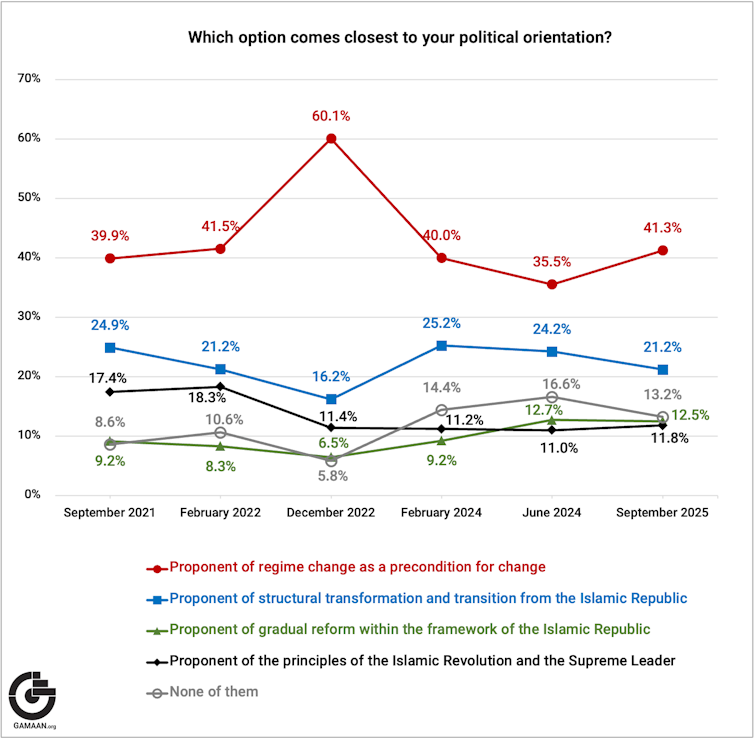
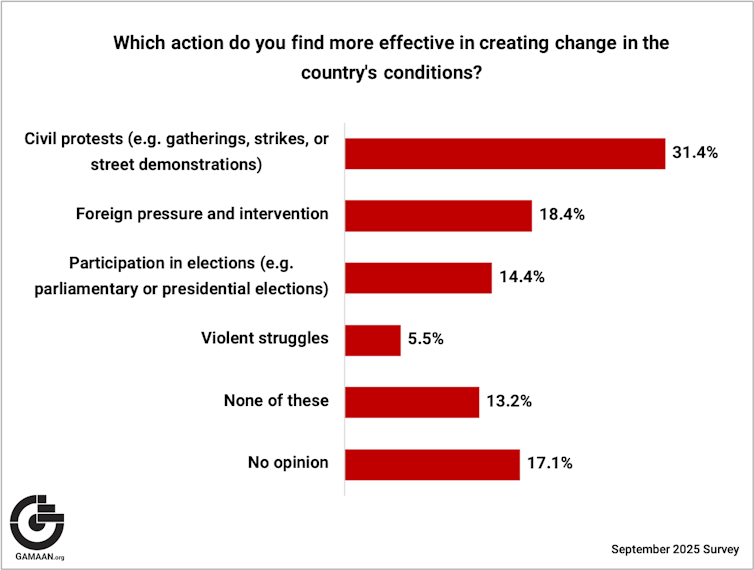
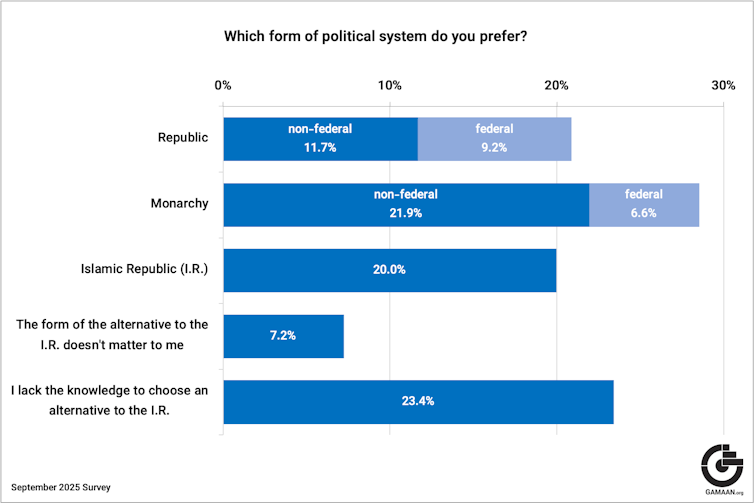
A clear majority of Iranians do not want the theocracy that came to power with the 1979 revolution. They want a secular democracy. But what does public opinion tell us about what that should entail and how this change should be achieved?
Measuring public opinion in one of the world’s most repressive countries is not an easy matter. Conventional surveys conducted through (landline) phones or by face-to-face interviews tend to reflect an implausibly homogeneous Islamic and pro-regime society. By contrast, Gamaan — the Group for Analysing and Measuring Attitudes in Iran — conducts surveys anonymously through the internet.
Our research is based on representative samples of anything from tens of thousands to over 100,000 respondents. In 2020 a Gamaan survey revealed a diverse, secularising and dissident society, in which around 70% rejected the compulsory hijab. These numbers materialised in the streets in 2022, during the “woman life freedom” protests (find out more about sample characteristics, weighting information, and external benchmark tests at gamaan.org and this Wapor methodology webinar).
To improve randomisation, we collaborate with Psiphon VPN, which is widely used across Iran. By 2025, an estimated 90% of Iranian internet users relied on VPNs to access blocked platforms, including basic messaging apps such as Whatsapp.
This level of coverage enabled what we call VPN sampling, yielding large, socially diverse samples under conditions of safety and anonymity. Combined with scale, anonymity offers reliable insight into what Iranians really want. The latest survey on the 12-day war with Israel, taken in September 2025, secured more than 30,000 responses from inside the country.
Why protests, again? What is different?
Our surveys consistently show that the majority shares a consensus on what it does not want. Across provinces, rural and urban areas, age groups and gender, roughly 70–80% say they would not vote for the Islamic Republic.
In all survey waves, support for regime change as a precondition for meaningful progress has been the most popular position. This support previously spiked during the “woman life freedom” protests. We believe we are currently witnessing another spike, given the increase observed after the 12-day war.
Results from GAMAAN’s surveys conducted between 2021 and 2025. CC BY-ND
Iranians believe that protests, foreign pressure and intervention are more likely to bring about political change than elections and reforms. They were thus emboldened when, for the first time, a US president threatened intervention should protesters be killed. This came days after the abduction by the US military of the Venezuelan president, Nicolás Maduro, a key ally of the Islamic Republic.
Results from GAMAAN’s 2025 survey on the 12-Day War. CC BY-ND
The popularity of Reza Pahlavi, the former crown prince in exile who represents inherited monarchical nationalism, can be understood in light of this Iran-first mentality. Pahlavi’s social base remained stable in Gamaan’s surveys between 2022 and 2025. Roughly one-third are strong supporters and another third strongly oppose him. The remaining segment somewhat agrees or disagrees, or expresses no opinion.
The current surge in pro-Pahlavi slogans suggests that his popularity is attracting segments of the latter moderate or undecided population. But our surveys found that his popularity is unevenly distributed. It is lower in provinces with higher ethnic minority populations, such as the Kurds, Azeri Turks and Baluch.
Results from GAMAAN’s 2025 survey on the 12-day war. CC BY-ND
Although there is no consensus on the form or structure of an alternative political system, it is noteworthy that in 2025 there was, for the first time, a marked increase in support for monarchy. Given the significant size of those who do not voice a strong opinion on the alternative, any group that can successfully topple the Islamic Republic will have an advantage in convincing the majority to adopt its proposed model.
Results from GAMAAN’s 2025 survey on the 12-day war. CC BY-ND
Iranians overwhelmingly support a “democratic political system” – with 89% in favour. Support for political liberalism, however, is weaker. In 2024, 43% agreed with having “a strong leader who does not have to bother with parliament and elections”. This view is significantly higher among those without higher education – among monarchists, it is 49%.
These facts should not be lamented or mocked but understood, if the threat of a lack of liberalism is to be mitigated. While nationalism may generate the force of a revolutionary storm capable of toppling the regime, long-term stability, after the fall of the Islamic Republic, will also require an acceptance of Iran’s cultural and ideological diversity as permanent features of a truly free nation.
Ammar Maleki is the founder and director of non-profit GAMAAN. He was selected as World Association for Public Opinion Research’s national representative for Iran for the 2025–2027 term.
Pooyan Tamimi Arab receives funding from the Dutch Research Council for the project Iran’s Secular Shift (2025-2030; VI.Vidi.231F.020). He is a board member of the non-profit research institute GAMAAN.
Jessie Buckey as Agnes and Paul Mescal as Shakespeare in the film adaptation of Maggie O’Farrell’s Hamnet.Universal Pictures Australia
In her eighth novel Hamnet, Maggie O’Farrell imagines the short life and tragic death of Shakespeare’s only son, aged 11, in 1596. Although it is not known how Hamnet died, O’Farrell attributes his death to the plague. She creates a visceral and affecting portrait of his swift decline and the powerlessness of those around him, particularly his mother, to save him.
A critical and commercial success, the novel’s popularity was aided by its connection with Shakespeare, whose enduring reputation as a literary genius ensures that, as the scholar John Sutherland once asserted, “where there’s a Will there’s a payday”.
The death of Hamnet is one creative trigger for this bestselling novel, but is it the main source? And was Hamnet’s death really the source for Shakespeare’s Hamlet? With the film adaptation, co-authored by O’Farrell and director Chloé Zhao, arriving in Australian cinemas this month, it is timely to consider the broader influences on O’Farrell’s novel and Shakespeare’s play.
The inspirations are not singular in either case. Shakespeare was influenced by clear creative precursors, while O’Farrell’s depiction of maternal grief is haunted by her personal experience.
A rescued wife?
O’Farrell has repeatedly stated in interviews that she had two motivations for writing Hamnet: to “rescue” Shakespeare’s wife Anne Hathaway from negative representations in biographies of Shakespeare, and to “correct” what she perceives as the lack of acknowledgement of the significance of Hamnet’s death to Shakespeare’s art.
Her former concern manifests in her representation of Anne as a quietly wilful character, who engineers her husband’s escape from his overbearing father in Stratford to London, where his career can take flight. The novel’s third-person narrative is increasingly filtered through Anne’s perspective as the story progresses, placing her grief centre stage.
In a pointed intervention, O’Farrell names her “Agnes”. This is the name she is given in her father Richard Hathaway’s will, though the assertion that Agnes is her “true” name is problematic, due to a lack of other documentary sources and because spelling was variable at the time.
Renaming Anne is indicative of O’Farrell’s desire to offer a fresh vision, but this in itself is not a new project. Carol Anne Duffy’s poem Anne Hathaway (1999) and Germaine Greer’s speculative biography Shakespeare’s Wife (2007) are two of many earlier revisionist treatments. Katherine West Schiel’s Imagining Shakespeare’s Wife: The Afterlife of Anne Hathaway (2018) tracks the long history of this inventive impulse.
O’Farrell explicitly encourages readers to connect Hamnet and Hamlet through two historical notes at the front of the book. The first informs us that Hamlet was staged only four years after Hamnet’s death; the second cites Shakespeare scholar Stephen Greenblatt’s claim that Hamlet and Hamnet were interchangeable names in Stratford in the period.
These selective facts serve O’Farrell’s fiction well. But the view that Hamlet memorialises Hamnet is, as scholar James Shapiro argues, a myth. While the novel’s promise to deliver the “backstage” story of the creation of Hamlet is alluring, its imputation that Hamnet’s death was the primary inspiration for the writing of the play is countered by the historical evidence and the play itself.
Does Shakespeare’s son haunt Hamlet?
The opening of Hamnet echoes that of Hamlet. In the novel’s first scene, Hamnet explores an empty house. O’Farrell gives him an exquisitely physical existence: he jumps from the third step and hurts his knees, he notices the orange embers and spiralling smoke in the fireplace. He calls out, “Where is everyone?”
His reality is unstable, palpable and yet spectral, as though he were already dead. This impression is advanced when he spooks his grandfather, whose sight is ailing:
“Who’s there?” he cries. “Who is that?”
“It’s me.”
“Who?”
“Me.” Hamnet steps towards the narrow shaft of light slanting through the window. “Hamnet.”
The beginning of Shakespeare’s Hamlet is similarly disorienting:
BARNARDO: Who’s there?
FRANCISCO: Nay answer me. Stand and unfold yourself.
We taste the fearful vigilance of the guards on the battlements of Elsinore castle. About eighteen lines later, we find out why everyone is so jumpy. The newly arrived guard asks: “What, has this thing appeared again tonight?”
As in O’Farrell’s novel, we enter a destabilised reality, in which physical sensation, here the “bitter cold”, amplifies the existential dread caused, in this case, by the repeated appearance of a ghost.
The biographical connection between Hamnet and Hamlet is clinched in the novel’s closing scene through Agnes’s response to a performance of Hamlet. Seeing her husband acting on stage as the ghost of Hamlet’s father (who is also named Hamlet), Agnes believes that Shakespeare
in writing this, in taking the role of the ghost, has changed places with his son […] he has put himself in death’s clutches, resurrecting the boy in his place.
As he exits, the ghost – Shakespeare – turns toward Agnes and “speaks his final words: ‘Remember me’.”
These words provide a poetic resolution for O’Farrell’s novel, but they are only the beginning of the tragedy for Hamlet. Readers familiar with the play may find it amusing that Agnes’s interest in the character bearing her dead son’s name evaporates before the end of Act I.
Grief is certainly a shared thread between the two stories, but if we take the drama on its own terms, “remember me”, as spoken by the Ghost, is unlikely to work as a salve for Agnes’s grief. In fact, as the next four acts bear out, the course of Hamlet’s grief for his father’s death is tortured. What torments him and results in many deaths, including his own, is not the loss of a beloved father, but regicidal corruption in the state and a personal commission to revenge “a foul and most unnatural murder”.
“Remember me” burdens Hamlet rather than frees him, making the play an ill-fitting memorial for Shakespeare’s lost son. By contrast, consider Constance’s lament in King John:
Grief fills the room up of my absent child,
Lies in his bed, walks up and down with me,
Puts on his pretty looks, repeats his words,
Remembers me of all his gracious parts,
Stuffs out his vacant garments with his form;
Then, have I reason to be fond of grief?
When Shakespeare wanted to portray the grief of a parent for a lost child, he knew how.
Hamlet is unlikely to have been a tribute to little Hamnet, but there are several imaginative sources. Hamlet bears more resemblance to the 12th-century Danish legend of Amleth than it does to Shakespeare’s life: a king is murdered by his brother, who subsequently marries the king’s wife; the son acts mad to protect himself from his uncle; an eavesdropper is killed; Amleth berates his mother Gerutha.
But there were even more immediate creative precursors. A play, now lost, called Hamlet is recorded in the diary of the theatre manager Philip Henslowe as being performed in London in 1594, at least five years before Shakespeare’s. What if, rather than pouring out his heart’s grief over his son, Shakespeare was adapting a recent hit?
In addition, Shakespeare was cashing in on the popularity of a play by Thomas Kyd, The Spanish Tragedy (1592), in which a father revenges the murder of his son, Horatio, using a play to do so.
Reading Hamlet through the prism of biographical speculation impoverishes our understanding of the play and its relationship with stories in circulation during the Renaissance period. Shakespeare used matter other than his own experience as creative springboards for his imagination – just as O’Farrell, in crafting Hamnet, borrows some material from Shakespeare’s life and work, and much from her own.
Reading Hamnet primarily in relation to Anne Hathaway, or Shakespeare, or his play Hamlet, is limiting. On the other hand, O’Farrell’s biography yields some illuminating links with her novel’s depiction of maternal grief.
In her memoir I Am, I Am, I Am (2017), O’Farrell writes about her experiences of pregnancy loss and her powerlessness in the face of her elder daughter’s life-threatening medical condition. In the mid-2000s, following the traumatic birth of her first child, a son, O’Farrell experienced multiple miscarriages.
She eventually conceived a daughter through IVF. This daughter lives with an immunological disorder, which leaves her vulnerable to ordinary illnesses, such as the common cold, and prone to anaphylaxis triggered by exposure to a variety of everyday substances. Consequently, O’Farrell and her family live “in a state of high alert”.
O’Farrell describes how the lack of vocabulary and rituals around miscarriage compounded her grief. She laments that children lost before they are born are “so invisible, so evanescent” that “our language doesn’t even have a word for them”. She also admonishes the “school of thought […] that expects women to get over a miscarriage as if nothing has happened, to metabolise it quickly and get on with life”.
In Hamnet, the absent presence of lost children is vividly portrayed. The novel evokes a matrix of loss that goes beyond Hamnet’s death. It references Shakespeare’s siblings who died in childhood, including his sisters Anne and the renamed “Eliza” (Joan). In the novel, one of Shakespeare’s surviving sisters is also called Eliza, a living memorial to her dead sibling.
In her own life, O’Farrell has been deprived of the opportunity to name and mourn, but she has meticulously populated Hamnet with lost children who continue to demand the attention of the living.
In O’Farrell’s memoir, death stalks the child who has lived when many before her did not. O’Farrell and her family must be always prepared for her daughter’s anaphylaxis. They must never leave the house without an emergency kit; they must weigh up the risks posed by a simple walk in the park or a play date. Then, when the world strikes, “you are reduced to a crystalline point, to a single purpose: to keep your child alive, to ensnare her in the world of the living, to hang on to her and never let her go”.
O’Farrell describes an attack in disturbing detail: hives leads to swelling of the airways, which, without emergency treatment, can be followed by cardiac arrest. Meanwhile, the victim is “clawing at their throat, hoarse with panic and fear,” and feels cold to the touch as their blood pressure drops.
There is more than a shade of this terror in the novel’s descriptions of Hamnet’s decline. As the fever takes hold, he is transported to a snowy landscape “he doesn’t recognise”, which tempts him to “surrender himself, to stretch out in this glistening, thick white blanket: what relief it would give him”.
One cannot fail to think of O’Farrell’s efforts to keep her daughter alive as Agnes watches Hamnet in his death throes, pleading with him not to go.
As a beautifully affecting portrait of grief, Hamnet achieves what Hamlet never set out to do: it inscribes the memory of children taken too soon and testifies to the necessity of mourning and remembrance. As readers, playgoers or film fans, it makes for a richer experience to weigh each work by its own merits, because it takes many different kinds of ghosts to make a story.
The authors do not work for, consult, own shares in or receive funding from any company or organisation that would benefit from this article, and have disclosed no relevant affiliations beyond their academic appointment.
Source: The Conversation (Au and NZ) – By Milad Haghani, Associate Professor and Principal Fellow in Urban Risk and Resilience, The University of Melbourne
In recent years, the way drivers interact with cars has fundamentally changed. Physical buttons have gradually disappeared from dashboards as more functions have been transferred to touchscreens.
Touchscreens in vehicle dashboards date back to the 1980s. But modern cars consolidate functions into these systems far beyond what we’ve seen before, to the point where a car feels mostly like a computer.
This may create the impression of a modern, technologically advanced vehicle. However, scientific evidence increasingly points to touchscreens compromising our safety.
In fact, ANCAP Safety, the independent car safety assessment program for Australia and New Zealand, has announced that from 2026 it will ask car manufacturers to “bring back buttons” for important driver controls, including headlights and windscreen wipers. Similar moves are underway in Europe.
ANCAP Safety will explicitly assess how vehicle design supports safe driving, and not just how well occupants are protected in the event of a crash – which means calling time on touchscreens that control everything in your car.
What human factors research says about distraction
Decades of road-safety research show human error plays a role in the vast majority of crashes. And the design of in-vehicle interfaces can contribute to how often drivers make safety errors.
Errors behind the wheel are often linked to driver distraction. But what exactly constitutes distraction, and how does it occur?
In human factors research, distraction is typically classified as visual, manual, cognitive, or a combination of these. A distracting event or stimulus may take the driver’s eyes off the road, their hands off the wheel, their mind off the driving task – or all three.
This is why texting while driving is considered particularly dangerous: it uses our visual, manual and cognitive resources at the same time. The more types of attention a task demands, the greater the level of distraction it creates.
By contrast, a physical knob allows the same adjustment to be made with minimal or no visual input. Tactile feedback and muscle memory compensate for the lack of visual information and let you complete the task while keeping eyes on the road.
How distracting are touchscreen features, really?
Perhaps the clearest and most accessible evidence to date comes from a 2020 UK study conducted by TRL, an independent transport research company.
Drivers completed simulated motorway drives while performing common in-car tasks. These included selecting music or navigating menus using touchscreen systems such as Apple CarPlay and Android Auto.
Performance was compared against baseline driving with no secondary task, as well as voice-based interaction.
When drivers interacted with touchscreens, their reaction times increased markedly.
At motorway speeds, this delay in reaction time corresponds to a measurable increase in stopping distance, meaning a driver would travel several additional car lengths before responding to a hazard.
Lane keeping and overall driving performance deteriorated too as a result of interaction with touchscreens.
The most striking aspect of this study is that touchscreen interaction was as distracting and, in some cases, even more distracting than texting while driving or having a handheld phone call.
Data from a recent survey of 92,000 US buyers indicate that infotainment systems – the official term for that touchscreen in the centre of the dashboard – remain the most problematic feature in new cars.
The survey shows infotainment systems lead to more complaints in the first 90 days of ownership than any other vehicle system.
Most complaints relate to usability. Drivers report frustration with basic controls that have been moved to touchscreens – such as lights, windshield wipers, temperature – and now require multiple steps and visual attention to operate while driving.
Could voice recognition be the solution?
Voice recognition is often presented as a safer alternative to touchscreens because it removes the need to look away from the road. But evidence suggests it’s not completely risk free either.
A large meta-analysis of experimental studies examined how drivers perform while using in-vehicle and smartphone voice-recognition systems, combining results from 43 different studies.
Across the evidence base, voice interaction worsens driving performance compared with driving without any secondary task. It increases reaction times and negatively influences lane keeping and hazard detection.
When voice systems are compared with visual-manual systems, performance is slightly better with voice control. But even though voice recognition is less distracting than touchscreens, it’s still measurably more distracting compared to baseline driving where drivers don’t need to interact with any menus or change settings.
The comeback of buttons
The evidence is clear: controls we frequently use while driving – temperature, fan speed, windscreen demisting, volume and many others – should remain tactile.
The driver shouldn’t have to divert their visual attention from the road to control these. It’s especially problematic when such controls are buried in layered menus, so you need to tap several times just to find the function you want to change.
Touchscreens are better suited to secondary functions and settings typically adjusted before driving, such as navigation setup, media selection, and vehicle customisation.
The good news is the evidence is being translated into car safety assessment programs. From this year, ANCAP Safety and its counterpart in the European Union, Euro NCAP, will require physical controls for certain features to award the highest safety rating for new vehicles.
It’s up to manufacturers to decide whether to comply. However, some car makers, such as Volkswagen and Hyundai, have already been responding to these requirements and to pressure from consumers to bring the buttons back.
Milad Haghani receives funding from the Australian government’s Office of Road Safety.
You arrive at the airport in plenty of time to check in. You reach the departure gate early. You board, walking down to your seat – and that’s when you discover the overhead lockers are already full.
Too much carry-on baggage can significantly delay departures, as cabin crew try to squeeze everything in – or send bags down to the hold.
As a former pilot turned aviation safety researcher, clearer rules for carry-on baggage are welcome, not least because too much cabin baggage is a real safety concern.
But as more airlines set carry-on limits, why are there different baggage rules for different airlines?
New rules for carry-on in Australia and beyond
From Monday February 2 2026, Virgin Australia will change their carry-on baggage policy for domestic flights.
Economy passengers will be limited to one standard-sized cabin bag for the overhead locker, weighing up to 8kg. A small, personal item that can fit under a seat will also be allowed.
International airlines are also adjusting their carry-on baggage rules. About a year ago, Air Canada restricted basic fare passengers to just one personal article for flights across North and Central America.
But the rules are confusing.
You could fly on the same type of plane from Sydney to Melbourne – such as a widely-used Boeing 737 – but depending on the airline and what you paid for your ticket, you’ll have completely different bag and weight restrictions.
one small personal item plus one standard piece of 10kg, or
two smaller pieces, where each piece must not exceed 10kg, and the total weight of both pieces is 14kg, or
one small piece and a garment bag, where each piece must not exceed 10kg and the total weight of both pieces is 14kg.
Budget carrier Jetstar is different again, allowing up to 7kg of carry-on luggage allowance, shared across two items.
So how do airlines actually set bag and weight limits?
Why passenger and baggage weight matters
Each aircraft has a maximum take-off weight, which can’t be exceeded to ensure it’s a safe flight. That total includes the weight of the plane, plus fuel, food and drink supplies in the galley, any cargo, the weight of the pilots and cabin crew, and the weight of the passengers and baggage.
Checked baggage is weighed at the check-in desk or bag drop. But what about carry-on bags?
If a plane is small, with fewer than seven passengers, actual passenger weights are needed. If you fly in remote parts of Australia – such as island-hopping in the Torres Strait – you have to weigh yourself, along with your bags, at the airport.
But for bigger planes on busier routes, Australian regulations allow an average passenger weight to calculate total passenger weight.
At the start of my flying career in 1998, the regulated standard weight for passengers flying in Australia was 77kg per person (excluding carry-on baggage).
But as people’s average weight has increased, the law has tried to keep up.
For planes with a maximum seating capacity of 150-299 seats, like a Boeing 737, the current standard weight of an adult male passenger is assumed to be 81.8kg, while it’s 66.7kg for adult women.
Then the standard weight for carry-on baggage is 7kg per passenger.
However, the law also allows individual airlines to seek approval for their own passenger and cabin baggage weights. That has to be approved by the regulator, the Civil Aviation Safety Authority.
That allows different airlines to have different rules around cabin baggage.
Billions of dollars for bags and other extras
Carry-on baggage rules used to be much more standard.
But the rise of low-cost airlines changed all that, charging for extra luggage, in-flight WiFi and food and drink as ancillary revenue: basically anything beyond the basic ticket.
The International Air Transport Association forecast ancillary revenue (including for extra baggage) will be worth US$144 billion (around A$220 billion) this year. That’s more than the value of transporting cargo around the world by air.
Today, how much you can pack usually depends on the fare or upgrades you choose.
Many passengers try to avoid ancillary fees by taking everything as carry-on. But airlines know this, so charge passengers extra for exceeding carry-on limits.
Lighten your load for a safer trip
Carry-on baggage is literal pain for cabin crew, who frequently suffer back and lifting injuries while helping passengers stow heavy bags in overhead compartments.
A 2017 Civil Aviation Safety Authority video showing safety mistakes to avoid, including what not to do with your carry-on bags.
Beyond physical risk, crew members have to deal with the time-consuming congestion of passengers struggling with large items during boarding.
In an emergency, passengers stopping to grab bags rather than leaving them behind has been proven to slow downevacuations.
So the next time you’re getting ready to travel, remember: if you want to take off on time and be safer in an emergency, pack lighter.
Your cabin crew will thank you for it.
Natasha Heap was an airline pilot and captain, who flew from 1998 to 2012, including flying for QantasLink, Australia’s largest regional airline.
Harcourt team-mates Oliver Pascoe (left) and Callum Wright during Sunday’s fixtureRNZ / Adam Burns
A Christchurch cricket club turned on the charm for their first game of the season, playing hosts to a globe-trotting outfit of social cricketers from offshore.
The visitors, largely made up of amateur club players from Australia and the UK, were touring the country for the first time, the latest trip of a fledgling annual tradition.
On Sunday, they faced the Valley of Peace XI at their “picturesque” club grounds, captained on the day by James Stokes, brother of New Zealand-born England cricket captain Ben.
Although the concept may not have the history and pedigree of the Ashes, the Stanton Harcourt Lions have already completed several tours around the world.
The idea arose about 15 years after a member of Australia’s Harcourt Cricket Club in Victoria stumbled on another namesake club based in Oxfordshire, England.
Australian Callum Wright would make a cameo appearance for Stanton Harcourt when he was in the UK for a wedding.
Local player Oliver Pascoe said he kept in touch with the Australian tourist.
“It took us a while, it took us till 2017 when we went to Australia and played against them, and a couple of other local clubs,” he said. “Because we were only a small village, we didn’t have the amount of players to tour around the world on our own. So we came together.”
The team has experienced a range of conditions, climates and circumstances during their travels.
They have tripped to Australia, South Africa, India, Nepal and South America, where they were locked down in a Peruvian hotel for a fortnight during the pandemic.
New Zealand was their latest destination,
Tucked away at the foot of the Port Hills in Kennedy’s Bush, the Valley of Peace club previously hosted a friendly match against the Barmy Army XI during the England team’s tour to New Zealand at the end of 2024.
“We weren’t sure what to expect,” Pascoe said. “A friend of mine from England played here a couple of years ago. He recommended it. I wasn’t expecting it to be this picturesque, with the history as well. It’s brilliant.”
Valley of ‘paradise’
Off the beaten track, the small and secluded Valley of Peace club was not your average cricket ground.
The boundaries were ringed by various trees. The pavilion, bar and score box at the southern end were built from rough-hewn oak wood. The Hoon Hay Valley also accentuated the vista.
The idyllic Valley of Peace cricket club is located in the Christchurch suburb of Kennedy’s Bush.RNZ / Adam Burns
Club president Scott Cartwright described the 98-year-old club as “a hidden treasure”.
“The Valley of Peace speaks for itself. It’s in the valley, it’s very peaceful,” he said.
There were traditional customs players and umpires had to adhere to when arriving at the club, including the wearing of a jacket, collar and tie.
Due to the smaller dimensions of the ground, sixes were worth four runs, and boundaries were worth two runs.
Inside the pavilion were photographs, memorabilia and honours boards dating back to 1929
Century-makers at the club included English test batting great Herbert Sutcliffe and current Black Cap Henry Nicholls.
Founded in 1928 by cinema operator Harry Waters, the club began as a means to play cricket on Sundays when other council-owned grounds were shut.
With temperatures climbing to 33 degrees in Christchurch on Sunday, the tranquil backdrop left the tourists impressed.
“What a magnificent setting here up the valley,” Wright said.
“We’re only minutes out of the city of Christchurch, but you’d think you were in paradise, it’s beautiful out here.”
Valley of Peace club president Scott Cartwright.RNZ / Adam Burns
Fresh off a quick-fire captain’s knock of “30-odd”, Stokes said games like these were always special occasions.
“Everyone wants to play them,” he said,
Ashes sparring
A week after the Australians completed a resounding 4-1 Ashes series win across the Tasman, there were obvious questions about team harmony among Australian and English teammates.
“It’s been very quiet, the English don’t talk about the cricket much,” Wright quipped.
“There’s always a little niggle, that’s where the fun’s at.”
Cartwright joked that he was surprised by the concept of an Australian-English combined team.
“I thought the [English] and the Aussies hated each other, let alone get together and tour together.
“I’d love to hear the sledging in behind the scenes.”
There was also an Ashes connection on the other side of the ledger, with Stokes leading the Valley.
English cricket pundits continued to lambast the side’s Ashes showing, particularly the preparation and tactics employed by their Kiwi coach Brendon McCullum.
When asked about the Ashes, Stokes stopped short of adding to the pile-on his brother’s team was copping.
“Yeah… everyone saw it to be fair. I’m not one to comment on that, I might get a bit of stick,” he chuckled.
Valley of Peace players, captained by James Stokes (third from left), converse with one of the opposition’s players.RNZ / Adam Burns
As far as the more laid-back setting of Sunday’s game went, the Valley posted a respectable total of 192 in their 40 overs.
The game was later abandoned after a fierce thunderstorm and heavy rain hit Christchurch later that afternoon.
The Stanton Harcourt Lions were also due to play games in Wānaka and Queenstown this week.
The team plans to travel to the Caribbean for a tour in 2027.
Sign up for Ngā Pitopito Kōrero, a daily newsletter curated by our editors and delivered straight to your inbox every weekday.
– Published by EveningReport.nz and AsiaPacificReport.nz, see: MIL OSI in partnership with Radio New Zealand
One of the games greats is calling an end to her incomparable cricket career.
Alyssa Healy has announced she will retire from all forms following Australia’s upcoming series against India.
Healy, 35, will end her 15-year career with almost 300 matches, more than 7,000 runs and 275 dismissals to her name following her national team debut in 2010.
Taking over as full-time Australian captain in 2023, Healy famously led the side to a historic 16-0 whitewash of England.
One of the most destructive batters and finest wicketkeepers in world cricket, she has been part of eight ICC World Cup titles, holding an array of records including the highest individual score in a World Cup Final and most dismissals by a wicketkeeper in T20 Internationals.
Healy was awarded the 2019 Belinda Clark Award, twice named ICC Women’s T20I Cricketer of the Year and was part of Australia’s Commonwealth Games gold medal winning side in 2022.
A founding Sydney Sixers player, Healy compiled more than 3,000 runs across 11 seasons in the Weber WBBL and was part of two title winning sides.
She was also part of a remarkable 11 Women’s National Cricket League titles with New South Wales.
“It’s with mixed emotions that the upcoming India series will be my last for Australia. I’m still passionate about playing for Australia, but I’ve somewhat lost that competitive edge that’s kept me driven since the start, so the time feels right to call it a day,” Healy said.
“Knowing I won’t be going to the T20 World Cup this year and the limited preparation time the team has, I won’t be part of the T20s against India, but I’m excited to have the opportunity to finish my career and captain the ODI and Test side at home against India – one of the biggest series on the calendar for us.
“I’ll genuinely miss my teammates, singing the team song and walking out to open the batting for Australia. Representing my country has been an incredible honour and I’m grateful for one last series in the green and gold.”
Cricket Australia CEO Todd Greenberg said Healy is one of the all-time greats of the game.
“She has made an immeasurable contribution both on and off the field over her 15-year career. On behalf of Australian Cricket, I’d like to thank Alyssa and congratulate her on an incredible career that has inspired so many and changed the game for the better.
“We look forward to celebrating her achievements throughout the series against India.”
Sign up for Ngā Pitopito Kōrero, a daily newsletter curated by our editors and delivered straight to your inbox every weekday.
– Published by EveningReport.nz and AsiaPacificReport.nz, see: MIL OSI in partnership with Radio New Zealand
A South Waikato official is calling for people to take responsibility for their actions to protect a nearly five-kilometre walkway at the Blue Spring near Putāruru.
South Waikato Mayor Gary Petley said cars are reportedly parking dangerously along the route, coins are tossed into the water and rubbish is caught in the trees all around.
Other officials want help to further manage and protect the country’s assets and taonga.
Regional Council chairperson Warren Maher told Morning Report the issues are caused by poor behaviour and an influx of visitors.
“There is a composting toilet on the walkway, but what’s happening is visitors are actually throwing rubbish down it, so there was an issue with that blocking up which had to bring in contractors to clear that out,” he said.
“People are throwing coins into the springs, I mean, it’s not a wishing well, it is a beautiful natural environment out there, and then of course the illegal and dangerous parking which are causing some major issues on those roadways leading in.”
He said if the toilets get blocked up, people could start using the sides of the walkways instead.
“That’s going to get into the waterways, we just don’t want that happening,” he said.
“People need to take a little bit of responsibility, it’s a beautiful area, it’d be a shame if access was restricted because of these ongoing issues.”
Maher said there was potential for an access fee to be put in place.
He suggested the idea of busing people to the site.
“You get a little bit of return, you get a little bit of money coming into the local area, bit like they’ve done up in Cathedral Cove up on the Coromandel,” he said.
“It’s something I think that needs to be looked at, just to help manage that heavy population that’s heading out there through this peak holiday time.”
Maher raised concerns about the costs of extra work along the track falling back on ratepayers.
“To me, it should be a little bit of give and take,” he said.
Maher conceded it wouldn’t be possible to restrict access to only those who have paid.
“You’d have to provide some sort of service, I think, to be able to put some sort of target on it as a such.”
He believed some of the International Visitor Levy should be reinvested into local councils to support their work.
“Tourism is one of our big earners, as such, especially around the Waikato,” Maher said.
“We’ve got some pretty amazing sites, so it’d be nice to see some of that money come into those local councils, just to help support the work that’s actually done on the ground that the people are coming to visit.”
Sign up for Ngā Pitopito Kōrero, a daily newsletter curated by our editors and delivered straight to your inbox every weekday.
– Published by EveningReport.nz and AsiaPacificReport.nz, see: MIL OSI in partnership with Radio New Zealand