Page 158

EB Games heaving with crowds as gamers snatch final deals

Source: Radio New Zealand

Hundreds of people have lined up outside EB Games stores around the country, eager to get some last minute bargains before the shops shut down.

The gaming outlet announced on Wednesday that it would be shutting all 38 stores around NZ by 31 January. They kicked off 50 percent off sales on Thursday, with no click and collect available until Friday, so gamers flocked on foot to stores.

A St Lukes mall security guard told RNZ by about 12.15pm up to 500 people had gathered around the store waiting to get in.

“… We were not prepared for anything like this… we had to setup barriers and organise a grumpy crowd on the fly,” he told RNZ.

Klaris Phillipson and her daughter Paige waited in line at St Lukes EB Games for three hours, eager to grab some Star Wars collectibles they said were hard to find anywhere else.

“I’ve been going there [EB Games] for 30 years, from when we lived in Sydney… there’s nothing like it in New Zealand,” Klaris told RNZ.

Brothers Kartik and Shivansh Sehgal waited three-and-a-half hours to get into EB Games, a shop they said defined their childhood.

They were looking to buy Pokémon cards, Lego sets and gaming accessoreies.

“A lot of things are online, but EB Games was the first place we would visit for reliable older secondhand games,” they said.

EB Games is an Australian-based video game and pop culture merchandise retailer, owned by GameStop since 2005. There are currently 336 outlets in Australia, according to GameStop’s latest annual report.

– Published by EveningReport.nz and AsiaPacificReport.nz, see: MIL OSI in partnership with Radio New Zealand


Scott Robertson sacking captures global headlines

Source: Radio New Zealand

Scott Robertson. John Cowpland / action press

The world’s media has reacted with surprise to the “jumpy” dumping of All Blacks head coach Scott Robertson.

Australian sport website The Roar headlined its report: “Razor gets the knife as All Blacks make cut-throat coaching call”.

“In a move straight out of the Rugby Australia playbook, the NZR have become jumpy after an underwhelming and dramatic, albeit moderately successful, two years in charge.

“The surprising departure of two well-credentialled coaches, including Leon MacDonald just months into his tenure because of “philosophical differences”, the clunky nature of their attack, and the side’s inability to problem solve on the run has led the NZR board to act.”

Scott Robertson. Alan Lee / www.photosport.nz

The RugbyPass website looked at what lies ahead.

“While several names, such as Highlanders boss and former Japan coach Jamie Joseph, are swirling as potential replacements, what All Blacks fans know for certain is that a historic schedule awaits whoever is backed to lead the team moving forward.

“A new-look global calendar, which features the inaugural Nations Championship and the return of expanded tours with South Africa, packaged as ‘Rugby’s Greatest Rivalry’, demands the incoming All Blacks coach hit the ground running.”

Scott Robertson (L) with Scott Barrett. Marty Melville/Photosport

Sydney’s Daily Telegraph took an Australian slant to its reportage.

“The All Blacks are on the hunt for a new coach to take them through to next year’s Rugby World Cup after Scott Robertson was sensationally sacked less than two years after taking on the job.

“Underperforming Wallabies’ coach Joe Schmidt has also been linked with a return to his homeland but has said he’s staying with Australia until his contract ends in July.

“Schmidt was spared the axe by Rugby Australia despite overseeing an abysmal run of defeats since taking over.”

MC Laura McGoldrick interviews the All Blacks coaching staff Assistant Coach Scott Hansen, Head Coach Scott Robertson, and Assistant Coach Jason Ryan. Andy Jackson/Getty Images

ESPN examined the lead-up to the axe swinging.

“The All Blacks have parted ways with embattled coach Scott Robertson after a disappointing 2025 season.

“According to multiple reports, including from the NZ Herald, All Blacks on-field leaders had been critical of his strategy, communication, and selections in a year in which they a series of shock losses to the likes of South Africa, Argentina, and England.”

Scott Robertson head coach of the All Blacks. Lynne Cameron/ActionPress

Reuters agency said pressure had been slowly building for the 51-year-old.

“Speculation over Robertson’s future has mounted since December amid reports of friction between senior players and All Blacks staff.

“Robertson, who replaced Ian Foster after the 2023 World Cup, guided the All Blacks to 10 wins out of 13 tests in the 2025 season but the former Canterbury Crusaders coach came under pressure following a first-ever away defeat to Argentina and a record 43-10 loss to South Africa in Wellington.”

A process would commence immediately to find Robertson’s replacement, NZ Rugby said on Thursday.

In a statement, Robertson said coaching the All Blacks had been an honour.

“I am incredibly proud of what this team has achieved and of the progress we have made. We have brought through a talented group of young players, strengthened the depth across the squad, and set solid foundations for the years ahead,” he said.

“Following the end of year review I have taken time to reflect on some of the feedback.

“My priority has always been the success of the All Blacks and, after discussions with New Zealand Rugby, I believe it is in the best interests of the team for me to step aside.

“I have therefore reached an agreement with New Zealand Rugby to end my contract early so a new coaching group has the time it needs to prepare and take the team into the next World Cup.”

Robertson said he was “gutted by this outcome”.

Sign up for Ngā Pitopito Kōrero, a daily newsletter curated by our editors and delivered straight to your inbox every weekday.

– Published by EveningReport.nz and AsiaPacificReport.nz, see: MIL OSI in partnership with Radio New Zealand

Family and friends gather at scene of Waitārere Beach shooting

Source: Radio New Zealand

RNZ/Mark Papalii

Family and friends of a man who died in a shooting in Waitārere Beach gathered outside the property today.

A man, identified by his sister as 60-year-old Benjamin Harry Timmins, was found dead and three others with gunshot wounds following the shooting on Wednesday in the lower North Island township.

A 46-year-old woman and two males aged 17 and 21 remain critically wounded in Wellington Hospital.

A young girl who was at the scene of the shooting on Wednesday is being cared for by family.

60-year-old Benjamin Harry Timmins. Supplied

Police are not looking for anyone else in relation to the shooting.

There were hugs and tears from those gathered outside the property today, which is still cordoned off by police.

They huddled under umbrellas, and there was karakia.

Speaking to RNZ afterwards, Timmins’ sister Rachel O’Grady said she did not believe he could have hurt anyone.

“He was the calm one in the family.”

She said he always said “‘there’s nothing that can’t be fixed with a cup of tea’”.

RNZ/Mark Papalii

O’Grady said the family had been under intense pressure in the last year, and she had feared it was coming to a crisis.

“But nothing like this.”

The body of Timmins was due to be removed from the property today and taken to the mortuary in Palmerston North ahead of a post-mortem on Friday.

This morning, RNZ reported police seized a dismantled a gun, parts and ammunition from the property a few hours before returning after a 111 call to find Timmins dead and three others with gunshot wounds.

The person who had contacted police did not speak, and officers believe the call had been made by the child.

Meanwhile, police also confirmed they responded to a family harm-related incident at the property last Friday.

Rachel O’Grady and Benjamin Timmins. Facebook / Rach O’Grady

Timmins was arrested and charged with two counts of assault on a person in a family relationship and had been scheduled to appear in court on 14 January – the day of the fatal shooting.

In 1996, Timmins was convicted of unlawful possession of a firearm, and then convicted again in 2019, on three charges of cultivation of cannabis, unlawful possession of ammunition and theft.

An appeal in 2024 was partly successful, with the conviction for unlawful possession of ammunition set aside.

Manawatū area commander Inspector Ross Grantham said the scene examination could extend into the weekend.

“We will continue to guard the scene and the public within the community can expect to see a more heavy police presence there than they normally would,” he said.

Where to get help:

  • Need to Talk? Free call or text 1737 any time to speak to a trained counsellor, for any reason
  • Lifeline: 0800 543 354 or text HELP to 4357
  • Suicide Crisis Helpline: 0508 828 865 / 0508 TAUTOKO. This is a service for people who may be thinking about suicide, or those who are concerned about family or friends
  • Depression Helpline: 0800 111 757 or text 4202
  • Samaritans: 0800 726 666
  • Youthline: 0800 376 633 or text 234 or email talk@youthline.co.nz
  • What’s Up: 0800 WHATSUP / 0800 9428 787. This is free counselling for 5 to 19-year-olds
  • Asian Family Services: 0800 862 342 or text 832. Languages spoken: Mandarin, Cantonese, Korean, Vietnamese, Thai, Japanese, Hindi, and English.
  • Rural Support Trust Helpline: 0800 787 254
  • Healthline: 0800 611 116
  • Rainbow Youth: (09) 376 4155
  • OUTLine: 0800 688 5463
  • Aoake te Rā bereaved by suicide service: or call 0800 000 053

If it is an emergency and you feel like you or someone else is at risk, call 111.

Family Violence

Sign up for Ngā Pitopito Kōrero, a daily newsletter curated by our editors and delivered straight to your inbox every weekday.

– Published by EveningReport.nz and AsiaPacificReport.nz, see: MIL OSI in partnership with Radio New Zealand

Health warnings lifted from Lyttelton bays after sewage overflow

Source: Radio New Zealand

A health warning has been lifted on Thursday, after it was issued for Corsair Bay, Cass Bay and Rāpaki Bay on Saturday. nigelspiers/123RF

Health warnings have been lifted at Corsair Bay and nearby beaches in Lyttelton Harbour after an overflow of raw sewage last weekend.

The sewage leak at the popular swimming spot was caused by a septic tank overflowing when bottles were flushed down public toilets.

A health warning was issued for Corsair Bay, Cass Bay and Rāpaki Bay on Saturday.

National Public Health Service medical officer of health Dr Cheryl Brunton said the latest water testing results showed faecal bacteria levels at these sites were now below guideline values.

“This is great news for swimmers and other recreational water users who would have been avoiding the water following the high levels of contamination,” she said.

Christchurch City Council said the leak occurred after the septic system was blocked by items – including bottles – being put in the public toilets at Corsair Bay.

Council community parks manager Al Hardy said there were waste bins at the beach that people should have been using.

“The only thing that I can think is people may think that the council public facilities are more robust than their ones at home, but actually that’s not the case – if you clog your toilet at home, what does it do, it backs up on you, and the same thing has kind of occurred out here,” he said.

“The lucky thing is there’s a very small amount of waste that would’ve been overflowing it would’ve just been successive flushes if you will, once the system had backed up.”

The Canterbury Regional Council had been collecting water samples daily since the sewage leak.

Sign up for Ngā Pitopito Kōrero, a daily newsletter curated by our editors and delivered straight to your inbox every weekday.

– Published by EveningReport.nz and AsiaPacificReport.nz, see: MIL OSI in partnership with Radio New Zealand

ER Report: A Roundup of Significant Articles on EveningReport.nz for January 15, 2026

ER Report: Here is a summary of significant articles published on EveningReport.nz on January 15, 2026.

Australia is betting on a new ‘strategic reserve’ to loosen China’s grip on critical minerals
Source: The Conversation (Au and NZ) – By Susan M Park, Professor of Global Governance, University of Sydney MirageC/Getty The federal government has unveiled new details of its plan to create a A$1.2 billion critical mineral reserve. Three minerals will initially be the focus: antimony, gallium and rare earths (a group of 17 different elements).

The Making of an Autocrat: podcast out now
Source: The Conversation (Au and NZ) – By Justin Bergman, International Affairs Editor, The Conversation We used to have a pretty clear idea of what an autocrat was. History is full of examples: Adolf Hitler, Joseph Stalin, Mao Zedong, along with Vladimir Putin, Xi Jinping and Viktor Orban today. The list goes on. So, where

China matches US contribution to Pacific environmental body a week after Trump pulls out
By Kaya Selby, RNZ Pacific journalist Just over a week after the United States announced its withdrawal from the Pacific Regional Environment Programme (SPREP) — China has stepped in to fill the funding gap. President Donald Trump included the scientific organisation among a list of others that US government officials were ordered to withdraw from.

Pedestrian deaths just reached an 18-year high. Bull bars are part of the problem
Source: The Conversation (Au and NZ) – By Milad Haghani, Associate Professor and Principal Fellow in Urban Risk and Resilience, The University of Melbourne Doug Bagg/Unsplash, CC BY The national road trauma data for December last year was just released, which means we now have a full picture of Australia’s road safety outcomes for 2025.

Another war in the Horn of Africa would be disastrous for one of the world’s most repressive nations
Source: The Conversation (Au and NZ) – By William Gourlay, Teaching Associate in Politics & International Relations at the School of Social Sciences, Monash University Independence Day celebration in Eritrea in 2023. J. Countess/Getty Images The geopolitical temperature is rising in the Red Sea. Ethiopia is threatening Eritrea, its diminutive neighbour, making a claim on

Does adding ‘please’ and ‘thank you’ to your ChatGPT prompts really waste energy?
Source: The Conversation (Au and NZ) – By Richard Morris, Postdoctoral Fellow, Faculty of Agriculture and Life Sciences, Lincoln University, New Zealand Serene Lee/Getty Images Cut the words “please” and “thank you” from your next ChatGPT query and, if you believe some of the talk online, you might think you are helping save the planet.

Native pollinators need more support than honeybees in Australia – here’s why
Source: The Conversation (Au and NZ) – By Graham H. Pyke, Honorary Professor in School of Natural Sciences, Macquarie University A native _Leioproctus_ bee on _Calectasia narragara_. Kit Prendergast/@bee.babette_performer Late last year, the New South Wales government announced an additional A$9.5 million in funding to support honeybee keepers in the wake of the 2022 arrival

DNA from wolf pup’s last meal reveals new facts about woolly rhino’s extinction
Source: The Conversation (Au and NZ) – By Timothy Neal Coulson, Professor of Zoology and Joint Head of Department of Biology, University of Oxford Woolly rhinos once roamed the Earth far and wide. Daniel Eskridge/Shutterstock The woolly rhino, Coelodonta antiquitatis, would have been an impressive sight to the ancient people who painted images of them

Searching reporters’ homes, suing journalists and repressing citizen dissent are well-known steps toward autocracy
Source: The Conversation (Au and NZ) – By Konstantin Zhukov, Assistant Professor of Economics, Indiana University; Institute for Humane Studies Neither of these men — US President Donald Trump, left, and Russian President Vladimir Putin — likes being held accountable by the press. Contributor/Getty Images The FBI search of a Washington Post reporter’s home on

Could ChatGPT convince you to buy something? Threat of manipulation looms as AI companies gear up to sell ads
Source: The Conversation (Au and NZ) – By Bruce Schneier, Adjunct Lecturer in Public Policy, Harvard Kennedy School AI advertising could be hard to resist – or even recognize. showcake/iStock via Getty Images Eighteen months ago, it was plausible that artificial intelligence might take a different path than social media. Back then, AI’s development hadn’t

Whether or not US acquires Greenland, the island will be at the centre of a massive military build-up in the Arctic
Source: The Conversation (Au and NZ) – By Caroline Kennedy-Pipe, Professor of War Studies, Loughborough University Donald Trump is clearly in a hurry to dominate the political narrative in his second term of office. He began 2026 with strikes in Syria against Islamic State groups, the kidnapping of Venezuelan president Nicolás Maduro, threats to intervene

Prioritising protein? What the new US dietary guidelines get right – and wrong – according to 2 nutrition experts
Source: The Conversation (Au and NZ) – By Lauren Ball, Professor of Community Health and Wellbeing, The University of Queensland Last week, United States health secretary Robert F. Kennedy Jr released the government’s revamped dietary guidelines for 2025 to 2030. These recommendations on healthy eating are updated every five years and help shape food policy

No power, no phone, no radio: why comms dropped out during the central Victorian fires
Source: The Conversation (Au and NZ) – By Fiannuala Morgan, Lecturer in communications, The University of Melbourne Australia has entered an era of climate instability, where communications during bushfires and extreme weather must perform under increasingly severe conditions. Digital services such as the VicEmergency app and mobile fire alerts have become central to how people

Trump wants to cap credit card interest to 10% for a year. Should Australia consider it?
Source: The Conversation (Au and NZ) – By Ama Samarasinghe, Lecturer, Financial Planning and Tax, RMIT University US President Donald Trump has called for a one year cap on credit card interest rate charges at 10% – around half of the average current US rate – starting from January 20. Vanderbilt University analysis from September

This TikTok star sharing Australian animal stories doesn’t exist – it’s AI Blakface
Source: The Conversation (Au and NZ) – By Tamika Worrell, Senior Lecturer in the Department of Critical Indigenous Studies, Macquarie University Bush Legend/The Conversation The self-described “Bush Legend” on TikTok, Facebook and Instagram is growing in popularity. These short and sharp videos feature an Aboriginal man – sometimes painted up in ochre, other times in

How street vendors and waste pickers can help cities manage growth
Source: The Conversation (Au and NZ) – By Gisèle Yasmeen, JW McConnell Professor of Practice, Max Bell School of Public Policy, McGill University The Milan Urban Food Policy Pact recently renewed global commitments to sustainable and equitable urban food systems. The pact has been signed by 330 cities around the world that have pledged to

Alleged tobacco kingpin Kazem ‘Kaz’ Hamad has been arrested in Iraq – what happens next?
Source: The Conversation (Au and NZ) – By James Martin, Associate Professor in Criminology, Deakin University Overnight, government authorities in Iraq arrested Kazem “Kaz” Hamad, the alleged kingpin of Australia’s illicit tobacco trade. Declared by an Iraqi court to be “one of the most dangerous wanted men in the world”, Hamad is the alleged mastermind

Why the world’s central bankers had to speak up against Trump’s attacks on the Fed
Source: The Conversation (Au and NZ) – By John Hawkins, Head, Canberra School of Government, University of Canberra Central bankers from around the world have issued a joint statement of support for US Federal Reserve Chair Jerome Powell, as he faces a criminal probe on top of mounting pressure from US President Donald Trump to

With its new laws, the government is tackling hate speech quickly, but not properly
Source: The Conversation (Au and NZ) – By Keiran Hardy, Associate Professor, Griffith Criminology Institute, Griffith University On Tuesday, in response to the Bondi terrorist attack and mounting pressure to take strong action, the Albanese government released draft legislation to counter hate crime and strengthen firearm controls. The draft bill is 144 pages long. It

Why Iran can’t afford to shut down the internet forever – even if the world doesn’t act
Source: The Conversation (Au and NZ) – By Dara Conduit, ARC DECRA Fellow, The University of Melbourne As citizens around the world prepared to welcome the new year, Iranians began taking to the streets to protest their country’s deepening economic crisis. Spurred by the continued devaluation of the Iranian currency against the US dollar, as

Australia is betting on a new ‘strategic reserve’ to loosen China’s grip on critical minerals

Source: The Conversation (Au and NZ) – By Susan M Park, Professor of Global Governance, University of Sydney

MirageC/Getty

The federal government has unveiled new details of its plan to create a A$1.2 billion critical mineral reserve.

Three minerals will initially be the focus: antimony, gallium and rare earths (a group of 17 different elements).

The details came as Treasurer Jim Chalmers travelled to Washington this week to promote the new reserve to key allies. At a meeting with finance ministers from the “G7 plus” group of countries, hosted by US Treasury Secretary Scott Bessent, Chalmers said the move was:

all about helping us and our partners shore up access to critical minerals during periods of market disruption.

The announcement puts meat on the bones of an idea first outlined by Labor in the lead-up to the last federal election.

Australia has untapped reserves of all three minerals in question. However, China currently dominates their processing. It accounts for 48% of global antimony production, 98% of gallium and 69% of rare earths.

So, why have these particular minerals been deemed so internationally important? And can Australia, as the government hopes, successfully establish itself as its allies’ “most reliable” critical minerals partner?

What are critical minerals?

Critical minerals are metals and minerals we rely upon for modern technologies that currently have no real alternative.

They’re essential for a range of applications, including:

  • solar and wind power
  • lithium-ion batteries
  • defence technologies (such as radar, fighter jets, submarines, and unmanned aerial vehicles)
  • communications
  • computing
  • medicine
  • other high-tech industries.

Many of the minerals Australia has in abundance still have a high supply risk, because we depend on importing the finished product.

For example, Australia exports most of its critical minerals to China for processing before they are on-sold to become parts of goods such as solar panels.

Critical mineral markets are also vulnerable to supply disruptions, such as global pandemics or trade disputes.

Why choose these three?

All three of the minerals nominated for Australia’s strategic reserve can be used to produce “dual-use” technologies for both civilian and military purposes.

Antimony can be used in flame retardants, lead-acid batteries, night vision goggles and ammunition. Gallium has applications in integrated circuits, optical devices, semiconductors, radar systems and solar panels.

And rare earths are needed for permanent magnets (used in fighter jets), metal alloys, medical imaging and lasers.

How it will work

With the strategic reserve, Australia will use its export finance credit agency to enable buyers to make “offtake agreements”. This is where buyers – which in this case will include the government itself – agree to buy the minerals as security, in some cases before the mining has begun. Buyers can then sell the minerals to Australia’s international allies and partners.

Currently, the West is not as competitive in establishing off-take agreements for critical minerals.

Chinese investors are more willing to provide equity and long term off-take agreements early in mining projects. China also has cost and technical knowledge advantages over Western companies.

Pitching to the G7

Australia’s decision to announce details of the reserve before this week’s G7 plus meeting was no accident. The G7 comprises the United States, Britain, Canada, France, Germany, Italy and Japan.

Ministers from India, Mexico and South Korea were also invited.

Short for “Group of Seven”, the G7 began as an informal meeting of the world’s largest economies (though all except the US have been overtaken by China). It has enabled financial decisions to be made quickly, without being hampered by a formal agreement or treaty.

Australia is not part of the G7, but often aligns on positions taken by the group.

Critical minerals mining and processing requires significant investment from both public and private sources using a range of financial tools, including export credits and development finance. Export credits, often provided by national agencies, include providing credit, loans, or guarantees to aid companies selling goods overseas.

That’s important, because entering these markets is risky. For example, lithium mining in Australia boomed as a result of the high demand for elective vehicles (EVs) using lithium-ion batteries. But the market went bust when EV sales slowed, leading some mines to stop or scale back production.

Countering China’s dominance won’t be easy

With the announcement, Australia has signalled it’s willing to intervene in critical mineral markets to further the needs of its allies and like-minded states.

Perhaps above all, Australia is seeking to reassure the US it’s a reliable partner for providing critical minerals. The US is urgently seeking critical minerals, even threatening to acquire Greenland for its minerals and strategic position in the Arctic circle.

Australia’s strategic reserve is what might be called a “geoeconomic” decision. This is where economic decisions are made based on accessing resources that benefit Australia and its partners and diversifying away from being dependent on China.

Many members of the G7 are part of the Minerals Security Partnership, which aims to secure a sustainable supply chain of critical minerals from diverse sources by working with industry and other governments.

It also contributes to the five-point plan agreed upon by the G7 in 2023 for critical minerals security.

The new strategic reserve may provide the West with greater access to minerals. But China still dominates the processing of many of them with advanced knowledge, skills and technology.

The Conversation

Susan M Park receives funding from the Australian Research Council.

ref. Australia is betting on a new ‘strategic reserve’ to loosen China’s grip on critical minerals – https://theconversation.com/australia-is-betting-on-a-new-strategic-reserve-to-loosen-chinas-grip-on-critical-minerals-273337

Inquisitive kea rescued after becoming trapped in water tank

Source: Radio New Zealand

The kea after its rescue. DOC / Andrew Bridgman

A kea has been rescued after becoming trapped in a water tank in Aoraki/Mount Cook National Park.

The Department of Conservation said it was notified late last year about the kea by a climber staying at the Sefton Bivouac.

The climber had found the bird in the lidless bivvy water tank after hearing its calls echoing overnight.

The kea had managed to find its way inside the tank but couldn’t get back out.

The kea was unable to get itself out of the tank. DOC / Andrew Bridgman

DOC said two members of its mountain rescue team made the trek up to the Sefton Bivouac hut and found the adult kea perched in the tank, “seemingly unimpressed by its situation”.

A team member leaned in and safely pulled the bird to freedom.

“Once released, the kea wasted no time tucking into nearby alpine plants before taking off as if nothing unusual had happened,” DOC said.

The kea was safely returned to the wild. DOC / Andrew Bridgman

SAR supervisor Andrew Bridgman said it was the team’s first kea rescue with the best outcome – “a healthy kea returned to the wild”.

DOC thanked the climber for raising the alarm, but said situations that kea find themselves in don’t always have the best outcome.

“Kea are natural explorers, but their curiosity can land them in tricky spots. The tank lid may have been removed by climbers accessing water when the pipes froze. It’s crucial that these lids are kept on, as kea have unfortunately died in water tanks in the past.

“Visitors can help by keeping an eye out for kea around huts, securing water tank lids and gear, and never feeding kea – helping to keep these charismatic mountain birds safe.”

A DOC team member reaching into the tank to rescue the kea. DOC / Andrew Bridgman

Sign up for Ngā Pitopito Kōrero, a daily newsletter curated by our editors and delivered straight to your inbox every weekday.

– Published by EveningReport.nz and AsiaPacificReport.nz, see: MIL OSI in partnership with Radio New Zealand

The Making of an Autocrat: podcast out now

Source: The Conversation (Au and NZ) – By Justin Bergman, International Affairs Editor, The Conversation

We used to have a pretty clear idea of what an autocrat was. History is full of examples: Adolf Hitler, Joseph Stalin, Mao Zedong, along with Vladimir Putin, Xi Jinping and Viktor Orban today. The list goes on.

So, where does US President Donald Trump fit in?

In our new podcast, The Making of an Autocrat, we asked six experts on authoritarianism and US politics to explain exactly how an autocrat is made – and whether Trump is on his way to becoming one.

This is the step-by-step guide Trump is following, tried and tested the world over by the strongmen Trump seeks to emulate.


Step 1: hijack a party

Like strongmen around the world, Trump’s first step was to take control of the Republican Party, explains Erica Frantz, associate professor of political science at Michigan State University.

Once a would-be autocrat dominates a party like this, they have a legitimate vehicle to begin dismantling a democracy. As Frantz explains:

Our research has shown this is a major red flag for democracy. It’s going to enable Trump to get rid of executive constraints in a variety of domains, which he has, and pursue his strongman agenda.


Step 2: recruit an architect

Every autocrat needs a clan of loyalists, strategists, masterminds – these are the figures behind the scenes pulling the strings. They’re unelected and unaccountable, yet they wield a huge amount of power.

This is the role Stephen Miller has played for Trump, explains Emma Shortis, a Trump expert and an adjunct senior fellow at RMIT University in Melbourne.

I think what Stephen Miller demonstrates and, and history has demonstrated over and over again is that autocrats cannot rise to power by themselves. They often require a singular kind of charisma and a singular kind of historical moment, but they also need architects behind them who are able to facilitate their rise to power.


Step 3: manufacture a crisis

Trump has sounded the alarm that the United States is facing an “invasion” by dangerous gang members. He blames immigrants for the country’s economic problems and claims protesters are destroying US cities.

He is not the first would-be autocrat to manufacture a crisis to seize extraordinary powers. As Natasha Lindstaedt, an expert in authoritarian regimes at the University of Essex, explains, a strongman “loves a crisis”.

A crisis is the way that they mobilise their base, the way that they can depict themselves as the saviour, as this messianic type of figure that is going to save people from this chaotic world.


Step 4: beat the courts

In democratic systems, the courts are a vital check on a leader’s power. They have the ability to overturn laws and, in Trump’s case, the executive orders he has relied on to achieve his goals.

Since taking office, Trump has targeted the judiciary with a vengeance. As Paul Collins, a Supreme Court expert from the University of Massachusetts-Amherst, explains:

It’s all about presidential power. And that’s really significant because it’s going to enable the president to basically inject a level of politics into the federal bureaucracy that we frankly haven’t really seen before in the US.


Step 5: suppress the people

The list of people Trump has punished or threatened since returning to office is long: James Comey, Letitia James, John Bolton, as well as members of the opposition, such as Adam Schiff, Mark Kelly and Kamala Harris.

He has gone so far as to call Democrats “the enemy from within”.

According to Lucan Way, a professor of democracy at the University of Toronto, when a leader attacks the opposition like this, it’s a clear sign a country is slipping into authoritarianism.

It really has this kind of broader silencing effect that I think is quite pernicious.


Step 6: co-opt the military

Since returning to office, Trump has successfully expanded his power over his own party, the courts and the American people. Now, like many autocrats around the world, he’s trying to exert control over the military.

Joe Wright, a political science professor at Penn State University, says:

I am very concerned that getting the military to do illegal things will not only put US soldiers at more risk when they do engage in international missions in the future […] it’s a first step to using the military to target domestic political opponents.

That’s what really worries me.


This series was written by Justin Bergman and produced and edited by Isabella Podwinski and Ashlynne McGhee. Sound design by Michelle Macklem.

Listen to The Making of an Autocrat on The Conversation Weekly feed via any of the apps listed above, download it directly via our RSS feedor find out how else to listen here. Transcripts of these episodes are available via the Apple Podcasts or Spotify apps.

.

Erica Frantz is a research fellow at the Charles F. Kettering Foundation.

Emma Shortis is director of International and Security Affairs at The Australia Institute, an independent think tank.

Natasha Lindstaedt does not work for, consult, own shares in or receive funding from any company or organisation that would benefit from this article, and has disclosed no relevant affiliations beyond their academic appointment.

Paul Collins does not work for, consult, own shares in or receive funding from any company or organisation that would benefit from this article, and has disclosed no relevant affiliations beyond their academic appointment.

Lucan Way has received funding from the Social Science and Humanities Research Council of Canada.

Joe Wright has received funding from the National Science Foundation, the Minerva Research Initiative, and private foundations.

Digital Storytelling Team does not work for, consult, own shares in or receive funding from any company or organisation that would benefit from this article, and has disclosed no relevant affiliations beyond their academic appointment.

ref. The Making of an Autocrat: podcast out now – https://theconversation.com/the-making-of-an-autocrat-podcast-out-now-273457

China matches US contribution to Pacific environmental body a week after Trump pulls out

By Kaya Selby, RNZ Pacific journalist

Just over a week after the United States announced its withdrawal from the Pacific Regional Environment Programme (SPREP) — China has stepped in to fill the funding gap.

President Donald Trump included the scientific organisation among a list of others that US government officials were ordered to withdraw from.

In a post to his social media platform Truth Social, Trump called these organisations “contrary to the interests of the United States”.

Others mostly consisted of United Nations bodies, including the Intergovernmental Panel on Climate Change, the UN framework convention on climate change, and UN Oceans.

The US was SPREP’s second-largest financial backer in 2024, responsible for US$190,000, or around 15 percent of overall funding from member states. That number dropped from $200,000 in 2023.

China, a donor but not a member, gave $200,000 in 2024, with an additional $362,817 left aside in case SPREP ever needed it, according to SPREP’s statement for the financial year.

RNZ Pacific asked the Australian and New Zealand governments, both significant SPREP backers themselves, whether they were concerned for SPREP’s future functioning.

NZ not concerned
New Zealand said they were not concerned, nor had they been asked to make up any shortfall, while Australia said they were engaging with SPREP to understand the implications.

A little over a week after Trump’s announcement, the Samoa government-owned Savali newspaper reported a US$200,000 donation to SPREP from China.

“The cheque was handed over in a small ceremony this morning at Vailima by China’s Ambassador to Samoa, Fei Mingxing, to SPREP officer-in-charge and director of legal services and governing bodies, Aumua Clark Peteru,” the report read.

Peteru reportedly said that China’s contributions in December 2023 and September 2024 “provided essential organisation-wide support”.

NZ/China relations expert and Waikato University pro-vice chancellor, Al Gillespie, told RNZ Pacific the saga was “a real pity”.

“We are seeing that countries play favourites and for position. The US leaving SPREP (and so many others) will create voids all over the place that others will fill,” Gillespie said.

“In the Pacific, if NZ and Australia cannot pick up the pace, others, like the PRC [People’s Republic of China] will step in and become the leaders in these areas.”

SPREP has repeatedly denied RNZ Pacific’s requests for comment, saying that the US has not formally given notice to withdraw.

“Silence is commonly the best defence right now for many on a host of international topics,” Gillespie said.

The Samoan government and the Chinese Embassy in New Zealand have been approached for comment.

This article is republished under a community partnership agreement with RNZ.

Article by AsiaPacificReport.nz

Review: Why Hamnet is more than a march through sadness

Source: Radio New Zealand

On paper, Hamnet should be a relentless march through grief. It centres on the death of a child, an absent spouse and the harshness of the world towards women.

What we get instead is two-hours of emotional pressure that end in a release so intense and calibrated that it becomes a genuinely convincing ode to the cathartic, healing power of drama.

Based on the novel of the same name, director Chloé Zhao’s (Nomadland) adaptation tells the partly true, mostly fictional story of playwright William Shakespeare and wife Agnes Hathaway grappling with the death of their 11-year-old son, and its relationship to the legendary drama Hamlet.

But it’s not really a film about The Bard, who spends large chunks of the run time away on unseen business in London.

It’s Agnes, played by Jessie Buckley (Lost Daughter; Chernobyl), who is our heroine. A woman rumoured to be the daughter of a witch, Agnes trains hawks, makes mysterious tinctures from plants and shares a bond with the woods.

The film frequently flirts with magical realism: its many omens, portents, and coincidences often nudging up against the line of fantasy, but always pulls back from the brink.

This could all come off as twee in less capable hands. Luckily, it’s carefully tuned, and then held together in reality by Buckley’s grounded performance, which captures a knowledgeable, fierce, practical mother – who is often going it alone without her husband – but one who lives in a world where she is repeatedly told the folklore she has inherited, and deeply feels, is wrong just when it matters most.

Buckley delivers bursts of heart-wrenching, explosive grief that hold together Hamnet’s most powerful moments. Her haunting primal scream during her son’s death is hard to forget. The look on Agnes’ face in the closing moments is almost worth the price of admission alone.

Meanwhile, Paul Mescal (Gladiator II, Normal People) plays Shakespeare himself. In his finest moments, his presence is magnetic, his smile alone bringing scenes to life, and we understand why Agnes is all in.

At other points – usually in which he is drunkenly writing and battling clunkier bits of the script’s dialogue – it feels a bit too much like watching a man trying to play William Shakespeare.

Brilliantly deployed in the edges of many key scenes is Emily Watson (Synecdoche,New York; Small Things like These), who, as Agnes’ well-intentioned mother-in-law makes a compelling role out of a part mostly made up of reaction shots.

It’s all held together by the same exceptional technical elements and deep commitment to physical realism we saw in Zhao’s Nomadland.

The costumes are tactile, the sets are lived-in and detailed, dirt is visible under everyone’s fingernails and you can almost smell 16th century England.

The cinematography (Lukasz Za) is practical, unpretentious and compelling for the most part, but seamlessly moves into moments of real beauty and poetry when called upon.

But in its weakest moments, Hamnet threatens to tread into melodrama.

In a few too many instances, characters stare into the distance and speak in the deep, ominous tones that plague so many biopics.

And it comes dangerously close to corny in a scene in which a despairing Shakespeare stands on the edge of a pier, plucking the words for Hamlet’s most famous soliloquy out of the air – verbatim as they appear in the play – as he stares into the abyss.

For these few faults, though, the payoff is too much to deny.

As the film crescendos, the strands come together to unexpectedly reveal the true shape of thing as a whole, in an intricate, nearly mystery-like moment of victory.

But more so, the emotional climb suddenly makes sense. The catharsis, the relief, are visceral.

It is hard not to be pulled under as a torrent of joy and sadness washes over Agnes in the final frames.

– Published by EveningReport.nz and AsiaPacificReport.nz, see: MIL OSI in partnership with Radio New Zealand

Explainer: What Scott Robertson’s axing means for the All Blacks and NZ Rugby

Source: Radio New Zealand

Scott Robertson. www.photosport.nz

Analysis – Out of the black but was it out of the blue? Scott Robertson’s new status as ex-All Black coach went from a rumour to confirmation quicker than a Will Jordan linebreak, with NZ Rugby (NZR) formally announcing the news on Thursday.

It comes off the back of a 10 win/three loss season, but also due to what’s widely believed to be a damning end of year review by the All Black players.

Is this the first time NZ Rugby has removed an All Black coach?

Yes and no. Robertson holds the dubious distinction of being the first All Black coach to ever be fired, as he will leave with two years remaining on his contract. However, John Mitchell was effectively forced out after the 2003 World Cup failure and a fractured relationship with NZR, while Sir Wayne Smith was asked to reapply for the role and subsequently declined.

What did the review say?

Scott Robertson. www.photosport.nz

It’s unlikely we’ll ever know exactly, but it’s not out of the question to make a few assumptions. The easiest and most commonly used term for what happened is a coach ‘losing the changing room’, which means that player confidence in them and their systems has severely eroded.

The talk is that senior players found it difficult to buy into Robertson’s coaching style, which was far more ‘big picture’ than figuring out how to overcome second half issues, clunky attack and general consistency. This was pretty evident in the record loss to the Springboks in Wellington, where the All Blacks gave an alarmingly out of character display more akin to a sub-par Super Rugby effort.

The swing of the axe

David Kirk Photosport

David Kirk, the World Cup-winning All Black captain, assumed the role of NZR chairman last year with a clear mandate that winning was a priority and the losses this season certainly didn’t help Robertson’s case. What also wouldn’t have helped would be the desire by NZR to avoid looking indecisive after the Ian Foster situation in 2022, as well as the player feedback.

Ardie Savea’s role

All Black Ardie Savea stands dejected. Marty Melville/Photosport

The player most linked to dissatisfaction is Ardie Savea, who ironically is coming off a stellar season. The sight of Savea slumped against the goalpost after the loss to England in November spoke volumes, while his desire to be vocal on issues like brand image and salary means it’s not hard think that his correspondence with Kirk would’ve been extremely honest to say the least.

Can Robertson feel hard done by?

Scott Robertson. ActionPress

He leaves with an overall record of 20 wins from 27 tests, at 74 percent higher than his predecessor Foster and putting him firmly in the middle tier of All Black coaches. While results are the ultimate bottom line, Robertson has been upfront about his role in developing depth across the All Black selection landscape.

This strategic approach isn’t only commendable, it’s vital given the massive attrition rates in test rugby these days. But the downside is that any attempt to do so ultimately gets compared to what Rassie Erasmus has done with the Springboks, often without understanding the vast differences between the two nations’ domestic set ups. If Robertson leaves any legacy, it will likely be this, as whoever takes over will have to carry on that depth-building project.

It’s also worth noting that Robertson’s regime started with a clean slate from almost top to bottom, with many aspects of simply running the All Blacks being reinvented.

What now for Robertson?

While test rugby proved to be an ultimately unsuccessful step up for him, it’s unlikely he will be unemployed for too long. His record at domestic level is perfect, having guided the Crusaders to seven straight Super Rugby titles, so there will be plenty of clubs around the world who will be happy to have a chat.

But will he have another crack at test rugby sometime in the future? You’d have to think so, given the resources that the likes of England can provide and their propensity to look abroad for coaching staff.

Sign up for Ngā Pitopito Kōrero, a daily newsletter curated by our editors and delivered straight to your inbox every weekday.

– Published by EveningReport.nz and AsiaPacificReport.nz, see: MIL OSI in partnership with Radio New Zealand

Netball NZ gets new interim boss and a high performance expert

Source: Radio New Zealand

Jane Patterson during the 100 Days to Go event for the FIFA Women’s World Cup at Eden Park, Auckland, 11 April 2023. Andrew Cornaga / www.photosport.nz

Netball New Zealand has appointed an interim chief executive and a new Silver Ferns high performance lead, who both come with impressive CVs.

Jane Patterson has been hired as interim boss, following Jennie Wyllie’s decision to step down as CEO in December 2025 after nine year’s in the job.

And a former NBA performance director, Chelsea Lane, has been appointed as Head of Performance – Silver Ferns.

Wyllie stepped down after what will be remembered as Netball New Zealand’s most turbulent year. In 2025 the organisation struggled to secure a broadcast deal for the ANZ Premiership, the sport’s domestic showpiece.

But the biggest damage to the organisation’s reputation came in September when it announced that Silver Ferns’ coach Dame Noeline Taurua was being suspended, due to concerns in the high performance environment, sparked by player complaints.

The saga played out in the media for weeks before Dame Noeline was eventually reinstated, but calls for ‘heads to roll’ at Netball NZ came from many quarters of the netball community.

Patterson has more than three decades of experience across sport and major events in New Zealand and internationally. Her career highlights include serving as Chief Operating Officer (New Zealand) for the FIFA Women’s World Cup Australia & New Zealand 2023.

She spent four years as COO and CMO of IRONMAN Asia Pacific and previously held the role of CEO of the Netball World Cup 2007, hosted in New Zealand. Most recently, she served as Interim CEO of Badminton New Zealand, a role she completed in December.

Patterson, who steps into the role on 19 January, believes she has a strong connection to the history, people and traditions that underpin netball in Aotearoa.

“Since first playing netball at the age of seven, I’ve carried a deep respect for the game and its proud place in New Zealand sport. Stepping into this role comes with a real sense of responsibility, and I’m committed to working alongside our staff, the Board, and the wider community to ensure the organisation remains strong, united, and focused for the future.

“My immediate focus as Interim CEO is to provide stability, clarity, and support across the organisation. This is a time to listen, to connect with our staff and communities nation-wide, and to ensure netball is well positioned for the future – both on and off the court,” Patterson said.

Lane’s appointment has been described as “further strengthening leadership within the Silver Ferns high performance programme.”

The Netball New Zealand press release said Lane will support the Silver Ferns with a clear, aligned, reliable and world-class performance system, “helping to assemble the team that will take the programme forward.”

Lane has more than 20 years’ experience across elite and professional sport, including senior roles with NBA franchises and national sporting bodies.

Her career includes helping transform the Atlanta Hawks from a low-performing franchise to a top-three NBA team within three seasons, as well as contributing to multiple NBA championships with the Golden State Warriors.

Netball New Zealand said closer to home, her work had strengthened high-performance capability at NZ Cricket and Basketball New Zealand, alongside mentoring performance leaders internationally.

Silver Ferns head coach Dame Noeline Taurua said: “Chelsea’s proven ability to align performance, people and culture will be invaluable as we continue to strengthen the Silver Ferns programme. I’m looking forward to working closely with her as we prepare for the challenges and opportunities ahead.”

Netball New Zealand believe both appointments will provide stability, additional support and experienced leadership at an important time for netball in Aotearoa.

Sign up for Ngā Pitopito Kōrero, a daily newsletter curated by our editors and delivered straight to your inbox every weekday.

– Published by EveningReport.nz and AsiaPacificReport.nz, see: MIL OSI in partnership with Radio New Zealand

Pedestrian deaths just reached an 18-year high. Bull bars are part of the problem

Source: The Conversation (Au and NZ) – By Milad Haghani, Associate Professor and Principal Fellow in Urban Risk and Resilience, The University of Melbourne

Doug Bagg/Unsplash, CC BY

The national road trauma data for December last year was just released, which means we now have a full picture of Australia’s road safety outcomes for 2025.

The picture is concerning.

For the first time since 2010, total road deaths surpassed 1,300. This marks the fifth consecutive year of growth in road trauma.

But a closer look at how these deaths are distributed across different road users tells an important story.

Fatalities among drivers and passengers have largely plateaued. The rise is being driven mainly by the deaths of vulnerable road users: pedestrians, cyclists and motorcyclists.

In 2025, 197 pedestrians were killed on Australian roads, the highest number since 2007. Almost every state recorded a noticeable spike in pedestrian deaths compared to last year.

Cyclist deaths also climbed to 49, up 32% from last year – the highest since 2013.

This suggests the added risk on our roads is not being shared evenly. Vulnerable road users are absorbing most of it.

What could be causing this?

One key reason appears to be the growing size and weight of vehicles, which can increase the risk of death and injury.

Then there is the not-so-uncommon use of bull bars, especially on four-wheel drives and large urban vehicles.

Research shows they increase the severity of pedestrian injuries and the risk of death when crashes occur.

Which raises a simple question: are bull bars really justified on vehicles driven in our cities?

How common are bull bars?

Bull bars are rigid or semi-rigid metal or composite frames mounted to the front of a vehicle.

They were originally developed for remote and rural areas, where vehicles frequently collide with large animals. They are there primarily to protect vehicles’ radiators, headlights and steering components.

Over time, bull bars became common on large urban vehicles, particularly four-wheel drives and dual-cab utilities, even when they are used almost entirely in metropolitan areas.

While there are no recent data outlining how common they are, an Australian study at pedestrian crash locations in Adelaide back in 2008 showed nearly half of four-wheel-drive and sports utility vehicles were fitted with bull bars.

In contrast, fewer than 2% of ordinary passenger cars had them.

Impact on pedestrian crashes

Evidence shows bull bars can significantly increase the severity of pedestrian injuries, even in low-speed urban crashes.

This is primarily because rigid bull bars concentrate the force of an impact over smaller contact areas and interfere with a vehicle’s energy-absorbing structures. This changes collision dynamics.

Crash-dynamics simulations, modelling full-body pedestrian impacts at 30 kilometres per hour show bull bars increase the speed at which a pedestrian’s head strikes a vehicle by an average of about 23%.

Controlled laboratory testing in Australia simulating crashes at 30km/h reached the same conclusion using physical injury measurements.

The tests show steel bull bars are consistently more hazardous than the vehicle front alone.

The impacts of steel bull bars were in some tests so severe, they exceeded the measuring range of the test equipment. Aluminium and Polymer bars were more forgiving.

Real-world crash reconstructions show the same pattern.

The height of the bull bar matters too. When the upper bar is positioned above the bonnet’s leading edge, it strikes the pelvis rather than the thigh, causing the upper body to rotate around the bar. This increases the speed and severity of the subsequent head impact.

Bull bars can do serious damage, especially if they’re higher off the ground.

A United Kingdom government study estimated fatalities would be reduced by around 6% and serious injuries by about 21% among pedestrians and two-wheeler riders struck by vehicles if traditional rigid bull bars were banned.

Do bull bars belong to metropolitan roads?

Bull bars are not banned in Australian cities. Instead, they are regulated through design standards that are weaker than European pedestrian-protection rules.

These regulations are not applied retrospectively, so older bull bars fitted before the current standards were introduced remain legal even if they would not meet more stringent pedestrian safety criteria.

The combination of design-based standards and non-retrospective application makes enforcement largely impractical.

Bull bars were designed for a specific purpose: protecting vehicles from animal strikes in rural and remote driving. That function is essentially irrelevant in metropolitan environments.

In cities, the only effect a bull bar has is how a vehicle interacts with people and other vehicles.

It is not clear why a vehicle registered in an urban area would need this kind of frontal reinforcement, particularly when it is most common on large vehicles that have well-established road safety risks.

At a time when our road environment has become less protective of vulnerable road users, every policy lever counts.

Restricting bull bars to rural and regional vehicles, or limiting what can be fitted to urban-registered vehicles, would remove a known source of harm without affecting legitimate remote-area needs.

The Conversation

Milad Haghani receives funding from the Australian government’s Office of Road Safety.

ref. Pedestrian deaths just reached an 18-year high. Bull bars are part of the problem – https://theconversation.com/pedestrian-deaths-just-reached-an-18-year-high-bull-bars-are-part-of-the-problem-273362

Another war in the Horn of Africa would be disastrous for one of the world’s most repressive nations

Source: The Conversation (Au and NZ) – By William Gourlay, Teaching Associate in Politics & International Relations at the School of Social Sciences, Monash University

Independence Day celebration in Eritrea in 2023. J. Countess/Getty Images

The geopolitical temperature is rising in the Red Sea.

Ethiopia is threatening Eritrea, its diminutive neighbour, making a claim on the Eritrean port of Assab. Ethiopian President Abiy Ahmed recently remarked that regaining Red Sea access would correct a “historical mistake” and address an “existential question” for landlocked Ethiopia.

Eritrea’s Information Minister Yemane Gebremeskel snapped back, accusing Ethiopia of irredentism and fomenting “an unjustified war”.

Public responses were muted on the streets of Asmara, the Eritrean capital, where I recently visited. The media is entirely government controlled, so it is possible that few Asmarinos were aware of these developments. And while I found Eritreans hospitable and engaging, they live under the most repressive rule in Africa, so few dare to talk politics.

Conflict between Eritrea and Ethiopia would have unpredictable effects across the strategically important Horn of Africa.

Seeds of a long-running dispute

To some extent, Eritrea’s relations with Ethiopia – and the question of its access to Assab – explain the dire state of politics in Eritrea.

After a 1998 border clash with Ethiopia, Eritrea’s President Isaias Afwerki reinstated compulsory military service. This was a first step towards tightening his control over the nation. It was also then that Eritrea closed off Assab to Ethiopian trade.

One Eritrean told me it was necessary to maintain military preparedness and “national unity”, given tensions with Ethiopia. However, since 1998, Isaias (Eritreans are referred to by their first names) has steadily accumulated power, arresting opposition figures and journalists and cancelling elections.

When Isaias took this authoritarian turn, officials in Western capitals expressed disappointment. He had been hailed as a new model of African leader who might catalyse a democratic wave across the continent. In 1995, then-US President Bill Clinton welcomed Isaias to the White House, applauding Eritrea’s initial steps towards democracy and a free market economy.

Hopes were high that Isaias would entrench the people at the centre of Eritrean politics. Such optimism proved unfounded.

The birth of a nation

The boundaries of present-day Eritrea – and the beginnings of an Eritrean national consciousness – date back to its colonisation by the Italians in the 19th century. After the British expelled the Italians during the second world war, most Eritreans hoped for the birth of a sovereign state.

However, diplomatic horse trading led to a UN resolution that subjected Eritrea to a forced marriage with Ethiopia in 1952. This was largely because the British had other priorities in the region. The whims of Ethiopian emperor Haile Selassie, universally hailed in Western capitals, took precedence over Eritrean aspirations.

On paper, Ethiopia and Eritrea were equal partners in a federal structure. In practice, Eritreans were swiftly disenfranchised. In 1962, Ethiopia neutered the Eritrean assembly, effectively annexing the territory. Eritrea had been decolonised once, but then effectively recolonised by its larger neighbour.

Some Eritreans had taken up arms even before Selassie reduced it to an Ethiopian province. And just as they had been disregarded in post-WWII diplomatic forums, they won little external support during their struggle.

Facing a much larger military force, the Eritreans developed a resourcefulness and resilience that allowed them to eventually win independence in 1993, led by Isaias, then-commander of the Eritrean Peoples’ Liberation Front (EPLF).

As seen in places like Northern Ireland and Ukraine, when conflagrations drag on, identities crystallise. The 30 years of war with Ethiopia certainly reinforced Eritreans’ sense of national identity and determination to resist their oppressors.

Resourcefulness in the face of oppression

That internal cohesion persists. From the Red Sea to highland camel markets, I witnessed the co-mingling of peoples of diverse ethnicities and religious backgrounds with no sign of rancour.

In Asmara’s Medeber market, resourcefulness is apparent, too. In a maze of dusty alleys, craftspeople create household items from scrap metal, second-hand tyres and 44-gallon drums.

Yet, self-reliance can have unforeseen consequences under an authoritarian system. Seasoned Africa correspondent Michela Wrong observes that the EPLF, achieving victory against the odds, developed an “indomitable self-belief”. The collective effort that defied Ethiopian domination never translated into a newly minted democracy. The party, and Isaias in particular, could countenance no political vision other than their own.

Historical experience also instilled in Isaias a distrust of the international community, perhaps understandably given Eritrea’s frequent betrayals. After his moment in the sun as an African liberator, Isaias turned inward, all but making Eritrea a hermit fiefdom.

To the visitor the impacts of authoritarian rule are obvious. There is a visible – if not threatening – military presence across the country and tell-tale signs of poor governance are everywhere.

If war were to erupt again, the outcome would be uncertain. This time, Eritrea is ill-equipped to respond, and it is the people who will – yet again – suffer the most.

The Conversation

William Gourlay is affiliated with the Brotherhood of St Laurence.

ref. Another war in the Horn of Africa would be disastrous for one of the world’s most repressive nations – https://theconversation.com/another-war-in-the-horn-of-africa-would-be-disastrous-for-one-of-the-worlds-most-repressive-nations-271529

Disposable Razor: Scott Robertson dumped as All Blacks coach

Source: Radio New Zealand

Marty Melville

Scott “Razor” Robertson, only a few years ago hailed as the future of All Black rugby after taking the Crusaders to multiple Super Rugby championships, has been dumped as All Black coach.

A process would commence immediately to find Robertson’s replacement, NZ Rugby said in a statement on Thursday.

“We’ve taken an extensive look at the team’s progress on and off the field and have subsequently had discussions with Scott on the way forward,” NZR chair David Kirk said.

“Both NZR and Scott agree it is in the best interests of the team that he depart his role.

“The mid-point in the Rugby World Cup cycle is the right time to look at the All Blacks’ progress over the first two seasons.”

Kirk thanked Robertson.

“He has continued to put the All Blacks first and we respect that he has done the hard but right thing in agreeing to depart.”

There had been mounting speculation after an internal report into the 2025 All Black games found dissatisfaction among senior players.

Robertson’s short tenure has been marred by turmoil.

Just eight months into his reign, assistant coach Leon MacDonald abruptly handed in his resignation ahead of the tour to South Africa, citing differences in attacking philosophy and coaching direction.

Jamie Joseph, right, and Tony Brown during their time at the Highlanders. PHOTOSPORT

This was followed by back-to-back defeats in the republic.

The Otago Daily Times earlier speculated Highlanders coach Jamie Joseph could take over the All Blacks if Scott Robertson does lose his job.

Under Robertson, the All Blacks also suffered their heaviest defeat in history, humiliated by the Springboks 43-10 in Wellington and were beaten on Argentinian soil for the first time.

Ceri Evans, head of leadership + mental performance, and coach Scott Robertson look dejected after the loss to Argentina. Andrew Cornaga/www.photosport.nz

However, the Razor era hasn’t all been doom and gloom. The All Blacks managed to keep the Eden Park streak intact with a gutsy victory over South Africa, and maintained New Zealand’s two-decade Bledisloe Cup dominance.

With Robertson overseeing the side, the All Blacks have had a 74 percent win rate, with 20 wins from 27 tests.

Sign up for Ngā Pitopito Kōrero, a daily newsletter curated by our editors and delivered straight to your inbox every weekday.

– Published by EveningReport.nz and AsiaPacificReport.nz, see: MIL OSI in partnership with Radio New Zealand

Deluge overwhelms stormwater network, closes streets in South Taranaki

Source: Radio New Zealand

Surface flooding on Princes Street and Furlong Street intersection in Hāwera. Supplied / South Taranaki District Council

Streets have been closed in Hāwera after heavy rain overwhelmed stormwater network causing surface flooding in the South Taranaki town.

A council spokespersoon said they had experienced extremely heavy rain coming down in a very short period of time.

“We have got all of our crews out there checking drains, clearing sumps, putting up signage and implementing traffic management where roads are flooded. For example, the Princes Street/Furlong St area in Hawera has been closed due to surface flooding.

“The extreme rainfall appears to have been centred around the central and southern parts of the district, with most of the calls we’ve received having come from Hāwera, Normanby and to a lesser extent Manaia and Pātea.

Council crews were checking drains, clearing sumps and putting up signage and putting in place traffic management in the affected areas.

The spokesperson said the rain had eased somewhat since the deluge and was forecast to be light for the rest of the day.

“Our emergency response team is continuing to monitor the situation and we urge drivers to take extra care on the roads and avoid driving on the roads if they can.

“One area to pay special attention to is State Highway 3 (the stretch between Hāwera and Normanby, outside the Hāwera aerodrome). Waka Kotahi/NZTA have been advised.”

Local residents had taken to the Extreme Weather Taranaki Facebook page to share their experience of the deluge.

Beamsley Jesse Heathers had just left Hāwera.

“Surface flooding like rivers through the main streets. Could barely see out the windscreen. Torrential downpours. Did not know due to poor visibility, that roads were overflowing and drove into floods. One supermarket carpark not usable and then the sirens went up.”

Michelle Watt posted that she’d had 85mls in her rain gauge over 12 hours, while others put up photos of surface flooding.

And Hāwera Harness Racing Club announced the postponement of its meeting due to “the huge amount of rain”.

It was looking to reschedule to Sunday.

Hāwera Fire and Emergency chief Merv Watt said the rain was causing a few issues.

“We’ve had non-stop rain all morning. It’s been pretty heavy most of the morning and luckily we’ve only actually had one call out to a business. And they just needed a hand to get rid of some water out of the premises.

“It was just a place in town that had a lot of water run into the area. It was like a workshop and we just needed to clean the workshop out of water.

“There’s been a lot of surface flooding around the town, and the council have closed off some of the streets. But yeah, there’s no being real, no big emergency call outs for the river at the stage, except for that one.

Sign up for Ngā Pitopito Kōrero, a daily newsletter curated by our editors and delivered straight to your inbox every weekday.

– Published by EveningReport.nz and AsiaPacificReport.nz, see: MIL OSI in partnership with Radio New Zealand

Students can now claim $12,000 but is it money well spent?

Source: Radio New Zealand

123RF

Eligible students can now apply for funds to help with the cost of their final year of study.

But one economist is asking whether it’s the best use of the money.

People who are studying for the first time can now access up to $12,000 for their final year of study or final two years of work-based learning.

The fees-free scheme changed from funding the first year to the final year from 1 January last year.

Payments are only available once the year is complete, so the first students are eligible under the new criteria this year.

Inland Revenue said the final-year fees-free programme was designed to motivate people to complete a qualification or programme.

They needed to pay their fees when they enrolled and then apply for the funding once they had competed and passed the qualification.

Infometrics chief executive Brad Olsen pointed to government analysis of the scheme before the change was introduced, which highlighted that it had not achieved many of its objectives.

“It wasn’t lifting participation rates or anything like that. It wasn’t helping people who would not have otherwise gone to university,” he said.

“It wasn’t helping people in a more disadvantaged position. It was basically just making stuff free, which might have felt good, but it didn’t make a real difference in terms of access or engagement or in completions or anything else. And so I think the challenge there was that you were paying a fair amount to subsidise a group of people to start their university career, where they were probably already going to do that.

“The government did want to focus a bit more on the final year because if you’re not getting any of those wider benefits, if you’re not changing participation or anything else, then it doesn’t make as much sense to fund and pay for university studies that might not be completed. And if you’re funding the last year, you effectively know that you are getting that much higher completion rate.”

The regulatory impact statement that examined the change said the main impact of the policy change would be on cost savings for the government. The total savings for final-year fees free versus first-year fees free for the financial years 2023/2024 – 2027/2028 were estimated at Budget 2024 to be $879 million.

Cost savings would decrease over time, to $139m on an ongoing basis.

Olsen said fees were not the barrier to university, a sentiment that was echoed by the regulatory impact statement.

“Especially because you take on a student loan and you have longer gains that you get over time with high earning potential.

“You have people that struggle still, be it fees free or not, to pay their living costs week to week. If they haven’t got sort of the right educational attainment over time or they haven’t got the right supports in place, you can fund them to go to university as much as you want. But if they can’t find somewhere to live, if they can’t pay for themselves while they’re living there, if they don’t have the ability to sort of continue to make it through the programme, none of that matters.”

He said there should be a wider conversation about how people could be encouraged and supported into education.

“Are you not better to instead of just saying everyone who’s sort of eligible, who’s doing all these various degrees or courses or similar in their last year, they can get it free? Are we not better to make it a whole lot more targeted if we know there are certain industries, areas that we know we want to cultivate a range of people if we know that there are groups or communities that are struggling to get access?

“We’re not better to put the money in there rather than just saying, you know what, anyone who’s doing a course, yes, if you’re completing it, you can have it free.”

Applications can be made through the myIR system. The application needs to be made within a year after completing the eligible qualification.

For people who have a student loan, the entitlement goes towards the loan balance.

Sign up for Money with Susan Edmunds, a weekly newsletter covering all the things that affect how we make, spend and invest money.

– Published by EveningReport.nz and AsiaPacificReport.nz, see: MIL OSI in partnership with Radio New Zealand
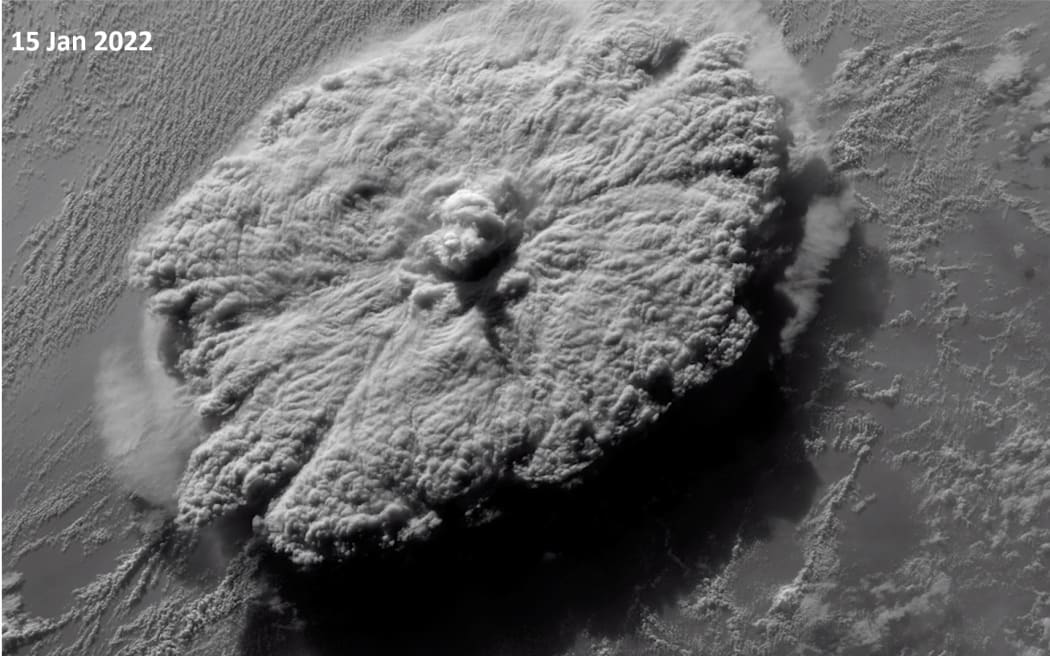
Tongans still ‘broken’ four years on from Hunga Tonga-Hunga Ha’apai volcano eruption

Source: Radio New Zealand

No caption

Photo:

It is known as the day Tonga went black. January 15th marks four years since the devastating eruption of the Hunga Tonga-Hunga Ha’apai volcano and the tsunami that followed.

Three people lost their lives and major damage was caused to infrastructure and crops in the surrounding islands. But it is the mental impacts which have scarred the local community the deepest.

Scientists described the underwater volcano as one of the largest volcanic eruptions in recorded history, equivalent to five underground nuclear bombs. It was an explosion that no one who experienced it could ever forget.

Business owner Liz Sullivan remembers that fateful day clearly. She was driving to safety with her late mother.

“As soon as we just turned this little turn, the world went dark and we could hear the bang, bang, bang and ash was down, falling, you know,” she recalled.

Hours later, she looked out at a surreal scene.

“When we went out and saw the ash was almost ankle high and it was just a very airy feeling in Tonga, you know, it was like something out of a movie. You never thought this would happen to us, but it did,” Sullivan explained.

Ash and debris covering houses and a road in Nuku'alofa, Tonga.

Photo: Consulate of the Kingdom of Tonga

Survivor Lusiana Kikau and her family are just grateful to be alive. They were employees of Fafa Island Resort. The small island, which is a 30-minute boat ride away from Tonga’s capital Nuku’alofa, was destroyed by the tsunami.

Kikau remembers sitting on the beach when the tsunami hit, and her main priority was to save her daughter who was 10 years old at the time.

“So, we just trying to save, save our daughter, so we try to clear with other two Fijian staff we were together on that island, just try to save our daughter. So, she climbed up on the tree. I just used the rope to tie around my waist when the waves start coming in,” Kikau recalled.

Kikau admitted that she was still traumatised by the event.

“Sometime when I heard loud sound like I’m scared, I always remember what happened on that day, when the loud sound like thunder or any sound,” she said.

This handout photo taken on January 16, 2022 and received on January 25 courtesy of Rev. Kisini Toetu'u via Matangi Tonga shows survivors praying on a hilltop at dawn on Mango Island, following the January 15 eruption of the nearby Hunga Tonga-Hunga Ha'apai underwater volcano.

This handout photo taken on January 16, 2022 and received on January 25 courtesy of Rev. Kisini Toetu’u via Matangi Tonga shows survivors praying on a hilltop at dawn on Mango Island, following the January 15 eruption of the nearby Hunga Tonga-Hunga Ha’apai underwater volcano. Photo: AFP PHOTO / Courtesy of Rev. Kisini Toetu’u via Matangi Tonga” –

In the immediate wake of the disaster, the Pasifika Medical Association Group sent an emergency response team of medical professionals to Tonga. It has subsequently returned each year with support focused on addressing the well-being of individuals.

PMA’s CEO Debbie Sorensen said today many people will be feeling overwhelmed by the legacy of the disaster.

“I think the anniversary brings up all sorts of feelings for people, you know, there are feelings of grief over what people have lost.

“There’s anxiety and fear, you know, I imagine quite a lot of people will be looking at that horizon wondering whether it’s going to be another one on the same day. You know, those are quite normal feelings,” she notes.

Sorensen said it’s important for those suffering trauma to seek help from the resources available, including reaching out to local mental health professionals

“The Tongan Mental Health Group is actually very well known amongst our community and in Tonga,” she said.

Volcanic clouds cover the skies over Tongatapu at around 5pm on 15 January 2022, as the Hunga Tonga - Hunga Ha'apai volcano started erupting.

Volcanic clouds cover the skies over Tongatapu at around 5pm on 15 January 2022, as the Hunga Tonga – Hunga Ha’apai volcano started erupting. Photo: Iliesa Tora

The traumatic event has left devastating effects on people’s well-being in Tonga. For some people, the full impacts of trauma are delayed, and four years on many people are still grappling with the worst of it – a complex set of fears and emotions that may not be visible to others but is very real for the people affected.

Sullivan said she is deeply concerned about the people around her, and said more professional help is needed to help the community.

“Someone passionate that can a listener you know, to help these people, they’re broken,” Sullivan said.

“Because I don’t think some will ever be able to recover from this at all.”

Sorensen agreed that more needs to be invested in resources.

“I think that technology, you know, has played its part in being able to extend the services that are offered. But there’s no question that there needs to be more investment in more resources applied.”

– Published by EveningReport.nz and AsiaPacificReport.nz, see: MIL OSI in partnership with Radio New Zealand
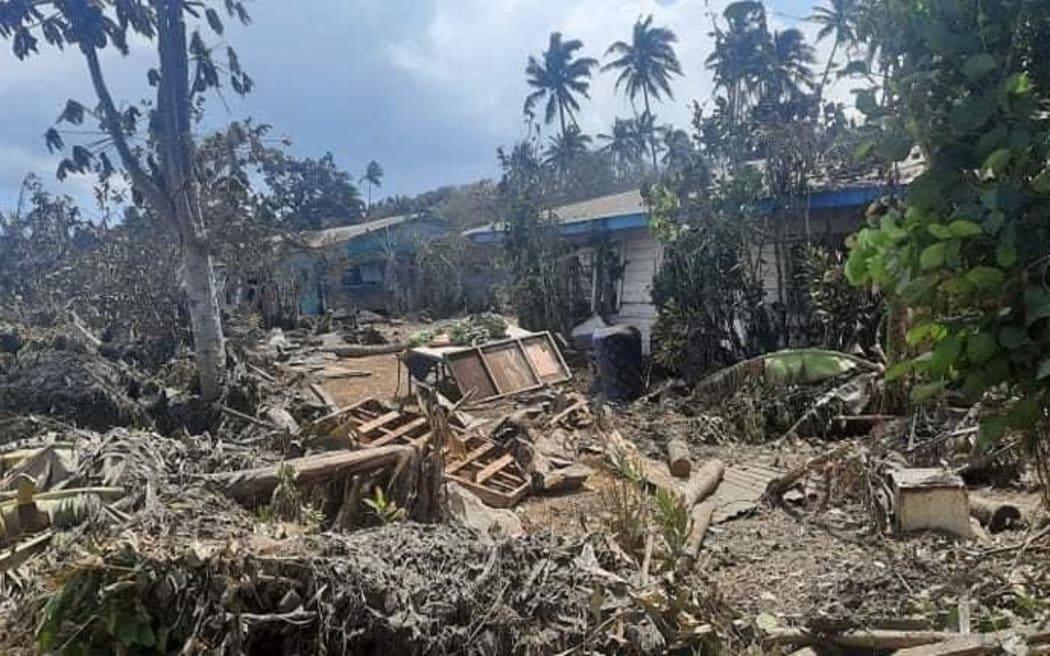
Marlborough’s only kaupapa Māori GP receives funding to address critical gap

Source: Radio New Zealand

Kaupapa Māori GP Manu Ora founders Dr Sara Simmons (left) and Dr Rachel Inder (right). Supplied/Chris Brooks – Motive Digital

Marlborough’s only kaupapa Māori general practice, Manu Ora, has received funding for the next three years with evidence showing it’s early intervention model benefits both its patients and the wider healthcare system.

The Blenheim based practice was established in mid-2021 by Dr Sara Simmons and Dr Rachel Inder in partnership with Te Piki Oranga a Māori health services provider in Te Tauihu.

Co-founder Dr Sara Simmons (Ngāi Tahu, Ngāti Māmoe, Waitaha) said it was born from a desire to provide care in a te ao Māori way for the community’s most vulnerable.

“Our partner organisation is Te Piki Oranga, so that’s a Māori wellness service here in Te Tauihu and we were really lucky to kind of gain their support a they recognised that we had something that could kind of close the loop of care for whānau Māori in the region from their perspective, because they have nurses and social workers and addiction services and mental health services and some other social services as well, but they didn’t have any GPs.”

Simmons said they soon realised the service needed to be run as a not for profit entity rather than the traditional GP business model. Only 28 percent of Manu Ora’s funding is provided through the government.

“We rely on funding for 72 percent of our costs. So, you know, that community support is just so critical. And we’ve been really lucky to have that and to get some recognition on a wider stage… We’re four and a half years in, and we’re kind of excited about where to next and what the future will bring and hopefully seeing some of those big stats turn the corner for our whānau Māori,” she said.

The Rātā Foundation awarded $165,000 to Manu Ora over three years, which Simmons said is their first multi year contract from an external organisation and will provide a degree certainty to their work.

Manu Ora a kaupapa Māori general practice in Blenheim. Supplied/Chris Brooks – Motive Digital

Simmons said they spent much of the practice’s first year planning and engaging with local whānau and community to create a service that would reflect their needs.

“Both Rachel and I are born and bred in the Wairau, and although I whakapapa to further south, down in Wairewa, you know, I’ve grown up going to Omaka Marae and connecting with our Māori community locally, and so we just really kind of opened the door and asked the question. And I think what people identified with was, the desire to do something different and the desire to do something that was really designed from the ground up to really benefit our community. So, we didn’t start with any preconceived ‘this is what we think it should look like,’ we really just asked that question of our whānau and kind of went from there.”

It’s a privilege to be able to provide care in a kaupapa Māori model, she said.

“It stemmed from a desire to do something different, a desire to do something that we thought was the right thing to do for our whānau Māori in the area… When we started having kōrero with people about what we wanted to do, that’s when we really thought, yeah, this is something that our community needs, because I think in Marlborough, in particular, many people have their eyes shut to the kind of poverty and the needs that is out there.

“I mean, we’ve got strong primary industry, and I think people see all of that, and don’t see the housing insecurity, and the kai insecurity, and the job insecurity, and then the kind of flow-on effects from that onto people’s mental health and their hauora, their overall well-being.”

Simmons said when the practice first opened, there was some concern from established practices in the region about their approach.

“It’s a reflection of the region really not providing care for our whānau Māori in a way that is really best for them. And, you know, we look at the stats and whānau Māori are less likely to seek out healthcare and then even when they do, they’re less likely to receive gold standard care. And so those impacts, you know, in the big picture, that health inequality is just, well, it’s massive and it’s really heartbreaking, you know, and to look at my tamariki and know that their life expectancy is seven or eight years less than non-Māori their same age – that’s kind of why we do what we do is, is to look to benefit, not only the whānau who we’ve got enrolled with us now, but our future generations.”

The team from Manu Ora a kaupapa Māori general practice in Marlborough. Supplied/Chris Brooks – Motive Digital

An independent evaluation by Sapere (2022) reported: “Stakeholders identify to us that these high needs vulnerable whānau likely would not have [otherwise] connected with general practice or would not have received an appropriate level of service, and only occasionally would have been seen by the DHB in its hospital, usually in a crisis situation.”

Manu Ora maintains a lower patient-to-GP ratio of 1:900, compared to the national average of 1:1,700. Nearly 50 percent of the practice’s patient roll is Māori, compared to 13 percent at other Blenheim practices; over 50 percent of staff, and 80 percent of the Board, whakapapa Māori.

Simmons thanked the team at Manu Ora, saying they are lucky to have a group of both Māori and non-Māori clinicians who can provide whānau centred care.

Sign up for Ngā Pitopito Kōrero, a daily newsletter curated by our editors and delivered straight to your inbox every weekday.

– Published by EveningReport.nz and AsiaPacificReport.nz, see: MIL OSI in partnership with Radio New Zealand
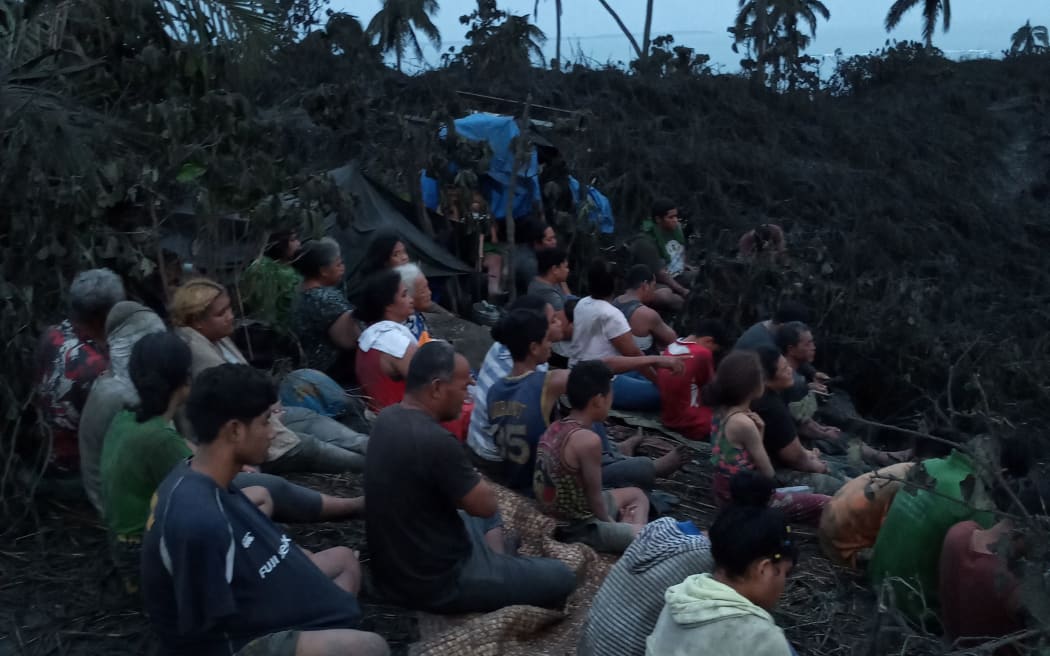
Weather: Severe thunderstorms, heavy rain warnings for North Island, upper South

Source: Radio New Zealand

An orange rain warning is in force for Bay of Plenty, including Rotorua, until 11am on Friday. Supplied/MetService

Severe thunderstorm and heavy rain watches are in place for the top half of the country and upper South Island, with surface flooding and slips possible.

MetService is warning people to prepare for localised downpours of 25 to 40 millimetres an hour.

An orange rain warning is in force for Bay of Plenty, including Rotorua, until 11am on Friday, with up to 150 millimetres expected.

Northland, Gisborne, Hawke’s Bay, Taihape, Wanganui, Manawatu, Tararua, Taranaki, Wellington, Wairarapa are all under a severe thunderstorm watch until late on Thursday night, while Auckland, Waikato, Great Barrier Island, Coromandel Peninsula’s watches are in place until early Friday morning.

Heavy rain is also set to lash the top of the South, with an orange warning in place for northern parts of Marlborough until late Thursday afternoon.

Rain watches are in place on Thursday across Nelson, Tasman, and southern Marlborough, including the Kaikoura Coast.

Marlborough District Council said Marlborough Sounds, Richmond Ranges, Rai Valley, Blenheim, Seddon and Ward residents should expect 60 to 90 millimetres of rain on top of what has already fallen.

It warned people travelling in the region to be cautious of slips and flooding.

Beware of localised downpours

MetService meteorologist Katie Lyons says the severe thunderstorm watches may be upgraded. MetService/Supplied

MetService meteorologist Katie Lyons told RNZ the severe thunderstorm watches could be upgraded.

“There’s a lot going on around the country, I think something that could catch people out today are just those localised downpours in one area.

“And watch out for those thunderstorm warnings,” she said.

MetService said people should make sure their drains and gutters are clear before the heavy rain hits.

It also warned travellers to driving cautiously with difficult driving conditions likely.

Road closures or delays possible – NZTA

A New Zealand Transport Agency spokesperson said motorists should drive with care, maintain safe following distances and slow down, to help keep everyone safe.

“Our crews will be closely monitoring the state highways while these watches and warnings are in place.

“Those who are travelling on the roads should be aware of possible flooding, especially in low-lying areas and near rivers, slips, fallen trees, reduced visibility and hazardous driving conditions, and potential road closures or delays.”

The heavy rain could cause potholes to form or worsen, creating additional hazards for drivers, the spokesperson said.

They also said travellers should be mindful of contractors who may be out clearing hazards off the road.

There are currently no reports from NZTA of state highway closures due to weather.

Both Air New Zealand and Jetstar said there were no flight disruptions or cancellations at this stage.

The airlines encouraged customers to check the status of their flight online or via their apps for the latest updates.

Good news for some

A recent fire on Waitara Road burned through 22 hectares of bush. FIRE AND EMERGENCY NZ / SUPPLIED

Fire and Emergency New Zealand are welcoming the rain with open arms, but remain cautious that a few downpours alone will not change fire risk conditions.

Fire bans and restrictions span across much of the country as the risk of wildfire intensified due to the recent hot and dry weather.

Wildfire manager Tim Mitchell told RNZ the rain was “absolutely” welcomed, particularly to drier high risk areas like Hawke’s Bay and Wairarapa.

Hawke’s Bay and Wairarapa are under a total fire ban due to dry conditions, with specific zones requiring permits for any outdoor burning.

Hawke’s Bay is under a total fire ban due to dry conditions. RNZ/Sally Round

Mitchell said fire risks remained in place and restrictions could not be removed until grass in drier regions turned green.

“We are hoping for steady rain over a long period of time to reduce fire risk, but heavy down pours may not change conditions.”

Mitchell said flooding also posed a risk to drier areas because the hard ground struggled to soaked up the rain water.

People should also be mindful that lightning strikes could start wildfires, but in contrast to Australia, New Zealand’s lightning is associated with rain, he said.

“Residents should take extra care around flood waters and when driving, keeping a good travelling distance, and double check the checkitsalright website.”

The spell of rain and thunderstorms looks to pass for much of the country moving into the weekend.

For more information on preparing and keeping safe during a storm, visit Civil Defence Get Ready website.

Sign up for Ngā Pitopito Kōrero, a daily newsletter curated by our editors and delivered straight to your inbox every weekday.

– Published by EveningReport.nz and AsiaPacificReport.nz, see: MIL OSI in partnership with Radio New Zealand

Does adding ‘please’ and ‘thank you’ to your ChatGPT prompts really waste energy?

Source: The Conversation (Au and NZ) – By Richard Morris, Postdoctoral Fellow, Faculty of Agriculture and Life Sciences, Lincoln University, New Zealand

Serene Lee/Getty Images

Cut the words “please” and “thank you” from your next ChatGPT query and, if you believe some of the talk online, you might think you are helping save the planet.

The idea sounds plausible because AI systems process text incrementally: longer prompts require slightly more computation and therefore use more energy. OpenAI’s chief executive Sam Altman has acknowledged it all adds to operating costs at the scale of billions of prompts.

At the same time, it is a stretch to suggest that treating ChatGPT politely comes at significant environmental cost. The effect of a few extra words is negligible compared with the energy required to operate the underlying data centre infrastructure.

What is more important, perhaps, is the persistence of the idea. It suggests that many people already sense AI is not as immaterial as it appears. That instinct is worth taking seriously.

Artificial intelligence depends on large data centres built around high-density computing infrastructure. These facilities draw substantial electricity, require continuous cooling, and are embedded in wider systems of energy supply, water and land use.

As AI use expands, so does this underlying footprint. The environmental question, then, is not how individual prompts are phrased, but how frequently and intensively these systems are used.

Why every AI query carries an energy cost

One structural difference between AI and most familiar digital services helps explain why this matters.

When a document is opened or a stored video is streamed, the main energy cost has already been incurred. The system is largely retrieving existing data.

By contrast, each time an AI model is queried it must perform a fresh computation to generate a response. In technical terms, each prompt triggers a fresh “inference” – a full computational pass through the model – and that energy cost is incurred every time.

This is why AI behaves less like conventional software and more like infrastructure. Use translates directly into energy demand.

The scale of that demand is no longer marginal. Research published in the journal Science estimates that data centres already account for a significant share of global electricity consumption, with demand rising rapidly as AI workloads grow.

The International Energy Agency has warned that electricity demand from data centres could double by the end of the decade under current growth trajectories.

Electricity is only one part of the picture. Data centres also require large volumes of water for cooling, and their construction and operation involve land, materials and long-lived assets. These impacts are experienced locally, even when the services provided are global.

AI’s hidden environmental footprint

New Zealand offers a clear illustration. Its high share of renewable electricity makes it attractive to data centre operators, but this does not make new demand impact-free.

Large data centres can place significant pressure on local grids and claims of renewable supply do not always correspond to new generation being added. Electricity used to run servers is electricity not available for other uses, particularly in dry years when hydro generation is constrained.

Viewed through a systems lens, AI introduces a new metabolic load into regions already under strain from climate change, population growth and competing resource demands.

Energy, water, land and infrastructure are tightly coupled. Changes in one part of the system propagate through the rest.

This matters for climate adaptation and long-term planning. Much adaptation work focuses on land and infrastructure: managing flood risk, protecting water quality, maintaining reliable energy supply and designing resilient settlements.

Yet AI infrastructure is often planned and assessed separately, as if it were merely a digital service rather than a persistent physical presence with ongoing resource demands.

Why the myth matters

From a systems perspective, new pressures do not simply accumulate. They can drive reorganisation.

In some cases, that reorganisation produces more coherent and resilient arrangements; in others, it amplifies existing vulnerabilities. Which outcome prevails depends largely on whether the pressure is recognised early and incorporated into system design or allowed to build unchecked.

This is where discussion of AI’s environmental footprint needs to mature. Focusing on small behavioural tweaks, such as how prompts are phrased, distracts from the real structural issues.

The more consequential questions concern how AI infrastructure is integrated into energy planning, how its water use is managed, how its location interacts with land-use priorities, and how its demand competes with other social needs.

None of this implies that AI should be rejected. AI already delivers value across research, health, logistics and many other domains.

But, like any infrastructure, it carries costs as well as benefits. Treating AI as immaterial software obscures those costs. Treating it as part of the physical systems we already manage brings them into view.

The popularity of the “please” myth is therefore less a mistake than a signal. People sense AI has a footprint, even if the language to describe it is still emerging.

Taking that signal seriously opens the door to a more grounded conversation about how AI fits into landscapes, energy systems and societies already navigating the limits of adaptation.

Richard Morris is the co-founder of Kirini Ltd, a nature-based solutions consultancy. He receives funding from Lincoln University.

ref. Does adding ‘please’ and ‘thank you’ to your ChatGPT prompts really waste energy? – https://theconversation.com/does-adding-please-and-thank-you-to-your-chatgpt-prompts-really-waste-energy-272258

Work set to begin on New Plymouth sewage pump station known to overflow

Source: Radio New Zealand

The Mangati Pump Station. Supplied

Work is set to begin on an upgrade to a New Plymouth sewage pump station, which has a history of overflowing into the Mangati Stream during power cuts or wet weather events.

To reduce the likelihood of future overflows, it was planned to install a large underground emergency storage unit beneath the adjacent Mangati Walkway in Bell Block.

In 2021, water services company, Citycare, and the New Plymouth District Council were fined $112,000 and $66,500 respectively for their part in spilling 1.5 million cubic litres of human effluent into the stream in – the equivalent of half the volume of an Olympic-sized swimming pool.

The January 2019 sewage pump station failure, which lasted for more than nine hours, also killed hundred of fish and eels.

NPDC Project Delivery Manager Sean Cressy said the first stage of the upgrade would be ground-testing to find out how much water was in the soil which would involve installing monitoring equipment in bore holes.

“The information we gather will help us design emergency storage that is suitable for the environment.”

Drilling the bore holes was scheduled to start on 19 January.

Cressy said silt control bags and fences would capture any sediment to prevent it entering Mangati Stream and pedestrians would be able to walk past the worksite with care during the three-week work.

Stage two of the upgrade, the installation of underground storage, would take place in 2026/27.

This project was part of NPDC’s $289 million investment over 10 years to fix the district’s plumbing.

At a glance:

  • The council maintained 34 pump stations, more than 7000 manholes and nearly 700km of pipes in the district’s wastewater network.
  • Raw sewage and trade waste collected from Waitara, Bell Block, New Plymouth, Inglewood and Ōākura was treated at the New Plymouth Wastewater Treatment Plant, which was turned into clean effluent, which was discharged via an outfall into the Tasman Sea, and the slow-release fertiliser Bioboost.

– Published by EveningReport.nz and AsiaPacificReport.nz, see: MIL OSI in partnership with Radio New Zealand

Red-hot Black Cap Daryl Mitchell scales new heights

Source: Radio New Zealand

Daryl Mitchell AFP

Black Caps match-winner Daryl Mitchell concedes he’s at the peak of his powers and finally feels “comfortable about how I go about my batting” in international cricket.

Mitchell unfurled another match-winning knock in the second ODI win by seven wickets over India in Rajkot, his unbeaten 131 continuing a majestic run of form in the 50-over format.

The 34-year-old has scored 936 runs at an average of 72.0 over his last 16 ODI innings, often steering New Zealand home or providing an important boost in setting a target.

His latest innings may well be enough to propel him from second to first in the format’s ICC batting rankings, lifting him ahead of Indian talisman Virat Kohli.

Daryl Mitchell tries to play a shot during the first ODI between India and New Zealand SHAMMI MEHRA

Mitchell’s brilliantly paced 117-ball knock was his eighth ton, but more importantly to him, it was at the heart of a Black Caps win as they completed their highest successful chase in an ODI in India.

“I just love playing for my country. I love travelling the world and playing international cricket and I’m lucky to do that across all three formats,” he said.

“My job’s to help us win games of cricket and I was able to do that tonight.”

Mitchell’s knock exemplified why he has thrived of late, helping New Zealand recover from 46-2, putting on 162 for the third wicket with Will Young (87) before swinging momentum by targeting India’s key spinner Kuldeep Yadav.

Ranked the world’s premier ODI bowler, Yadav leaked 82 runs from his 10 overs, unable to contain Mitchell’s guile.

“As New Zealanders, we don’t grow up on these surfaces. We grow up on bouncy, grassy wickets and the nature of playing international cricket is you have to find ways all around the world,” Mitchell said.

“For me, it’s been a learning process over several years now. I’m comfortable with how I want to go about my batting in these conditions and trying to find ways to put the bowlers under pressure.

“Whether that’s using your feet, sweep, using the crease – there are different ways to put pressure on them.

“The likes of Kuldeep and Ravi Jadeja, who are accurate and bowl so well, you keep finding ways to put pressure on them.

“It’s constantly adapting to what the surface is dictating. I guess today the surface was a lot lower and slower so it was a lot easier to go square, rather than down the ground, at times.

“It’s about being smart with your boundary options.

Daryl Mitchell celebrates after scoring a century. PUNIT PARANJPE

Mitchell accelerated to finish with 11 fours and two sixes, and was still at the crease when victory was achieved with 15 balls to spare.

He fell three runs short of his highest ODI score – achieved in India two years ago – and lifted his career average to a remarkable 56.73, the second-highest figure behind Kohli’s 58.45 among all batsmen to have played 50 or more ODIs.

The series is 1-1 ahead of the third and final game in Indore on Sunday, where Mitchell and his team will target a first ever ODI series win in India.

Sign up for Ngā Pitopito Kōrero, a daily newsletter curated by our editors and delivered straight to your inbox every weekday.

– Published by EveningReport.nz and AsiaPacificReport.nz, see: MIL OSI in partnership with Radio New Zealand

Faulty ferry doesn’t damper Bluebridge bookings

Source: Radio New Zealand

A Bluebridge ferry docked in Wellington. RNZ / Mary Argue

Bluebridge says sailings are fully booked for vehicle space into February. It comes after a fault with the ramp on one of its Cook Strait ferries cancelled days of sailings during the busy holiday period.

Around 200 passengers aboard a night sailing on the Connemara last Thursday ended up being stranded on the docked boat for 15 hours following a problem with the winch that controls the stern door.

Sailings were cancelled through to Tuesday this week.

A broken ramp on the Bluebridge Connemara left hundreds of passengers stuck on the ferry overnight. Supplied

In an alert on its website, Bluebridge said it was currently experiencing very high demand.

“Our sailings are fully booked into February,” it said.

“All ferries are operating as normal, but our phone lines and inbox are extremely busy due to peak‑season volumes.”

Bluebridge said the fastest way to check availability or make a booking was online, or via their 0800 number.

“Any seats that become available will appear online first.”

Customers were advised that phone wait times could be longer than usual as Bluebridge were operating at peak capacity.

Bluebridge has been approached for comment.

Have you been affected by the high demand? Email iwitness@rnz.co.nz

In a statement earlier this week StraitNZ Bluebridge spokesperson Will Dady said the majority of people affected by the Connemara cancellations had been allocated to alternative sailings or chosen to travel by other means.

“We’d like to thank everyone for their patience and apologise again for the disruption caused. We’re working as quickly as possible to liaise with those impacted but it does take time,” Dady said.

“It’s the most difficult time of year to experience a mechanical issue such as this with already heavy demand for sailings but we want to reassure our passengers we’re doing our best to assist getting them across Cook Strait to their destination as quickly as possible,” he said.

When can you book a ferry?

RNZ went through Bluebridge’s website to see when a sailing could be booked.

For two passengers with a car, the first available sailing RNZ found was Friday 20 February at 2am from Wellington to Picton, with limited sailings through to the end of February.

In the reverse direction, there were limited sailings listed in January and most sailings appeared to be available from February.

RNZ also looked at availability on competitor Cook Strait ferry the Interislander.

For two people and a car there were limited sailings in the next week. Picton sailings were available through February while Wellington sailings were booked out until 23 February.

On both Interislander and Bluebridge, more sailings were available without a vehicle.

Interislander says it has limited space, had 100 percent reliability over holiday period

An Interislander spokesperson said its releasing vehicle capacity whenever possible to accommodate the high demand, including for the upcoming long weekends, but it warns space is likely to be very limited.

“While Interislander’s ships are fully booked for vehicle passengers departing Wellington until late February, there is some vehicle capacity departing Picton, and we have availability for foot passengers travelling both ways.”

The spokesperson said this was Interislander’s first peak season operating with two ships.

“Reliability was 100 percent throughout the busy festive period; most sailings were full, and our on-time performance was excellent. We’re proud to have delivered a safe, reliable service so far, helping tens of thousands of New Zealanders and visitors cross Cook Strait.”

Sign up for Ngā Pitopito Kōrero, a daily newsletter curated by our editors and delivered straight to your inbox every weekday.

– Published by EveningReport.nz and AsiaPacificReport.nz, see: MIL OSI in partnership with Radio New Zealand

Should you take Elon Musk’s advice not to save for retirement?

Source: Radio New Zealand

123RF

Elon Musk says you might not need to worry about saving for retirement soon – but New Zealanders are being told to be very wary.

The US billionaire told a recent podcast that he thought people did not need to be “squirrelling money away for retirement in 10 or 20 years”.

He said AI would reduce the cost of everything so much that everyone would have “universally high income”.

“It won’t matter … If any of the things that we’ve said are true, saving for retirement will be irrelevant.”

Dean Anderson, founder of Kernel Wealth, said this was poor advice and a major risk for most people.

“Handing over your financial security to the whim and hope that future governments or trillionaires will reliably redesign centuries of incentives, tax systems, capital ownership, and welfare … in a way that’s reliable, fair, and works for you personally is not a plan.”

He said the irony was that Musk was the ultimate reminder of why capital ownership mattered.

“He places all value on owning assets, not just earning an income. He’s accidentally proving exactly why we should save and invest.”

Rupert Carlyon, founder of Koura, agreed: “This is very rich coming from the person who has $720 billion squirrelled away.

“We have seen over the past 20 years the gap between rich and poor accelerate as technology has advanced. I struggle to see why that will change all of a sudden.

“A UBI still needs to be funded and we haven’t seen a desire from the wealthy to pay higher taxes to fund it.”

Simplicity chief economist Shamubeel Eaqub said there was a difference between wealth being created and the distribution of the wealth.

“We just don’t have the mechanisms to make everyone equally well off. And so we should always prepare … why would you not? If it turns out better than you expected, yay. But if it doesn’t, you’re still good. I think there’s a difference between what might be good for Elon Musk versus what might be good for the population of the world. They’re not the same things.”

MoneyHub founder Christopher Walsh said people needed to look after themselves.

“No one is going to underwrite or provide for your retirement other than you. Be careful of gurus, experts, podcasters and/or YouTubers who promise you otherwise.

“The next five to 20 years will be significantly different for working and retiring New Zealanders. The best thing to do is to be prepared, not rely on the chance of robots or profits from a moonshot. The changes to come in AI will benefit some more than others. It’s unknown right now.”

Sign up for Money with Susan Edmunds, a weekly newsletter covering all the things that affect how we make, spend and invest money.

– Published by EveningReport.nz and AsiaPacificReport.nz, see: MIL OSI in partnership with Radio New Zealand

Native pollinators need more support than honeybees in Australia – here’s why

Source: The Conversation (Au and NZ) – By Graham H. Pyke, Honorary Professor in School of Natural Sciences, Macquarie University

A native _Leioproctus_ bee on _Calectasia narragara_. Kit Prendergast/@bee.babette_performer

Late last year, the New South Wales government announced an additional A$9.5 million in funding to support honeybee keepers in the wake of the 2022 arrival and subsequent spread of the Varroa mite.

Varroa mites attack honeybee larvae, reducing and even destroying entire colonies. This impacts honey production and the crop pollination services provided by honeybees.

However, the honeybee is not native to Australia. It’s an introduced species that has routinely escaped hives and gone feral, negatively impacting our native animals and biodiversity in general.

The new funding follows $58.4 million already spent by the NSW government in relation to the Varroa mite. It’s part of an ongoing trend of millions being spent on this exotic bee and pollination services to exotic crops, while largely neglecting the native plant-pollinator interactions that existed prior to European colonisation.

While some government and non-government funding is starting to look into alternative pollinators, thousands of Australian bee species and other native pollinators don’t enjoy nearly the same support as European honeybees. Native biodiversity is on the brink – but there’s work we can do to stop this.

The pollination crisis down under

Australia’s native pollinators include about 2,000 species of bees and many thousands of species of other insect pollinators. These include beetles, flies, wasps, butterflies and moths, as well as many of our bird and mammal species.

The biggest problem all these native pollinators face stems from our ignorance. Since the 1990s, the global decline of pollinators due to human activities, climate change and diseases has been a serious concern, especially in Europe and North America.

In Australasia this pollination crisis has been largely neglected, making it seem as if we’d dodged the bullet. However, our research shows the negative factors affecting pollinators elsewhere are just as present here.

The honeybee is so good at invading and proliferating in Australian landscapes, we now have some of the highest reported densities of feral honeybees in the world.

It’s likely honeybees adversely impact native pollinators and pollinator networks, because they compete for shared floral resources. The evidence available to date is consistent with this.

For example, recent studies have shown that native bees, when exposed to high honeybee densities, have fewer offspring and produce more males than females, which can lead to population declines.

White-cheeked honeyeater probing the flowers of Xanthorrhoea resinosa for nectar.
Graham Pyke

The super-generalist honeybee can also harm our native pollination networks by facilitating the pollination of noxious weeds. It’s also likely native plants are receiving less pollination because honeybees have caused a decline in native pollinators.

However, it’s difficult to collect such evidence. It requires careful, time-consuming research. This difficulty has been compounded by an almost complete lack of funding for research on the impact of honeybees on native bees, and on Australia’s biodiversity.

An opportunity for native pollinators

The recent arrival of the Varroa mite provides an excellent opportunity to find out how Australia’s native pollinator systems will change in the wake of projected feral honeybee declines.

Governments around the country should urgently fund research on native pollinators. There are likely several hundred unnamed and thus unknown native bees in Australia. We need studies that identify them so we can learn more and protect them. Just recently one of us, Kit Prendergast, described a new species of native bee that visits a critically endangered plant. This research was not funded by any government.

Most importantly, as the Varroa mite is likely to continue spreading, it will significantly thin out the numbers of feral honeybees. This might be temporary as new feral honeybees escape from hives and replace them.

Still, it provides an opportunity for before-and-after studies, to understand the impacts of introduced honeybees on our native flora, fauna and ecosystems.

We have a narrow window to find out if native pollinators can recover after a temporary drop in feral honey bee densities. The time to carry out such studies is now, before the Varroa mite becomes ubiquitous.

Amegilla dawsoni one of the largest Australian native bee species, visiting a Trichodesma zeylanicum flower.
Kit Prendergast/@bee.babette_performer

Time for a new strategy

Ultimately, honeybees are not at risk of extinction. Despite the global pollinator decline, honeybees haven’t disappeared anywhere in the world, even in countries with far fewer resources than Australia. Nor has any plant species gone extinct from a lack of honeybees.

In contrast, there is overseas evidence of plant population declines due to the presence of honeybees and lack of native pollinators. In Australia, honeybees are so dominant and visit such a huge range of native plant species, they likely have extensive negative impacts.

We and a consortium of scientists are, without any current funding, developing a unique and much-needed Native Bee and Pollinator Conservation Strategy for Australia.

It will provide a clear, scientific evidence-based approach to safeguarding Australia’s unique pollinators and plants, and will provide practical and policy guidance to address the native pollinator crisis in Australia.

At present, protected areas in Australia are not selected based on their conservation value to pollinating insects. Of the three native bee species that are listed with being threatened with extinction on the Environment Protection and Biodiversity Conservation (EPBC) Act, none has a recovery plan.

There’s also general agreement feral animals shouldn’t be allowed in national parks. However, there are currently many licenced beekeeping sites on public land, including national parks and nature reserves.

It’s time for Australia’s governments to step up and invest in Australia’s native pollinators and the plants that rely upon their services, rather than pouring millions into the honeybee – a feral invasive species that jeopardises native wildlife. We implore them to do so.

Graham H. Pyke is a member of the NSW Frog and Tadpole Study Group, Birds Australia and the NSW Royal Zoological Society.

Amy-Marie Gilpin receives funding from the research and development corporation Hort Innovation.

Kit Prendergast does not work for, consult, own shares in or receive funding from any company or organisation that would benefit from this article, and has disclosed no relevant affiliations beyond their academic appointment.

ref. Native pollinators need more support than honeybees in Australia – here’s why – https://theconversation.com/native-pollinators-need-more-support-than-honeybees-in-australia-heres-why-273238

Tech firms’ initiative offers chance for lower fees for sole traders

Source: Radio New Zealand

AFP

Two New Zealand tech firms are looking to capitalise on the launch of regulated open banking, rolling out a new service that promises to cut fees for sole traders.

What is open banking, how does it work and what are the risks?

Sole trader accounting platform Hnry and payment firm Volley’s new service would allow sole traders to take payments on-the-go, without needing a card terminal or percentage-based debit and credit card transaction fees.

The companies said sole traders would be able to generate a QR code in the Hnry app for clients, who would then scan and approve payments in their bank app.

“It cuts both admin time and costs,” said Hnry co-founder James Fuller, noting strong demand for an option like the service provided by Volley.

“Personal trainers, for example, don’t want to carry a card terminal, pay high fees, send invoices or chase payments,” Fuller said. “Now they can get paid on the spot, with no charge to their customer and just a small flat fee for them.”

The funds would be transferred for a flat fee of 35 cents per transaction.

Volley is a New Zealand-built payment method, launched by Jack Callister and James McCann.

It uses open banking technology to enable what they say is secure, account-to-account payments without sharing bank or card details.

Volley co-founder James McCann, who previously worked at Hnry, said New Zealand’s open banking infrastructure has caught up with the world.

“We’ve worked with open banking systems overseas, so we know what great looks like,” McCann said.

Hnry said it would gradually roll out Scan to Pay to all its customers over the next few weeks.

Sign up for Ngā Pitopito Kōrero, a daily newsletter curated by our editors and delivered straight to your inbox every weekday.

– Published by EveningReport.nz and AsiaPacificReport.nz, see: MIL OSI in partnership with Radio New Zealand

Coalition pushes go on fresh tourism campaigns to promote regions

Source: Radio New Zealand

Tourism and Hospitality Minister Louise Upston. RNZ / Angus Dreaver

The government has announced five new tourism campaigns to lure more visitors from the United States, Canada and Australia.

It’s part of a sustained push to promote a wider range of holiday destinations through the $10 million Regional Tourism Boost.

Today’s second tranche of campaigns includes a $1.2 million project targeting Americans and Canadians, coordinated by Tātaki Auckland Unlimited.

A $1 million campaign to attract Australians from the eastern seaboard to alpine and coastal regions within the central South Island will be led by ChristchurchNZ.

Further north, a $600,000 cycling initiative to attract more Australian holidaymakers to the country’s bike trails will be led by Destination Great Lake Taupō.

Two separate $459,000 projects will be run to draw Australians from the Gold Coast and Sydney to both the lower South Island and heart of the North Island.

These campaigns will be led by Great South and seven associated Regional Tourism Organisations, and Hamilton & Waikato Tourism respectively.

Tourism and Hospitality Minister Louise Upston said the coalition wanted visitors to experience more of what New Zealand had to offer.

This included helping the regions shine by supporting local businesses and encouraging tourists to explore beyond the usual hotspots, she said.

“Whether it’s cycling the Great Lake Trails in Taupō, tasting pinot noir in Waipara Valley, enjoying speciality cheese in Ōamaru or admiring Southland’s fiords, our visitors really can do it all,” she said.

“By highlighting time-limited travel and accommodation deals, and regionally distinctive hospitality experiences, we’re making it easier for international travellers to enjoy New Zealand during the quieter autumn and early winter months.”

The campaigns announced today mean all of the $10 million Regional Tourism Boost funding has now been allocated.

The fund has supported a total nine campaigns, the first four of which were announced last November.

The Regional Tourism Boost is part of the government’s $70 million Major Events and Tourism Package, set up to support recovery and growth in the tourism sector.

Sign up for Ngā Pitopito Kōrero, a daily newsletter curated by our editors and delivered straight to your inbox every weekday.

– Published by EveningReport.nz and AsiaPacificReport.nz, see: MIL OSI in partnership with Radio New Zealand

Kaipara council’s CEO resigns

Source: Radio New Zealand

Jason Marris’s tenure also spanned Cyclone Gabrielle, the Mangawhai tornado and significant government reform. Supplied

The Kaipara District’s chief executive has resigned after three-and-a-half years at the helm of the controversial council.

Jason Marris’s time in the top job spanned Cyclone Gabrielle, the Mangawhai tornado and significant government reform – as well as the three-year term of outspoken former mayor Craig Jepson and a flurry of headlines about a karakia ban, the abolition of Māori wards, and complaints about last year’s election.

New Mayor Jonathan Larsen said he accepted Marris’s resignation earlier this week.

Marris was the council’s general manager for three and a half years before becoming interim chief executive in October 2022, then taking on the permanent role in February 2023.

Larsen thanked Marris for his work for the Kaipara District, and said the council would now start the process of recruiting a new chief executive.

He said Marris brought roading services back in-house, navigated a Long Term Plan focused on recovery from extreme weather events, and oversaw key programmes including hundreds of millions of dollars in capital works across the district.

Marris said the decision to leave was extremely difficult but he believed the time was right for a change.

“It’s been my absolute privilege to lead an organisation of so many highly skilled people who care so deeply about the community. I feel incredibly proud of the work that’s been achieved in my time here. Kaipara will always have a special place in my heart.”

His last day at the council will be 10 April.

Sign up for Ngā Pitopito Kōrero, a daily newsletter curated by our editors and delivered straight to your inbox every weekday.

– Published by EveningReport.nz and AsiaPacificReport.nz, see: MIL OSI in partnership with Radio New Zealand

Sensitive info possibly made public as 1000 police cases affected by tech problem

Source: Radio New Zealand

RNZ earlier revealed an investigation was under way into the extent of the issue and the Police Minister and Office of the Privacy Commissioner had been notified. RNZ / Richard Tindiller

More than 1000 cases were affected by a “technical issue” with police’s investigation management tool that led to sensitive information that was supposed to be redacted during disclosure potentially being made visible.

RNZ earlier revealed an investigation was under way into the extent of the issue and the Police Minister and Office of the Privacy Commissioner had been notified.

On Thursday Acting Assistant Commissioner Investigations, Serious and Organised Crime Keith Borrell told RNZ that the technical issue with the disclosure functionality of Police’s Investigation Management tool (IMT) was connected to a software update.

“As a result of this issue Police have reverted to an earlier iteration of the disclosure platform that has been thoroughly tested by both Police ICT and the software supplier.

  • Do you know more? Email sam.sherwood@rnz.co.nz

“As a result of the investigations into the extent of the issue, Police have established that 1527 disclosure packages from 1037 cases have been affected. Police are working with justice sector partners to determine if there have been any privacy breaches as a result of the issue, and to date have identified 46 occasions where private information has been shared unintentionally.”

Police were working closely with the Office of the Privacy Commissioner and were assessing each case carefully to ensure individuals were informed and safety measures put in place where required. Borrell said that the majority of the information released was already known by the person who received it.

RNZ earlier reported police had contacted lawyers of defendants advising them of the issue.

An email seen by RNZ says a technical issue with police’s Investigation Management Tool (IMT) had been discovered that resulted in some redacted documents produced since 4 December not being correctly processed by the system.

This meant that information that was supposed to be redacted could become visible.

The lawyers were advised to retrieve the disclosure packages from their clients or request deletion of the email.

They were also told to advise them that they must comply with the Lawyers and Conveyances Act which included not disclosing information that would be likely to place a person’s health or safety at risk.

Police Minister Mark Mitchell earlier said it was “disappointing and concerning this error has occurred”.

“I expect Police to take all necessary steps to understand what happened, and to ensure it cannot happen again.”

Chief Victims Advisor Ruth Money earlier told RNZ she had contacted police asking for information on what had happened and what actions police were taking regarding both at risk victims and victims and witnesses in general who have been affected.

A spokesperson for the Office of the Privacy Commissioner earlier confirmed to RNZ police notified them of a privacy breach on 16 December 2025.

“The Privacy Act sets out that agencies are required to notify the Office of the Privacy Commissioner as soon as they are aware of breaches that they have assessed as ‘serious harm.’

“As with any breach, Police will need to investigate so they can fully understand the size and scope of the breach and its impact on New Zealanders. It’s possible that further investigation of a breach could result in an initial assessment of serious harm being downgraded.”

The commissioner’s initial focus was to “support agencies who have experienced a breach with advice on how to minimise the harm to any people affected.”

Sign up for Ngā Pitopito Kōrero, a daily newsletter curated by our editors and delivered straight to your inbox every weekday.

– Published by EveningReport.nz and AsiaPacificReport.nz, see: MIL OSI in partnership with Radio New Zealand

Election 2026: Labour proposes ‘game-changing’ streaming levy to fund local productions

Source: Radio New Zealand

The revenue from the levy would be reinvested into local productions. 123RF

The Producers’ Guild says a levy on the big content streaming companies would be a “game changer” for the country’s screen production industry.

Labour has proposed implementing a streaming levy should it win the election, with the revenue reinvested into local productions.

Its broadcasting and media spokesperson Reuben Davidson said local content had strong economic and cultural value.

“A levy on streamers would ensure big international streaming operators fairly invest directly in local content,” he said.

Reuben Davidson, Labour’s broadcasting and media spokesperson. RNZ / Angus Dreaver

Irene Gardiner, president of the Screen Production and Development Association (Spada), said as little as five percent of the big streamers’ New Zealand revenue would be worth $25 million a year.

“It can be quite a game changer,” she said.

“The problem that has been caused by the arrival of the streamers on local production everywhere in the world is that it’s massively taken out the advertising revenue which paid for a lot of local content.”

Gardiner, who is also on the RNZ board of governors, said two years ago there were “massive local production cutbacks” at the major New Zealand networks.

“A lot of industries are contracting, and it’s tough. We’re no different in that sense. But the sense where we are different is that it’s the New Zealand voice, and I think that’s at the heart of it,” she said.

“If the streamers just go on and on and on, unregulated all around the world, yes sure we here in New Zealand, we will have all the content in the world, and how wonderful will that be? Except that you could have a situation where there’s almost no local New Zealand content within that, which is such a loss, in terms of national identity and all that side of life.”

Australia also has local production quotas, which requires platforms to invest a minimum amount of money in local content.

However, Gardiner said this would be difficult to impose in New Zealand due to international trade agreements.

“A levy may work better in New Zealand, but look it could even be a hybrid where we invite people to do x number of commissions a year, but if they don’t want to, they pay the levy,” she suggested.

RNZ has contacted Paul Goldsmith, the Minister for Media and Communications, for comment.

Last year, the Ministry for Culture and Heritage released a series of proposals to modernise regulation and content funding arrangements.

They included requiring TV manufacturers to prominently display local media services, and requiring streaming platforms to invest in local content and make it ‘discoverable’ on their platforms.

In October, the government passed legislation to scrap advertising restrictions for broadcasters on Sundays and public holidays.

Sign up for Ngā Pitopito Kōrero, a daily newsletter curated by our editors and delivered straight to your inbox every weekday.

– Published by EveningReport.nz and AsiaPacificReport.nz, see: MIL OSI in partnership with Radio New Zealand

Disposable Razor: All Blacks coach Scott Robertson expected to get the sack – reports

Source: Radio New Zealand

Scott Robertson. Paul Thomas / Photosport

Scott “Razor” Robertson, only a few years ago hailed as the future of All Black rugby after taking the Crusaders to multiple Super Rugby championships, could be about to be dumped as All Black coach, according to several media.

1News is reporting NZ Rugby is expected to confirm today that Robertson will be dropped two years into his four year term.

The Irish Independent is reporting that the All Blacks will be plunged into “unprecedented turmoil” with Robertson about to depart his job.

The speculation is so far unconfirmed.

RNZ is contacting NZ Rugby about the rumours but has yet to receive a response.

There has been mounting speculation after an internal report into the 2025 All Black games found dissatisfaction among senior players.

Sign up for Ngā Pitopito Kōrero, a daily newsletter curated by our editors and delivered straight to your inbox every weekday.

– Published by EveningReport.nz and AsiaPacificReport.nz, see: MIL OSI in partnership with Radio New Zealand

The X Factor: Grok deepfakes and why NZ is still using Elon Musk’s X

Source: Radio New Zealand

In this photo illustration an iPhone screen displays Elon Musk’s repost on his social media platform X regarding criticism from British Prime Minister Kier Starmer about his AI tool Grok, on 11 January 2026 in Bath, England. Elon Musk’s company xAI has been widely criticised following reports that its AI tool Grok has been used to make sexualised images of children and undress women. Anna Barclay / Getty Images

Explainer – Elon Musk’s X has been in the line of fire over Grok AI deepfakes – with Prime Minister Christopher Luxon’s office calling them “concerning.”

What’s going on? And is there any role New Zealand should play in how it uses X to disseminate information?

Recent non-consensual adult content created by X’s AI chatbot Grok has led some to call for a boycott of using X.

X announced on Thursday it would make changes to its AI chatbot after the UK joined many countries in planning to investigate the company.

However, the reputational damage X has been accumulating during Musk’s takeover of the company may be lasting.

It’s still a popular forum for many New Zealand politicians and public agencies to use, but some left-leaning political parties have mostly abandoned it. A human rights group has called for greater regulation of X in New Zealand, while the Free Speech Union is calling that censorship.

Here’s what’s got people concerned about X and Grok, and where New Zealand politicians stand on it.

What is Grok AI doing exactly?

Formerly Twitter, the social media platform X was bought by the world’s richest man Musk in 2022.

X launched its AI chatbot Grok in late 2023, and recently it came out that users could edit an image to create deepfake nude or partially clothed images.

At some points earlier in January, hundreds – perhaps thousands – of requests were coming in to change photos of women to put them in bikinis and other suggestive poses every hour, separate analyses by Bloomberg News, Reuters and The Guardian all found.

The company soon said it limited the image function to paid subscribers, although NBC News and others have reported that the standalone app and the Grok section of X is still able to generate the deepfake images.

Hundreds of examples of non-consensual Grok AI creations have since come out, and the chatbot has been blocked by Indonesia and Malaysia and under investigation in the UK.

The company now appears to be altering course after the backlash.

“I have been informed this morning that X is acting to ensure full compliance with UK law,” UK Prime Minister Sir Keir Starmer told parliament today, adding that the government would take further measures if needed.

Musk posted on X today that Grok will always comply with the law of the countries in which it operates, and also said that he was “not aware” of any naked underage images created by Grok: “literally zero”.

“When asked to generate images, [Grok] will refuse to produce anything illegal, as the operating principle for Grok is to obey the laws of any given country or state,” he said.

Musk has not yet made further statements about how exactly Grok will be changed.

Elon Musk. AFP / BRENDAN SMIALOWSKI

New Zealand has been described as “lagging behind” on policing deepfake content and needs enforceable standards, an organisation working to prevent child sexual exploitation told RNZ earlier this week.

Auckland media commentator and journalist Russell Brown said the recent “undressing” posts on X crossed a line.

“It strikes me it’s only a couple of months ago that these ‘nudify’ apps were regarded as totally marginal and now it’s a front and centre service available from X’s flagship product, which is Grok.

“The fact that the company could entirely withdraw that part of the service and say, ‘no undressing app,’ and they’ve made it clear that they won’t do that, it really should raise some questions.”

ACT MP Laura McClure’s member’s bill to criminalise non-consensual sexually explicit deepfakes was pulled from the ballot last year and will be considered by Parliament in the future.

There have been calls to remove Grok from app stores, while Musk himself claimed it was the number one app in New Zealand in a recent post.

Are NZ politicians still using X?

World politicians often use X to make announcements and statements, and New Zealand is no different.

Prime Minister Christopher Luxon regularly communicates on X, as well as many other social media platforms such as Facebook, Instagram and TikTok.

In a statement to RNZ on Wednesday, a spokesperson for the Prime Minister’s office said Luxon was aware of concerns about Grok.

“The use of Grok in this manner is concerning. We are actively monitoring developments.”

Many official agencies such as MetService, NZTA and NZ Defence Force still use X.

Labour Party leader Chris Hipkins does post on X, although the official Labour X account hasn’t posted since May 2025.

“Political parties and MPs use a range of social media platforms,” said Reuben Davidson, Labour’s spokesperson for media and digital economy.

“The Labour Party has chosen to prioritise channels where we can engage constructively with New Zealanders and reach the audiences we are focused on.”

The ACT party is also a frequent user of X, but in a statement posted Wednesday condemned deepfakes, while also saying regulating companies or the technology was a step too far.

“The harms are very real, and the problem is not limited to X,” the party’s official account posted on X. “New Zealand law should target the individuals who are engaging in abusive behaviour.”

“We should target abusers directly, rather than shutting down tools used legitimately for news or satire.”

NZ First leader Winston Peters is also a regular user of X, as is the party’s official account.

The Green Party’s official account hasn’t posted since 2024, while Te Pāti Māori last posted in June.

Many other politicians post announcements or statements regularly on X, including Wellington Mayor Andrew Little and Auckland Mayor Wayne Brown.

X-slash-Twitter has wielded a heavy influence on social media over the years, despite its relatively smaller user base than other social networks.

It’s difficult to find precise figures, but research by Meltwater/We Are Social for 2025 showed Twitter was only the 11th most used social platform, with just 23.8 percent of internet users on it, while DataReportal said it estimated 15.2 of eligible audience (those over 13) used it.

In InternetNZ’s 2024 Internet Insights report, X was among sites like Discord and Mastodon that it lumped in with the description “most New Zealanders have never used these social media platforms”. It found 73 percent of New Zealanders never used X.

“Most New Zealanders would agree that the creation and distribution of non-consensual or abusive AI-generated images is utterly unacceptable and raises serious questions about the responsibility of platforms to create a safe online environment,” Labour’s Davidson said.

He said he has proposed a member’s bill that would hold platforms more accountable for harmful content, although it has not been pulled from the ballot.

In addition to McClure’s deepfakes bill, Education Minister Erica Stanford has also promised regulatory changes over social media harm in response to calls for a minimum age of 16 to access social media similar to what Australia has recently instituted.

The Grok X AI chatbot is also available as a standalone app on phones. Jonathan Raa / NurPhoto via AFP

Has X gone too far?

Brown said that X has lost its usefulness to many people and that some New Zealand accounts have been leaving the platform.

“That’s the tragedy of it. The old Twitter had come to fill a kind of important niche for those kind of institutional accounts and it was a way to reach the public quickly with information. And now you’re asking the public to wade through a sewer to get there. It’s broken now.”

“I think the discussions are being had” about leaving X, he said. “I think there are public groups who are on X who are having the discussion, I think.”

Free speech and human rights groups are also staking out sides on whether to rein in X.

Rights Aotearoa put out an open letter to Justice Minister Paul Goldsmith calling for regulation of X, while the Free Speech Union blasted the rise of “censorship infrastructure.”

Rights Aotearoa said it was “deeply concerned” about X’s Grok tool.

“This represents a serious and immediate threat to human dignity, privacy, and safety,” its chief executive Paul Thistoll said. He said Grok’s image generation raised concerns about image-based sexual abuse, child safety and gendered and identity-based harm.

“The non-consensual creation and potential distribution of intimate imagery constitutes a form of sexual violence with severe psychological and reputational harm to victims.”

However, Free Speech Union chief executive Jillaine Heather condemned calls to block X by the UK and warned New Zealand against doing the same.

“Today it’s X for failing to police Grok. Tomorrow it’s any platform a government decides is insufficiently compliant. Australia already banned everyone under 16 from social media last month. Not from illegal content. From platforms entirely. Safety rhetoric, expanded control.

“Attempts to use child safety as a pretext to ban, restrict, or de-platform X would represent a serious breach of free expression and would be met with determined resistance. If the New Zealand government joins this international suppression effort, it will have a fight on its hands.

“Free speech is not a privilege granted by governments when it suits them,” Heather said. “It is a fundamental right and it will be defended.”

But Rights Aotearoa’s Thistoll said before today’s announcement that the government should act.

“The technology exists. The harm is occurring,” Thistoll said. “The government has both the power and the responsibility to act.”

Brown said what has happened to X is also part of a wider shift away from platforms like Facebook and broad concerns about “enshittification” of the internet and the polarisation of politics sweeping across all platforms.

“I think a lot of people are moving away from social media altogether, and exactly what solution they’ve found for keeping in touch with people I think varies from person to person.

“With what’s happened with Grok and these non-consensual undressing apps, I think we actually have reached the point where decisions need to be made.”

Sign up for Ngā Pitopito Kōrero, a daily newsletter curated by our editors and delivered straight to your inbox every weekday.

– Published by EveningReport.nz and AsiaPacificReport.nz, see: MIL OSI in partnership with Radio New Zealand

Watch: Ministers mark start of new granny flats rules

Source: Radio New Zealand

The Housing, Building and Associate Finance Ministers have marked the start of new rules allowing easier building of small dwellings.

Chris Bishop, Chris Penk and Shane Jones visited a granny flat in Auckland’s Riverhead on Thursday.

They were there to talk up the changes as well as shifts in national direction linked to the government’s resource management reforms.

The new granny flat rules allow a small dwelling with a simple design of up to 70 square metres to be built without a resource consent, and are in effect from today.

Homeowners must notify their local council before building, and once it is completed, and work must be carried out or supervised by licensed builders.

Variations and exemptions must be taken into account.

Homeowners and builders should also check the new National Environmental Standards for Detached Minor Residential Units to ensure their plan met the standard.

Bishop said providing housing in New Zealand had been overly difficult and expensive for too long.

Jones said the changes would save up to $5650 on building a granny flat and speed up the process by about 14 weeks.

Penk said he was looking forward to the change boosting productivity in construction with as many as 13,000 additional granny flats expected over the next decade.

National direction

Alongside the granny flats changes, a total of 10 updated or new National Policy Statements (NPS) come into effect.

A further five National Environmental Standards and other national direction instruments are expected to be considered by Cabinet in coming months.

Bishop said it was “staggering” the country had not had an NPS for infrastructure until now.

“Making these changes now mean that New Zealanders can see some of the benefits from a more enabling, simpler planning system now, rather than waiting until our new planning system fully takes effect.”

He said the changes were extensively consulted on last year.

Updated NPSs cover renewable electricity generation and electricity networks, natural hazards, highly productive land, indigenous biodiversity, freshwater management, freshwater regulation, and coastal policy.

The latter would provide a “more flexible approach to the use of Land Use Capability Class 3 (LUC3) land.

However, Agriculture Minister Todd McClay said the government had decided to pause progress on a proposal to establish “Special Agricultural Areas”.

Sign up for Ngā Pitopito Kōrero, a daily newsletter curated by our editors and delivered straight to your inbox every weekday.

– Published by EveningReport.nz and AsiaPacificReport.nz, see: MIL OSI in partnership with Radio New Zealand

David Byrne has already given us one of the year’s best shows

Source: Radio New Zealand

It’s only the third week of January, but David Byrne’s dazzling performance at Auckland’s Spark Arena Wednesday night will go down as one of the concert highlights of the year.

The legendary frontman for Talking Heads made a triumphant return to Tāmaki Makaurau with his Who Is The Sky? tour, filling the arena with a constantly moving dynamic 12-piece backing band, a life-affirming blast of treasured pop songs and giving us all a much-needed hit of optimism.

If between wars, attacks and political chaos 2026 has perhaps already seemed like a bit of a bummer, David Byrne was here to make us feel the love again.

David Byrne is 73-years-old now, but you would never know it.

RNZ / Nik Dirga

– Published by EveningReport.nz and AsiaPacificReport.nz, see: MIL OSI in partnership with Radio New Zealand

‘He lost his spark for life’: Benjamin Timmins’ sister speaks out after Waitārere shooting

Source: Radio New Zealand

The scene of the shooting on Wednesday. RNZ/Mark Papalii

The sister of a man who died after a shooting in Waitārere Beach in Horowhenua says her brother is more than just his criminal history.

Rach O’Grady and Benjamin Harry Timmins in photos taken in 1986 and 2025. Facebook/ Rach O’Grady

A 46-year-old woman and two males aged 17 and 21 – remain critically wounded in Wellington Hospital on Thursday.

A young girl who was at the scene of the shooting on Wednesday is being cared for by family.

Police are not looking for anyone else.

Rach O’Grady has identified her older brother, Benjamin Harry Timmins, 60, as the deceased, calling him a “loved friend, father, and brother. Trickster, funny fella, all round solid gold”.

Speaking to RNZ on Thursday, she said she understood her brother’s body was being removed from the house on Thursday.

In life, she remembered him as funny, intelligent, a staunch protector and sometimes strict parent.

In his 20s he joined the Territorial Force – now known as the Army Reserve Force – “to keep people safe, to protect, to ensure that he had a purpose in his life”, she said.

In more recent years his work had been caring for his children and working on the farm on Waitārere Beach Road, which had cows, sheep and horses, and a cattery in which they bred Ragdolls.

“He was a carer,” O’Grady said.

Wednesday’s events did not reflect the brother she knew, she said, and had left the family asking, “What happened to him?”

Amid speculation online, she wanted to make clear he did not have gang affiliations, and she was worried his past brushes with the law on cannabis and firearms offences painted a picture of a different person to the man she knew.

This morning, RNZ reported police seized a dismantled a gun, parts and ammunition from the property a few hours before returning to find a Timmins dead and three others with gunshot wounds.

Police also this morning confirmed they responded to a family harm-related incident at the property last Friday. One person was arrested and charged with assault on a person in a family relationship and had been scheduled to appear in court on 14 January.

The most recent events at the house were a failing of the mental health system, O’Grady said.

Her brother had changed in the past few years, becoming “quiet, withdrawn. He lost his spark for life”.

“Men’s mental health should never be ignored, because when a man breaks, it’s not just the man who breaks, it’s his families, the family he comes from, the family he’s created. Men’s mental health has been so ignored.”

She had last seen her brother at the weekend, and had spoken to him on the phone that night. She said one of his last comments to her was: “Make sure my story gets out.”

The family still had questions about what exactly had happened, and she hoped the police investigation would bring those answers.

“Ben is not the person that he is going to be portrayed as. He is not his criminal history.”

Manawatū area commander Inspector Ross Grantham said the scene examination could extend into the weekend.

“We will continue to guard the scene and the public within the community can expect to see a more heavy police presence there than they normally would,” he said.

“It’s like most small communities in New Zealand, everybody knows everybody or somebody knows somebody and so it will have a very wide impact on that community and the community within the Horowhenua.”

Police were not seeking anyone else.

“Family harm is a very wide spectrum and if this is indeed family harm, then it is most certainly at the top end of that spectrum,” he said. “That is terribly, terribly sad.”

Sign up for Ngā Pitopito Kōrero, a daily newsletter curated by our editors and delivered straight to your inbox every weekday.

– Published by EveningReport.nz and AsiaPacificReport.nz, see: MIL OSI in partnership with Radio New Zealand

Man arrested after allegedly spraying bus driver with fire extinguisher in Auckland

Source: Radio New Zealand

File photo. 123rf.com

A 32-year-old man has been arrested after a bus driver was allegedly sprayed with a fire extinguisher in Auckland earlier this week.

Police said a passenger travelling on the 27H bus along MT Eden Road became verbally aggressive with the driver about 6pm on Tuesday.

They claim he sprayed the driver with a fire extinguishing before leaving the bus.

Detective senior sergeant Anthony Darvill said the driver was uninjured but she was shaken up by the incident.

Officers arrested the man late last night, charging him with assault with a weapon and endangering transport.

He was expected to appear in Auckland District Court today.

Sign up for Ngā Pitopito Kōrero, a daily newsletter curated by our editors and delivered straight to your inbox every weekday.

– Published by EveningReport.nz and AsiaPacificReport.nz, see: MIL OSI in partnership with Radio New Zealand

New Plymouth: The sunniest spot in New Zealand?

Source: Radio New Zealand

Fitzroy Beach is New Plymouth’s most popular swimming beach. RNZ / Robin Martin

New Plymouth has been crowned the sunniest spot in New Zealand.

With 2743 sunshine hours in 2025, Earth Sciences NZ found the Taranaki region basked in sunshine for 2743 hours in 2025, putting it ahead of Nelson (2672 hours), and Marlborough (2644 hours) in third place.

It’s the third time in the past five years it has won sunniest place in the country.

New Plymouth District Mayor Max Brough told Summer Times sunshine is good for you’re health, and the city has plenty of it.

“Everyone’s in a sunny mood in New Plymouth, every day, it’s a great place to live.”

New Plymouth District Mayor Max Brough. LDR /Te Korimako o Taranaki

Other draw cards were the region’s coastal walkway, mountain tracks and trails, he said.

Brough’s favourite thing to do in Taranaki is go fishing.

“We’ve probably one of the best kept secrets in the fishing world… It’s great to go fishing,” he said.

“You go fishing in the Hauraki Gulf and you’re lucky if you can get a fish that’s bigger than the palm of your hand. If you come down to Taranaki, they don’t start until about the length of your arm.”

Brough, who became mayor for the first time at the last elections, said he was “absolutely gobsmacked” at the number of new citizens getting sworn in to live in New Plymouth.

“People are coming from all around the world to live here,” he said.

The entrance to Te Papa-Kura-o-Taranaki. Supplied / New Plymouth District Council

On the other end of the spectrum, Dunedin was found to be the least sunniest.

As for the wettest location, according to rain gauges, it was Cropp River at the Waterfall on the West Coast, which recorded 10.951mm of rain.

Sign up for Ngā Pitopito Kōrero, a daily newsletter curated by our editors and delivered straight to your inbox every weekday.

– Published by EveningReport.nz and AsiaPacificReport.nz, see: MIL OSI in partnership with Radio New Zealand

Watch Live: Ministers mark start of new granny flats rules

Source: Radio New Zealand

The Housing, Building and Associate Finance Ministers are speaking to media ahead of the government’s rules allowing small dwellings taking effect.

The new rules allow a small dwelling with a simple design of up to 70 square metres to be built without a resource consent, and are in effect from today.

Homeowners must notify their local council before building, and once it is completed, and work must be carried out or supervised by licensed builders.

Variations and exemptions must be taken into account.

Chris Bishop, Chris Penk and Shane Jones are visiting a granny flat in Auckland’s Riverhead and are expected to talk up the changes as well as shifts in national direction linked to the government’s resource management reforms.

Sign up for Ngā Pitopito Kōrero, a daily newsletter curated by our editors and delivered straight to your inbox every weekday.

– Published by EveningReport.nz and AsiaPacificReport.nz, see: MIL OSI in partnership with Radio New Zealand

Train hits large rock disrupting Wellington’s peak-time services

Source: Radio New Zealand

File pic RNZ / Krystal Gibbens

Wellington rail commuters can expect delays on Thursday morning after one service collided with a large rock.

A KiwiRail spokesperson says the collision was reported about 6.30am.

It involved a passenger train travelling north from Wellington on the Kāpiti Line.

The spokesperson said there were no injuries, and the train did not derail and was able to safely continue along the line.

The line has now reopened following track inspections, but some delays are expected as a result.

Deborah Morris, who was on a southbound train, said she and about 40 other passengers were now waiting in wet weather for a bus replacement service at Paekakariki Station.

She said her plan was to return to her car and drive in, in case disruption continued throughout the day.

Sign up for Ngā Pitopito Kōrero, a daily newsletter curated by our editors and delivered straight to your inbox every weekday.

– Published by EveningReport.nz and AsiaPacificReport.nz, see: MIL OSI in partnership with Radio New Zealand