

Page 148

Pūkaha National Wildlife Centre back from brink of closure

Source: Radio New Zealand

Tūturuatu/shore plover Tara Swan

Half a year ago, Pūkaha National Wildlife Centre was on the brink of closure.

The sanctuary – described as a taonga on the border of Wairarapa and Tararua – was in financial turmoil, forced to make a desperate bid for donations just as a stoush over a new home for an endangered bird hit the headlines.

Since then, the entire board has been replaced and a new general manager is at the helm.

But what became of the shore plover, the tiny wading bird at the centre of all the strife?

Manager Toby Cantwell at Pūkaha National Wildlife Centre. RNZ / Mary Argue

You hear them before you see them.

As Toby Cantwell moves towards the line of brand-new aviaries out the back of Pūkaha, a series of high-pitched cheeping erupts.

The conservation manager’s footsteps signal breakfast and the shore plovers seem to know it. They’re on high alert.

Today’s menu includes a reddish-brown mush of minced ox heart, kitten biscuits, insects and supplements all mixed in individual bowls, plus a handful of live, wriggling, mealworms – bred onsite and handpicked stoically by Cantwell.

He hates creepy-crawlies but they afford him an important once-over of the birds, a visual health check.

“The mealworms are quite good, because that means they [the shore plovers] come over to us nice and close, so you can get a good look.

“Often times you’ll employ a pair of binoculars as well, so you can really see the detail of their feet.

“Is there any sign of any problem? Are they using both their feet, are they walking properly? Do they look like they’ve hurt themselves?”

The birds, with their motley white and brown feathers, take a minute to spot amongst the pebbles and tussock of their artificial coastal environment.

About the size of a fist, the endemic tūturuatu/shore plover is one of the country’s most critically endangered birds.

Decades of habitat loss and predation, mean there are fewer than 250 left in the wild, according to the Department of Conservation (DOC), most of them on offshore islands.

Pūkaha National Wildlife Centre hopes its breed and release programme will help bolster those numbers, but earlier this year that ambition was hanging in the balance.

Manager Toby Cantwell. RNZ / Mary Argue

Pūkaha’s plea for financial help

Established in 1962, the wildlife sanctuary is perhaps best known for its first species – the takahē, a Fiordland bird once thought extinct.

The flightless bird marked the start of Pūkaha’s breed and release programme for endangered species, but in June this year the sanctuary’s days were suddenly numbered.

In a desperate plea for financial help, the then-board announced that without an immediate and significant cash injection of $600,000, Pūkaha would be forced to shut its doors.

“Pūkaha has enjoyed over 60 years of community support, and we are asking our local community and New Zealand to again step up – provide financial assistance – or face the potential closure of this magnificent national treasure, ” then-board co-chair Mavis Mullins said at the time.

tūturuatu/ shore plover Tara Swan

Pūkaha’s financial woes escalated in a public stoush over payment for the construction of new aviaries for a critically endangered bird – the shore plover.

DOC had approved a grant for $530,000 for the aviaries – due to be completed before the end of 2024 – with funds to be released on the completion of agreed milestones.

But by May 2025, tensions regarding an unpaid $244,000 invoice from the contractor boiled over. BK Engineering walked off the job, and took its gear and the aviaries’ doors with it.

DOC said it hadn’t contracted the work and it was working with Pūkaha on finding a solution.

Ultimately, the department stepped in to finish the aviaries, saying they were integral for the shore plover breeding programme and urgently needed.

By mid-June the entire Pūkaha board had been replaced, and its new members were scrambling.

‘Sweat, tears and many hui’

It’s been a rollercoaster ride, according to Shane McManaway, the new board chair, who said the centre got itself into financial difficulties in the latter part of 2024 for “a whole host of reasons”.

Pūkaha’s 2023-2024 annual report shows soaring debt – hitting about $3 million – rising operational costs, and falling grant money.

While visitors numbers had increased, they were still about 12,000 below pre-pandemic levels.

By July this year, the new board closed a multi-million-dollar deal with iwi and creditors that kept Pūkaha’s doors open.

BK Engineering was paid, but McManaway says the board didn’t come up for air for months as its members sought to get a grip on Pūkaha’s finances and secure support.

“Day in and day out, all of June, all of July, and most of August we didn’t do anything else but really focus on making sure we got it back up on its feet,” McManaway says.

Rangitāne Tū Mai Rā Trust chair Sonya Rimene said the deal with the sanctuary came after a “lot of sweat, tears and many hui”.

Ultimately, the Trust agreed to buy the sanctuary’s education complex, Whare Wānanga, (which it did in August) helping relieve some of the centre’s debt and also took on a $1 million loan from the Tararua District Council.

Masterton District Council and Central Energy Trust also came to the party, as did “many, many supporters” from across the region, Rimene said.

She said with Trust members on the board, helping to put Pūkaha “back in the black”, and the Whare Wānanga already fully booked into mid-next year, they’re feeling positive.

So is McManaway. He said the centre is currently advertising for a ‘Chief of Awesome’ to help enhance people’s experience at the sanctuary and boost numbers through the door – a key part of future revenue and financial stability.

“We want to do more than wash our face to be fair, we want to make sure we can grow the business,” he said.

“We really are putting a big effort in. A lot of hard work, but given that it’s such a special thing for our beautiful region, it’s been worth every hour that we’ve put in.”

McManaway said the sanctuary’s financial position is looking “pretty good” – a turnaround made possible by those who “rolled up their sleeves” and the staff who stuck it out during a “very awkward time”.

Sights set on future

That tumultuous period is something interim general manager Rhys Watkins would sooner leave behind.

“It was a tricky time… When the new board came in, they obviously had some work to do.”

That tumultuous period is something interim general manager Rhys Watkins would sooner leave behind. RNZ / Mary Argue

The “team of superstars” is getting things done, but he said running a conservation centre 364-days a year, doesn’t come cheap.

“[It’s] always a feel-good story and quite often it’s not wrapped around with bucketloads of money.”

Extensive trapping is required to ensure the survival of native species, such as kokako, kiwi, kakariki, and riroriro within and around the reserve’s 942 hectares, he said.

Infrastructure, for example aviaries for breeding programmes, also costs.

Despite the challenges, he’s optimistic.

“For myself, it’s a very exciting time and I think there’s opportunity on the horizon – and that’s great.

“From a place where you’re having discussions about doors closing… to now we’re opening doors left, right, and centre.”

DOC said work on stage one of the shore plover aviaries (whose doors were stripped) wrapped in August, and work is underway on a second aviary plus one for future chicks.

Lower North Island operations director Alice Heather said it took a lot of hard work to get the aviaries up-and-running and relocated the birds. There are currently 12 shore plovers on site.

She said Pūkaha is an important captive breeding site for endangered species and “the conservation of the critically endangered tūturuatu” is the current focus of DOC’s collaboration with the centre.

“While birds are co-housed, DOC is not encouraging breeding right now but will be actively encouraging the birds during the next breeding season, beginning in spring 2026.”

Sign up for Ngā Pitopito Kōrero, a daily newsletter curated by our editors and delivered straight to your inbox every weekday.

– Published by EveningReport.nz and AsiaPacificReport.nz, see: MIL OSI in partnership with Radio New Zealand

Can I travel while getting NZ Super, and other most-asked questions of 2025 – Ask Susan

Source: Radio New Zealand

RNZ’s money correspondent Susan Edmunds answers your questions. RNZ

Every week in 2025, RNZ money correspondent Susan Edmunds answered your questions online and on her podcast [ https://www.rnz.co.nz/podcast/no-stupid-questions No Stupid Questions].

Here are some of the most-asked questions this year. If you have any you would like her to tackle in 2026, send them to questions@rnz.co.nz

I’m not quite at retirement age yet but I’m planning. My daughter lives in Canada and I will go to visit her and potentially use her as a base to go sightseeing. I see that if you are away for more than 26 weeks you can lose your pension unless you make provisions with Work and Income.

If you have lived and worked in NZ and reach retirement why should there be any conditions on travelling if that’s what you want to do? Sure, they need to keep tabs in case you pass away and guard against fraudulent activity, but this legislation feels out of touch with the needs of many families in this day and age.

I took your question to the Ministry of Social Development (MSD), which indicated it’s basically about keeping the scheme affordable for New Zealand.

General manager for the international disability and generational policy group Harry Fenton said it had always been a feature of NZ Super (NZS) that eligibility was based on residence in this country.

He said it was one of the aspects of the scheme that was designed to keep it fiscally sustainable.

He said people who wanted to travel could receive their pension for 26 weeks if they returned to New Zealand within 30 weeks.

“A person who wants to travel or live overseas for longer than 26 weeks can also apply under the general portability payments and their payment is proportional to their residence in New Zealand between the ages of 20 and 65.

“A person living permanently overseas may be able to receive up to the full rate of NZS if the country they’re residing in has a social security agreement with New Zealand. What a person may be eligible to receive will depend on their personal circumstances and the provisions of the individual agreement. New Zealand has a social security agreement with 10 countries which includes Canada, Australia and the United Kingdom.”

Fenton said people move to certain Pacific Island countries could also receive payment of the pension proportional to their time as a resident in New Zealand.

I was 35 when KiwiSaver began … I was a full-time worker, wasn’t receiving a benefit. It was like this until this year, when I was told by my doctor that I can no longer work as I have osteoarthritis halfway down my back to my legs.

The skills I had were as a cleaner and I ended as a customer service representative, so I was on my feet a lot. I am now just about 55, I’ve got 10 years until retirement.

No one out there now will employ me as I’m just hitting retirement age and I have health issues. My husband and I are now on a supported living benefit together, he hasn’t worked for 19 years.

My KiwiSaver doesn’t get any money from my wages any more.

Can I get all my KiwiSaver money out that is in there? It’s all my hard work and I no longer work.

This is a really tough situation, and I can understand why it must be frustrating to have your KiwiSaver money there but untouchable!

You can’t close a KiwiSaver account in the same way that you would a bank account.

When you first sign up, you can opt out if you do it quickly, but once you’re in the scheme, you can only stop contributions.

You can withdraw in limited circumstances: When you hit 65, if you meet the criteria for financial hardship, if you’re buying a first home or if you are leaving the country permanently, but not if you’re going to Australia.

In your case, unless you’re actually falling behind on your bills, you probably won’t meet the hardship test.

I checked with Rupert Carlyon, who is the founder of KiwiSaver provider Koura.

He said: “Unfortunately, she is only allowed to withdraw for serious financial hardship if she can’t meet her day-to-day living costs or if she has bills that she is unable to pay.”

He said there was a category that allowed for withdrawals in cases of serious illness but if you’re still able to do some types of work you might not qualify for that.

The KiwiSaver Act defines serious illness as something “that results in the member being totally and permanently unable to engage in work for which he or she is suited by reason of experience, education, or training, or any combination of those things; or that poses a serious and imminent risk of death”. (You could always check with your provider to see what advice they could offer.)

Carlyon said he realised the situation was not ideal for you. “But the positive is that from the age of 65 they will be able to draw down and use the money to help the next phase of her retirement.”

My parents are in their late 70s. Dad is in rest home hospital care in a rest home with physical issues and dementia and he and Mum own a unit in the same retirement village, which would gain $150,000 when they sell (die or both in care). They have joint savings of $50,000 and own a car (no other assets). Dad’s care is funded by the government and is $11,000 a month. In the unlikely event mum was to pass away before dad, would the house proceeds and savings be used by the government to fund dad’s care? Or would this inheritance be paid out to us children as per their will?

Your parents’ assets are below the rest home subsidy asset test threshold so even if the money were to pass to him as relationship property, as I expect it would, it would not be enough to affect the subsidy for his care.

The threshold of assets in this situation would be $284,636. It would only be assets above that which would affect him receiving the government support.

If one person in a de facto relationship needs permanent medical care, does the government require the other partner to pay for the care once the unwell patient’s funds run out?

The basic answer to your question is that when your partner is being assessed for their ability to pay for their care, your income and assets will usually be taken into account.

If you’re referring to medical care in a rest home setting, your assets and personal income affect whether your partner will qualify for a residential care subsidy.

“People who need residential care are required to pay for it themselves, if they can afford to do so. If they cannot afford it, they may be eligible for a residential care subsidy, which Health New Zealand pays directly to the care provider,” said Ministry of Social Development group general manager for client service delivery Graham Allpress.

“MSD’s role is to check whether people qualify for this subsidy by performing a ‘financial means assessment’.

“To get the subsidy, a person’s income and assets must be under a certain amount. If they are in a relationship, the combined income and assets of both parties must be under a certain amount.”

People can qualify for the subsidy if they are 50 to 64, single and without dependent children, or over 65 and meet the income and means test. That means, even if your partner’s funds have run out, your assets could still be taken into account.

If only one partner needs care, the couple combined need to have assets of no more than $155,873 not including the family home and car, or $284,636 if you do want the home and car in the assessment.

If it’s other types of care that you’re thinking of, it could be a good idea to contact Health NZ for a needs assessment.

There are options such as the supported living payment but eligibility for this is assessed on a household income basis, too.

Sign up for Money with Susan Edmunds, a weekly newsletter covering all the things that affect how we make, spend and invest money.

– Published by EveningReport.nz and AsiaPacificReport.nz, see: MIL OSI in partnership with Radio New Zealand

Water search for missing jet skier ended for second night

Source: Radio New Zealand

The police Eagle helicopter crew and Coastguard are searching for a missing jet skier off Waikato (file photo). RNZ / Dom Thomas

The search for a jet skier missing in the water for more than 24 hours off Port Waikato has ended for a second night.

Emergency services responded to reports of three people in distress in the sea about 6:30pm last night, near the sandbar at the Waikato River mouth.

On Thursday two people, including a five year old child were rescued at the river mouth with help from the police Eagle helicopter. But searchers continued to scour the water on Friday, searching for a third person.

The trio were jet skiing near the notoriously dangerous sand bar at the river’s mouth on Christmas Day when they got into trouble.

Police said they responded to a report about the incident about 6:30pm on Thursday. The Police Eagle helicopter crew helped surf lifesavers to rescue two people, but the third had not yet been found.

Surf Life Saving NZ (SLSNZ) said on Christmas Day lifeguards from Sunset Beach and Kariaotahi had responded to the incident, with patrol lifeguards and search and rescue squads, using inflatable rescue boats and rescue water craft. The Northern Rescue helicopter had also helped search.

Lifeguards had been able to pull a five-year-old child from the water, and had kept searching until it became too dark to continue, at about 8pm on Thursday.

The remaining missing person was a male, SLSNZ said.

Sign up for Ngā Pitopito Kōrero, a daily newsletter curated by our editors and delivered straight to your inbox every weekday.

– Published by EveningReport.nz and AsiaPacificReport.nz, see: MIL OSI in partnership with Radio New Zealand

Ashes batters run for cover on manic day one in Melbourne

Source: Radio New Zealand

  • Twenty wickets fall on chaotic day one
  • Tongue gets five-wicket haul for England
  • Tailender Neser top-scores for Australia with 35
  • Australia finished marginally on top at the end of a chaotic opening day of the fourth Ashes test after an extraordinary 20 wickets fell in front of a record crowd at the Melbourne Cricket Ground on Friday.

    Australia nightwatchman Scott Boland was four not out with Travis Head yet to score as the hosts went to stumps at four for no loss in their second innings, carrying a 46-run lead over England.

    With England bowled out for 110 in reply to Australia’s first innings 152, it was the highest number of wickets in a single day at the MCG since a record 25 fell in the 1902 Ashes.

    Josh Tongue took a career-best 5-45 to skittle Australia on the grassy pitch after England captain Ben Stokes won the toss and elected to field in the traditional Boxing Day test.

    But the tourists’ batters then suffered a more egregious collapse.

    The batting carnage unfolded in front of a crowd of 93,442, eclipsing the stadium’s previous record of 93,013 for a day of cricket at the 2015 World Cup final.

    England, who have already lost the series after three straight defeats, came into the match under a cloud, following reports that some players had taken a “stag party” attitude to a trip to Noosa between the second and third tests.

    But they would have been well pleased with their work in the field early on, rattling through Australia in 45.2 overs to bring tea early.

    The alarm bells were soon ringing, however, as their top order collapsed before they were bowled out in 29.5 overs.

    Former England captain Michael Vaughan labelled the pitch a “shocker” but Australia seamer Michael Neser, who led his team’s bowling with 4-45 and batting with 35, had no complaints.

    “We know it can move real fast day one and two, and then once that wicket hardens up and dries out, it can be quite nice to bat on,” he told reporters.

    Miserable series

    Neser’s knock was 33 runs better than England opener Ben Duckett, who was caught for two with a loose drive at Mitchell Starc, continuing his miserable series.

    New number three Jacob Bethell, the replacement for the dropped Ollie Pope, managed only one before Neser had him caught behind, while opener Zak Crawley edged Starc to Steve Smith in the slips to be out for five.

    Root was then out for a 15-ball duck, his second of the series, nicking Neser behind.

    Harry Brook and Stokes dug in for a 50-run partnership to trim the deficit to 86 runs, but England were then blown out of the water by a triple-strike from Boland.

    The pacer took 3-11 as he trapped Brook lbw for 41, bowled Jamie Smith through the gate for two and had all-rounder Will Jacks caught behind for five.

    Stokes was unable to rescue England, falling for 16 with an edge off Neser to Smith at first slip.

    Gus Atkinson and Tongue’s 10th-wicket stand of 19 runs appeared heroic after what had gone on before. But it was all over when Cameron Green bowled Atkinson for 28, just in time for England’s bowlers to get one wicketless over in before stumps.

    Australia’s Jhye Richardson, named for his first test since the last home Ashes in 2021/22, was the only one of the hosts’ four pacers not cashing in.

    Tongue bowled Smith through the gate for nine among his five wickets and has dismissed the master batter in every first-class match against him, including both times at Lord’s during the 2023 Ashes.

    He also removed opener Jake Weatherald (10) and number three Marnus Labuschagne (six) as Australia lost their four top-order wickets for 51 runs.

    “Bowling them out for 150-odd, I thought we did an amazing job as a bowling unit,” said Tongue.

    “They’ve bowled well as well. It’s obviously a pitch that’s doing quite a bit.”

    Reuters

    Relive all the action from day 1:

    – Published by EveningReport.nz and AsiaPacificReport.nz, see: MIL OSI in partnership with Radio New Zealand

    The Ashes: Australia v England – fourth test, day one

    Source: Radio New Zealand

    Australia is carrying a 46 run lead over England after a dramatic opening day in the fourth Ashes test in Melbourne.

    The day ended with Scott Boland on four not out, and Travis Head yet to score as Australia went to stumps at four for no loss in their second innings.

    Earlier England had been bowled out for just 110 in reply to Australia’s first innings 152.

    20 wickets fell – the highest number in a single day at the MCG since 1902.

    Sign up for Ngā Pitopito Kōrero, a daily newsletter curated by our editors and delivered straight to your inbox every weekday.

    Philip Brown

    – Published by EveningReport.nz and AsiaPacificReport.nz, see: MIL OSI in partnership with Radio New Zealand

    Break in at antique store ‘another blow’, owner says

    Source: Radio New Zealand

    Raewyn Dailey says the burglary of imported jewellery from her Napier antique store was a blow on top of recent challenges to retail in the area (file photo). RNZ / Jimmy Ellingham

    A Napier antique shop owner is blaming the high price of silver, after an overnight burglary at her store between Christmas Day and Boxing Day.

    Raewyn Dailey from Napier Antiques said the thieves stole $50,000 worth of silver jewellery.

    The jewellery had been sourced overseas and would be difficult to replace.

    “We’ve put so much effort into getting our stock, and we can’t just up and travel overseas and buy it again easily,” she said.

    Spot prices for silver had more than doubled since December last year.

    Retail crime in the city had risen significantly in the past four years, she said.

    “The crime is just terrible, and it’s getting worse and worse, and no matter what we do security-wise, nothing seems to quite cut it any more.”

    The stock was especially needed for visitors coming into the city for the Napier Art Deco Festival, which was just two months away, and is a major boost to business that they count on, Dailey said.

    “You know it couldn’t happened at a worse time for us. Being an antique store we’re not a regular gifting shop where people come in before Christmas to buy, they actually come in when they’re travelling around, and this is our busiest time, from today.”

    In recent years, disruptions to business from Cyclone Gabrielle and the pandemic had made an impact, especially due to the festival being cancelled over multiple years, she had earlier told RNZ.

    – Published by EveningReport.nz and AsiaPacificReport.nz, see: MIL OSI in partnership with Radio New Zealand
    Weather: Flooding, large hail and thunder, as storms sweep across New Zealand

    Source: Radio New Zealand

    Flooding has been reported in some areas, while MetService has issued more thunderstorm warnings, on top of earlier forecasts of stormy, wet weather for Boxing Day.

    A new severe thunderstorm warning was issued for the Clutha District.

    Thunderstorms were expected to lie near Balclutha, Nugget Point, Owaka, Kaitangata, Kaka Point and Offshore Nugget Point about 6pm.The thunderstorms could be accompanied by very heavy rain, large hail and frequent lightning.

    Heavy rain has been making its way up the country, and causing flooding in parts of the North Island.

    MetService said Taranaki, and the town of Hāwera in particular, had been hardest hit.

    Warnings issued for storms

    Several weather watches were issued earlier, for thunderstorms expected for the upper North Island and southeast of the South Island.

    Including severe thunderstorm watches for Christchurch, Canterbury Plains, Canterbury High Country, North Otago, Central Otago, Dunedin, Clutha and Southland from 1pm until 8pm on Friday.

    Forecasters said there was the possibility of hail larger than 20mm in these areas.

    “A cold unstable air-mass affects parts of the South Island today. For coastal Canterbury from the Banks Peninsula southwards, eastern Otago and Southland there is a moderate risk of thunderstorms. These storms may become severe this afternoon and evening with hail, larger than 20mm.”

    MetService weather watches on Boxing Day afternoon. MetService

    Meanwhile, up north, a complex trough embedded in a moist unstable air-mass was expected to move east across the upper North Island, MetService forecasters said.

    They issued a severe thunderstorm watch for Northland, Auckland, Great Barrier Island, Coromandel Peninsula, Bay of Plenty and Rotorua from 2pm until 8pm on Friday.

    And Gisborne was also under a watch from 7pm until 11pm Friday.

    MetService said the downpours could bring hourly rainfall amounts of 25 to 40mm an hour.

    Heavy rain watches were also issued for parts of Bay of Plenty, Taranaki Maunga, Tararua Range and Wellington.

    Sign up for Ngā Pitopito Kōrero, a daily newsletter curated by our editors and delivered straight to your inbox every weekday.

    – Published by EveningReport.nz and AsiaPacificReport.nz, see: MIL OSI in partnership with Radio New Zealand
    Water search underway in Waikato for missing jet skier

    Source: Radio New Zealand

    The police Eagle helicopter crew and Coastguard are searching for a missing jet skiier off Waikato (file photo). RNZ / Dom Thomas

    The Coastguard are helping police search for a jet skier missing on the Port Waikato coast for almost 24 hours.

    Police responded to reports of three people in distress at sea about 6:30pm on Boxing Day.

    The Police Eagle helicopter crew helped surf lifesavers to rescue two of them, but the third has not yet been found.

    The Waiuku Coastguard and the Auckland Coastguard Air Patrol were out at first light on Friday, searching for them.

    Sign up for Ngā Pitopito Kōrero, a daily newsletter curated by our editors and delivered straight to your inbox every weekday.

    – Published by EveningReport.nz and AsiaPacificReport.nz, see: MIL OSI in partnership with Radio New Zealand

    Water pollution warnings for Wellington, Lower Hutt

    Source: Radio New Zealand

    Wellington’s Lyall Bay, and the surrounding bays are popular water recreation spots. RNZ / Mark Papalii

    All Wellington swimming spots have been marked with red ‘unsuitable for swimming’ labels, and warnings have been issued about pollution from two wastewater discharges.

    Warning signs were being put up along parts of Wellington’s south coast after the discharge of untreated wastewater, while all Lower Hutt swimming spots – including Petone and Eastbourne – had been marked as unsuitable for swimming after another discharge to an urban stream.

    Wellington Water said it was replacing its ultraviolet water disinfection system at the Moa Point Wastewater Treatment Plant, resulting in a discharge of partially-treated wastewater about 2km off the coast of Lyall Bay.

    The area is popular with surfers, divers and swimmers.

    The water disinfection system upgrade is expected to take until May next year, leaving the plant at reduced capacity, Land Air and Water Aotearoa said.

    “When it’s raining, wastewater volumes are higher than usual, and some wastewater may bypass the full treatment, resulting in a discharge of partially treated wastewater via the long outfall pipe, 1.8km offshore. Any discharges in this location, will be heavily diluted due to significant tidal flows,” they said.

    People should stay out of the water on Wellington’s south coast for at least 48 hours after rainfall. And it urged ongoing caution in the area: “due to potential discharges of partially treated wastewater on rainy days, we advise people take extra care if recreating (swimming) in this area after rainfall.”

    They would continue to monitor the water quality in the area after rainfall and water discharges.

    Wastewater had also been discharged into Wellington Harbour from the Waiwhetu Stream in Lower Hutt after heavy rain, Wellington Water said. It was fully treated, but could be smelly.

    Boxing Day Enterococci bacteria results for all Lower Hutt swimming spots, including popular spots Petone and Eastbourne, showed the area was unsuitable for swimming, Land Air and Water said.

    Lower Hutt’s Petone Wharf, facing Wellington City (file photo). Supplied/ Dan Bailey

    For both Wellington’s south coast, and Lower Hutt beaches, the waste could create cloudy or murky water, LAWA said.

    You can find Land Air and Water’s Is it safe to Swim map here.

    Sign up for Ngā Pitopito Kōrero, a daily newsletter curated by our editors and delivered straight to your inbox every weekday.

    – Published by EveningReport.nz and AsiaPacificReport.nz, see: MIL OSI in partnership with Radio New Zealand

    Contractors whip into action to clean up 10km cream spill

    Source: Radio New Zealand

    No use crying over spilled cream: the slick stretched for about 10km through Waikato, and police warned motorists the road was slippery. (File photo) RNZ / REECE BAKER

    Contractors had a dairy big clean-up job on their hands early on Boxing Day, after responding to a report of a large cream spill on Waikato roads.

    The 10km-long slick reached between Te Awamutu and Ōhaupō on State Highway 3 – a recipe for hazardous conditions for drivers.

    The road has now been cleared. But in an earlier warning to motorists, Waikato police urged them to “take extra caution to stop their journey going sour”.

    The post churned up a fever of puns:

    “Keep up the good work, you guys are legendairy – the cream of the crop”, one person commented.

    “The clean up crew will be milking the OT”, another said.

    One was certain the onion soup truck and chips trucks would be along next, while another remembered a strawberry punnet truck crash in the region years earlier, and predicted a pavlova truck crash could be next.

    In October, an industrial chemical spill on the Pōkeno on-ramp posed a difficult pose up challenge.

    Sign up for Ngā Pitopito Kōrero, a daily newsletter curated by our editors and delivered straight to your inbox every weekday.

    – Published by EveningReport.nz and AsiaPacificReport.nz, see: MIL OSI in partnership with Radio New Zealand

    ER Report: A Roundup of Significant Articles on EveningReport.nz for December 26, 2025

    ER Report: Here is a summary of significant articles published on EveningReport.nz on December 26, 2025.

    Why do cricket balls have to be so hard?
    Source: The Conversation (Au and NZ) – By John Arnold, Senior Lecturer, Sport & Exercise Biomechanics, University of South Australia The game of cricket is believed to have originated in rural England sometime in the 16th or 17th century. The earliest versions of cricket balls had no standard size, weight or stitching: they were handmade

    Why do cricket balls have to be so hard?
    Source: The Conversation (Au and NZ) – By John Arnold, Senior Lecturer, Sport & Exercise Biomechanics, University of South Australia The game of cricket is believed to have originated in rural England sometime in the 16th or 17th century. The earliest versions of cricket balls had no standard size, weight or stitching: they were handmade

    Cookbook authors, ‘dukes’ and card game gatecrashers: Australia’s quirkiest politicians
    Source: The Conversation (Au and NZ) – By Robert Hortle, Deputy Director, Tasmanian Policy Exchange, University of Tasmania Australia has a fine tradition of unconventional politicians at all levels of government. Multiple examples probably spring to mind immediately. But in researching this piece, I went down a wacky rabbit hole. It turns out there are

    Cookbook authors, ‘dukes’ and card game gatecrashers: Australia’s quirkiest politicians
    Source: The Conversation (Au and NZ) – By Robert Hortle, Deputy Director, Tasmanian Policy Exchange, University of Tasmania Australia has a fine tradition of unconventional politicians at all levels of government. Multiple examples probably spring to mind immediately. But in researching this piece, I went down a wacky rabbit hole. It turns out there are

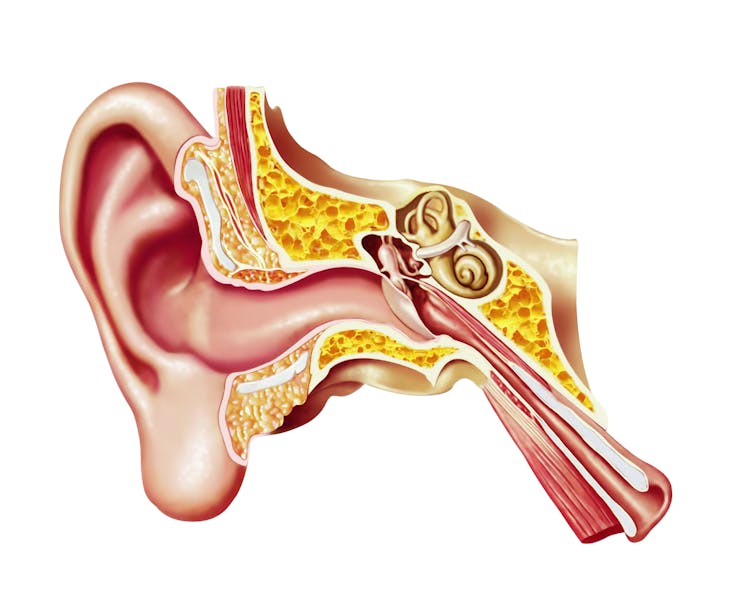
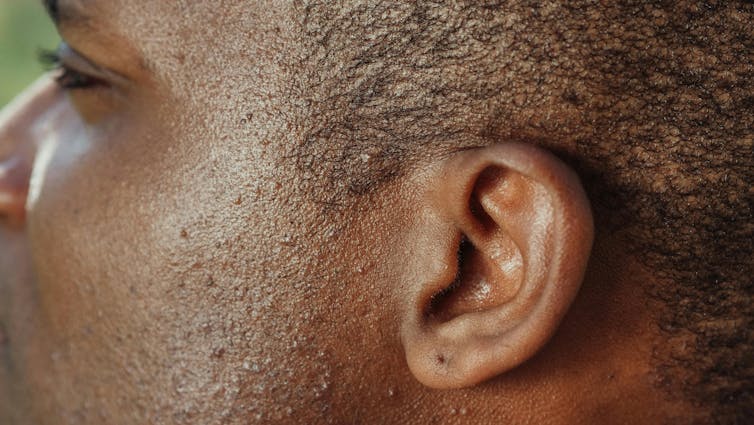
    How can I get water out of my ear after swimming?
    Source: The Conversation (Au and NZ) – By Peter Carew, Senior Lecturer in Audiology, The University of Melbourne; Murdoch Children’s Research Institute Rhett Noonan/Unsplash Swimming is one of the best parts of summer. But long after you’ve cooled down and dried off, you might be left with a niggling feeling – there is still water

    How can I get water out of my ear after swimming?
    Source: The Conversation (Au and NZ) – By Peter Carew, Senior Lecturer in Audiology, The University of Melbourne; Murdoch Children’s Research Institute Rhett Noonan/Unsplash Swimming is one of the best parts of summer. But long after you’ve cooled down and dried off, you might be left with a niggling feeling – there is still water

    Can you return gifts without a receipt or packaging? A legal expert explains
    Source: The Conversation (Au and NZ) – By Katharine Kemp, Associate Professor, Faculty of Law & Justice; Lead, UNSW Public Interest Law & Tech Initiative, UNSW Sydney Yan Krukau/Pexels, CC BY You’ve been given an ugly t-shirt and a book you’ve already read. But if you don’t have the receipts, can you return them? Or

    Can you return gifts without a receipt or packaging? A legal expert explains
    Source: The Conversation (Au and NZ) – By Katharine Kemp, Associate Professor, Faculty of Law & Justice; Lead, UNSW Public Interest Law & Tech Initiative, UNSW Sydney Yan Krukau/Pexels, CC BY You’ve been given an ugly t-shirt and a book you’ve already read. But if you don’t have the receipts, can you return them? Or

    5 things to know about Daphne Oram, the visionary pioneer in electronic music
    Source: The Conversation (Au and NZ) – By Prudence Rees-Lee, PhD Candidate, School of Design, RMIT University Daily Herald Archive/National Science and Media Museum/SSPL/Getty Images Daphne Oram (1925–2003) was one of Britain’s most important early electronic composers. Oram trained first as a pianist and composer and turned down a place at the Royal College of

    5 things to know about Daphne Oram, the visionary pioneer in electronic music
    Source: The Conversation (Au and NZ) – By Prudence Rees-Lee, PhD Candidate, School of Design, RMIT University Daily Herald Archive/National Science and Media Museum/SSPL/Getty Images Daphne Oram (1925–2003) was one of Britain’s most important early electronic composers. Oram trained first as a pianist and composer and turned down a place at the Royal College of

    Too sick to attend, too bad: why the live music ticketing market is broken
    Source: The Conversation (Au and NZ) – By Sam Whiting, Vice-Chancellor’s Senior Research Fellow in Music Industries and Cultural Economy, RMIT University Getty Images I recently had an urgent surgery to have a malignant growth removed. Unfortunately, this meant I was too immobile to attend the Melbourne event of the annual hard rock festival Good

    Too sick to attend, too bad: why the live music ticketing market is broken
    Source: The Conversation (Au and NZ) – By Sam Whiting, Vice-Chancellor’s Senior Research Fellow in Music Industries and Cultural Economy, RMIT University Getty Images I recently had an urgent surgery to have a malignant growth removed. Unfortunately, this meant I was too immobile to attend the Melbourne event of the annual hard rock festival Good

    How do I make clear ice at home? A food scientist shares easy tips
    Source: The Conversation (Au and NZ) – By Paulomi (Polly) Burey, Professor in Food Science, University of Southern Queensland Manki Kim/Unsplash When you splurge on a cocktail in a bar, the drink often comes with a slab of aesthetically pleasing, perfectly clear ice. The stuff looks much fancier than the slightly cloudy ice you get

    Body found after helicopter joins search at Piha Beach

    Source: Radio New Zealand

    Piha Beach, west of Auckland City, is notorious for its challenging conditions for swimmers and surfers (file photo). RNZ / Marika Khabazi

    A body has been found at Piha Beach, after the police helicopter joined a search for a person swept away.

    At about 12:30pm on Boxing Day, emergency services were told a person had been washed away by waves, police said in a statement.

    “The Police Eagle [helicopter] was deployed to help locate the person,” they said.

    “Sadly they were located and confirmed deceased around 1:20pm.”

    The death would be referred to the coroner.

    Sign up for Ngā Pitopito Kōrero, a daily newsletter curated by our editors and delivered straight to your inbox every weekday.

    – Published by EveningReport.nz and AsiaPacificReport.nz, see: MIL OSI in partnership with Radio New Zealand

    Boxing Day shoppers clog Auckland motorways

    Source: Radio New Zealand

    State Highway 16 full of slow moving morning traffic as the sun rises. RNZ / Cole Eastham-Farrelly

    Anyone catching a flight to Auckland Airport on Friday should allow extra travelling time as bargain hunters heading to shopping hot spots clog up the city’s motorway network.

    It will take 45 minutes to drive from the central city to the Manawa Bay shopping Outlet Centre near the airport. The trip would usually take less than half an hour on a good traffic day.

    Auckland Airport said there were some temporary road closures in place on Boxing Day. Nixon Road was closed and access along Jimmy Ward Crescent from the south was closed. Tom Pearce Drive remains open.

    Traffic was also building on State Highway 1, near the Mt Wellington Highway off-ramps, as shoppers head to the country’s biggest mall, Sylvia Park and the newly opened Ikea furniture store.

    It was also busy on both State Highway 20A and State Highway 20B around Auckland Airport.

    New Zealand Transport Agency advised people to plan ahead, and allow extra time for traffic.

    Sylvia Park centre manager Shahyad Asdollah-zadeh expected it to be a huge day.

    “If the last fortnight’s been any indication, we’ve had some really good numbers through the mall… The morning just so far to date has been good. So look, expecting a big day, which will be great for our retailers and customers.”

    Asdollah-zadeh expected foot traffic through the mall to be higher than last year.

    Sign up for Ngā Pitopito Kōrero, a daily newsletter curated by our editors and delivered straight to your inbox every weekday.

    – Published by EveningReport.nz and AsiaPacificReport.nz, see: MIL OSI in partnership with Radio New Zealand

    RNZ’s best videos to watch over summer

    Source: Radio New Zealand

    123RF

    Looking for something a bit different to watch this summer break? RNZ has you covered.

    There are more than 100 series and films available to watch in our video section, from current affairs and documentaries to kids’ shows and comedy.

    Here are some of the highlights to check out, curated by us for you.

    Popular Documentaries

    From visionary director Katie Wolfe comes The Haka Party Incident, an unflinching documentary of a forgotten history retold from every side.

    Or if literature is more your thing, try Joy, Full and Fearless, which follows the trauma and triumph of Joy Cowley’s astonishing life as New Zealand’s prolific, widely published and celebrated author of children’s fiction.

    Untold Pacific History is a dynamic and often provocative account of NZ’s relationship with the Pacific, while Cutting the Curve is a bold docuseries on fashion, power, and visibility in an era of diet drugs and shrinking ideals.

    Check out the full playlist of popular documentaries here.

    RNZ

    Hidden Gems

    A collection of some of the best bits you might have missed this year, including This is Wheel Life, a look into the lives of Soph and Indy, the quadriplegic-carer-cousin duo.

    Marauders promises glorious handycam footage from the Fat Freddy’s Drop 2003 debut European tour, while NZ Hip Hop Stand Up tells the stories behind some of the most influential tracks in Aotearoa hip hop.

    Crown Lynn: A Māori Story is a riveting slice of New Zealand history, telling the iconic story of Crown Lynn pottery and the generations of Māori families that worked there.

    Check out all the hidden gems here.

    RNZ

    Comedy Picks

    Need a laugh?

    Alice Snedden’s Bad News is an eight-episode docu-comedy about political and social issues confronting 2020 Aotearoa.

    The Citizen’s Handbook is a 10-part video and podcast comedy series and civics class for all New Zealanders, created by the award-winning team behind the popular satirical web show White Man Behind a Desk, and starring Robbie Nicol.

    Meanwhile, in each episode of ConspiraSeries, Bubbah gets first-hand insight from the locals, while motion graphics and animation visually represent the subject matter, whether it be the Te Anau moose, the flying spaghetti monster chilling over Mt Vic or the penis-shaped aviation patterns in Canterbury.

    Find more of RNZ’s best comedy videos here.

    RNZ

    Tamariki

    Get your young ‘uns into RNZ! Check out Music with Michalsing, dance, laugh, and play while learning music.

    Or perhaps they’d like Bigsies and Littles – two penguins exploring everyday life, finding big meaning in little moments – or Josh Thompson’s My Favourite Dead Person, a sketch show for kids that honours New Zealand history by telling some of our incredible, funny, inspiring, and outrageous stories, while highlighting what makes them unique and relevant to our special corner of the world.

    What Will I Be Today? is a vibrant, imaginative pre-school series that celebrates curiosity, creativity, and cultural diversity.

    And The Aotearoa History Show tells the story of New Zealand and its people from its geological origins to modern day.

    More of RNZ’s original kids’ shows can be found here.

    RNZ

    Natural history and science

    Want to spend summer filling your brain with facts? RNZ has you sorted.

    In Our Other Islands, Troy Kingi, one of NZ’s most-beloved musicians, embarks on a journey to explore the fascinating “other” islands of Aotearoa, delving into their histories and legends, chatting with the locals, and enjoying some delicious kai.

    In My Cyclone Gabrielle, four award-winning Kiwi filmmakers capture the aftermath of the storm from where they live, in some of the worst-affected regions of the country.

    Antarctica in a Warming World exposes the continent’s dramatic climate shifts, from melting ice to rising seas, showing how changes at the world’s edge threaten Earth’s shared future.

    Go here for the full natural history and science playlist.

    Musician and composer Don McGlashan speaks to Guyon Espiner in studio for ’30 with Guyon Espiner’ season 4. RNZ / Cole Eastham-Farrelly

    2025 Releases

    RNZ’s newest video content includes some of the shows already mentioned, and more – including 30 With Guyon Espiner, a series of 30-minute interviews with prominent Kiwis, completely raw and unedited.

    Bird’s Eye View focuses on four feathered friends who love to ponder and debate the bizarre behaviours of humans in their natural habitat, while Shine On Katherine Mansfield introduces a cast of Kiwi characters inspired by her writing, her short stories, and her tempestuous life.

    The All Goods Race is a fast-paced, feel-good reality adventure that throws two of Aotearoa’s biggest social-media personalities, Torrell Tafa and Terewai “Trexx” Kopua, into the ultimate test of resilience, humour, and Kiwi spirit as they race across the motu.

    Back to Timor follows the journey of four Kiwi military veterans who return to East Timor 25 years after serving as peacekeepers there. The big question for them: did they make a difference?

    And that’s just scratching the surface! Check out all RNZ’s 2025 releases here.

    Sign up for Ngā Pitopito Kōrero, a daily newsletter curated by our editors and delivered straight to your inbox every weekday.

    – Published by EveningReport.nz and AsiaPacificReport.nz, see: MIL OSI in partnership with Radio New Zealand

    Teenager charged after person shot in Christchurch

    Source: Radio New Zealand

    He is charged of wounding with intent to cause grievous bodily harm. RNZ / Nate McKinnon

    A man is due to appear in court on Friday after a person was reportedly shot in Christchurch.

    The police received multiple calls just after 6.30pm on Thursday about a man being chased by others on Amyes Road in Hornby.

    One of the people was reported to be carrying a gun.

    Officers found one person with a suspected gunshot wound in hospital that isn’t considered life-threatening.

    A 19-year-old man was arrested at a house on Amyes Road.

    He was charged of wounding with intent to cause grievous bodily harm.

    Sign up for Ngā Pitopito Kōrero, a daily newsletter curated by our editors and delivered straight to your inbox every weekday.

    – Published by EveningReport.nz and AsiaPacificReport.nz, see: MIL OSI in partnership with Radio New Zealand

    Not Only Fred Dagg: Lorin Clarke reflects on her father’s legacy

    Source: Radio New Zealand

    When Lorin Clarke told her mum, Helen, she was making a documentary about her late father, John, his “partner in every regard” warned that it couldn’t just be a story of how great he was.

    But Not Only Fred Dagg But Also John Clarke reveals John, who left school at 15, created the beloved comedy character Fred Dagg as a young man and later became a satirical writer and TV personality in Australia, was a pretty great New Zealander.

    Lorin says she wanted the film to show people who saw John or his black-singleted ’70s alter-ego on TV and thought ‘I feel like I know that guy’, they were not wrong – “It’s the same thing that you’re seeing that we experienced as a family with him. That’s unusual, I think, for somebody to be how they are,” she tells Culture 101.

    – Published by EveningReport.nz and AsiaPacificReport.nz, see: MIL OSI in partnership with Radio New Zealand

    Domestic violence experts warning of increase in abusive partners using tracking devices

    Source: Radio New Zealand

    Experts say there is an increase in abusive partners stalking their exes with small tracking devices. 123RF

    Domestic violence experts warn they are seeing an alarming increase in abusive partners stalking their exes using mini tracking devices and mobile phone apps.

    The social service Help at Hand, funds technology to help reduce family violence and its general manager Gavin Healy said the majority of the refuges they deal with report tracking devices are a problem.

    “They’re being found everywhere, they’re being found slipped in handbags, kids teddies if they know there’s a toy the kid brings everywhere with them they’ll stick it in there, back of the car,” he said.

    Help at Hand general manager Gavin Healy SUPPLIED

    “We’ve also come across a situation where someone had access to the PlayStation and was actually able to turn the camera on the other side to see what was going on when the kids were playing.”

    Healy said in a recent survey of 778 survivors of domestic voilence, 38 percent were fearful their former partner was tracking them digitally and 20 percent reported their ex had taken control of their social media, bank accounts or codes.

    He said digital tracking was also occurring via phone apps.

    “We’re just getting our heads around it and the perpetrators are streaks ahead but the data’s definitely there to show that this is becoming a really significant issue.”

    Healy said Help at Hand was in the initial stages of working with organisations on the frontline to help them identify and reduce digital tracking.

    Eclipse aims to prevent family violence and train those working in the sector, its director Debbs Murray is herself a survivor of domestic violence.

    Debbs Murray, author of One Soul, One Survivor supplied

    She said they began offering a technology family violence workshop mid-2025 because of the prevalence of digital harm.

    “We’re actively training our frontline now about it…It is a whole new form of coercive control in itself, it’s brutal.”

    She said mini tracking devices were used but so were everyday household devices.

    “Anything that can be controlled by an app can be used as a form of coercive control or family violence tactics,” Murray said.

    “If you imagine that the primary victim’s sitting in their home and suddenly the curtains start opening and closing or the wifi’s shut down or the power’s turned off.”

    She said children’s toys could be used to track whereabouts, and pets.

    “I heard a story about a woman who was tracked down by her predominant aggressor through a microchip in a cat,” Murray said.

    “Anything that’s got cameras on it, children’s toys there’s pet dispensers that have cameras on that can be used to surveil and monitor. It’s so big.”

    Women’s Refuge this year found more than 80 percent of people using their services had experienced digital abuse through their phones and other technology and 56 percent had been tracked and had their movements monitored.

    Its principal policy advisor Dr Natalie Thorburn said mobile phone apps were most commonly used.

    “While occasionally we do have perpetrators who will use things like air tags or other associated GPS technology that are separate from their phones to stalk, to monitor, to keep an eye on their victims, most of the time it actually happens just as effectively using everyday technology,” she said.

    “The apps you already have on your phone, the ones that you use on a regular basis, those things are actually far more likely to be maliciously utilised by perpetrators than any of the new technology.”

    Thorburn said it was concerning.

    “As our lives become increasingly digitally mediated, so does the forms of violence that we experience so it’s the same kind of violence, but just enacted through a different mechanism,” she said.

    “It does make perpetrators’ ways of abusing people more efficient and give them greater reach and that’s kind of the terrifying part of it.”

    Legislation to make stalking a specific criminal offence has passed its third reading in Parliament and will come into force in May 2026.

    The legislation amends the Crimes Act to make stalking and harassment punishable by up to five years in prison.

    “The new stalking law will make it a lot easier to identify those examples of tracking, monitoring, spying behaviour basically as stalking, especially in an intimate partner scenario where there’s reason to be fearful of someone’s response,” Thorburn said.

    Sign up for Ngā Pitopito Kōrero, a daily newsletter curated by our editors and delivered straight to your inbox every weekday.

    – Published by EveningReport.nz and AsiaPacificReport.nz, see: MIL OSI in partnership with Radio New Zealand

    The Ashes live: Australia v England – fourth test, day one

    Source: Radio New Zealand

    Follow all the cricket action, as the fourth in the five-test series between archrivals Australia and England gets underway at the MCG in Melbourne

    Australia swept to an 82-run win in the third Ashes test at Adelaide Oval to retain the urn with two matches to spare.

    After eight-wicket defeats in Perth and Brisbane, England have lost the Ashes in three matches for the fourth consecutive tour, while losing 16 of their last 18 tests in Australia.

    First ball is scheduled for 12.30pm NZT.

    Sign up for Ngā Pitopito Kōrero, a daily newsletter curated by our editors and delivered straight to your inbox every weekday.

    Philip Brown

    – Published by EveningReport.nz and AsiaPacificReport.nz, see: MIL OSI in partnership with Radio New Zealand

    Andrew Bayly and the fight for Antarctica

    Source: Radio New Zealand

    Andrew Bayly went to Antarctica in 2012. Supplied

    Andrew Bayly still remembers the “visual assault” of Antarctica, the piercing blue clarity and scale-bending brightness.

    The National MP tells how he once convinced his companions to join him on what he thought would be a short trip to climb a nearby peak. They borrowed skis, promised they would be back for lunch and set off.

    Instead, the trek stretched for hours, across a crevasse field and then up a seemingly endless slope. The mountain turned out to be 12 kilometres away.

    “We didn’t get back to the base until late that night,” Bayly laughs. “It was just meant to be a little stroll.”

    Bayly was there for a full month in 2012, climbing mountains, including the continent’s tallest peak, Mount Vinson, and another never-before-climbed – the mountaineer’s “holy grail”.

    “It was only three of us. We were miles from anyone,” he says. “You know that if you’re in trouble, you’re really in trouble.”

    More than a decade on, the landscapes have stayed with him, fuelling a personal affinity for the continent and a determination to protect it.

    Group photo of attendees at the Antarctic Parliamentarians Assembly in Wellington. Supplied

    In December, Bayly brought politicians, diplomats and officials from overseas to Wellington for a two-day meeting, the third Antarctic Parliamentarians Assembly.

    Roughly 40 guests – representing nearly 20 nations – came to hear from scientists, compare notes and take home a clearer sense of what is happening at the bottom of the world.

    From ice to influence

    Antarctica is governed by a treaty signed in 1959, designating it a natural reserve devoted to peace and science. It explicitly prohibits military bases, weapons testing and new territorial claims.

    But that is not to say the continent is free from pressure.

    Tourism has surged in recent years. More than 120,000 visitors travelled south last season, six times the numbers seen two decades ago.

    “We want to welcome tourists. We want people to go to Antarctica,” Bayly says. “The question is: how do you do that in a sustainable way?”

    Fishing remains a concern, too. The krill fishery reached its annual catch limit this year for the first time, forcing its shutdown three months ahead of schedule – a warning sign that pressure is rising.

    The tiny shrimp-like crustaceans are fundamental to the ecosystem as a primary food source for whales, penguins and seals.

    Andrew Bayly at the South Pole. Supplied

    “Certain nations really want to have a go at fishing out the krill,” Bayly says. “So, how do we protect ourselves against that?”

    And then there is the unmistakable effect of climate change.

    On the Antarctic Peninsula, the area of ice-free “greening” has jumped from 86 hectares to nearly 1200 over four decades – the size of a large sheep and beef farm, now exposed land rather than ice.

    Research teams are drilling through kilometres of ice to pull up samples that may hold climate records stretching back more than a million years.

    “They’re going to farm out all those core samples to … research people around the world, whoever wants them. So, you know, how do you collaborate?”

    Bayly says those big questions of conservation and collaboration dominated discussions among the parliamentarians, many of whom arrived with limited knowledge of Antarctica.

    “When they go back to their home, we want them to be strong advocates… in an informed way,” he says.

    Among the speakers was mountaineer Peter Hillary, a moment Bayly says resonated with those visitors familiar with the legacy of his father, Sir Edmund Hillary.

    “They love our connection to Antarctica,” he says. “They know we’ve got a leadership position.”

    The next assembly is already in motion, scheduled for 2027, with Bayly asked to chair the steering committee. Several nations have already put up their hands to host: Norway, China, Italy, Argentina, and potentially more.

    Sign up for Ngā Pitopito Kōrero, a daily newsletter curated by our editors and delivered straight to your inbox every weekday.

    – Published by EveningReport.nz and AsiaPacificReport.nz, see: MIL OSI in partnership with Radio New Zealand

    Parking hard to find as Boxing Day sales begin

    Source: Radio New Zealand

    Shoppers at Sylvia Park, Auckland, on Boxing Day 2025. Ke-Xin Li / RNZ

    Bargain hunters have started their Boxing Day shopping early to avoid crowds and traffic.

    Auckland woman Lara finished her shopping at Sylvia Park shortly after the mall opened at 9am.

    “I only went to Lush, so I went really early to be on time for Lush. The parking was fine because I got here about 8.30am to be in time.”

    Lush opened at 9am, but Lara said there was already a long queue from 8.30am.

    Shoppers at Sylvia Park, Auckland, on Boxing Day 2025. Ke-Xin Li / RNZ

    Shoppers arriving after 9am said it was hard to find parking.

    But the mall was not as busy as in previous years, some said.

    Patrick, who arrived at the mall at 9.30am, said it seemed less crowded than in previous years.

    “I’ve been here a couple of times on a Boxing Day – I’d say this year around has probably less people around.

    “I’d probably say it’s more towards the cost of living that affected everybody’s opportunity to come here.”

    Shoppers at Sylvia Park, Auckland, on Boxing Day 2025. Ke-Xin Li / RNZ

    People should prepare for stormy, wet weather, as they head out on Boxing Day, MetService warned earlier.

    Sign up for Ngā Pitopito Kōrero, a daily newsletter curated by our editors and delivered straight to your inbox every weekday.

    – Published by EveningReport.nz and AsiaPacificReport.nz, see: MIL OSI in partnership with Radio New Zealand

    Thousands of unwanted Christmas gifts already for sale on Trade Me

    Source: Radio New Zealand

    A survey found most people are not offended if a gift is on-sold. Unsplash/ Kira auf der Heide

    More than 4500 unwanted Christmas gifts had already been listed for sale online by 8:30am on Boxing Day, according to Trade Me.

    Interesting listings include De Walt power tools listed by someone who prefers Ryobi, a large Kathmandu jacket gifted to a “tall skinny young man who never wears a large” and a bag of Licorice Allsorts gifted to someone who does not eat sweets.

    The company’s spokesperson Millie Silvester said bargain hunters were also out in force.

    “Boxing Day is a prime time for Kiwi to head to Trade Me to scope out the presents that didn’t make the cut,” she says.

    “Last year, we saw almost 60,000 searches for ‘unwanted gifts’ on the 26th itself, and this year is already looking similar with over 10,000 searches yesterday – most before Christmas dinner had even been served.”

    A recent Trade Me survey showed the trend of receiving lacklustre gifts continues.

    “The data shows a significant number of New Zealanders, 42 percent to be exact, typically unwrap at least one present they didn’t want,” Silvester said.

    “It’s become a bit of a tradition for Kiwi to list their unwanted Christmas pressies on Trade Me.

    “This year, our survey found that one in four Kiwi (25 percent) are planning to list any duds they get. We’re expecting to see thousands more of these items pop up over the next few days.”

    She also said that sellers shouldn’t feel guilty, as most people are not offended if a gift is on-sold.

    Trade Me survey also showed that over half of New Zealanders (51 percent) were fine if a gift they gave was sold on, with only 5 percent saying they’d be upset.

    “We think this shows that people just want their loved ones to be happy with their gift, even if that means swapping it for something they’ll get more use out of.”

    The company also said a massive 70 percent of Kiwis will pretend to like a gift they were not happy with.

    Silvester said including the words “unwanted gift” in the tile will help attract bargain hunters and clear, well-lit photos would also make a difference.

    “A good backstory can help your item sell, but if you’d rather keep the sale on the quiet, it’s best to avoid any details that might identify you to the person who gave you the present,” she said.

    “It’s also best to avoid listing handmade or highly personalised items, as they can be tricky to sell.”

    The company’s survey found that popular choices of dealing with unwanted presents also include donating them to charity, regifting, or stashing them in a cupboard to be forgotten.

    Sign up for Ngā Pitopito Kōrero, a daily newsletter curated by our editors and delivered straight to your inbox every weekday.

    – Published by EveningReport.nz and AsiaPacificReport.nz, see: MIL OSI in partnership with Radio New Zealand

    Paid firefighters call off planned Boxing Day strike

    Source: Radio New Zealand

    Volunteer firefighters will respond to 111 calls during the strike hour. RNZ / Alexander Robertson

    The Professional Firefighters’ Union has decided to stop Boxing Day’s one-hour strike that was meant to begin at midday.

    It acknowledged that it was Boxing Day, and for those not rostered to work, it was an important opportunity to be with whanau.

    The withdrawal meant volunteers who would feel obligated to respond during the strike could relax.

    Collective bargaining between Fire and Emergency and the Professional Firefighters’ Union broke down, and the Employment Relations Authority this month sent them into facilitation.

    The union will instead strike for one hour on 2 and 9 January.

    Meanwhile, firefighters have put out a grass fire on the bank of the Waimakariri River near Swannanoa, north of Christchurch.

    The fire was reported just after 11pm on Thursday and when firefighters arrived, they found a blaze of about 80 by 10 metres.

    It took three hours and three tankers to extinguish the grass fire, which was fanned by high winds.

    – Published by EveningReport.nz and AsiaPacificReport.nz, see: MIL OSI in partnership with Radio New Zealand

    Weather: Large hail, thunderstorms forecast across New Zealand

    Source: Radio New Zealand

    Several weather watches have been issued (file image). 123rf.com

    People should prepare for stormy, wet weather, as they head out to Boxing Day sales.

    Several weather watches have been issued as thunderstorms are expected for the upper North Island and southeast of the South Island.

    MetService has issued a severe thunderstorm watch for Christchurch, Canterbury Plains, Canterbury High Country, North Otago, Central Otago, Dunedin, Clutha and Southland from 1pm until 8pm on Friday.

    It said there was a possibility of hail larger than 20mm in these areas.

    “A cold unstable air-mass affects parts of the South Island today. For coastal Canterbury from the Banks Peninsula southwards, eastern Otago and Southland there is a moderate risk of thunderstorms. These storms may become severe this afternoon and evening with hail, larger than 20mm.”

    Several weather watches have been issued. MetService

    Meanwhile up north, a complex trough embedded in a moist unstable air-mass was expected to move east across the upper North Island, the forecaster said.

    It issued a severe thunderstorm watch for Northland, Auckland, Great Barrier Island, Coromandel Peninsula, Bay of Plenty and Rotorua from 2pm until 8pm on Friday. Bay of Plenty and Gisborne are also under a watch from 7pm until 11pm Friday.

    MetService said the downpours could bring hourly rainfall amounts of 25 to 40mm an hour.

    Sign up for Ngā Pitopito Kōrero, a daily newsletter curated by our editors and delivered straight to your inbox every weekday.

    – Published by EveningReport.nz and AsiaPacificReport.nz, see: MIL OSI in partnership with Radio New Zealand

    Why do cricket balls have to be so hard?

    Source: The Conversation (Au and NZ) – By John Arnold, Senior Lecturer, Sport & Exercise Biomechanics, University of South Australia

    The game of cricket is believed to have originated in rural England sometime in the 16th or 17th century.

    The earliest versions of cricket balls had no standard size, weight or stitching: they were handmade by locals and consisted of a round leather case filled with materials such as cork or wool.

    As there were no set requirements or construction methods, each ball was different, and this affected how it bounced, moved and rebounded off the bat.

    However, cricket spiked in popularity in the first half of the 18th century, which prompted consistency in the rules and equipment to ensure fairness and facilitate further growth of the game.

    The modern cricket ball

    Modern balls consist of four main components: a cork and twine (string) core, a leather casing, a raised middle section (the seam) with stitching on either side and a wax or lacquer coating.

    Balls are either red (for long formats such as international Test matches), white (for shorter formats such as One Day Internationals or Twenty20 games) or pink (for day-night Tests and first-class games).


    Read more:
    Like night and day: why Test cricket changes so much under lights


    The laws of cricket state that when new, the ball should weigh between 5.5 and 5.75 ounces (155.9–163 grams) and have a circumference of 22.4–22.9 centimetres.

    For women’s cricket, the ball can weight slightly less (140–151g) and for junior cricket (under 13) even less again (133–144g).

    A set of technical standards was formalised in 1994 which stipulate the mechanical requirements for factors such as hardness, to help different manufacturers produce balls with more consistency and ensure fairness across the globe.

    So why are balls so hard?

    Cricket balls are the product of centuries of tradition and the extreme physical demands of the game. They must be robust and hard-wearing, able to withstand repeated high-force impacts from both the bat and the pitch over the course of a match.

    Consider the forces involved when a ball is struck by a bat.

    Reasonable estimates of peak forces when the ball is struck by the bat are about 17 kilonewtons (the weight of 1,700 kilograms) – enough to lift a 1.7 tonne car off the ground.

    The ball also repeatedly impacts the pitch at high speeds, experiencing shear forces that gradually wear its surface. On deteriorating pitches, this wear is even more pronounced.

    In Test cricket, a single ball can be bowled up to 480 times (80 overs) before the fielding team is allowed to request a replacement.

    While cricket ball construction has evolved over the past 300 years, its main elements have remained largely consistent.

    The introduction of the seam – the raised stitching that runs around the ball’s circumference – and the practice of shining one side of the ball to create swing are fundamental aspects of match play.

    These features allow bowlers to generate movement in the air – challenging batters and shaping the strategy of the game.


    Read more:
    How cricket balls move: the science behind swing, seam and spin


    The materials, construction and physical characteristics of the ball – including size, mass and density – determine its mechanical properties and influence how it bounces, spins and interacts with different surfaces and equipment.

    These properties are central to cricket’s nature and style – changing them would fundamentally alter the way the game is played.

    Tradition and the physical requirements of the game have ensured this construction is tried, tested and fit for purpose, creating the ball we know today.

    Is the ball dangerous?

    Bowlers vary their deliveries to deceive the batter and gain a tactical advantage. This can include changing the speed or where they aim the ball.

    A specific strategy fast bowlers may use is to aim to bounce the ball directly at a batter’s upper body or head (referred to as a “bouncer)”.

    This can be used to intimidate the batter and/or force them to make a mistake.

    Perhaps the most infamous example of this was the 1932–33 Ashes series, in which the English cricket team controversially used a consistent “bodyline” delivery approach to contain Australian batting legend Don Bradman.

    Various rule changes since the 1990s have limited the number of bouncers that bowlers can deliver, making the game safer.

    At the elite level, cricket balls are commonly bowled at speeds of 130–150 kilometres per hour.

    Occasionally, fast bowlers can exceed 160km/h. At amateur and recreational levels, bowlers commonly still reach 100km/h.

    When a person is struck – whether it be a batter, fielder or umpire – the ball hardly rebounds and the momentum is absorbed by the body.

    The force is also concentrated in a small area, making serious or even fatal injury possible – particularly if contact is made directly to the head.

    The exact force depends on the timing, location and angle of impact. But there’s no doubt the combination of a small, dense ball moving at high speed and stopping almost instantly makes cricket-ball injuries potentially deadly.

    There have been fatal incidents, albeit rare. The most high-profile such incident was the death of Phillip Hughes in 2014, who was hit on the neck in a Sheffield Shield match and died two days later from a vertebral artery injury.


    Read more:
    Yes, cricket is a contact sport. We have safety gear – but we need to do more


    The number of deaths has declined significantly in the past 30 years, most likely due to widespread use of enhanced safety equipment, especially helmets, by batters and close-in fielders.

    So while a layperson may view cricket as a non-contact sport, the truth is batting and fielding require great courage, considering the hardness of the ball and the speeds it can reach.

    The Conversation

    The authors do not work for, consult, own shares in or receive funding from any company or organisation that would benefit from this article, and have disclosed no relevant affiliations beyond their academic appointment.

    ref. Why do cricket balls have to be so hard? – https://theconversation.com/why-do-cricket-balls-have-to-be-so-hard-269900

    Cookbook authors, ‘dukes’ and card game gatecrashers: Australia’s quirkiest politicians

    Source: The Conversation (Au and NZ) – By Robert Hortle, Deputy Director, Tasmanian Policy Exchange, University of Tasmania

    Australia has a fine tradition of unconventional politicians at all levels of government. Multiple examples probably spring to mind immediately.

    But in researching this piece, I went down a wacky rabbit hole. It turns out there are lesser-known characters in the annals of history that deserve some time in the spotlight.

    From particularly well-dressed pioneers to founders of micronations, here are some of Australia’s most eccentric politicians.

    But who counts as ‘eccentric’?

    What do we really mean by “eccentric”? According to the Cambridge Dictionary, the term describes someone who is “strange or unusual, sometimes in a humorous way”.

    For our purposes here, a deep commitment to long-term oddity is vital – a one-off bizarro act isn’t enough.

    You’ll notice there are very few women politicians described as eccentric. This is partly because historically the vast majority of state and federal MPs have been men, and partly because we (the public) are more accepting of eccentric men in political office, while women are held to a different standard.

    It’s also a very fine line between being eccentric and being problematic or offensive. Many MPs have fallen foul of that line and so won’t be included here.

    With all that in mind, I looked beyond the usual cast of onion-eaters, hat-wearers, Jurassic Park fans, and dog-threateners to find some of our lesser-known rum’uns.

    Alfred Deakin

    Many will know Deakin as one of the architects of Australian federation, the country’s second prime minister, and a strong advocate of racist policies.

    What’s less well-known is that over a period of 13 years – including while he was prime minister – Deakin regularly published articles and letters anonymously in various newspapers.

    Often written under the byline “From our special correspondent”, Deakin’s missives have been described as “vivid in style, intelligent in comment, relatively free from bias and mildly critical of himself on occasions”.

    Deakin was also deeply interested in Muscular Christianity and spiritualism – he attended seances as a young man – and wrote poetry and plays throughout his life.

    John the Duke of Avram

    Born as John Charlton Rudge, “His Grace, the most Noble Duke of Avram” was a Liberal MP in Tasmanian parliament between 1989 and 1992 and later a deputy mayor in the state’s south.

    In the early 1980s, the Duke had founded the Grand Duchy of Avram, a micronation with its own Royal Bank, to bring his PhD thesis on central banks to life.

    A yellow bank note with cursive text on one side and a portrait of a man in an tudor bonnet
    The 25 Avram note, distributed by the Grand Duke of Avram in the 1980s.
    Grand Duchy of Avram

    The Duchy never claimed any physical territory – and the Duke later said the micronation doesn’t exist – but the bank briefly opened a branch in Tasmania that issued coins and notes.

    The federal government took the bank to court several times, but lost.

    Kezia Purick

    Purick was a Northern Territory MP from 2008 to 2024, first as part of the Country Liberal Party and later as an independent.

    Down the years she made headlines for spending taxpayers’ money on booze, the corrupt use of public resources to stymie the creation of a new political party, resuscitating a chicken and catching a python.

    Purick reserved some of her particularly colourful language for the late former federal minister Kevin Andrews. When he made headlines after saying that de facto couples should get married to protect their relationships and children, she called him a “pooncy, pasty-faced person” and implied she’d take to him with a device used for castrating young bulls if he turned up in her electorate.

    Don Dunstan

    Known for his progressive politics, dapper style and bisexuality, Dunstan was a revolutionary figure in South Australian politics. As premier in the late 1960s and 70s, he led a government that reformed Aboriginal land rights, decriminalised male homosexuality and put in place environmental protections.

    And he did all this while turning out immaculately in safari suits, floral shirts, and – on a day that has gone down in Australian political folklore – tiny, bright pink shorts.

    While he was premier, Dunstan also took up surfing and wrote a cookbook. After retiring from politics he hosted a TV show, opened a restaurant, campaigned for democracy in Fiji and much more.

    Archie Galbraith Cameron

    Cameron was a federal MP for 22 years and speaker of the House of Representatives from 1950 to 1956.

    A black and white portrait of an older man in a juridicial wig
    Archie Cameron hated gambling. Like, really hated it.
    Wikimedia Commons

    Variously described as abrasive, charming, and ruthless, Cameron is famous for his anti-gambling views. Legend has it that in May 1950, he climbed the roof of Old Parliament House and leapt through the press gallery window to shut down a card game.

    And, in a famous showdown with the long-serving Parliament House barber, Cameron insisted a poster of Phar Lap be removed from the barber shop.

    Cameron was also a stickler when it came to the parliamentary dress code – at least for others. The man himself was known to receive visitors to his office wearing shorts and a singlet, bare feet propped on his desk.

    Barry Jones

    Classified by the National Trust as an “Australian Living Treasure”, Barry Jones was a federal MP between 1977 and 1998.

    Before entering federal politics, Jones made a name for himself as a quiz champion. In the 1960s, he was a regular on the TV show Pick a Box, where he was famous for arguing with the host about the correct answer.

    As minister for science, Jones oversaw the founding of Questacon and later authored the influential book Sleepers, Wake!, which interrogated the role of technology and work in a post-industrial society.

    An unapologetic intellectual, Jones has been a passionate advocate for the arts, a critic of the “dumbing down” of Australian politics, a campaigner against the death penalty, and much more.

    Jacqui Lambie

    Lambie was first elected as a senator in 2013 after running for the Palmer United Party. Following a brief stint as an independent, she established the Jacqui Lambie Network.

    Tasmania’s favourite battler has a strong record of off-piste comments, from describing her ideal man (“well-hung”, if you were wondering) to some particularly memorable breakfast TV exchanges.

    Lambie was booted from parliament in 2017 during the section 44 debacle in which a string of MPs with dual citizenship were forced to resign. In response, Lambie opined that “I think that’s really cutting down our gene pool – and let’s face it, the gene pool is f****d”.

    And who could forget the famous dagwood dog incident, which resulted in a photo that could be described as Tasmania’s political Mona Lisa.

    The Conversation

    Robert Hortle does not work for, consult, own shares in or receive funding from any company or organisation that would benefit from this article, and has disclosed no relevant affiliations beyond their academic appointment.

    ref. Cookbook authors, ‘dukes’ and card game gatecrashers: Australia’s quirkiest politicians – https://theconversation.com/cookbook-authors-dukes-and-card-game-gatecrashers-australias-quirkiest-politicians-271515

    How can I get water out of my ear after swimming?

    Source: The Conversation (Au and NZ) – By Peter Carew, Senior Lecturer in Audiology, The University of Melbourne; Murdoch Children’s Research Institute

    Rhett Noonan/Unsplash

    Swimming is one of the best parts of summer. But long after you’ve cooled down and dried off, you might be left with a niggling feeling – there is still water in your ear.

    Your ear may feel full or blocked and sounds may be muffled. You may even hear some gurgling or rustling noises.

    While water usually drains naturally, a few tips can help speed things up and prevent swimmer’s ear, a common infection after swimming.

    Why water gets stuck

    You might think your ear canal is a straight tube, but it’s not. It bends twice, and some people’s canals are naturally narrower than others.

    The ear canal is lined with hair and wax for protection. It can also develop extra bone growth (exostoses) from years of cold-water swimming, sometimes known as “surfer’s ear”, which can make it even narrower.

    When you swim, water can easily get past all these curves and barriers when you dip your head under water or get splashed. But getting it out afterwards can be tricky.

    Diagram showing the curved ear canal.
    The ear canal bends twice and is naturally narrower in some people.
    Leonello Calvetti/Stocktreck Images/Getty

    Try the simplest things first

    Wiggle and tilt

    Gently tug your earlobe up and down while tipping the blocked ear towards your shoulder. This straightens the ear canal and lets gravity help drain water out.

    Lie on your side

    Lay on your side on a towel for a few minutes, then roll over to the other side. Gravity will help again. In summer, warmth from the sun and towel can also help water in the ear dry faster.

    Cup and pump

    Press your slightly cupped palm over your ear to form a seal, then gently push and release to create a vacuum effect. You can also press the tragus (the firm skin in front of your ear canal) over the opening of your ear canal several times to encourage movement and drainage.

    Close-up of a man's ear.
    The tragus is the small cartilage flap covering the ear canal’s opening.
    Kindel Media/Pexels

    Do I need ear drops?

    If none of these tips have worked so far, you might need some ear drops designed to dry out your ears.

    Typically, these contain alcohol, which helps water evaporate faster. You can get these over the counter from a pharmacy.

    But be sure to read the instructions, and don’t use them if you have any ear pain, discharge, an ear infection or a hole in your eardrum (or grommets, which are tiny tubes surgically inserted in the eardrum).

    Some people make their own drops, using a solution of rubbing alcohol and white vinegar in equal proportions. This makes the ear canal more acidic, which can help prevent bacteria and fungal growth.

    Be cautious when you use your own drops (again, don’t use them if you think you have a hole in your eardrum) and only use a few drops in each ear.

    What not to do

    Never put anything in your ears – even fingers or the tip of a towel can push water, wax and anything else trapped in your ear deeper and worsen the problem.

    You might also scratch the delicate canal skin, increasing infection risk.

    Avoid cotton buds and stick to the tips above.

    Is trapped water dangerous?

    Many people find the feeling annoying. But warm, moist places are also ideal for bacteria and fungi, so water trapped in the ear canal can lead to swimmer’s ear (otitis externa).

    Symptoms include pain when moving the outer ear (the bit you can see), itchiness, discharge, redness or swelling, and sometimes fever.

    Around one in ten people experience it at some point in their lives, most often during summer, and kids aged 7–14 are at higher risk.

    If you suspect you have swimmer’s ear, it is important to see a medical professional as you will likely need treatment (typically antibiotic drops and pain relief).

    Avoid swimming after storms or in polluted water, which carries more bacteria.

    Freshwater sources such as rivers and lakes pose greater risk than salty ocean water, while properly chlorinated pools are generally pretty safe.

    How to avoid it and when to seek help

    If you don’t like the feeling after swimming – or you frequently get water trapped in your ears – invest in a swim cap or some ear plugs. Audiologists can help you find or customise earplugs to fit your ears.

    Prioritise drying out ears once you are finished swimming, and use some of the tips above. For kids, making it into a game can help.

    If an ear feels painful, inflamed or looks swollen, there might be an ear infection and it’s best to seek advice and attention from your GP.

    If you still feel like you have water in your ears after two to three days, it’s best to also get it checked out.

    The Conversation

    Peter Carew is a member of Audiology Australia.

    ref. How can I get water out of my ear after swimming? – https://theconversation.com/how-can-i-get-water-out-of-my-ear-after-swimming-270674

    Can you return gifts without a receipt or packaging? A legal expert explains

    Source: The Conversation (Au and NZ) – By Katharine Kemp, Associate Professor, Faculty of Law & Justice; Lead, UNSW Public Interest Law & Tech Initiative, UNSW Sydney

    Yan Krukau/Pexels, CC BY

    You’ve been given an ugly t-shirt and a book you’ve already read. But if you don’t have the receipts, can you return them?

    Or what if someone’s given you a gift that’s defective in some way?

    Before you box up your unwanted presents and head to the shops, here’s what the Australian Consumer Law – the rules on consumers’ rights and business responsibilities – says about asking for a return, exchange or refund under different circumstances.

    Can I return gifts as ‘change of mind’ without a receipt?

    Australian consumer law generally doesn’t require retailers to accept returns for change of mind alone.

    So if you just didn’t like the gift, that’s not enough under the law to be able to ask for the money back.

    If a business has a “change of mind” returns policy, they have to honour it. Otherwise, they may get in trouble for “misleading conduct” under the consumer law.

    But even for stores allowing change of mind returns, they usually have a list of exceptions, including underwear, beauty products, food and more – so check their rules.

    All retailers will want to see some proof of purchase – though not necessarily the original receipt.

    What are my rights if the gift’s faulty?

    If a product is defective, under Australian consumer law shoppers have a lot more rights than many people realise. It can help to use the phrase “Australian consumer law” so the retailer knows you’re aware of your rights.

    What you can ask for depends on whether or not there’s a “major failure” of your basic rights under consumer law, known as “consumer guarantees”.

    A “major failure” of a consumer guarantee is when the product:

    • is unsafe

    • has either one serious problem, or several smaller problems, which would have stopped a reasonable person from buying the product

    • is very different from the description, sample or demonstration the purchaser received before purchase

    • can’t be used for its expected purpose and can’t easily be fixed within a reasonable time.

    In these cases, you’re entitled to your choice of a replacement product or a full refund, if you can produce either a receipt or other proof of purchase.

    For other more minor failures that can be remedied, the business only has to repair it for free within a reasonable time. It doesn’t have to offer you a replacement or refund.

    However, if you’ve caused damage to the product yourself, you may not be able to rely on the consumer guarantees.

    There are exceptions to the consumer guarantees. For instance, some don’t apply to goods sold by auction. And most don’t apply to “non-business” sellers, such as private sellers on Gumtree or Facebook Marketplace.

    What if the original packaging is missing or damaged?

    If the product is faulty in one of the ways above, you’re still entitled to those consumer law remedies – even if the original packaging is missing or damaged.

    But if you’re returning for change of mind, most retailers require the product to be in saleable condition, with packaging intact.

    What counts as proof of purchase?

    You need proof of purchase to establish your right to consumer guarantees, but this doesn’t have to be a receipt.

    Other types of proof of purchase can include:

    • a credit card statement

    • a warranty card showing the date and place of purchase

    • receipt number or reference number given over the phone or internet

    • the serial number, if this is stored in the store’s computer system.

    The law doesn’t specify exactly what proof of purchase is sufficient. The consumer just needs to be able to reasonably prove they bought the item.

    So if was a gift, you’re likely to need some help from the gift-giver.

    Importantly, you don’t have to have an original copy: photos and photocopies also count. So if you’re ever buying something expensive, take a photo of your receipt immediately. It can save you time and money later.

    Does it make a difference if it was bought online or in a shop?

    For faulty products, Australian consumer law rights apply whether the gift was bought online or in a shop.

    A guarantee that’s especially helpful for online purchases is that goods must “correspond with the description”.

    For example, you would be entitled to your choice of a refund or replacement if the photo advertising a suitcase showed or described a combination lock as a feature, but the one you received had no lock.

    Hands holding a measuring tape over a white shirt.
    If a shirt sold online says it’s a large and 57cm wide, but it turns out to be only 54cm wide, you could ask for a refund or replacement.
    Anna Savina/Unsplash, CC BY

    What if the store still says no?

    If the product’s faulty, it’s illegal for businesses to refer to store policies or terms and conditions that deny your right to consumer guarantees – such as policies saying “no refunds or exchanges on sale items”.

    If you think a business hasn’t delivered on Australia’s consumer law guarantees, you may be able to ask for a repair, replacement, refund, cancellation or compensation for damages or loss.

    You can read more on the process of making a complaint – starting with the business the item came from.

    The Conversation

    Katharine Kemp is a member of the research committee of the Consumer Policy Research Centre, an independent, not-for-profit consumer think-tank.

    ref. Can you return gifts without a receipt or packaging? A legal expert explains – https://theconversation.com/can-you-return-gifts-without-a-receipt-or-packaging-a-legal-expert-explains-270084

    5 things to know about Daphne Oram, the visionary pioneer in electronic music

    Source: The Conversation (Au and NZ) – By Prudence Rees-Lee, PhD Candidate, School of Design, RMIT University

    Daily Herald Archive/National Science and Media Museum/SSPL/Getty Images

    Daphne Oram (1925–2003) was one of Britain’s most important early electronic composers. Oram trained first as a pianist and composer and turned down a place at the Royal College of Music to work at the BBC, where late-night tape experiments and hands-on work with microphones and oscillators drew her from conventional composition into pioneering electronic sound.

    In 1958 she co-founded the BBC Radiophonic Workshop, a studio set up to create sound effects and electronic scores for radio and TV. On the wall she pinned a passage from Francis Bacon’s 17th-century utopia New Atlantis about imaginary sound-houses where scientists manipulate echoes, invent new instruments and transmit sound “in strange lines and distances”.

    Bacon’s sound houses are often read now as a prophetic sketch of the modern electronic music studio.

    The Workshop would famously go on to produce the Doctor Who theme, but Oram’s time there was brief. Less than a year after its opening she left, frustrated by bureaucracy and the institution’s small, utilitarian vision for what electronic sound could be.

    Despite her key influence on electronic composition, Oram’s name still isn’t as mainstream as some of the ideas and technologies she helped to normalise.

    This December marks her centenary, and her archive is sparking new works, releases and performances, proving her ideas are still alive and still adventurous. Here are five things you should know about this visionary woman.

    1. She grew up in a household where séances were the norm

    Oram’s parents were involved in the spiritualist movement and hosted séances in the family home. The idea of disembodied sound as a portal to another world was something she grew up with.

    It was a household where unseen forces, signals and voices from “elsewhere” were taken seriously.

    This backdrop makes Oram’s later fascination with invisible vibrations and electronic sound feel strangely inevitable.

    2. She invented her own instrument, Oramics

    After leaving the BBC, Oram set up Oramics Studios for Electronic Composition at her home, the delightfully named Tower Folly. Here she began building her own machine: the Oramics system.

    Using strips of 35mm film, she drew shapes that controlled pitch, volume, timbre and envelope. These were then translated into sound by photo-electric cells and oscillators.

    Oram was not the first to experiment with this kind of “drawn sound” system.

    But Oramics was distinctive in its ambition and in the way it centred the composer’s hand, eye and imagination, humanising electronic sound.

    The partially restored Oramics machine is now held by the Science Museum in London.

    3. She believed electronic sound could help us imagine different futures

    In her 1972 book, An Individual Note of Music, Sound and Electronics, Oram wrote:

    Do you think it is the role of music always to reflect the life of the day? I think it is much more than that […] I think it should not only reflect the life of the day but show the possibilities for the future.

    This captures the forward looking orientation that characterised much of Oram’s writing.

    Oram consistently returned to Bacon’s “soundhouses” as a guiding metaphor for imagining technological and social progress through sound. Her ambitious 1960 manifesto, Atlantis Anew, reinterprets Bacon’s utopian vision to propose an expanded role for sound in society: from rehabilitating criminals and healing the sick to facilitating communication with the non-human world.

    4. Still Point imagined live electronic processing decades before DJ culture

    In 1948, at just 23, Oram wrote Still Point, a piece for two orchestras, turntables and real-time electronic processing.

    Still Point was shelved and effectively lost for years, before it finally premiered at the BBC Proms in 2018.

    Still Point is regarded as one of the first works to call for live electronic processing of an acoustic ensemble. It was startlingly ahead of its time in its treatment of sound as something spatial and architectural, not just musical.

    Oram scores the piece for two orchestras: one “dry”, shielded with acoustic baffles, and one “wet”, more exposed and resonant. During performance their sound is picked up, routed through turntables, amplified and fed into echo, so the orchestras are effectively reshaped in real time as moving, malleable sonic objects.

    It’s incredible to think of the kind of imagination required to conceive of this when DJing as we know it today didn’t coalesce until the late 1960s.

    The piece was originally submitted for the inaugural Prix Italia in 1950, but was turned down on the basis that the work could only be judged as a “straight score” and the adjudicators wouldn’t understand the “acoustic variants and pre-recording techniques” it used.

    5. She foresaw a more inclusive future, and it’s arriving via her own archive

    In 1994, Oram published an essay titled Looking Back … To See Ahead, in which she reflects on women’s roles in music.

    She’s direct about how women were sidelined in studios and institutions, but surprisingly upbeat. She suggests the rise of personal computers and home recording could allow women to bypass gatekeepers and work independently of exclusionary, male-dominated studio cultures.

    That prediction is now playing out. The Oram Awards were set up in 2017 to support women and gender-diverse artists working in sound. For her centenary, they’ve partnered with nonclassical and the Daphne Oram Trust on vari/ations, Ode to Oram, a compilation where contemporary electronic artists create new work from samples of Oram’s tapes.

    It’s hard to imagine a better way to honour someone who thought so deeply about sound, futurity and access: a new generation using her archive not as a museum piece, but as raw material for the worlds they want to hear next.

    The Conversation

    Prudence Rees-Lee does not work for, consult, own shares in or receive funding from any company or organisation that would benefit from this article, and has disclosed no relevant affiliations beyond their academic appointment.

    ref. 5 things to know about Daphne Oram, the visionary pioneer in electronic music – https://theconversation.com/5-things-to-know-about-daphne-oram-the-visionary-pioneer-in-electronic-music-266591

    Too sick to attend, too bad: why the live music ticketing market is broken

    Source: The Conversation (Au and NZ) – By Sam Whiting, Vice-Chancellor’s Senior Research Fellow in Music Industries and Cultural Economy, RMIT University

    Getty Images

    I recently had an urgent surgery to have a malignant growth removed. Unfortunately, this meant I was too immobile to attend the Melbourne event of the annual hard rock festival Good Things, this year headlined by the greatest band of all time, Tool.

    I explained my situation to OzTix, Good Things’ ticketing provider, and requested a refund for two tickets – but was denied on the grounds I hadn’t purchased “refund protection”.

    I was then directed to a resale platform, Twickets, which only allows resale at the initial cost price. This is a poor option for tickets to events that are yet to sell out, as buyers can simply buy from the primary vendor at the same price point.

    Disappointed, the experience got me thinking about the considerable consolidation of the Australian ticketing market, and the addition of “refund protection” as an extra cost.

    It’s not just fans who suffer. The lack of competition in this market is negatively impacting artists and promoters alike.

    No right to a refund

    As event tickets became digitised throughout the 2000s, companies in Australia and overseas started to integrate “refund protection” as an optional purchase at the point of sale.

    This additional cost was adopted by the Australian market wholesale during the pandemic. With lockdown-related uncertainty plaguing the events sector, ticketing providers needed to mitigate liability for cancellations and no-shows.

    Much of this liability has been passed onto consumers. Most providers no longer bother with robust or discretionary refund policies, no matter how severe the circumstances.

    And consumer law only protects consumers if an event is cancelled or postponed – not if they’re unable to attend. If refund protection isn’t purchased, providers are off the hook, even in the event of death.

    This approach is a choice, just as it is a choice for airlines to offer refunds or compassionate fares in extenuating circumstances such as a medical emergency.

    Refund protection is often costly. It scales with the price of the ticket, becoming more expensive as the cost price increases. And it can only be purchased at the point of sale, which is often six to twelve months before an event. All of this amounts to a form of price-gouging that’s not dissimilar to hidden add-ons used by budget airlines.

    Resale platforms blocked

    Many consumers might forgo purchasing refund protection with the confidence that, if they can no longer attend, they can resell their tickets for cheap (to increase the chances of sale) on a legitimate resale platform such as Tixel.

    However, the Good Things festival blocked the resale of tickets on Tixel this year, limiting resale to Twickets at the original cost price.

    A screenshot of a Reddit post titled 'Good Things Resale Closed'.
    Online, festial-goers have shared their frustration over not being able to resell their tickets for a cheaper price.
    Reddit

    In such cases, fans with unwanted tickets may turn to unregulated channels such as social media. This increases the risk of scams, adding further uncertainty to the equation.

    The live music sector is already struggling. Blocking off a legitimate resale platform could reduce consumers’ confidence in the sector, and may make them hesitant to secure early tickets in future.

    Market consolidation

    All of this has a lot to do with the relative consolidation of Australia’s ticketing market. The sector is dominated by two major operators, Ticketek and Ticketmaster, owned respectively by multinationals TEG and Live Nation.

    This duopoly was further solidified in 2019, when Ticketmaster purchased Australian company Moshtix. Today, only Oztix remains as the primary independent operator in Australia.

    A handful of smaller companies offer bespoke ticketing services, such as Eventbrite, Humanitix and TryBooking – but they are yet to crack the live music market in the same way.

    Australia’s ticketing market stands in stark contrast to the United Kingdom and Europe, where dozens of ticketing providers compete for business (often in smaller markets such as Denmark and Ireland).

    In research conducted during my recent Churchill Fellowship, I spoke to 100 venue operators, promoters and music industry professionals across the UK and Europe. Each had a choice of multiple ticketing services to work with.

    This level of competition produces a healthier market for artists, fans and promoters.

    For fans, it could mean less hidden fees, more robust refund policies, and reduced prices as fewer costs are passed on.

    For promoters, it allows access to more competitive rates and a diversity of back-of-house services. For instance, Dutch company Stager is not only a ticketing platform, but also handles marketing and event management.

    And for artists, more competition means potentially less chokepoints between them and fans, as well as greater control over this relationship, potentially reducing the ability of intermediaries (such as ticketing companies and promoters) to squeeze transactions for unnecessary profits and audience data, an increasingly important asset.


    Read more:
    Chokepoint Capitalism: why we’ll all lose unless we stop Amazon, Spotify and other platforms squeezing cash from creators


    Dealing with anti-competitive practices

    The government has already taken action to crack down on dynamic pricing for concert tickets. It should go further.

    Encouraging new market entrants could help boost competition. New entrants have failed to break in since ticketing, like much of Australia’s music industry, has been locked up through a series of handshake deals, personal relationships and decades-long contracts.

    In 2019, UK-based operator DICE attempted to enter the market, but the pandemic and other factors stymied its efforts.

    Australia also suffers from a lack of anti-trust laws, which would be relevant in the case of Live Nation, TEG, and their vertical integration of ticketing.

    The Australian Competition and Consumer Commission (ACCC) could be doing more to investigate anti-competitive practices, such as the blocking of legitimate resale sites such as Tixel.

    And if new entrants aren’t able to make an impact in a market of almost 28 million people, the ACCC should be asking why – and what can be done about it.

    The Conversation reached out to OzTix for comment, but it did not reply within the allocated timeframe.

    The Conversation

    Sam Whiting receives funding from RMIT University, the Winston Churchill Trust and Sound NSW.

    ref. Too sick to attend, too bad: why the live music ticketing market is broken – https://theconversation.com/too-sick-to-attend-too-bad-why-the-live-music-ticketing-market-is-broken-271618

    ‘Strong’ quake shakes lower North Island

    Source: Radio New Zealand

    123rf

    A quake described by GeoNet as “strong” shook the lower North Island on Friday morning.

    It measured 4.7 and struck 10 km southwest of Pongaroa at a depth of 17km at 7.16am.

    Pongaroa is southwest of Hastings and northeast of Wellington.

    Felt reports were lodged from the top of the South Island up to around Lake Taupō.

    – Published by EveningReport.nz and AsiaPacificReport.nz, see: MIL OSI in partnership with Radio New Zealand

    How do I make clear ice at home? A food scientist shares easy tips

    Source: The Conversation (Au and NZ) – By Paulomi (Polly) Burey, Professor in Food Science, University of Southern Queensland

    Manki Kim/Unsplash

    When you splurge on a cocktail in a bar, the drink often comes with a slab of aesthetically pleasing, perfectly clear ice. The stuff looks much fancier than the slightly cloudy ice you get from your home freezer. How do they do this?

    Clear ice is actually made from regular water – what’s different is the freezing process.

    With a little help from science you can make clear ice at home, and it’s not even that tricky. However, there are quite a few hacks on the internet that won’t work. Let’s dive into the physics and chemistry involved.

    Why ice goes cloudy

    Homemade ice is often cloudy because it has a myriad of tiny bubbles and other impurities. In a typical ice cube tray, as freezing begins and ice starts to form inward from all directions, it traps whatever is floating in the water: mostly air bubbles, dissolved minerals and gases.

    These get pushed toward the centre of the ice as freezing progresses and end up caught in the middle of the cube with nowhere else to go.

    That’s why when making ice the usual way – just pouring water into a vessel and putting in the freezer – it will always end up looking somewhat cloudy. Light scatters as it hits the finished ice cube, colliding with the concentrated core of trapped gases and minerals. This creates the cloudy appearance.

    The point of clear ice

    As well as looking nice, clear ice is denser and melts slower because it doesn’t have those bubbles and impurities. This also means that it dilutes drinks more slowly than regular, cloudy ice.

    Because it doesn’t have impurities, the clear ice should also be free from any inadvertent flavours that could contaminate your drink.

    An ice scoop pouring clear ice cubes into a fluted glass on a white background.
    It’s possible to make clear ice at home, and you don’t need fancy equipment.
    Cottonbro Studio/Pexels

    Additionally, because it’s less likely to crumble, clear ice can be easily cut and formed into different shapes to further dress up your cocktail.

    If you’ve tried looking up how to make clear ice before, you’ve likely seen several suggestions. These include using distilled, boiled or filtered water, and a process called directional freezing. Here’s the science on what works and what doesn’t.

    Myths about clear ice that don’t work

    You might think that to get clear ice, you simply need to start out with really clean water. However, a recent study found this isn’t the case.

    Using boiling water

    Starting out with boiling water does mean the water will have less dissolved gases in it, but boiling doesn’t remove all impurities. It also doesn’t control the freezing process, so the ice will still become cloudy.

    Using distilled water

    While distilling water removes more impurities that boiling, distilled water still freezes from the outside in, concentrating any remaining impurities or air bubbles in the centre, again resulting in cloudy ice.

    Using filtered or tap water

    Filtering the water or using tap water also doesn’t stop the impurities from concentrating during the conventional freezing process.

    What actually works

    As it turns out, it’s not the water quality that guarantees clear ice. It’s all about how you freeze it. The main technique for successfully making clear ice is called “directional freezing”.

    Directional freezing is simply the process of forcing water to freeze in a single direction instead of from all sides at once, like it does in a regular ice cube tray.

    This way, the impurities and air will be forced to the opposite side from where the freezing starts, leaving the ice clear except for a small cloudy section.

    In practice, this means insulating the sides of the ice container so that the water freezes in one direction, typically from the top down. This is because heat transfer and phase transition from liquid to solid happens faster through the exposed top than the insulated sides.

    How to make clear ice at home

    The simplest way to have a go at directional freezing at home is to use an insulated container – you can use a really small cooler (that is, an “esky”), an insulated mug or even a commercially available insulated ice cube tray designed for making clear ice at home.

    Fill the insulated container with water and place it in the freezer, then check on it periodically.

    Once all the impurities and air bubbles are concentrated in a single cloudy area at the bottom, you can either pour away this water before it’s fully frozen through, or let the block freeze solid and then cut off the cloudy portion with a large serrated knife, then cut the ice into cubes for your drinks.

    If using a commercial clear ice tray, it will likely come with instructions on how to get rid of the cloudy portion so you can enjoy the sparkling clear ice.

    The Conversation

    Paulomi (Polly) Burey does not work for, consult, own shares in or receive funding from any company or organisation that would benefit from this article, and has disclosed no relevant affiliations beyond their academic appointment.

    ref. How do I make clear ice at home? A food scientist shares easy tips – https://theconversation.com/how-do-i-make-clear-ice-at-home-a-food-scientist-shares-easy-tips-267544

    Paid firefighters to briefly strike on Boxing Day

    Source: Radio New Zealand

    Volunteer firefighters will respond to 111 calls during the strike hour. RNZ / Alexander Robertson

    Fire and Emergency will be relying on volunteer crews to fight fires in the main centres on Boxing Day between midday and 1pm, as its paid staff go on strike.

    Talks between the fire service and the Professional Firefighters’ Union broke down, and the Employment Relations Authority this month sent them into facilitation.

    The union said Fire and Emergency could come to the table outside that process, but the employer said it had no plans to do so.

    It said its volunteer firefighters will respond to 111 calls during the strike hour, but it was also asking people to be careful when doing anything that could start a fire.

    Meanwhile, firefighters have put out a grass fire on the bank of the Waimakariri River near Swannanoa, north of Christchurch.

    The fire was reported just after 11pm on Thursday and when firefighters arrived, they found a blaze of about 80 by 10 metres.

    It took three hours and three tankers to extinguish the grass fire, which was fanned by high winds.

    – Published by EveningReport.nz and AsiaPacificReport.nz, see: MIL OSI in partnership with Radio New Zealand

    Rockfall blocks state highway

    Source: Radio New Zealand

    File image. 123RF

    Rockfall has been causing disruption on the roads around Arthur’s Pass between Canterbury and the West Coast.

    Fire and Emergency says it responded to a crash around 10.15pm on Christmas Day on State Highway 73, near the turnoff to Mount White.

    A car had run into a fallen rock and was damaged, but there were no injuries.

    And further west on the Ōtira Gorge stretch of the same highway, a section of the road had a priority give-way system in place because of rockfall. It was still in place early on Boxing Day morning.

    Sign up for Ngā Pitopito Kōrero, a daily newsletter curated by our editors and delivered straight to your inbox every weekday.

    – Published by EveningReport.nz and AsiaPacificReport.nz, see: MIL OSI in partnership with Radio New Zealand

    What makes Dudley Benson’s The Awakening an essential album

    Source: Radio New Zealand

    Some time in the mid-2000s, a singular piece of music found its way onto student radio and other playlists.

    Consisting only of multi-tracked voices – like a one-person choir – The Awakening was a spooky song-poem: “a canon set in purgatory” as its author would later describe it.

    The subject of the song ‘The Awakening’ was the 19th-century murderess Minnie Dean, known for transporting dead babies in hatboxes on trains and the only woman to have been hanged in New Zealand.

    Dudley Benson – The Awakening

    Essential New Zealand AlbumsSeason 5 / Episode 5

    Dudley Benson in 2008

    Karen Inderbitzen Waller

    – Published by EveningReport.nz and AsiaPacificReport.nz, see: MIL OSI in partnership with Radio New Zealand

    Scrapped light rail must become Auckland’s long-term transport plan, advocate says

    Source: Radio New Zealand

    An artists’ visualisation for Auckland Transport of light rail in Mt Roskill. Supplied / Auckland Transport

    A public transport advocate, whose Auckland Light Rail submission made it onto the NZ Infrastructure Commission’s list of priorities, said light rail and mass transit needs to be brought back and become part of the supercity’s long-term transport plan.

    The multibillion-dollar project was scrapped by the coalition in early 2024, which argued over $200 million had been spent on planning and investigating options, without having achieved any real results.

    Connor Sharp, a contributor to the transport advocacy blog Greater Auckland, is the only one to have made a proposal for light rail to the commission’s invitation for its Infrastructure Priorities Programme (IPP).

    The commission said while endorsement did not guarantee funding, it did send a strong signal to decision makers about infrastructure priorities.

    Sharp’s proposal for ‘mass rapid transit in the city centre to Mangere corridor’ was endorsed at stage 1 of the IPP in December 2025, which meant it’s had been identified as a nationally significant issue.

    “I think it’s pretty significant that they’ve endorsed it, especially because I made this as an individual, pretty much every other proposal put forward, endorsed, were done by organisations … I’m pretty stoked they endorsed it.”

    Sharp said it was unfortunate the project had become a “hot potato” and over-politicised over the years, particularly at a national level, and he hoped Auckland Council could take up the reigns to advocate for it.

    “If we have a lot of councillors and the mayor maybe pick this back up, it would be a lot more productive, and you’re probably trying to avoid a lot of that politicisation issues,”

    Advocate Connor Sharp: Build surface rail from City Centre to Mount Roskill first

    Meanwhile, Sharp’s proposal for a surface light rail to run from the city centre to Mount Roskill via Dominion Road was declined for stage 2 of the IPP – which called for specific solutions.

    Sharp said he still felt this section of light rail needed to be built first, to fill the void of rapid transit connections through the central isthmus, which is leading to congestion.

    Sharp said regardless of what the extension to Mangere and the Airport looked like, he hoped this section could be built first.

    He said he felt the project fell through previously as decision-makers were trying to do something really big within a limited time they had in government, rather than work through it incrementally.

    Sharp said the upcoming transport reforms in 2026 and the development of a 30-year Integrated Transport Plan were opportunties to progress work on light rail.

    The opening of the City Rail Link (CRL) in 2026 would also spur people’s expectations of more transit options, he said.

    “I think people, once they experience what CRL is going to do, I think they’ll naturally start thinking of what are we going to do next, and there’ll be a few big projects that will come into conversation, and light rail should be one of them from my perspective.”

    Mayor has no comment; Councillor delighted with endorsement

    Meanwhile, Auckland mayor Wayne Brown declined RNZ’s request for an interview to discuss possibilities for the future of light rail in Auckland.

    He also declined to comment on his thoughts on the submission being endorsed by the IPP at stage 1, and whether he would consider renewing discussions around light rail options for Auckland as part of the city’s 30-year ITP.

    His office said in a statement: “The mayor has nothing further to add, at this time, in relation to your request.”

    Councillor Shane Henderson said he was delighted.

    “The message is really clear that there is a huge issue here and we need to move people along this corridor, it’s good to have that recognition from the infrastructure commission.”

    Henderson said the council should be keeping light rail in the front of their minds as they worked through the city’s long-term transport plans.

    He said it had not been discussed much at the council table since it was canned by the government.

    Sign up for Ngā Pitopito Kōrero, a daily newsletter curated by our editors and delivered straight to your inbox every weekday.

    – Published by EveningReport.nz and AsiaPacificReport.nz, see: MIL OSI in partnership with Radio New Zealand

    Rare Hector’s or Māui dolphin spotted in Northland prompts questions

    Source: Radio New Zealand

    By Penny Smith

    Scientists are asking people to watch out for any Māui or Hector’s dolphins spotted in North Island waters, and report them. Māui dolphin are critically endangered, while Hector’s dolphins are vulnerable. Earthrace Conservation/Liz Slooten (CC BY-NC-SA 2.0)

    Sightings of a rare dolphin in the Bay of Islands in Northland have delighted marine scientists.

    Dolphin researcher Jochen Zaeschmar spotted the solitary sea creature last weekend, and it has since been observed in English Bay in the Opua channel.

    He said genetic testing would determine if it was a Hector’s or Māui dolphin.

    “We would like to know how rare this is. Is there a small population around here, or are they recolonising the North? Genetics will be able to tell a great deal about that.”

    Department of Conservation marine species advisor Kristina Hillock said sightings of Hector’s or Māui dolphins in the Bay of Islands were rare.

    “This would be just the second confirmed sighting of a Hector’s in Northland in 100 years,” she said,

    Hector’s dolphins were once found along the coast of most of the South Island as well as parts of the North Island.

    A Hector’s dolphin at the surface, in Akaroa Harbour. RNZ / Alison Ballance

    Today, Hector’s dolphins are classified as nationally vulnerable and live in different sub-populations around the South Island. They are only occasionally seen around the North Island.

    The Māui dolphin is a nationally critical subspecies of the Hector’s dolphin, which is found on the west coast of the North Island, mainly between Taranaki and Kaipara Harbour. It is estimated just 54 adult Māui dolphins remain.

    The two species were not easily distinguished from each other without DNA testing, but were readily identifiable from other dolphins.

    Both Hector’s and Māui dolphins were grey and white, with black markings and a distinctive black rounded fin, shaped like Mickey Mouse’s ear.

    People who saw the dolphin should call the Department of Conservation (0800 DOC HOT – 0800 362 468).

    Zaeschmar said Hector’s and Māui dolphins were known to be friendly.

    “They are social and they will come and interact with boats and people, so there is a good chance that somebody will come across it,” he said.

    But he said people who spot the dolphin should try to keep their distance.

    “It is really exciting to have this animal here and we encourage the public to report sightings, but please stick to the rules. They are prone to get hit by propellers and boats, sadly all around the country. Just be boat-wise when you are around the animal and give it plenty of space. Please respect its habitat.”

    Sign up for Ngā Pitopito Kōrero, a daily newsletter curated by our editors and delivered straight to your inbox every weekday.

    – Published by EveningReport.nz and AsiaPacificReport.nz, see: MIL OSI in partnership with Radio New Zealand

    Hundreds lose power in Dunedin thunderstorms

    Source: Radio New Zealand

    (File photo) 123RF

    Hundreds of households in the lower South Island are still without electricity after severe thunderstorms damaged powerlines.

    Power has been restored to many homes in Mosgiel near Dunedin, but at 10pm provider Aurora still listed around 300 customers impacted by outages.

    Dozens of rural areas in Southland are also affected by blackouts.

    Photos posted on social media captured lightning strikes hitting power poles.

    Aurora’s website estimated a restoration time of 10.30pm Thursday.

    In Southland, dozens of smaller scale outages have cut power to rural areas east of Invercargill and north of Gore.

    MetService earlier issued a severe thunderstorm warning over Dunedin and Clutha which has since been lifted.

    Lightning strikes a power pole in Mosgiel on Thursday night. Supplied

    – Published by EveningReport.nz and AsiaPacificReport.nz, see: MIL OSI in partnership with Radio New Zealand

    What happens to people who die without any relatives to bury them?

    Source: Radio New Zealand

    RNZ / Nate McKinnon

    The number of people in the Auckland region who died without any family or friends to handle funeral arrangements leapt in the last year.

    If someone dies and no family or friends come forward to claim the body, some councils cover the cost of a burial or cremation.

    In the last year Auckland Council covered the cost of cremation for 15 people, up from only five cremations and one burial in the previous year.

    The last spike was in 2022 when the council paid for the cremations of 11 people.

    Auckland Council’s Manager of Cemetery Services, Nikki Nelson, said in specific circumstances Auckland Council provides end-of-life services for people with no known relatives.

    “These are people who have passed away in hospices or hospital and referred to us from Health New Zealand. The council has completed one burial and 43 cremations of this nature in the past five years.”

    By November, Christchurch City Council had covered the cost of eight burials, in what the council officially calls a Poor Person burial.

    Simplicity Funerals in Christchurch manages the burials.

    Manager of Simplicity Funerals Christchurch Jamie Harvey said they are usually contacted by the hospital’s Mortuary Service to say a person has died and not been claimed.

    He said they will then try to make contact with anyone known to the person such as a GP or friends, and get in touch with the Public Trust, Perpetual Guardian and police.

    If they can’t find any next of kin or anyone able to take on the burial, Simplicity then contacts a JP to authorise the burial.

    Harvey said the process can be labour intensive, but they see it as a community service they are able to supply.

    A funeral service by Simplicity Funerals Christchurch for a person with no known relatives. Photo permission of Simplicity Funerals. Supplied

    At the burial a Simplicity staff member will say a few words, and usually the council sextons attend as well.

    “As human beings we are not immune to any of the emotions, so it can be a little bit trying. But equally it’s really rewarding that this person, who may not have anyone in their world, we are able to look after them with respect and dignity.”

    Any friends of the person are able to attend the burial, but under the council rules no headstone or memorial can be put up until cemetery fees and charges are paid.

    Harvey said Simplicity have been managing such burials for about the last seven years in Christchurch, and numbers have steadily risen.

    “Sadly there has been an increase year on year. Historically there would be potentially be two or three people each year, but so far this year we are into the double digits.”

    In Christchurch people can also apply to the council’s Mayoral Welfare Fund for assistance with funeral costs.

    Between October 2024 and October 2025 two application for funerals were approved by the fund to the total cost of $2400.

    Wellington City Council covered six indigent services since 2020, made up of one burial and five cremations. A spokesperson said some local funeral homes also assist with costs from time to time.

    In Dunedin the council has carried out four indigent burials and 34 indigent cremations since 2020. The last one occurred in 2023.

    The council said that since then costs of any indigent burials or cremations have been covered by WINZ funeral grants.

    An Auckland Council spokesperson said that in situations where families are likely to struggle to cover the cost of funeral expenses for a relative or loved one, Work and Income may also be able to provide support in the way of a funeral grant.

    Sign up for Ngā Pitopito Kōrero, a daily newsletter curated by our editors and delivered straight to your inbox every weekday.

    – Published by EveningReport.nz and AsiaPacificReport.nz, see: MIL OSI in partnership with Radio New Zealand

    What to remember before your Boxing Day shopping spree

    Source: Radio New Zealand

    Consumer NZ is urging people to do their homework ahead of the Boxing Day sale frenzy. RNZ

    Consumer NZ is urging people to do their homework, double check gift cards and know their rights ahead of Boxing Day sale frenzy.

    Electronic transaction figures showed pre-Christmas spending was slightly down on last year, but many may be waiting for the post-Christmas sales to nab a bargain.

    Last year New Zealanders spent almost $68 million on Boxing Day.

    Consumer campaign manager Jessica Walker said shoppers should separate their wants from their needs and set a budget before hitting the shops to avoid a “buy-now-regret-later” situation.

    She advised researching prospective purchases, as constantly fluctuating prices made it hard to know whether discounts were genuine or just a variation on the usual price, and check the item was not cheaper elsewhere.

    It was a breach of the Fair Trading Act to mislead customers about the regular price, she said.

    Consumer Guarantees Act will ‘see you right’

    Walker urged shoppers to resist the pressure to purchase extended warranties – you’re already covered under the Consumer Guarantees Act.

    “Sometimes retailers will give you a really hard sell, especially if you buy a product on sale it might be a even more enticing opportunity for retailers to try and make some money from an extended warranty.”

    Walker recommended people ask what an extended warranty would provide that the Consumer Guarantees Act would not.

    “Most of the time I think you’ll find its very little. The Consumer Guarantees Act doesn’t just cover you for the period of the manufacturer’s warranty, it covers reasonable use over a reasonable length of time. The vast majority of the time, that’s going to see you right – if a product’s failed you do have the right to ask for a refund or an exchange depending on what’s gone wrong.”

    Consumer campaign manager Jessica Walker. Supplied / Consumer NZ

    Protections under the Consumer Guarantees Act applied whether people purchased sale goods or full priced ones, and signs warning of no refunds or exchanges on sale items were misleading, Walker said.

    “Just because you bought something on sale does not mean you’re forgoing your consumer rights.”

    Retailers did not have to refund for a change of mind, but if something was faulty or did not last as long as it should, “the retailer needs to put you right”.

    “If one of your Boxing Day purchases is faulty, the retailer must put things right. You don’t need the original packaging to return the product.”

    If shoppers did get into difficulty and could not get redress at the store, they could take a complaint to the Commerce Commission, or take the matter to the disputes tribunal, at a cost of $61.

    The filing fee was non-refundable, even if the tribunal found in the customer’s favour, and could be a barrier, Walker said.

    Beware dark designs that fuel FOMO

    Walker also warned of “dark patterns” while online shopping – digital methods designed to encourage people to spend more than they intended, like countdown timers or warnings of low or rapidly diminshing stock.

    “These tactics play on our FOMO [fear of missing out] and effectively encourage us to spend more, and quickly.”

    The deepest discount or top of the range product did not necessarily mean a good deal, with Consumer product tests often finding the most expensive product was not necessarily the best.

    “A big discount doesn’t necessarily mean a good deal.”

    Be sure to spend gift cards

    From March next year, gift cards would be required to have an expiry date at least three years from the date the card was sold.

    Until then, Walker recommended keeping on top of expiry dates, which varied.

    “Gift cards can come with really short expiry times, and people also put them in a drawer and lose them – our research has shown there’s about $10 million dollars goes on unspent gift cards every year.

    “If you’re hitting the shops and think you’ve got a gift card lurking we would encourage people to hunt it out and find it so they don’t end up giving a gift to the retailer – if you’ve got money there you can spend, we encourage people to use it before they lose it.

    “Our advice is don’t buy something unless you really need or want it. While the pull of the last sale of 2025 could be strong, the first sale of 2026 is probably less than a week away,” Walker said.

    Shoppers at Queensgate Mall in Lower Hutt on Boxing Day, 2024. RNZ / Mary Argue

    Cost of living pressures squeezing many at Christmas

    Worldine transaction figures showed Christmas spending was down on 2024, with consumer spending for the first three weeks of December hitting just over $3 billion.

    A survey of nearly 1100 Westpac customers earlier this month showed nearly three-quarters (73 percent) were either extremely or moderately concerned about the cost of living, little changed from last year, while a survey conducted by accounting software company MYOB found the ongoing pressures of the cost of living squeeze were pushing respondents to seek additional income sources or take on debt to pay for presents.

    A third said their financial position was the same as it was this time last year, while 42 percent felt worse off, and a quarter felt better off.

    More than half expected to spend about the same on gifts last year, and 15 percent set to spend more, while more than a quarter planned to cut back.

    To help cover costs, people were turning to side hustles or additional income sources, credit or buy-now-pay-later options.

    While the latest StatsNZ figures showed a small drop in food prices prompted by a fall in the cost of fruit and vegetables, overall food was 4.4 percent more expensive than this time last year.

    Meanwhile, 18,000 jobs had been lost in the past year, and unemployment was sitting at 5.3 percent, a nine-year high.

    Sign up for Ngā Pitopito Kōrero, a daily newsletter curated by our editors and delivered straight to your inbox every weekday.

    – Published by EveningReport.nz and AsiaPacificReport.nz, see: MIL OSI in partnership with Radio New Zealand

    Person critically injured after vehicle rollover

    Source: Radio New Zealand

    RNZ / Kim Baker Wilson

    A person has been airlifted to Auckland’s Middlemore Hospital in critical condition after a vehicle rolled over in Northland.

    St John were called to Pouto Point at around 2.30pm.

    One person with moderate injuries was treated at the scene and a second person with critical injuries was taken by helicopter to Auckland.

    – Published by EveningReport.nz and AsiaPacificReport.nz, see: MIL OSI in partnership with Radio New Zealand