Page 136

Chasing delicious (and unusual) food around the world as a job

Source: Radio New Zealand

For more than a decade, Kiwi couple Thomas and Sheena Southam have been chasing the world’s best food — not through fine-dining lists, but by following the locals.

Through their YouTube channel Chasing a Plate, the pair have built a following by immersing themselves in food cultures across the world.

The journey began in Melbourne, when Sheena — then a lawyer — was made redundant. New to the city and tired of endlessly applying for jobs, she started a food blog as a way to meet people.

This video is hosted on Youtube.

– Published by EveningReport.nz and AsiaPacificReport.nz, see: MIL OSI in partnership with Radio New Zealand

Aaron Gate passes up further Commonwealth Games glory for a shot at the big show

Source: Radio New Zealand

New Zealand cyclist Aaron Gate of XDS Astana Team, 2025. YANG GUANYU / AFP

New Zealand cyclist Aaron Gate won’t defend his four Commonwealth Games titles this year, but the 35-year-old is hoping to tick off a first in 2026.

Four years ago, Gate made history by becoming the first New Zealander to win four gold medals at a Commonwealth Games.

He won three on the track (team pursuit, individual pursuit and points race) along with the road race.

Gate has just completed his first full season with a World Tour road team, XDS Astana, and impressed so much that the Kazakhstan-registered outfit has signed him on for another two years.

He admitted a lot would have to change before he would consider competing in Glasgow this year.

“It would have been nice to go back and do another Commonwealth Games but you have to pick your battles sometimes,” Gate told RNZ.

“The team (XDS Astana) has been very supportive of me so far so I’m going to give them my unwavering support for the season and just focusing on the road and doing that job.”

New Zealand cyclist Aaron Gate with his four gold medals from the 2022 Commonwealth Games. PHOTOSPORT

Gate hasn’t competed on the track in over a year but felt that the (track) team New Zealand was preparing was very strong.

Besides, he jokingly admitted that it would have been hard to trump what he achieved in Birmingham in 2022.

“I guess in some ways it is good to quit while you’re ahead and I may be getting a bit old for the next Commonwealth Games (in four years time), but you never know.”

What he did have his sights set on was the greatest race in cycling – the Tour de France.

Having only joined a World Tour team for the first time in 2025, the opportunity to ride the Tour de France had never come up before, but his team earmarked him for the race in July.

Gate watched it often and spoken to many people about it.

Aaron Gate tour winner of the New Zealand Cycle Classic 2024 PHOTOSPORT

“It is one of the craziest experiences you can do as an athlete with all eyes on everything at all time.

“Having been to the Olympics (2012, 2016, 2020 and 2024) on the track it is a similar high pressure environment where you need to perform at that moment and there is a lot riding on it .

“The Tour de France is like that but the difference is there are 180 guys in the bunch and so it is going to be very stressful and at times not enjoyable but it’s the achievement of doing the job well.”

For now, Gate will compete in the Tour Down Under and Cadel Evans Great Ocean Road Race this month before heading to Europe to prepare for the northern season in February.

Gate finished second in the Cadel Evans race in 2025.

Sign up for Ngā Pitopito Kōrero, a daily newsletter curated by our editors and delivered straight to your inbox every weekday.

– Published by EveningReport.nz and AsiaPacificReport.nz, see: MIL OSI in partnership with Radio New Zealand

‘We’d be bored just sitting in a house all day’: The couple caravanning around NZ

Source: Radio New Zealand

Stella and Paul Richards live on the road. They’ve travelled the length and breadth of New Zealand in the last three years – and their cat, Maggie, is along for the ride.

The loss of two people close to them in quick succession prompted their decision to embrace life on the road, Stella told RNZ’s Summer Times.

So they sold their business, handed in the lease on their New Plymouth rental and set off.

Travelling companion Maggie the cat.

Stella Richards

– Published by EveningReport.nz and AsiaPacificReport.nz, see: MIL OSI in partnership with Radio New Zealand

Biggest Waka Ama Nationals in history set to begin

Source: Radio New Zealand

Paddlers in the 2024 Waka Ama Long Distance Nationals. supplied

A crew of almost 5000 paddlers are set to paddle Waikato waters this weekend in the biggest Waka Ama nationals in history.

Lake Karāpiro will play host to the 2026 Waka Ama Sprint Nationals, with 800 more paddlers than last year, marking a first in the sport’s history and making it one of the biggest sporting events in Aotearoa.

The 4500 paddlers will range in age from five to over 85.

Run by Waka Ama Aotearoa NZ (WAANZ) with support from mana whenua Ngāti Korokī Kahukura and Ngāti Hauā, the competition is also a qualifying event for the 2026 International Va’a Federation World Sprint Championships in Singapore in August.

WAANZ chief executive Lara Collins said it was a milestone for waka ama.

“To see an increase in paddlers from 2025, with our rangatahi numbers on the rise, it shows just how powerful this sport has become for whānau and communities across Aotearoa.”

Taitamariki races with nearly 900 tamariki under the age 10, will begin racing on Sunda, closing up with the premier women’s 500m final on 17 January.

Thousands of supporters are expected to attend, with 2025 bringing more than 10,000 lakeside during the week.

Sign up for Ngā Pitopito Kōrero, a daily newsletter curated by our editors and delivered straight to your inbox every weekday.

– Published by EveningReport.nz and AsiaPacificReport.nz, see: MIL OSI in partnership with Radio New Zealand

Heli-golf, Aston Martin tours: How Queenstown is courting ultra-wealthy visitors

Source: Radio New Zealand

Gold Rush: Who’s cashing in on Queenstown? An RNZ series examining the money flowing into Queenstown – and who’s missing out.

In Queenstown, a hotel with rooms priced up to $50,000 a night is attracting visitors willing to book not just a suite, but sometimes the whole hotel.

ROKI Collection is one of several new operators catering to the ultra luxury market, as international visitor arrivals in Queenstown climb 40 percent higher than pre-Covid levels.

General manager Stephen McAteer. RNZ / Nate McKinnon

General manager Stephen McAteer said every element of the 15-room hotel, tucked just off the Lake Esplanade, had been meticulously designed to evoke a sense of serenity.

“High net worth travellers are looking for seclusion and escape. A little bit of tranquillity. New Zealand is one of the most sought-after destinations,” he said.

The hotel opened in September, on the former site of a backpackers’ hostel.

RNZ / Nate McKinnon

Junior suites start at $2800 per night in the off-season, while the Grand Roki Suite is around the $50,000 per night mark, McAteer said.

Some groups have already hired out the entire hotel in late summer, McAteer said.

Guests can expect bespoke mini bars, sophisticated interiors by designer Virginia Fisher, a Rolls Royce on standby, and a discreet back entrance for those wanting to avoid attention.

The spa features a long list of treatments, yoga and wellness sessions, and – for those who need it – a “sleep concierge”.

“We offer a number of rituals in the sanctuary itself, and we have a sleep concierge who performs sleep resets for our guests in their rooms,” McAteer said.

Guests can move from a library bar stocked with first edition books to two restaurants helmed by director of culinary Paul Froggatt – including an “experiential offering” built around a 10-course fine-dining menu, McAteer said.

RNZ / Nate McKinnon

Nearly 50 staff are on hand, including drivers, chefs, butlers and concierge staff ready to arrange anything from a private outing on a luxury boat, to a helicopter drop off at a golf course on top of Cecil Peak.

ROKI Collection has been attracting visitors from New Zealand and overseas – most generally staying at least four to five nights, McAteer said.

They were often people who prioritised “value over cost,” he said.

“As long as we’re providing that value, be it in the form of the experiences and the connections and those memories that they take away, it really doesn’t matter what they pay,” he said.

ROKI Collection is one of several new operators catering to the ultra luxury market. RNZ / Nate McKinnon

Visitor arrivals up

Data from Queenstown Airport showed 895,669 arrivals from January 2025 to November – nearly 40 percent higher than the same period in 2019.

The airport recorded about one private jet arrival or departure each day, making up about a third of the country’s total private jet movements.

Infometrics figures showed domestic and international visitors were spending approximately $2.83 billion a year on their visits to the district, with the lion’s share going to food and beverage services.

Two new hot pool complexes, a floating sauna on Lake Whakatipu, a luxury car concierge company and a heli-skiing festival experience were also among new additions to the district in 2025.

Further high-end hotels are on their way, with the five-star Coronet Ridge Resort set to open in late 2025, and the $130 million Noctis by Kamana set to open in 2027.

Destination Queenstown and Lake Wānaka Tourism chief executive Mat Woods said it was exciting to see the private sector’s confidence in Queenstown as a luxury destination.

“We are delighted to welcome these high-end products and believe there is a strong market for them,” he said.

RNZ / Nate McKinnon

‘More and more sophisticated clients travelling’

Ricky Bennett caters to visitors willing to spend big on something a little outside the usual Queenstown itinerary, with bespoke tours in rare Aston Martin cars.

Clients can choose between a James Bond-themed Vantage 007 Edition – one of only 100 in the world – or a DBX707 luxury SUV, Aston Martin’s F1 tribute and official medical car.

“We work with a reasonably sophisticated market who really wants something that’s unique. A lot of people have been to Queenstown before and coming back for perhaps to try something that they haven’t done before,” Bennett said.

Bennett’s outings, starting at $2500 for a few hours, range from vineyard trips with premium tastings to sightseeing circuits around the district.

“We try and work with the guests… to package up something that will be unique to what they haven’t experienced,” he said.

The company recently launched an Aston Martin Field and Discovery Trip which was a combination of land, sea and air, he said.

“That’s where passengers or guests fly in from a helicopter base, land on the back of a beautiful launch in Milford, have a two-hour private lunch and a cruise. They then fly back to Glenorchy, we pick them up in the F1 Aston Martin, and then we finish off that day with a sightseeing tour around central Otago,” he said.

So far, guests have been a demographic cross-section, he said.

“A lot of Australians, a lot of Americans, surprisingly quite a few New Zealanders … we have vouchers which wives can provide to their partners and vice versa,” he said.

“I think there’s more and more sophisticated clients travelling. They want better experiences, they want unique experiences.”

Bennett said the arrival of new top-tier accommodation in the district had brought in more visitors looking for “wow” moments.

He said exchange rates had also been favourable for inbound tourists, particularly from the UK.

“And America, where we’ve probably been at record low levels in the last five years – so that means they can get reasonably good value for their money.”

Private stays in secret homes

In Wānaka, Nick Frame pairs carefully vetted guests with luxury property owners who do not want their homes advertised publicly.

His high-end vacation agency, Release NZ, recently launched Black Label Retreats – an offering where only pre-approved guests willing to stay a week or more, and generally will to pay five figures a night, receive a password to view the properties.

The company promises “guaranteed discretion” and “homes that cannot be browsed, booked or discovered anywhere else”.

Guests have a real sense of exclusivity, Frame said.

He said many of Release’s clients were holidaying families – often North American, usually business owners rather than celebrities – but all looking for something more remarkable than a hotel.

Typically, the accommodation was just the start of their spending, he said.

“We add all the luxury touches. Daily servicing, chefs, hostess – and what Release does is design their stay in Wānaka, so we organise car drivers, personal chefs, personal trainers, helicopter rides to the fiords, mountain biking, skiing, you name it,” he said.

“For example, we had a large American family last year. And they probably spent in excess of $400,000 on the extras – which was helicopters to Milford Sound and Dusky Sound and Mount Cook. They spent over $30,000 on hired bikes, for just getting around town. We had a wakeboard boat on standby for them so whenever they wanted to go get in the lake, they could. Private chef every day, cleaning every day… heli fly-fishing, float fishing down the river, they just did everything.”

Frame said high-spending visitors put money into every corner of the Wānaka economy.

“The beauty of it is that money spreads right through the community. Your window cleaners, cleaners, linen companies, chefs, helicopter pilots, restaurants, you name it,” he said.

Mat Woods said despite the flurry of new, upscale services in the district, Queenstown was still popular with backpackers.

The district could accommodate a range of budgets and travel styles, he said.

“It is likely that your first trip to Queenstown may be as a backpacker, returning later in life with more personal disposable income to spend on your accommodation and experiences,” he said.

Sign up for Ngā Pitopito Kōrero, a daily newsletter curated by our editors and delivered straight to your inbox every weekday.

– Published by EveningReport.nz and AsiaPacificReport.nz, see: MIL OSI in partnership with Radio New Zealand

How to get yourself out of a reading rut

Source: Radio New Zealand

Remember summers spent leafing through cracked, yellow pages of a dusty novel on the beach? Or staying up late speeding through the a thriller you were given for Christmas? 

Recent studies have linked the rise of smartphones and screen-time to increasingly short attention spans, and suggested it’s broken our reading habits.

With streams of notifications and reels tugging at our attention, how can we re-learn the love of turning pages, rather than scrolling? 

Joining a book club is one way to keep the reading momentum going.

RNZ / Mark Papalii

– Published by EveningReport.nz and AsiaPacificReport.nz, see: MIL OSI in partnership with Radio New Zealand

Can you only poo at home? You may be a ‘heimscheisser’

Source: Radio New Zealand

Poo anxiety, bashful bowels, shy bowel syndrome: they’re all terms for what’s medically known as parcopresis or difficulty pooping when you’re not at home. The Germans have given a name to this condition: Heimscheißer (pronounced “heimscheisser”), which means “home shitter”.

Sufferers experience distress and anxiety at the mere thought of having to use a toilet at school, work or any public place. Some may even find it hard to poop while on holidays.

If forced to use a toilet away from home, sufferers might experience a racing heartbeat, excess sweating, nausea, tremors and difficulty passing a bowel movement.

One treatment option for people is to build up their tolerance for public toilets. (file image)

Unsplash / Dean Fick

– Published by EveningReport.nz and AsiaPacificReport.nz, see: MIL OSI in partnership with Radio New Zealand

Criticism of Manage My Health cyber attack response mounts as another deadline passes

Source: Radio New Zealand

RNZ / Finn Blackwell

  • New ransom deadline arrives
  • Deceased patients among those to have data breached
  • Manage My Health response labelled “shambolic, frustrating and slow”
  • Patient told she is caught up in breach after being earlier told she wasn’t

A new ransom deadline is thought to have arrived as criticism mounts of Manage My Health’s response to its hacking and massive data breach.

In an interview with RNZ this week, the country’s largest patient portal believed the new deadline was 5am on Friday.

It would not be drawn on whether it was prepared to pay.

The College of GPs said Manage My Health’s reaction to the cyber attack had been shambolic, frustrating and slow.

“Patients are really frustrated, GPs are frustrated, there’s mixed amounts of information coming out,” president Luke Bradford said.

College of GPs president Luke Bradford. Supplied

“Some practices are being told the number of patients they have affected but not which patients, my practice for instance was told we had 59 patients but not the patients’ names, some practices are being given the patients’ names, Manage My Health has said they’re going to contact patients but that hasn’t happened particularly quickly yet.”

He said his own practice stopped using Manage My Health several years ago and it had no idea records were still being stored after that relationship ended.

Manage My Health needed to up its game and give step-by-step instructions to not only affected patients and practices but everyone it still had records for, he said.

Angus Chambers from the General Practice Owners Association was also unimpressed with how long it was taking to Manage My Health to contact patients.

Those who had not yet been told their data had been breached had been left wondering whether it had, he said.

Angus Chambers from the General Practice Owners Association. Supplied

Manage My Health’s latest update said “direct notifications to the first 50 percent of patients affected” had commenced.

It did not answer a request from RNZ to clarify that statement.

Notifications were being sent by email to addresses affected patients used to register their account.

An Auckland patient, Barbara, told RNZ she was disturbed after Manage My Health told her that her data had been breached after telling her two days earlier it had not.

“I got an e-mail saying that my details hadn’t been impacted by the hacking, and that was fine, I thought ‘oh well, good’,” she said.

“And then I got another email to say well actually, yes I have unfortunately.”

Barbara said she was directed to go online to immediately change her password.

“I got part way through and then there was a notification saying the website was down, I presume everybody who’s just been notified was trying to change their password immediately and it was overloaded,” she said.

Barbara was now left trying to figure out what her data being breached meant for her, she said.

“I can see for some people that have come forward, like the people who have suffered from abuse and things like that, you definitely don’t want that information out there.

“But what else is there? And that’s what’s worrying me.”

Another patient who RNZ has agreed to not name said Manage My Health should have known that lots of anxious patients would flood its website.

“They are reporting problems with the platform on the platform that is having problems,” she said.

Disability advocate Blake Forbes, meanwhile, said it was unacceptable that many people were still in the dark over a week after the cyber attack.

“For me it’s causing, from a personal perspective, and I know a lot of friends are like this as well, it’s causing me a lot of anxiety, their GPs don’t even know what’s going on.”

Disability advocate Blake Forbes. RNZ / Samuel Rillstone

Dead patients among those with records breached

Manage My Health announced it had appointed an honorary clinical advisor in the wake of the breach, Emeritus Professor Murray Tilyard.

He told RNZ the breach was significant, but varied from practice to practice.

“So I’m aware of a clinical network who have over 100,000 enrolled patients, and 99.6 percent of those patients’ records have not been breached,” he said.

“Now, that doesn’t mean that other practice networks or practices don’t have a much higher proportion.”

Tilyard expanded on what he said were three categories within the breach relating to three years of data between 2017 and 2019.

The first was Northland hospital discharge summaries, he said.

“So these only affect patients who were resident in that Northland area in those years, 2017 to 2019. We now know that many of them have shifted.”

The second category was material uploaded by patients themselves.

“It could be, for instance, I’ve notified via the portal that I’ve changed my address. It could be that I’ve actually uplifted my home blood pressure recording, or my weight.

“So these are patient-generated documents.”

The third was referral documents.

“So I’m interested, once I’m briefed, to understand the mix of those,” he said.

“Because that’s actually important to be able to tell the patients whose data has been breached what has actually been taken because some data, I would suggest both you and I would feel is more sensitive than other data.”

Tilyard said he did not underestimate how patients would be feeling.

“I mean, I go back to when I was very young and living at home in Wellington and we came back from holiday to find that people had broken the house and lived there for a week. My mother was devastated, she wanted to leave,” he said.

“The house was tainted, her privacy was tainted.”

Tilyard said his role would also include helping practices identify patients who were potentially vulnerable and may need more support.

He said the breaches did not just affect patients.

“I’m aware that some of the patients who start have been breached are deceased, so my strong view is that the practices must identify, obviously, those who are deceased.”

He said next of kin must be identified and contacted because they themselves may be vulnerable.

“In New Zealand there are 1022 individual general practices, so we’re mobilising.”

Tilyard said he knew Manage My Health chief executive Vino Ramayah and offered his help.

Manage My Health CEO Vino Ramayah. SCREENSHOT / RNZ

Manage My Health response ‘unacceptable’, site still has flaws

Vimal Kumar, a senior lecturer at Waikato University’s Cyber Security Lab, said it had taken too long for Manage My Health to contact affected patients.

He described the security breach as “a pretty major one”.

“The company was made aware of this on 30th of December and they are reaching out to their users, people who have been affected now,” he said.

“It’s shocking, and people are worried about the safety of their data and their own well-being.

“And then to have to wait for nine days to get any information from the organisation is shocking, to be honest.”

Kumar said other aspects of Manage My Health gave an indication of its security.

“There’s something called DMARC (Domain-based Message Authentication, Reporting, and Conformance) which has not been set up properly.”

He said this was something that was easy to configure.

“Now, this particular hack is not related to DMARC, but that sort of gives you an idea of the cybersecurity posture of the organisation.

“If the DMARC which is fairly easy to set up has not been set up, then what other things were not being done properly?”

The key facts according to Manage My Health

The cyber incident was limited to 6-7 percent of 1.8 million registered users, within the “My Health Documents” module only.

The data relates to a range of medical practices, including:

  • Approximately 45 Northland-based GP practices;
  • Clinical discharge summaries and historical clinical referral records in the Northland region (data that is between six and eight years old)
  • Approximately 355 “referral-originating” GP practices across a number of New Zealand regions
  • Personal health information uploaded by patients

Sign up for Ngā Pitopito Kōrero, a daily newsletter curated by our editors and delivered straight to your inbox every weekday.

– Published by EveningReport.nz and AsiaPacificReport.nz, see: MIL OSI in partnership with Radio New Zealand

Hastings tipped to be hottest spot as temperatures rise around the country

Source: Radio New Zealand

Temperatures are forecast to top 30 degrees in many places around the country. RNZ / Richard Tindiller

Hastings is in for a scorcher on Friday with MetService predicting it’ll be the hottest spot in the country.

Temperatures are forecast to top 30 degrees in many places, and heat alerts have been issued for Hastings, Napier, Whakatāne, Motueka, Blenheim and Kaikōura.

Meteorologist Devlin Lynden said remnants from Australia’s heatwave had arrived.

“The air mass that affected Australia earlier this week has moved over us, and we’re expecting some pretty high temperatures as the day progresses.”

Hastings could reach 34 degrees on Friday, he said.

“But that’s just the start of the story really, as we head into the weekend, those temperatures are going to remain high. Hastings again is looking like 30 on Saturday, and perhaps as high as 37 on Sunday.”

Eastern spots were often the warmest, said Lynden.

“That’s because as that air mass moves over the country it dries out and just gives it that extra little bit of kick and heats things up even more.”

Lynden expected a hot and muggy bedtime for most of the country, with higher than usual overnight temperatures.

However the West Coast of the South Island will stay cooler, he said.

“There’s a good frontal system moving over particularly the South Island, and that’s expected to bring quite a lot of rain to the West Coast.”

Heat alerts were issued when two consecutive days of higher than average temperatures were forecast, and MetService said it was likely more alerts would be issued on Friday and Saturday.

Meanwhile Fire and Emergency warned extreme heat came with heightened fire risk – particularly in Canterbury, Marlborough, Wairarapa, Hawke’s Bay, Tairāwhiti and Northland.

“This weekend, many parts of the country will be experiencing elevated fire danger conditions, with temperatures expected to surpass 30 degrees in some locations, wind gusts of 30km/h at times, and low humidity,” said FENZ deputy chief executive Nick Pyatt.

“These conditions are what we call a perfect storm for wildfire risk.”

Pyatt urged people not to light outdoor fires, and to put off activities that could generate sparks, like mowing the lawn and using power tools.

Sign up for Ngā Pitopito Kōrero, a daily newsletter curated by our editors and delivered straight to your inbox every weekday.

– Published by EveningReport.nz and AsiaPacificReport.nz, see: MIL OSI in partnership with Radio New Zealand

South Africa’s addressing system is still not in place: a clear vision is needed

Source: The Conversation (Au and NZ) – By Sharthi Laldaparsad, PhD Student, University of Pretoria

Informal settlement in South Africa. By Matt-80 – Own work, CC BY 2.0, Wikimedia Commons, CC BY

“Turn right after the first big tree; my house is the one with the yellow door.” In parts of South Africa, where settlements have grown without formal urban planning due to rapid urbanisation, that could well be a person’s “address”.

Having an address has many purposes. Not only does it allow you to find a place or person you want to visit, it’s compulsory in South Africa to provide an address when opening a bank account and registering as a voter in elections. Address locations are used to plan the delivery of services such as electricity or refuse removal and health services at clinics or education at schools. Police and health workers need addresses in emergencies.

Nowadays, address data is integrated and maintained in databases at municipalities, banks and utility providers, and used to analyse targeted interventions and developmental outcomes. Examples would be tracking the spread of communicable diseases, voter registration or service delivery trends.

South Africa has had national address standards since 2009 to make it easier to assign addresses that work in multiple systems, and to share the data. But the standards are not enforced, so the struggle with addressing persists. There is still no authoritative register of addresses in South Africa, and it’s not clear who is responsible for the governance of address data.

We work in geography and geoinformatics, an interdisciplinary field to do with collecting, managing and analysing geographical information. We recently turned to a neglected source to explore the issue of addresses: the people in government and business who actually use the information. We wanted to explore what they said about whose job it is to give everyone an address, how the data is maintained and what’s standing in the way of doing this.

Our research took a qualitative approach. We interviewed stakeholders to get their unique insights and daily experiences about what addresses are used for, how they are used, challenges that are experienced and how these are overcome. We spoke to 21 respondents across different levels of government with in-depth experience of projects, in both urban and rural settlements, as well as private companies that collect,
integrate and provide address data and related services.

Our main finding was that there’s no clear vision of future address systems, or leadership on the issue. Without agreement on whether there is a problem, or whose problem it is, a resolution isn’t possible.

Categories of addresses

First we collected all the different purposes of addresses and systematically categorised them. The main categories were:

  • finding an object (for example, for postal deliveries)

  • service delivery (such as electricity)

  • identity (for example, for citizenship)

  • common reference (for example, use in a voter register or in a pandemic).

The broad spectrum of address purposes suggests that addresses are essential to society, governance and the economy in a modern world.

So what’s standing in the way of better address coverage?

Need for governance: The interviews confirmed that stakeholders need clear rules, regulations, processes and structures to guide decisions, allocate resources and ensure accountability about addresses and address data. Most of the respondents considered addresses to be necessary for socio-economic development.


Read more:
‘Walk straight’: how small-town residents navigate without street signs and names


Leadership: These responses suggest that the societal problem of addressing is not (yet) clearly identified and defined. That makes it difficult to determine who should legitimately resolve the problem, for whom and how.

Interviewees raised concerns about leadership and vision at different levels of government affecting the country’s ability to solve the address issue. They agreed that the task had not been assigned to municipalities, which have many other pressing priorities and limited resources. The South African Post Office could play a role. But it has been placed in business rescue.

Adapting to gaps: In this constrained environment, stakeholders resort to short-term “fixes” that don’t have systemic impact. For example, some municipalities assign numbers to dwellings based on aerial photography, or barcodes on dwellings, or only locate the main assembly points in their jurisdiction, to fulfil their own responsibilities. So nothing changes: addresses and address data are incomplete and of poor quality.

Respondents also made suggestions.

Some questioned whether addresses were needed at all. They said there were other ways of finding a house or a business, such as navigating to a coordinate shared via Google Maps, or using verbal directions.

Some suggested that the uncertainty about responsibilities could be an opportunity for the private sector. It is already collecting address information from various sources like municipalities, then standardising, integrating and making available address data and related services, at a cost.

However, as is the case with many other services in the country, rural areas may be left behind where there is no economic incentive. Access to private data becomes unaffordable for government and society at large.

Ending the aimlessness

The deficiencies and adaptations in South Africa suggest that addressing is in a state of aimlessness.

How to fix the problem will require a number of interventions.

Firstly, there need to be decisions, actions and institutional commitments towards long-term strategies that will stop the drift. For example, cities and municipalities should strive for full coverage of addresses. They should also improve the quality and standardisation of the data, so that they are more useful.

Secondly, there’s a need for innovation and investment to transform and strengthen the governance of the country’s addressing infrastructure. For example, the European Commission recommends e-government based on a set of interlinked registers for property, addresses, people, business and vehicles.

Thirdly, data collection platforms and databases should be designed with the understanding that different types of addresses are in use – it could be a street name and number, or an informal description. Different types of addresses should have equal validity or credibility.


Read more:
South Africa needs a national database of addresses: how it could be done


At a more technical level, address metadata (information about the data) should make it possible for different systems to use it.

Addresses connect us to society – locally to our community and globally to the rest of the world. Addresses are essential for socio-economic growth and good governance in cities and municipalities.

The authors do not work for, consult, own shares in or receive funding from any company or organisation that would benefit from this article, and have disclosed no relevant affiliations beyond their academic appointment.

ref. South Africa’s addressing system is still not in place: a clear vision is needed – https://theconversation.com/south-africas-addressing-system-is-still-not-in-place-a-clear-vision-is-needed-268135

‘An extraordinary, charismatic man’: Sir Tim Shadbolt dies at 78

New Zealand former Invercargill and Waitematā mayor Sir Tim Shadbolt died today. He was 78.

Sir Tim, who was awarded the Knight Companion of New Zealand Order of Merit in the 2019 New Year’s Honours List, served eight terms as Invercargill Mayor between 1993 and 1995, and again between 1998-2022, and two terms as Waitematā (Auckland) Mayor, between 1983 and 1989, making him one of the longest-serving mayors in New Zealand.

“Today we lost the cornerstone of our family and the man who has devoted himself to promoting the City of Invercargill for almost 30 years,” the mayor’s partner of many decades, Asha Dutt, said in a statement on behalf of the family.

“Tim was a kind-hearted man who cared deeply about the people around him. He was a champion for the underdog and an active political campaigner from his student days of anti-war protest, his activism for Māori rights, and his fight to keep the Southern Institute of Technology and Zero Fees autonomous.

“Tim will be remembered with gratitude, respect, and affection for his commitment to the south and his passion for life. The citizens of Invercargill can be proud of the enormous legacy he leaves.”

Invercargill Mayor Tom Campbell told RNZ he was saddened by the news of Sir Tim’s passing.

“He was an extraordinary, charismatic man. On the surface he was a bit of a joker and a bit of a showman. But also a profoundly capable person.

‘Beloved by Invercargill’
“He is beloved by the people of Invercargill and they’re going to be deeply affected by his death.”

The longstanding local leader was responsible for amplifying the city’s profile, not just around New Zealand, but offshore, Campbell said.

“You went anywhere in this country, you go into a taxi, the taxi driver says: ‘where do you come from?’ you say: ‘Invercargill’. They say ‘Sir Tim Shadbolt’.

“You could go to London and the same thing happened. You could go to Melbourne and the same thing happened.

“He was extraordinarily well known.”

Campbell, who won the city’s mayoralty last year, said aside from Sir Tim’s longevity, his advocacy for both the Southern Institute of Technology and Invercargill Airport were some of his greatest achievements in office.

“I think the city is much stronger as a consequence of having Sir Tim as mayor for as long as it did,” he said.

‘Everybody smiled’
“There’s a lot of good that comes from continuity. Just having the same person, pushing the same programmes, being well-known, being popular, everybody smiled when they saw him.

“I think he raised the spirits of Invercargill, he certainly raised the profile of Invercargill, and that’s what he’s going to be remembered for.”

Prime Minister Christopher Luxon paid tribute to Shadbolt, writing on social media that “few New Zealanders have given such devoted public service as Sir Tim.”

Labour party leader Chris Hipkins also expressed his condolences.

“From all of the Labour Party, we are very sad to hear of the passing of Sir Tim Shadbolt,” he said.

“Sir Tim gave decades of service to the people of Invercargill. He was a passionate advocate for his community, a tireless public servant, and a voice for those often unheard.

“He believed deeply in the power of people and his leadership helped transform Invercargill.”

Sir Tim’s family has requested privacy during this time and said funeral service details will be announced once confirmed.

The Invercargill City Council said flowers could be left at the Blade of Grass sculpture outside the council’s Esk Street offices.

Politician needs communicating “in all ways”
When he was tapped for New Year Honours in 2018, he told RNZ that being a good politician required people to “communicate in all ways”.

“You’ve got to be an excellent and confident public speaker, you’ve got to be a good writer — you’re always writing reports or newspaper columns. You’ve got to be able to communicate via the radio, the internet, and all the changes in technology that we live in.”

“I like to think I am a good politician,” he said then.

“I guess it’s the old cliché that the proof is in the pudding and we’ve had a golden run, really, in Invercargill.

“When I arrived there we were the fastest declining city in New Zealand or Australia, and we’ve turned that around, mainly with the zero fees schemes (at the Southern Institute of Technology) where we went from a thousand students to 5000 students, so it’s good to actually be able to see changes that are significant.”

He said the zero fees scheme changed Invercargill.

“Instead of being sort of a rural backwater, we were suddenly on the cutting edge of innovation and change and that to me is the project I feel most strongly about.

‘Gritty, honest people’
“The people of Invercargill are gritty, honest, hard working and prepared to take risks, and I was a risk.”

Tim Shadbolt with a group of protesters outside the Auckland Town Hall in 1973. Image: Te Ara/Public Domain/RNZ

An iconic personality
Shadbolt, with his trademark cheesy grin, became one of New Zealand’s most readily identifiable personalities.

Born in Auckland in 1947, he attended Rutherford High and Auckland University.

He first came to national prominence in the 1960s as a student activist on issues like the Vietnam war and apartheid.

A talented public speaker and debater, he worked as a concrete contractor and was a member of the Auckland Regional Council.

In 1983, Shadbolt was elected mayor of Waitematā — and spent a colourful, and at times controversial, six years in the job.

In 1997, he sued Independent News for articles on the disappearance of the mayoral chain and robes eight years earlier, and was awarded $50,000 in damages.

In 1992, he stood for mayor in Auckland, Waitakere and Dunedin, finishing third in each poll.

Elected mayor again
But the following year, Shadbolt was a mayor again, easily beating 13 rivals for the job in a byelection in Invercargill.

In 1993, Shadbolt was elected mayor again, easily beating 13 rivals for the job in a byelection in Invercargill. Image: LDR/Otago Daily Times/Stephen Jaquiery/RNZ

Voted out after only two years, he was re-elected in a landslide in 1998.

He lost his last bid for re-election in 2022.

He also showed an interest in national politics — he was the New Zealand First candidate for the Selwyn byelection in 1994, less than 24 hours after joining the party.

And in 1996, he was on the party list for the Aotearoa Legalise Cannabis Party.

Prince Harry (front, right) meets Invercargill Mayor Tim Shadbolt. Image: Twitter/NZ Governor-General/RNZ

Always prepared to make fun of himself, he appeared in a famous cheese ad featuring the line: “I don’t care where, as long as I’m Mayor”.

The Invercargill City Council paid tribute to him, saying “he was a huge advocate for Invercargill and tirelessly championed for its people. His impact and legacy will be remembered for generations to come.”

“The former mayor was known for ‘putting Invercargill on the map’ and to honour this legacy, the Invercargill Airport terminal building was officially named to the Sir Tim Shadbolt Terminal last year.

“While Southland was not originally the place he called home, Invercargill will always be proud to claim him as one of its own.”

This article is republished under a community partnership agreement with RNZ.

Article by AsiaPacificReport.nz

Jonathan Cook: From Gaza to Venezuela, the US has been unmasked as the serial villain

The path to Caracas — and potentially next to Colombia, Cuba and Greenland, other targets of Donald Trump’s colonial greed– was paved in Gaza, writes Jonathan Cook.

ANALYSIS: By Jonathan Cook

For decades, the United States and Israel have stuck closely to their respective, scripted roles in the Middle East: the job of good cop and bad cop.

The charade has continued despite Washington’s active participation in Israel’s 25-month slaughter of Gaza’s people — and a dawning realisation among ever-larger sections of Western publics that they have been duped.

Here is my first prediction of 2026: this law enforcement role-playing is going to continue even after the Trump administration’s outrageously illegal abduction of Venezuela’s president, Nicolás Maduro, at the weekend, and Trump’s admission that the US attack was about grabbing the country’s oil.

The path to Caracas — and potentially next to Mexico, Colombia, Cuba, Greenland and Canada, other targets of Donald Trump’s greed — was paved in Gaza.

It is worth standing back, as one year ends and another begins, to consider how we got here, and what lies ahead.

The central conceit of the good cop, bad cop narrative is that both the US and Israel are the ones upholding the law and fighting the criminals.

Unlike the Hollywood version, neither of these real-world cops is in any way good. But there is a further difference: the spectacle is not intended for those the pair confront. After all, the Palestinians know only too well that they have been suffering for decades under the boot of a lawless, joint US-Israeli criminal enterprise.

No, the intended audience are the onlookers: Western publics.

Ban on aid groups
The US “honest broker” myth should have perished long ago. But somehow it persists, despite the evidence endlessly discrediting it. And that is because Western capitals and Western media keep propping the myth up, treating it as a plausible description of events it simply cannot explain.

Nothing has disrupted the official “policing” storyline in Gaza, supposedly against Hamas “law-breaking”.

It is now echoed in Trump’s outlandish claim that his self-declared oil grab in Venezuela is really about bringing Maduro to justice for supposed drug trafficking — or “narco-terrorism” as the administration prefers to call it.

Why has Gaza dropped off the front pages? Only because the “good cop” declares it has brought hostilities from the “bad cop” to an end.

Last week, Trump publicly applauded Israeli Prime Minister Benjamin Netanyahu at Mar-a-Lago, his Florida residence, for sticking to the president’s so-called “peace plan”. “Israel has lived up to the plan, 100 percent,” Trump declared.

The reality, however, is that Israel violated the “ceasefire” nearly 1000 times in the first two months after it was supposed to go into effect, in mid-October. Israel continues to kill and starve the people of Gaza, if at a slower rate.

Last week, Israel announced it was banning 37 humanitarian organisations from Gaza, including Doctors Without Borders, which supports one in five emergency hospitals beds in the strip. The group noted that Israel was “cutting off life-saving medical assistance for hundreds of thousands of people”.

The ceasefire is just the latest storyline in a two-year piece of theatre.

Horrifying dream
While Western capitals and the media stubbornly adhere to the good cop, bad cop narrative, Western publics have started waking from it, as if from a bad dream.

The mass demonstrations of two years ago may have gradually shrunk in numbers, but only after western politicians and media waged an aggressive war of attrition and campaign of vilification against them. Public exhaustion has set in.

The cause of the disbelief and anger that spurred millions to take to the streets, and to campuses, remains unaddressed. Western powers are still colluding deeply in Israel’s crimes. The public’s initial outrage has slowly hardened into a burning resentment and disdain towards their own political and media establishments.

That mood intensifies each time western officials, unable to win the argument, resort to force.

Britain illustrates especially starkly the authoritarian, repressive trends visible across the West.

There, protests against genocide have been designated “hate marches”. Slogans in solidarity with the Palestinians are now grounds for arrest for antisemitism. Journalists critical of the government have been arrested or their homes raided.

Support for practical action to stop the genocide, by targeting the weapons factories supplying Israel with killer drones, is now classed as terrorism.

The government is flaunting its indifference – again backed by the media – as anti-genocide activists risk death to protest the outlawing of Palestine Action and their abusive treatment by prison authorities, in the biggest UK hunger strike since the IRA’s nearly half a century ago.

To no effect, a group of United Nations legal experts – called special rapporteurs –expressed grave concern last month at the UK’s flouting of international law in its treatment of the hunger-strikers, who face prolonged detention on remand in violation of British law.

Just before Christmas, the world’s most famous environmental campaigner, Greta Thunberg, was arrested in London by the Metropolitan Police for holding a sign drawing attention to the plight of those prisoners.

This has been a process of escalation, of upping the stakes. First, opposition to Israel’s apartheid rule over Palestinians was conflated with antisemitism. Now opposition to Israel’s genocide of Palestinians is conflated with terrorism.

Scrapping jury trials
The task of Western establishments — and their media — has been to shore up a patently duplicitous narrative to excuse their complicity in the Gaza genocide: that the more vocal the criticism of Israel, the more evident the antisemitism.

The implication is clear. The correct response to that genocide is silence.

Ultimately, domestic courts in the UK — led by a judiciary highly unrepresentative of wider British society — are unlikely to hold the line against this all-out assault on law, morality and basic logic.

The test will be a ruling by the High Court, expected soon, on the legality of the British government’s decision to outlaw Palestine Action as a terrorist organisation — the first time a direct-action group has been proscribed in British history.

Worryingly, the judge hearing the case — who, in approving the judicial review, had indicated a degree of scepticism about proscription — was removed from the hearing at the last minute and without explanation. He was replaced by a new panel of three judges who have a track record of demonstrating more deference to the British state.

The lacuna in this growing domestic architecture of authoritarianism is the right to trial by jury. Unsurprisingly, juries have a tendency to take a far more critical view of the British establishment’s behaviour than the establishment does itself.

For centuries, juries have been a central component of fair trials, and viewed as a fundamental to a justice system capable of limiting state power and governmental overreach.

Now the government of Prime Minister Keir Starmer has announced plans to scrap many jury trials — citing the need to address a record backlog of cases, a backlog it is failing to address by properly funding the court system.

Once the principle is conceded, it is surely only a matter of time before all jury trials are eradicated.

Bank accounts frozen
Already, under government direction, judges in political trials — notably in climate protest cases — have been denying defendants the chance to explain their motivations and reasoning to juries.

That is because too often, when presented with information the media has withheld from them, those juries acquit.

Starmer’s government understands that efforts to crush the Palestinian solidarity movement, and chill speech critical of UK complicity in genocide, depend on securing convictions. Juries are an obstacle.

Even so, the government has up its sleeve other punishments — outside the scope of judicial scrutiny — that can be used to penalise pro-Palestinian activism, whether it be efforts to stop Israel’s genocide or to simply ameliorate the suffering of its victims.

Last month it emerged that the National Crime Agency, a body answerable to government ministers, was likely behind efforts to economically intimidate and vilify the wider Palestinian solidarity movement.

The bank accounts of solidarity groups in Manchester and Scotland have been frozen, as part of investigations into Palestine Action, despite neither having an affiliation with the direct-action group.

These underhand, extrajudicial moves by the government hamper efforts to raise or donate money to charities that help feed Palestinians in Gaza, treat the wounded and house those without shelter in the winter.

It is hard to get one’s head round the depravity of these decisions.

Declared non-person
This is far from just a British problem. Other Western states are following suit in a bid not only to rehabilitate the genocidal state of Israel but to erase any perception of their own participation in its crimes.

And the template is being rolled out not just domestically but at the international level too.

While Western states bully their publics into silence on Gaza, international humanitarian institutions have done their best to hold their nerve.

United Nations special rapporteurs — independent legal experts — have issued a series of damning reports on Israel’s genocide and Western complicity.

The US responded last week by slashing $15 billion from its funding of UN humanitarian agencies.

Most visible among the rapporteurs has been the UN’s expert on the occupied Palestinian territories, Francesca Albanese. Washington’s response to her has been illuminating.

In July she was placed on a US Treasury sanctions list normally reserved for those accused of terrorism, drug trafficking or money laundering. Her listing came a few days after she published her report on the collusion of Western corporations in Israel’s genocide.

The US sanctions violate the diplomatic immunity she enjoys as a UN official and make it impossible for her to attend meetings at UN headquarters in New York.

With the US effectively exercising a stranglehold on the international financial system, the sanctions also mean no banks or credit cards will allow her to use their services. She cannot be paid by employers. She cannot book a flight or hotel.

Universities, human rights institutions and charities have cut her adrift for fear of facing reprisals themselves if they continue to have dealings with her.

Her assets in the US have been frozen, including her bank account and an apartment. It is unlikely her new book on Palestine can be distributed in the US.

Effectively, Albanese has been turned into a “non-person”, with the silent consent of Western politicians and media.

ICC sanctioned
The State Department justified the sanctions on the grounds Albanese had recommended that the International Criminal Court (ICC) issue arrest warrants against Netanyahu and his former defence minister Yoav Gallant.

In fact, ICC judges approved the arrest warrants in November 2024 after the court’s prosecutors amassed evidence of crimes against humanity committed by Netanyahu and Gallant, chiefly over their imposition of an aid blockade to starve Gaza’s population.

It was no surprise, therefore, that the Trump administration has issued similar sanctions against eight judges at the Hague war crimes court, either for approving those arrest warrants or for authorising an investigation into crimes by US military personnel in Afghanistan.

In an executive order announcing the sanctions in February, Trump declared a “national emergency”, saying the court represented an “unusual and extraordinary threat to the national security and foreign policy of the United States”.

You might imagine that this lawless move against some of the most renowned jurists in the world would have provoked considerable pushback in Europe. You would be wrong. The all-out assault on one of the main pillars of international law has been barely mentioned.

Le Monde broke ranks in November to interview French judge Nicolas Guillou. He detailed the impact since he was sanctioned in August: “All my accounts with American companies, such as Amazon, Airbnb, PayPal and others, have been closed . . .  Being under sanctions is like being sent back to the 1990s.”

European banks, fearful of the US Treasury, also closed his accounts, and European companies refuse to provide him with services.

He concluded: “Putting someone under sanctions creates a state of permanent anxiety and powerlessness, with the intent of discouragement.”

Washington has sanctioned too the ICC’s chief prosecutor, Karim Khan, and two of his deputies.

In fact, Khan, a British lawyer, has found himself embroiled in a protracted legal and reputational struggle ever since he submitted the applications in May 2024.

That included threats, reported by Middle East Eye, from the then UK foreign secretary David Cameron that Britain would defund the court and withdraw from the Rome Statute that founded the ICC if Khan did not back down.

‘Might is right’ politics
Clearly, Israel and the US are eager to intimidate the court, and ready to destroy it rather than be judged by international law standards and held accountable for their crimes.

But the sanctions have an additional audience: the International Court of Justice (ICJ), sometimes referred to as the World Court.

Its panel of 15 judges have issued a series of rulings over the past two years against Israel.

Most explosively, the ICJ ruled in January 2024 that a “plausible” case had been made that Israel is committing genocide in Gaza. As a result, the ICJ is currently investigating Israel for this, the ultimate crime.

The wheels of justice turn slowly at the World Court. But its judges are undoubtedly watching the treatment of Albanese and the ICC with alarm.

Like gangsters, Israel and the US are sending a very direct message to each of the ICJ judges: you will be punished too, if you dare to find us guilty.

ICC judge Nicholas Gillou notes that Europe could show solidarity with the victims of these sanctions by invoking what is known as “a blocking statute” – a mechanism that protects EU citizens and companies from the effects of sanctions imposed by third countries.

But any hope that Europe will break ranks with the US and Israel over this naked attack on the two main courts upholding international law — bulwarks against a return to “might is right” global politics — is almost certainly forlorn.

Last month, drawing on the Trump playbook, the European Union imposed economic sanctions on a dozen of its own critics.

Notable was the inclusion of Jacques Baud, a former colonel in the Swiss army. His distinguished military career includes leading peacekeeping missions for the UN, including in Rwanda and Sudan, and serving as a Nato senior strategic analyst.

Reputational assassination
Baud was accused of no crime. His offence is being deeply critical of European officials and the strategic coherence of their support for war in Ukraine. Given his military expertise, his analyses are embarrassing European establishments.

The draconian sanctions mean he is effectively imprisoned in Belgium, where he lives. He cannot leave to return to Switzerland. His assets are frozen. He cannot use a bank account and cannot have any kind of economic relations with other citizens of the EU.

Baud cannot appeal the decision or subject it to judicial review. Like Albanese he has been turned into a non-person.

A precedent has thereby been set that means anyone who challenges Western leaders — whether judges, journalists, lawyers, or human rights groups — could similarly end up destitute.

What the US and the EU are rolling out are extrajudicial reputational assassinations and economic incarcerations, as a way to silence critics and watchdogs, that cannot be appealed.

This is a model Israel and its lobbyists in the West have been trialling for years.

The US doxing website Canary Mission, for example, seeks to destroy the careers and livelihoods of students and academics critical of Israel.

Meanwhile, the lawfare group UK Lawyers for Israel is currently under investigation for threatening individuals and groups with vexatious legal actions to pressure them into retracting their solidarity with Palestinians.

Criminals in charge
Washington — the gangster-in-chief posing as global policeman — refuses to accept any limitations on its actions. If legal authorities, whether domestic or international, try to stand in its way, they are either punished or pushed aside.

In this topsy-turvy world, Trump’s naked exercise of colonial violence is feted as peace-making. As he was massing troops off Venezuela’s coast last month, Fifa, the international football federation, awarded him its inaugural “peace prize” — an honour created specifically to stroke his ego.

Though the Nobel Committee could not bring itself to hand the peace prize directly to Trump, its judges did the next best thing. They awarded it to Maria Corina Machado, the Venezuela opposition leader who has publicly called on the US to invade her country and seize its resources.

The complete abandonment of long-standing international legal safeguards puts everyone in jeopardy — all the more so when technological developments mean states have near-absolute control over their citizens’ lives, and superpowers can use ever more sophisticated weapons to wreck countries at little cost to themselves in blood or treasure.

But paradoxically, the very act of dismantling the global system of international law is still being dressed up in the garb of law enforcement.

Israel’s US-backed genocide in Gaza is supposedly needed to defeat Hamas’ “illegitimate” rule. The abduction of Maduro from Caracas is sold as the enforcement of drug-trafficking laws.

European leaders’ response to Trump’s crime of aggression against Venezuela signals where things head next.

Britain’s Starmer effectively welcomed Washington’s criminal regime-change operation and threat to occupy Venezuela to control its oil. He said he “shed no tears” for Maduro.

Similarly, Kaja Kallas, Europe’s foreign policy chief, emphasised Maduro’s supposed lack of “legitimacy”.

Mexico, Colombia, Cuba, Denmark, Greenland, Canada — all in Washington’s sights — should fear that similar “legal” pretexts will be found to justify attacks on their own sovereignty.

Trump’s favourite new catchphrase is that he can do global business “the easy way or the hard way”.

Now, having shredded international law, the “good cop” looks ready to discard an outdated disguise and reveal the serial villain underneath.

Jonathan Cook is a writer, journalist and self-appointed media critic and author of many books about Palestine. Winner of the Martha Gellhorn Special Prize for Journalism. This article was first published by the Middle East Eye and reepublished from the author’s blog with permission.

Article by AsiaPacificReport.nz

Burst pipes leaves more than 100 Wellington homes without water

Source: Radio New Zealand

Streets affected by a burst water pipe in Wellington’s Kingston. Supplied / Wellington Water

More than 100 properties in the Wellington suburb of Kingston will be without water for at least six hours today due to a burst pipe.

Wellington Water said the pipe burst on Kingston Heights Road at about 11.30am.

“In order to protect the stormwater environment, we have turned the water off to this area,” it said.

“It is anticipated that service will be interrupted for at least six hours.”

All 114 homes on Kingston Heights Road, Ontario Street, Laurent Place, Manitoba Place, Caribou Place and Stormont Place are affected.

Wellington Water estimates the water will be back on about 5.30pm.

Sign up for Ngā Pitopito Kōrero, a daily newsletter curated by our editors and delivered straight to your inbox every weekday.

– Published by EveningReport.nz and AsiaPacificReport.nz, see: MIL OSI in partnership with Radio New Zealand

Mass whale stranding on Farewell Spit

Source: Radio New Zealand

More than 50 pilot whales have stranded across two sites on Farewell Spit. Supplied / Project Jonah

More than 50 pilot whales have stranded on Farewell Spit, as volunteers work to rescue them.

Project Jonah New Zealand said on its Facebook page that, “Early this afternoon we were notified of a pod of whales swimming in the shallows and heading towards Farewell Spit.

“Our local medics responded alongside Department of Conservation staff and boat and Manawhenua Ki Mohua but despite best efforts, 53 pilot whales have stranded across two sites on Farewell Spit.”

Volunteers are being sought to help the whales Thursday evening.

“We welcome help at Farewell Spit this evening keeping the whales cool until sunset. Wetsuits are recommended as it is windy and exposed. If coming to help please bring your own supplies as it is an isolated location.”

Sign up for Ngā Pitopito Kōrero, a daily newsletter curated by our editors and delivered straight to your inbox every weekday.

– Published by EveningReport.nz and AsiaPacificReport.nz, see: MIL OSI in partnership with Radio New Zealand

Movement of produce restricted in Auckland suburb after fruit fly found

Source: Radio New Zealand

Queensland fruit fly. Supplied / Biosecurity New Zealand

Legal controls restricting the movement of produce are now in place in Auckland’s Mount Roskill, affecting more than 8500 properties.

A biosecurity response is underway after a single male Queensland fruit fly was found on Wednesday morning.

The pest, which damages a wide variety of fruit and vegetable crops overseas, was identified in one of Biosecurity New Zealand’s national surveillance traps, placed in fruit trees in residential backyards.

Biosecurity Commissioner Mike Ingliss said they had established a controlled area surrounding where the fruit fly was found, which had been divided into two zones.

In Zone A, including 262 properties, no whole fresh fruit and vegetables, except for leafy vegetables and soil-free root vegetables, could be taken outside the zone.

In Zone B, including 8300 properties, fruit and vegetables grown in the area cannot be taken out of the zone.

He said residents would also soon be advised of the location of disposal bins for food and garden waste.

“Those in Zone A need to make sure they don’t compost fruit and vegetables. Either dispose of it in a waste disposal unit or in the bins provided by us, which will be delivered shortly.

“In both zones, homegrown produce waste and garden waste need to be disposed of in the biosecurity bins. As we’ve done in previously successful eradication events, we’ll make sure that the message is crystal clear.

“Staff have also been visiting high-risk sites, whether that’s supermarkets or fresh produce shops, to make sure that this fruit fly is not established.”

Ingliss said the restrictions would likely be in place for at least one month.

“We know it’s a major commitment, and it’s an inconvenience for residents, so we really appreciate everyone getting involved. It’s essential to make sure we eradicate this pest.”

He said they were putting up signs notifying people of the restrictions and to mark the controlled area boundaries.

He said staff had also been door-knocking residents’ homes on Thursday.

Biosecurity also planned to lay 400 additional traps within a 1500 metre radius.

Sign up for Ngā Pitopito Kōrero, a daily newsletter curated by our editors and delivered straight to your inbox every weekday.

– Published by EveningReport.nz and AsiaPacificReport.nz, see: MIL OSI in partnership with Radio New Zealand

The most expensive place to rent in New Zealand is Central Otago Lakes District

Source: Radio New Zealand

Renting in the Central Otago Lakes District region is now more expensive than Auckland. Unsplash/ Michael Amadeus

  • Central Otago Lakes District average rents hit $891 per week
  • National average weekly rent drops 2.4 percent to $626 per week
  • Wellington’s average weekly rent drops 8.40 percent to $663 per week

In a league of its own

Central Otago Lakes District remains the priciest place to rent in New Zealand, with the average weekly price hitting $891 – more than $200 above Auckland – according to realestate.co.nz.

Rents climbed 11.8 percent over the year to December, reflecting strong demand and a tight pool of available properties.

The central North Island recorded the second‑largest annual increase, with rents rising 6.2 percent to $597 per week.

Nationally, the average rent fell 2.4 percent to $626 per week.

Realestate.co.nz spokesperson Vanessa Williams said the data shows a clear split emerging between premium lifestyle regions and the rest of the market.

“Central Otago/Lakes District continues to sit in a league of its own, driven by strong demand and a limited pool of rentals which is pushing prices to record highs.”

“When weekly rental prices start closing in on mortgage repayments, it’s no surprise that renters are making the leap into home ownership and our data shows that shift is well underway.”

It’s a buyers market elsewhere

The news is much better for renters across the rest of the country, as 13 of 19 regions recorded annual price drops compared to December 2024.

Coromandel saw the steepest decline, with average rents plunging 41.0 percent to $539 per week.

Wellington followed with an 8.4 percent fall to $663, while Auckland slipped 1.7 percent to $683.

Realestate.co.nz said the rental market is now flooded with stock, with new listings up 19.8 percent year‑on‑year to 5,349 in December 2025.

Wellington’s number of rentals show a staggering increase of 91.5 percent to 925 properties.

Vanessa Williams says it will be a buyers market for the foreseeable future in most parts of the country.

She said the weakness in Auckland and Wellington reflected their weak economies, and soft jobs markets.

“With stock building and competition among landlords rising, renters will continue to find themselves in a stronger position to negotiate on price or lease terms in 2026.”

Sign up for Ngā Pitopito Kōrero, a daily newsletter curated by our editors and delivered straight to your inbox every weekday.

– Published by EveningReport.nz and AsiaPacificReport.nz, see: MIL OSI in partnership with Radio New Zealand

My home is in a district facing extreme or catastrophic fire danger. What should I do?

Source: The Conversation (Au and NZ) – By Sarah McColl-Gausden, Research fellow, The University of Melbourne

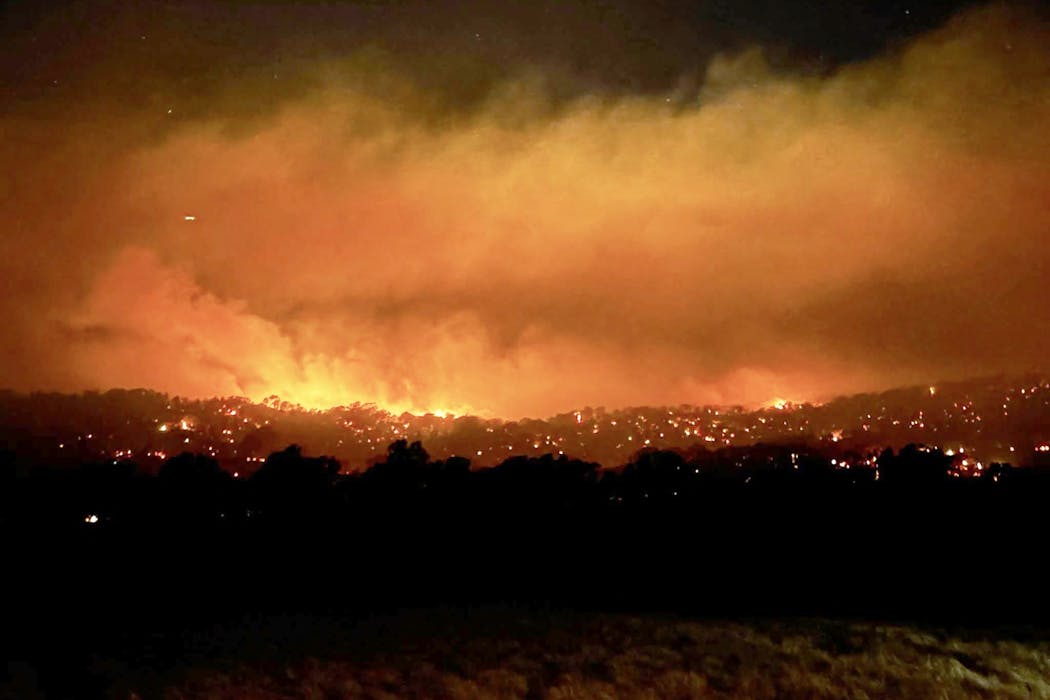
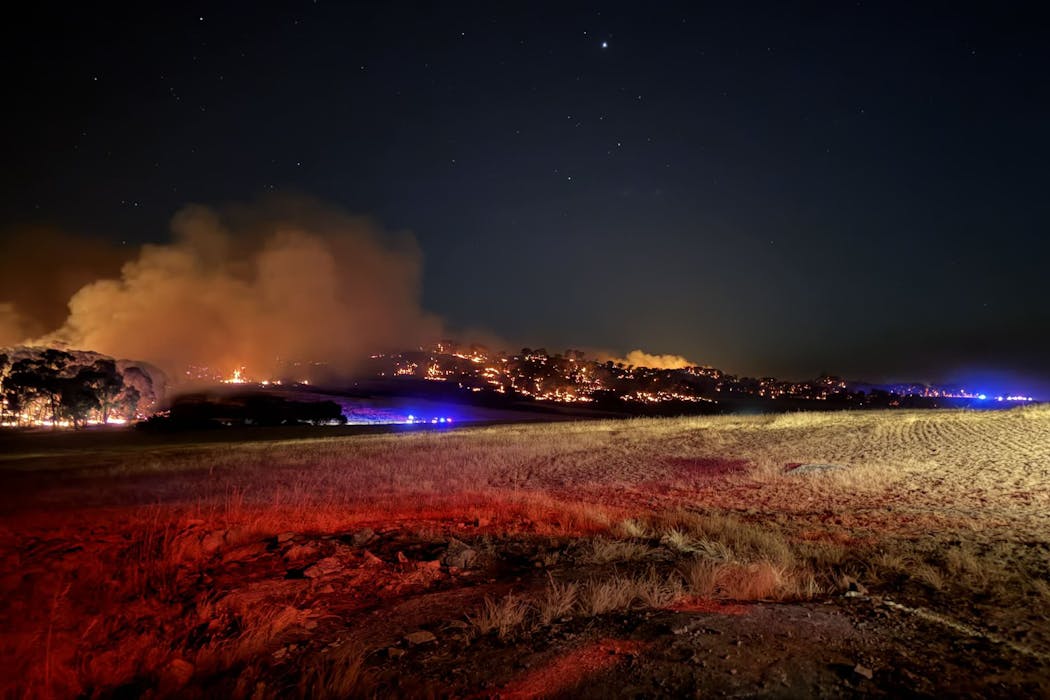
The Longwood fire on the night of January 7, 2026 Getty

Across Australia there are a number of fire districts facing extreme or catastrophic fire danger ratings in this ongoing heatwave.

In Victoria, the Wimmera, Northern Country and North Central districts have been assigned a catastrophic rating, while the rest of the state has been assigned an extreme rating. South Australia has nine districts with a forecast of extreme.

Australia’s fire danger ratings are designed to provide a clear, consistent warning system for communities.

There are four ratings that communicate to the public how dangerous a fire would be if one started, rather than how likely it is to occur. These ratings guide the actions that community members should take before and during a “bad” fire day.

Victoria fires in pictures

The warnings

  1. A moderate warning suggests most fires can be controlled by fire agencies. You should “plan and prepare” by revisiting your bushfire plan, preparing your property and discussing evacuation plans.

  2. A high warning means fires can become dangerous and there is a heightened risk to life and property. You should be “ready to act”, which includes being alert for fire in your area. Know what you will do if a fire does start and be prepared to act quickly. Pack an emergency kit in case you need to leave and alert emergency contacts.

  3. An extreme warning means fires can spread quickly and are extremely dangerous. Fires under these conditions are unlikely to be suppressed. You should “take action now to protect life and property” by enacting your bushfire plan. This can include leaving bushfire danger areas early in the day.

  4. And a catastrophic warning means fires are at their most dangerous. They will be uncontrollable and pose the greatest threat to human life. You should enact your bushfire plan and “leave bushfire risk areas early for your survival”, given homes cannot withstand fires under these conditions. For your survival, do not be in bushfire danger areas.

How are they decided?

Fire danger ratings are calculated by state and territory fire agencies. They consider factors such as:

  • forecast weather data from the Bureau of Meteorology (BoM) such as temperature, relative humidity and wind speed
  • vegetation fuel loads, including the amount of combustible materials, and
  • short and long-term dryness conditions, such as grass curing and drought levels, respectively.

All of these factors can play a significant role in determining the type of fire behaviour that could occur if one breaks out.

Each state and territory is broken up into fire danger districts, and ratings are issued for each district. Ratings are available up to three days in advance, allowing the public to see upcoming conditions and prepare early.

You may need to act the day before a bad bushfire day, so it is wise to check upcoming fire danger ratings. With many people travelling at this time of year, it is also important to check each district you will visit or pass through.

Here’s where you can check current fire danger ratings for each state and territory:

Forecasts for each state and district are also available on the BoM website.

What to do next

If your area has been given a fire danger rating, examine your bushfire plan. Ideally your plan is in place before the bushfire season and includes considerations such as:

  • Which Fire Danger Rating is your trigger to leave?
  • Where will you go?
  • What route will you take – and what is your alternative in the event that a fire is already in the area?
  • What do you need to organise for pets or livestock?
  • How will you stay informed about warnings and updates?
  • What will you do if there is a fire in the area and you cannot leave?

Ensure your property is prepared and you understand your plan. Follow any actions given by authorities and the fire ratings. Leaving early is always the safest option.

If a fire does start in your area, the relevant fire agency will issue a further alert to describe the situation. There are three alert levels.

  1. Advice: A fire has started. There is no immediate danger. Stay up to date in case the situation changes.
  2. Watch and Act: There is a heightened level of threat. Conditions are changing and you need to start taking action now to protect yourself and your family.
  3. Emergency Warnings: An emergency warning is the highest level of bushfire alert. You may be in danger and need to take action immediately. Any delay puts your life at risk.

However, do not wait for an alert to be issued to take action. Fires can escalate quickly so there may not be any warning. These alert levels can also change rapidly, particularly under extreme and catastrophic fire danger conditions.

Stay informed through your local ABC radio station as the official emergency broadcaster, and through your state-based emergency app for notifications about fires and warning levels. In Victoria, for example, this is VicEmergency and in South Australia it is Alert SA.

A dangerous day ahead

Total fire bans will be in place on Friday across Victoria and for the nine South Australian districts with the extreme fire danger rating. This means no fires can be lit in the open air while the ban is in place, and heavy penalties apply.

Key things to do

  • Examine your bushfire plan.
  • Reconsider your plans. Any non-essential travel or activity in areas currently affected by fire, or with catastrophic ratings should be carefully considered and cancelled if possible.
  • Complete final preparations for your property. If you are not prepared, plan to leave early. Under catastrophic conditions, help may not be available. The recommendation is to leave early, which may mean leaving the day before a high-risk day. Do not wait for a fire to start in your area.
  • Download the relevant state-based emergency app for notifications about fires and warning levels.

Know your fire danger rating, be prepared, stay informed, and act early to ensure your safety.

The Conversation

Sarah McColl-Gausden has received funding from the Victorian Department of Energy, Environment and Climate Action including through the Integrated Forest Ecosystem Research program. She is a member of the Ecological Society of Australia.

Bianca Pickering receives funding from the Victorian Department of Energy, Environment and Climate Action including through the Integrated Forest Ecosystem Research program. She is a volunteer for the Country Fire Authority.

Kate Parkins has received funding from the Victorian Department of Energy, Environment and Climate Action, Natural Hazards Research Australia and state fire agencies. She is a member of the Ecological Society of Australia.

ref. My home is in a district facing extreme or catastrophic fire danger. What should I do? – https://theconversation.com/my-home-is-in-a-district-facing-extreme-or-catastrophic-fire-danger-what-should-i-do-273000

Filipino trailblazer storms into ASB Classic quarters

Source: Radio New Zealand

Philippines’ Alexandra Eala during Round 16 Singles Women’s ASB Classic Tennis Tournament at Manuka Doctor Arena, Auckland, New Zealand on Thursday 8 January 2026. Joshua Devenie / www.photosport.nz www.photosport.nz

Alexandra Eala is not letting the hype get to her head.

The Filipino star has attracted plenty of attention for her trailblazing feats, becoming the highest-ranked Filipino in history and the first to break into the top 50.

The fourth seed continued her winning ways at Stanley Street today, cruising into the ASB Classic top eight with an emphatic straight sets win.

Eala needed just 62 minutes to dismantle Petra Marčinko 6-0, 6-2, but despite her dominance, is staying grounded.

“A lot of people mention the word pressure when they talk about all this hype and attention, but you can’t take anything for granted because coming from where I have come from and this whole journey that I’ve had, this is a dream to play on the tour and to compete against these great players. So I don’t take anything for granted.”

Eala has rewritten the record books at just age 20, having already become the first player from her country to win a WTA title, claiming the Guadalajara 125 Open in September last year.

“We haven’t had any players that have reached this level, but I think when it comes to taking inspiration, you hold the power from where you take inspiration from.

“So I take inspiration from my family and I’m inspired by my teammates and how we’re so proud to be Filipino. So there are many things I take inspiration from.”

Eala was a perfect 6-for-6 on break-point opportunities in the match.

“I try to be aggressive when I can and I try to recognise when it’s not the time to be aggressive and that’s something I’m still working on.

It was a much less one-sided affair in the second match of the day as Poland’s Magda Linette and Elisabetta Cocciaretto of Italy were locked in a three-set battle to decide who will advance to tomorrow’s top eight.

Linette, who knocked out superstar wildcard Venus Williams in three sets on Tuesday, eventually prevailed 7-5, 2-6, 6-3.

The fifth seed said hot and windy conditions made things tough on centre court.

“It was all about the competing and finding the way. It was never going to be who’s going to play better tennis really because the conditions were quite difficult and I was just really glad that I competed well. I came back and I managed to play a little bit more aggressive and kept my game.”

The night session will see the final two quarterfinal spots contested as top seed Elina Svitolina takes on Katie Boulter followed by Ella Seidel against Sonay Kartal.

The quarterfinals will begin on Saturday morning.

Sign up for Ngā Pitopito Kōrero, a daily newsletter curated by our editors and delivered straight to your inbox every weekday.

– Published by EveningReport.nz and AsiaPacificReport.nz, see: MIL OSI in partnership with Radio New Zealand

One dead after two motorbikes crash in Tararua District

Source: Radio New Zealand

Supplied / Google Maps

One person has died following a crash in Kumeroa on Thursday afternoon.

One person died at the scene, and a second person sustained moderate injuries.

Emergency services were called to the intersection of Gaisford and Oringi Roads in Kumeroa just before 2.30pm.

The road remains closed with diversions in place while the Serious Crash Unit conduct a scene examination.

Sign up for Ngā Pitopito Kōrero, a daily newsletter curated by our editors and delivered straight to your inbox every weekday.

– Published by EveningReport.nz and AsiaPacificReport.nz, see: MIL OSI in partnership with Radio New Zealand

Victoria bushfires at a glance

Source: The Conversation (Au and NZ) – By Digital Storytelling Team, The Conversation

The Sassafras-Ferny Creek Fire Brigade is dispatched to the Longwood fire on January 7, 2026. Sassafras-Ferny Creek Fire Brigade CFA/Facebook

Victoria is bracing for potentially catastrophic bushfire conditions on Friday, with temperatures expected to top 40°C for the third day in a row in parts of the state and winds up to 100 kilometres per hour.

The conditions will be the worst the state has seen since the Black Summer bushifres of 2019–20. The Country Fire Authority’s Jason Heffernan called it “a very dire bushfire day”.

Two major fires are burning in the state – one in Longwood, where residents have been warned to leave; and another in the Mount Lawson State Park along the Murray River near Walwa, which is now generating its own fire-fuelled thunderstorms.

Victoria fires in pictures and video


Where are the fires?

The Conversation

Digital Storytelling Team does not work for, consult, own shares in or receive funding from any company or organisation that would benefit from this article, and has disclosed no relevant affiliations beyond their academic appointment.

ref. Victoria bushfires at a glance – https://theconversation.com/victoria-bushfires-at-a-glance-273002

Photos of attack on Palestine activist’s property ‘censored’ by Facebook

COMMENTARY: By Saige England

What happened at New Zealand human rights campaigner John Minto’s home? Let me tell you.

Let me tell you that he wrote about it and Facebook took it down. Yep. Wrong after wrong.

Minto, national co-chair of the Palestine Solidarity Network Aotearoa (PSNA) advocacy and protest group, has been arrested at least 23 times for standing against racism.

A couple of nights ago two Palestinian flags were stolen from the Christchurch Ōtautahi home of John and his partner, Bronwen. “Nazi scum” was spray-painted in large letters on his footpath.

The sign “make poverty history” ripped off the fence and the Te Tiriti sign spray-painted.

But John, who has been a leader in New Zealand protests against Israel’s genocide in Gaza which has killed at least 71,000 people since October 2023, has been unable to report this because Facebook removed his original post about this crime.

Why? Because white supremacists and their allies want to win this round, their complaints are supported by oppressive social media mechanisms.

Human rights are under threat. A genocide in Gaza is supported by our New Zealand government. Propaganda is rife. And the Treaty that represents partnership, that should uphold the rights of the tangata whenua is being pushed to the gutter.

And speaking of gutter. Here you see it.

People who feel entitled to storm private property and tear down signs that stand against extermination and exile.

Facebook is blocking shares about the details about the vandalism. Censorship! To thwart the censorship, share this commentary if you wish to share the truth and disempower those who want supreme power.

Saige England is an award-winning journalist and author of The Seasonwife, a novel exploring the brutal impacts of colonisation. She is also a contributor to Asia Pacific Report. Republished from a social media post with the author’s permission.

Article by AsiaPacificReport.nz

Patients ask GPs for info on health records after Manage My Health security breach

Source: Radio New Zealand

Manage My Health was due to begin informing patients affected by the security breach on Thursday. RNZ / Finn Blackwell

Frustrated patients who fear their highly sensitive health records may have been stolen in Manage My Health’s cyber security breach are pushing their GPs to tell them.

Manage My Health was due to begin informing affected patients on Thursday and meanwhile has referred people to its website for more information.

However, RNZ has received multiple reports of the website crashing.

Have you been affected? Share your stories with us at: iwitness@rnz.co.nz

The company said it was taking the lead to avoid patients getting “multiple or confusing notifications” – a stance supported by General Practice New Zealand, which represents primary health organisations.

Yet some practices have already let their own patients know whether they were affected.

Posting anonymously in an online New Zealand forum, a sexual assault survivor urged others with a similar history not to wait for Manage My Health to get in touch.

After “pushing”, the GP confirmed the person’s name was on the list of patients whose records were accessed – but days later, Manage My Health had yet make contact.

The writer urged anyone who was worried to contact their clinic directly, as they all had lists of which patients were impacted.

Health documents were not “harmless admin” and such information could be “life-altering” if made public, the person wrote.

Another sexual assault survivor who was still waiting to hear anything told RNZ the data breach was hugely worrying.

“I’m so angry. My sexual abuse records of 30 years could rip my family apart.”

In its latest update on Wednesday night, Manage My Health said it continued to “work around the clock” with authorities and agencies to resolve the matter for patients and general practices.

“We sincerely apologise for the pain and disruption that this incident has caused to our providers and patients as a result of this criminal activity against our systems.”

Email notifications to affected patients would include an 0800 number to get “support and assistance”.

Manage My Health website crashing

Other patients reported being sent updates by their GPs via Manage My Health, but being unable to get access to them.

“The performance degradation of the platform (almost certainly due to being inundated with traffic of everyone else anxiously trying to figure out what information of theirs might be at risk) made it virtually impossible to actually log in, let alone see this message and the advice it contained,” one patient told RNZ.

“Upon phoning my GP, they confirmed that they were receiving multiple calls saying the same thing.”

Once she managed to log in, the platform kept randomly logging her out.

Manage My Health has been approached for comment.

Sign up for Ngā Pitopito Kōrero, a daily newsletter curated by our editors and delivered straight to your inbox every weekday.

– Published by EveningReport.nz and AsiaPacificReport.nz, see: MIL OSI in partnership with Radio New Zealand

‘It’s the Kiwi thing to do’: Aucklanders question fines for washing cars at home

Source: Radio New Zealand

Some Aucklanders are calling a potentially hefty $1500 fine for individuals washing their cars with cleaning products on driveways and letting soapy water run into stormwater drains “unfair”.

They said the rule was poorly publicised and disproportionately affected individuals rather than major polluters.

“It’s the Kiwi thing to do – wash your car at the front of the house,” said Freemans Bay resident Tony Franklin Ross after learning car owners could face a $1500 fine for washing their vehicles with cleaning products on their own driveways, with soapy run-off flowing into stormwater systems.

The reaction followed a social media post late last year in which one user claimed a friend had been fined for washing their car at home, prompting widespread surprise and debate online.

Under amendments to the 1991 Resource Management Act introduced in September, penalties were increased for individuals and companies found to be polluting waterways, poisoning aquatic life or damaging habitats.

Individuals discharging contaminants such as cleaning products into stormwater systems faced fines of $1500, while companies could be fined up to $3000.

Auckland Council also warned organisers of community car washes, including fundraising events, to ensure run off did not enter the stormwater system if large quantities of wash water were used.

Organisers were advised to cover or block stormwater catchpits, divert wash water to unsealed ground, seek permission from Watercare to discharge into the sewer system, block catchpit outflows and remove excess water using wet vacuums.

Tony Franklin Ross

Freemans Bay resident Tony Franklin Ross, who lives in Auckland’s Freemans Bay, says local bylaws covering cash washes at home are not well advertised. Photo: RNZ / Yiting Lin

Ross said he had no idea such a fine existed.

“It’s totally unfair,” he said.

Ross said the rule was not well advertised or publicised, and questioned why residents were being penalised given the scale of infrastructure upgrades underway.

“Well, considering Freemans Bay and our area, we’re paying how many millions if not billions on the interceptor to separate our water systems so that we don’t have that sort of problem,” he said.

“Why are we having all that work done if it’s still going to be problems in terms of what goes into the stormwater system? … It seems a bit crazy, that’s what storm water is there for.”

Man washing red car with sponge and soap

Photo: 123RF

Silverdale resident Nadir Tottabaduge said he was also unaware of the fine and was shocked by its size.

“I’m very surprised that it is a $1500 fine,” he said.

“It is too much because I think there are new builds that actually have very small spaces and they don’t have a huge space to park your car or wash your car, so it is not fair.”

He said many new developments were poorly designed, with limited driveway space and narrow roads.

“It’s not fair and actually they’re grabbing a lot of money from us rather than providing a lot of good service,” he said.

Tottabaduge said he preferred washing his car at home because professional car washes were expensive.

Kim

Kim, who lives in West Auckland, believes penalties should be proportional to income. Photo: RNZ / Yiting Lin

An Auckland resident named Kim, who did not want to share her surname with RNZ, said she was also unaware of the rule or the fine.

She said penalties should be proportional to income, and argued councils should focus on larger polluters.

“I understand it is polluting, but like there are people doing way worse polluting,” she said. “If you’re not starting at the top and you’re just hitting the bottom, are you really doing anything at all?

“This doesn’t feel very science-based or statistics-based to me.”

Kim, who lives in West Auckland, said fines such as these, as well as speeding fines, affected lower income households more than wealthier ones and were not addressing the root of the problem.

“I don’t see the point,” she said.

Auckland Council said it did not target households washing their cars on their driveways.

“The Resource Management Act states that people cannot discharge any contaminant into water without a consent,” said Robert Irvine, the council’s general manager of licensing and compliance.

“Council takes a pragmatic approach towards households, and we do not go out seeking to fine people who may be out washing their cars on a Saturday morning,” he said.

“If we were to issue an infringement for such an activity, it would be in response to a complaint and where we believe the activity poses a significant environmental risk.”

Irvine said Aucklanders were expected to be mindful that anything entering the stormwater system eventually flowed into streams, rivers and the sea, where it could cause harm.

“Many Aucklanders do this already to protect our vital waterways, and we thank them for being mindful of both the rules and our environment,” he said.

– Published by EveningReport.nz and AsiaPacificReport.nz, see: MIL OSI in partnership with Radio New Zealand

January temperature records could fall as hot spell forecast

Source: Radio New Zealand

Some parts of the country could reach 37C. RNZ / Rebekah Parsons-King

Experts are warning of extreme heat and fire risk as temperatures are forecast to soar across the country on Friday.

The highs could shatter last year’s record, which was set just last month.

MetService issued heat alerts for Friday in Whakatāne, Napier, Hastings, Motueka, Blenheim and Kaikōura, where temperatures in the low to mid thirties were expected.

It said alerts were issued when the forecasted temperature exceeded the normal average for two consecutive days.

They were put out the day before the heat was due to strike – and there would likely be more to follow on Friday and Saturday.

MetService said the heat would really ramp up over the weekend, with forecasts indicating 35C to 37C around Hawke’s Bay, 30C to 31C in Northland, and 28C to 31C for North Canterbury and Marlborough.

That could surpass last year’s record high: Kawerau hit 35.6 degrees on 7 December.

The warmth was on its way from Australia, said MetService meteorologist Clare O’Connor.

“An area of high pressure is driving westerly winds over the Tasman, picking up moisture along the way and delivering that hot, moist air direct to our doorsteps,” she said.

“Some January temperature records are expected to tumble over the weekend, which highlights the extremes we could reach.”

Meanwhile Fire and Emergency warned that came with increased fire risk – particularly in Canterbury, Marlborough, Wairarapa, Hawke’s Bay, Tairāwhiti and Northland.

“This weekend, many parts of the country will be experiencing elevated fire danger conditions, with temperatures expected to surpass 30 degrees in some locations, wind gusts of 30km/h at times, and low humidity,” said FENZ deputy chief executive Nick Pyatt.

“These conditions are what we call a perfect storm for wildfire risk.”

People caused 97 percent of wildfires in Aotearoa, he said.

Pyatt urged people not to light outdoor fires, and to put off activities that could generate sparks, like mowing the lawn and using power tools.

“In these conditions, all it takes is one spark or ember to start a wildfire that will get out of control quickly and be very difficult for our crews to control.”

Firefighters to strike on Friday

Paid firefighters are due to strike for an hour from 12pm-1pm on Friday, amid ongoing negotiations over pay and conditions between the Professional Firefighters’ Union and FENZ.

FENZ asked the union to call it off “given heightened fire risks and the fact both parties are due to meet for facilitation later this month.”

But the union’s national secretary, Wattie Watson said the strike would go ahead.

She said there was increased fire risk all the time due to insufficient staffing and equipment from FENZ.

Watson said members take the industrial action very seriously, and did not have another option for putting pressure on FENZ ahead of bargaining.

Wellington enjoyed a fine and sunny day on Thursday. RNZ / Mark Papalii

Capital soaks up the sun

Wellingtonians were treated to a rare still, sunny day on Thursday.

Churton Park residents Emma and Harry headed to Oriental Bay to soak up the sun.

“Such a beautiful day, not much wind,” Emma said.

It was far busier than usual at this time of year, she said.

Inspired by the conditions, Harry took an a impromptu dip: “couldn’t have been better,” he said.

Jen was on the waterfront with her mum, who was visiting from Scotland.

“No wind, which is lovely, just enjoyed coffee and ice cream and soaking [up] the vibes of the beach,” she said.

Christchurch family Emily, Nathan, Lexi, Xavier were joined by grandmother Betty-Ann who was visiting from England.

They’d ordered an ice cream and said had been a beautiful day at the beach – much warmer than the -3 degrees Betty-Ann had left back home.

Gisborne gears up for busy beach weekend

Crews were still working hard to clear logs and driftwood from Gisborne beaches after last weekend’s storm ahead of the scorching weekend, the district council said.

Waikanae and Midway beaches were still littered with woody debris, with people warned to stay away while it’s removed.

“Progress is slower than expected because a lot of debris is washed up high past the tide line, a lot is smaller and thicker with big logs underneath,” it said.

“There’s more debris than initially estimated too – around 8,600m³ of debris along 1.5kms – roughly double the last clean-up.”

The council said it’s a big job and won’t be completed by the weekend – but crews are doing their best to clear space for beachgoers.

Gisborne will also host the national surfing championships this weekend.

Sign up for Ngā Pitopito Kōrero, a daily newsletter curated by our editors and delivered straight to your inbox every weekday.

– Published by EveningReport.nz and AsiaPacificReport.nz, see: MIL OSI in partnership with Radio New Zealand

Older people are more vulnerable in heatwaves. Here’s why – and how to stay safe

Source: The Conversation (Au and NZ) – By Aaron Bach, Researcher and Lecturer in Exercise Science, Griffith University

solidcolours/Getty

Southeast Australia is enduring a record-breaking heatwave, with temperatures rising above 40ºC in many areas.

For vulnerable people, particularly older Australians, this heat is not only uncomfortable but dangerous. High temperatures can worsen existing health problems and in some cases even prove fatal.

So as the mercury climbs, it’s important to understand why some people are more at risk.

Here’s how to tell if someone is not coping with the heat – and how to stay safe.

Why is it harder for older people to keep cool?

Our bodies have a number of processes to regulate temperature.

First, the heart directs blood toward the skin, delivering heat from the body’s core to the surface.

Second, when we sweat and it evaporates off our skin, this allows excess body heat to escape into the air.

But as we age, these processes become less efficient. Older people’s blood flow and sweating are reduced compared to younger people. This means their bodies store more heat for longer.

Why this is dangerous

Often, the real danger isn’t simply overheating – it’s the strain heat puts on the cardiovascular system (the heart, blood and blood vessels) trying to serve two masters.

During hot weather, the heart works significantly harder. It diverts blood to the skin to shed excess heat, while still trying to satisfy the oxygen demands of other vital organs.

This helps explain why, during heatwaves, hospitals are not overrun with older people suffering from heatstroke. Instead, the overwhelming surge in emergency department admissions is mostly due to underlying health conditions that get much worse, such as diabetes and heart, lung or kidney diseases.

Older adults are more likely to have at least one chronic condition, and in heatwaves that last for days without a break these conditions can rapidly worsen.

The more chronic conditions someone has, the more likely they are to be hospitalised during hot weather.

Common medications can also interfere with the body’s cooling mechanisms.

Diuretics increase the risk of dehydration, while beta-blockers and some antidepressants can impair sweating, as can anticholinergic drugs (found in some medications for bladder problems, allergies and Parkinson’s disease).

Social factors can also make things worse

While the number of air conditioners has soared in Australia in the past two decades, rising energy costs mean many older adults may be reluctant to run their units.

Others may live alone or be less mobile. Conditions which affect thinking and memory, such as dementia, can also make it difficult for someone to assess their own risk and remember to drink fluids.

What to look for

Keep an eye out for signs you or your loved ones are not coping with the heat.

For older adults, these can be subtle. Early signs of heat stress include:

  • being unusually tired or lethargic
  • losing balance
  • feeling confused
  • feeling short of breath
  • urinating less or dark urine (this can indicate dehydration and kidney strain).

In those with chronic conditions, watch for any worsening of usual symptoms.

Heat exhaustion is more serious, and requires fluids and rest in a cool environment. Signs of heat exhaustion include very heavy sweating, nausea, headache and muscle cramps.

Heat stroke has similar symptoms but is a medical emergency – it requires immediate medical attention.

Heat stroke is also characterised by hot and dry skin as the body’s heat regulation system fails.

This happens when the body’s core temperature exceeds 40ºC, and can lead to loss of consciousness and organ failure.

Heat exhaustion vs heat stroke venn diagram
The Conversation.
CC BY-SA


Read more:
What’s the difference between heat exhaustion and heat stroke? One’s a medical emergency


How to stay safe

Beyond the usual advice to stay hydrated, seek shade and reduce physical activity, there are some simple strategies that can also help the impact of extreme heat for older adults.

Air conditioning remains the most effective defence against the heat. If you don’t have air conditioning at home, consider going somewhere such as a shopping centre or library during the hottest part of the day.

If you do have an air conditioner, setting it to 26–27ºC and using a pedestal fan can result in a 76% reduction in electricity consumption and improves comfort.

For those without air conditioning, fans alone can help. Wetting the skin or clothing in combination with a fan boosts evaporative cooling without requiring your body to produce more sweat.

However, for older adults (who sweat less) the effectiveness of fans begins to diminish between 33 and 37ºC. Above 37ºC, fans may actually make the body hotter faster than sweating can compensate for.

So for older adults it’s important to keep the skin moist or find other ways to cool down if using a fan when temperature is above 37ºC.

Even something as simple as immersing your hands and forearms in cool tap water – for ten minutes every half hour – has been shown to meaningfully lower body temperatures and stress on the heart.

The bottom line

Heat doesn’t discriminate, but its consequences do. In a heatwave, look out for older family members and neighbours.

If you or someone you know has symptoms of heat stroke such as slurred speech, confusion, fainting, or hot, dry skin, call 000 immediately.

The Conversation

The authors do not work for, consult, own shares in or receive funding from any company or organisation that would benefit from this article, and have disclosed no relevant affiliations beyond their academic appointment.

ref. Older people are more vulnerable in heatwaves. Here’s why – and how to stay safe – https://theconversation.com/older-people-are-more-vulnerable-in-heatwaves-heres-why-and-how-to-stay-safe-272900

Sir Tim Shadbolt has died at age 78

Source: Radio New Zealand

Supplied/LDR – ODT/Stephen Jaquiery

Former Invercargill and Waitematā Mayor, Sir Tim Shadbolt, has died early this morning.

He was 78 years old.

Sir Tim, who was awarded the Knight Companion of New Zealand Order of Merit in the 2019 New Year’s Honours List, served eight terms as Invercargill Mayor between 1993 and 1995, and again between 1998 – 2022, and two terms as Waitematā (Auckland) Mayor, between 1983 and 1989, making him one of the longest-serving mayors in New Zealand.

“Today we lost the cornerstone of our family and the man who has devoted himself to

promoting the City of Invercargill for almost 30 years,” the mayor’s partner of many decades, Asha Dutt, said in a statement on behalf of the family.

“Tim was a kind-hearted man who cared deeply about the people around him. He was a champion for the underdog and an active political campaigner from his student days of anti-war protest, his activism for Māori rights, and his fight to keep the Southern Institute of Technology and Zero Fees

autonomous.

“Tim will be remembered with gratitude, respect, and affection for his commitment to the south and his passion for life. The citizens of Invercargill can be proud of the enormous legacy he leaves.”

Sir Tim’s family has requested privacy during this time and said funeral service details will be announced once confirmed.

Tim Shadbolt with a group of protesters outside the Auckland Town Hall in 1973 Te Ara / Public Domain

An iconic personality

Shadbolt, with his trademark cheesy grin, became one of New Zealand’s most readily identifiable personalities.

Born in Auckland in 1947, he attended Rutherford High and Auckland University.

He first came to national prominence in the 1960s as a student activist on issues like the Vietnam war and apartheid.

A talented public speaker and debater, he worked as a concrete contractor and was a member of the Auckland Regional Council.

In 1983, Shadbolt was elected mayor of Waitematā , and spent a colourful and at times controversial 6 years in the job.

In 1997, he sued Independent News for articles on the disappearance of the mayoral chain and robes 8 years earlier, and was awarded $50,000 in damages.

In 1992 he stood for mayor in Auckland, Waitakere and Dunedin, finishing third in each poll.

But the following year, Shadbolt was a mayor again, easily beating 13 rivals for the job in a byelection in Invercargill.

Otago Daily Times / Stephen Jaquiery

Voted out after only two years, he was re-elected in a landslide in 1998.

He lost his last bid for re-election in 2022.

He also showed an interest in national politics – he was the New Zealand First candidate for the Selwyn byelection in 1994, less than 24 hours after joining the party.

And in 1996, he was on the party list for the Aotearoa Legalise Cannabis Party.

Always prepared to make fun of himself, he appeared in a famous cheese ad featuring the line “I dont care where, as long as I’m Mayor”.

More to come.

– Published by EveningReport.nz and AsiaPacificReport.nz, see: MIL OSI in partnership with Radio New Zealand

Roads can become more dangerous on hot days – especially for pedestrians, cyclists and motorcyclists

Source: The Conversation (Au and NZ) – By Milad Haghani, Associate Professor and Principal Fellow in Urban Risk and Resilience, The University of Melbourne

Munbaik Cycling Clothing/Unsplash

During heatwaves, everyday life tends to feel more difficult than on an average day. Travel and daily movement are no exception.

But while most of us know rain, fog and storms can make driving conditions challenging, not many people realise heat also changes transport risk.

In particular, research evidence consistently suggests roads, trips and daily commutes can become more dangerous on very hot days compared with an average day.

The key questions are how much more dangerous, who is most affected, whether the risk is short-lived or lingers and how this information can be used to better manage road safety during extreme heat.

Who is most at risk?

The clearest picture comes from a recent multi-city study in tropical and subtropical Taiwan.

Using injury data across six large cities, researchers examined how road injury risk changes as temperatures rise, and how this differs by mode of travel.

The results show what researchers call a sharp, non-linear increase in risk on very hot days.

It’s non-linear because road injury risk rises much more steeply once temperatures move into the 30–40°C range.

It is also within this range that different travel modes begin to clearly separate in terms of their susceptibility to heat-related risk.

This Taiwan study found injury risk for pedestrians more than doubled during extreme heat. Cyclist injuries soared by around 80%, and motorcyclist injuries by about 50%. In contrast, the increase for car drivers is much smaller.

The pattern is clear: the more exposed the road user, the bigger the heat-related risk.

The pattern is also not exclusive to a single geographical region and has been observed in other countries too.

A long-running national study from Spain drew on two decades of crash data covering nearly 2 million incidents and showed crash risk increases steadily as temperatures rise.

At very high temperatures, overall crash risk is about 15% higher than on cool days.

Importantly, the increase is even larger for crashes linked to driver fatigue, distraction or illness.

A nationwide study in the United States found a 3.4% increase in fatal traffic crashes on heatwave days versus non-heatwave days.

The increase is not evenly distributed. Fatal crash risk rises more strongly:

  • on rural roads
  • among middle-aged and older drivers, and
  • on hot, dry days with high UV radiation.

This shows extreme heat does not just increase crash likelihood, but also the chance that crashes result in death. That’s particularly true in settings with higher speeds and less forgiving road environments.

Taken together, the international evidence base is consistent: the likelihood of crashes, injury risk and fatal outcomes all increase during hot days.

Why heat increases road risk, and why the effects can linger

Across the three studies, the evidence points to a combination of exposure and human performance effects.

The Taiwan study shows that risk increases most sharply for pedestrians, cyclists and motorcyclists. These are groups that are physically exposed to ambient heat and, in some cases, exertion. In contrast, occupants of enclosed vehicles show smaller increases in risk.

This suggests that direct exposure to heat plays a role in shaping who is most affected.

The Spanish study suggests that the largest heat-related increases occur in crashes involving driver fatigue, distraction, sleepiness or illness.

This indicates that heat affects road safety not only through environmental conditions, but through changes in human performance that make errors more likely.

Importantly, the Spanish data also show that these effects are not always confined to the hottest day itself. They can persist for several days following extreme heat, consistent with cumulative impacts such as sleep disruption and prolonged fatigue.

High solar radiation refers to days with intense, direct sunlight and little cloud cover. In the US study, heat-related increases in fatal crashes were strongest under these conditions.

Although visibility was not directly examined, these are also conditions associated with greater glare, which may make things even less safe.

How can the extra risk be managed?

The empirical evidence does not point to a single solution, but it does indicate where risk is elevated and where things become less safe. That knowledge alone can be used to manage risk.

First, reducing exposure matters. Fewer trips mean less risk, and flexible work arrangements during heatwaves can indirectly reduce road exposure altogether.

Second, risk awareness matters. Simply recognising that heatwaves are higher-risk travel days can help us be more cautious, especially for those travelling without the protection of an enclosed vehicle.

We tend to adapt quickly to rain. As soon as the first drops hit the windscreen, we reduce speed almost subconsciously and increase distance to other vehicles. This, in fact, is a key reason traffic jams often start to develop shortly after roads become wet.

But a growing body of research shows we also need to be more careful when it comes to travel and commuting during extreme heat.

The Conversation

Milad Haghani receives funding from the Australian government (the Office of Road Safety).

Zahra Shahhoseini does not work for, consult, own shares in or receive funding from any company or organisation that would benefit from this article, and has disclosed no relevant affiliations beyond their academic appointment.

ref. Roads can become more dangerous on hot days – especially for pedestrians, cyclists and motorcyclists – https://theconversation.com/roads-can-become-more-dangerous-on-hot-days-especially-for-pedestrians-cyclists-and-motorcyclists-272995

Investigation underway after footage emerges of people diving off Auckland Harbour Bridge

Source: Radio New Zealand

Water Safety NZ says it’s not worth risking your life for views after footage of two people diving off the Auckland Harbour Bridge emerged online.

The footage uploaded to social media and believed to be taken at the weekend shows two men leaping into Waitematā Harbour from the maintenance walkway that runs under the bridge.

Water Safety general manager of partnerships Gavin Walker told RNZ no amount of social media views was worth people risking their lives.

“Jumping off places like bridges, there is a fairly high risk of something going wrong,” he said.

Video has emerged of two people jumping off the Auckland Harbour Bridge. Supplied

Walker wanted people to realise the danger.

“The more challenging thing that we’d love people to think about is even the strongest swimmers can encounter issues with currents and tides in locations like under the harbour bridge,” he said.

“It’s one thing to do the jump, it’s another thing to get back safe…”

Hitting the water the wrong way could quite easily knock someone out, Walker said.

There was also the risk of boats.

“There’s always the risk of boats coming through that are obscured from your view, so you don’t actually know that they’re coming through, and they can’t tell that somebody’s about to jump,” he said.

If people wanted to jump into water, they should do it where it’s safe, Walker said.

“Bridges are notorious for having kind of hidden hazards underneath them, so things like logs and other things trapped around them and the current swirling around tend to move logs and sand banks around quite easily.”

Walker said the Auckland harbour itself was a challenging place to swim.

“Depending on the tidal conditions and currents on the day and time, it can be quite difficult, more difficult than people think, to get back to shore.”

Walker said he didn’t want people to underestimate the challenge.

“Look it’s beautiful weather, and these things always look like great fun, but there are other places where you can go and have fun and do that more safely.”

Walker said he wanted swimmers to make good choices when getting into the water.

“These are the days where we love getting into the water, but we need to look after each other so that we don’t have tragedy.”

Another video posted earlier in 2025 on a separate account also showed two people hanging from underneath the bridge before dropping into the water.

NZTA told RNZ the bridge jump in the video was illegal and dangerous.

“Pedestrian access to the bridge is strictly prohibited as it is part of the motorway network and is a hazardous area, and the potential for serious injury from such illegal access is high.”

A spokesperson said NZTA was investigating the incident and would pass any relevant information to police.

They said access was currently controlled by security fencing and electronic gates, and that NZTA would review security as part of the investigation.

Police said they were not immediately aware of any reports.

Sign up for Ngā Pitopito Kōrero, a daily newsletter curated by our editors and delivered straight to your inbox every weekday.

– Published by EveningReport.nz and AsiaPacificReport.nz, see: MIL OSI in partnership with Radio New Zealand

Serious injuries after two motorbikes crash in Tararua District

Source: Radio New Zealand

Supplied / Google Maps

Police believe there have been serious injuries suffered in a crash involving two motorbikes in the Tararua District this afternoon.

Emergency services were called to the intersection of Gaisford and Oringi Roads in Kumeroa just before 2.30pm.

Police said the road is blocked and diversions are in place.

Sign up for Ngā Pitopito Kōrero, a daily newsletter curated by our editors and delivered straight to your inbox every weekday.

– Published by EveningReport.nz and AsiaPacificReport.nz, see: MIL OSI in partnership with Radio New Zealand

ER Report: A Roundup of Significant Articles on EveningReport.nz for January 8, 2026

ER Report: Here is a summary of significant articles published on EveningReport.nz on January 8, 2026.

Thermal drones can track dolphin health without having to touch or disturb them
Source: The Conversation (Au and NZ) – By Charlie White, PhD Candidate, Behaviour and Evolution Lab, College of Science and Engineering, Flinders University Thermal image of an adult bottlenose dolphin captured by a drone-mounted thermal camera. Charlie White/CEBEL Marine mammals are sentinels of the sea. When dolphins and whales show signs of stress or illness,

‘Straight-up piracy and extortion’: Trump says he will control money from sale of Venezuelan oil
By Jake Johnson US President Donald Trump has claimed that Venezuela’s interim leadership will turn over to the United States as many as 50 million barrels of sanctioned oil to be sold at market price, part of a broader, unlawful administration effort to seize the South American nation’s natural resources. Trump, who authorised the illegal

Stephen Miller: portrait of Donald Trump’s ideologue-in-chief
Source: The Conversation (Au and NZ) – By Natasha Lindstaedt, Professor in the Department of Government, University of Essex During a recent interview with CNN host Jake Tapper, the White House deputy chief of staff, Stephen Miller, laid out what appears to be the core of the new ideology driving US foreign policy: the notion

US boards a ship sailing under a Russian flag: what we know and don’t know about the legal position
Source: The Conversation (Au and NZ) – By Andrew Serdy, Professor of the Public International Law of the Sea, University of Southampton Relations between the US and Russia have hit a fresh bump after the US coastguard boarded a vessel sailing in the Icelandic waters, claiming it was in breach of sanctions on Venezuela. The

Why grieving a pet can be as hard as grieving a person
Source: The Conversation (Au and NZ) – By Erin Smith, Associate Professor and Discipline Lead (Paramedicine), La Trobe University Solovyova/Getty For many of us, pets are more than just animals. They are family. So, when a beloved pet dies, the grief can feel overwhelming. For some, like me, it does more than break your heart.

Bryce Edwards: NZ’s craven stance on the US invasion of Venezuela
ANALYSIS: By Bryce Edwards When Russia invaded Ukraine in 2022, New Zealand responded with unusual speed. Sanctions followed. Condemnations were issued. The language was unambiguous. We were told this was about defending the “rules-based international order” — a phrase our politicians have grown remarkably fond of. Winston Peters has deployed it frequently in his time

Malcolm Evans: What have we become that we accept such brigandry?
COMMENTARY: By Malcolm Evans What have we become if to survive in our so-called “free world” we must turn a blind eye to cold-blooded genocide, must arm ourselves to oppose our major trading partner, must support a contrived war to defeat an adversary that no longer exists, (lest its new form otherwise achieves its potential)

Where will the next megafire break out? Climate change is making it tougher to predict
Source: The Conversation (Au and NZ) – By Rachael Helene Nolan, Associate Professor, Hawkesbury Institute for the Environment, Western Sydney University Matt Palmer/Unsplash, CC BY Much of south-eastern Australia is currently in the grip of a heatwave, which is expected to peak over the next two days. Heatwaves often trigger bushfires, particularly if combined with

As Australia bakes through an extreme heatwave, even insects aren’t immune to its impact
Source: The Conversation (Au and NZ) – By Caitlyn Forster, Associate Lecturer, School of Life and Environmental Sciences, University of Sydney Дмитрий Пропадалин/Pexels Australia is baking through another extreme heatwave, with temperatures forecast to reach above 45°C for multiple days in a row across large swathes of the country. Heatwaves are a deadly threat to

Inflation cooled more than expected in November. But rate cuts remain unlikely anytime soon
Source: The Conversation (Au and NZ) – By John Hawkins, Head, Canberra School of Government, University of Canberra Annual inflation cooled in November. The latest Australian Bureau of Statistics (ABS) consumer price index (CPI) report, released on Wednesday, shows inflation over the year to November was 3.4%, down from 3.8% a month earlier. This 3.4%

X is facilitating nonconsensual sexual AI-generated images. The law – and society – must catch up
Source: The Conversation (Au and NZ) – By Giselle Woodley, Lecturer and Research Fellow in Communications, Edith Cowan University UMA Media/Pexels X (formerly Twitter) has become a site for the rapid spread of artificial intelligence-generated nonconsensual sexual images (also known as “deepfakes”). Using the platform’s own built-in generative AI chatbot, Grok, users can edit images

ER Report: A Roundup of Significant Articles on EveningReport.nz for January 7, 2026
ER Report: Here is a summary of significant articles published on EveningReport.nz on January 7, 2026.

Weather: Long range forecast is mostly more heat, more wet

Source: Radio New Zealand

RNZ/ Mohammad Alafeshat

Earth Sciences New Zealand (ESNZ) is expecting the rest of summer to remain warm and wet for many regions.

The organisation on Thursday has released its climate outlook for the next three months, heralding weak La Niña conditions expected to bring a mixed bag of weather.

The report showed that most of the North Island and areas of the South Island’s west coast were very likely to be average or warmer than average.

Northland, Auckland, Waikato, Bay of Plenty, Central North Island, Taranaki, Whanganui, Manawatu and Wellington were most likely to get those higher temperatures – all given a 65 percent chance.

ESNZ Manager of Climate Atmosphere and Hazards Nava Fedaeff said the east coast of the South Island was the exception – due for average or below average temperatures – as predicted easterly winds were likely to bring frequent cloud and showers to that part of the country.

“For places like Christchurch that’s not necessarily a good recipe for a sunny summer.”

Despite the prediction of warmer weather, the North Island was still likely to get a few downpours, Fedaeff said.

“The door to the tropics is open over the next three months. We are in tropical cyclone season, there’s tropical lows and things like that. So we can’t rule out that some of these systems are going to make their way our way and deliver some heavy rainfall.”

The National Climate Centre outlook for 2026. Supplied

When all the weather factors combined, it looked like Otago was the perfect holiday spot for the rest of the summer.

“If you’re in Queenstown – above average temperatures, below average rainfall – sounds like the place to be.”

Sea surface temperatures around the country cooled markedly during December but remain generally above average, which meant nights would be particularly hot for the rest of the summer.

ESNZ also expected soil moisture levels and river flows to be near normal for the west of the North Island, and equally likely to be below normal or near normal for the rest of the country.

Sign up for Ngā Pitopito Kōrero, a daily newsletter curated by our editors and delivered straight to your inbox every weekday.

– Published by EveningReport.nz and AsiaPacificReport.nz, see: MIL OSI in partnership with Radio New Zealand

Kilos return four times faster after ending weight-loss drugs, study finds

Source: Radio New Zealand

When people stop taking the new generation of weight-loss drugs they pile back on the kilos four times faster than they would after ending diet and exercise regimes, new research has found.

But this was mostly because they lost so much weight in the first place, according to the British researchers who conducted the largest and most up-to-date review of the subject.

A new generation of appetite-suppressing, injectable drugs called GLP-1 agonists have become immensely popular in the last few years, transforming the treatment for obesity and diabetes in many countries.

After stopping the medication, study participants were found to have regained 10kg within a year, which was the longest follow-up period available for these relatively new drugs. (file image)

Unsplash / Getty Images

– Published by EveningReport.nz and AsiaPacificReport.nz, see: MIL OSI in partnership with Radio New Zealand

Heat alerts issued, warnings to prepare as temperatures set to soar

Source: Radio New Zealand

MetService says the temperatures won’t drop much at night. RNZ / Samuel Rillstone

Metservice has issued heat alerts for hotspots across the country as temperatures are forecast to soar on Friday.

The alerts were in place for Whakatāne, Napier, Hastings, Motueka, Blenheim and Kaikōura, where temperatures in the low to mid thirties were expected.

Metservice meteorologist Samkelo Magwala said alerts were issued when the forecasted temperature exceeded the normal average for two consecutive days.

Magwala said alerts were issued the day before the heat was due to strike – and there would likely be more to follow on Friday and Saturday.

Hastings could hit a whopping 37C over the weekend as hot air from a heatwave in Australia blankets the east coast of New Zealand.

MetService is predicting that many areas will be warm on Thursday, with the weekend reaching temperatures over 30C.

The hottest areas are expected to be the East Cape of the North Island, Gisborne, Wairoa and Hastings.

Hastings Mayor Wendy Schollum said the council was working to ensure residents were prepared.

“Because this can be really dangerous heat, and I don’t think many people are used to it, so the big message we are trying to get out to people is make sure on those really hot days you are drinking plenty of water, taking breaks in the shade and avoiding the hottest part of the day if you can.”

She said the community needed to look out for each other, particularly older people, infants and toddlers who were the most susceptible to heat.

Schollum said fire risk was also a major concern.

Hastings Mayor Wendy Schollum says the council are working to ensure residents are prepared as scorching temperatures loom. RNZ/Alexa Cook

“We really need everyone to be conscious, please please please be careful, no fire, we’ve got a complete fire restriction at the moment, if you’ve got fireworks stocked away, no setting those off right now.

“And just also being conscious of anything else you might be doing that could potentially spark a fire, whether that’s using machinery or any of those sorts of activities.”

Marlborough Mayor Nadine Taylor seconded that sentiment and said it was a risky time for spot fires.

“We are really encouraging people to make sure they have an awareness, obviously of not light fires, but also an awareness if they are using lawnmowers, chainsaws anything that might spark or set off a fire.”

Taylor reminded people that the Wither Hills Farm Park closed when the fire risk was too high.

Meanwhile, in the capital about a hundred people are were soaking up the sun at Oriental Bay.

It’s a warm day in Wellington with MetService picking the temperature could hit 24C in the city.

Eight-year-old Eyt said she and her father James came from Stokes Valley in Lower Hutt to hit the beach.

She said the weather is hot, but the water is still “freezing”.

FENZ warns against complacency

Fire and Emergency warned people were getting complacent and ignoring safety warnings.

Wildfire manager for Fire and Emergency Tim Mitchell told Morning Report incoming winds and hot temperatures would create the “perfect storm” for a fire to start and spread, particularly in the Hawke’s Bay region.

“Over the weekend conditions are really going to ramp up, as a result of an approaching weather system from the west a westerly flow is going to set up… under that westerly flow we are likely going to reduce humidity in those areas, it could go below that 30 percent maybe getting into the low 20’s as well.”

A bushfire in Ngunguru, Northland, last February. Supplied/Ann Austin

Mitchell said most of New Zealand’s fires were caused by human related activities, so people needed to be cautious when doing anything that could create a spark.

He urged people to avoid activities that could spark a wildfire, including welding, grinding, using cookers and mowing lawns.

“We’re asking the public to accept that there are times when we aren’t able to do these things and actually follow the advice and don’t do those activities during high-risk periods.

“Obviously, it’s the weekend, which is when people mow their lawns. But we need your flexibility around not undertaking high-risk activities.”

Check the checkitsalright website if you were unsure of anything, Mitchell said.

Influx of beachgoers

Surf Lifesaving is preparing for a swarm of beachgoers with hot weather expected across the country.

Surf Lifesaving’s Chris Emmet said it was expecting a busy weekend across its 90 patrolled locations around the country, with hot weather bringing big numbers of people to the beach.

Surf Lifesaving’s Chris Emmet stressed the importance of swimming at patrolled beaches between the flags. Nick Monro

“Lifeguards look forward to this time of year, when there is quite a bit of activity around the beach. We’re really well prepared across the country.”

Emmet said Auckland’s West Coast beaches often saw big crowds and also a high number of incidents.

“The biggest concern for us is people finding a location to swim that’s safe for them. If you’re really hot in Auckland over the next few days, the East Coast will generally be safer than the West Coast.”

He stressed the importance of swimming at patrolled beaches between the flags.

“Patrol hours are generally 10am to 6pm, but some patrols do run a bit later, and if there are big crowds, lifeguards will stay on for a bit longer.”

Hot nights ahead

To add to the high daytime temperatures, MetService said it wouldn’t cool much at night.

“It affects sleep; people can’t sleep well and the body can’t get rest,” MetService meteorologist Clare O’Connor told RNZ.

She urged people to keep an eye on heat alerts, especially those working outside as temperatures mount.

“So the weekend is looking hot. That might be great news for people who have been back at work this week and are looking to get to the beach. But it is tough on people working in the heat.”

The temperatures will be mounting but MetService is not expecting them to quite hit the highs of the past. Ruatoria recorded the North Island’s highest January temperature in 1979 when it hit 38.9C.

The heatwave in Australia is set to blanket the east coast of New Zealand. AFP / Farooq Khan

Highest is expected to be Hastings on 37C on Sunday.

In the South Island, the highest temperatures will also be along the eastern coast with Christchurch, Kaikoura and Timaru forecast to get steadily hotter over the next few days reaching just over 30C throughout the weekend.

Australia’s heatwave driving up New Zealand temperatures

The warm weather is being driven by a heatwave in south-eastern Australia where on Wednesday the region sweltered through its hottest day in years. Firefighters in Victoria and Western Australia continue to battle out-of-control blazes.

Some towns recorded their warmest maximum temperatures in seven years, including Whyalla (45.8 degrees Celsius), Port Augusta (46.3C) and Port Lincoln (44.5C) in South Australia and Warrnambool (41.3C) in Victoria.

Melbourne reached a top of 41C, its highest in six years, while Adelaide recorded a peak of 43C.

Sign up for Ngā Pitopito Kōrero, a daily newsletter curated by our editors and delivered straight to your inbox every weekday.

– Published by EveningReport.nz and AsiaPacificReport.nz, see: MIL OSI in partnership with Radio New Zealand

‘Real risk’: FENZ warns of extreme fire danger as temperatures set to swelter

Source: Radio New Zealand

RNZ / Richard Tindiller

Fire and Emergency is warning Cantabrians of extreme fire danger this Sunday as parts of the country are set to swelter under high temperatures.

Canterbury is currently in a restricted fire season, which requires people to apply for permits to light open air fires. However, all permits will be suspended from midnight Friday until 8am on Monday.

The move comes as an intense heatwave in south-eastern Australia fuels hot air across parts of New Zealand.

While the hottest temperatures are expected in the East Cape of the North Island, Gisborne, Wairoa and Hastings, the east of the South Island is also in for above average temperatures.

Blenheim, Kaikoura, Christchurch and Invercargill are all expecting temperatures in the mid to late 20s on Thursday (3 to 5C above average), while Blenheim is forecast to hit 32C on Friday – 7.5C above average.

MetService is predicting a high of 32C for Christchurch and strong northwesterlies on Sunday.

FENZ Canterbury assistant commander Brian Keown said the combination of expected high nor’west winds, high temperatures into the early 30s and low relative humidity made for a high risk situation.

FENZ Canterbury assistant commander Brian Keown. Nathan Mckinnon / RNZ

Relatively high grass “curing” (drying out) of 60 to 70 percent, in some cases higher, meant any spark of a fire would move relatively quickly with the wind pushing it along, he said.

FENZ deputy chief executive of prevention Nick Pyatt said the greatest risk was in Canterbury, Marlborough, Wairarapa, Hawke’s Bay, Tai Rāwhiti, and Northland districts.

“This weekend, many parts of the country will be experiencing elevated fire danger conditions, with temperatures expected to surpass 30C in some locations, wind gusts of 30km/h at times, and low humidity.

“These conditions are what we call a perfect storm for wildfire risk.”

Pyatt said it only took one spark to start a wildfire that could get out of control quickly.

According to a FENZ research report, more than half of all wildfires in New Zealand are grass fires – the higher the curing, the greater the fire risk.

Keown was confident FENZ had sufficient resources, and was getting in touch with contractors, volunteers and specialist personnel to let them know of the weekend’s high risk potential.

He said people should not hesitate to call 111 at the first sign of smoke.

Anyone who had used a burn pile in recent weeks should check it was thoroughly extinguished, Keown said.

“One of our biggest risks and causes of fires in the last few months have been permitted – or non permitted burns in the open season – that had not been properly put out, and the wind has got in amongst it and pushed embers into vegetation.

“That’s a real risk for us and there’s been too much of it going on.”

FENZ had put a lot of “time and effort educating people that if they have been burning to ensure their fires are out”, he said.

Anyone who had burnt in the past two to three weeks should go out, inspect their heaps and give them a good rake over and ensure they were fully extinguished, Keown said.

A wildfire that destroyed four homes, 29 structures and spread over an area of almost 200 hectares in Kaikōura in October was caused by a burn pile.

Almost 200 volunteer firefighters worked over six days to extinguish the fires amid winds of 150 kilometres an hour.

A FENZ spokesperson said it did not pursue a prosecution against the owner of the burn pile because it was an open fire season when the blaze began.

Last year was the country’s fourth-hottest year on record, according to Earth Sciences New Zealand’s (ESNZ) annual climate report.

Meanwhile, FENZ reminded people that firefighters in the union would be striking for one hour on Friday from 12pm-1pm.

Volunteers will respond to incidents – but ther will be delays.

“Fire and Emergency urges the NZPFU to call off its strike given heightened fire risks and the fact both parties are due to meet for facilitation later this month.”

Sign up for Ngā Pitopito Kōrero, a daily newsletter curated by our editors and delivered straight to your inbox every weekday.

– Published by EveningReport.nz and AsiaPacificReport.nz, see: MIL OSI in partnership with Radio New Zealand

Christopher Luxon working from home as year gets underway

Source: Radio New Zealand

RNZ / Marika Khabazi

The Prime Minister is working from home as the year gets underway, with Parliament not set to return until the end of the month.

Ahead of the summer break, Christopher Luxon told Newstalk ZB he expected to be back at work the first week of January, as he had spent much of his career working overseas where the holiday breaks were shorter.

“In the US you maybe get two weeks’ annual leave holiday and Christmas is a couple of days off and you’re back at it again,” Luxon said.

“I’ve always been used to going back to work on the 3rd or 4th of January.”

Luxon has not released any statements on Venezuela, with foreign affairs minister Winston Peters leading the government’s communications instead.

Luxon’s only social media posts this year have been to wish the country a happy new year, and a video from December’s press conference announcing free trade negotiations with India had concluded.

Asked by RNZ whether Luxon was back at work, what he was doing, and where he was working from, a spokesperson said Luxon was in Auckland working from home, planning for the year ahead.

Parliament will resume sitting on 27th January. It will sit for one week before breaking for a week-long recess, which will include Waitangi Day.

Before Parliament resumes, Luxon will deliver a State of the Nation speech, and National’s caucus will meet for its annual retreat.

While it is possible Luxon will announce the election date at one of those events, a cabinet reshuffle is not expected.

Sign up for Ngā Pitopito Kōrero, a daily newsletter curated by our editors and delivered straight to your inbox every weekday.

– Published by EveningReport.nz and AsiaPacificReport.nz, see: MIL OSI in partnership with Radio New Zealand

Experienced All Whites defender Bill Tuiloma signs with Phoenix

Source: Radio New Zealand

Bill Tuiloma during All Whites v Costa Rica, FIFA World Cup 2022 play-off match, Qatar on 14 June 2022. Photosport

In a long-awaited homecoming, experienced All Whites’ defender Bill Tuiloma has signed with the Wellington Phoenix.

Securing the signature of the 47-cap international before the A-League mid-season transfer window opens, is a major statement from the Wellington Phoenix.

The 30-year-old has signed on until the end of the 2027-28 A-League season.

Tuiloma has played more than 200 professional matches in France and the USA over the past 12 and a half years, since joining Olympique de Marseille as an 18-year-old in 2013.

Phoenix head coach Giancarlo Italiano said Tuiloma ticked all of the boxes for a defender playing in a back three.

“Bill will bring quality and experience to our backline,” Italiano said.

“His ability with the ball is one of his biggest assets. He’ll add to the way we build up, which is very important.”

Italiano said Tuiloma wanted to be part of the All Whites squad for this year’s FIFA World Cup, so was highly motivated.

Tuiloma arrived in the capital on Sunday and started training with his new Nix team-mates on Tuesday.

“I’m excited to be in Wellington and I’m grateful for the opportunity the Phoenix have given me,” Tuiloma said.

“I’m ready to play, win games and help the team as much as I can on and off the pitch.

“I know it’s been a rollercoaster so far this season, but the Phoenix have the players and the quality and I can’t wait to start playing and hopefully help the team go all the way and win a trophy.”

Another motivation is that outside of a handful of games for the All Whites, Tuiloma hasn’t played in front of his family in New Zealand.

Tuiloma is reuniting with fellow defender Tim Payne and club captain Alex Rufer, who he played with at the Asia Pacific Football Academy in Christchurch, the precursor to the club’s own academy.

“I remember this skinny white kid coming into the academy. I’ve known Rufer for a very long time and it’s good to be able to play with him again.

“I also know Payney from when we played together at the FIFA U-17 World Cup in Mexico and at Waitakere United. They’re great guys and I’m excited to play with them and the rest of the team.

“When the interest from the Phoenix came about, I quietly talked to both of them about what Wellington’s like. They were really on to me about wanting me to sign with the Phoenix.”

Tuiloma will have to wait for the A-League’s mid-season registration window to open on 14th January before he can make his Phoenix debut.

Tuiloma will wear the no. 28 shirt for the Wellington Phoenix, becoming just the third player to do so and the first since Joel Stevens a decade ago.

Sign up for Ngā Pitopito Kōrero, a daily newsletter curated by our editors and delivered straight to your inbox every weekday.

– Published by EveningReport.nz and AsiaPacificReport.nz, see: MIL OSI in partnership with Radio New Zealand

Croatian shirt incident a ‘misunderstanding’ – ASB Classic organisers

Source: Radio New Zealand

Fans during the 2026 ASB Classic Women’s Tennis Tournament at Manuka Doctor Arena, Auckland, New Zealand. Tuesday 6 January 2026. Andrew Cornaga/www.photosport.nz

Organisers of Auckland’s ASB Tennis Classic insist that no fans will be turned away for wearing national colours.

Their statement comes after a man complained to media he was turned away from the Stanley Street venue due to his Croatian football jersey.

However, organisers say this was as a result of an over-zealous security guard misinterpreting the tour policy which does not allow flags, to prevent blocking views of the court.

“As per tour rules, flags are prohibited from the stadium to ensure the comfort of all guests and does not apply to clothing, including T-shirts or other apparel,” a spokesperson for the tournament said.

“In an isolated incident on Tuesday, this policy was misinterpreted by a security guard. This was addressed and the correct interpretation has been clearly reinforced across the security team.”

The fan, not wanting to escalate the situation, told the New Zealand Herald that he turned his jersey inside out after security mentioned the new measures were a result of geopolitical tensions.

He also said a fellow fan experienced a similar run in when entering the stadium wearing a Croatian jersey.

But tournament organisers say there is not such policy in place.

“No patrons would be prevented from entering the venue on the basis of what they are wearing, unless it is inappropriate or offensive. This week has seen many supportive fans attending matches wearing a wide range of national attire,” the spokesman said.

Fans during the 2026 ASB Classic Women’s Tennis Tournament at Manuka Doctor Arena, Auckland, New Zealand. Tuesday 6 January 2026. Andrew Cornaga/www.photosport.nz

Sign up for Ngā Pitopito Kōrero, a daily newsletter curated by our editors and delivered straight to your inbox every weekday.

– Published by EveningReport.nz and AsiaPacificReport.nz, see: MIL OSI in partnership with Radio New Zealand

Burst pipes sees more than 100 Wellington homes left without water

Source: Radio New Zealand

Streets affected by a burst water pipe in Wellington’s Kingston. Supplied / Wellington Water

More than 100 properties in the Wellington suburb of Kingston will be without water for at least six hours today due to a burst pipe.

Wellington Water said the pipe burst on Kingston Heights Road at about 11.30am.

“In order to protect the stormwater environment, we have turned the water off to this area,” it said.

“It is anticipated that service will be interrupted for at least six hours.”

All 114 homes on Kingston Heights Road, Ontario Street, Laurent Place, Manitoba Place, Caribou Place and Stormont Place are affected.

Wellington Water estimates the water will be back on about 5.30pm.

Sign up for Ngā Pitopito Kōrero, a daily newsletter curated by our editors and delivered straight to your inbox every weekday.

– Published by EveningReport.nz and AsiaPacificReport.nz, see: MIL OSI in partnership with Radio New Zealand

Cook Islands govt rejects research saying deep sea mining not profitable

Source: Radio New Zealand

Cook Islands activists confront the EV Nautilus upon its return to Rarotonga, holding banners reading ‘Don’t Mine The Moana.’ Supplied / Greenpeace

Research commissioned by Greenpeace, showing that deep sea mining in the Cook Islands is unlikely to make any money, is being rejected by the country’s government.

The research, performed by Trytten Consulting Services in October last year, reviewed the economic potential of polymetallic nodules in the Cook Islands’ seabed.

It looked at the likelihood of generating profit through the two main ways of seabed nodule recovery – dredging and picking – both of which are yet to be used on a commercial mining scale.

Taking into account available market data, the analysis found it was more likely than not that the ultimate economic return for Cook Islands nodules would be negative.

“Although it is possible that an economic collection and processing system could be derived, analysis of the projected plans by two leading proponents, coupled with analysis of the available market structure suggest that it is more likely than not that the ultimate economic return for Cook Islands nodules would be negative,” the research stated.

The Cook Islands Seabed Minerals Authority has estimated there are 6.7 billion tonnes of wet polymetallic nodules in the country’s Exclusive Economic Zone (EEZ).

These contain minerals like cobalt and nickel, used in a range of products including smartphones, electric batteries, and weapons.

Prime Minister Mark Brown has billed the developing industry as a potential stream for generational prosperity, however the prospect of deep sea mining in the country’s waters has divided Cook Islanders – locally and abroad.

In 2022, Brown’s government issued exploration licenses to three deep sea mining companies – one of which is part-owned by the Cook Islands government.

These exploratory licenses were due to end in February 2027, but in November the Cook Islands Seabed Minerals Authority (SMBA) extended the licenses for another five years.

The longer exploration licence period effectively pushed out the decision regarding commercial deep sea mining in the country’s EEZ until at least 2032.

“As the licence holders have not yet completed their approved plans of work, they will be required to apply for renewal of their exploration licences for a further five-year period if they wish to continue,” SMBA commissioner Beverly Stacey-Ataera told Cook Islands News at the time.

Edward Herman, director of partnerships and cooperation at SMBA, said the government understands from the companies which have exploration licenses that “eventual commercial development has a real chance of being economic”.

He noted the companies were making “real, major investments” and that the government wanted any research to be “independently checked”.

“Our current licence holders were vetted for technical competency, and they almost certainly know more than anyone else about the potential cost versus revenue of their projects, given their specific insight and work done in their exploration scope,” Herman said.

“The level of studies required by the Cook Islands government are based on international standards resulting from decades of project development and learnings from thousands of projects both onshore and offshore.

“Nonetheless, before any minerals harvesting could be licenced, Government has a requirement for a much more detailed and complete report, than that of Greenpeace’s, which will be independently checked.”

Juressa Lee, Greenpeace Aotearoa seabed mining campaigner, reiterated the need to carefully examine the business-case and environmental risks of deep sea mining in Cook Islands.

“Scientific warnings are crystal clear: deep sea mining will damage the oceans and harm biodiversity,” she said.

“Millions of people across the world, including people in the Cook Islands, are concerned about the threats posed by this industry. When you add the major financial risks, it’s hard to understand why anyone is still pushing this industry at all.”

– Published by EveningReport.nz and AsiaPacificReport.nz, see: MIL OSI in partnership with Radio New Zealand

Thermal drones can track dolphin health without having to touch or disturb them

Source: The Conversation (Au and NZ) – By Charlie White, PhD Candidate, Behaviour and Evolution Lab, College of Science and Engineering, Flinders University

Thermal image of an adult bottlenose dolphin captured by a drone-mounted thermal camera. Charlie White/CEBEL

Marine mammals are sentinels of the sea. When dolphins and whales show signs of stress or illness, it often signals deeper problems in the ocean ecosystems we all depend on.

But assessing the health of dolphins and whales is notoriously difficult. That’s because they spend most of their lives underwater, move over vast areas, and cannot be examined closely without causing stress or disturbance.

Our new research provides a promising solution to this problem. Published in the Journal of Thermal Biology, it shows how drone-mounted thermal cameras can help monitor dolphins’ vital signs such as skin temperature and breathing patterns.

Monitoring animals without handling them

Scientists have typically relied on hands-on methods to assess the health of wild marine mammals. These include attaching tagging devices or taking measurements during capture and handling.

While these methods can be effective, they are also invasive, expensive, logistically complex, and can alter the animals’ behaviour and physiology. This can induce stress, making results harder to interpret.

To fix this problem, researchers need tools that allow them to monitor dolphins repeatedly and accurately, while minimising disturbance.

One example is drones fitted with thermal cameras.

Thermal cameras detect heat emitted from surfaces, allowing temperature patterns to be measured remotely. When mounted on drones, they can potentially record this information from above, while animals continue to move freely.

In the case of dolphins, they have the potential to measure skin temperature and breathing patterns based on the heat emitted from the animals’ blowholes, body and dorsal fin, without having to get close or touch them.

But until now, no studies have tested how accurate, reliable or practical this approach is in real-world conditions.

Drone-based thermal imaging was used in this study to measure dolphin surface temperature and breathing rates.
Guido J. Parra/CEBEL

Testing drones on dolphins

In our study, we used a drone-mounted thermal camera to measure dolphins’ body surface temperature and breathing rate under controlled conditions designed to reflect how dolphins are monitored in the wild.

The study involved 14 adult common bottlenose dolphins under human care at Dolphin Beach, Sea World on the Gold Coast, Australia. Testing was conducted across different heights, camera angles and environmental conditions to validate drone-based measurements.

We compared measurements obtained from drones with close-range reference data collected at the same time. Body surface temperature was measured using hand-held thermal cameras and breathing rates were calculated from the drone’s visual footage. This allowed us to assess how accurate and reliable the drone measurements were.

This approach required no restraint or tagging. Drone-based measurements were collected without physical handling of the animals.

We found that how the drone was flown substantially affected the accuracy of measurements. For example, flight height influenced how reliably body surface temperature and breathing rate could be estimated.

Measurements collected at lower altitudes, particularly about ten metres directly above the dolphin, consistently produced the most accurate results. At this height, body surface temperatures derived from thermal imagery closely matched close-range reference measurements taken at the same time.

As flight height increased, measurement accuracy declined. However, temperature estimates remained within approximately 1°C of the reference measurements.

Camera angle also influenced the accuracy of measurements. Thermal measurements were most accurate when the camera was positioned directly above the dolphin.

We could estimate breathing rates accurately from thermal imagery. Each breath produced a brief, localised increase in temperature at the blowhole that was clearly visible in the thermal footage.

Drone imagery combining colour and thermal views of four bottlenose dolphins at the surface.
Charlie White/CEBEL; processing by Andrew P. Colefax

Growing the conservation toolbox

These results show that drone-mounted thermal cameras can reliably measure dolphins’ surface temperature and breathing rate.

This represents a practical advance in how dolphin vital signs can be monitored in the wild. Until now, repeated measurements of temperature and breathing have typically required researchers to be close enough to dolphins to take measurements directly, such as from boats or by capturing and physically handling an animal.

This has limited how often measurements can be taken. Thermal drones offer a way to gather this information routinely, without significantly disturbing dolphins.

This approach has the potential to improve our ability to detect physiological changes and examine how dolphin health may vary over time in the wild. Combined with behavioural observations, drone-based thermal imaging could help explore links between surface temperatures, breathing patterns and environmental conditions.

Our study focused on dolphins under human care. But the same approach could be applied to free-ranging dolphins and other marine mammals for which close-range monitoring of vital signs is difficult.

As coastal ecosystems face growing pressure, tools such as thermal drones that allow researchers to monitor wildlife efficiently, repeatedly and non-invasively will become increasingly important. They provide a practical addition to the conservation toolbox, helping us better understand, and ultimately protect, dolphins and other animals in a changing ocean.


The authors would like to acknowledge the contribution of Dr. Andrew Colefax to this research and the Sea World, Gold Coast team for their support and in-kind contributions.

The authors do not work for, consult, own shares in or receive funding from any company or organisation that would benefit from this article, and have disclosed no relevant affiliations beyond their academic appointment.

ref. Thermal drones can track dolphin health without having to touch or disturb them – https://theconversation.com/thermal-drones-can-track-dolphin-health-without-having-to-touch-or-disturb-them-272701