

Page 132

Bay of Plenty families remain isolated two weeks after Waioweka Gorge slips

Source: Radio New Zealand

Damage in the Wairata Valley following torrential rain on 16 January that brought down slips on SH2, closing the Waioweka Gorge. Supplied / Rebecca Redpath

Several families living in the Waioweka Gorge in Bay of Plenty remain isolated, two weeks after dozens of slips came down.

The landslides have closed kilometres of State Highway 2 – the main route between Ōpōtiki and Gisborne and helicopters have been taking supplies to the cut-off locals.

Even before last week’s storm laid waste to North Island communities – families in the Waioweka Gorge were isolated.

On Friday 16 January, torrential rain brought down multiple slips on SH2, trapping around 40 motorists, who had to be evacuated by helicopter.

On the family farm in the Wairata Valley, Rebecca Redpath said the rain was relentless.

“It was just coming down in sheets … you often get heavy rain, but it doesn’t last, and this just lasted, and lasted, and lasted.”

The nearby creek turned into a roaring torrent as boulders came crashing down, she said.

Damage in the Wairata Valley on 16 January. Supplied / Rebecca Redpath

The damage to the gorge road, meant her in-laws Bob and Mary Redpath – who were away – had to be helicoptered to their home.

Bob Redpath said while they had had floods in the past – the damage had never been this extensive, and the bird’s-eye-view from the chopper was sobering.

“We’ve had nothing this complete. Every creek, every little spring has blown out.

“It was just so much rain – 160mm in two hours – and y’know, nature can’t deal with that.”

Mary Redpath said in her 47 years on the farm, she’d never seen anything like it, with streams rerouted 10 metres away from their original course.

“It’s … totally mindboggling.”

She said they were lucky the deluge came at a time when no one was out on the farm and in danger from rushing water and slips.

“Because we would never expect this to happen. Tracks here on the farm – you’ve got to scramble over rocks and debris and trees.

“The whole land has just slipped away in places that it’s never slipped before and washed out all these fences, and it’s like, ‘Where do you begin?’”

Bob Redpath said the ongoing gorge closure, had meant their farmstay operation has come to a grinding halt.

“This is our prime part of the season, so we have had people booked right through … to autumn.

“We’ve had to ring people and say, ‘Look, you’re on standby but it doesn’t look like you’re going to be able to get in here, so very sorry, we’ll have to try that again another day.’”

But, he’s philosophical about it.

“Yeah, it is rough. But hey, you live in a wild place like the Waioweka Gorge occasionally these things jump out and bite you in the bum.”

Rebecca Redpath said the impact of the road’s closure went well beyond her family, and she was just hopeful they would be able to drive out this weekend in time for her children to start school in Hawke’s Bay, next week.

One of the slips blocking State Highway 2 through Waiwoeka Gorge. Supplied

NZ Transport Agency regional transport services manager Mark Owen said crews were working overtime to reopen the section of SH2, but it was a huge job.

“Unfortunately, there’s been massive damage in there, so again crews are working away, beavering away at each end – they’re doing a full assessment.”

He was hopeful they could provide a timeframe for opening later this week.

“The good news, is that we think the road will probably be okay, but we’ve got massive slips that have come down … so we can clear and get a lane but then we’ve actually got to stabilise the hill as well.

“Then once the river recedes we then need to determine whether we’ve got any under-slips where the river may have scoured into the highway,” Owen said.

“Teams are working, we’ve got all the expertise that we need, it’s just going to take some time.”

Damage in the Wairata Valley following torrential rain on 16 January. Supplied / Rebecca Redpath

Ōpōtiki mayor David Moore said up to 30 people were living in the gorge, which ran through both Ōpōtiki and Gisborne districts.

He said the council’s civil defence teams had been working together since its closure.

“There’s people who’ve been in and out for medical appointments. There were some people that were in there that needed to get out and people that needed to get in.”

Moore said Ōpōtiki town was lucky to dodge the severe weather that ripped across the North Island last week, but the damage on the outskirts – especially on the highways – had been significant.

“It’s caused a lot of damage in the Waioweka Gorge, which is our main arterial route, transport route – lifeline for Gisborne.

“[It’s] one of three roads to Gisborne, and all three roads are out now.”

Damage to State Highway 35 from a landslide. Supplied / NZTA

SH35 from Ōpōtiki to Gisborne around the East Coast is closed in sections following torrential rain on 21 January, and SH38 which links the regions via Lake Waikaremoana is also shut.

“There’s a massive monetary cost, but that’s nothing compared to the tragedies that are playing out, the devastation to homes and the community on the SH35.

“The alternative route to Gisborne now is through SH5 – it’s a beautiful drive but it’s a very long drive and will add a lot of time and expense.”

Moore said when the Waioweka Gorge shut on 16 January, the alternative around SH35 added about five hours travel time between Ōpōtiki and Gisborne.

He said trucks took SH5 which added at least three hours to the travel time, joining the East Coast just north of Napier.

Moore anticipated it would be months until SH2 through the gorge returned to what it was, and said once that was done the focus should shift to the future.

“Whether we like it or not these weather events are happening more frequently. I was a beekeeper for 21 years so I do understand the weather.

“I know the Waioweka Gorge very well, so I’ve been in a weather event like that up there and it came out of nowhere.

“This is what’s happening so we have to make these roads as resilient as we can.”

Sign up for Ngā Pitopito Kōrero, a daily newsletter curated by our editors and delivered straight to your inbox every weekday.

– Published by EveningReport.nz and AsiaPacificReport.nz, see: MIL OSI in partnership with Radio New Zealand

Christchurch resident says council should communicate better over ‘toxic’ smell

Source: Radio New Zealand

Christchurch’s Wastewater Treatment Plant.

A resident of east Christchurch says the council should be communicating better with locals about a putrid stench from the city’s sewage treatment plant.

Offensive odours have plagued Bromley and neighbouring suburbs since a fire at the plant in 2021 but some neighbours believe the pong has become worse than ever in recent days.

The fire badly damaged the plant’s two trickling filters, affecting the quality of effluent flowing into the system.

The stench left people battling nausea, worsening asthma, sleepless nights and deteriorating mental health for months.

Christchurch City Council said recent heavy rain had affected the health of oxidation ponds and the stench could last for at least another week.

Woolston local and community advocate Rebecca Robin told Morning Report the smell was terrible.

“We’ve had to shut all of our windows and pretty much stay inside. For the people who live right next to the wastewater treatment plant, this is what it smells like for them all the time,” she said.

Work had started on a new $140 million sludge plant, with construction expected to take about three years.

“There’s going to be three more years. [The council] could potentially communicate with people more, not just by Facebook, and give the residents some more authority over what’s going on, let them be involved,” Robin said.

The smell could be dependent on the way the wind blew, she said.

“It’s been really bad since the fire. It’s definitely a toxic smell and it should’ve been prioritised a lot faster than what it has been,” she said.

Environment Canterbury said since Monday, it had received 530 odour reports from east Christchurch suburbs, which were likely related to the plant.

The regional council said it was working with Christchurch City Council on odour mitigation measures.

Christchurch City Council head of three waters Gavin Hutchison said the council expected higher-than-normal odour levels to continue for at least another week.

“The recent period of heavy rain has significantly affected the health of several oxidation ponds. Monitoring from this week showed a drop in dissolved oxygen levels across the system. These low-oxygen conditions create an environment where odour is much more likely to be released,” he said.

“This is different from what we’ve seen in the past. During previous wet-weather events, the additional rainfall has generally supported pond recovery, improving overall pond health and preventing odour issues. However, this time the ponds have not responded in the same way. Our staff are continuing to collect and analyse data to understand why these conditions have developed on this occasion.

“We’ve also seen increased loading to the ponds, which also put more pressure on the ponds, increasing the likelihood of odour.”

Hutchison said staff were trying to minimise the odour by using all available tools to improve the ponds’ water quality.

“We know odour impacts are disruptive and we want to reassure our community that reducing them is a priority for us,” he said.

Sign up for Ngā Pitopito Kōrero, a daily newsletter curated by our editors and delivered straight to your inbox every weekday.

– Published by EveningReport.nz and AsiaPacificReport.nz, see: MIL OSI in partnership with Radio New Zealand
UFC 325: Volkanovski v Lopes 2 – everything to know and the Kiwi fighters headed to Sydney

Source: Radio New Zealand

Dan Hooker returns to the Octagon just 69 days after his grudge match with Arman Tsarukyan. PHOTOSPORT

UFC 325 – Volkanovski vs Lopes 2

Main Card 3pm NZT, Sunday February 1st.

Early prelims from 11am.

Qudos Bank Arena, Sydney.

Live blog updates on RNZ

Will the sequel flip the script?

Despite seemingly putting the story to bed, Alexander ‘The Great’ Volkanovski will run it back with Brazil’s Diego Lopes, this time in Volk’s backyard.

The pair first met for the vacant featherweight strap in April of last year after Ilia Topuria made the move up to lightweight. While many believed Volkanovski’s reign at the top was over when Topuria shut his lights off in devastating fashion, the king made his return to the throne in a dominant five round decision victory over Lopes at UFC 314. Now in the second PPV in as many weeks to kick off 2026, Volk and Lopes will run it back for the featherweight strap in Sydney’s main event.

Meanwhile, The Hangman is back in action and promising to deliver more violence in his bout against ‘the God of war’ Benoit Saint-Denis. It’s a quickfire turnaround for Dan Hooker, who is just 69 days removed from his grudge match with Arman Tsarukyan.

Hooker was choked out by Tsarukyan in late November, and is a rank outsider for the co-main, but so lethal is his striking that one accurate shot could see the Frenchman fold.

“There is no other way I do business, let’s get down to work,” Hooker said at this week’s press conference.

About the fighters

Alexander ‘the Great’ Volkanovski – champion

  • Age – 37
  • Nation – Australia
  • Record – 27 wins 4 losses
  • Height – 5ft 6 inches (1.68m)
  • Weight – 145lbs (66kg)
  • Reach – 71 inches (180cm)

Diego Lopez – challenger

  • Age – 31
  • Nation – Brazil
  • Record – 27 wins 7 losses
  • Height – 5ft 11inches (1.8m)
  • Weight – 145lbs (66kg)
  • Reach – 72.5 inches (184cm)

Who did they most recently fight?

It was an emphatic bounce back for Lopes after the Volkanovski defeat, a stunning spinning back elbow knocking out Jean Silva in round two at UFC Fight Night in September to earn another shot at the champ. Volkanovski has not been in action since putting on a clinic against Lopes to win back his crown.

What are they saying?

“When you’ve got a guy like Diego Lopes who’s gonna bring it, you know he’s gonna bring it, he’s a gamer, he’s going to want to get in my face and make it a fight so we will have no choice but to fight.” – Volkanovski.

“He is a legend in the sport. He has a lot of fights in the UFC, but I think this time it’s my time to take the belt.” – Lopes.

“If you want to go to war, I’ll take you to f****** war.” – Hooker

“I don’t need to sell the fight, you know it’s going to be a brawl, let’s go for a bloodbath.” – Saint-Denis.

What will happen?

Expect a similar if not more emphatic result in Sydney. While Lopes has a dangerous submission game, Volkanovski has proved his world class takedown defence against the best maulers in the game.

With Lopes having a base in jiu-jitsu and Volkanovski in wrestling, another stand up war is inevitable.

Prediction – Volkanovski by decision.

Kiwis head across the Tasman

Australia cards always have a heavy kiwi presence and Sunday will be no different with a trio of City Kick Boxing fighters set to make the walk to the octagon. Kicking off the early prelims will be a pair of New Zealand trained contenders chasing a contract in their respective Road To UFC finals in Aaron Tau and Lawrence Lui. Tau opens the event against Namsrai Batbayar in the flyweight final, is riding a three fight win streak after suffering his only career loss in 2024 on Dana White’s Contender Series. ‘Tauzemup’ is an incredibly aggressive front foot fighter, who thrives in chaos. He has seven career knockouts from his 11 wins, with just the one submission victory coming back in 2021. Fellow team member and bantamweight Lawrence Lui takes on China’s Sulangrangbo, also on the early prelims at Qudos bank Arena having booked his spot with a UD win and second round knockout last year. Another pure striker, Lui has seven career wins, four by knockout and juts one defeat which came back in 2022.

UFC 325 Main Card

  • Alexander Volkanovski (c) v Diego Lopes for the UFC featherweight championship
  • Dan Hooker vs. Benoit Saint Denis at Lightweight
  • Rafael Fiziev vs. Mauricio Ruffy at Lightweight
  • Tai Tuivasa vs. Tallison Teixeira at Heavyweight
  • Quillan Salkilld vs. Jamie Mullarkey at Lightweight

Prelims

  • Junior Tafa vs. Billy Elekana at Light Heavyweight
  • Cam Rowston vs. Cody Brundage at Middleweight
  • Jacob Malkoun vs. Torrez Finney at Middleweight
  • Jonathan Micallef vs. Oban Elliott at Welterweight

Early prelims

  • Kaan Ofli vs. Yizha at Featherweight
  • Kim Sang-wook vs. Dom Mar Fan at Lightweight
  • Keiichiro Nakamura vs. Sebastian Szalay at Featherweight
  • Lawrence Lui (NZ) vs. Namsrai Batbayar at Flyweight
  • Aaron Tau (NZ) vs Sulangrangbo at Bantamweight

Volkanovski will headline in his hometown at UFC 325. UFC

Sign up for Ngā Pitopito Kōrero, a daily newsletter curated by our editors and delivered straight to your inbox every weekday.

– Published by EveningReport.nz and AsiaPacificReport.nz, see: MIL OSI in partnership with Radio New Zealand

‘Carry that legacy on’: Ngāti Hāua celebrates Treaty settlement

Source: Radio New Zealand

Te Whiringa Kākaho o Ngāti Hāua trustee Aaron Rice-Edwards Supplied/Ngāti Hāua Taumarunui

The Crown has apologised to Taumarunui iwi Ngāti Hāua in a Treaty Settlement, which includes statutory pardons for two of their tūpuna.

The Ngāti Hāua Claims Settlement Bill passed its third and final reading in Parliament on Thursday.

Te Whiringa Kākaho o Ngāti Hāua trustee Aaron Rice-Edwards said it’s a day of celebration for the iwi, around 200 people travelled to Parliament from Taumarunui and beyond to share in the milestone.

“It’s been a rough road. We feel a bit battered and bruised. Like most iwi can attest to, this process is hard. It’s hard on relationships with our neighbours, hard on relationships with ourselves, but it’s an awesome testament today to finally arrive here, due in large measure to the sacrifice of our leadership and our pāhake and our kaumātua, many of whom have passed on. So we’re kind of carrying their legacy and their moemoeā, their vision for our people,” Rice-Edwards said.

“A lot of our whānau have brought pictures of their loved ones who’ve passed on. So again, we carry that legacy on.”

Rice-Edwards said securing pardons for Mātene Ruta Te Whareaitu and Te Rangiātea, who were unjustly convicted under martial law in 1846, was a critical part of negotiations.

“Te Rangiātea, he was a koro at the time, quite elderly. He died in November 1846 in jail, in Mt Cook Jail. Also, tūpuna Mātene Ruta Te Whareaitu was sentenced for rebellion against the Crown. He was convicted to die or be executed by hanging.”

Ngāti Hāua have a strong history in the Heretaunga or Hutt Valley and both Mātene Ruta Te Whareaitu and Te Rangiātea were caught up in land disputes which led to armed conflict in the Hutt Valley, he said.

“It’s been a sense of grievance for our iwi for a long time. So we’ve carried that and their descendants have carried that stigma. A big part of that mamae is the fact that we never had the remains of our tūpuna to bury properly in terms of our tikanga or to take them back home,” he said.

“So today is remembering those two tūpuna and reaffirming their mana in terms of the injustice of the Crown, the way they were treated.”

Ngāpūwaiwaha Marae in Taumarunui where the Deed of Settlement was signed in 2025. Supplied

Following today’s third reading, the bill will go to the Governor-General for Royal Assent, becoming the Ngāti Hāua Claims Settlement Act.

Once the legislation is enacted, settlement assets will transfer to Te Whiringa Kākaho o Ngāti Hāua Trust.

Minister for Treaty of Waitangi Negotiations Paul Goldsmith said the total settlement package provides $19 million of financial redress and includes the return of 64 culturally significant sites.

Goldsmith told MPs the Act records the Crown’s apology for its actions which breached the Treaty, including warfare, the alienation of land through Crown purchasing and Public Works taking which left Ngāti Hāua virtually landless.

“The loss of land led to the erosion of tribal structures and left Ngāti Hāua unable to sustain themselves and with few opportunities for social and economic development. Many Ngāti Hāua were obliged to leave their rohe which exacerbated the damage to the iwi’s spiritual and cultural well-being.”

This settlement lays the economic, cultural and social foundation for Ngāti Hāua to reestablish their connection to their land, their rohe, strengthen their identity and to build a future for themselves in generations to come.”

The settlement can never fully compensate Ngāti Hāua for the loss they’ve suffered as a result of Crown actions, he said.

Rice-Edwards said back home in Taumarunui, the main centre of their region, there is a lot of disparity and inequity in housing, health and employment among their people.

“While we’re not sort of letting the Crown off the hook in terms of its obligations to our people. We want to go back home and be a catalyst for change and social transformation. So that will be a big focus for us for the next five years.”

Rice-Edwards said the financial redress will be helpful in rebuilding their tribal nation, but the return of land has been a key focus for the iwi.

“So that will be a focus in terms of growing those reserves and just managing them and just reconnecting as a people with those places, because all of those places we haven’t been able to access for a long time.”

Many rangatahi (young people) were in attendance at Parliament to watch the Bill pass and Rice-Edwards said it is incumbent the current leadership to start looking to the future.

Sign up for Ngā Pitopito Kōrero, a daily newsletter curated by our editors and delivered straight to your inbox every weekday.

– Published by EveningReport.nz and AsiaPacificReport.nz, see: MIL OSI in partnership with Radio New Zealand

Election 2026: How does campaign advertising work, and what are the rules?

Source: Radio New Zealand

There are many rules in place for the election ads we’ll see leading up to Election Day. RNZ illustration / Nik Dirga / 123rf

Explainer – The big flood of election adverts and billboards won’t start until closer to November, but the race to influence hearts and minds begins now.

There are many rules regulating disclosure, campaign spending and the timing of certain election advertisements.

There are still more than nine months before we vote on 7 November, which means the candidates and parties have plenty of time to pitch for your vote.

“The lengthy time period is advantageous for parties with more money to spend as they can effectively campaign for the whole year,” University of Otago professor of law Andrew Geddis said. “Based on recent donation returns, that’s National and ACT in particular.”

Here are the basic rules around political advertisements and what you can and can’t do.

Clockwise from top left, National leader Christopher Luxon, Labour leader Chris Hipkins, ACT leader David Seymour, New Zealand First leader Winston Peters on the campaign trail. RNZ

Can people legally advertise before the election is even near?

Absolutely, although you won’t generally see election advertisements everywhere until closer to November.

“There is no restriction on when people can publish election advertisements, other than Election Day before 7pm,” the Electoral Commission legal and policy manager Kristina Temel said.

This can include online advertisements or print media.

However, you can’t put election advertisements on TV or radio until the official election regulated period starts.

The election regulated period runs the three months before Election Day. RNZ / Marika Khabazi

Wait, what does that regulated period mean?

It’s when we start counting how much is being spent, for one thing. The regulated election period runs in the three months before Election Day – this year, from 7 August to 6 November.

Once that period begins, a bunch of strict rules around election spending kick in.

Electorate candidates are only allowed to spend up to $36,000 during the regulated period. This includes any advertising by someone else that is approved by the candidate.

Registered political parties can spend up to $1,503,000 if they contest the party vote plus $36,000 for each electorate candidate for the party. Registered third party promoters can spend up to $424,000 while unregistered third party promoters can spend up to $17,000.

Temel said that there are still some requirements about how campaign advertising is conducted outside the regulatory period.

“The regulated period is relevant for election expenditure limits, but both before, during and after the regulated period, obligations regarding promoter statements and written authorisation to publish election advertisements apply.”

And of course, all election advertising has to be taken down by midnight on 6 November, including billboards and online ads, and breaches can result in fines.

Labour leader Chris Hipkins speaks at the unveiling of the party’s first billboard of the 2023 general election campaign. Giles Dexter

What counts as an advertisement?

They can be in the humble newspaper, on television, leaflets dropped in your mailbox or ads seen while scrolling online, or they can be big old billboards you see every time you drive to the supermarket.

The Electoral Commission’s candidate handbook defines them as “an advertisement that may reasonably be regarded as encouraging or persuading voters to vote, or not vote, for a candidate or party”, or alternatively, “a type of candidate or party the advertisement describes by referencing views they do or don’t hold”.

What that all means is that it’s anything that is trying to persuade you to vote a certain way.

Editorial content – news items such as RNZ reporting Christopher Luxon’s latest announcement, for example – doesn’t count as an advertisement.

Individuals posting their political views online doesn’t count, unless it’s paid content or someone claiming to speak for a political party, for example making a post saying they speak for the Green Party or New Zealand First or others.

An MP’s contact details also doesn’t count as election advertising, nor do columns or opinion pieces solicited or published by media with no payment involved.

There are no limitations on where candidates or advocacy groups can buy advertisements, or how often they can buy them, other than the spending limits during that designated regulation period, the Advertising Standards Authority (ASA) chief told RNZ.

“The ASA does not restrict election advertisements in those ways,” Hilary Souter said.

But if you are making an election ad, you’ve absolutely, positively got to include a promoter statement.

Campaign ads like this 2023 ad against the National Party by the New Zealand Council of Trade Unions must carry a promoter statement, as seen at the bottom. Supplied

What’s a promoter statement, then?

Basically, it tells people who’s behind the advertisement. Those small notes you see on billboards telling you “authorised by Joe Bloggs” or something similar? That’s a promoter statement.

Promoter statements are required at all times, even outside the regulatory period, and they must include a name and contact details.

Advocacy groups such as Council of Trade Unions or Family First NZ also fall in this requirement.

They need to be “clearly displayed,” the Electoral Commission says – no 2-point font, please – and it notes “making your promoter statement too small will likely generate complaints”.

Even advertisements related to the election but not pushing one particular view – such as encouraging people to vote or enrol – must include a promoter statement.

If you don’t use a promoter statement, you can be fined up to $40,000 – which could pay for a lot of pamphlets – so it’s probably worth taking the time to credit your advert accordingly.

Elections NZ also can give advice on whether an ad counts as an election advertisement or not, by contacting advisory@elections.govt.nz.

Billboards as seen in the 2020 election. RNZ / Cole Eastham-Farrelly

What about election billboards?

There’s no actual national rule about election billboards waiting until the final weeks to go up.

However, election billboard rules are set by local councils and vary from place to place. For example, in Auckland election signs are only allowed nine weeks before Election Day.

“You should talk to your local council before you put up any election signs,” Elections NZ’s website warns.

In 2023 for instance, the ACT party was found to be in breach of electoral rules in Tasman and Marlborough districts by putting up large signs in June before the October election.

The Electoral Act says you can have election signs that are up to three square metres in size in the nine weeks before Election Day. And all those billboards are required to have the mandatory promoter statement, preferably not at microscopic size.

But the internet is likely to be the biggest battlefield in 2026, not billboards.

“The fact is that such blanket forms of advertising are very expensive and the spend-to-result ratio is not that efficient as most people simply are not really thinking about the election,” Geddis said.

“Which is why parties and candidates will put their money towards online messaging that they can target towards individuals they think are most likely to be influenced.”

A compilation of TV ads from the 2023 election:

[embedded content]

Are media companies obligated to be fair in the ads they run?

There’s no requirement for equal time, so if one party decides to buy more ads there’s no obligation for media to run an equal amount by another. It’s all about how much money political groups are willing to spend.

“Ultimately, the responsibility to be aware of and comply with all aspects of advertising regulation is shared between all the parties to an advertisement, including the advertiser, agencies, and media organisations,” the Advertising Standards Code says.

And if ads are misleading or violate the rules, there are several ways to file a complaint about them.

ACT MP Brooke van Velden in a campaign ad for the party in 2023. Screenshot

How do you make complaints?

The Electoral Commission deals with breaching of election advertising or Election Day rules under the Electoral Act, and election programmes under the Broadcasting Act. Offences could then be reported to the police.

When it comes to content, the Broadcasting Standards Authority (BSA), the Media Council and ASA can all field possible complaints about election adverts that fall in their jurisdiction.

The BSA oversees TV and radio, the ASA oversees ads in other media, and the Media Council looks at editorial content concerns.

“As in previous years, our focus will be on paid election advertising and compliance under the rules of social responsibility and truthful presentation,” the ASA’s Souter said.

RNZ

Do all these rules apply in cyberspace?

Of course, the days of people only seeing election ads in newspapers and before the 6pm news are long past.

You’re likely to soon be bombarded by election content every time you start scrolling on your phone.

“We are acutely aware of the ongoing changes to the information environment and how rapidly technology is developing,” Temel said.

Broadly, the rules are just the same for online advertisements.

“Our election advertising rules are media-neutral in that the same requirements apply no matter where they appear,” Geddis said.

“As such, online election ads delivered through social media or elsewhere still must contain promoters statements that alert those receiving them as to who is behind the messages.”

What about AI ads? Are there rules about those?

AI-generated content has taken over much of the world these days, and it’s likely to only get worse this year.

An ad by the ACT party last year featured an AI-generated “happy Māori” couple. Screenshot

There’s no specific regulations around the use of AI in political advertising, although in 2023 complaints were heard about its use in National campaign advertisements, while an ACT party ad with an AI-generated ‘happy Māori’ image last year also drew controversy.

“We have social media advice on our website for people on what to do if an election ad doesn’t look right,” Temel said.

“There are some checks that can be applied. Does the ad have a promoter statement saying who’s behind it? If it’s from a candidate or party, you can check if it’s on their social media account or website. If you’re not sure about it, don’t share it.”

Existing frameworks like the Harmful Digital Communications Act and Privacy Act also apply to AI content, while other advertising standards can also apply to misleading online election ads.

“The ASA codes do not currently contain AI-specific rules,” Souter said. “The codes apply regardless of how content is generated, edited, or targeted.”

Geddis notes the Electoral Act 1993 includes the offence of undue influence”, which prohibits using “any fraudulent means [to] impede or prevent the free exercise of the franchise of an elector”.

“The limits of this provision are relatively untested, but could be read to capture some AI-generated disinformation that is intended to discourage voters from casting a ballot,” he said.

Should the regulated period be longer when the election isn’t for months?

Geddis said the time between the announcement and Election Day isn’t actually unusually long this year.

“The gap between election announcement and Election Day is two to three weeks longer than in 2023, which is not hugely different.

“The problem is that the further the regulated period – where controls on campaign spending are in place – is pushed out from polling day, the more forms of political related speech get captured.

“It isn’t just candidates or parties that have caps on their election advertisements. All individuals or groups who publish these sorts of messages during the regulated period face spending caps.”

Geddis said because MPs and parties are prohibited from spending parliamentary funding on election advertising during the regulated period, “all parties have an interest in keeping this period at three months”.

Sign up for Ngā Pitopito Kōrero, a daily newsletter curated by our editors and delivered straight to your inbox every weekday.

– Published by EveningReport.nz and AsiaPacificReport.nz, see: MIL OSI in partnership with Radio New Zealand

What next for Newmarket as ’emo’ Twenty-Seven Names goes?

Source: Radio New Zealand

Twenty-Seven Names in Newmarket. Google Maps

Another big name is leaving Newmarket, but the local business association says things are looking up for the Auckland shopping district.

Retailer Twenty-Seven Names told customers this week it had decided not to renew the lease on its Newmarket shop.

“Yes, it’s sad and yes, we’re a little emo about it. But we’re not in a position to renew the lease, and we’re choosing to honour the decade we had in that beautiful space rather than stretch it beyond what feels right,” it said in an email.

A number of shops in Newmarket have closed in recent years, including Smith & Caughey, Sportscraft and Route 66.

Retail consultant Chris Wilkinson said shopping areas in Auckland had been jostling for position in recent years.

“Newmarket has faced increasing competition as Sylvia Park continues to add new anchor attractors, while Commercial Bay’s retail and hospitality offer and the luxury quarter on Queen Street have won back shoppers who were being wooed by Westfield Newmarket,” he said.

But he said there were positive signs for the area, including university developments and public transport connectivity that would benefit from the City Rail Link.

“That will unlock new audiences and increased convenience which are key to driving growth in an otherwise fairly flat spending environment. Chemist Warehouse have secured the former Smith and Caughey site, and that will reinvigorate this prime retail strip significantly.

“Challenges have been around the suitability of spaces, with many older and smaller sites no longer being suitable for the needs of today’s tenants. A number of major occupiers moved from the retail strip into Westfield when the refurbished centre opened, and it’s taken time to backfill these sites.

“However, the fundamentals of Newmarket are strong, with significant spending power within its core catchment area and good connectivity. Newmarket is a favourite spot for boutiques to locate and hip brands like Nature Baby, although the decision by Twenty-Seven Names is really just reflective of the evolution of these brands in the way they connect with their markets.”

Newmarket Business Association chief executive Mark Knoff-Thomas said there had been a prolonged period of disruption as the area dealt with Covid and then the economic downturn.

“The last sort of six months, leasing activity has ramped up again. It’s very sad about Twenty-Seven Names closing, but that site has already been leased to another retailer coming in.”

Caitlan Mitchell for Twenty Seven Names. Supplied.

He said there had been renewal in some of the areas that had been empty for a while.

“You’ll see in places like Broadway a lot of activity, a lot of fit-outs happening. Other examples like Nuffield St, over the back of Broadway, that’s almost completely full again with leasing.

“By mid-year we should be back up and getting towards where we were before Covid.”

He said times were still tough for retail, but the end of the year had been respectable.

“New Zealand’s been though a pretty tough time and I think there’s some really good reasons to be optimistic about the year ahead for all of us – not just Newmarket, but across the board.

“Every economic downturn has a tragic side of it but also has an opportune side of it as well, where new people come in and things get regenerated. I think we’re probably at that phase of the cycle now where new things are starting to happen.”

Sign up for Money with Susan Edmunds, a weekly newsletter covering all the things that affect how we make, spend and invest money.

– Published by EveningReport.nz and AsiaPacificReport.nz, see: MIL OSI in partnership with Radio New Zealand

Year-long prescriptions not the cure for ailing health system – pharmacist

Source: Radio New Zealand

From Sunday 1 February, people can get prescriptions for up to 12 months. 123RF

A Te Awamutu pharmacist is concerned changes to prescriptions happening this week will burden pharmacists.

From Sunday 1 February, people can get prescriptions for up to 12 months – rather than three – if their doctor deems it safe.

Gemma Perry-Waterhouse, who owns Sanders Pharmacy in Te Awamutu, said a shortage of pharmacists would make explaining the new system while keeping up with other responsibilities challenging.

“There has been a decline in the number of pharmacies in New Zealand, and there’s a serious workforce issue. We don’t have enough pharmacists.

“We are concerned about this rollout and how much time it will take to explain to all patients what to expect with 12-month scripts; the fact that it isn’t for everyone, that their doctor needs to decide that.

“Be kind to your pharmacy if you’re popping in to talk about a 12-month script and what to expect, because we’re all under a lot of pressure at the moment.”

She said those eligible for a 12-month prescription would still need to go back to the pharmacy every three months to have medication dispensed.

“We’d have huge supply issues on top of the supply issues we’ve already got if patients were walking out with a year’s worth of medication.

“How often patients come into the pharmacy is not changing. Those interactions we have with our patients are so important for picking up changes and making sure everything is okay. It’s like an early warning system.”

She believed there could be more safeguards in place to monitor patients throughout the year if they were not visiting the doctor as often.

“The onus is on the prescriber to ensure the safety of the patients they’re giving out a prescription for 12 months to.

“But I think pharmacists’ concerns haven’t really been heard. We would have liked a system where pharmacists were actually empowered to check in properly with patients and a proper structure for feeding information back to the doctor. There’s no national system for pharmacists to communicate with doctors. A lot of the time, pharmacists are phoning reception and waiting to try speak with someone.

“Or community pharmacists being able to subscribe funded medications for patients would be a huge relief on primary healthcare and improve access for patients.

“There’s definitely more changes that can be done to use our pharmacists better.”

Sign up for Ngā Pitopito Kōrero, a daily newsletter curated by our editors and delivered straight to your inbox every weekday.

– Published by EveningReport.nz and AsiaPacificReport.nz, see: MIL OSI in partnership with Radio New Zealand

Rethinking Troy: how years of careful peace, not epic war, shaped this bronze age city

Source: The Conversation (Au and NZ) – By Stephan Blum, Research Associate, Institute for Prehistory and Early History and Medieval Archaeology, University of Tübingen

Imagine a city that thrived for thousands of years, its streets alive with workshops, markets and the laughter of children, yet that is remembered for a single night of fire. That city is Troy.

Long before Homer’s epics immortalised its fall, Troy was a place of everyday life. Potters shaped jars and bowls destined to travel far beyond the settlement itself, moving through wide horizons of exchange and connection.

Bronze tools rang in busy workshops. Traders called across the marketplace and children chased one another along sun‑warmed footpaths. This was the real heartbeat of Troy – the story history has forgotten.

Homer’s late eighth‑century BC epic poems, the Iliad and the Odyssey, fixed powerful images in western cultural memory: heroes clashing, a wooden horse dragged through city gates, flames licking the night sky. Yet this dramatic ending hides a far longer, far more remarkable story: centuries of cooperation embedded in everyday social organisation. A story we might call the Trojan peace.

This selective memory is not unique to Troy. Across history, spectacular collapses dominate how we imagine the past: Rome burning in AD64, Carthage razed in 146BC and the Aztec capital Tenochtitlán falling in AD1521. Sudden catastrophe is vivid and memorable. The slow, fragile work of maintaining stability is easier to overlook.

The Trojan peace was not the absence of tension or inequality. It was the everyday ability to manage them without society breaking apart, the capacity to absorb pressure through routine cooperation rather than dramatic intervention.

When catastrophe outshines stability

Archaeology often speaks loudest when something goes catastrophically wrong. Fires preserve. Ruins cling to the soil like charcoal fingerprints. Peace, by contrast, leaves no single dramatic moment to anchor it.

Its traces survive in the ordinary: footpaths worn smooth by generations of feet; jars repaired, reused and handled for decades, some still bearing the drilled holes of ancient mending. These humble remnants form the true architecture of long‑term stability.

Troy is a textbook example. Archaeologists have identified nine major layers at the site, some of which are associated with substantial architectural reorganisation. But that isn’t evidence of destruction. Rather it simply reflects the everyday reality of a settlement’s history: building, use, maintenance or levelling, rebuilding and repetition.

Instead, I argue that Troy’s archaeological record reveals centuries of architectural continuity, stable coastal occupation and trade networks stretching from Mesopotamia to the Aegean and the Balkans – a geography of connection rather than conflict.

The only evidence for truly massive destruction that can be identified dates to around 2350BC. Against the broader archaeological backdrop, this stands out as a rare, fiery rupture – one dramatic episode within a much longer pattern of recovery and continuity.

Whether sparked by conflict, social unrest or an accident, it interrupted only briefly the long continuity of daily life – more than a thousand years before the events portrayed by the poet Homer in his tale of the Trojan war were supposed to have taken place.


Read more:
Fall of Troy: the legend and the facts


But what actually held Troy together for so long? During the third and second millennia BC, Troy was a modest but highly connected coastal hub, thriving through exchange, craft specialisation, shared material traditions and the steady movement of ideas and goods.

The real drivers of Troy’s development were households, traders and craftspeople. Their lives depended on coordination and reciprocity: managing water and farmland, organising production, securing vital resources such as bronze and negotiating movement along the coast. In modern terms, peace was work, negotiated daily, maintained collectively and never guaranteed.

When crises arose, the community adapted. Labour was reorganised, resources redistributed, routines adjusted. Stability was restored not through force, but through collective problem solving embedded in everyday practice.

This was not a utopia. Troy’s stability was constrained by environmental limits, population pressure and finite resources. A successful trading season could bring prosperity; a failed harvest could strain systems quickly. Peace was never about eliminating conflict, but about absorbing pressure without collapse.

Satellite image of the bronze age citadel of Troy.
Satellite image of the bronze age citadel of Troy. Over more than two millennia, successive phases of construction accumulated at the same location, forming a settlement mound rising over 15 metres above the surrounding landscape.
University of Çanakkale/Rüstem Aslan, CC BY


Read more:
Troy’s fall was partly due to environmental strain – and it holds lessons for today


Archaeologically, this long-term balance appears as persistence: settlement layouts maintained across generations, skills refined and passed down, and gradual expansion from the citadel into what would later become the lower town. These developments depended on negotiation and cooperation, not conquest, revealing practical mechanisms of peace in the bronze age.

Why we remember the war

Stories favour rupture over routine. Homer’s Iliad was never a historical account of the bronze age, but a poetic reflection of heroism, morality, power and loss. The long, quiet centuries of cooperation before and after were too distant – and too subtle – to dramatise.

Modern archaeology has often followed the same gravitational pull. Excavations at Troy began with the explicit aim of locating the battlefield of the Trojan war. Even as scholarship moved on, the story of war continued to dominate the public imagination. War offers a clear narrative. Peace leaves behind complexity.

Reexamining Troy through the lens of peace shifts attention away from moments of destruction and towards centuries of continuity. Archaeology shows how communities without states, armies, or written law sustained stability through everyday practices of cooperation. What kept Troy going was not grand strategy, but the quiet work of living together, generation after generation.

The real miracle of Troy was not how it fell – but for how long it endured. Rethinking the cherished narrative of the Trojan war reminds us that lasting peace is built not in dramatic moments, but through the persistent, creative efforts of ordinary people.


Looking for something good? Cut through the noise with a carefully curated selection of the latest releases, live events and exhibitions, straight to your inbox every fortnight, on Fridays. Sign up here.


This article features references to books that have been included for editorial reasons, and may contain links to bookshop.org. If you click on one of the links and go on to buy something from bookshop.org The Conversation UK may earn a commission.

The Conversation

Stephan Blum does not work for, consult, own shares in or receive funding from any company or organisation that would benefit from this article, and has disclosed no relevant affiliations beyond their academic appointment.

ref. Rethinking Troy: how years of careful peace, not epic war, shaped this bronze age city – https://theconversation.com/rethinking-troy-how-years-of-careful-peace-not-epic-war-shaped-this-bronze-age-city-272833

Welcome to the ‘Homogenocene’: how humans are making the world’s wildlife dangerously samey

Source: The Conversation (Au and NZ) – By Mark Williams, Professor of Palaeobiology, University of Leicester

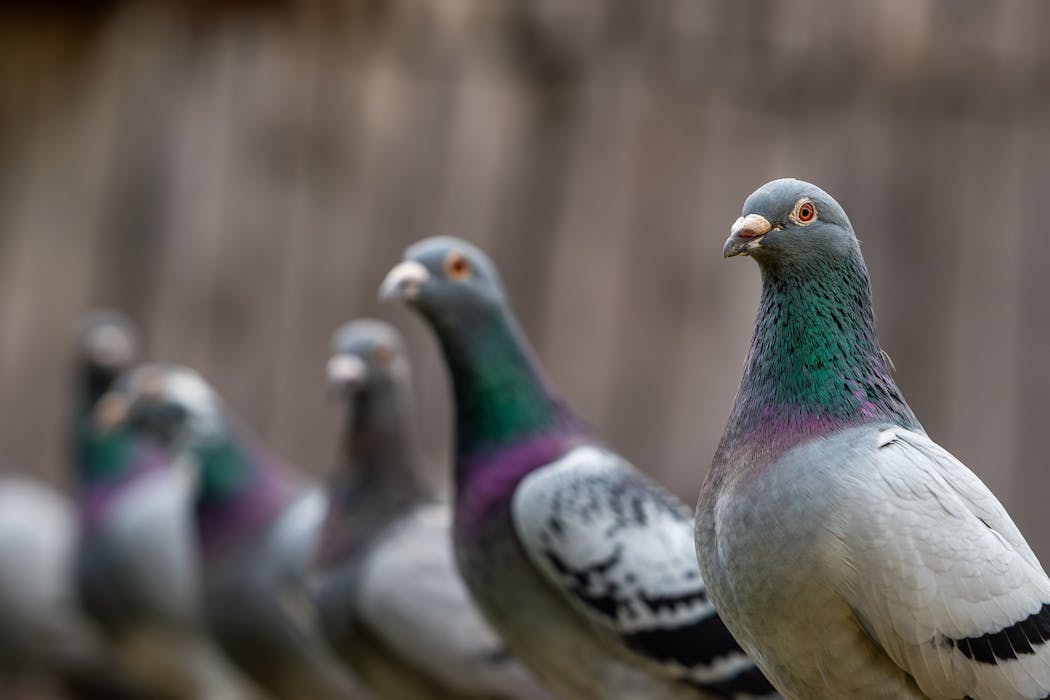
Pigeons are well-suited to urban living, and are outcompeting distinctive local species around the world. Wirestock Creators / shutterstock

The age of humans is increasingly an age of sameness. Across the planet, distinctive plants and animals are disappearing, replaced by species that are lucky enough to thrive alongside humans and travel with us easily. Some scientists have a word for this reshuffling of life: the Homogenocene.

Evidence for it is found in the world’s museums. Storerooms are full of animals that no longer walk among us, pickled in spirit-filled jars: coiled snakes, bloated fish, frogs, birds. Each extinct species marks the removal of a particular evolutionary path from a particular place – and these absences are increasingly being filled by the same hardy, adaptable species, again and again.

One such absence is embodied by a small bird kept in a glass jar in London’s Natural History Museum: the Fijian Bar-winged rail, not seen in the wild since the 1970s. It seems to be sleeping, its eyes closed, its wings tucked in along its back, its beak resting against the glass.

A flightless bird, it was particularly vulnerable to predators introduced by humans, including mongooses brought to Fiji in the 1800s. Its disappearance was part of a broad pattern in which island species are vanishing and a narrower set of globally successful animals thrive in their place.

It’s a phenomenon that was called the Homogenocene even before a similar term growing in popularity, the Anthropocene, was coined in 2000. If the Anthropocene describes a planet transformed by humans, the Homogenocene is one ecological consequence: fewer places with their own distinctive life.

It goes well beyond charismatic birds and mammals. Freshwater fish, for instance, are becoming more “samey”, as the natural barriers that once kept populations separate – waterfalls, river catchments, temperature limits – are effectively blurred or erased by human activity. Think of common carp deliberately stocked in lakes for anglers, or catfish released from home aquariums that now thrive in rivers thousands of miles from their native habitat.

Meanwhile, many thousands of mollusc species have disappeared over the past 500 years, with snails living on islands also severely affected: many are simply eaten by non-native predatory snails. Some invasive snails have become highly successful and widely distributed, such as the giant African snail that is now found from the Hawaiian Islands to the Americas, or South American golden apple snails rampant through east and south-east Asia since their introduction in the 1980s.

Homogeneity is just one facet of the changes wrought on the Earth’s tapestry of life by humans, a process that started in the last ice age when hunting was likely key to the disappearance of the mammoth, giant sloth and other large mammals. It continued over around 11,700 years of the recent Holocene epoch – the period following the last ice age – as forests were felled and savannahs cleared for agriculture and the growth of farms and cities.

Over the past seven decades changes to life on Earth have intensified dramatically. This is the focus of a major new volume published by the Royal Society of London: The Biosphere in the Anthropocene.

The Anthropocene has reached the ocean

Life in the oceans was relatively little changed between the last ice age and recent history, even as humans increasingly affected life on land. No longer: a feature of the Anthropocene is the rapid extension of human impacts through the oceans.

This is partly due to simple over-exploitation, as human technology post-second world war enabled more efficient and deeper trawling, and fish stocks became seriously depleted.

lionfish on coral reef
Lionfish from the Pacific have been introduced in the Caribbean, where they’re hoovering up native fish who don’t recognise them as predators.
Drew McArthur / shutterstock

Partly this is also due to the increasing effects of fossil-fuelled heat and oxygen depletion spreading through the oceans. Most visibly, this is now devastating coral reefs.

Out of sight, many animals are being displaced northwards and southwards out of the tropics to escape the heat; these conditions are also affecting spawning in fish, creating “bottlenecks” where life cycle development is limited by increasing heat or a lack of oxygen. The effects are reaching through into the deep oceans, where proposals for deep sea mining of minerals threaten to damage marine life that is barely known to science.

And as on land and in rivers, these changes are not just reducing life in the oceans – they’re redistributing species and blurring long-standing biological boundaries.

Local biodiversity, global sameness

Not all the changes to life made by humans are calamitous. In some places, incoming non-native species have blended seamlessly into existing environments to actually enhance local biodiversity.

In other contexts, both historical and contemporary, humans have been decisive in fostering wildlife, increasing the diversity of animals and plants in ecosystems by cutting or burning back the dominant vegetation and thereby allowing a greater range of animals and plants to flourish.

In our near-future world there are opportunities to support wildlife, for instance by changing patterns of agriculture to use less land to grow more food. With such freeing-up of space for nature, coupled with changes to farming and fishing that actively protect biodiversity, there is still a chance that we can avoid the worst predictions of a future biodiversity crash.

But this is by no means certain. Avoiding yet more rows of pickled corpses in museum jars will require a concerted effort to protect nature, one that must aim to help future generations of humans live in a biodiverse world.

The Conversation

The authors do not work for, consult, own shares in or receive funding from any company or organisation that would benefit from this article, and have disclosed no relevant affiliations beyond their academic appointment.

ref. Welcome to the ‘Homogenocene’: how humans are making the world’s wildlife dangerously samey – https://theconversation.com/welcome-to-the-homogenocene-how-humans-are-making-the-worlds-wildlife-dangerously-samey-274092

Fears dung beetle investment will be flushed away

Source: Radio New Zealand

©Rainer Fuhrmann – stock.adobe.com

New Zealand’s only dung beetle rearing facility says it may have to close if there’s not more support.

Dung Beetle Innovations was launched in 2014, following a successful application to import exotic dung beetles into Aotearoa to help reduce the impacts of farming on soil and water quality, and reduce drench resistance.

Co-founder Dr Shaun Forgie said while livestock had been brought in to establish New Zealand’s agriculture sector, a “suitable clean-up crew” had not been.

He said dung beetles helped rid paddocks of the manure left behind by stock, which would otherwise cause “major problems” with runoff and contaminants going into waterways.

“It is one of the greatest opportunities for utilising poop on farm paddocks as a free, sustainable fertiliser, and effectively halve your fertiliser bill. It’s one of those great things for improving soil productivity and productivity on your farm.”

The Auckland-based company bred and reared eight species of exotic dung beetles at its facility – the only such kind in New Zealand.

Forgie estimated they had since released millions of beetles onto farms through direct to farm sales as well as initiatives undertaken by regional councils and local catchment groups.

However, with sales declining in recent years, the future of the facility seemed uncertain.

“Sales are really dwindling to a point where we’re critically underfunded now, and there’s a high likelihood we’re not going to survive unless either the government jumps in and uses it as one of its mitigation tools for improving water quality, or farmers get on with ordering beetles.”

Forgie said there were like a variety of factors behind the slowdown in sales, including potentially the cost.

“These beetles may be expensive upfront, but for the long-term gain for your farm, you’re saving vast amounts of money and productivity and reduced chemical costs, reduced fertiliser costs.

“New Zealand’s a small country, it’s a small economy. We know statistically 15 percent of our farmers are the innovative early adopters that will get on with things like this. There’s another 15 percent we know that will see what they’re doing, the first 15 percent, and then they will think, ‘Well, it’s a good idea, we’ll get on board.’

“So really, I think we’re probably catering for probably 30 percent of the farming community.”

Forgie wondered if the market was now at saturation point, with the self-sustaining beetle colonies taking about 10 years to fully establish themselves on farm.

He said if the government were to invest $60 million in supplying farms with beetles over 10 years it would have massive benefits for the primary sector.

Ministry for Primary Industries (MPI) director of investment programmes and operations Steve Penno said it had invested more than $800,000 in dung beetle research to date.

“On balance, the evidence suggests that dung beetles provide positive benefits to pasture, soil quality, and nutrient loss. However, they don’t offer a ‘quick fix’ solution to address water quality given the time they take to establish. Their effectiveness also very much depends upon the individual farm situation.”

He said MPI was open to receiving more dung beetle applications to the Primary Sector Growth Fund.

Sign up for Ngā Pitopito Kōrero, a daily newsletter curated by our editors and delivered straight to your inbox every weekday.

– Published by EveningReport.nz and AsiaPacificReport.nz, see: MIL OSI in partnership with Radio New Zealand

Inside Andrew Coster’s resignation after a damning police watchdog report

Source: Radio New Zealand

Andrew Coster resigned from the Social Investment Agency (SIA) last year following the police watchdog’s damning report. RNZ / Samuel Rillstone

Former police commissioner Andrew Coster told staff he was “sorry” to be leaving the Social Investment Agency following a scathing report by the police watchdog.

Coster resigned from the Social Investment Agency (SIA) last year following the police watchdog’s damning report into police’s response to allegations of sexual offending by former Deputy Police Commissioner Jevon McSkimming.

RNZ has obtained a series of messages and emails from Coster in relation to his resignation under the Official Information Act.

On 27 November, a week before his resignation was announced, Coster messaged the engagement and communications manager and acting chief executive.

“Please keep developments as discussed today under your hat until confirmed. Timing looks more likely to be next week. Will keep you posted.”

Do you know more? Email sam.sherwood@rnz.co.nz

He also messaged his executive assistant asking them to “hold off until it’s been announced”.

“Lest we start a rumour prematurely.”

On 3 December, RNZ approached the SIA, Coster and the Public Service Commission with questions about his resignation.

About an hour later Coster emailed all SIA staff telling them he was leaving.

“It is with sadness that I announce today my resignation from my role as Secretary for Social Investment, effective from 1 December.”

Coster said it had been “an absolute pleasure and privilege” to work at the agency.

“I want to thank every one of you for the hard work and commitment that has seen us achieve such a lot in the last year. I have been incredibly impressed by the quality of the people we have in the organisation and your willingness to go above and beyond to deliver on the challenging work programme we have had.

“I’m sorry that I won’t be continuing this journey with you. However, I will watch with interest, as you continue to pursue better outcomes for all New Zealanders.”

Two hours later he wrote a similar email to the Social Investment Board, thanking them for their “wisdom shared and important input”.

“As you all appreciate better than I do, this is an incredibly important opportunity for New Zealand, and I’m sorry that I won’t be continuing this journey with you.

“I’ve valued our conversations and the forthright perspective each of you has brought to assist the Agency in its work. We are the better for it.”

In an earlier statement to RNZ, Coster said his resignation was “a result of my acceptance of full responsibility for the shortcomings” identified in the Independent Police Conduct Authority’s report.

“I regret the impact on the young woman at the centre of this matter and sincerely apologise to her for the distress caused.

“I accept that I was too ready to trust and accept at face value Deputy Commissioner McSkimming’s disclosure and explanations to me. I should have been faster and more thorough in looking into the matter.”

Coster acknowledged he should have more fully investigated the allegations when they were brought to his attention, “rather than assuming that their previous disclosure to senior Police staff a few years earlier would have resulted in an investigation if necessary”.

“It is clear that Police’s handling of the whole matter was lacking and that I was ultimately responsible for those matters. It was sobering to read of a number of missed opportunities which should have proceeded differently and more appropriately.”

Coster welcomed Public Service Commissioner Sir Brian Roche’s acknowledgement that the report made no finding of corruption or cover-up, nor did the IPCA find any evidence of any actions involving officers consciously doing the wrong thing or setting out to undermine the integrity of the organisation.

“I made decisions honestly. I acted in good faith. I sought to take all important factors into account with the information I had at the time. While it is not possible to alter past events, I am prepared to take responsibility – I got this wrong.

“I want to apologise to all members of the NZ Police. They work hard every day to keep our communities safe. I know they have been adversely affected by these events.”

Sign up for Ngā Pitopito Kōrero, a daily newsletter curated by our editors and delivered straight to your inbox every weekday.

– Published by EveningReport.nz and AsiaPacificReport.nz, see: MIL OSI in partnership with Radio New Zealand

Are You Dead? China’s viral app reveals a complex reality of solo living and changing social ties

Source: The Conversation (Au and NZ) – By Pan Wang, Associate Professor in Chinese and Asian Studies, UNSW Sydney

Qianlong / AP

A Chinese personal safety app called Are You Dead? – recently rebranded as Demumu – has gone viral in recent weeks, attracting widespread media attention.

Behind its sudden popularity lie deeper social transformations, including demographic shifts and changing personal and family relationships. At the same time, demand is growing for trust-based, non-medical, easy-to-use care networks tailored to the rapid rise of one-person households.

Demumu also shows how digital technologies are not only responding to everyday safety concerns but also reshaping social and cultural norms. As traditional kinship ties and community support structures weaken, technology is stepping in to fill – and capitalise on – the gaps.

Demumu’s virality: from local to global

In mid-2025, with a development cost of around 1,500 yuan (US$210), three young Chinese professionals from Moonscape Technologies launched a personal safety app called Are You Dead?.

The app was designed to address the safety concerns of China’s growing population of people who live alone. As described on its official store page, the app aims to “protect every solitary moment with simple solutions and build a solid safety line for solo living”.

Users are prompted to click an on-screen button daily or fortnightly via their smartphone to verify they are alive. If a user fails to do so, the system automatically sends email alerts to two nominated emergency contacts.

Shortly after the app’s release, it went viral and quickly became the most downloaded paid app in China. A 10% stake in the company reportedly increased in value from 1 million yuan (US$140,000) to nearly 10 million yuan (US$1.4 million) within three days. This suggests an overall valuation of close to 100 million yuan (US$14 million) for the developer.

In mid-January 2026, the app rebranded as Demumu as part of a global expansion. It has now gained traction in more than 40 countries and ranking near the top in global markets such as the United States, the United Kingdom and Canada.

China is moving towards smaller families and more individualised lives

The 2020 China Population Census showed there were more than 125 million one-person households in China. That’s one in every four households in the country.

Around two thirds of these solo dwellers are aged between 20 and 59. It is estimated there will be 200 million such households by 2030.

The rapid rise of solo living in China can be attributed to several factors. First, a growing number of “empty nest” older adults. This has been caused by population ageing, and the decline of marriage and fertility while divorce rates rise. These trends have been intensified by longer life expectancy and the legacy of the decades-long One Child Policy.

Second, intimate relationships and family formation have become less attainable for many. Men are often expected to own a home and a car even at the courtship stage, which is increasingly difficult due to rising living costs and high property prices. “Bride prices” – paid by a man’s family to a woman’s before marriage – are also escalating.

Third, large-scale migration from rural to urban areas and between cities has produced many “split households”. Millions of “empty-nest youths” live alone for extended periods under intense work-related pressures before forming or reuniting with families. A common anxiety among this group is “disappearing in loneliness”.

Numerous reports have documented “empty nesters” who died and were only found days, weeks, or even months later, particularly in gated urban communities. These incidents highlight the vulnerabilities associated with solo living, as well as the absence of trust-based safety networks. This is a problem Demumu seeks to address.

Moreover, among younger generations in China – particularly highly educated urban women – attitudes towards marriage and singlehood are shifting. Living alone is increasingly a deliberate choice.

Career development and personal autonomy are becoming higher priorities. Many women wish to avoid taking on a disproportionate share of domestic and caregiving responsibilities.

Solo living: a high-potential market

China’s singles economy is booming, and the market still has significant room to grow.

In major metropolitan centres such as Beijing, Shanghai, and Guangzhou, products and services tailored to people living alone are more and more visible.

These include one-person hotpot restaurants, single-person karaoke booths, and micro-apartments designed for solo dwellers. Compact household appliances such as mini-fridges, coffee machines, and kettles are also readily available, as well as solo travel packages offered by tourism agencies.

A single-person karaoke booth (often called a mini KTV) in a shopping centre in Changping district, Beijing.
These booths are commonly installed in shopping malls, entertainment complexes, and commercial streets.

Pan Wang, CC BY

Companionship of various kinds is also on offer. Owning pets – particularly dogs and cats – often plays an important role in the everyday lives of people who live alone.

The intimate services market has also expanded rapidly through digital platforms and smartphone apps. This includes love mentoring and relationship counselling, online dating and digital romance games. AI-powered chatbot companions and humanoid dolls designed to meet the emotional and relational needs of solo dwellers are also becoming more common.

There’s also an emerging niche business known as date-renting. This practice was initially popularised among young “bare branches” seeking to bring a temporary partner home for Lunar New Year family gatherings.

However, date-renting has since evolved into a personalised service economy in which individuals exchange intimacy, companionship, and dating experiences. In the process, dating is transformed into an “emotional commodity,” made visible for public consumption and increasingly shaped by platform profiteering.

Together with the emergence of safety apps such as Demumu, these singles-oriented businesses and technologies are energising China’s solo-driven economy. More importantly, they are also filling the gaps left by shrinking families and increasingly individualised living arrangements. In the process, they are reshaping contemporary social and personal relations and normalising single-centred cultures and lifestyles in everyday life.

Pan Wang does not work for, consult, own shares in or receive funding from any company or organisation that would benefit from this article, and has disclosed no relevant affiliations beyond their academic appointment.

ref. Are You Dead? China’s viral app reveals a complex reality of solo living and changing social ties – https://theconversation.com/are-you-dead-chinas-viral-app-reveals-a-complex-reality-of-solo-living-and-changing-social-ties-274536

We know how to cool our cities and towns. So why aren’t we doing it?

Source: The Conversation (Au and NZ) – By A/Prof. Elmira Jamei, Associate professor, Victoria University

This week, Victoria recorded its hottest day in nearly six years. On Tuesday, the northwest towns of Walpeup and Hopetoun reached 48.9°C, and the temperature in parts of Melbourne soared over 45°C. Towns in South Australia also broke heat records.

This heatwave is not an outlier. It is a warning shot.

These weather conditions rival the extreme heat seen in the lead-up to the 2019–20 Black Summer, and they point to a future in which days like this are no longer rare, but routine.

What makes this summer so confronting is not just how hot it has been, but this: Australia already knows how to cool cities, yet we are failing to do it. Why?

Urban heat is not inevitable

Cities heat up faster and stay hotter than surrounding areas because of how they are built. Dense development, dark road surfaces, limited shade, and buildings that trap heat and rely heavily on air-conditioning create the “urban heat island” effect.

This means cities absorb vast amounts of heat during the day and release it slowly at night, preventing the city from cooling down even after sunset. During heatwaves, this trapped heat accumulates day after day and pushes temperatures well beyond what people can safely tolerate.

Future urbanisation is expected to amplify projected urban heat, irrespective of background climate conditions. Global climate change is making the urban heat island effect worse, but much of the heat we experience in cities has been built in through decades of planning and design choices.

Hot cities are not only a result of climate change, they are also a failure of urban planning.
zpagistock/Getty

Heat is a health and equity crisis

Heatwaves already kill more than 1,100 Australians each year, more than any other natural hazard. Extreme heat increases the risk of heart and respiratory disease, worsens chronic illness, disrupts sleep and overwhelms health services.

Poorly designed and inadequately insulated homes, particularly in rental and social housing can become heat traps. People on low incomes are least able to afford effective cooling, pushing many into energy debt or forcing them to endure dangerously high temperatures.
Urban heat deepens existing inequalities. Those who contributed least to the problem often bear the greatest burden.

Australia has expertise, but not ambition

Here is the paradox. Australia is a major contributor to global research on urban heat. Australian researchers are developing national tools to measure and mitigate urban heat, and studies from cities such as Melbourne have quantified urban heat island intensity and investigated how urban design can influence heat stress.

Additionally, Australia already has the technologies to cool cities, from reflective coatings and heat-resilient pavements to advanced shading systems. Yet many of our cities remain dangerously hot. The issue isn’t a lack of solutions, but the failure to roll them out at scale.

Internationally, we are lagging behind countries where large-scale heat mitigation projects are already reducing urban temperatures, cutting energy demand and saving lives.

For example, Paris has adopted a city-wide strategy to create “cool islands”, transforming public spaces and schoolyards into shaded, cooler places that reduce heat stress during heatwaves.

In China, the Sponge City program, now implemented in cities such as Shenzhen and Wuhan, uses green infrastructure and water-sensitive design to cool urban areas and reduce heat stress.

Paris has a city-wide strategy to create cool zones by transforming public spaces into shaded environments.
42 North/Unsplash, CC BY

Symbolic change can’t meet the challenge

Too often, urban heat policy stops at small, symbolic actions, a pocket park here, a tree-planting program there. These measures are important, but they are not sufficient for the scale of the challenge.

Greening cities is essential. Trees cool streets, improve thermal comfort and deliver multiple health and environmental benefits. But greenery has limits. If buildings remain poorly insulated, roads continue to absorb heat and cooling demand keeps rising, trees alone will not protect cities from extreme temperatures in the coming decades.

Urban heat is a complex systems problem. It emerges from how cities are built, and is largely shaped by construction materials, building codes, transport systems and planning decisions locked in over generations. Scientists know a great deal about how to reduce urban heat, but many responses remain piecemeal and intuitive rather than systemic.

Designing an uncomfortable future

Research suggests that even if global warming is limited to below 2°C, heatwaves in major Australian cities could approach 50°C by 2040. At those temperatures, emergency responses alone will not be enough. Beyond certain temperature thresholds, behaviour change, public warnings and cooling centres cannot fully protect people.

The choices we make now about buildings, streets, materials and energy systems will determine whether Australian cities become increasingly unliveable, or remain places where people can safely live, work and age.

The battle against urban heat will be won or lost through design, technology, innovation and political will. Cities need to deploy advanced cool materials across roofs, buildings and roads, in combination with nature-based solutions. This will only work if governments use incentives to reward heat-safe design. Heat must be planned for systematically, not treated as a cosmetic problem.

With leadership and a handful of well-designed, large-scale projects, Australia could shift from laggard to leader. We have the science. We have the industry. We have the solutions. The heat is here. The only real question is whether we act, or keep absorbing it.

A/Prof. Elmira Jamei does not work for, consult, own shares in or receive funding from any company or organisation that would benefit from this article, and has disclosed no relevant affiliations beyond their academic appointment.

ref. We know how to cool our cities and towns. So why aren’t we doing it? – https://theconversation.com/we-know-how-to-cool-our-cities-and-towns-so-why-arent-we-doing-it-273341

‘Bold’. ‘Elegant’. ‘Introverted’? How words describing wine get lost in translation

Source: The Conversation (Au and NZ) – By Allison Creed, Lecturer and Curriculum Designer, Cognitive Linguistics, The University of Melbourne

karelnoppe/Getty

I recently watched a participant at a wine tasting freeze when asked for their opinion. “It’s … nice?” they ventured, clearly wanting to say more but lacking the specific vocabulary to do so.

The sommelier quickly intervened, noting the wine was “quite elegant, with beautiful structure.” The participant simply nodded, and the conversation ended.

Wine is a multi-billion-dollar export commodity, yet industry “winespeak” can actually stop people feeling they can join in conversations about wine. And often words can get lost in translation – or mean something very different – in fast-growing wine markets such as China, Vietnam and Thailand.

My new research systematically reviewed 77 studies on wine language and metaphor. Building on my earlier research tracking how wine metaphors evolve, it reveals a surprising disconnect: the language used to taste and talk about wine does not travel across cultures as smoothly as the industry assumes.

This matters for the wine industry, because wine descriptions directly influence purchasing decisions and overall enjoyment.

Images in English that don’t travel

The problem is not the use of metaphor itself. In their 1980 book, Metaphors We Live By, George Lakoff and Mark Johnson argue metaphors are essential cognitive tools we use every day, often without even noticing.

When we say a wine has “body” or “backbone,” we draw on our intimate knowledge of physical experience to make sense of taste and texture. This is how human language works.

The problem is when metaphors fail to travel. Consider “body,” a fundamental concept in English-speaking wine cultures when talking about weight and mouthfeel.

Research shows even native English speakers interpret “body” differently. Some believe it refers to flavour, others to texture, still others to alcohol content.

When translated where the word lacks the same associations, confusion multiplies. In Dutch, German, and Hungarian, literal translations (“lichaam”, “Körper”, “test”) trigger awkward anatomical associations. What sounds natural in English reads as bizarre in translation.

The enigma of ‘elegance’

“Elegance” presents a similar challenge. Wine experts across cultures share a core understanding – that a wine is smooth, balanced, refined, or complex. Yet cultural associations can vary.

In Chinese wine reviews, elegance is expressed through mírén (迷人), meaning “charming”, and nèiliǎn (內斂), meaning “introverted”. These are social-aesthetic metaphors that activate entirely different cultural scripts.

This is significant, because wine is what’s called an “experience good”. You cannot judge taste or quality until after you purchase. Consumers rely on descriptions to signal what they are buying.

When metaphors don’t align culturally, the industry is not just failing to communicate but actively eroding people’s trust.

Why some words affect wine ratings

The wine world’s most widespread linguistic habit is anthropomorphism – the attribution of human characteristics.

Industry reviews routinely characterise wines as “shy,” “honest,” or “aggressive”. This is not decorative language; it is cognitive scaffolding.

Describing wine as a person helps us communicate complex sensory perceptions by drawing on our personal experience of human behaviour and emotion.

However, these particular metaphors can carry cultural baggage. Research suggests that wines labelled with feminine terms (such as “delicate” or “elegant”) are perceived as hedonistic products meant for quick consumption, leading consumers to believe they decline at a younger age.

Conversely, wines with masculine descriptors (“powerful”, “bold”) are linked to ageing potential, and receive higher quality ratings.

Although these gendered metaphors might not always hit the price tag directly, they can fundamentally alter if and when a consumer decides to drink the bottle.

Creating better metaphors

As global wine trade increases, industry is eager to connect with new consumers in emerging markets. Yet they often do so using vocabulary rooted in European traditions and Western thinking that do not communicate clearly to international audiences.

Wine marketers find themselves caught between traditional wine language maintaining prestige and authority, and pressure to create new metaphors resonating globally.

The solution is not to stop using metaphors to describe wine – that would be impossible. The question is how metaphors can work inclusively across cultures, rather than carrying cultural baggage that can lead to bias and market undervaluation.

My research suggests a need to rethink how we communicate about wine. This could include writing tasting notes that incorporate more universally understood sensory cues and culturally consistent evaluative language, in addition to traditional expert vocabulary.

Without deliberate attention to how metaphors travel, or fail to travel, across cultures, the gap between expert “winespeak” and consumer understanding will only widen. The industry is not building a Tower of Babel through metaphor itself, but through the assumption that everyone speaks the same metaphorical language.

Allison Creed is affiliated with The University of Melbourne, Wine Communicators of Australia, and the Global Wine Business Institute.

ref. ‘Bold’. ‘Elegant’. ‘Introverted’? How words describing wine get lost in translation – https://theconversation.com/bold-elegant-introverted-how-words-describing-wine-get-lost-in-translation-274415

Dog parks are an unexploited arena for a television dramedy – so now we have ABC’s Dog Park

Source: The Conversation (Au and NZ) – By Phoebe Hart, Associate Professor, Film Screen & Animation, Queensland University of Technology

ABC

Raise a paw if your dog ever helped you to meet a new two-legged friend? The premise of ABC’s Dog Park capitalises on the fact pet ownership in Australia is increasing, with canines being the most popular choice.

This rise is sadly commensurate to the rate of social isolation and loneliness experienced in Australia, especially among men.

Enter Roland, played by Dog Park co-creator Leon Ford. Ford, who (according to the press notes on the series) says his own dog makes him nervous, came up with the concept with Matchbox Productions’ Amanda Higgs, best known for spawning the Australian drama series The Secret Life of Us (2001–05).

Roland is a middle aged recluse and all-round grump who has a hard time trusting and/or liking other humans. His sense of dissolution takes a further dip when his estranging wife Emma (Brooke Satchwell) departs for work in the United States, leaving the TAFE career counsellor in charge of his distant teenage daughter Mia (Florence Gladwin) and disdained dog Beattie.

The first turning point of this six-part series occurs when Beattie goes missing and boozehound Roland searches for her at the local park. This is where Roland meets the always sunny Samantha (Celia Pacquola) and a ragtag bunch of overly friendly folks and their fur babies (AKA the Dog Park Divas), all of whom are quite familiar with Beattie already.

From the outset, you can tell it is this diverse pack of dog lovers that are most likely to draw Roland out of his hard, turtle-like shell, and hopefully deliver a few laughs along the way too.

The ensemble cast features a few familiar faces, including Florence Gladwin, Nick Boshier, Ash Flanders, Ras-Samuel, Grace Chow and Elizabeth Alexander.

The series also features a quirky visual style throughout thanks to the off-beat camerawork from director of photography Aaron Farrugia and his team. The rambling and percussive musical score by Bryony Marks is another highlight with some solid licensed music choices as well. I love the title track use of the 1991 indie anthem Don’t Go Now by Aussie rockers Ratcat, but maybe Reg Mombassa and Peter O’Doherty’s Dog Trumpet would be more appropriate?

Doling out life lessons

Dog parks are a relatively novel innovation in town planning. There are many proven benefits to exercising dogs communally, but not unsurprisingly dog parks can also be sites of conflict.

Therefore, I would argue they are an unexploited arena for a television dramedy, although Wilfred (2007–10) sticks out like you-know-whats as a rather surreal and anthropomorphic example of dogs teaching humans a thing or two.

Both Dog Park and Wilfred centre on a hero suffering depression: a tough sell for prime time telly. I struggled to form an attachment to Dog Park’s protagonist, a man who goes out of his way to alienate others and does not seem to know how nor want to help himself, but feel this is a topic worth exploring.

Roland is hard to like – but Beattie is very cute.
ABC

The Dog Park Divas dole out life lessons, trying to help slow Roland’s downhill roll. Their interventions slowly begin to take effect – which gives hope that all humans are ultimately redeemable.

There is another bone to pick. Although much of the action in Dog Park, which was filmed in Melbourne, occurs in a city park, it appeared to me this location doesn’t look too fenced off. These outdoor areas are a hit in many urban centres and city councils around the world because dogs can be safely let off their leashes while the people socialise. Dog Park breaks slightly with reality in that way, but I guess the other 50% of the audience who don’t own a dog would never know.

All this said, Dog Park is tender in a darkly bittersweet way with an underlying thematic of connection and chosen family. The tone of grounded humour with a generous dollop of pathos aligns well with episode one director Matthew Seville’s previous work, which includes the painfully honest Please Like Me (2013–16).

Dog Park continues in this mode and could be a bit hit as well; I predict a TV format adaptation overseas in the not too distant future. An American remake of Wilfred starring Elijah Wood lasted four seasons.

Newcomer director Nina Buxton, fresh from directing episodes of season three of Heartbreak High (2022–), sinks her teeth into three episodes of Dog Park. There is peppery dialogue throughout thanks to screenwriters Penelope Chai, Chloe Wong and Nick Coyle alongside Ford and Higgs. Beattie (played by an unspecified poodle breed named Indie in real life) is pretty cute – and proof dogs really are the superior species.

Dog Park is on ABC and ABC iView from Sunday.

Phoebe Hart does not work for, consult, own shares in or receive funding from any company or organisation that would benefit from this article, and has disclosed no relevant affiliations beyond their academic appointment.

ref. Dog parks are an unexploited arena for a television dramedy – so now we have ABC’s Dog Park – https://theconversation.com/dog-parks-are-an-unexploited-arena-for-a-television-dramedy-so-now-we-have-abcs-dog-park-273458

F1: A better day for Liam Lawson in new Racing Bulls car

Source: Radio New Zealand

New Zealand F1 driver Liam Lawson. MPS AGENCY / PHOTOSPORT

New Zealand driver Liam Lawson had a positive second day in his new Racing Bulls car at the Barcelona F1 Shakedown.

Teams have run their new spec 2026 cars behind closed doors at the Circuit de Catalunya.

Lawson described his first outing earlier this week as “very, very different” as he struggled to get to grips with the new design which this year means the cars are smaller and lighter with no DRS and more electrical power.

However after completing the morning session on Thursday, Lawson appeared to be happier.

“We just keep learning,” Lawson told F1.

“We’re making, obviously, big gains, but so is everybody else. Very, very different cars, but in a much better place than we were on Monday, which is the main thing. We just need to keep learning and improving the car.”

“The main goal is to just try and keep learning and improving the car and discovering what we can.”

Unofficially Lawson got through more than a hundred laps today and recorded a best time that was two seconds slower than the Mercedes of George Russell.

New team-mate Arvid Lindblad got behind the wheel in the afternoon session.

Aston Martin made their first appearance on Thursday.

The Barcelona Shakedown concludes on Friday.

Formula 1 has two test sessions in Bahrain in February with the opening round of the 2026 championship in Australia on 8 March.

Sign up for Ngā Pitopito Kōrero, a daily newsletter curated by our editors and delivered straight to your inbox every weekday.

– Published by EveningReport.nz and AsiaPacificReport.nz, see: MIL OSI in partnership with Radio New Zealand

The treasure’s in the tales of New Zealand’s 2500 sunken ships

Source: Radio New Zealand

The S.S.Tasmania hit a rock off Table Cape, Mahia Peninsula in 1897. Auckland Libraries

There are concerns divers are plundering one of New Zealand’s famous shipwrecks. Are they treasure-hunting pirates, or just amateur souvenir-seekers?

Concerns have been raised over the summer that the historic contents of a shipwreck off the Mahia Peninsula are being plundered by divers.

The site where the alleged theft is happening is that of the S.S. Tasmania, a grand passenger steamer that went down in a fierce storm in 1897 after hitting rocks off Table Cape.

On board was a suitcase full of jewels, carried by a distant relative of the famous Rothschild family. It was that treasure that prompted diving pioneer Kelly Tarlton to buy the wreck, and in the 1970s he managed to recover about 250 rings and other items encrusted with rubies, opals, sapphires and diamonds.

But it was only a fraction of the loot, and the rest – more than half of what went down – is still there.

That may well be the allure of diving the wreck but the experts all agree that what’s left will remain lost. Storms, shifting currents and sludge from land clearances have literally muddied the waters.

Now the site of the wreck is targeted by fishers going after the prize species that gather there, but some divers are believed to be after crockery and other bits of history they can lay their hands on.

One expert however doubts there’s any looting going on.

Garth MacIntyre owns the property closest to the wreck at Mahia. He’s been diving and exploring shipwrecks for 50 years, and counts Kelly Tarlton among his mentors.

The ship site is “dived regularly by numerous recreational divers, and probably predominately spear fishermen who free dive over the wreck,” he says.

“The wreck in its own right acts like an artificial reef and draws in a lot of fish life. It’s a spectacular dive when the conditions allow you to dive it. It’s a great location.”

But he says if you’re keen enough to explore an old wreck for its potential treasure, you’re probably going to be spending more money setting up your operation than you’ll gain from any plunder.

“It’s a passion – you’re not going to get rich out of it,” he says.

For him, it’s more about the history and the stories of those who were on board.

“We don’t have an old history here, so we know most things about the wrecks that have gone down, in terms of their design and probably what they’re carrying,” he says.

“But it’s still a real buzz and a real thrill to be able to try and find these wrecks and document them – you know, video record them. There’s so much great technology out there now to relay that to the general public, and that’s what keeps driving me and this small group of people who are endeavouring to find these deep water wrecks or revisiting the shallow water wrecks.”

Today on The Detail, MacIntyre also talks about the laws governing diving around shipwrecks, and who has salvage rights.

Check out how to listen to and follow The Detail here.

You can also stay up-to-date by liking us on Facebook or following us on Twitter.

– Published by EveningReport.nz and AsiaPacificReport.nz, see: MIL OSI in partnership with Radio New Zealand

New Zealanders missing out on motor neurone disease treatment, study shows

Source: Radio New Zealand

Illustration of motor neuron diseases, showing degeneration of motor neurons in anterior horns of spinal cord. Science Photo Libra via AFP

A low uptake of New Zealanders with motor neurone disease are using the only publicly-funded treatment available for the disease, a new study shows.

Motor neurone disease (MND) was a fatal, rapidly progressing neurodegenerative disease that deprived people of their ability to move, talk, and eventually breathe.

The only Medsafe-funded treatment available for the most common variant of the disease, known as amyotrophic lateral sclerosis (ALS), was a riluzole tablet.

A research paper was published in the New Zealand Medical Journal on Friday.

Research showed 48 percent of research participants with ALS took riluzole, a lower uptake seen overseas.

Four European ALS centres showed an 83 percent uptake while an Australian MND survey recorded 76 percent usage.

The study was led by Motor Neurone Disease New Zealand (MND NZ) research advisor Dr Natalie Gauld, and neurologists Dr James Cleland and Dr Sarah Buchanan.

Participants, who were not taking riluzole, said they were either worried about its effectiveness or side effects, had not been offered or prescribed it, or had never heard of it.

People with swallowing issues (bulbar onset) were less likely to be prescribed riluzole, underlining a need for the liquid form to be introduced in New Zealand, researchers said.

“As lead investigator on this research and a person living with motor neurone disease, it has been concerning to see our riluzole uptake is so low when compared internationally.

“I believe it is vital for everyone with ALS to have access to liquid riluzole and the right information about its life-extending properties to aid uptake in New Zealand,” Gauld said.

Recent research showed, on average, riluzole extended survival by seven to 11 months, Gauld said.

“This is meaningful for those living with this fast-progressing terminal disease and their whānau. Earlier riluzole trials only showed a median increased survival of 2 to 3 months compared to a placebo.”

The average life expectancy of the disease was two to three years after diagnosis, with 50 percent of people dying within 30 months of the onset of symptoms.

Two people each week in New Zealand were diagnosed with MND.

Dr Natalie Gauld was the project’s lead researcher. Supplied / Motor Neurone Disease New Zealand

Dr Cleland, one of the paper’s co-authors, said he was pleased to see the paper published, which brought benefits to people living with MND in New Zealand.

“This research highlights the strength of collaboration between patients, whānau, and healthcare and research teams. It shows that New Zealand can play a meaningful role in advancing MND research, and we look forward to ongoing partnerships focused on reducing the burden of this devastating disease for New Zealanders,” he said.

“It also highlights the evolving nature of science and the need for clinical practice to adapt as evidence changes over time.”

Dr Gauld and MND NZ chief executive Mark Leggett had contacted Pharmac and Medsafe to ask the government to urgently introduce and fund a liquid form of riluzole in New Zealand.

The findings from Friday’s paper was also presented at a neurological association conference in November last year to raise awareness amongst neurologists.

Sign up for Ngā Pitopito Kōrero, a daily newsletter curated by our editors and delivered straight to your inbox every weekday.

– Published by EveningReport.nz and AsiaPacificReport.nz, see: MIL OSI in partnership with Radio New Zealand

Teaching Council to examine actions of ‘everyone involved’ over sex abuse claims against St Bede’s priest

Source: Radio New Zealand

Former St Bede’s College priest Fr Rowan Donoghue arrives at the Christchurch District Court for an appearance on January 28, 2026. Nathan McKinnon / RNZ

The Teaching Council says it will investigate whether mandatory reporting obligations were met over allegations involving a priest now convicted of sexually abusing boys, with its disciplinary process set to examine the actions of “everyone involved”.

It comes after RNZ revealed that the Society of Mary was made aware of allegations against the priest nearly 20 years ago. The religious order was unable to verify the allegations from the anonymous complainant, but removed him from public ministry and enacted a “safety plan”.

RNZ reported on Wednesday that Fr Rowan Donoghue had pleaded guilty to six charges, five of which are representative, including indecent assault on a boy aged 12-16, indecent assault on a boy 16 and over and sexual violation by unlawful sexual connection.

The offending related to four boys who were boarding at St Bede’s College in Christchurch between 1996 and 2000.

  • Do you know more? Email sam.sherwood@rnz.co.nz

In response to questions from RNZ, a Teaching Council spokesperson said any situation where a young person had been harmed or made to feel unsafe was “deeply distressing”.

“Our thoughts are with all those affected by this case. No child or young person should ever feel unsafe at school.”

Fr Rowan Donoghue pictured in the 1993 year book. RNZ

In general, the council did not comment on complaints or mandatory reports that had been made to the council.

“However, given the level of public interest, we can confirm that we have been working closely with New Zealand Police since early 2025 in support of their investigation into offending by Mr Donoghue.

“The legal requirement for mandatory reporting to the New Zealand Teachers Council (now the Teaching Council) relating to the dismissal, resignation under investigation, serious misconduct, competence concerns, or specified convictions of teachers was first inserted into the Education Act 1989 by the Education Standards Act 2001 to protect the safety of children and young people in our education system.”

Now the criminal process had concluded, the council’s professional disciplinary process would resume.

“This process will include consideration of whether obligations have been met to report conduct or competence concerns to the council that were known at the time, and appropriate action depending on the findings.”

Asked who the disciplinary process would look at, the spokesperson said the council would “look into the actions of everyone involved”.

“We are committed to ensuring the safety of children and young people and the quality of teaching in our education system, and we encourage anyone who has concerns about the conduct or competence of a formally registered teacher to reach out to us.”

In response to questions from RNZ on Wednesday, the Society of Mary confirmed an anonymous complaint of a sexual nature was made against Donoghue in 2007.

“The Society of Mary sought to investigate the complaint, but was unable to gain sufficient information to verify the allegations. Even so, the Society of Mary determined that Donoghue should be removed from public ministry, with a safety plan enacted. That has stayed in place since that time.”

The society was not aware of the allegations to which Donoghue entered guilty pleas until police laid charges, the spokesperson said.

“Our first thoughts are with those who came forward and described what happened to them. We extend our apologies to them, and will seek to do so personally at an appropriate time. We deeply regret the hurt or harm caused.”

The society was “committed to ongoing efforts to ensure the safety of all people in Church settings”.

Asked whether police were told, the spokesperson said the complainant was “encouraged to contact the police”.

St Bede’s College rector Jon McDowall told RNZ on Wednesday the details outlined through the court process were “deeply disturbing”.

“As rector, it makes me feel sick to think that young people entrusted to an adult’s care were abused in this way. I am deeply sorry that this happened to them, and my thoughts are with the victims and survivors who continue to live with the impact of that harm.”

McDowall said the school had worked openly with police throughout the process.

“We will continue to cooperate fully with the authorities should any further information come to light.

“Abuse has no place at St Bede’s – past, present, or future. The College has an established policy in place to respond and support victims of historical abuse, alongside safeguarding policies and practices to protect the wellbeing and safety of students today. Our focus remains on providing a safe and supportive environment for all members of our community.”

McDowall extended an open invitation for victims in the case, and others who may have been impacted, or anyone with concerns to contact him directly.

He earlier told RNZ the school was “formally notified” of the allegations by police and had “worked openly with them since that time”.

“We hold victims and survivors in our thoughts and remain focused on providing a safe and supportive environment for all members of our community – past, present and future.”

In early 2023, police were contacted about the allegations of sexual abuse by Donoghue in relation to his time at St Bede’s College.

St Patrick’s Silverstream rector Rob Ferreira told RNZ the school had not been made aware of any allegations of abuse in care while Fr Donoghue worked at the school between 1982 to 1992.

“We have not had any inquiries from the police either.

“We operate according to clearly set out guidelines and best practice and you should note that our primary concern is the wellbeing of our students. Given that – our protection of the privacy and any other rights of survivors of abuse and other individuals would be paramount.”

He said the school had informed the community that Donoghue’s name suppression had lifted.

St Patrick’s College Wellington rector Mike Savali confirmed to RNZ that Donoghue was on the college staff from 2003 to 2007.

Where to get help

If it is an emergency and you feel like you or someone else is at risk, call 111.

If you have been abused, remember it’s not your fault.

Sign up for Ngā Pitopito Kōrero, a daily newsletter curated by our editors and delivered straight to your inbox every weekday.

– Published by EveningReport.nz and AsiaPacificReport.nz, see: MIL OSI in partnership with Radio New Zealand

Collectors fear police aren’t taking Pokémon card thefts seriously

Source: Radio New Zealand

A Guinness Book of Records record-holding collection of Pokémon cards owned by Jens Ishoey Prehn and his brother Per Ishoy Nielsen. IDA MARIE ODGAARD / AFP

Trading cards like Pokémon have become serious business, straddling the worlds of gaming and high-value investment.

Originally created in 1996 for competitive play and on sale for approximately a dollar per card, the most expensive card has since sold for a staggering US$5,275,000 (NZ$8.7m).

And soaring collectible value has turned the cards into targets for theft and fraud.

Liam O’Neil, managing director of Hobby Lords, said they had to beef up security to protect staff after one worker was recently stabbed in a robbery.

“Each of our stores in this industry has more money (stock value) than jewellery stores. We have to look like jewellery stores with security and alarms, and all bells and whistles.”

And while the burglary is now before the courts, O’Neill said the theft of Pokémon cards was not being taken seriously enough by police.

“Police are under-resourced, understaffed, and that’s causing part of the problem that they don’t have the resources to investigate these crimes.

“But when it comes to the punishment levels versus jewellery stores, cigarettes, ram raids, do I think the punishment [for card thefts] is lesser than those? Yes, 100 percent. I don’t think it’s been taken seriously.”

Liam O’Neil, managing director at Hobby Lords, feels they are increasingly becoming the target of criminals. Supplied

But police deny this, saying they treat all the reports of fraud or theft the same.

In a statement, Superintendent Blair Macdonald, director for service said: “Police treat reports of fraud or theft the same – it doesn’t matter what has been stolen or defrauded, or from what type of community. Police conduct an initial assessment for any matter reported to us, which considers a number of factors in determining whether it will be investigated. This is not based on monetary values.”

Trading cards first became popular in the ’90s. Along with Pokémon cards, The game Magic: The Gathering was particularly hot at the moment.

O’Neil said one of his customers lost around $25,000 worth of Magic: The Gathering cards when their home was burgled in early January. Two weeks later, a woman walked into O’Neil’s store attempting to trade them.

Staff instantly recognised the cards and made multiple calls to police while trying to keep the woman in store for 90 minutes.

O’Neil said the 90-minute wait for police was a disruption for the business as they discreetly asked other customers to leave, and the woman began behaving aggressively after they told her they knew the cards were stolen.

Police confirmed they had arrested someone in relation to the burglary and have returned stolen items to the victim.

Scams are also widespread within the trading card community, O’Neil said.

“We had a person I know personally stole at least $10,000 worth of stuff from scamming. We had her address, we had a bank account number, we had everything which has been presented to the police, and nothing’s ever happened to them.”

Three teenagers who allegedly stole items from a Hobby Lords store in Newmarket, as caught on CCTV. Hobby Lords / supplied

Macdonald told RNZ they had not identified it as a particular issue of concern, but they encouraged victims of this type of offence to report it.

“Aside from enabling us to investigate if appropriate, it also helps us to build a picture of offending and understand any trends, which in turn can help us more effectively target our response.”

Collector Peter Johnson believed the increase in crime was due to increased publicity over the potential value of trading cards.

“Over the last two years, there has been a small influx of theft going on as the community has seen the value in Pokémon and sees an increase in your investment over a short period of time. So that’s definitely interested a lot of people that are outside of the hobby.”

He had been collecting Pokémon cards since they first launched in 1996.

Peter Johnson has been collecting Pokémon cards since 1996. Supplied

In the past month, his Umbreon VMAX card – currently valued at $3500 – had been stolen twice at trading events.

The first time, Johnson recovered the card after alerting the trading card community. It was taken by a 10-year-old boy and later returned by his apologetic parents.

But two weeks later, it was stolen again and was still missing.

“It hurts and it’s sad, but it’s motivated me more to be more alert. This weekend just gone, I’ve put up a tripod and a camera and filmed the whole event. “

Card Merchant Westcity store manager Marshall Stevenson had also seen an increase in shoplifting.

Card Merchant Westcity store manager Marshall Stevenson has also seen an increase in shoplifting since 2024. Supplied

He suspected much of it was carried out by parents trying to fulfill their children’s wish list.

“Any time we hear about particularly valuable collections or a particular card that have ended up being sold within our local area, most of our industry is aware of the situation and will keep an eye out for that sort of thing.

“Hopefully someone will be able to come across it at some point, but I don’t hear many of them ever showing up again. A lot of people are able to sell overseas.”

Sign up for Ngā Pitopito Kōrero, a daily newsletter curated by our editors and delivered straight to your inbox every weekday.

– Published by EveningReport.nz and AsiaPacificReport.nz, see: MIL OSI in partnership with Radio New Zealand

Australian Open cameras: WTA backs players’ calls for more off-court privacy at tournaments

Source: Radio New Zealand

Coco Gauff went viral after smashing her racket following her quarter-final defeat at the Australian Open. AAP / Photosport

The WTA said that calls from players for more privacy away from the court at tournaments were entirely valid after broadcasts of Coco Gauff smashing her racket following her quarter-final defeat at the Australian Open sparked intense debate.

Gauff looked for a place without cameras to channel her frustrations shortly after losing to Elina Svitolina on Tuesday and was unhappy to learn that video of her striking her racket repeatedly on the floor near the match call area of Rod Laver Arena had been broadcast worldwide.

Iga Swiatek, Jessica Pegula and Amanda Anisimova were among the players highlighting the lack of privacy and the WTA agreed steps should be taken.

“Recent concerns raised by WTA players at the Australian Open about cameras in off-court player areas are completely valid,” WTA chairperson Valerie Camillo said on Thursday.

“This is a very human and fair request – athletes need spaces where they can recover and not feel constantly under scrutiny.

“Providing that space is part of our responsibility as a sport. The WTA is committed to listening to its players and acting on concerns like this.”

Craig Tiley AFP

Tennis Australia, which organises the year’s opening Grand Slam, said cameras in warm-up and cool-down areas were set up to provide fans with a “deeper connection” to the players, but that it will work with them to find solutions to their concerns.

“We want to listen to the players, we want to really understand what their needs and what their wants are,” tournament director Craig Tiley told the Tennis Channel.

“So, that’s the first question we’ll ask; we’ve heard you and whatever adjustments we need to make we will make.

“It’s a fine line between the player promotion, event promotion, and where the cameras are.”

The WTA said it had already taken steps to reduce the number of cameras in off-court areas at its tournaments.

“We moved to this standard because we agree that there should be clear, respectful boundaries in off-court areas,” the governing body of women’s tennis added, calling for similar action from other stakeholders and broadcasters.

“We believe this issue should be reviewed by tournament organisers and broadcast partners to ensure appropriate boundaries are in place.”

-Reuters

– Published by EveningReport.nz and AsiaPacificReport.nz, see: MIL OSI in partnership with Radio New Zealand

‘Footballing nation’ – record number of Kiwis playing

Source: Radio New Zealand

Football is becoming increasingly popular in NZ. Photosport

Football is increasingly becoming the sport of choice in New Zealand, with the latest numbers showing more Kiwis than ever are playing.

And New Zealand Football expected that to grow, with the All Whites competing at the FIFA World Cup 2026.

According to New Zealand Football’s 2025’s participation statistics, more than 180,000 players registered to play last year.

And football continued to be the most popular team participation sport in Aotearoa, according to Sport NZ’s most recent Active NZ Participation Survey.

Nearly 148,500 players took part in New Zealand Football organised football and futsal in 2025, a 3 percent growth in football and an 11 percent rise in futsal from 2024.

Adding to that, more than 34,000 players also played through New Zealand Secondary Schools.

Girls and women’s football continued to gain in popularity after the FIFA Women’s World Cup 2023, with a 35 percent increase in female football and futsal players since 2022.

There had also been significant growth for under-represented ethnicities, with participation among Māori up 9 percent compared to 2024.

The biggest rise was in Asian participation compared to 2024, increasing by more than 10 percent, while participation in football by Pasifika increased 7 percent.

There was also a big jump in people taking part in New Zealand Football coaching courses in 2025. The biggest hike by far was seen in an 80 percent increase in Asian, Māori, and Pacific coaching participants.

New Zealand Football CEO Andrew Pragnell said New Zealand continued to show it was a footballing nation.

“With the All Whites competing at the FIFA World Cup 2026, this year represents a massive opportunity to inspire more Kiwis to pick up the sport and join their local club.

“We’ve seen the power of football through major tournaments already, with the women’s game still blossoming through the legacy project established following the FIFA Women’s World Cup 2023 on home soil.”

Pragnell said the numbers showed they were on the right path towards achieving key outcomes in New Zealand Football’s 2035 strategy.

“Which includes football becoming the most inclusive sport in Aotearoa New Zealand, thriving participation driven by high quality experiences, inspiring performances through connected pathways, growing fans and growing revenue while ensuring financial sustainability.”

Sign up for Ngā Pitopito Kōrero, a daily newsletter curated by our editors and delivered straight to your inbox every weekday.

– Published by EveningReport.nz and AsiaPacificReport.nz, see: MIL OSI in partnership with Radio New Zealand

The Masters Games: Jigsaw puzzle racing, ballroom dancing and competitive cornhole

Source: Radio New Zealand

Mosgiel resident Carole Evans, 84, said she was first introduced to cycling about 34 years ago through her husband and she has loved getting on her bike ever since. She is wearing her original 1992 Masters Games tracksuit. RNZ / Tess Brunton

Quick minds and fast feet are not the only skills that will be on display when the Masters Games kick off this weekend in Dunedin.

Just over 3500 competitors have already signed up, ranging in age from a 94-year-old cyclist to a 20-year-old swimmer.

They would soon be facing off in sports ranging from traditional athletics to ballroom dancing and the popular jigsaw puzzle racing – which sold out on the first day.

Mosgiel resident Carole Evans got into cycling later in life, when she was about 50.

But the now-84-year-old was excited to compete in another Masters Games – her first was back in 1992 in Dunedin, and she has not missed one in the southern city since.

“Everyone was lovely and they put me on some good handicaps sometimes so I did win a few races,” she said.

But it was running – 10 kilometres and a half marathon – that first got her involved, until the cycling bug kicked in.

“I like the speed of it. You can go a lot faster than walking or running and we meet some lovely people. Quite a few come from overseas every year and from different parts of New Zealand, and it’s just a fun thing to do, and I’m quite competitive as well,” she said.

She has a drawer full of medals but her favourites were from the World Masters Games in Auckland, Canada and Australia.

Evans stayed fit with mountain bike rides over Saddle Hill and around the suburbs once a week and enjoyed getting on her racing bike as well as using her rowing machine and exercise bike.

Christchurch couple Chris (R) and Norm Ellis took up indoor bowling just before Covid struck. Supplied

Christchurch couple Chris and Norm Ellis first competed in the Masters Games two years ago after hearing about it through their indoor bowls club.

As well as indoor bowls, they also gave cornhole and petanque a crack, enjoyed it so much that Norm has since built a cornhole board and they have joined a petanque club.

Chris, 72, said it was such a great week they were coming back for more and adding a sports accuracy challenge to the mix.

“It was fantastic. Everybody was happy and they were chatty … it was just fun, caring, I mean you could go through the dictionary but it was just a lovely week and everybody was so, so helpful down there,” she said.

They were looking forward to teaming up for cornhole after being on different teams last games.

“I’m not really a sporty person, never have been, but these games and the games we play sort of galvanise you just to be social and have a good time,” she said.

Christchurch couple Norm (L) and Chris Ellis gave cornhole a go at the last Masters Games and enjoyed it so much Norm made them a cornhole board. Supplied

Norm, 74, said they first took up indoor bowls just before Covid after a friend had been asking them to give it a go for about eight years.

He enjoyed being able to play together, saying that he wanted to share more experiences after doing night shift work for about 27 years.

He would like to get a medal in indoor bowls, but said the competition would be tough.

“But the thing is we know who we are up against and they’re people who have been playing 40, 50 years and they’re very wily, they’re very good and they’re very experienced,” he said.

“Just over five years experience doesn’t cut the mustard with them and we’re working hard. But the thing is we’ve improved enormously after the last five years.”

A lot of different sports had come out of the woodwork over the 13 years Vicki Kestila had been the games manager.

“Jigsaw racing is fantastic. It’s such a great event to watch and very intense. We’ve got Brazilian Jiu Jitsu, which is the first time we’ve had that,” she said.

“Extreme petanque, looking forward to that. It’s a bit like mini golf-petanque cross.”

Masters Games manager Vicki Kestila said registrations were still open for some sports, and she encouraged people to get in touch if they wanted to compete. RNZ / Tess Brunton

About 60 percent of competitors come from out of town with the average games bringing in $3.5 to $4 million to the local economy.

It was the people and great atmosphere that kept people coming back year after year, she said.

“Some people are not competitive at all. But there are a lot of people, they get on that sports field and that competitive streak comes out. I know I’m one of them,” she said.

“It just depends. That’s what I think great about the games is that it’s there for everybody, so if you are competitive, that’s great, and if you just want to give it a go or you just want to participate, that’s great too.

“There’s something for everybody.”

Registrations remained open for some sports, and she encouraged people to get in touch if they wanted to compete.

The Masters Games opening ceremony on Saturday would be a chance for competitors to glam it up at the Edgar Centre before the sweat started to fall.

Sign up for Ngā Pitopito Kōrero, a daily newsletter curated by our editors and delivered straight to your inbox every weekday.

– Published by EveningReport.nz and AsiaPacificReport.nz, see: MIL OSI in partnership with Radio New Zealand

Bay of Plenty families remain isolated two weeks after Waioeka Gorge slips

Source: Radio New Zealand

Damage in the Wairata Valley following torrential rain on 16 January that brought down slips on SH2, closing the Waioweka Gorge. Supplied / Rebecca Redpath

Damage in the Wairata Valley following torrential rain on 16 January that brought down slips on SH2, closing the Waioweka Gorge.

Several families living in the Waioeka Gorge in Bay of Plenty remain isolated, two weeks after dozens of slips came down.

The landslides have closed kilometres of State Highway 2 – the main route between Ōpōtiki and Gisborne and helicopters have been taking supplies to the cut-off locals.

Even before last week’s storm laid waste to North Island communities – families in the Waioeka Gorge were isolated.

On Friday 16 January, torrential rain brought down multiple slips on SH2, trapping around 40 motorists, who had to be evacuated by helicopter.

On the family farm in the Wairata Valley, Rebecca Redpath said the rain was relentless.

“It was just coming down in sheets … you often get heavy rain, but it doesn’t last, and this just lasted, and lasted, and lasted.”

The nearby creek turned into a roaring torrent as boulders came crashing down, she said.

Damage in the Wairata Valley on 16 January. Supplied / Rebecca Redpath

The damage to the gorge road, meant her in-laws Bob and Mary Redpath – who were away – had to be helicoptered to their home.

Bob Redpath said while they had had floods in the past – the damage had never been this extensive, and the bird’s-eye-view from the chopper was sobering.

“We’ve had nothing this complete. Every creek, every little spring has blown out.

“It was just so much rain – 160mm in two hours – and y’know, nature can’t deal with that.”

Mary Redpath said in her 47 years on the farm, she’d never seen anything like it, with streams rerouted 10 metres away from their original course.

“It’s … totally mindboggling.”

She said they were lucky the deluge came at a time when no one was out on the farm and in danger from rushing water and slips.

“Because we would never expect this to happen. Tracks here on the farm – you’ve got to scramble over rocks and debris and trees.

“The whole land has just slipped away in places that it’s never slipped before and washed out all these fences, and it’s like, ‘Where do you begin?’”

Bob Redpath said the ongoing gorge closure, had meant their farmstay operation has come to a grinding halt.

“This is our prime part of the season, so we have had people booked right through … to autumn.

“We’ve had to ring people and say, ‘Look, you’re on standby but it doesn’t look like you’re going to be able to get in here, so very sorry, we’ll have to try that again another day.’”

But, he’s philosophical about it.

“Yeah, it is rough. But hey, you live in a wild place like the Waioeka Gorge occasionally these things jump out and bite you in the bum.”

Rebecca Redpath said the impact of the road’s closure went well beyond her family, and she was just hopeful they would be able to drive out this weekend in time for her children to start school in Hawke’s Bay, next week.

One of the slips blocking State Highway 2 through Waioeka Gorge. Supplied

NZ Transport Agency regional transport services manager Mark Owen said crews were working overtime to reopen the section of SH2, but it was a huge job.

“Unfortunately, there’s been massive damage in there, so again crews are working away, beavering away at each end – they’re doing a full assessment.”

He was hopeful they could provide a timeframe for opening later this week.

“The good news, is that we think the road will probably be okay, but we’ve got massive slips that have come down … so we can clear and get a lane but then we’ve actually got to stabilise the hill as well.

“Then once the river recedes we then need to determine whether we’ve got any under-slips where the river may have scoured into the highway,” Owen said.

“Teams are working, we’ve got all the expertise that we need, it’s just going to take some time.”

Damage in the Wairata Valley following torrential rain on 16 January. Supplied / Rebecca Redpath

Ōpōtiki mayor David Moore said up to 30 people were living in the gorge, which ran through both Ōpōtiki and Gisborne districts.

He said the council’s civil defence teams had been working together since its closure.

“There’s people who’ve been in and out for medical appointments. There were some people that were in there that needed to get out and people that needed to get in.”

Moore said Ōpōtiki town was lucky to dodge the severe weather that ripped across the North Island last week, but the damage on the outskirts – especially on the highways – had been significant.

“It’s caused a lot of damage in the Waioeka Gorge, which is our main arterial route, transport route – lifeline for Gisborne.

“[It’s] one of three roads to Gisborne, and all three roads are out now.”

Damage to State Highway 35 from a landslide. Supplied / NZTA

SH35 from Ōpōtiki to Gisborne around the East Coast is closed in sections following torrential rain on 21 January, and SH38 which links the regions via Lake Waikaremoana is also shut.

“There’s a massive monetary cost, but that’s nothing compared to the tragedies that are playing out, the devastation to homes and the community on the SH35.

“The alternative route to Gisborne now is through SH5 – it’s a beautiful drive but it’s a very long drive and will add a lot of time and expense.”

Moore said when the Waioeka Gorge shut on 16 January, the alternative around SH35 added about five hours travel time between Ōpōtiki and Gisborne.

He said trucks took SH5 which added at least three hours to the travel time, joining the East Coast just north of Napier.

Moore anticipated it would be months until SH2 through the gorge returned to what it was, and said once that was done the focus should shift to the future.

“Whether we like it or not these weather events are happening more frequently. I was a beekeeper for 21 years so I do understand the weather.

“I know the Waioeka Gorge very well, so I’ve been in a weather event like that up there and it came out of nowhere.

“This is what’s happening so we have to make these roads as resilient as we can.”

Sign up for Ngā Pitopito Kōrero, a daily newsletter curated by our editors and delivered straight to your inbox every weekday.

– Published by EveningReport.nz and AsiaPacificReport.nz, see: MIL OSI in partnership with Radio New Zealand

Staff, public deserve answers after major IT outage at hospitals, union says

Source: Radio New Zealand

Hospitals in Auckland and Northland were impacted by the outage. (File photo) 123rf.com

There are calls from the senior doctors’ union for an explanation from Health New Zealand as to what caused the most recent IT outage to hospitals in the upper North Island.

The computer systems outage happened over a 12-hour period between Wednesday night to Thursday morning.

Health NZ executive director for the northern region Andrew Brant confirmed the outage had affected several hospitals.

“Health New Zealand hospitals in Te Tai Tokerau, Waitematā, Auckland and Counties Manukau experienced an IT outage yesterday impacting some clinical and operational systems,” he said.

“The outage lasted around 12 hours with services restored to all impacted hospitals in the early hours of this morning.”

He said patient care continued safely during those hours.

“We are currently completing an incident debrief to identify any potential opportunities to improve our systems,” he said.

It comes less than a month after online portal Manage My Health was hacked and patient data held ransom.

Association of Salaried Medical Specialists (ASMS) executive director Sarah Dalton said an outage had happened more than once recently and staff and the public deserved answers.

“We haven’t had any kind of a meaningful response from Heath New Zealand’s leadership and given the frequency of these system failures, I think the public deserves to know what’s going on in our public health system.”

Dalton said it was chaos for many staff during the outage period.

“Clinicians were unable to print patient labels, access laboratory records which means no bloods, they couldn’t book theatres, they couldn’t see patient histories online.

“Basically anything that might be recorded digitally, was unable to be accessed.”

Dalton put the outage down to the lack of resources and investment into the systems by the government.

“There is no meaningful investment and the kind of work that is needed to bring it up to scratch and to deal with issues of interoperability between community based care, hospital based care and across the country, they are just not in a place to make those things happen,” she said.

But Health New Zealand acting chief information technology officer Darren Douglass said there was no link between the IT outages in recent weeks and staffing numbers in the Digital Services team.

“All but one of the outages this month have been due to third party vendor issues.

“We operate a very complex technology environment, and we have monitoring and support in place across the system.

“We do experience technical issues from time to time. This includes the recent IT outages where thanks to strong back-up plans, patient care continued safely.

“Since we became a single health organisation, we have been working hard to rationalise and modernise our systems, improve the quality of our data and digital platforms and ensure that they connect across the country to support and enhance healthcare delivery,” he said.

Auckland University computer scientist Dr Ulrich Speidel said the country’s systems needed a complete overhaul.

He said the systems were vulnerable due to decades of neglect.

“That dates back even to the district health boards, back then every district health board was cost under pressure, so you know, where do you go when you’re not having to save on doctors and nurses, you go and see what you can save in the IT and your trying to make your old equipment tick over,” he said.

Douglass said it had a 10-year Digital Investment Plan to modernise current systems.

“While we continue to improve and modernise our technology environment patient safety remains our priority. Our hospitals have contingency plans in place to ensure the delivery of safe patient care during and IT outage,” he said.

Sign up for Ngā Pitopito Kōrero, a daily newsletter curated by our editors and delivered straight to your inbox every weekday.

– Published by EveningReport.nz and AsiaPacificReport.nz, see: MIL OSI in partnership with Radio New Zealand

Panicked travellers fear getting caught out by new UK passport rules

Source: Radio New Zealand

Travel agents say they are fielding queries about new UK passport rules. RNZ

Travel agents say they are fielding queries from panicked travellers who think they might be caught out by new United Kingdom passport rules.

From 25 February, expat British and Irish dual citizens are required to use their British or Irish passport to enter the UK, or pay more than NZ$1300 for a ‘certificate of entitlement’ to use in their New Zealand passport.

Alternatively, they can pay about NZ$1100 to renounce their citizenship.

Previously, dual citizens have been able to visit the UK on a New Zealand passport, more recently with an ETA, an electronic online declaration costing about $37.

Tori Keating, managing director of Queenstown travel agency xtravel, said the rules had left “an awful lot of people quite confused”.

“I actually had a client book her trip to the UK to visit family and friends for the 25th of February literally the day before the announcement came out. So she had to get herself a passport. She only had a four week turnaround for her passport to come through, but now the turnaround time is extending out as literally hundreds of thousands of people are trying to organise passports for trips that they have pre-booked this year,” she said.

To start the passport process, people had to track down their birth certificate or apply for one in the UK, she said.

“That gets sent over, then you have to send it back so that you can actually do your passport application,” she said.

From 25 February, expat British and Irish dual citizens are required to use their British or Irish passport to enter the UK. 123RF

Auckland visa consultant Thelma Lorence, of Visa Assist, said she too had been inundated with questions about the change.

She was trying to find out how it would affect people on a cruise ship travelling around the world, who boarded last month and were due to arrive in the UK after the deadline.

“It’s thrown a huge curveball for those who may be caught out,” she said.

The British High Commissioner has encouraged people to use an online tool to check if they have British citizenship.

Lorence said a key point of confusion was whether people entitled to apply for a UK passport needed to apply, including children and descendants of citizens.

“Nowhere does it say you must now apply for a British passport to come to the UK. Nowhere is that in black and white. But there won’t be any case studies until after the 25th of February,” she said.

Dunedin travel agent Rosann Connolly-George, of Vincent George Travel, said about a third of her clients heading to the UK this year had already been in touch, worried they would be affected.

Some were thinking about avoiding the UK altogether, she said.

“A couple of our clients are actually rethinking about going into the United Kingdom and focusing more on the European side of things – which is a real shame for the tourism there,” she said.

UK border system goes digital

British High Commissioner to New Zealand Iona Thomas and Governor-General Dame Cindy Kiro pictured in August 2022. Supplied

The new passport rules were part of what British High Commissioner Iona Thomas called a broader shift towards a more streamlined immigration and border-control system.

The UK government was rolling out a fully digital system, replacing physical documents with online records of immigration status and digital travel permission.

Disability advocate Blake Forbes said he was concerned about what that could mean for people who were “digitally isolated” and less computer-savvy, including elderly people and those with disabilities.

“I would like to see them just keep those more non-technological options for a little bit longer,” he said.

Disability advocate Blake Forbes. RNZ / Samuel Rillstone

Earlier, the British High Commission said it had put out notifications last year to make people aware of the change.

Thomas said she was sorry dual citizens were finding the new passport rules hard to adjust to.

Dual citizens warned to sort passports well ahead of travel

Dual citizens who did not have travel plans should still be aware of the change, Keating said.

“It’s no longer going to be enough to be able to get into the UK urgently with a New Zealand passport, even if you try and say that you didn’t realise you had the citizenship, you don’t want the citizenship. All of the processes, all of the steps need to have been taken before you can actually board the plane. And in fact, you won’t even be allowed to board the plane if you don’t have your UK passport or your Irish passport,” she said.

“Being prepared right now gives you more flexibility to be able to move quickly if needed.”

People with queries should not rely on AI or social media for answers, she said.

“Start with the British consulate, or the Irish consulate,” she said.

Sign up for Ngā Pitopito Kōrero, a daily newsletter curated by our editors and delivered straight to your inbox every weekday.

– Published by EveningReport.nz and AsiaPacificReport.nz, see: MIL OSI in partnership with Radio New Zealand

Could this be the year NZX stops being left behind?

Source: Radio New Zealand

Investment experts say 2026 could be the year the New Zealand share market bounces back. RNZ / Angus Dreaver

2026 could be a year in which the New Zealand share market shakes off the underperformance that has weighed it down since Covid hit, investment experts say.

For the decade until 2020, the NZX was one of the best performing share markets globally. But since 2020, it has lagged.

Mark Lister, investment director at Craigs Investment Partners, said it was well positioned for change.

“Last year we were up about 3 percent and many other markets were up much more than that, between 10 percent and 30 percent depending which market you’re looking at.

“We’ve been a major laggard and it wasn’t just last year, either. Since Covid, we’ve been flatlining which is in part due to our economy being in recession for a fair degree of that time while other parts of the world have not been in recession and have been ticking over nicely.

“Part of it is also the strength in the tech sector and so forth overseas, we don’t really have a tech sector so we’re never going to be able to ride that wave.”

Over the last five years, the NZX50 was up 1.69 percent, compared to 82.53 percent for the Nasdaq and 87.87 percent for the S&P500.

“Would I go as far as saying we will do better than some of those international markets over the next couple of years? Probably not, but I do strongly believe we will at least close that performance gap with other international peers. We’ll have a much better year in my opinion than we have had for the last four or five years.”

But he said markets were cyclical and the NZX could outperform again.

“You look at the 10 years leading up to the start of 2020, we, the New Zealand market, outperformed international shares in seven out of 10 years. So if you and I were having the same conversation on the 1st of January 2020, and we wouldn’t know that Covid was about to hit at that point, but if we were having this conversation then, we would be talking about how the New Zealand market has been so much better than international markets, and is there any point investing overseas? That was the story for the whole decade.

“When I cast my mind back to those years it was actually quite hard to get investors to have more international stocks because they were like but New Zealand’s been doing really well, why should I bother?”

He said if the tech sector hit trouble, New Zealand might look like a good alternative.

“We’re not as hyped up and frothy as other markets. I still think in a long-term sense, international markets look more inviting because they’re bigger, they’re more innovative, there’s more happening and the growth from outside New Zealand is probably stronger than it is here.

“But I think our market looks interesting to me at the moment and dividend yields are attractive. with term deposit rates and the OCR [official cash rate] lower than it has been for some time. So, and our market is a very tax efficient place to invest.”

Mike Taylor, founder of Pie Funds. Supplied / Pie Funds

Mike Taylor, founder of Pie Funds, said it made sense to expect more from the NZ market.

“But markets trade on sentiment as much as earnings. The election later this year may have an impact. I’d like to think a turn in the NZD is a signal that things are improving for NZ Inc, albeit off a very low base.”

At Generate, investment specialist Greg Smith said there were now signs of “genuine green shoots” coming through in the economy.

“As activity begins to turn, parts of the local share market could also start to perform better in the year ahead. It won’t be uniform, but the backdrop is gradually becoming more supportive than it was a year ago.”

Dean Anderson, founder of Kernel, said there were already bright spots in investment markets.

“The Emerging Opportunities Index, which is looking at smaller companies outside the large top 20 listed on the index and how they’ve performed, is actually up 17 percent in the past 12 months versus the S&P 500 in New Zealand dollar terms … which is up 9.2 percent.

“So what was driving that, though, and what’s been really interesting is that there have been a lot of smaller companies on the NZX over the past year that often fly under the radar of analysts, too small for the very large KiwiSavers who are so big they’re forced to basically only invest into the big names. And these companies have existed and they’ve had quite attractive ratios and look comparatively cheap. And what we’ve seen is they’ve now started to come on the radar of others for acquisition targets.”

That could generate very strong returns for investors in those companies, he said.

Sign up for Money with Susan Edmunds, a weekly newsletter covering all the things that affect how we make, spend and invest money.

– Published by EveningReport.nz and AsiaPacificReport.nz, see: MIL OSI in partnership with Radio New Zealand

How to build your child’s confidence as they start school

Source: Radio New Zealand

Starting school is a big moment in a child’s life. It is a time filled with new routines, new people and new places. These changes can also mean it is sometimes a stressful time. But it doesn’t have to be.

Our recent research explored what helps children’s confidence as they begin formal schooling. More than 100 children aged three to six and 21 teachers participated in our study, which included interviews, observations and children’s drawings.

We found there are many simple, everyday things families can do to help children feel calm and ready for their first day.

Help your child feel familiar with their new setting before the first day by attending any orientation sessions or arranging a visit.

123RF

– Published by EveningReport.nz and AsiaPacificReport.nz, see: MIL OSI in partnership with Radio New Zealand

Tanning and anti-aging procedures: Gen Z loves both

Source: Radio New Zealand

It’s no secret that Gen Z, those currently aged between 14 and 29, spend big on beauty products and cosmetic procedures.

They typically lean towards complicated, multistep beauty routines and get into it early. Cosmetic procedures such as Botox are being used to prevent aging rather than dial back its impact. This younger generation is increasingly likely to forgo spending money on alcohol so they can join a health club or buy wellness supplements. The sauna is the place to socialise rather than the bar. Looking good and feeling good are paramount.

So, it’s somewhat surprising that New Zealand’s young people are still drawn to the gaze of something that can age you quicker and leave you with lifelong health implications, such as skin cancer. Yes, I’m referring to the sun and its glorious ability to give us a tan.

– Published by EveningReport.nz and AsiaPacificReport.nz, see: MIL OSI in partnership with Radio New Zealand

The treasure’s in the tales

Source: Radio New Zealand

The S.S.Tasmania hit a rock off Table Cape, Mahia Peninsula in 1897. Auckland Libraries

There are concerns divers are plundering one of New Zealand’s famous shipwrecks. Are they treasure-hunting pirates, or just amateur souvenir-seekers?

Concerns have been raised over the summer that the historic contents of a shipwreck off the Mahia Peninsula are being plundered by divers.

The site where the alleged theft is happening is that of the S.S. Tasmania, a grand passenger steamer that went down in a fierce storm in 1897 after hitting rocks off Table Cape.

On board was a suitcase full of jewels, carried by a distant relative of the famous Rothschild family. It was that treasure that prompted diving pioneer Kelly Tarlton to buy the wreck, and in the 1970s he managed to recover about 250 rings and other items encrusted with rubies, opals, sapphires and diamonds.

But it was only a fraction of the loot, and the rest – more than half of what went down – is still there.

That may well be the allure of diving the wreck but the experts all agree that what’s left will remain lost. Storms, shifting currents and sludge from land clearances have literally muddied the waters.

Now the site of the wreck is targeted by fishers going after the prize species that gather there, but some divers are believed to be after crockery and other bits of history they can lay their hands on.

One expert however doubts there’s any looting going on.

Garth MacIntyre owns the property closest to the wreck at Mahia. He’s been diving and exploring shipwrecks for 50 years, and counts Kelly Tarlton among his mentors.

The ship site is “dived regularly by numerous recreational divers, and probably predominately spear fishermen who free dive over the wreck,” he says.

“The wreck in its own right acts like an artificial reef and draws in a lot of fish life. It’s a spectacular dive when the conditions allow you to dive it. It’s a great location.”

But he says if you’re keen enough to explore an old wreck for its potential treasure, you’re probably going to be spending more money setting up your operation than you’ll gain from any plunder.

“It’s a passion – you’re not going to get rich out of it,” he says.

For him, it’s more about the history and the stories of those who were on board.

“We don’t have an old history here, so we know most things about the wrecks that have gone down, in terms of their design and probably what they’re carrying,” he says.

“But it’s still a real buzz and a real thrill to be able to try and find these wrecks and document them – you know, video record them. There’s so much great technology out there now to relay that to the general public, and that’s what keeps driving me and this small group of people who are endeavouring to find these deep water wrecks or revisiting the shallow water wrecks.”

Today on The Detail, MacIntyre also talks about the laws governing diving around shipwrecks, and who has salvage rights.

Check out how to listen to and follow The Detail here.

You can also stay up-to-date by liking us on Facebook or following us on Twitter.

– Published by EveningReport.nz and AsiaPacificReport.nz, see: MIL OSI in partnership with Radio New Zealand

Westport residents turn to brokers and specialists as mainstream insurers shut the door

Source: Radio New Zealand

Flooding in Westport in July 2021. Supplied / NZ Defence Force

Westport locals are using brokers or specialist insurers as standard insurance in the flood-prone town becomes more difficult or expensive to get.

RNZ reported on Thursday that AA Insurance had temporarily stopped offering new home insurance policies in Westport because of the town’s flood risk.

However, Westport residents said that while AA Insurance was the only company to publicise its policy, many others were also refusing to take on new customers.

Life-time local Glenys Elley lives on a 10-acre lifestyle block on the outskirts of town, close to the Buller River but not in a flood area.

She was quoted nearly double her previous premium, after her broker was unable to secure a new policy for her in 2024.

“We had comprehensive insurance, we had total replacement. [In] 2023, we paid $4700 for our insurance,” she said.

“My broker rang and he said, ‘Glenys, I just can’t get any reasonable insurance for you.’ And I said, ‘Oh, really?’ And he said, ‘$8500.’

“And I said, ‘You are joking.’”

After calling insurers herself, Elley was able to get a quote from specialist rural insurer FMG, for a lower premium than her existing policy.

“I had a great experience with them, and they’ve been great.”

An aerial view of the eastern end of Westport during the July 2021 flood. Supplied / Defence Force

Elley is not the only one – FMG was recommended by locals in Facebook community pages as among the few insurers still reliably offering new policies in Westport.

Jonathan Cleland, head of underwriting at FMG, told RNZ, “we have a limited risk-appetite within urban areas, given our focus on supporting rural and provincial areas”.

“For areas of heightened natural hazard, including flood risk, FMG takes a case-by-case approach considering individual client circumstances aligned with our underwriting risk-appetite.”

Taryn Sweyt and her partner ended up going through a broker to secure insurance for their first home, which they will move into next month.

The house – a 1950’s bach-style property – is at Carters Beach, a part of town the couple had always wanted to live in.

“Being able to hear the ocean all the time, being able to walk over to the beach and go for a swim, we know a lot of people who live at Carters Beach so you can wander round to each others’ houses easily.”

Carters Beach is low-lying and has had problems with erosion, but the house was on higher land, had not experienced flooding, and the vendors had an insurance policy, Sweyt said.

It was a surprise, therefore, when right before going unconditional they discovered that none of the major insurers would let them take out a policy.

“As soon as you put the postcode in, it says, ‘We’re no longer accepting insurance quotes’,” she said.

They even contacted the vendor’s insurer to see if they could transfer the policy, but were turned down.

“We thought, things have been kind of too good to be true, maybe this is the thing that makes it not happen.”

At their lawyer’s suggestion, they contacted a broker – a former cricket teammate of her partner’s – who was able to secure them insurance that afternoon.

Carters Beach is low-lying and has had problems with erosion. RNZ / Rebekah Parsons-King

It had been “an interesting experience”, Sweyt said.

“The postcode is associated with flooding but where the property is, yes it’s near the beach, but a lot of places in New Zealand are, and it’s never had flooding before.”

Monitoring data published by Treasury in recent years has shown that insurers are starting to hone in on flood-risk areas, charging elevated premiums and removing some online availability.

Experts have warned that insurance will become prohibitively expensive or impossible to get at all for some properties as the risk from climate change-driven weather events continues to rise.

Westport has been repeatedly flooded over time, escalating in recent years. A 2021 flood left more than 100 homes uninhabitable.

Last March, Buller District Council endorsed a flood protection plan that includes opening up lower-risk land away from the existing town for development, building 17 kilometres of stopbanks and improving flood warning systems.

West Coast Regional Council chief executive Darryl Lew said on Thursday that two sections of stopbank had been completed.

But long-time Westport real estate agent Charlie Elley – Glenys Elley’s brother-in-law – said many residents felt there had been limited progress.

It was unsurprising that AA Insurance had decided to pause new policies, he said.

“I think the insurance companies have had to make this decision, and they have included in their statements that when things improve, they will reassess.”

Charlie Elley said problems with getting affordable insurance stretched back years, to when insurers started to use flood mapping.

“Even without floods, some of our premiums around town went up then, and that’s back in about 2005.”

The issue escalated after the 2021 flood, though.

“[Home buyers] tended to first up seek properties that weren’t affected. Then after that, and the rebuild of the houses that were affected took its course … people started to look at those properties, and then they started to get a few questions over their ability to get insurance.”

More recently, insurers seemed to be affected by “postcode insurance syndrome”, he said.

“It soon became obvious that there was a trend or a change … and now they’ve come out and announced it, [but] it was already being implemented.”

Nowadays, he often advised buyers to ask the seller for their insurance information so that they could request a policy transfer.

“We say it might cost you a little bit more, but it’s better than a total outright rejection.”

There had also been “a shift in loyalty” away from the traditional insurers to others with more leeway, he said.

“And we’ve now got an insurance broker in town offering to do what they can to get insurance for anybody. So, you know, where there’s a need, then there’s a market and somebody will probably meet it.”

Sign up for Ngā Pitopito Kōrero, a daily newsletter curated by our editors and delivered straight to your inbox every weekday.

– Published by EveningReport.nz and AsiaPacificReport.nz, see: MIL OSI in partnership with Radio New Zealand

Sophie Elliott’s dad fears her murderer could kill again if released on parole

Source: Radio New Zealand

Gil Elliott. RNZ / Nate McKinnon

Gil Elliott fears his daughter’s murderer may kill again if given a chance at freedom.

Clayton Weatherston was a 32-year-old economics tutor at Otago University, who had taught and had been in a relationship with honours student Sophie Elliott.

The 22-year-old had left Weatherston and on 9 January 2008 was packing up her life to move to Wellington to take up a job at Treasury.

Weatherston arrived at her family’s home in the Dunedin suburb of Ravensbourne armed with a knife.

He stabbed her to death so viciously the knife broke and Weatherston also used a pair of scissors in the frenzy.

At trial he tried to blame the attack on Sophie, claiming the partial defence of provocation.

Her death shocked New Zealand and Weatherston’s antics at trial outraged the nation, leading to the partial defence of provocation being abolished by statute.

Gil Elliott said while Sophie’s death was 18 years ago, it felt like little time had passed at all.

“The 18 years just seems to have gone by in a flash, quite honestly,” Elliott said.

“It won’t have for him, no doubt. It’s probably been a bit of a grind for him, but too bad.”

Now Elliott was facing the possibility of Weatherston being released on parole.

The now 50-year-old murderer would appear before the Parole Board for the first time on Friday.

“We don’t have Sophie – it’s terrible to think about it,” Elliott said.

“She was such a lovely person too and she was absolutely innocent. There was no reason for him to do what he did to her.

“He didn’t just kill – he butchered her. I mean 216 times, seven blunt force injuries, he must have bashed her as well. And then to mutilate her when she was dead.”

Sophie Elliott. Gil Elliott

Weatherston had not acknowledged his guilt or offered an apology in his 18 years behind bars, Elliott said.

He was a narcissist and a danger to society, Elliott said.

“He’s not necessarily going to be in there forever and a day. I mean, that’s the problem with our system – he eventually probably will get out.

“So he didn’t get a life sentence, did he? He got denied his freedom for 18 years, but it hasn’t cost him a cent.

“It’s cost our family a hell of a lot in emotional harm and financial harm as well. The taxpayer forked out all this money to give him a trial, allow him to appeal, and then lock him up.”

Elliott said he feared Weatherston had parallels to Paul Wilson, who was also known as Paul Tainui.

Wilson spent more than 16 years behind bars for sexual assault and murder.

After being released on parole he raped and murdered another innocent woman.

Elliott met with the Parole Board on Thursday and raised Wilson’s offending.

“I reminded the Parole Board of that particular case,” Elliott said.

“I’m sure they don’t need to be reminded – they let him out.

“Corrections didn’t keep a close eye on him … and he murdered again.

“There’s no reason why Weatherston couldn’t do exactly that same thing. So I said to them ‘I just hope that if Weatherston gets out, he’s not another Wilson’.”

Weatherston’s chances of parole were remote at this time, but Elliott said he was still concerned about the narcissistic killer being released – no matter how small the possibility.

He told the Parole Board if Weatherston was released he should have conditions on where he could live and visit.

“We don’t want him to be in Dunedin. We don’t want him to be in Christchurch – we’ve got family here. We don’t want him to be on the West Coast – we’ve got relations over there. We don’t want him to be in Auckland because we’ve got relations and family in Auckland. We don’t want him to be in Whangārei as well.

“So, facetiously, I suggested they send him to the Auckland Islands.”

Steeling himself and preparing for Weatherston’s parole hearing had been draining for himself and his family, Elliott said.

“It’s been emotionally draining, quite honestly,” he said.

“I wrote a written submission and sent that in about two months ago, along with a lot of other people [who] have sent in written submissions.

“So it’s almost re-victimisation. My two sons … they wouldn’t come to the hearing because they … just couldn’t go through that again.

“I did.”

He told the Parole Board to decline parole and impose a postponement order, so Weatherston could not seek parole for several more years.

“The thing about it is it was Sophie that got the life sentence and our family,” Elliott said.

“But he didn’t because he can get out one day.

“He got 18 years because he defiled Sophie after she was dead.

“But, theoretically, he can be released.

“I’d hate to actually meet up with him. I really would.”

Sign up for Ngā Pitopito Kōrero, a daily newsletter curated by our editors and delivered straight to your inbox every weekday.

– Published by EveningReport.nz and AsiaPacificReport.nz, see: MIL OSI in partnership with Radio New Zealand

Can you still make money doing up a property to resell?

Source: Radio New Zealand

Data from Trade Me shows that buyers are moving away from ‘doer-uppers’. 123rf / Federica Fortunat

Can you still make money buying a property and doing it up to resell?

As data from Trade Me shows that buyers are moving away from ‘doer-uppers’, property experts are divided on how much value people can hope to add by renovating a home.

Trade Me said its survey of 2200 people found 49 percent of active buyers were looking for a house that already felt new or updated and 16 percent wanted a new build.

“The DIY dream appears to be fading. Only 6 percent of buyers are now explicitly looking for a fixer-upper, while just 15 percent are interested in original-condition properties. In a market with fluctuating building costs, many buyers would rather pay more for a finished product than face the uncertainty of a renovation,” Trade Me Property spokesperson Casey Wylde said.

Nick Goodall, head of research at Cotality, formerly Corelogic, said its data indicated that, at a high level, materially increasing the quality of a property would lift the value by 4 percent to 5 percent.

Cotality head of research Nick Goodall. Supplied / Cotality

He said that would need to be more than just a new coat of paint.

“That figure is really looking at a full renovation. You’re probably talking about double-glazing the windows, modernising core areas like bathroom and kitchen.”

But he said some first-home buyers who did want to buy an older house and do it up might be doing it so they could enjoy it, rather than to make money.

“The improved value doesn’t necessarily matter if you’re going to be living in it for a decent period of time, and you get to enjoy the benefit of that improved quality, rather than doing it purely based on ‘if I spend $10,000, it’s going to increase the property value by $20,000’.”

He said most owner-occupiers would not be doing up a property purely with the idea of financial gain. “The data sort of proves that you need a pretty full-scale renovation to even get a 5 percent lift … you don’t do it for that reason, you do it to live in yourself.”

Investors would be looking at ways to improve the rents that could be charged, he said. “In which case they need to be pretty efficient with their renovation so they’re not overcapitalising on it.

“[They might be] going to be making a more significant change, such as adding that extra bathroom so that the capacity of the property increases and you can charge a higher total rent as well.”

He said there was also less of a difference in price with new builds at the moment than there had been at some points in the past, which meant more people could afford to buy new.

“The cost to build has slowed down, the growth in the cost to build has slowed down. So that gap’s closed up. And certainly for many people, new builds will still be an option because, the lending restrictions allow for more people to go into new builds.

“You don’t have to adhere to the LVR [Loan to Value ratio] restrictions. For example, if you’re buying new, DTI [Debt-to-Income ratio] is also exempted too. So I think there’s a few extra incentives to go and build new, which means that your demand might stay there.

“It means you’re probably going to be getting a smaller house … looking at a townhouse, for example, but at least it’s new and modern and won’t require any work. And the good news from that perspective from a first home buyer’s view is that there is plenty of them, particularly in Auckland, but also around the country. And I think that’s part of the reason we’ve seen continued high first home buyer activity is because those entry-level townhouses, particularly in Auckland, have been so prevalent that the options are there and they’ve not taken advantage of that.”

But investors said it should be possible to generate higher returns from renovations.

Property investment coach Steve Goodey said he had found that structural work such as replacing roofs or piling did not increase the value of a property because people assumed a house would have those things.

But he said cosmetic work could be cost-effective.

“If you buy well and get a discount when you purchase, maybe 10 percent, then you add 5 percent or 10 percent in value to it, that added 20 percent should allow the property to recycle and you can buy another property, too, which is always the way I have looked at it.”

Ed McKnight, economist at Opes Partners, said 5 percent seemed low.

“A standard rule of thumb is that is you spend $1 on a renovation, you want the value of the property to increase by at least $2. So for instance, if there was a $600,000 property and the investor spent $80,000 on a renovation, then a good investor would want the property to increase by at least $160,000 to $760,000. That’s a 27 percent increase in this example.

“Often those improvements would be reasonably extensive, including bathroom and kitchen upgrades, repainting and potentially repurposing an old dining room into a bedroom.”

Sign up for Money with Susan Edmunds, a weekly newsletter covering all the things that affect how we make, spend and invest money.

– Published by EveningReport.nz and AsiaPacificReport.nz, see: MIL OSI in partnership with Radio New Zealand

Rugby league: English forward Morgan Gannon tests himself in NRL with NZ Warriors

Source: Radio New Zealand

Morgan Gannon hopes to make Go Media Stadium his home for the next three years. Andrew Cornaga/Photosport

Morgan Gannon has already had his ‘welcome to the Warriors’ moment.

The young English forward has travelled halfway across the planet to test his rugby league skills with the Auckland-based NRL outfit for the next three years, but has found a roster packed with talent playing his second row/lock positions.

Those incumbents have wasted little time putting the newcomer in his place.

“We were doing some defence, and Demitric ran straight at me and knocked me on my arse,” chuckles Gannon. “That taught me they run pretty hard over here.

“That was a good wake-up, but it’s been good how competitive and how physically we train. I feel like I’ll be prepared for that going into the season.”

Whatever other positional shortcomings the Warriors may have, the back row is not one of them, led by the experience of Kurt Capewell and Marata Niukore, but ably supplemented by a production line of young local talent, notably Leka Halasima and powerhouse Demitric Vaimauga.

Just where Gannon, 22, fits into this pecking order – or whether the West Yorkshire lad will ever gain membership of the legendary ‘Zesty Boys’ – remains to be seen, but he seems up for the challenge.

“There’s obviously a lot of competition for every spot in the forwards,” he confirms. “The second row is good, but I’ve got on with Capey quite well and he’s taken me under his wing a bit with some of the learnings off him.

“I’ve been playing a bit of lock as well, so taking some learnings off Erin Clark.

“There’s a massive group of young boys and it’s shocked me how mature they all are – they all seem like they’re 25-26.

“They’re mature beyond their years and that was one of the big pulls coming here, seeing how exciting the young crew were coming through.

“It’s been good seeing that live in training, the energy they bring and the enthusiasm as well.”

Gannon fits right into that mould. At 17, he debuted for Leeds Rhinos in the Challenge Cup and has since amassed 73 games for the club.

Gannon is not the first player sat down by Warriors powerhouse Demitric Vaimauga. David Neilson/Photosport

Dad Jim Gannon was an Australian, who played an NRL season with Balmain Tigers, before heading to England, where he played 15 years as a front-row prop, including 149 games for Halifax (where Morgan was born) and 100 for Huddersfield.

That’s where the groundwork for Gannon’s Mt Smart stint really began.

Warriors coach Andrew Webster was an assistant coach at Hull Kingston Rovers, where James Gannon played a season alongside Warriors reserves coach David Tangata-Toa. Webster’s brother, Richard, played with Gannon at Hull Kingston Rovers and Widnes Vikings.

Current Warriors assistant coach Richard Agar gave Morgan Gannon his professional start at Leeds.

“It started maybe this time last year,” Gannon Jnr says. “I had a call with Webby and Cappy [Warriors recruitment manager Andrew McFadden], which planted the seed.

“They set up a call with my mum and dad, and my partner to discuss the opportunity.

“I had an offer from Leeds as well, but I decided this opportunity doesn’t come around too often and, if I turned it down, it might never come again.

“I knew Rich Agar was a good coach and he looked after me during my time at Leeds, and with my dad already knowing a few of the coaches… there were a few links and family connections with people we trusted.”

Those connections put Gannon on the Warriors radar early and, 12 months ago, the stars aligned.

“I think Morgan’s ambition to come to the NRL and throw himself into this situation is something he’s wanted to do for a long time,” Webster said.

“We’re both on the same page – we both thought he was ready to come and he was keen to do it.”

Morgan Gannon scores a try for Leeds against St Helens. AFP

The difference in standard and style between Super League and NRL is sizeable. Many who have excelled in the northern hemisphere find the transition too great, while many at the end of their Australian careers can usually squeeze out a few more seasons in England to pad their retirement fund.

Gannon has already discovered some major differences.

“I’m used to doing 6-8 weeks of pre-season before our first game,” he says. “Now I’m doing 14-16 weeks of pre-season and I can feel that in myself, in my body.

“I definitely feel like the speed of it and the arm-wrestles we’ve done so far will take some getting used to.”

Webster likes the flexibility that has seen Gannon even suit up in a No.6 five-eighth jersey before. His ball-playing ability puts him up against Clark in that role.

“It’s up to him and up to the rest of the squad, I suppose,” Webster says. “If anyone lets their guard down, he’ll take it.

“Edge back row or middle, it’s good to have that versatility from a guy who can play 20 minutes on the edge and then slot straight into the middle, and vice versa. Some guys can’t do that.

“We are stacked, but I also believe he’s one for the future too. Not every player in our squad is getting any younger and we’ve also got a lot of youth, so we’ve got to look with one eye to the future.

“There’s no pressure for Morgan to come in and play round one, but I’m sure, the way he’s tracking at training, he’s going to put a lot of pressure on to do that.”

Sign up for Ngā Pitopito Kōrero, a daily newsletter curated by our editors and delivered straight to your inbox every weekday.

– Published by EveningReport.nz and AsiaPacificReport.nz, see: MIL OSI in partnership with Radio New Zealand

Teaching Council to probe its actions over sexual abuse allegations against St Bede’s College priest

Source: Radio New Zealand

Former St Bede’s College priest Fr Rowan Donoghue arrives at the Christchurch District Court for an appearance on January 28, 2026. Nathan McKinnon / RNZ

The Teaching Council says it will investigate whether mandatory reporting obligations were met over allegations involving a priest now convicted of sexually abusing boys, with its disciplinary process set to examine the actions of “everyone involved”.

It comes after RNZ revealed that the Society of Mary was made aware of allegations against the priest nearly 20 years ago. The religious order was unable to verify the allegations from the anonymous complainant, but removed him from public ministry and enacted a “safety plan”.

RNZ reported on Wednesday that Fr Rowan Donoghue had pleaded guilty to six charges, five of which are representative, including indecent assault on a boy aged 12-16, indecent assault on a boy 16 and over and sexual violation by unlawful sexual connection.

The offending related to four boys who were boarding at St Bede’s College in Christchurch between 1996 and 2000.

  • Do you know more? Email sam.sherwood@rnz.co.nz

In response to questions from RNZ, a Teaching Council spokesperson said any situation where a young person had been harmed or made to feel unsafe was “deeply distressing”.

“Our thoughts are with all those affected by this case. No child or young person should ever feel unsafe at school.”

Fr Rowan Donoghue pictured in the 1993 year book. RNZ

In general, the council did not comment on complaints or mandatory reports that had been made to the council.

“However, given the level of public interest, we can confirm that we have been working closely with New Zealand Police since early 2025 in support of their investigation into offending by Mr Donoghue.

“The legal requirement for mandatory reporting to the New Zealand Teachers Council (now the Teaching Council) relating to the dismissal, resignation under investigation, serious misconduct, competence concerns, or specified convictions of teachers was first inserted into the Education Act 1989 by the Education Standards Act 2001 to protect the safety of children and young people in our education system.”

Now the criminal process had concluded, the council’s professional disciplinary process would resume.

“This process will include consideration of whether obligations have been met to report conduct or competence concerns to the council that were known at the time, and appropriate action depending on the findings.”

Asked who the disciplinary process would look at, the spokesperson said the council would “look into the actions of everyone involved”.

“We are committed to ensuring the safety of children and young people and the quality of teaching in our education system, and we encourage anyone who has concerns about the conduct or competence of a formally registered teacher to reach out to us.”

In response to questions from RNZ on Wednesday, the Society of Mary confirmed an anonymous complaint of a sexual nature was made against Donoghue in 2007.

“The Society of Mary sought to investigate the complaint, but was unable to gain sufficient information to verify the allegations. Even so, the Society of Mary determined that Donoghue should be removed from public ministry, with a safety plan enacted. That has stayed in place since that time.”

The society was not aware of the allegations to which Donoghue entered guilty pleas until police laid charges, the spokesperson said.

“Our first thoughts are with those who came forward and described what happened to them. We extend our apologies to them, and will seek to do so personally at an appropriate time. We deeply regret the hurt or harm caused.”

The society was “committed to ongoing efforts to ensure the safety of all people in Church settings”.

Asked whether police were told, the spokesperson said the complainant was “encouraged to contact the police”.

St Bede’s College rector Jon McDowall told RNZ on Wednesday the details outlined through the court process were “deeply disturbing”.

“As rector, it makes me feel sick to think that young people entrusted to an adult’s care were abused in this way. I am deeply sorry that this happened to them, and my thoughts are with the victims and survivors who continue to live with the impact of that harm.”

McDowall said the school had worked openly with police throughout the process.

“We will continue to cooperate fully with the authorities should any further information come to light.

“Abuse has no place at St Bede’s – past, present, or future. The College has an established policy in place to respond and support victims of historical abuse, alongside safeguarding policies and practices to protect the wellbeing and safety of students today. Our focus remains on providing a safe and supportive environment for all members of our community.”

McDowall extended an open invitation for victims in the case, and others who may have been impacted, or anyone with concerns to contact him directly.

He earlier told RNZ the school was “formally notified” of the allegations by police and had “worked openly with them since that time”.

“We hold victims and survivors in our thoughts and remain focused on providing a safe and supportive environment for all members of our community – past, present and future.”

In early 2023, police were contacted about the allegations of sexual abuse by Donoghue in relation to his time at St Bede’s College.

St Patrick’s Silverstream rector Rob Ferreira told RNZ the school had not been made aware of any allegations of abuse in care while Fr Donoghue worked at the school between 1982 to 1992.

“We have not had any inquiries from the police either.

“We operate according to clearly set out guidelines and best practice and you should note that our primary concern is the wellbeing of our students. Given that – our protection of the privacy and any other rights of survivors of abuse and other individuals would be paramount.”

He said the school had informed the community that Donoghue’s name suppression had lifted.

St Patrick’s College Wellington rector Mike Savali confirmed to RNZ that Donoghue was on the college staff from 2003 to 2007.

Where to get help

If it is an emergency and you feel like you or someone else is at risk, call 111.

If you have been abused, remember it’s not your fault.

Sign up for Ngā Pitopito Kōrero, a daily newsletter curated by our editors and delivered straight to your inbox every weekday.

– Published by EveningReport.nz and AsiaPacificReport.nz, see: MIL OSI in partnership with Radio New Zealand

Deadly storms expose growing gap between disaster recovery and climate preparation

Source: Radio New Zealand

The Glover family evacuates during flooding in Te Araroa last week. Supplied / Byron Glover

As floodwaters recede and damage assessments continue after last week’s deadly storms, scrutiny is turning to whether New Zealand is prepared for the next disaster – and how it will pay for it.

One long-term economic analysis shows New Zealand has developed a pattern of spending heavily after disasters strike, while investing comparatively little upfront to reduce future risk.

“Our key problem is that we tend to respond to every disaster in an ad hoc way,” said adaptation expert Professor Bronwyn Hayward, from Canterbury University. “And we’re treating every disaster individually.”

Treasury flagged the same issue in 2024, warning there is an 80 percent chance New Zealand will experience another Cyclone Gabrielle-scale event within the next 50 years, and describing extreme weather as a repeat and growing fiscal risk for the Crown, rather than a one-off shock.

Despite those warnings, funding and planning for climate adaptation has been scaled back by the current government – even as recovery bills have climbed well over $1b following Cyclone Gabrielle, the Auckland Anniversary floods and last year’s Tasman floods.

Experts say the bill will only continue to rise as climate change worsens, unless the nation makes urgent changes to how it funds climate adaptation.

“You end up paying six times more for emergency repair than you would if you’d actually planned ahead and planned the upgrades or planned a city,” says Emily Mabin Sutton, chief executive of the Climate Club, a group that organises climate action. “Basically – we can brush our teeth each day or get a painful root canal…and at the moment we’re going to the dentist screaming.”

The government has argued resilience investment continues, but through mainstream infrastructure and regional funding rather than ring-fenced funds.

Deadly storms and mounting recovery costs

Heavy rain triggered widespread flooding, evacuations and landslides across parts of the North Island last week, including Bay of Plenty, Northland, the Coromandel and Tai Rāwhiti. In Mount Maunganui, six people were killed when a landslide struck a campground after intense rainfall destabilised steep hillsides. Two more died in a slip in nearby Papamoa, and another in Northland when his car was swept down a river.

Recovery attempts at the Mt Maunganui landslide remain ongoing. Screengrab / Amy Till

Cabinet approved $2.2 million in immediate recovery funding, including for the marae which opened its doors to evacuees. Further support is expected as damage estimates are finalised. Gisborne District Mayor Rehette Stoltz estimated the damage caused to her region alone during last week’s storms will cost $21.5m to fix.

The money has already been criticised as “not enough” by opposition parties, who say there needs to be more funding for resilience, not just recovery.

“Aotearoa New Zealand needs to get out of the pattern of crisis and response. We know that climate change charged weather events are going to become more frequent and more extreme, and we need to plan accordingly,” said Green Party co-leader Chlöe Swarbrick.

Since its election in 2023, the government has removed or reduced most forms of dedicated climate adaptation and resilience funding.

In Budget 2024, Finance Minister Nicola Willis ended the ring-fencing of Emissions Trading Scheme revenue for the Climate Emergency Response Fund. The government also dismantled a $6 billion national resilience fund created after Cyclone Gabrielle, arguing resilience spending should instead be assessed through standard Budget processes.

The coalition government has dismantled ring-fenced climate funding. RNZ / Nathan Mckinnon

At the same time, scientific capacity has been reduced. NIWA has confirmed job cuts affecting climate modelling, physical oceanography and marine science roles, while the government discontinued Te Ara Paerangi – Future Pathways, a programme intended to strengthen the science system supporting long-term climate risk assessment.

Planned adaptation actions quietly discontinued

The policy framework intended to guide climate adaptation has also been scaled back.

When the Ministry for the Environment released the first National Adaptation Plan in 2022, it was intended to translate climate risk assessments into practical decisions about where and how the country builds, protects infrastructure, and supports communities facing growing hazards.

At the centre of the plan were tools designed to help governments and councils move beyond ad hoc responses to extreme weather. These included guidance for central government policymakers on incorporating climate risk into decision-making, updated methodologies for local climate risk assessments, and a framework for councils to identify when areas should be protected, redesigned or retreated from as risks escalate over time.

An official addendum table published in January 2025 shows much of that work has since been stopped, leaving decisions about rebuilding and upgrading exposed assets largely to existing regulatory and funding settings.

Economic and social adaptation measures were also discontinued, including work on income insurance and welfare reforms intended to support communities facing climate shocks, as well as targeted support for Māori small-business resilience and sector-specific adaptation initiatives in areas such as tourism.

The community of Punuruku, Te Araroa, has been supported by its local marae after severe flooding. Supplied

Swarbrick said the fact funding for Māori resilience had been cut was “gutting”.

“That would have enabled more investment in building that resilience, as opposed to what [the government] are doing right now, which is patting iwi Māori on the back and simply reimbursing them.”

While national direction on natural hazards remains in place through planning instruments, the National Adaptation Plan was intended to provide the tools, standards and coordination needed to act on that direction.

Mabin Sutton said the cuts had real-world impacts for communities wanting to make decisions about their futures.

“Over 65 percent of New Zealand’s population in major infrastructure sits within 5 kilometres of the coast. And we haven’t got a map yet of where is the most risky place to live or the safer places to live.”

The new plan

The government says it has not abandoned climate adaptation. In October 2025, the Ministry for the Environment announced a National Adaptation Framework, setting out 16 initial actions focused on improving coordination across agencies, clarifying roles and responsibilities, and establishing principles for adaptation planning.

It will also develop new national hazard datasets, and a requirement for councils to develop adaptation plans for priority areas.

But that framework does not include a dedicated funding mechanism, and it does not reinstate many of the delivery tools discontinued from the first National Adaptation Plan.

A flood mapping project is part of the government’s adaptation framework. Supplied/Christopher Maca

One of its central initiatives – a national flood-mapping programme – is not expected to produce its first public outputs until 2027, while decisions on cost-sharing have been deferred until the next parliamentary term. The Climate Change Commission has warned that the lack of clarity about who pays for adaptation remains a major barrier to progress.

The weighting towards crisis response was last year captured in economic analysis commissioned by insurance company IAG, which examined central government spending on natural hazards over time.

The report found spending had increased but is dominated by post-event recovery, highlighting that recovery spending following events such as Cyclone Gabrielle and the Auckland Anniversary floods ran into the billions of dollars, while investment aimed at reducing future exposure remains comparatively small and episodic.

Sapere Research Group, which completed the report, found severe weather events requiring large-scale Crown intervention are occurring more frequently. It also noted that central government increasingly acts as the funder of last resort, particularly where homes, infrastructure and communities remain exposed to known flood and landslip risks.

The insurance sector is also beginning to reflect those risks from climate more explicitly. This week, AA Insurance confirmed it had temporarily stopped offering new home and landlord policies in parts of Westport because of flood risk, citing elevated exposure.

‘Significant fiscal cost’ must be shared, government says

When questioned about the funding cuts this week, the government said resilience investment continues, but through mainstream infrastructure and regional funding.

Prime Minister Christopher Luxon has said climate and resilience spending should be assessed through standard Budget processes rather than ring-fenced funds. Finance Minister Willis has cited flood protection works, stopbanks and transport upgrades as evidence resilience investment is ongoing, arguing such projects should compete alongside other infrastructure priorities.

Climate change minister Simon Watts pointed to funding available for adaptation through the $1.2 billion regional infrastructure fund. RNZ / Nate McKinnon

Climate Change Minister Simon Watts told RNZ that adaptation involves “a significant fiscal cost” that will need to be shared across society over time.

“The work we are doing with the National Adaptation Framework will give us an enduring system that prepares New Zealand for the impacts of climate change, while keeping costs to our society as low as possible,” Watts said in a statement to RNZ.

“Our approach is about making sure people have the right information to make the right decisions. This will allow people and businesses to plan ahead and make decisions that lower risk and boost resilience.”

Watts said the government’s framework included shifting spending towards reducing risk before climate-related events like floods or storms happen.

He pointed to funding available through the $1.2b regional infrastructure fund, including $200m ring-fenced for flood protection, but has said councils will need to develop adaptation plans and then work with central government and other stakeholders on how costs are met.

Meanwhile, the latest climate projections indicate New Zealand is already around 1.1C warmer than in the early 1900s, and could be up to 3C hotter by the end of the century if global greenhouse gas emissions are not rapidly reduced.

Scientists say that warming will increase the frequency and severity of floods, landslides, storms, heatwaves and droughts, while also placing growing strain on emergency response systems, public health, insurance availability and government budgets.

Hayward said the stakes were clear. “Children that have been born in 2020 and since will face over four times the number of extreme events in their lifetimes than any of us who were 55 in 2020 will ever experience in our remaining lives,” she said.

Sign up for Ngā Pitopito Kōrero, a daily newsletter curated by our editors and delivered straight to your inbox every weekday.

– Published by EveningReport.nz and AsiaPacificReport.nz, see: MIL OSI in partnership with Radio New Zealand

‘A very emotional week’: Hundreds gather to remember Mt Maunganui landslide victims

Source: Radio New Zealand

A vigil has been held at Coronation Park in Tauranga in the wake of the Mount Maunganui landslide. RNZ / Kim Baker Wilson

Angela Amohanga walked into the vigil ground with six sombre black balloons in tow.

Each of them carried the name of a victim of Mount Maunganui’s deadly landslide a week earlier.

“I just wanted to do a tribute for an occasion that none of us liked, I think it’s touched many people,” she said.

The names were inked in gold especially to remember Lisa Anne Maclennan, 50, who has been described as a hero for waking up other campers.

“So, got the gold, you know, hearts of gold, I’ve got a heart of gold and I just wanted to pass it on to them and especially their families,” Amohanga said.

“I can only imagine what they’re going through … I know if it was me, I would want to be in there, getting my family out.”

Angela Amohanga walked into the vigil ground with six sombre black balloons in tow. RNZ / Kim Baker Wilson

Through tears, she spoke of a feeling of devastation.

It was the same as what many of the thousand or so people at the vigil were feeling.

For seven long days there has been a sense of heaviness across Mount Maunganui, and it was hoped the vigil could lift a little of that weight.

Angela Armer said it was important to come for a sense of connection.

“It’s affected a lot of people and you just feel that everybody’s been affected by it,” she said.

“It’s been a very emotional week, it really has, and all we can do is just imagine what the parents are going through and the families, you know.

“It goes deep for a lot of people.”

More than 1000 people attended the vigil. RNZ / Kim Baker Wilson

Relatives of victims were slowly guided and welcomed onto the grounds after attending an earlier, private ceremony with emergency workers.

Older people from the community were asked sit in seats next to them in a show of support.

“We all feel for the ones that have gone and their family,” another attendee, Liz, said.

She too was visibly upset.

“It’s so close to home, it could have been one of us or one of our family.”

Sitting on the ground next to her was Joy.

“I’ve climbed it and been around it many, many times and I feel for what’s happened down here is such a tragedy to our little Mount,” she said.

“And I feel for everybody that’s here and it’s quite emotional.”

She described the turnout as incredible.

“We’ve got a beautiful night for it too,” she added.

A performance at the vigil for Mt Maunganui landslide victims as the sun went down. RNZ / Kim Baker Wilson

The service progressed as the sun went down and the light faded.

It was scheduled so most of it was to simply be together, the speeches made up only a small part.

Many stood with their arm around the person next to them.

Angela, sitting with Joy and Liz, said people were trying to feel a bit more normal.

“We expected a lot of people to be here because a lot of people do feel for what has happened at the Mount,” she said.

“And I think a lot of people, there’s nothing that we can do about it so we come together to support each other in this strange feeling that we have.

“And everybody has this feeling of loss… I don’t know what it is, it’s a human thing, isn’t it? Getting together to mourn and pay respects.”

Many attendees stood with their arm around the person next to them. RNZ / Kim Baker Wilson

The air was pierced with waiata with singing from Te Wharekura o Mauao and performer Ria Hall.

Six names were also read out – Lisa, Måns, Jacqueline, Susan, Sharon, and Max.

Tauranga mayor Mahé Drysdale also acknowledged 10-year-old Austen Richardson and his grandmother Yao Fang, the victims of another slip in Pāpāmoa.

“One week ago today, tragedy struck our city and it changed our lives forever, we stand here tonight in solidarity with the families that devastatingly lost their loved ones.”

He said the community deeply felt their grief.

“It has been a hard week for everyone and it is bringing your loved ones home that has got us all through,” Drysdale said.

The mayor also paid tribute to volunteers and emergency workers who he said were continuing to work tirelessly.

“Tonight is about processing the tragic events of last week, it’s about supporting each other, it’s about sharing experience and hoping that we can start the recovery.

“Just thank you to the families for your strength.”

Speeches made up only a small part of the commemoration. RNZ / Kim Baker Wilson

Prime Minister Christopher Luxon said the families were going through unimaginable grief.

“And those first three days since that landslide occurred at the Mount Maunganui campground, every New Zealander, I’m telling you, was hoping for a miracle that I spoke to up and down this country,” he said.

“And we were then devastated to receive the news that we’d all been dreading, and that was a particular cruelty that in this awful event, there were families that had actually just been celebrating a Kiwi summer at an awesome Kiwi campground.

“And I want to say to the families, though I know it does not ease your grief or your pain or your suffering, I want you to know that New Zealand is with you, we grieve with you, every one of us stands with you at this very difficult and challenging time,” he said.

“We can’t take away your pain, but we can carry some of its weight for you and alongside you.”

Prime Minister Christopher Luxon said the families were going through unimaginable grief. RNZ / Kim Baker Wilson

Work at the base of Mauao was ongoing and Police said workers were expected to be there for some time.

Stephen Ireland, also at the vigil, had made a point of going to one of the re-opened cafes.

“It was quite good, but it was a pretty quiet, sort of subdued atmosphere, I guess.

“Having a coffee and then, because those diggers were just working there next to us, basically, and the trucks pulling the dirt out, it’s pretty surreal.

“Unbelievable, really.”

Sign up for Ngā Pitopito Kōrero, a daily newsletter curated by our editors and delivered straight to your inbox every weekday.

– Published by EveningReport.nz and AsiaPacificReport.nz, see: MIL OSI in partnership with Radio New Zealand

Convicted double-murderer Scott Watson due before Parole Board again

Source: Radio New Zealand

Convicted double-murderer Scott Watson is due to appear before the Parole Board again. Pool / John Kirk-Anderson

Convicted double-murderer Scott Watson is due to appear before the Parole Board again on Friday, in his latest bid to be released from prison.

Watson was sentenced to life imprisonment in 1999 for murdering Ben Smart and Olivia Hope in the Marlborough Sounds after an 11-week trial involving about 500 witnesses.

Ben Smart and Olivia Hope NZ Police

The Blenheim friends, aged 21 and 17, were last seen stepping off a water taxi onto a stranger’s yacht in the early hours of 1 January 1998 after a New Year’s Eve party at Furneaux Lodge. Their bodies have never been found.

Watson, 54, had always maintained his innocence and had now spent more than 27 years behind bars.

It was now accepted that Hope and Smart died in circumstances that amounted to murder at the hands of the lone man with whom they boarded the yacht on which they were last seen.

The key issue at trial was whether that man was Watson.

Watson became eligible for parole in June 2015 but his denials had been a factor in why parole had been declined four times so far.

His fifth attempt in March last year was abandoned after the Parole Board ran out of time to hear from Watson, his family and an independent psychologist.

The Court of Appeal turned down a bid to quash Watson’s murder convictions last year.

The appeal focused on the use of photo montages shown to witnesses ahead of the original trial and the reliability of forensic testing used to show two hairs found on Watson’s boat belonged to Hope.

An almost 300-page decision released last September by Justices Christine French, Patricia Courtney and Susan Thomas found there was no miscarriage of justice in relation to the hair evidence or the identification of Watson by water taxi skipper Guy Wallace.

The court was satisfied Watson’s trial was fair and the jury’s guilty verdicts followed the crown presenting a compelling case.

It was Watson’s fourth attempt to appeal his convictions.

The first application to the Court of Appeal in 2000 was dismissed then an application to the Privy Council for special leave to appeal was declined in late 2003.

An application for the exercise of the royal prerogative of mercy – a special avenue for criminal cases to be reopened where a person might have been wrongly convicted – was declined in 2013.

Watson made a second application for a royal pardon in November 2017 and in 2020 the Governor-General referred the question of his convictions to the Court of Appeal to determine whether a miscarriage of justice had occurred with the hearing held in 2024.

Timeline

  • 1999: Scott Watson is convicted of the murders of Ben Smart and Olivia Hope
  • 2000: The Court of Appeal declines to recommend a second trial
  • 2003: The Privy Council declines to hear the case, saying there are no grounds for further appeal
  • 2009: Watson petitions the Governor-General for a Royal Prerogative of Mercy pardon (on the basis Ros McNeilly and Guy Wallace no longer believed they had identified the right person)
  • 2013: Then-Justice Minister Judith Collins advises Governor-General Sir Jerry Mateparae that Watson’s application for a royal pardon should be declined on the basis of a report by Kristy McDonald QC that found there was no “fresh evidence” to consider
  • 2015: Watson is denied parole for the first time
  • 2017: A second application for a Royal Pardon is made (by convicted murderer Brian McDonald) centring on the reliability of evidence of the two blonde hairs found on Watson’s boat Blade. The application is declined
  • 2020: Then-Justice Minister Andrew Little announces Governor-General Dame Patsy Reddy has referred Watson’s case back to the Court of Appeal. He appears before the Parole Board for the third time
  • 2021: A fourth attempt at parole is declined
  • 2025: Watson appears before the parole board for a fifth time (after two adjournments May and November 2024) but the hearing runs out of time

Sign up for Ngā Pitopito Kōrero, a daily newsletter curated by our editors and delivered straight to your inbox every weekday.

– Published by EveningReport.nz and AsiaPacificReport.nz, see: MIL OSI in partnership with Radio New Zealand

Radio rollout of communications system for first responders delayed

Source: Radio New Zealand

A radio transmission site in Canterbury. Supplied / Tait Systems

Cost pressures and delays face the billion-dollar-plus overhaul of emergency communications technology systems that had let down first responders in previous disasters.

The Public Safety Network project was recently rated top of the ”Top 10 reported cost pressures by value” in a freshly released (but dated) Treasury report.

Its main contractor missed a contractual milestone triggering a briefing last August by police, which runs the project.

It was one of four high-risk investments that made the agenda at the first few meetings of the new Infrastructure and Investment Ministers Group last year, an OIA response said.

Meantime, the National Emergency Management Agency (NEMA) is working to get its own five-year emergency response systems overhaul underway this year, three years on from Cyclone Gabrielle, though it still depended it said on securing Budget funding.

The cellphone part of the three-part Public Safety Network has been delivered already but not the bigger digital radio part – which requires work on 500 hilltops and other spots – and most of the $1.8 billion budget remains unspent.

The delay has pushed the radio rollout in the final regions from this year to next.

That was not among the Top 10 delays that Treasury told ministers about in its Quarterly Investment Report to June 2025, the latest that has been made public.

The government agency in charge, Next Generation Critical Communications or NGCC, has said it could not scrimp on testing to ensure it all worked every time.

“The safety of [30,000] emergency responders and the public they serve depends on it.”

‘Hugely challenged’

The network would combine new technology across cellphones, digital radio and alert devices to protect and prioritise them for police, fire and ambulance first responders.

It had been designed to overcome the sorts of blackouts that plagued them when Cyclone Gabrielle took out power to hundreds of cellphone towers.

First endorsed by Cabinet in 2020, the project had spent just a sixth ($308 million) of its budget by last June, the date of Treasury’s latest available quarterly investment report (QIR).

The $100m appropriated for the project in Budget 2025 was easily the highest among those initiatives that got higher funding than planned.

Tait Systems took over full charge of it in 2024 when Kordia reduced itself to subcontractor status.

“In addition to delays caused by the vendor change, the project is one of the largest P25 [a type of standard] land mobile radio networks in the world under construction and is hugely challenged by the remoteness of many of the 500 sites required and New Zealand’s geography and weather,” NGCC told RNZ this week.

“Timing delays in the NGCC” have featured in police reports about financial impacts, such as how they spent $70m less on property and plant last year than expected.

Tait Systems took over full charge of the project in 2024, when Kordia reduced itself to subcontractor status. Supplied / Tait Systems

Tait had still to acquire over 200 of the 500 sites needed for the radio network. Almost 100 were ready for testing and 61 were being built, with Auckland, Wellington and Canterbury best covered so far, covering 60 percent of the population.

“All except two Auckland sites are now in the build stage.”

Over 20,000 radio terminals were being put into vehicles, stations and buildings. This was “well underway”, said NGCC.

On the cellphone front, there were now 27,000 connections linked to the stronger network.

The project was not upgrading the fraught 111 emergency call system; police were looking afresh at that separately.

Treasury refused to release the police briefing about the contractual milestone miss on commercial grounds.

In 2024 MPs were told that “vendor issues” that might hold the project up had been resolved.

Treasury also blanked out exactly how much cost pressure the Public Safety Network project was under, though its report gave a total of $70m in cost pressure across the Top 10.

The quarterly reports detailed Cabinet efforts to get a better steer on big projects from agencies whose business plans have often been found wanting. They charted where the biggest and highest risk projects were at, but for public purposes gave only a dated view as they were typically released when they were already six months old.

Big jobs ahead

Cyclone Gabrielle marked the start of three years that have featured more storm inquiries with findings that the country’s emergency comms were still not good enough, a scrapping of Labour’s efforts to overhaul emergency management laws in favour of new efforts, and a struggle to deliver big, complicated technologies.

The National Emergency Management Agency had entered the fray with a five-year programme.

It could begin on that this year said NEMA, though that depended on more policy work, legislation and “availability of new funding through future Budgets”.

It was working on “the evidence base and business cases” to get it going, NEMA told RNZ this week.

The operational systems side of this was rated a “high-risk” investment in the quarterly report. It had been due for a Treasury ‘Gateway’ review late last year to check the quality of its project planning.

Among what it might deliver was a National Warning System and a Common Operating Picture or COP to let police, fire and ambulance all see the same picture of what was happening in real time.

COPs have been talked about as essential but missing by storm investigators for many years.

Tait Systems declined to comment.

Sign up for Ngā Pitopito Kōrero, a daily newsletter curated by our editors and delivered straight to your inbox every weekday.

– Published by EveningReport.nz and AsiaPacificReport.nz, see: MIL OSI in partnership with Radio New Zealand

Australia’s invitation to Herzog sparks protest plans over Gaza genocide

Asia Pacific Report

Australia’s decision to host Israeli President Isaac Herzog next month has sparked criticism and a wave of planned protests, as Israel remains under international investigation over its war in Gaza, reports One Path Network.

Legal cases are underway at the International Court of Justice (ICJ) and the International Criminal Court (ICC), examining allegations of war crimes and possible genocide in the war on Gaza.

Critics say welcoming Israel’s President on February 9-12 during these investigations sends the wrong message and risks weakening Australia’s claim that it supports international law and human rights.

Australia’s planned nationwide protest march against Israeli President Isaac Herzog on February 9.

The backlash is growing because senior Israeli leaders could face arrest if they travel to some countries that recognise international courts, making Australia’s invitation appear out of step with global accountability efforts.

Herzog’s past comments suggesting Gaza’s population shares responsibility for the war have also drawn condemnation from human rights groups.

The visit also coincides with the introduction of new hate crime laws in Australia, a timing that has raised further concern among civil liberties advocates.

At home, as protests over Gaza are restricted and public anger rises, many are questioning whether the government is placing political alliances above justice, human rights, and the right to speak out.

Article by AsiaPacificReport.nz