

NewsroomPlus.com
 Today’s edition of NewsRoom_Digest features 5 resourceful links of the day and the politics pulse from Thursday 17th of March. It is best viewed on a desktop screen.
NEWSROOM_MONITOR
Noteworthy stories in the current news cycle include: the Commerce Commission investigating revelations a major building product manufacturer has been using false certificates for the last four years; an Australian economist, George Barker saying the government has grossly overestimated the cost of extending copyright laws under the Trans-Pacific Partnership by tens of millions of dollars; and the economy continuing to grow, with stronger activity in the services sector driving a 0.9 percent rise in the gross domestic product (GDP).
POLITICS PULSE
Government: New Zealand economy continues to grow; McCully welcomes UAE Foreign Minister; Weak environment Bill fails parliamentary vote; Progress of Rangitāne – Manawatū Bill described as bittersweet;Two Settlement Bills – a road to healing for iwi;Government Welcomes Forest Safety Charter;Shortlist announced for transfer of social houses in Tauranga and Invercargill; New Board line-up to lead fire services sector;t: NZ concerned at Israeli land appropriations;Berhampore centre strengthens community;Minister welcomes Polyfest celebration
Greens: Welcome end to harmful pollution subsidy;NZ should follow UK’s bold sugar levy move; Mojo Mathers to receive 50,000-strong petition to ban rodeo; Weak environment Bill fails parliamentary vote; Green Party Pleased Changes To Regeneration Bill Will Give More Power To Christchurch;New local government changes a blow to communities;GDP stats highlight two-speed economy;John Key knew NZ ‘jihadi brides’ claim to be false
Labour: 400,000 bogged down in driver licence log jam;DOC struggling to protect our biodiversity;Govt to blame for low burglary resolution, not parents;Goodhew needs to back local forestry companies; Sell-off drives community groups into arms of bankers;Tertiary education books an indictment on Govt
New Zealand First: Big Bill For Flag Change, But No One Did The Sums; Speech – Grey Power Whanganui;Govt Shows No Concern For Maori Men’s Health;Two Lane Bridges In The Dead Slow Lane;Supergold Cardholders Urged To Fight For Card’s Survival
LINKS OF THE DAY
ENVIRONMENT CANTERBURY REPORT: Environment Canterbury released its Compliance Monitoring Annual report for the 2014-2015 year. For the compliance report, including zone reports, go tohttp://ecan.govt.nz/publications/Pages/compliance-reports.aspx
FOREST INDUSTRY SAFETY COUNCIL: The Forest Industry Safety Council (FISC) Charter has been launched. The Charter publicly commits the industry to a mission of ‘Together Towards Zero’ as the driver for achieving safe outcomes for all forestry industry workers. For more information on the Charter, see http://www.fisc.org.nz.
GDP INCREASE: GDP increased 0.9 percent in the December 2015 quarter, boosted by the service industries, Statistics New Zealand said today. Click here for more: http://bit.ly/22nn6zV
GLOBAL WATER SHORTFALL: A 2016 research paper in the Journal Nature predicts a 40% shortfall of available water across the globe by 2030 with effects not just for drinking, food production, hygiene and public health, but also for 98% of global electric power generation. Read more:https://www.bec.org.nz/__data/assets/pdf_file/0017/113741/Resilience-managing-the-risks-of-the-energy-water-food-nexus.pdf
YOUNG GLOBAL CITIZENS: The New Zealand Centre for Global Studies is calling for senior high school students to apply for its 2016 Global Citizenship Conference. Featuring workshops and addresses from leading academics, the conference will encourage Kiwi high school students to reframe their perceptions of global citizenship, and examine its increasing importance to them in the 21st century. Applications are open to Year 11–13 students from throughout New Zealand. Find out more and apply online by 10 April 2016 at: bit.ly/NZCGSconf.
And that’s our sampling of “news you can use” for Thursday 17th March.]]>
Today’s edition of NewsRoom_Digest features 5 resourceful links of the day and the politics pulse from Thursday 17th of March. It is best viewed on a desktop screen.
NEWSROOM_MONITOR
Noteworthy stories in the current news cycle include: the Commerce Commission investigating revelations a major building product manufacturer has been using false certificates for the last four years; an Australian economist, George Barker saying the government has grossly overestimated the cost of extending copyright laws under the Trans-Pacific Partnership by tens of millions of dollars; and the economy continuing to grow, with stronger activity in the services sector driving a 0.9 percent rise in the gross domestic product (GDP).
POLITICS PULSE
Government: New Zealand economy continues to grow; McCully welcomes UAE Foreign Minister; Weak environment Bill fails parliamentary vote; Progress of Rangitāne – Manawatū Bill described as bittersweet;Two Settlement Bills – a road to healing for iwi;Government Welcomes Forest Safety Charter;Shortlist announced for transfer of social houses in Tauranga and Invercargill; New Board line-up to lead fire services sector;t: NZ concerned at Israeli land appropriations;Berhampore centre strengthens community;Minister welcomes Polyfest celebration
Greens: Welcome end to harmful pollution subsidy;NZ should follow UK’s bold sugar levy move; Mojo Mathers to receive 50,000-strong petition to ban rodeo; Weak environment Bill fails parliamentary vote; Green Party Pleased Changes To Regeneration Bill Will Give More Power To Christchurch;New local government changes a blow to communities;GDP stats highlight two-speed economy;John Key knew NZ ‘jihadi brides’ claim to be false
Labour: 400,000 bogged down in driver licence log jam;DOC struggling to protect our biodiversity;Govt to blame for low burglary resolution, not parents;Goodhew needs to back local forestry companies; Sell-off drives community groups into arms of bankers;Tertiary education books an indictment on Govt
New Zealand First: Big Bill For Flag Change, But No One Did The Sums; Speech – Grey Power Whanganui;Govt Shows No Concern For Maori Men’s Health;Two Lane Bridges In The Dead Slow Lane;Supergold Cardholders Urged To Fight For Card’s Survival
LINKS OF THE DAY
ENVIRONMENT CANTERBURY REPORT: Environment Canterbury released its Compliance Monitoring Annual report for the 2014-2015 year. For the compliance report, including zone reports, go tohttp://ecan.govt.nz/publications/Pages/compliance-reports.aspx
FOREST INDUSTRY SAFETY COUNCIL: The Forest Industry Safety Council (FISC) Charter has been launched. The Charter publicly commits the industry to a mission of ‘Together Towards Zero’ as the driver for achieving safe outcomes for all forestry industry workers. For more information on the Charter, see http://www.fisc.org.nz.
GDP INCREASE: GDP increased 0.9 percent in the December 2015 quarter, boosted by the service industries, Statistics New Zealand said today. Click here for more: http://bit.ly/22nn6zV
GLOBAL WATER SHORTFALL: A 2016 research paper in the Journal Nature predicts a 40% shortfall of available water across the globe by 2030 with effects not just for drinking, food production, hygiene and public health, but also for 98% of global electric power generation. Read more:https://www.bec.org.nz/__data/assets/pdf_file/0017/113741/Resilience-managing-the-risks-of-the-energy-water-food-nexus.pdf
YOUNG GLOBAL CITIZENS: The New Zealand Centre for Global Studies is calling for senior high school students to apply for its 2016 Global Citizenship Conference. Featuring workshops and addresses from leading academics, the conference will encourage Kiwi high school students to reframe their perceptions of global citizenship, and examine its increasing importance to them in the 21st century. Applications are open to Year 11–13 students from throughout New Zealand. Find out more and apply online by 10 April 2016 at: bit.ly/NZCGSconf.
And that’s our sampling of “news you can use” for Thursday 17th March.]]>
NewsRoom_Digest for 17 March 2016
Pasifika diaspora media book launched in NZ – first of its kind
AsiaPacificReport.nz
By TJ Aumua of Pacific Media Watch
A research report about Pacific media outlets in New Zealand was launched today at Auckland University of Technology – the first time an extensive investigation of the Pasifika diaspora media in Auckland has been produced.
New Zealand journalist and former Auckland University of Technology postgraduate student Michael Neilson undertook the research in 2015 with the guidance of PMC director Professor David Robie.
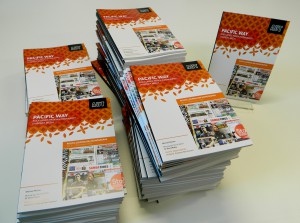
The monograph, published by the Pacific Media Centre, includes interviews with staff at more than18 of Auckland’s Pacific media outlets and provides a broad snapshot of Pasifika media representation in New Zealand and seeks to improve the recognition of Pacific within media coverage as well as the profession.
Neilson, who is currently in Indonesia after an internship with the Sydney Morning Herald bureau in Jakarta, was unable to be at the launch but he was praised by staff and colleagues for the depth and range of the research.
Former postgraduate leader at AUT, Dr Frances Nelson, said the monograph included quotes, data and photographic material that had captured the essence of the organisations that participated in the research.
‘Beautifully written’
“It is also beautifully written. And it shows his engagement with the Pasifika community and their media outlets,” she said.
Dr Robie, who is editor of the Pacific Journalism Monograph series, said: “This will be a tremendously useful booklet for both Pasifika newsrooms and our student journalists. Michael did a really dedicated and thorough job on this project.”
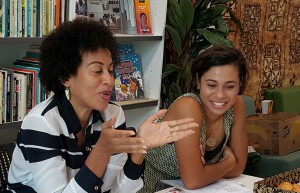
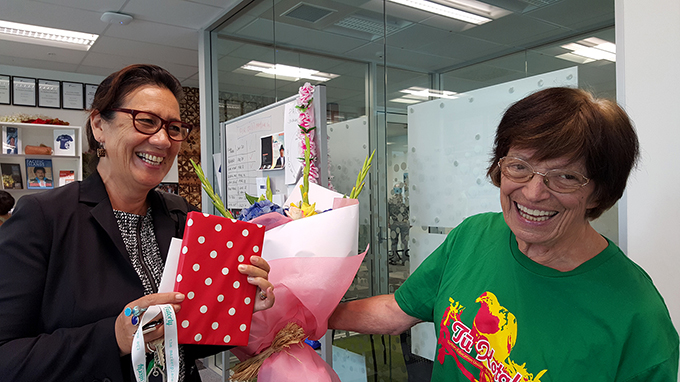
Outgoing chair of the Pacific Media Centre, Isabella Rasch, launched the monograph before she stepped down after three years in the role. Associate Professor Camille Nakhid, a social scientist with a media profile, was elected as the new chair.
The monograph can be purchased at the AUT bookshop. It will be distributed to Pasifika media offices and libraries, and will eventually be made available online.
–]]>
Vanuatu DPM slams kidnap, attack on woman: ‘Enough is enough’
AsiaPacificReport.nz
By TJ Aumua
The kidnapping and attack on a local Vanuatu female tourism manager, Florence Lengkon, has stirred strong criticism of violence against women in the island nation.
Deputy Prime Minister Joe Natuman, who holds the Tourism, Commerce, Trades and Ni- Vanuatu Business portfolio, was quoted by the Vanuatu Daily Post today as saying: “Enough is enough.”
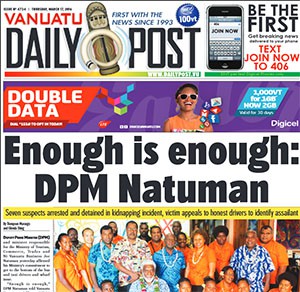
He sent a clear message which told police to “arrest those involved in the kidnapping and assault of a female employee of the Vanuatu Helicopters”.
Lengkon was allegedly abducted and beaten after posting criticism of Vanuatu bus and taxi drivers on social media.
In an email to the Auckland-based Pacific Media Centre, Post media director Dan McGarry, who broke the story on Monday after interviewing Lengkon, said today: “I think this might just be a watershed moment in Vanuatu society.
“It’s the very first time that the preponderance of opinion has been in defence of the vulnerable instead of deferring to bullies.”
The Post reported today local police had so far arrested seven people alleged to have been involved in the kidnapping and attack on Lengkon.
Court warrant
The prosecution unit reportedly applied for a court warrant to detain the seven suspects until police completed the investigations and subsequent court hearings.
The attack on Lengkon came after she commented on a Facebook post in an online discussion where members of the public blamed the Port Vila and Efate Land Transport Authority (PVELTA) for a recent string of violent activity at the wharf.
Dan McGarry’s article about the incident on Monday reported that Lengkon’s comment had called the bus and taxi drivers “big headed” and “unprofessional”.
In her interview with the Daily Post, Lengkon she was approached by three men who pulled her from office, located on the Port Vila waterfront, on mid-Sunday morning. They forced her into a bus and took her to the wharf.
She said there were lots of taxi and bus drivers, who she was ordered to apologise too, but received verbal abuse and eventually was hit. McGarry’s report quoted her as saying:
“I apologised. I apologised for a second time, and one of them gestured like he was going to hit me. That’s when I started to cry and bent down to hide my face. I don’t know who hit me, but someone did. Blood began to run down my face.”
Details have not been released on why Lenkon’s comment was singled out and targeted as a threat when her comment was only one of more than 100 responses to the public Facebook post.
Her attack emphasises the escalating tensions between bus and taxi drivers who are dealing with loss of tourism at the port due Vanuatu’s shaky economy.
In February, rocks were thrown at a passenger-full tour bus.
A Daily Post article stated “eye witnesses reported that the ‘bus drivers were banging on the back of the buses, yelling at them and then started to stone the vehicles’”.
TJ Aumua is contributing editor of the Pacific Media Centre’s Pacific Media Watch freedom project.
Brave woman tells of beating by Vanuatu drivers – 7 arrested
–]]>
Bryce Edwards’ Political Roundup: TVNZ’s controversial Kiwimeter survey

Political Roundup by Dr Bryce Edwards.
TVNZ’s controversial Kiwimeter survey
[caption id="attachment_4808" align="alignleft" width="150"] Dr Bryce Edwards.[/caption]
Is TVNZ’s Kiwimeter survey simply designed to effectively gather public opinion on matters around national identity, or is it fostering racism? That’s the question at the heart of the current controversy over the broadcaster’s attempt to carry out the biggest survey of national identity ever undertaken in New Zealand.
In early March TVNZ launched Kiwimeter, promoting it as the “biggest survey of national identity ever undertaken in New Zealand” – see: Take the Kiwimeter test: The biggest ever survey of NZ’s identity. You can go directly to the survey here: Kiwimeter: What kind of Kiwi are you?
“We’re all Kiwis, but we don’t all think the same” runs the promo. TVNZ says the online Q&A is designed to gather opinions on a range of issues, including the environment, religion, gender, race relations, immigration, poverty and sport. Respondents are then placed in one of six groups – patriot, globalist, egalitarian, loyalist, traditionalist or sceptic.
At the time of the launch John Gillespie, TVNZ’s Head of News and Current Affairs, said his hope was that “Kiwimeter will spur a lively debate among New Zealanders about our identity, in the same way Vote Compass engaged Kiwis in political conversations.”
In fact, Kiwimeter was produced by the same team as TVNZ’s election-year Vote Compass, comprised of Canadian firm Vox Pop Labs – “an independent and non-partisan team of political scientists” – with input from highly respected academics from Victoria University (Jack Vowles and Kaapua Smith) and the University of Auckland (Jennifer Lees-Marshment and Danny Osborne).
Racism allegations
In one question, respondents are asked to agree or disagree with the statement “Maori should not receive any special treatment”, and to indicate the strength of their belief.
This question is at the root of most of the controversy over the survey, with Labour’s Te Tai Tokerau MP and Maori Affairs spokesperson Kelvin Davis stating the question is “out and out racism” and needs to be removed from the survey – see Stuff’s Maori MPs claim TVNZ KiwiMeter survey incites racial intolerance.
Davis is reported as saying: “It just evokes images of Don Brash 2004: implying that Maori have special treatment, I’d like to know what special treatment they’re talking about. Is it our health statistics, the fact that we’re dying 10 years earlier than non-Maori, our poor education statistics? What exactly are they meaning by special treatment? I just find it offensive.”
Labour leader Andrew Little echoed Davis’ concerns describing the question as “dubious”, “ham-fisted and cack-handed” and saying it “smacks more of prejudice” as it “begs the question that there is special treatment anyway.”
Green Party co-leader Metiria Turei described the survey questions relating to Maori as “fundamentally misleading and racist and a disgraceful approach to serious issues facing Maori in Aotearoa. Are they asking people about having Treaty rights recognised and reparation for land stolen by the Crown, are they talking about the special treatment of not getting access to housing or our parents being kicked out of bars for being Maori?” – see Mihingarangi Forbes’ PM defends ‘racist’ TVNZ survey.
Maori Party co-leader Marama Fox said she wanted to know more on how the survey came about and questioned why TVNZ had engaged a Canadian firm “to find out what New Zealanders think about New Zealanders.” She also took issue with some of the questions around religion and immigration telling RNZ’s Guyon Espiner “it seems like this survey is attacking minority groups” – you can listen to her five-minute interview here: TVNZ’s ‘special treatment’ question widely criticised.
The Human Rights Commission has also voiced concern over the survey – see RNZ’s TVNZ quiz ‘biased’ on Maori question – HRC. The Commission alleges the question on special treatment for Maori demonstrates “a biased belief by the KiwiMeter authors. The commission believed the authors had decided in advance that Maori received special treatment already.”
Outrage and offence
“’Special treatment’ is a euphemism for Maori privilege, a belief that somehow Maori receive something that other NZers can’t attain,” alleges Martyn Bradbury in his blog post, TVNZ play the race game – again.
He says TVNZ’s response that there must be questions that reflect all parts of society is akin to promoting “victim blaming for sexual assault, climate denial and homophobia because some sections of society also believe those things.” Bradbury says “We look to a public broadcaster to question bigotry, not foster it.”
“According to this noxious survey, you’re less of a patriot for being proud of Maori culture” argues Madeleine Chapman in The ‘Kiwimeter’ is nasty, divisive rubbish. Do you disagree, slightly agree, or strongly agree?
Stephanie Rodgers attempts to shed some light on Where those Kiwimeter questions came from. Rodgers took part in the local pilot study of 11,000 respondents that led to the development of the Kiwimeter survey and was recruited after her participation in the earlier Vote Compass project.
Rodgers kept a copy of the pilot questions and offers them up saying “So there we go. If you were wondering how the Kiwimeter sausage was made, there’s the Vote Compass survey horse. What does any of this mean? Buggered if I know, but I figured someone will be able to draw interesting conclusions.”
Regardless of the survey’s intentions, Kiwimeter has caused harm and offence, says blogger Tze Ming Mok – see: ‘Kiwimeter’ is a methodological car crash and I still can’t look away. She says accusations of racism are justified, because if “the overall effect of ‘Kiwimeter’ is one of causing emotional distress and feelings of marginalisation for Maori, even if due to incompetence, then it’s ultimately a racist effect.”
She argues that the academics involved should have made greater efforts in testing to ensure the survey would not cause harm to respondents. Some similar points are made by Giovanni Tiso in What colour is your nationalism? He says the involvement of “the state broadcaster” and universities should be of great concern.
One political scientist has also spoken out strongly against Kiwimeter. The head of the political science department at the University of Canterbury, Bronwyn Hayward (@BMHayward) has been making the case on Twitter that there is bias in the survey, and says “Think #Kiwimeter critics are too PC, easily offended & avoiding tough debate? Imagine YOUR human rights got challenged by TV, for fun”.
So is the Kiwimeter survey worth participating in? In his Herald column today Raybon Kan says: Kiwimeter survey? Don’t bother.
In defence of Kiwimeter
Professional pollster Andrew Robertson, of Colmar Brunton, defends TVNZ’s project in his blog post Is it racist to measure racism? Robertson’s key points are: “1. The only way we can know if racism is a problem in New Zealand is to measure it scientifically, and to see if it is getting better or worse over time. 2. The measurement of racism is complex. It is typically done by asking people if they agree or disagree with a series of scientifically selected attitude statements. There is a deep logic behind how we select these statements. 3. Sometimes these attitude statements can seem offensive, but it’s important to include them because some parts of our society endorse them. If we exclude these statements, we can’t measure prejudice.”
His arguments are expanded by the research team from the University of Auckland’s New Zealand Attitudes and Values Study – a 20-year longitudinal study of social attitudes, personality and health outcomes – who yesterday released the following statement on Why and how we measure racism, sexism, and other forms of prejudice (PDF).
Critics appear to have completely missed that the TVNZ survey is designed to measure public attitudes, not the rights or wrongs of those attitudes, says Newstalk ZB’s Barry Soper: “They all seem to have missed the point that this is an attitudinal survey, it’s not about the past, it’s trying and find out where we all fit in the great big melting pot” – see: Maori MPs miss the point of TVNZ’s survey.
RNZ’s media commentator Gavin Ellis also spoke favourably about the survey in his seven-minute discussion with Kathryn Ryan on media, saying he thought it was “a very, very well-constructed survey”.
TVNZ and survey team response
TVNZ’s John Gillespie said he would not apologise for the question and it would remain in the survey: “We think that in the survey it is important to be robust and to have questions in it that reflect all parts of society so we won’t be taking out questions where we thought long and hard about why they’re in there” – see Claire Trevett’s TVNZ survey question about Maori branded racist and offensive.
The company contracted to help TVNZ with the survey, Vox Pop Labs, has responded to Kelvin Davis’ claims, labeling them “categorically false” – see Mihingarangi Forbes’ PM defends ‘racist’ TVNZ survey. CEO, Clifton van der Linden, said his company was reflecting views that already existed and defended the wording of the question, saying it “doesn’t imply Maori received special treatment. If I were asking the question ‘John shouldn’t paint his house yellow’, it doesn’t imply John is painting his house yellow.” He argues “We can learn more about the mechanisms through which racism and prejudices operate and find ways to combat these prejudices. If you don’t ask the question, how do you hope to find the answer?”
Forbes reports that Danny Osborne of Auckland University, one of the academics involved in creating the survey, said he and his colleagues recognised “the issues were sensitive, and accepted that when a question was drawn out in isolation it could appear to be biased. However, the questions used in KiwiMeter are mutually dependent, and so removing one question would destroy its balance.” He is referring to questions “A history of discrimination has created conditions that make it difficult for Maori to be successful” and “Maori culture is something that all New Zealanders can take pride in, no matter their background.”
Threats to media and academic freedom
One of the academics involved in Kiwimeter, Jennifer Lees-Marshment (@jleesmarshment) has tweeted: “Sad to see the Labour Party and other politicians interfering with academic freedom and telling us how to design public opinion surveys”.
So should we be concerned that politicians, state bodies and activists are attempting to control research carried out by media and academics? Absolutely, says David Farrar: “What is especially worrying about this, is they are trying to censor and control research. They’re saying that because they have a view that there is no special treatment, you shouldn’t even be allowed to ask if people have that view. It is profoundly dangerous” – see: Now the left are trying to censor research.
Farrar says he would have chosen a different wording himself but ultimately believes no question should be off limits – “For how else can you find out how people have that view?”
He commends TVNZ for refusing to bend to pressure and challenges Kelvin Davis’ claim he doesn’t know what “special treatment” Maori receive with a blunt response: “He’s an MP for an electorate where eligibility is dependent on your blood ancestry”.
On Public Address, academic researcher Peter Davis makes an interesting comment at the end of Tze Ming Mok’s blog post, ‘Kiwimeter’ is a methodological car crash and I still can’t look away. Davis writes that he is not aware of Kiwimeter and therefore is not necessarily defending its methodology but, nonetheless, “There is a problem if ethics committees start saying that you cannot ask questions about controversial and/or sensitive issues. You immediately get a whole lot of subjects taken off the agenda”. He gives an international example showing knowledge and understanding of prejudice can be enhanced by asking questions that are, on the face of it, racist.
And are TVNZ’s media rivals playing a part in stirring up anger over the survey? RNZ and Stuff have both published reports claiming the TVNZ survey is designed to find out “how Kiwi” we are – a phrase that does not actually appear in TVNZ’s own discussion or promotion of the survey and is qualitatively different to the Kiwimeter tagline “What kind of Kiwi are you?”
Kiwimeter data
TVNZ has been broadcasting the results from the survey, which has been taken so far by over 140,000 people – see the following reports by Daniel Faitaua: Kiwimeter: First results are in as survey on national identity climbs to 80,000, Kiwimeter reveals we’re proud of our anti-nuclear stance and lifestyle, Kiwimeter: Nationalism, sport the top Kiwi values and Kiwimeter: Turns out Aucklanders aren’t too different from the rest of NZ.
These reports are illuminating and useful contributions to public debate about politics and society. But the fact they have become the subject of such controversy also reveals how sensitive New Zealand has become to issues of ethnicity and, in particular, perceived racism.
Finally, Kiwimeter isn’t the first attempt to categorise New Zealanders into different social groupings representing our values and lifestyles. A few years ago, Jill Caldwell and Christopher Brown attempted to create a “snapshot of New Zealand that explores our unspoken class system and the hidden social boundaries that separate us from each other” with their book “8 Tribes”, which broke us into the groups represented by the geographical areas of: North Shore, Balclutha, Otara, Cuba St, Grey Lynn, Remuera, Raglan, and Papatoetoe. You can find which of the eight tribes you belong to here: 8 Tribes.
]]>Across the Ditch: Across the Ditch: Uber V Taxis + Dairy Exports & NZ Economy Wobbles + Cricket
Across the Ditch: With Australian radio FiveAA.com.au’s Peter Godfrey and EveningReport.nz’s Selwyn Manning. This week Peter and Selwyn discuss the rise and controversy surrounding Uber V Taxis + Dairy Exports & New Zealand’s current account deficit blowout + New Zealand’s Blackcaps beat India in the World Twenty-20 match and face Australia tomorrow (Friday). UBER: Yes Uber is operating in Auckland and Wellington. It has caused, in part, Auckland Airport (both domestic and international terminals) to lock-down its taxi pick up areas to taxi companies that successfully won a tender. A few weeks ago Auckland Airport Ltd also initiated a new tender bid and it is making a lot of noise that the company that wins the tender will be recognised as providing a safe, efficient and trustworthy service for travellers. It seems the move is in part designed to clear the taxi ranks of budget operators and also most likely Uber. There is no way the Airport company can stop people arranging a ride with Uber to the airport. But a quick look on the Uber site shows a fare from central Auckland out to the International terminal will cost around NZ$41.56. The budget taxi operators can do this for around $30.00 but sometimes their vehicles do not carry eftpos or credit card transaction equipment. Sometimes too the vehicles have passed their best. A ride from the Auckland CBD to the international terminal in a Auckland Co-Op Taxi will cost over $60.00, and Corporate Cabs are well above this. NZ’S ECONOMY UNDER STRAIN: New Zealand’s current account deficit ballooned out by $221 million in the December quarter to a total of $1.9 billion dollars. The deterioration of the current account deficit was caused in part by the value of exported goods falling by $554 million from September 1 to December 31. The drop was led by plummeting dairy sector returns, due significantly to the continuing collapse of global milk powder prices. The whole milk powder price dropped this week by 0.8 percent to US$1971 per tonne. Kiwi farmers need the price to be US$3000 per tonne to break even. On top of the collapse of milk powder prices, butter dropped by 2.8 percent and cheddar cheese was down 5.6 percent. With the Kiwi dollar treading water at around 66 to 67 US cents, many farmers are facing insolvency. Consequently the narrative has shifted from how to trade out of the mess, to how much is the farm worth on the open market. The collapse of the ‘white gold’ market is estimated to have driven between 20-30 percent of farmers against the wall. Politicians of the New Zealand First and Labour parties have been urging the Government to intervene. Yesterday, Fonterra, the global dairy export giant, announced the “permanent closure” of its South Island Kaikoura site . Mark Leslie, Fonterra’s Director of New Zealand Manufacturing, said: “While it is difficult for the people involved, we have a responsibility to our farmer shareholders and unit holders, and our customers to be as efficient as possible across our business, especially given the low milk price.” Beyond Milk. Import values also declined, softening a potential big hit from poor export returns. The lower than normal import total was attributed largely to lower prices paid for imported crude and petrol. Statistics New Zealand reported yesterday (Wednesday) that the annual current account balance was a deficit of $7.7 billion (3.1 percent of GDP). New Zealand has struggled with its current account deficit since the majority of the country’s banks became foreign-owned. Also, outsourcing to overseas owned providers of state-subsidised healthcare and continuing care for the elderly, has also ratcheted up the level of indebtedness the country’s public and private entities, and citizens, owe to overseas interests. A poor current account means Kiwis will continue to pay higher interest rates for foreign-sourced capital. CRICKET: NZ’S BLACK CAPS BEAT INDIA IN WORLD TWENTY-20. New Zealand clobbered India in the Cricket on Wednesday winning the 20 over match by 47 runs – NZ was 126 for 7. India was all out for 79 runs. The Blackcaps took India’s batters apart with a spin-bowling attack. After the win, NZ Cricket said the team would be rising early at 6am to travel North to the edge of the Himalayas to the hillside city of Darashalla. There they will find snow, the Dalai Lama, and our old rival Australia. It should be a great game between the Trans Tasman rivals tomorrow (Friday) at the Himachal Pradesh Cricket Association. As Peter always says, let the best team win!
Across the Ditch was Recorded Live on 17/03/16. It broadcasts live each week on Australia’s radio FiveAA.com.au and webcasts on EveningReport.nz, LiveNews.co.nz, and ForeignAffairs.co.nz.
]]>NewsRoom_Digest for 15 March 2016
NewsroomPlus.com
Today’s edition of NewsRoom_Digest features 3 resourceful links of the day and the politics pulse from Wednesday 16th of March. It is best viewed on a desktop screen.
NEWSROOM_MONITOR
Noteworthy stories in the current news cycle include: the timber industry saying it’s losing money from the country’s free trade agreement with China; banks being criticised for keeping credit card interest rates at nearly 20% – when interest rates generally are at their lowest in decades; and that a special 50% reduction in climate change obligations for New Zealand citizens and companies will be scrapped.
POLITICS PULSE
Government: Majority of transactions with government now digital; Wraparound service proving a ‘lifesaver’; Citrus industry joins GIA biosecurity agreement; PM announces appointment of GCSB director; Land Transfer Bill passes first reading;Wide parliamentary support for Kermadec Sanctuary; Major reforms to improve local government services for ratepayers; Taking the LEAD on disability employment; TPP reduces non-tariff trade barriers;Three Treaty settlement bills pass first reading; Substance Addiction (Compulsory Assessment and Treatment) Bill passes First Reading; Modern buses for the regions
Labour: Gun inquiry welcome but must be robust;Stress test shows banks have room to support farmers; Tertiary education “whitestreaming” must stop
Māori Party: First reading of Te Ātiawa Claims Settlement Bill
New Zealand First: ForestWood 2016 Conference Speech;Global Dairy Trade Down; Italy And Hungary Break Ranks Over Russia; We’ve Been Taken For Mugs By China As Wood Industry Proves;Key Runs From His Government’s Claims On TPPA Gains;Sale Of 10 Northland Farms Shows Foreign Buyers Not Needed
LINKS OF THE DAY
BANKING ROBUST: The banking system is robust to a severe dairy stress test, according to a Bulletin article ‘Summary of the dairy portfolio stress testing exercise’ published today by the Reserve Bank. Click here for more:http://www.rbnz.govt.nz/research-and-publications/reserve-bank-bulletin/2016/rbb2016-79-05
BALANCE OF PAYMENTS: New Zealand’s seasonally adjusted current account balance widened by $221 million in the December 2015 quarter, to a deficit of $1.9 billion, according to New Zealand.m More details at:http://bit.ly/1nMRmEz
INTENSIVE WRAPAROUND SERVICE: A review of a new service for students with the highest needs which has found it is improving behaviour and educational outcomes. Introduced in 2012, Intensive Wraparound Service is an intensive, personalised service that supports children and young people with high and complex behavioural and learning needs. Read more: http://www.educationcounts.govt.nz/publications/schooling/patterns-of-student-progress-in-the-intensive-wraparound-service
And that’s our sampling of “news you can use” for Wednesday 16th March.
]]>18 Timorese freedom-seekers recall courageous voyage
AsiaPacificReport.nz
By Vannessa Hearman and Jose da Costa
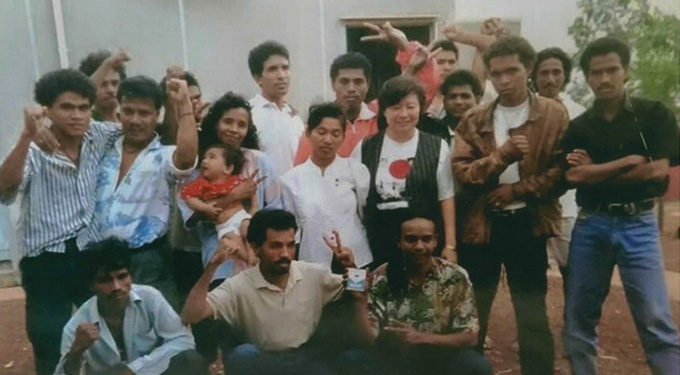
In 1995, 18 East Timorese youths sailed illegally to Australia in a small fishing boat. After five nights at sea they reached Australian waters. They were picked up by Australian Customs and brought to Darwin.
As young members of the clandestine movement opposed to Indonesian rule, many of the youths risked being captured, tortured or even killed in East Timor. Their voyage created a diplomatic nightmare for both countries.
Jose da Costa was 18 when he embarked on the journey. “Sometimes people asked me, why did you want to risk your life traveling on a small fishing boat to cross the ocean? The answer is, we didn’t want to but we had no choice.”
Da Costa was born six months after Indonesia’s December 1975 invasion. “I was born in the jungle near Uaimori, Viqueque district. My family had fled from Baucau to seek sanctuary after the invasion.”
After about two years, Indonesian encirclement and aerial bombardment made living conditions almost impossible for the fugitives. “Five of my siblings died from starvation. My uncle and his family were killed during the heavy bombardment by the Indonesian armed forces.”
The Indonesian military captured Da Costa’s family and transported them back to their village in Baucau, where their freedom of movement was curtailed.
When he was just eight years old, his father Bie Ono was lynched by the Indonesian military as he had been helping the anti-Indonesian forces. They made out Bie Ono had committed suicide and the villagers were brought to see his lifeless body.
Clandestine movement
In his teenage years, Da Costa joined the clandestine movement. He was badly tortured after participating in a protest march to the Santa Cruz cemetery in the capital, Dili, on 12 November 1991.
The march preceded a funeral procession for a Timorese activist who had been murdered by Indonesian troops. The Indonesian military opened fire on the protesters, killing 271 of them, in what became known as the Dili Massacre.
Young people who survived were rounded up and interrogated. Some never made it back out of the detention centres they were taken to.
Da Costa was one who did make it out of detention. Following his release, he began working as a courier, passing on goods and messages between the towns and the Timorese guerrillas in the mountains.
The boat voyage to Australia took some planning. Several young people had thought about travelling to Australia and seeking asylum, including other members of the clandestine network, such as Florentino Das Neves and Alfredo Reinado.
Reinado had lived and worked in Indonesia. As a young boy, he was forced to be a military assistant, carrying equipment and weaponry for the military. He joined the clandestine movement upon his return from Indonesia.
Da Costa, Das Neves and Reinado experimented with sailing a boat from Dili, but the canoe they bought only made it as far as Laga, 142 kilometres away.
On 12 November 1994, a group of Timorese youth jumped the fences of the United States Embassy in Jakarta and received asylum in Portugal. This renewed the Dili youths’ interest in the boat voyage. In consultation with Timorese pro-independence leaders, they resumed planning to sail to Australia, this time with a boat called Tasi Diak [Good Sea].
Father Domingos Maubere is a Catholic priest who played an active role in supporting the independence movement. As the 15 men, two women and one baby assembled on the beach at Tibar, 18 km west of Dili, to prepare for their departure, Father Domingos married Reinado to Maria Alves and baptised the couple’s six month-old baby, Billy Ray.
He then handed each person a small crucifix to hang around their neck “as a symbol of suffering and hope”.
Father Domingos told them, “My children, if I have not heard any news about you in seven days, I will bring candles and flowers to the sea to remember you as heroes of your country.”
His words suddenly brought the poignant realisation that they might not make it to Australia.
Hid behind mangroves
Da Costa recounted, “Father Domingos hid behind the mangroves and watched us sail away. From the boat, we saw his car lights slowly disappear behind the hill. We were then all alone. Just us and the sea.”
The journey took five nights and six days. Overloaded, the boat soon leaked and the passengers had to bail out water continuously. Luckily the sea remained placid until the second day of the voyage. Da Costa who, like most of the other passengers, was unable to swim recalled:
The waves were very rough, it was dark. We could not see anything we could only hear the sound of the waves hitting the boat and people vomiting. The only light that we had was a battery-powered torch to light the compass so we could see where to go. We could hear the sea water coming in and in the dark we were struggling to bail out the water. We were vomiting on each other, because we could not see in the dark. All night we struggled with the rough waves and tried to save the boat from sinking and there were no life jackets.
Tracking southeast, they didn’t tell the boat’s skipper Julio that Australia was their destination until the second day of the journey. They were confined to eating raw noodles and Indonesian military tinned rations, as a storm made it impossible to cook the sack of rice they brought. Eventually the storm cleared.
In the morning I was at the back of the boat pumping out the sea water. I saw a big group of dolphins jumping around and I remembered my father telling me that if you were at sea and you saw a dolphin you were very safe.
Da Costa recalled their arrival in Australian waters on the morning of 29 May 1995:
An Australian Customs boat sailed alongside our boat and we cut the boat’s engine, thinking they would bring us onto their boat. Instead two Customs officers jumped into our boat and restarted the engine. They asked us in English if we were Indonesian. Alfredo replied in his limited English, that we were Timorese. They put a light reflector on our boat and we followed them. When it was close to Darwin the officer tied a rope to our boat and towed us to Larakeyah naval centre. We arrived there around 2am Australian time [on 30 May 1995].
From the Naval Centre, they were brought to Darwin Airport, where they were to be accommodated. The following day, the group was rushed to the isolated Curtin RAAF Base in Western Australia, which had just been converted into a detention centre. This was partly to prevent the group, dubbed the Quail Group, from becoming a public rallying point for Timorese independence supporters in Darwin.
The Timorese community in Darwin had been alerted to the departure of the group from Dili and had been waiting anxiously for the boat’s arrival. Embarrassingly for the Indonesian government, the group’s arrival coincided with Indonesian Research and Technology Minister Baharuddin Jusuf Habibie’s visit to Australia. The Australian press quizzed him on the “boat people”.
Members of the “Quail group” were the only asylum seekers to arrive by boat from Indonesian-occupied East Timor. When they were released from Curtin detention centre, all 18 were issued bridging visas, allowing them to stay in Australia while their refugee claims were being assessed. They went to live with Timorese families in Melbourne, Sydney and Darwin.
Torture survivors
Da Costa, who like the other members of the group had been interviewed by the department of immigration, lawyers and counsellors, including those who specialised in working with torture survivors, said, “My group did not understand the visa process and we did not understand what the bridging visa meant. We only understood that we could not leave the country nor work or study in Australia.”
Foreign Minister Ali Alatas was livid at the issuing of the bridging visas. He argued that they were not genuine refugees, ridiculing their claims of torture. Despite then Foreign Minister Gareth Evans defending the issuing of the bridging visas, other Australian public officials bent over backwards to appease the Indonesian government.
Australian Ambassador to Indonesia Allan Taylor assured them that a bridging visa did not mean the East Timorese had been granted refugee status. Then Prime Minister Paul Keating put forward contradictory positions when he told The Guardian newspaper in October 1995: “Though the government has taken the view that East Timor . . . is a province of Indonesia, those people still have Portuguese citizenship and status.”
Australia was the only country to provide de jure recognition of Indonesian rule over East Timor (1975–99). But in this instance, Keating seemed prepared to junk that policy, at least momentarily for the sake of claiming that “these people have dual citizenship; therefore they cannot argue they are refugees”.
A second boat voyage was attempted when 35 people sailed from Dili in November 1995, but their boat was stranded on the coast due to bad weather and the passengers were arrested by Indonesian police.
In August 1999, the East Timorese people voted in a United Nations supervised referendum to reject Indonesian rule. Indonesian forces withdrew the following month, but only after destroying some 70 per cent of the territory’s buildings.
After Da Costa’s arrival, Australian governments, both Labor and Liberal, tried to repatriate over 1500 Timorese asylum seekers on the grounds that they had Portuguese citizenship and, after Indonesian rule ended, that East Timor was safe. After successive bridging visas, Da Costa received a special humanitarian visa (rather than refugee status) under Liberal Immigration Minister Amanda Vanstone in 2003, eight years after his arrival in Australia.
Vannessa Hearman is lecturer in Indonesian Studies at the University of Sydney. Jose Da Costa is a teacher, filmmaker and actor. He is completing a Master in Educational Studies at the University of New South Wales.
–]]>
NewsRoom_Digest for 14 March 2016
NewsroomPlus.com
Today’s edition of NewsRoom_Digest features 4 resourceful links of the day and the politics pulse from Monday 14th of March. It is best viewed on a desktop screen.
NEWSROOM_MONITOR
Noteworthy stories in the current news cycle include: the Prime Minister being accused of downplaying the possible impact of the dairy crisis – by saying that up to 10% of dairy farms could fail; the Department of Conservation advising its minister that proposed changes to the Resource Management Act (RMA) mean it may not be able to carry out its statutory duty; and the Police Minister, Judith Collins, wanting an investigation into gun laws to get under way quickly, saying she favours a select committee or ministerial inquiry.
POLITICS PULSE
Government: Minister welcomes Waitangi Tribunal report; Ministers welcome consumer awareness video; Adams to address Human Rights Council in Geneva; Health Star Rating awareness campaign; Minister of Health Volunteer Awards open; New Timaru Community Corrections Site opens; $8.2m road project completed in Queenstown; Northern forest and wetland gem secured; NZ and Iran Foreign Ministers meet; Public Service working hard to meet challenging targets; Students on track to better target ahead of time; New BPS measures to track family violence and reoffending
Greens: National must change Bill and give DoC a voice; Time to reassess Government irrigation spend; Assessments for dyslexia should be state funded; Greens Will Withdraw Gun Briefing Request If Independent Inquiry Progresses; Ture Whenua Bill must not proceed without broad support; Govt must stop pretending dairy is business as usual; Green Party Launches New Plan To Make It Safe To Walk And Bike To School
Labour: Programme for Future of Work conference; Time for quality plumbing standards regime; Time for quality plumbing standards regime; Minister must delay land reforms; Government must fix NCEA support inequities
New Zealand First: Another Blooper In Referendum Papers;Labour Misses The Mark On Firearms
LINKS OF THE DAY
CONSENSUS FORECASTS: The latest NZIER Consensus Forecasts shows forecasters have revised up expectations of growth and employment through to 2019. Despite the more favourable growth outlook, expectations for inflation and wage growth have been lowered. Read more: http://nzier.org.nz/static/media/filer_public/46/fb/46fbe078-b958-4809-bf9c-7f363e43bc12/consensus_forecasts_march_2016.pdf
FUTURE OF WORK CONFERENCE: Labour’s Future of Work Commission Chair Grant Robertson will host the Future of Work Conference at AUT University on 23 and 24 March. The keynote speakers for the 23rd are former Secretary of Labour for the Clinton Administration Robert Reich and author of The Precariat Guy Standing. The programme can be found here: http://www.futureofwork.nz/conference
HEALTH VOLUNTEER CONFERENCE: Nominations are now open for the 2016 Minister of Health Volunteer Awards. Nominations close on 8 April. The Awards will be presented during National Volunteer Week, 19 to 25 June. For more information about nominations and the Awards go to: http://volunteerawards.health.govt.nz
INFLATION AND MONETARY POLICY: The Reserve Bank today published a Bulletin article, ‘Inflation expectations and the conduct of monetary policy in New Zealand’.This article discusses some useful tools the Bank has developed to assess the policy implications of inflation expectations, highlights recent trends in inflation expectations, and draws out the implications for current monetary policy settings in New Zealand. Read more:http://www.rbnz.govt.nz/research-and-publications/reserve-bank-bulletin/2016/rbb2016-79-04
And that’s our sampling of “news you can use” for Monday 14th March.
—
]]>Pacific-wide study tipped to show ‘real value’ of lost fisheries
AsiaPacificReport.nz
By Lealaiauloto Fatu Tauafiafi in Auckland
Seventeen Pacific island countries, including New Zealand and its territory Tokelau, will have the results of a Pacific-wide study revealing the real value of lost annual revenue in the Pacific’s US$6-7 billion fishery through illegal, unreported and unregulated fishing.
The results of the two-year study: Towards the Quantification of Illegal, Unreported and Unregulated (IUU) Fishing in the Pacific Islands Region, coordinated by the Forum Fisheries Agency will be reported to countries in a closed session tomorrow as part of FFA’s 19th Monitoring, Control and Surveillance Working Group meeting held in Auckland, New Zealand.
The FFA sessions follow on from two other key MCS events hosted in Auckland this month.
Discussion by the MCS working group officials will be followed by the report’s public debut at a media launch with FFA’s Director-General James Movick, Tuvalu’s Minister for Works and Natural Resources Pita Elisala, and the report’s author, MRAG’s Duncan Souter taking questions.
“This is the first time that the Pacific countries, through FFA have been in a position to determine the type and scope of such a review,” said FFA’s Movick.
“The study itself provides a clearer sense of what the main IUU risks are, what is working, and what needs additional priority when it comes to ensuring tuna vessels in Pacific waters are complying with the rules.”
At the core of the report is for the first time, being able to speicifically quantify the nature and extent of IUU fishing in the Pacific region’s fishery.
Planning with confidence
What that means at the street-level is the information in the report will help Pacific countries plan with confidence against losses through more effective stock assessments and stronger MCS responses.
Importantly, says FFA, the report provides the most reliable and current estimate, which puts to rest previously touted guesses totalling up to US$1.5 billion.
The Federated States of Micronesia has applauded FFA’s initiative in putting together the report. Attending the meeting, Susan Lowe-Gallen, FSM’s Chief of Compliance says the report is a game changer and sees two main impacts the region needs to take note.
First it elevates the Pacific to be one of the leading forces in the fight against IUU tuna fishing globally, “I don’t think any other region in the world has that [study] at this point,” she said.
She admits the numbers would not be absolute but “it gives us a better sense, a better estimate for the Pacific overall. In that regard we are slightly ahead of the game.”
But that follows up with a warning and the second impact that might hit the region as a result of the study.
“We don’t want decisions that end up going to the FAO [UN Food and Agricultural Organisation] or IMCS [International MCS Network] or anyone else that would could generate things such as frameworks or initiatives that would actually set the Pacific back a step from where we already are.
‘More at stake’
“We’re working hard and we’re trying our best to ensure that we don’t end up like a lot of those countries in Europe and Africa. We have a lot more at stake because for the majority of our countries, fisheries is all they have –we don’t have anything else so we have a little bit more at stake than many others.”
It is already a moot point that the majority of Pacific countries agree it is the “Unreported ‘U’” in IUU that is an area of weakness in current MCS efforts.
Samoa points to the absence of independent catch monitoring and verification in the longline sector as major weakness and therefore needs more attention for a mitigation upgrade.
“Very importantly, this report will set a definitive baseline for the scale, composition and quantified value on IUU fishing and what it is costing this region, against which future success can be measured,” said Movick.
“It will also help to provide a clearer basis to assess what is working and what needs reworking to ensure that collective regional efforts are targeted toward the most prevalent and costly forms of IUU in the evolving Pacific tuna fishery.”
And that is exactly one of the major roles the study is expected to provide.
It will provide evidential support for IUU mitigation management measures.
‘Don’t have ammunition’
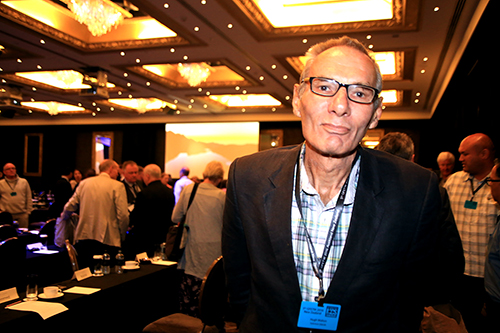
According to Hugh Walton, FFA’s project manager for the EU-funded DEVFISH II programme, which coordinated the study, the report will allow discussion on mitigation measures “because we already know what they are but we don’t have the ammunition for them.
“We’re hoping that this report will give us the ammunition, say management measures in the Western and Central Pacific Fisheries Commission (WCPFC) sense, then for us at the regional level in terms on how we focus our MCS activities and then at the national level, in terms of our national level MCS activities, how they are focused.”
He cited as an example one of the MCS tools currently being discussed, e-monitoring and e-reporting in terms of the “U” for unreported.
“When you look at the e-monitoring and e-reporting tools in terms of the unreported, the camera doesn’t lie. In the trials we’ve done, we have done enough to know that the camera doesn’t lie.
“What that means is if you have a history of being a compliant vessel then I don’t need to worry too much about you. But if you rate on my compliance register over here [risk] – then that says I’m going to make you carry this camera – ideally. And there are, potentially, quite accessible mechanisms to focus on some of these risk areas. And tools are available and evolving to assist in that focus.”
Essentially, Walton added, “we are saying that this stuff is here, it’s now, and what it means is a change in the way we run our organisations and our national administrations.
“We don’t enter data anymore, we’ve got real time data that we can analyse and act on the analysis. So essentially we are moving towards a paradigm shift in the way organisations work.”
Frontline improvement
At the frontline of improving the management of the Pacific’s fishery are MCS practitioners.
Their efforts are guided by a newly endorsed “Fisheries Roadmap” that talks about increasing employment, revenue and economic returns to Pacific countries while ensuring sustainability of the tuna resource.
The MCS framework and the IUU work that forms a key part of it are all about ensuring there is tuna today and tomorrow- but it is a known fact that many times, decision-makers come up with things at very high superficial level without knowing what the reality is on the ground.
Which means that to deliver on the aspirations of, say, the Pacific Roadmap; and aligning them to the reality facing MCS practitioners is about the mechanisms needed to be put in place that will facilitate meeting some of those ambitious targets.
It means the support mechanisms will need to be built around what needs to be done to hit some of those targets – and the study being launched tomorrow will provide some of the building blocks to meet those ends.
–]]>
New report tells of murder, kidnapping and torture in West Papua
AsiaPacificReport.nz
By Mark Bowling
Allegations of recent military and police intimidation, beatings and torture, kidnapping and murder in West Papua, have been documented in a new Church report.
The report documents Muslims being radicalised in the once predominantly Christian Papuan provinces, and “very active” Muslim militias that burn down Papuan houses.
The report was compiled by the Brisbane Catholic Justice and Peace Commission’s Shadow Human Rights Fact Finding Mission to West Papua, following a visit to West Papua last month.
It has not yet been publicly released, nor comment sought from Indonesian authorities.
The report documents religious, social and economic discrimination, including how the carve up of land for major development has benefited multinationals and excluded Papuans from ownership and jobs.
It refers to a slow motion genocide happening and states that “the Indonesians want to replace the Christian religion with Islam”.
The report author, Josephite Sister Susan Connelly, was accompanied to West Papua by Brisbane archdiocese’s Catholic Justice and Peace Commission executive officer Peter Arndt. During their fact-finding mission they interviewed more than 250 community leaders in Japapura, Merauke, Timika and Sorong.
Comparison to East Timor
Sr Connelly, a respected human rights advocate, likened her visit to West Papua to “stepping back 20 years when I first went to East Timor”.
“The same oppressive security presence everywhere, the same suspicion, bewilderment, frustration and sadness,” she said.
“The same fear. The same seemingly groundless hope. A man took my hands in his and said, ‘We are in danger’. That simple statement sums up for me the experience of the whole visit.
“The Papuan people have lost so much, and are facing erasure as a people, merely preserved as oddities of the past or artifacts to be photographed for tourist brochures. They realise that their land is considered more valuable than they are.”
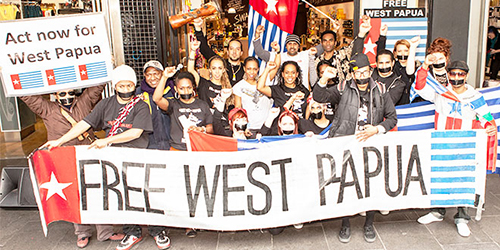
The fact-finding team heard many accounts of alleged military and police brutality and murder.
“There is clear evidence of ongoing violence, intimidation and harassment by the Indonesian security forces,” Arndt said on his return to Brisbane.
“That is especially the case for Papuans expressing their support for particular political points of view. Authorities want to close down any Papuan efforts to promote discussion about self-determination, and they have applied a military response to deal with the irrepressible desire of a large number of Papuans to promote their cause for freedom.”
Instigators identified
Based on his interviews across West Papua, Arndt (pictured) identified the instigators of alleged human rights violations as members of the Indonesian army including Kopassus, police including a special counter insurgency unit, Detachment 88, and Indonesia’s intelligence agency, BIN.
“Even demonstrations about social issues such as access to education get broken up by authorities,” he said.
The fact-finding team heard many examples of how the Indonesian government pushed economic development, but ignored human rights.
“The government has carved up the land and given it for exploitation to some 50 multinational companies,” the report said.
“The procedure is that the local government invites companies to come and gives permits. People are usually shocked when the companies come to sign a MoU (memorandum of understanding) with them, showing them the permit and the map. If the villagers don’t agree to the proposal, the company goes back to the local government and returns with the police.”
In the 1970s, ethnic Papuans accounted for 96 percent of the population. Today they are a minority 48 per cent, because of the rapid migration of Indonesians from other more populated islands such as Java.
The report found that Papuans were now marginalised economically at the expense of immigrants, the majority of whom are Muslims. The report said there was “a movement for Muslims from Indonesia to replace Papuans in every sector”.
Many mosques built
“The Indonesians want to replace the Christian religion with Islam.
“Many mosques are being built everywhere. They want Papua to be a Javanese Malay nation,” the report said.
“Radicalisation is happening in Papua, with some militias very active near the border with PNG. They burn down the Papuan houses. They are recruited as illegal loggers. Their camps and logging are well protected by the military.
“The military are certainly killing the people, and closed access to opportunity to Papuans in all areas of life constitutes a slow motion genocide. The general opinion encountered was that Indonesia is a total failure regarding Papua and is just another coloniser.
“The Indonesian government does not give opportunities to Papuan people or protect them. It was said that most Church leaders try to deal with the problems one by one, but the whole picture should be looked at as a series of policies designed to overcome the Papuan people.
“In every sector of government the system is composed of Indonesian tactics to destroy the Papuans. Beatings and torture are used, but also the economic aspects of lack of opportunity, the sidelining of the indigenous peoples, the taking over of land by companies… are part of the plan.”
Accusations in the report
- A young, wealthy businessman poisoned in 2015. He had financially supported building an office for the National Committee for West Papua, an independence-oriented group. He also funded Papuans being sent to international conferences.
- A Papuan woman activist arrested in 2015 by police for holding a prayer service in support of an international conference in London. She and her group were interrogated for five hours.
- -In January this year, 27 Papuan palm oil workers were allegedly tortured by the Indonesian army’s special force Kopassus. The men had previously complained to their company bosses after they had not been paid for two months.
- A man aged 35 who used to work for Papua’s Freeport gold mine was kidnapped in 2015, killed, and his body thrown on the street. There was no sign of torture and the police told his family that it was an accident.
- Police and military broke up community activities such as prayer meetings.
- In September 2015, 18-year-old Daniel Bowgow was killed. His father was a local prayer meeting leader.
- People reported they could not move freely at night to search for food for fear of being kidnapped. The military and police use Papuan informers to let them know of people’s movements.
Mark Bowling is a contributor to The Catholic Leader. This article was first published by The Catholic Leader.
–]]>
Pacific one year after Pam – we need to talk about cyclones
AsiaPacificReport.nz
Joanna, 11, talks about life in Vanuatu one year on after Cyclone Pam. Video: UNICEF
By Karen Allen
Something is seriously wrong in the Pacific.
The numbers speak for themselves; since 1970 only 11 category 5 cyclones have been recorded south of the equator; two of these happened in the last 12 months.
In 2015 the Pacific also saw three Category 4 cyclones occurring simultaneously. In a deeply concerning trend, cyclones are beginning to form out of the normal Pacific cyclone season, which spans November to April; five such cyclones formed in 2015 alone.
Last, but by no means least, Pacific countries near the equator such as Kiribati, normally protected from these storms, have in recent times reported cyclones forming in their neighbourhood.
It’s clear that the Pacific, already home to four of the world’s 10 most disaster-prone countries, has become even more vulnerable to disasters.
Sunday, 13 March 2016, marks the one-year anniversary of Cyclone Pam, which hit Kiribati, Tuvalu, the Solomon Islands and Vanuatu. Pam made landfall in Vanuatu as a devastating category 5 cyclone, affecting two-thirds of the country’s population.
Less than 12 months later, Fiji is recovering from the second-strongest storm ever to make landfall (second only to Super Typhoon Haiyan in the Philippines). Forty percent of the country’s population (an estimated 350,000 people) have been directly affected.
More severe cyclones
While scientists are unsure of the connection between climate change and the overall number of cyclones, most agree that climate change is leading to a higher number of severe tropical cyclones.
In short, the cyclones we do get, will be more destructive. In an El Niño year, warm waters caused by the cyclical weather phenomenon provide the perfect stomping grounds for stronger and longer-lasting cyclones to form and roam over vast distances.
In the case of Fiji, Cyclone Winston began as a tropical disturbance on February 7, only dissipating 26 days later, leaving a trail of destruction in its wake.
During this time it travelled past Fiji at a lower intensity, grazed Tonga, did a u-turn and came straight back at Fiji at category 5 strength, hitting the island nation with monstrous peak sustained winds of 297 kmh. Islands directly in its path never stood a chance.
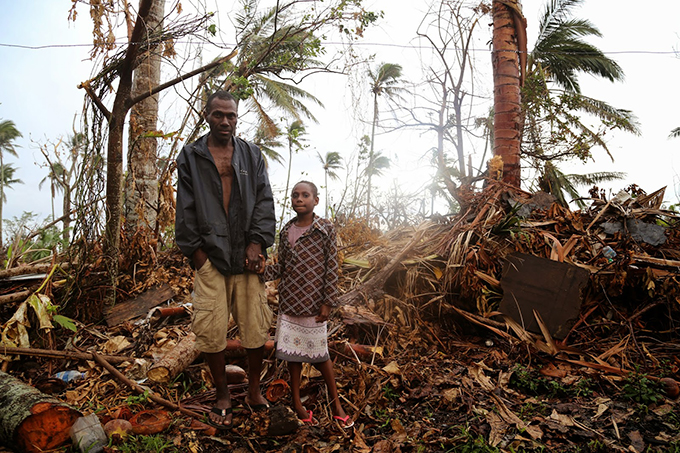
In the days since this cyclone hit, we have met countless families who have said that they had no understanding of what a category 5 cyclone meant. Entire villages have simply disappeared. Concrete or wooden foundations and scattered debris are the only evidence of houses, schools and health centres.
For children and families who have lost literally everything, the impact on their lives is incalculable. UNICEF has been working around the clock to support the Fiji government to provide immediate relief to affected communities – we will continue to do so as they begin the long road to recovery.
Even a year on from Cyclone Pam in Vanuatu, children and their families still talk about the cyclone with fear in their voices. A year may have passed but the memory of that terrifying weekend is like a fresh wound.
In both countries, communities are doing their best to recover, to clean up, and to return to a sense of normality. Those in Vanuatu would no doubt tell those in Fiji that this takes time, effort, patience and strength in the face of seemingly insurmountable problems.
So what does this mean for Pacific nations?
It may sound like a cliché – but the expression “the new normal” is a reality here in the Pacific. Pacific countries now need to plan and prepare for all eventualities, including the prospect of a direct hit by a category 5 cyclone.
The implications are immense. We need to consider everything from the way we build homes, schools, health facilities and other critical infrastructure such as water and power supply, to the way that families prepare themselves, their crops and their livelihoods.
Buildings traditionally designated as evacuation centres may now be insufficient; community centres purpose built to serve large numbers as evacuation centres are needed.
Every child and adult in the Pacific needs to know what to do before, during and after a disaster strikes. Pacific Islanders are extremely resilient in times of difficulty but the new normal requires another level of planning, preparedness and emotional strength.
Children in the Pacific must also be a vital part of these conversations, both as those most affected by emergencies, and as those who can and will contribute to building more resilient communities in the future.
When a disaster strikes, children’s lives are changed forever. Death, injury, illness and the loss of the most basic human rights can happen in a moment; schooling comes to an end, family incomes disappear, hopes and dreams are washed away.
When it comes to climate change, with rising sea levels, prolonged droughts and intensified storms, those least responsible for this unfolding environmental disaster are shouldering the consequences of climate change.
We must listen to children and communities and actively involve them in preparing for disasters. An early warning system for cyclones is only useful if everyone understands what the warnings mean and what actions to take.
Read more about the year since Cyclone Pam struck: Fast Facts Vanuatu Cyclone Pam – One year on
At UNICEF we are investing in school-based preparedness efforts so that children will be prepared for emergencies from their youngest years; just as children learn to brush their teeth or wash their hands, they must also be aware of the simple actions they can take to prepare for emergencies and become more resilient, together.
We regularly support government-led assessments and community feedback systems using mobile phones and traditional community conversations. These can also complement existing systems used to warn children and communities about impending disasters and steps needed to protect themselves, as well as real-time monitoring and reporting.
We must learn from the past. We know, for example, that, on average, more women and girls die in disasters than men.
Seventy percent of those who died in the 2009 Tonga tsunami were women. People with disabilities, the elderly, children, those in remote communities and other groups made vulnerable by their position in society are also disproportionately and differently affected.
These groups are often the last to be reached by relief efforts, and say that they are rarely consulted or included during preparedness or recovery planning. If we are serious about assisting those most affected by disasters, then these groups need to be prioritised and supported in practical and meaningful ways.
Delaying action for children and communities on climate change not an option.
Climate change will not wait. Natural disasters will not wait. Anote Tong, the former President of Kiribati, one of the world’s most climate-affected countries, has said: “At the rate we are going it doesn’t seem likely we will be able to keep what we have for our children.” We must act to protect children now and in generations to come.
The consequences of climate change inaction are being felt every day in the Pacific. On 12 February 2016 Fiji became the first country in the world to formally ratify the new Paris Climate Agreement, undertaking to pursue renewable energy sources and cut overall emissions by 30 per cent.
Eight days later, Cyclone Winston hit.
For those who live outside the Pacific, the reality of climate change and other natural disasters can be hard to grasp. For the children of the Pacific however, this is the reality of today – and tomorrow.
The Pacific is leading the way on action to reduce the impacts of climate change. Policy changes, investment in climate change resistant crops, improved water supply and treatment methods and community-led mitigation efforts are all pieces of a much larger puzzle.
The same is true for disaster preparedness and response. Just as the Pacific looks to others for expertise and guidance, the rest of the world has much to learn from the Pacific region. We are, after all, experts by circumstance.
Whether you live in or beyond the Pacific, we all have a role to play, both in everyday actions to reduce the effects of climate change and in simple measures to better prepare ourselves and our communities for emergencies. Every step we make today to prevent and reduce the impact of climate change and natural disasters in the Pacific is an investment in a safer and more resilient future for all. We have done a lot but we need to push ourselves to do even more, our children are depending on us.
Dr Karen Allen is the UNICEF Pacific Representative. This post first appeared on UNICEF’s Connect and Vanuatu Daily Digest blogs.
Other Cyclone Pam one year later videos
–]]>
Timorese scholarship students in NZ greet former president Ramos-Horta

AsiaPacificReport.nz By Hannah Short Former president of Timor-Leste and Nobel Peace Prize winner Dr José Ramos-Horta praised the educational opportunity being provided for students from his country in New Zealand this week. Scholarship students from Timor-Leste welcomed him at a morning tea at Auckland University of Technology on Thursday. The students used the opportunity to ask Ramos-Horta to elaborate more on the development of Timor-Leste, both during and following his time as president. Discussions covered the upcoming election in Timor-Leste, the state of the economy and the positive impact his successor as prime minister, Xanana Gusmao, has had on education. “Many Timorese have gone on study across Asia, in Australia and New Zealand. Thousands of Timorese are getting masters degrees in the best universities across the region now thanks to Xanana Gusmao and his government,” said Ramos-Horta. AUT currently has 10 students from Timor-Leste, with four more on their way, on New Zealand Development Scholarships, which are awarded by the Ministry of Foreign Affairs and Trade . These students are supported by the Scholarships Office team, who provide assistance with everything from orientation to opening a New Zealand bank account. Hosting delight The University Scholarships Office was delighted to be approached to host Dr José Ramos-Horta and Timor-Leste students from AUT, Auckland University, Massey, Unitec and MIT on his visit to the country. Philippa Hay, head of the University Scholarships Office, said students from Timor-Leste arrived in New Zealand motivated and well prepared for their studies, and usually adjusted to New Zealand culture without issue. “Our students from Timor-Leste have less trouble adapting than most international students. They’re extremely cohesive students, and support each other very well.” Dr José Ramos-Horta’s most significant visit to New Zealand happened during the 1999 APEC Summit in Auckland. His pleas for international assistance overshadowed the conference, shifting the focus from trade discussions to the raging violence in Timor-Leste. Ramos-Horta has been recognised internationally as a peacemaker for his work toward the safety and protection of the Timorese people. His efforts include building a human rights network to defend the rights of the Timorese, liaising with the United Nations, and entering discussions with the Security Council. Along with Roman Catholic priest Carlos Belo, Ramos-Horta was awarded the Nobel Peace Prize in 1996. He is now the Special Representative of the UN Secretary-General to the African nation of Guinea Bissau. Hannah Short is a communications team member of Auckland University of Technology. Wallace Chapman talks to Dr José Ramos-Horta on RNZ’s Sunday programme – 13 March 2016 –]]>
Tony Alexander’s Weekly Economic Overview M-10 2016

Economic Analysis by Tony Alexander.
 Tony Alexander, BNZ economist.[/caption]
The Reserve Bank cut it’s official cash rate another 0.25% Thursday morning so it now sits at a record low of 2.25%, even lower than right after the depths of the global financial crisis. So why cut when the economy is growing near a 3% pace? They are worried about inflation settling uncomfortably low having missed their inflation target range of 1% – 3% for a year and a bit now. Current inflation is only 0.1%. The cash rate cut will lead to some retail lending rates going down, but with bank funding costs offshore rising because of investor concerns about European banks the feed-through in many instances probably won’t amount to the full 0.25%.
Download document
Tony Alexander, BNZ economist.[/caption]
The Reserve Bank cut it’s official cash rate another 0.25% Thursday morning so it now sits at a record low of 2.25%, even lower than right after the depths of the global financial crisis. So why cut when the economy is growing near a 3% pace? They are worried about inflation settling uncomfortably low having missed their inflation target range of 1% – 3% for a year and a bit now. Current inflation is only 0.1%. The cash rate cut will lead to some retail lending rates going down, but with bank funding costs offshore rising because of investor concerns about European banks the feed-through in many instances probably won’t amount to the full 0.25%.
Download document
The Weekly Overview is written by Tony Alexander, Chief Economist at the Bank of New Zealand. The views expressed are my own and do not purport to represent the views of the BNZ. To receive the Weekly Overview each Thursday night please sign up at www.tonyalexander.co.nz To change your address or unsubscribe please click the link at the bottom of your email. Tony.alexander@bnz.co.nz
–]]>NewsRoom_Digest for 11 March 2016
NewsroomPlus.com
Today’s edition of NewsRoom_Digest features 4 resourceful links of the day and the politics pulse from Friday 11th of March. It is best viewed on a desktop screen.
NEWSROOM_MONITOR
Noteworthy stories in the current news cycle include: the Workplace and Safety Minister saying eight agricultural workers have died and 200 have been seriously harmed since the new workplace safety rules came into force last year; food prices have fallen, led by seasonally lower fruit and vegetable prices; and international research headed by NZ scientists has found that agricultural practices such as farming and rice-growing, not fossil fuels, are likely to be responsible for rising atmospheric methane levels since 2007.
POLITICS PULSE
Government: Zero-hour contracts gone, PPL extended; Appointments to Maritime New Zealand board; Tauranga fully-fibred and rearing to go; New Zealand/South Australia school exchange; Largest roading project in Waikato’s history underway; Well-rounded education favoured; Celebrating New Zealand’s top foster carers; New wood products partnership launched; New cycleways better connecting the Western Bay; Irrigation funding boost for Wairarapa, Hawke’s Bay and Gisborne; Topping off a milestone for Justice Precinct
Greens: ACC shouldn’t prop up Ruataniwha Dam; MPI must front up over swamp kauri trade documents; ECAN must take action to stop waterways from drying up; Greens Called For Guns Briefing Four Months Ago
Labour: MPI’s blinkers on over bobby calf abuse; Wairarapa irrigation scheme – another waste of millions? Labour Calls For Independent Gun Inquiry; Farm workers 20 times more likely to be killed
New Zealand First: Mocking A Legitimate Concern On Flag Voting Information; Minister Should Go For Abysmal Failure On Swamp Kauri Exports
NZ National Party: Hutt Valley hosts Play.sport in a bid to get kids active; Bishop encourages applications for 2016 Youth Awards
LINKS OF THE DAY
MONTHLY FOOD PRICES FALL: Food prices fell 0.6 percent in February 2016, Statistics New Zealand said today. This was influenced by falls across a range of foods, and led by seasonally lower fruit and vegetable prices. Read more:http://bit.ly/1YE8wSe
METHANE LEVELS: A breakthrough in understanding about the causes of climate change has today been published online in the prestigious international journal Science. Read the paper here : http://www.sciencemag.org/
PROTECTION OF NZ OCEANS: The Parliamentary Commissioner for the Environment today urged New Zealanders not to squander another chance to protect New Zealand’s oceans. The Commissioner’s submission is available here:http://www.pce.parliament.nz/media/1632/mpaa-submission-final.pdf
ZERO HOUR CONTRACTS: A Bill which will eliminate zero-hour contracts, extend paid parental leave (PPL) and help stamp out worker exploitation passed its third reading yesterday. The new laws come into force on 1 April 2016. For more information see: http://www.employment.govt.nz/er/services/law/legislationreviews/employment-standards-bill.asp
And that’s our sampling of “news you can use” for Friday 11th March.
]]>Mystery Whales Put On Show At Scott Base

NewsroomPlus.com
A rare appearance by Arnoux beaked whales at Scott Base has University of Canterbury (UC) Gateway Antarctica scientist Dr Regina Eisert excited about research possibilities.
 Yesterday (9 March), a group of nine large whales appeared at Scott Base. The whales put on an exuberant display, tail-slapping, breaching, and leaping clear out of the water. The rare sighting was made possible by the sea ice breaking out, something which happens every few years in McMurdo Sound, creating panoramic views of the open ocean.
Antarctica New Zealand Winter Leader Andy Waters and Construction Site Manager Karl Johnson who are stationed at New Zealand’s Antarctic research base, happened to be outside with their cameras ready.
The whales came up at the southern end of McMurdo Sound, right against the edge of the Ross ice shelf. They stayed in the area for about half an hour, and then disappeared as suddenly as they had come.
A hot debate ensued at Scott Base as to the identity of the whales. To resolve this, pictures were sent to UC Antarctic marine mammal expert Dr Regina Eisert who immediately recognised that the whales were not minke whales, but something much more exotic – beaked whales.
“Based on their appearance and the location, these are probably Arnoux beaked whales (Berardius arnuxii). Beaked whales are the ‘mystery’ whales and sightings are few and far between. It’s very exciting to have them show up right outside Scott Base.”
Beaked whales are classified as toothed whales (like killer whales and sperm whales). Arnoux beaked whales occur throughout the South Pacific and Southern Ocean including New Zealand waters. They grow up to 9.75 metres long.
“This is a very special, scientifically significant sighting. People just normally don’t get to see them. The question is, are the whales just being nosy or are they searching for new feeding grounds? If they do visit this area then in future, we may be able to study them in this ecosystem, which would be a fantastic research opportunity.”
–]]>
Yesterday (9 March), a group of nine large whales appeared at Scott Base. The whales put on an exuberant display, tail-slapping, breaching, and leaping clear out of the water. The rare sighting was made possible by the sea ice breaking out, something which happens every few years in McMurdo Sound, creating panoramic views of the open ocean.
Antarctica New Zealand Winter Leader Andy Waters and Construction Site Manager Karl Johnson who are stationed at New Zealand’s Antarctic research base, happened to be outside with their cameras ready.
The whales came up at the southern end of McMurdo Sound, right against the edge of the Ross ice shelf. They stayed in the area for about half an hour, and then disappeared as suddenly as they had come.
A hot debate ensued at Scott Base as to the identity of the whales. To resolve this, pictures were sent to UC Antarctic marine mammal expert Dr Regina Eisert who immediately recognised that the whales were not minke whales, but something much more exotic – beaked whales.
“Based on their appearance and the location, these are probably Arnoux beaked whales (Berardius arnuxii). Beaked whales are the ‘mystery’ whales and sightings are few and far between. It’s very exciting to have them show up right outside Scott Base.”
Beaked whales are classified as toothed whales (like killer whales and sperm whales). Arnoux beaked whales occur throughout the South Pacific and Southern Ocean including New Zealand waters. They grow up to 9.75 metres long.
“This is a very special, scientifically significant sighting. People just normally don’t get to see them. The question is, are the whales just being nosy or are they searching for new feeding grounds? If they do visit this area then in future, we may be able to study them in this ecosystem, which would be a fantastic research opportunity.”
–]]>
Selwyn Manning Editorial: More Intrusive Spy Laws Loom for New Zealand

Editorial by Selwyn Manning.
The Government is considering the recommendations of a former Deputy Prime Minister and lawyer as it embarks on designing a new wave of controversial spy-law reform. And again, it looks certain to drive a wedge into contemporary New Zealand.
On one side are those who support and trust the government to get the balance right between security intelligence and civil liberties, and on the other… those who don’t. Previous polls on such matters suggest the split is about 50/50.

The Report was delivered to the Government on February 29 and had been kept under wraps until yesterday (Wednesday March 9). It’s titled: Intelligence and Security in a Free Society and was written by former Deputy Prime Minister and Finance Minister in the Clark Labour Government, Sir Michael Cullen, and, Dame Patsy Reddy a lawyer with corporate experience.
Sir Michael and Dame Patsy write: “The need to maintain both security and the rights and liberties of New Zealanders has been at the forefront of our minds. Given the intrusive nature of the Agencies’ activities, New Zealanders are understandably concerned about whether those activities are justifiable. This concern is not helped by the fact that the Agencies’ activities have been kept largely in the shadows.”
Fair comment.
But I would add to that the fact the Government Communications Security Bureau (GCSB) was found only four years ago to have been operating illegally under the current Prime Minister’s governance. That is, until he changed the law in 2013 to accommodate the spy agency’s illegal operations. And after much public outrage on the matter, the Prime Minister also read into the new legislation a retrospective element, making past illegalities legal. In some suburbs of Auckland, slick manoeuvres such as this are called a hustle.
However, in this report, there is some progressive thinking in evidence. For example Sir Michael and Dame Pasty recommend New Zealand’s spy laws be redrafted and brought under one single intelligence and security act, so as to make it clear what the spy agencies “can and cannot do”.
In a comprehensive report such as this, there is much detail, and within it much that when brought out for discussion will attract considerable and enduring controversy.
Let’s look at the recommendations regarding proposed authorisation procedures.
This set of recommendations frame how authorisation is applied for, and given, when spy agencies seek to surveil New Zealand citizens and permanent residents. The recommendations include changes to:
* how targeted surveillance is authorised against New Zealanders and permanent residents be designated as Tier 1 authorisation and require sign off from the Attorney General and a judicial commissioner. This changes from the Prime Minister (or minister responsible for the intelligence agency) and commissioner.
* how covert spying and intelligence gathering activities be designated as Tier 2 authorisation and would require the sign off of just the Attorney General
* how open source intelligence gathering is authorised, defining it based on how it is collected (which includes the surveillance of organisations, people, and individuals while in a public place) – such activities would be designated as Tier 3 authorisation and would only require a broad policy statement to be issued by the Attorney General.
If the spy operations intend to target a foreign dignitary, or embark on an operation likely to have implications for New Zealand’s foreign policy or international relations, then the Attorney General ‘should be required’ to refer authorisation applications to the Minister of Foreign Affairs for comment.
Is this an erosion of the status quo, of the current requirement that security intelligence operations involving the surveillance of New Zealand citizens and permanent residents require a warrant signed off by the commissioner and Prime Minister or minister responsible? Or is it improving on the current regime by tagging the responsibility to the Attorney General, a minister in the Executive Government’s cabinet whose justifications can be more readily challenged, even reprimanded, than can a prime minister?
The report fails however to address the fact that when our security intelligence agencies target an individual placing him or her under surveillance, breach a network, a computer, smartphone or communications device, they initiate an operative methodology referred to as up to ‘two hops’ – which means hundreds or even thousands of others fall into the scope of surveillance simply because they may have been in direct communication with the individual under surveillance or (in the case of two hops) been in communication with an individual who may have been in communication with the individual upon whom an authorisation surveillance warrant has been granted and actioned.
It is believed that this is how Keith Locke’s SIS file included references to surveillance while he was a member of Parliament representing the Green Party. Helen Clark, who was the prime minister at the time, suggested no warrant had been authorised permitting the SIS to place Mr Locke under surveillance. However, it is believed, that a person of Sri Lankan Tamil origin, whom Mr Locke was in communication with, was the subject of an authorised and warranted surveillance operation. If correct, then Mr Locke’s privacy and rightful right to political liberty was breached without authorisation.
The report fails to address this nor make a recommendation on how such a practice should be addressed.
Scope of the Spy Agencies:
There is considerable attention given to how the security agencies should come under the State Services Act and be under one umbrella; that accessible information databases be defined and information and intelligence sharing and cooperation among public agencies (including the Police and Inland Revenue) be permitted.
It suggests a legislative catch-up be initiated to detail in law how the Security Intelligence Service (SIS) and the Government Communications Security Bureau (GCSB) work with the Police on operations, share skill-sets, and prevent duplication of the same within other agencies.
The National Assessments Bureau (NAB) is also given some attention, suggesting it be brought into the fold as a significant specialist analysis body that works with executive government and politicians to understand and accurately assess the intelligence product. The NAB has been doing this in part since it was brought in from the cold, its title changed from the under-utilised External Assessments Bureau and brought within the respectable influence of the Department of Prime Minister and Cabinet.
The report did not observe nor comment on how professional, efficient, or otherwise the spy agencies are. However, moves to locate elements of the intelligence community within the scope of the Department of Prime Minister and Cabinet suggest deep-seated concerns by those of the Public Service’s highest office. And the fact that senior members of the DPMC have in recent years been seconded to the SIS and GCSB also suggest a tipping point was breached once realisation was publicly noted of ill-defined and illegal surveillance activity.
The report also fails to address the question of in whose interests (foreign or otherwise) the GCSB and SIS serve. The Edward Snowden revelations, and the FBI’s involvement in the raids on Kim Dot Com and his associates (of which the GCSB was found to have been illegally involved) underscore why the public rightfully has concerns that external foreign powers use the GCSB as an instrument that serves their own national security interests.
Human Rights:
The report does mention how human rights should be a consideration for investigations conducted by the Inspector General of Intelligence and Security, which could offer a counter-balance to the previously heavy-weighted national security intelligence considerations applied to trade implications.
This recommendation may provide a reference, or at least a point of discussion, should the SIS embark on another disastrous, costly, wobbly, and legally flawed security risk certificate exercise – as was initiated when former Algerian politician and academic Ahmed Zaoui was imprisoned unjustly after seeking asylum and refugee status in New Zealand. In that case, the SIS cited likely negative trade implications with Algeria as justification for imprisonment without a trial while the Government considered Zaoui’s fate and possible deportation. Of course in the end, after years of legal battles and millions of dollars spent, the SIS retracted its security risk determination and deemed Zaoui not to be a risk to New Zealand’s national security at all.
Oversight:
With the forever intensification of state security intelligence powers, there has been much discussion about the need for more robust oversight. It is interesting, if not disappointing, that Sir Michael and Dame Patsy only recommend a slight tweaking of the status quo.
For example, it is recommended the Inspector General of Intelligence and Security’s investigative powers be expanded in scope to include investigations into ‘sensitive’ operations. And, the Parliamentary Intelligence and Security Committee be increased to a minimum of five and a maximum of seven politicians. There is nothing in the report’s recommendations that addresses Sir Michael and Dame Patsy’s observation that politicians on the intelligence committee are at times unable to fathom the detail or underlying consequences of information communicated during intelligence briefings – presumably due to the use of jargon, intel-speak, and vague references in the communications.
One would have expected, at the very least, this report would have recommended a robust oversight committee be established with a mix of sworn in and appointed experts including political, judicial, constitutional, and formerly operational members.
In Summary:
There is much detail in the report, and overall Sir Michael and Dame Patsy have provided a robust analysis of today’s security intelligence environment, its demands, complexities, and referenced realities of security threats (whether they be cyber-security, human, infrastructure, or reputational in nature).
The Cullen-Reddy report does not make recommendations nor observations as to whether New Zealand has the balance right between the state’s search and surveillance powers and those of the citizenry’s right to expressions of freedom and liberty without undue corruption of those ideals.
And as far as public discussion, discourse and debate is concerned, it would have been helpful had the report included an observation of where New Zealand currently sits on the search and surveil Vs civil liberties axis when compared to the other Five Eyes intelligence partner states – I would suggest the Telecommunications (Interception Capability and Security) Act 2013 and other states’ counterpart legislation could be used as a benchmark.
You can download the full Cullen/Reddy report –Intelligence and Security in a Free Society (pdf).
See Also EveningReport.nz: Across the Ditch Australia radio bulletin (March 10, 2016 – Selwyn Manning and Peter Godfrey).
And, Dr Paul Buchanan’s comprehensive Analysis: Institutional Lag and the New Zealand Intelligence Community
And, Dr Paul Buchanan’s polemic on KiwiPolitico.com: Questions of the Day.
—
NewsRoom_Digest for 10 March 2016
NewsroomPlus.com
Today’s edition of NewsRoom_Digest features resourceful links of the day and the politics pulse from Thursday 10th of March. It is best viewed on a desktop screen.
NEWSROOM_MONITOR
Noteworthy stories in the current news cycle include: the Reserve Bank lowering the Official Cash Rate to a new record low of 2.25 percent, and the New Zealand dollar falling 1 cent in response; the New Zealand Educational Institute (NZEI) saying thousands of school support staff are being underpaid because of a calendar anomaly; and Housing New Zealand saying it will issue summonses to force Auckland Council experts to appear before hearings on the city’s 30-year-development plan.
POLITICS PULSE
Media releases issued from Parliament by political parties today
included:
Government: Minister welcomes back Pasifika Festival; Play.sport helps Kiwi kids get more active;Historic Bill One Step Closer to Law;Leaky home support extended; $37.8 million Health IT research partnership;Nominations for 2016 Youth Awards open today; New code of practice for international education providers;Child protection policies widened; Kiwi women encouraged to participate in local body elections
Greens: ORC cut welcomed but overdue;Green Party Calls On Authorities To Follow Christchurch And Put Public Safety First
Labour: UN slow to spend on Pacific climate change; Rate cut shows Govt needs to step up
Māori Party: Māori Party Celebrates The Passing Of The Second Reading Of The Māori Language (Te Reo Māori) Bill
New Zealand First: TPPA Silver Bullet ‘A Myth’; Speech- Rt Hon Winston Peters- Optimism only when optimism is justified
LINKS OF THE DAY
CODE OF PRACTICE: A new code of practice for education providers that will strengthen the care of international students in New Zealand was announced today. More information can be found here:http://www.education.
Across the Ditch audio: More Intrusive Spy Laws Loom for New Zealand
In this week’s Across the Ditch: Australia’s Radio FiveAA host Peter Godfrey talks to Selwyn Manning about an armed stand-off in the Bay of Plenty which saw four police officers shot. Also discussed, new spy laws loom for New Zealand New Zealand’s unemployment rate Oh no… The Batchelor is back, this time with a guy called Jordan and a host of hopefuls.
Across the Ditch broadcasts live on Australia’s radio FiveAA.com.au and webcasts on EveningReport.nz, LiveNews.co.nz and ForeignAffairs.co.nz. Recorded live on 10/03/16.
]]>Paul Buchanan Analysis: Institutional Lag and the New Zealand Intelligence Community

Analysis by Dr Paul Buchanan.
Introduction. This essay examines the subject of institutional lag after foreign policy realignment, using as an example the “core “ of the New Zealand intelligence community (the Security Intelligence Service (SIS), Government Communications Security Bureau (GCSB) and National Assessments Bureau (NAB)) after the end of the Cold War. The essay argues that New Zealand intelligence agencies have been slow to adapt to changes brought by the country’s foreign policy realignment in the mid 1990s as well as broader changes in the geopolitical and technological landscape. The study focuses on the post-Cold War period because modern New Zealand’s intelligence community was born of and deeply influenced by the Cold War, which made the latter’s termination a milestone in the history of New Zealand intelligence community (NZIC). As will be elaborated ahead, how the New Zealand intelligence community responded to the changes wrought by the end of the Cold War and subsequent geopolitical shifts were not necessarily foresighted, seamless or responsive to the actualities of the moment. Instead it reflected the clash between old ways of viewing things, reliance on foreign intelligence partners (and their perspectives), as overlaid on the practical necessities of coping with new technologies, areas of focus, non-traditional threats and changes in foreign policy orientation. The essay is organized as follows. The first sections explicate the concepts used as foundational stones of the argument. The essay then proceeds to brief case overviews before concluding with an explanation as to why things happened as they did. Institutional lag. Institutional lag refers to the time gap between external events or exogenous conditions and institutional (bureaucratic) adjustment or response. There is varying depth to the delay in organizational change given historical and contextual conditions both internal and external to the agencies involved. Influenced by the work of Thorstein Veblen (1857-1929) on cultural lag, the term “institutional lag” was coined by philosopher and economist Charles Ayers in his Theory of Economic Progress (1944). “Ayres propounded a theory of “institutional lag” whereby technological changes inevitably kept economic technology one step ahead of inherited socio-cultural institutions. The process of Veblenian “evolution” Ayres envisaged was that technological changes were generated by spurts of instinctive inventive activity to innovate in technological processes but that the relatively slow, inherited socio-economic structures would be maladapted to these changes. With glacier-like gradualness, institutions would eventually respond to the new technology, but by the time they adjusted, the next round of inventive activity would have been skipping along further ahead, thus maintaining a permanent lag and thus incongruity between social structures and economic technology.”[1] Used as a means of explaining the delayed response of firms to technological change in a cycle of perpetual catch-up, the concept has now been expanded to include slow or belated public bureaucracy responses to cultural, socio-economic, political and diplomatic change (as well as technological change). More specifically, policy shifts announced by governments as new initiatives often occur before the public agencies responsible for implementing them have undertaken the organizational reforms required to do so., which necessitates a process of institutional “catch up.” Delays in bureaucratic responses to shifts in environmental conditions extend to foreign policy and security. This is particularly the case when nation-states have reoriented their international orientation due to external or internal factors (say, as the result of war, alterations in trade regimes or domestic political change). New Zealand’s response to the elimination of British export preferences in the early 1970s and declaration of its non-nuclear status in the mid 1980s are examples of external and internally motivated foreign policy realignment. Foreign policy realignments can be brought about precipitously or after much deliberation. The former is often reactive to externalities whereas the latter is the product of calculations of longer-term costs and benefits. Either way, the institutional apparatus underpinning the old status quo has to adapt to the change in orientation. Given the inertial weight of institutional history and tradition, it may be something that takes time, especially if confronted with bureaucratic opposition within affected agencies. Two further syndromes compound the problem of institutional lag following foreign policy realignment. On the one hand there is the issue of institutional rippling, whereby a government opts for realignment but does not involve agencies other than those most immediately and directly affected by and involved in the shift. Whereas the diplomatic corps and foreign affairs bureaucracy are integrally involved in implementing the details of foreign policy realignment, other affected government agencies are slower to follow and often do so in uncoordinated and uneven fashion. This is seen in military and intelligence agencies as well as those such as Customs and Immigration, which are often not fully involved in the decision-making process leading to a foreign policy realignment and yet have to engage organizational reforms in accordance with their own institutional traditions and structures that may not easily follow the dictates of diplomats or the pet projects of politicians. That brings into play the second syndrome, that of institutional “depth.” Institutional depth refers to the historical legacies of institutional tradition and practice. Some public agencies, such as the police and the military, have long traditions and standards of practice that often date to the days of independence or state foundation. Others, such as agencies involved in the oversight and regulation of information technology and telecommunications, are relatively new to the scene and do not have the accumulated “weight” of institutional mores and practices to deal with when confronting significant change in their operating environments. Institutional rippling in response to policy realignment often begins with agencies directly involved in the transition and “newer” agencies lacking in relative institutional depth, which are then followed by agencies less directly involved in the realignment decision and/or which have greater institutional depth. The overall effect is that institutional lag becomes a process as well as a distinct organizational phenomenon, with some agencies suffering less institutional lag than others depending on the level of involvement in implementing the realignment and the degree of institutional depth encountered in each. To summarise: Significant change in a nation’s foreign relations often leads to a process of institutional lag that is determined by the relative institutional depth and degree of involvement of the agencies affected. Front-line agencies such as foreign affairs ministries and recently created agencies with connections to priority aspects of foreign relations may undertake immediate organizational reforms in response to the policy shift, but other agencies, including security and intelligence agencies, may lag behind in reorienting their institutional gaze as well as their internal conformation. Foreign policy realignment. Foreign policy realignment refers to a shift in a nation-state’s geopolitical and diplomatic relations. It can be the product of internal factors such as political regime change or an alteration in government perspectives on global affairs, or it can be the consequence of changes in the external environment such as the beginning or termination of conflict, the emergence of new actors, markets or areas of resource contestation, diplomatic shifts by allies or enemies, and more. Foreign policy realignments may be sudden and/or forced upon states or they may be the product of lengthy deliberation. The end of the Cold War is an example of an external event that produced rather quick foreign policy realignments on the part of many states, while New Zealand’s decision to broaden its trade relations in the mid 1990s is an example of an internally-directed foreign policy realignment that was deliberate and measured in light of systemic changes in the international environment over the previous decade. Foreign policy realignment does not come easily. Whether they are consulted in advance or not, government agencies must adapt to the change in posture. This can well involve significant and discrete organizational and policy changes as well as alterations in their relationship with private sector and public interest groups, some of which may be resistant to change. The end of the Cold War illustrates the reality of institutional lag in the wake of foreign policy realignment. Although the international community first shifted from a tight bipolar to a unipolar system, then to a loose multipolar configuration, many defense and security organizations, to include intelligence agencies on both sides of the Berlin Wall, continued to view the world and organize themselves according to Cold War precepts. As this proved inadequate for confronting the new security and intelligence challenges of the 1990s and 2000s, only then did military and intelligence agencies begin to undertake the organizational, doctrinal and perspective changes required in order to do so. This slow and reactive response to changing global externalities was evident in the New Zealand intelligence community. Issue Linkage. Issue linkage in international relations refers to the tying together of two or more foreign policy concerns in a “holistic” approach to bilateral and multilateral relations. During the Cold War the most important example of issue linkage was that of trade and security, whereby security partners on both sides of the ideological divide traded preferentially with each other, thereby reinforcing their alliance commitments. After the Cold War there was a move to uncouple trade and security. This was primarily due to two factors, these being the loosening of security alliances in a unipolar security environment dominated by the United States and the globalization of production, communications and exchange connected by international commodity chains. It was believed that security and trade relations could be uncoupled and dispersed across a wider array of partners, thereby avoiding undue dependence on any one of them (Buchanan and Lin 2006). They key to success of this new paradigm was to ensure that the new trade and security relationships were not juxtaposed in a contrary or contradictory manner (say, by attempting to trade with a state at war while maintaining security relations with its main antagonist). So long as that did not occur, states were free to loosen the linkages between their trade relations and national security. As shall be discussed below, this was the dilemma posed to New Zealand after its foreign policy realignment in the mid-1990s. The New Zealand Intelligence Community (NZIC). This essay focuses on the three “core” intelligence agencies in New Zealand, the Security Intelligence Service (SIS), Government Communications Security Bureau (GCSB) and National Assessments Bureau (NAB, formerly titled the External Assessments Bureau), which is part of the Department of the Prime Minister and Cabinet (DPMC). There are a number of other agencies that serve as intelligence collection and analysis units. This includes the Officials Committee for Domestic and External Security Coordination (ODESC), which coordinates assessments and responses to a wide range of potential threats ranging from natural disasters to cyber warfare. The New Zealand Defense Forces have military intelligence branches in all three services (Army, Navy and Air Force) as well as military intelligence units (Directorate of Defense Intelligence and GEOINT) serving the NZDF as a whole. These agencies, especially the service branch intelligence units, produce tactical intelligence in areas in which the NZDF operates or from where armed threats to New Zealand interests may originate.
Pipitea House, Home of the GCSB, SIS and NAB.
The GCSB is a signals (SIGINT) and technical (TECHINT) intelligence gathering agency that is part of the Anglophone 5 Eyes or Echelon alliance. Its primary focus is foreign intelligence collection but in specific circumstances and increasingly as of late it can undertake domestic SIGINT and TECHINT work in a “partner” role at the behest of other New Zealand government agencies (such as the Police or Customs). The SIS is responsible for domestic intelligence gathering, counter-intelligence operations and foreign human intelligence collection. It also has a “hand in glove” relationship with other New Zealand security agencies when the occasion warrants. The NAB is the ultimate recipient of intelligence streams from all of the NZIC, where it prepares assessments for the Prime Minister within the confines of the DPMC. The terrorist attacks of 9/11 produced a proliferation of intelligence “cells” in a host of New Zealand public agencies. New Zealand Police, Immigration New Zealand, the Ministry of Business, Innovation and Enterprise, New Zealand Customs Service, and Treasury have their own specialized units. There are also interagency intelligence cells such as the Counter-Terrorism Assessment Group (CTAG), Security and Risk Group (SRG), Intelligence Coordination Group (ICG), and the National Assessments Committee (NAC), with the intelligence from all of these agencies as well as the SIS and GCSB flowing to the NAB, which in turn answers to the Cabinet Strategy Subcommittee on Intelligence and Security (CSSIS). In total, there are 12 intelligence agencies encompassed with the NZIC. The question is whether the proliferation of these intelligence agencies has increased the accuracy, efficiency and reliability of the information obtained and processed by the New Zealand intelligence community. That raises the issue of how the New Zealand intelligence community sees the world around it, how it frames and assesses threats and how it responds to them. In order to determine this, mention must be made of the research methodology underpinning this analysis. Methodology. The focus of this essay is on the SIS, GCSB and NAB because the first two are the lead human and signals/technical intelligence agencies in New Zealand and the latter is the ultimate intelligence assessment and evaluation unit in the country. The perspectives they have on international security matters and New Zealand’s geopolitical context constitute the core of the NZIC’s current assessments and future forecasts of risks and threats. To study what these are, the essay uses the secondary literature dedicated to the theme as well as summary diachronic analysis of the annual reports of the NAB, GCSB and NZSIS (where available), which postulate what are perceived as New Zealand’s most pressing security and intelligence concerns. The summary analysis is diachronic in that it is both chronological and covers four separate governments: the National government led by Jim Bolger from 1990-1996, the Jenny Shipley-led National/New Zealand First government of 1996-99, the 5th Labour government led by Helen Clark from 1999-2008, and the John Key-led National government of 2008-2015. Viewing core NZIC assessments over time and across governments allows us to determine if there were variations in threat perception under each or if they remained constant regardless of who was in power. The Bolger Years. The Bolger government was confronted with significant shifts in its domestic and foreign environment. Domestically, it inherited and was charged with deepening market-oriented economic reforms initiated by its Labour predecessor. Externally, it witnessed the official end of the Cold War. It focused on the former rather than the latter for two reasons. First, because the transition from the welfare state to a market economy was contested, controversial and polarizing, something that demanded the full attention of policy-makers as they embarked on efforts to “deepen” and institutionalize structural reforms. Secondly, because the collapse of the USSR and its Warsaw Pact allies was not seen as directly or fundamentally altering New Zealand’s (largely pro-NATO) foreign policy orientation, regardless of the tensions between New Zealand, France and the US over the issue of nuclear weapons testing and the presence of nuclear powered and armed warships in the South Pacific. This had an interesting effect on the two main intelligence agencies. Under the terms of the 5 Eyes/Echelon signals intelligence alliance “reciprocity agreement” that saw it collect information on the Pacific region (and elsewhere when designated) in exchange for global intelligence collected from its larger signals partners, the GCSB basically served as the local storefront for them. It continued to focus its attention on targets of interest mainly to the partners rather than those of New Zealand itself. This included the communications of former Warsaw Pact members as well as Pacific and Eastern Asian nations and Iran in particular, with the emphasis placed on military, political and diplomatic communications. It included (and includes) monitoring of French communications in the Pacific.[2] It was important for New Zealand to continue to support its Anglophone partners in the 5 Eyes/Echelon signals intelligence network because that was one of, if not the primary method of secure and trustworthy contact after the diplomatic and military fallout from New Zealand’s 1985 decision to adopt a non-nuclear policy (which had the effect of banning nuclear powered and armed vessels from New Zealand waters, which in turn led to the dissolution of the Australia-New Zealand-US (ANZUS) defense alliance). The SIS likewise maintained a special relationship with its Anglophone partners, but given its small size and domestic orientation this was not as crucial to alliance relations as was the reciprocity agreement within 5 Eyes. However, when the Berlin Wall fell the SIS was left without a mission. Its primary focus was (and is) domestic espionage, and in the Cold War period that meant identifying reds under beds. With that concern removed, the SIS was hard pressed to justify its existence beyond assisting the Police on criminal matters, at least when it came to domestic intelligence gathering and counter-espionage (since the thrust of SIS counter-espionage efforts during the Cold War were directed at Soviet intelligence gathering activities in New Zealand and, in the wake of the Rainbow Warrior bombing by French operatives in Auckland harbor, on French clandestine activities in the South Pacific). The SIS assigned itself the task of uncovering new domestic threats, and fortuitously for the agency this was provided by the move to market-driven economics. Besides an ongoing interest in criminal enterprise, opponents to the market-oriented policy shift became the new focus of domestic intelligence concern. These came in the form of unionists, environmentalists, human rights, fair trade and social welfare activists, community organisers, Maori separatists, anarchists and other domestic Left activists unconnected to the former Soviet Union and its satellites. The trouble for both spy agencies was that with the end of the Cold War the ideological conflict between East and West largely died, especially with the adoption of capitalist economics by former communist countries such as the People’s Republic of China and Vietnam. This meant the end of “exporting” revolution by supporting indigenous Left groups, particularly those who advocated armed struggle. As for the French, the arrest, trial and conviction of two French agents over the Rainbow Warrior bombing signaled the downsizing of French intelligence operations in New Zealand in exchange for improved diplomatic relations. The combined result meant that the SIS no longer had foreign-based espionage or subversion to be concerned about when it came to domestic intelligence and counter-intelligence operations. The result was that threat assessments provided by the (then) EAB focused on domestic actors, regional instability and criminal enterprise. Little emphasis was placed on foreign conflicts further afield and little to no mention was made of terrorism beyond the potential for low-level violence on the part of domestic militants. The Shipley Government. The first elected government under MMP, the Jenny Shipley-led National/New Zealand First coalition “deepened” market-oriented policies, the most significant being making trade the centerpiece of foreign policy and developing export markets in Asia, Latin America and the Middle East. This ran in parallel with further opening of the New Zealand market to foreign imports and investment. What this meant in practice was significant foreign policy realignment, arguably one that was built upon and yet more significant than those occasioned by the end of the special trade relationship with the UK and the declaration of nuclear free status. Foreign policy otherwise ran in concert with the “independent and autonomous” stance favoured by both major parties, with continued emphasis on non-proliferation, disarmament and peacetime military operations (particularly regional conflict resolution, humanitarian assistance, and peace-keeping). But the dye was recast: henceforth New Zealand would put trade at the center of its foreign policy and it no longer would privilege the Anglophone world when it came to commercial relations. There was no “issue linkage” between the shift in foreign policy and the orientation of the New Zealand intelligence community. Issue linkage is pursued in order to provide coherency in the approach to foreign affairs. The problem for New Zealand was that its intelligence orientation did not match the new trade-based approach to the international system. Instead, it remained focused on pre-existing domestic threats and the external preoccupations of its foreign partners. The GCSB focus continued to respond to the strategic requirements of its 5 Eyes partners, especially the US and UK. It shared eavesdropping duties in the South Pacific with Australia and traded selected intelligence with France even as it monitored French military and diplomatic communications in the region. Emphasis shifted to include communications in failed, failing and rogue states and those of non-state armed actors. But the mainstay of its eavesdropping and intercepts were focused on South Pacific states, North and Southeast Asia, extra-regional diplomatic communications, international and non-governmental organizations and telemetry from non-5 Eye satellites that disclosed military, particularly naval, communications. The SIS maintained the focus it had under the preceding government, to include monitoring of anti-status quo ideological activists, Aian criminal organizations, and foreign spy networks operating in New Zealand and the English speaking South Pacific. It’s foreign intelligence collection efforts centered on the South Pacific, specifically focusing on domestic sources of instability and the growing influence of extra-regional actors. Foreign terrorism was not a priority even though it began to impact on New Zealand’s major security partners. All of this was reflected in (then) EAB reports. The Fifth Labour Government. The Fifth Labour government headed by Helen Clark looked to be serious about abandoning its Euro- and Anglo-centric view of the world and embracing the notions of trade internationalism, security multilateralism and a diplomatic independence marked by commitment to human rights, non-proliferation and disarmament, regional development in the South Pacific and environmental sustainability. This was evident among other things by its cancellation of a purchase order for F-16 tactical aircraft to replace the aging A4 fleet, which left New Zealand without a combat air wing. It reduced the defense budget across the board and ramped up the trade component of its foreign affairs bureaucracy as it moved to expand and deepen the initiatives begun under the Shipley government. The NZIC perspective did not change significantly immediately after the Clark government was installed in 1999, although increased attention was given to international disarmament, non-proliferation and support for peace-keeping and military missions other than war. Both the GCSB and SIS continued a priority focus on instability in the South Pacific while tending to the requirements of foreign partners, on the one hand (GCSB) and the necessities of domestic espionage on the other (SIS). 9/11 changed that. The unconventional attacks by al-Qaeda on New York and Washington DC, precipitated the global “war on terrorism.” The US opted for pre-emptive war on al-Qaeda, saber rattling at the so-called “Axis of Evil” and other rogue states, and started a war of aggression on Iraq. It sent out a call for solidarity and assistance to the international community, and given its traditional ties to the US, New Zealand could not refuse the request. The question for the Clark government was how to do so without betraying the Left wing of the Labour Party and other Left parties in Parliament (especially the Greens). The answer was found in image management and quiet diplomacy. Security conservatives in the NZDF, MFAT, NAB and DPMC urged the Clark government to use the opportunity to finally repair ties with the US strained since the 1985 non-nuclear declaration. This extended to supporting specialized defense niche businesses based in New Zealand, but was primarily centered on improving bilateral military-to-military and intelligence links with the US as well as strengthening security training and cooperation agreements with Australia, the UK and other Western powers (including France). For the intelligence community the impact was two-fold. The SIS re-directed its energies towards counter-terrorism, specifically in detecting so-called “home grown” jihadis who might be planning attacks on New Zealand soil as well as those who supported al-Qaeda and other Islamicist extremist groups financially or politically (such as via the use of non-profit organizations as fronts for extremist recruiting or for sending money to al-Qaeda affiliated NGOs). Later, under the Key government, this concern turned to the subject of so-called returning “foreign fighters, that is, New Zealand citizens and permanent residents who left to Middle Eastern war zones and were suspected of trying to return to New Zealand having been radicalized and trained by violent extremist groups like the Islamic State. This tasking extended to monitoring the activities of suspected Islamicists in the English-speaking South Pacific and became the dominant preoccupation of its domestic espionage program. The problem with the sudden focus on domestic Islamic terrorists was that there were few to be found. This led to some awkward moments, such as when the 2005 SIS annual report claimed that the primary threat to domestic security were “home-grown” jihadis and al-Qaeda supporters, only to have the 2006 report, under a new Director, abandon the claim entirely in favor of foreign espionage on New Zealand soil (Buchanan, 2007). Likewise, there was a brief media frenzy about a New Zealand based plot to bomb targets in Australia to which the government replied cryptically (thereby fueling public speculation about local jihadis), but in the end not a single person was detained, much less charged for Islamicist-inspired terrorist offenses during the entire term of the 5th Labour government, as well as that of its successor. The SIS continued monitoring of non-Islamic domestic radicals, particularly Marxists, Anarchists, Maori separatists, environmental and animal rights activists. This culminated in the “anti-terrorist” raids of October 15, 2007 where 18 individuals fitting these descriptors (including one with pro-Palestinian sympathies) were arrested on grounds that they were part of an armed criminal conspiracy plotting to commitment politically-motivated violent acts against high profile targets (all terrorism charged were eventually dropped and only four were convicted and sentenced for firearms related charges). It also increased its counter-espionage activities, as growing numbers of Chinese migrants brought with it a concern about PRC espionage activities in New Zealand. Although the SIS did not name the countries it believed were engaged in foreign espionage in New Zealand, successive annual reports indicate that it remained a primary concern for the duration of the 5th Labour government. One effect of the focus on counter-terrorism and domestic extremism is that the SIS lost some of its ability to engage in South Pacific based human intelligence collection. This was particularly evident in its failure to anticipate the 2006 Fijian coup or the 2009 hardening of the military bureaucratic regime installed by it. The GCSB also refocused its energies on the terrorist threat, but its role included using its assets in support of and supplying personnel to the US-led wars in Afghanistan and Iraq (Hager, 2011). GCSB involvement in locating, identifying and targeting al-Qaeda and Taliban “high value” individuals in Afghanistan and Pakistan occurred in spite of the government’s claim that New Zealand was only engaged in non-combat roles (a claim that it also used when questioned about New Zealand Defense Force deployments in Afghanistan and more recently Iraq). The push to show concrete support for the war on Islamicist extremism made for a difficult juxtaposition. By the early 2000s New Zealand was firmly committed to expanding its commercial relations with Asia and the Middle East, yet some of the countries that it was working to establish deeper commercial ties with such as Pakistan and Saudi Arabia were hotbeds of violent Wahhabist and Salafist thought. The contradiction was evident in New Zealand signing bilateral education agreements with Pakistan and Saudi Arabia by which thousands of students from those countries were given visas to pursue university studies in New Zealand without any security vetting. Moreover, the move to re-establish security ties with the US and its allies in the War on Terrorism brought with it the possibility of alienating Chinese economic and diplomatic interests that saw better New Zealand-US security ties as a threat to China’s growing role as a great Pacific power. Since New Zealand was the first Western country to sign a bilateral trade agreement with the PRC, the reaffirmation of its security relationship with the US placed New Zealand in a particularly awkward diplomatic position vis a vis the two rival powers, one that has a distinct possibility of becoming a “Melian Dilemma.” (Buchanan 2010 b) The reassertion and extension of New Zealand’s security ties with the US counterbalanced the thrust of New Zealand’s trade-oriented foreign policy realignment away from its traditional sources of patronage and alliance. For the NZIC there was no contradiction inherent in the juxtaposition of an East-focused trade policy and a West-focused security policy and was, in fact, seen as having the best of both worlds (Buchanan 2010a). Even so, there was an increased awareness within the NAB that in spite of claims about New Zealand’s “benign” strategic environment, the country was increasingly exposed to the repercussions of foreign conflicts, something driven home by the deaths of Kiwis on 9/11 and in the 2002 Bali and 2005 London bombings perpetrated by affiliates of al-Qaeda (none of which were foreseen by the NZIC or its major allies). This forced the NZIC to focus priority attention on irregular threats originating or inspired from abroad, to include domestic sources of funding and recruitment for foreign extremism. The Key Government. The process of rapprochement between New Zealand and the United States came to fruition with the election of the John Key-led National government in late 2008. Key makes no secret of his affection for the US and was determined to overcome the final barriers to full restoration of bilateral security ties with it. The task was accomplished with the signing of the Wellington and Washington Declarations in 2010 and 2011 respectively. These restored New Zealand as a first tier military partner of the US. In parallel, after a number of breaches and spy scandals, then the Edward Snowden leaks, the GCSB saw a series of systems and protocol upgrades designed to address the problem of cyber security while increasing its ability to engage in mass surveillance and hacking operations against targets of interest to the US and other 5 Eyes partners. The GCSB was fully integrated into the 5 Eyes mass data collection schemes as well as providing technical support for US drone operations in the Horn of Africa, Arabian Peninsula, Afghanistan and Pakistan (Hager, 2011). Beyond that its targets include foreign diplomatic and commercial communications, notably those of neighboring Pacific states, diplomatic allies, trade partners, other friendly nations as well as international and non-governmental organizations, interest groups, charities and foreign regulatory agencies. The SIS continued its attention on counter-terrorism, accentuating its focus on Muslim extremists (including so called foreign fighters and home grown jihadis) while continuing its long-standing interest in Maori separatists, Marxists of various persuasion and anti-free trade groups and individuals. As had occurred under the Fifth Labour government, the heightened concern with counter-terrorism continued to divert resources away from overseas human intelligence operations, particularly within the South Pacific. One area that continued to grow in importance for the SIS was counter-intelligence operations. These are mainly directed at Chinese espionage, which includes economic as well as military-diplomatic targets. In concert with GCSB efforts to thwart Chinese and other foreign based cyber-espionage and theft, the SIS focus on counter-espionage became the fourth pillar of its institutional orientation (along with counter-terrorism, domestic political espionage and criminal investigations). Added to issues such as fisheries poaching, whaling, arms proliferation and people smuggling, these concerns comprised the bulk of the threat assessment packages delivered to the Prime Minister by the NAB. In 2010 a reform process was initiated within the NZIC under the banner “one community, many agencies.” The ICG was created and along with the NAB and SRG was re-located in the same building as the GCSB with an eye towards improving information sharing and coordination between them. The SIS was urged to improve its coordination with domestic security agencies and other members of the NZIC in an age of globalized threats. Based on recommendations made in the 2009 Intelligence Agency Review commissioned by the State Services Commission (known as he Murdoch Review), the reforms were driven by the understanding that the NZIC was the product of historical legacies that included adoption of doctrines, precepts, perceptions and policies from foreign intelligence partners that led to a patchwork approach to intelligence gathering and analysis and some “tribal” outlooks on inter-agency dynamics. (Whibley 2014). Notwithstanding these reform efforts, subsequent reviews of the GCSB and SIS found serious issues with legal compliance, organizational dysfunction and misunderstanding or uncertainty about specific responsibilities within the larger division of labour within the NZIC. Public revelations of these failings led to the creation of the Intelligence Review committee whose review and recommendations will be published in early 2016. Conclusion. The New Zealand intelligence community suffered some but not a particularly uncommon degree of institutional lag after the Cold War and the foreign policy realignment of the mid 1990s. Its priorities slowly changed over the 20 plus years that followed the end of the Cold War, but its core areas of interest remained largely unchanged. That was because it did not engage in issue linkage following the foreign policy realignment of the mid 1990s and basically followed the lead of its larger intelligence partners when it came to foreign intelligence priorities and assessments and, at their behest, added terrorism to its list of domestic intelligence priorities. It was slow to react to the threats posed by Islamic extremism and cyber warfare as well as the use of social media for untoward ends, but that was a common problem for all of its intelligence partners prior to 9/11 and the subsequent introduction of “smart” mass communication technologies. Institutional lag in the New Zealand intelligence community is the product of five factors: over-reliance on foreign intelligence streams for information; subservience to allied intelligence requirements and priorities; limited autonomous signals and human collection capabilities; organizational sclerosis and misplaced focus (on the nature of domestic “threats”). The combination saw the NZIC respond reactively rather than proactively to the emerging threat environment in which it is located. In addition, institutional lag in the SIS and GCSB appears to derive from three organizational pathologies: bureaucratic insulation, inertia and capture. Both agencies were until recently very insulated from outside scrutiny, to include that of the Ministers responsible for their oversight and direction. This allowed them to conduct their affairs and determine their priorities in relatively unchecked fashion, to include engaging in operations that stretched the boundaries of their legal charters. In part this was due, and in turn contributed to, bureaucratic inertia. Bureaucratic inertia in the NZIC was characterized by collector bias, organizational complacency, operational redundancy (especially within the GCSB) and resistance to internal and external criticism, administrative change or outside advice. Much of this was rooted in organizational features dating back to the Cold War and recruitment patterns that favored a specific demographic. Until the mid 2000s both agencies were characterized by an “old boys” culture, with limited recruiting outside of pakeha (white European) males, many of who had previous military or police experience. A partial exception is in the GCSB, which fields a significant number of translators. Because of the requirements for native or near-native fluency, recruitment in the GCSB tends to reflect the listening priorities of its 5 Eyes partners more so than those of New Zealand itself. That includes Farsi speakers as well as those who have command of Mandarin and Korean, which means that the recruitment base for translators extends beyond the traditional pool of European males with military or police experience. SIS recruitment of Asians and Maori, while ongoing due to concerns about Asian based organized crime and Maori separatists, was expanded post 9/11 to include females and people of Middle Eastern descent. Although females are now a significant component of both the SIS and GCSB (over 30 percent in each agency), Maori, Pacifika and other ethnic minorities remain a very small percentage of these agencies’ staffs (New Zealand Herald, January 3, 2016). The same can be said for the NAB. More importantly, the overall mindset, again until very recently and perhaps extending to this day, was one that emphasized group cohesion and shared perspectives and logics that placed a career premium on “team players” rather than those who might challenge the status quo or rock the boat. Given the very small size of the NZIC (approximately 600 people, of which 500 work in the GCSB and SIS) this mitigated against substantive reform within it. This organizational culture would not matter, or may not have been allowed to persist, had there been effective oversight of these agencies. But the contrary occurred (and still occurs). Rather than having Ministers and independent oversight agencies such as the Inspector General of Intelligence and Security (IGIS) of and Parliamentary Committee on Intelligence and Security (PCIS) effectively acting as overseers of the agencies that provided a check on their activities, the reverse occurred: ministers, IGs and parliamentary committees were essentially “captured” by the logic and expertise of the intelligence managers who ostensibly reported to them. Given the limited scope of authority and powers made available to IGs and the PCIS (which excluded them from scrutinizing operational matters, among other things), this left them at the mercy of senior intelligence officials for information about agency activities. With such emasculated oversight that provided no counter-weight to what the agencies claimed to be in the legitimate national security interest, the ministers responsible for them (until this year the Prime Minister acting as Minister of Intelligence and Security) were left to their own devices when it came to critically evaluating intelligence assessments and operations (when they were aware of them). Again, this led to their bureaucratic “capture” by their senior intelligence managers and advisors, with Ministers having to take more on faith than knowledge that what the IC was doing was in fact legal, timely when it came to emerging threats and in the national security interest. This was as true for the NAB and other intelligence consumers within the government at large. In practice the quid pro quo for government acceptance of bureaucratic capture by the IC appears to be the supply by the latter (specifically the SIS and GCSB) of politically sensitive domestic intelligence for partisan use by the government of the day. Again, until very recently in light of the Snowden revelations and Kim Dotcom scandal, both major parties seemed confortable with that arrangement, although recent evidence suggests that the Key government was particularly adept at using intelligence agencies for partisan purposes (Hager, 2014). The combination of external dependency and internal conformity contributed the most to the NZIC’s institutional lag. Added to that was the significant depth of organizational culture and practice within the SIS and GCSB, which was resistance to change even after the 2010 reforms and which focused on either debatable domestic threats or the external concerns of New Zealand’s main intelligence partners. This ran counter to the thrust of New Zealand’s mid 1990s foreign policy realignment, particularly with regard to its relations with China and a variety of Central Asian and Middle Eastern nations. That has left New Zealand in the unenviable position of straddling the fence when it comes to its trade and security orientation and partners, something that is arguably untenable over the long term given the divergence interests of and growing strategic competition between the larger partners (Buchanan 2010b). 2016 represents a potential watershed moment for the NZIC. An Intelligence Review will be published that is anticipated will recommend legal and organizational changes to the SIS, GCSB and perhaps other members of the NZIC. Two female lawyers now head the SIS and GCSB, and their tenures have been marked by more transparency and critical self-reflection than in previous eras. Efforts to broaden the recruitment base for the NZIC are underway within the limits of what secrecy and security allow. It remains to be seen if any changes are made to the PCIS and the relationship between it and the NZIC, as well as that between the Minister of Intelligence and Security, the Commissioner of Security Warrants, IGIS and the agencies they oversee. They key to improving oversight and quality control mechanisms is to make them proactive as well as reactive in their scrutiny of agency operations and to give them powers of compulsion under oath (Buchanan 2014). Some measures have been taken in this regard with respect to the authority of the IGIS, but oversight currently remains thin at best. The primary solution to the problem of institutional lag within the NZIC is to develop more autonomous priorities and capabilities. Although doing so in the context of the 5 Eyes system is difficult given alliance commitments, it is not impossible to add a New Zealand centric focus to signals and technical intelligence targeting that does not interfere with ongoing alliance priorities. Even more so, the SIS has the opportunity to redefine its role in a way that is more in line with its relatively limited capabilities, for example, by divesting itself of domestic espionage duties (to the Police) in order to concentrate on foreign human intelligence and counter-intelligence work. For all the good intent of the 2010 reforms and proliferation of intelligence agencies and cells through government departments, it remains unclear if the intelligence gathering, analysis and assessment process in New Zealand has improved or been streamlined to the point of increased efficiency and accuracy of intelligence products. The 2016 Intelligence Review may help shed light on whether that is the case. One thing is certain. If the NZIC is going to confront the security challenges of the 21st century it will have to continue to adapt and reform. Only by doing so can it overcome the problem of institutional lag and the contradictions inherent in issue de-linkage. Because being small and distant is not a secure barrier to global threats, and be they foreign or domestic, the threat environment in New Zealand is constantly evolving and posing new challenges to those entrusted with its safe-keeping. Endnotes. [1] Anonymous correspondent Phillip H. quoted in Charles Hugh Smith, Institutional Darwinism: Adapt or Perish, www.oftwominds.com, February 18, 2010. [2] The French Pacific Fleet is headquartered in Papeete and the French Pacific Army is headquartered in Noumea. Concern with French nuclear testing and instability in former French territories drove New Zealand’s interest in them. References. Buchanan, Paul G. and Lin, Kun Chin (2006)) “Symmetry and Asymmetry in Pacific Rim Approaches to Trade and Security Agreements.” Asia-Pacific Research Universities Research Paper/36th Parallel Assessments Working Paper. http://36th-parallel.com/wp-content/uploads/2012/02/Symmetry_and_Asymmetry_in_Pacific_Rim_approaches_to_trade_and_security_agreements-final1.pdf Buchanan, Paul G. (2007). “A Change of Focus at the SIS,” Scoop.co.nz, February 27. http://www.scoop.co.nz/stories/HL0702/S00257.htm Buchanan, Paul G. (2010a). “Lilliputian in Fluid Times: New Zealand Foreign Policy afterthe Cold War,” Political Science Quarterly, V.125, N.2: 255-279. Buchanan, Paul G. (2010b). “New Zealand’s Coming Melian Dilemma,” Scoop.co.nz, September 14, 2010. http://www.scoop.co.nz/stories/HL1009/S00097/paul-buchanan-new-zealands-coming-melian-dilemma.htm. Buchanan, Paul G. (2014). “Analytic Brief: A primer on democratic intelligence oversight.” 36th Parallel Assessments, May 3, 2014. http://36th-parallel.com/2014/05/03/analytic-brief-a-primer-on-democratic-intelligence-oversight/ Fisher, David (2015). “Just how bad were our spies?” New Zealand Herald, November 6. http://www.nzherald.co.nz/nz/news/article.cfm?c_id=1&objectid=11541220 Fisher, David (2016). “Activist says SIS will struggle to recruit Maori as report reveals spy agencies are ‘old boys club’ that makes racist jokes,” New Zealand Herald, January 3. http://www.nzherald.co.nz/nz/news/article.cfm?c_id=1&objectid=11568617 Hager, Nicky (1996). Secret Power: New Zealand’s Role in the International Spy Network. Nelson, Craig Potton Publishing. Hager, Nicky (2011). Other People’s Wars: New Zealand in Afghanistan, Iraq and the war on terror. Nelson: Craig Potton Publishing. Hager, Nicky (2014). Dirty Politics: How attacks politics is poisoning New Zealand’s political environment. Nelson: Craig Cotton Publishing. Hunt, Graham (2007). Spies and Revolutionaries: A History of New Zealand Subversion. Auckland: Reed Publishing. Patman, Robert G. and Laura Southgate (2015). “National security and surveillance: the public impact of the GCSB Amendment Bill and the Snowden revelations in New Zealand,” Intelligence and National Security, V.30 (Online version published 20 October 2015). Smith, Charles Hugh (2010).“Institutional Darwinism: Adapt or Perish,” www.oftwominds.com, February 18. Whibley, James (2014). “One Community, Many Agencies: Administrative Developments in New Zealand’s Intelligence Services,” Intelligence and National Security, V.29, N.1: 122-135 (2014). http://www.nzsis.govt.nz/publications/annual-reports/ http://www.gcsb.govt.nz/publications/annual-reports/ http://www.nzic.govt.nz/about-us/nab/ http://www.nzic.govt.nz http://www.gcsb.govt.nz/assets/GCSB-Compliance-Review/Review-of-Compliance.pdf An edited version of this essay appears in R. Patman, ed., New Zealand and the World. Singapore: World Scientific Publishing, 2016.]]>