Page 1221

China coal plant building at crossroads amid carbon pricing reforms

]]>

AsiaPacificReport.nz

China is currently building more coal plants than it needs and in doing so is misallocating capital at an unprecedented rate.

As of July 2016, China had 895 GW of existing coal capacity being used less than half of the time – and perversely has 205 GW under construction and another 405 GW of capacity planned, with a total overnight capital cost of half a trillion US dollars.

This misallocation of capital is a microcosm of wider structural woes within the Chinese economy. China’s rapid economic growth, demographic profile and geographical size has meant it often made sense for the government to build power infrastructure first and ask questions later.

The days when China could grow at a fast pace by accumulating capital, safe in the knowledge that this capital would achieve high returns, appear to be over.

China’s coal power investments have reached an important juncture: keep pouring capital into increasingly unviable projects and put the financial system under additional pressure from the risk of large-scale defaults, or stop investing and promote efficiency.

As power demand growth slows from a historical average of 10 percent to 3 percent or less per year, the coal capacity in the pipeline, as well as some existing coal capacity, risks becoming stranded due to low carbon capacity targets, ongoing reforms in the power sector and carbon pricing.

A new report, Chasing the Dragon? China’s coal capacity crisis and what it means for investors, presents analysis which finds China no longer needs to build any additional coal plants and therefore it makes sense to act with conviction to contain its coal overcapacity crisis.

To prove this, Carbon Tracker Initiative developed a short-term scenario analysing the 2020 targets in the 13th five-year plan (13 FYP) and a long-term scenario analysing the implications of limiting the average global temperature increase to 2°C.

Carbon Tracker Initiative also develop a 2020 reform scenario which models the potential impact of power market reforms and a national emission trading scheme (ETS) on the gross profitability of each operating coal plant in China.

Investors who fail to understand the immediacy of China’s energy transition could find themselves chasing fossil fuel demand that is not there.

13th five-year plan doesn’t add up for coal generation
Low carbon capacity targets in the 13 FYP coupled with a low power demand environment will likely strand coal capacity. Additional capacity beyond existing plants is only required by 2020 if power generation growth exceeds 4% per year and coal plants are run at a capacity factor of 45% or less. If plants under construction are built and existing capacity are run at a 45% capacity factor, then 210 GW of coal capacity is unneeded in 2020 in an environment where power generation growth is 3% per year. Indeed, even in the most optimistic scenario (i.e. sub 45% capacity factor and above 5% power generation growth) there would still be a surplus if capacity under construction is built and operated alongside existing capacity.

Matrix of needed or unneeded coal capacity (GW) in 2020 based on existing plants as of 2016 and plants under construction under different coal plant capacity factors and power generation growth rates. Graphic: CTI analysis

Half a trillion US dollars of wasted capital could be avoided
To remain consistent with the IEA’s 2°C scenario (2DS) China can avoid building any new coal plants from now until 2032 by marginally increasing the utilization of their existing fleet. After 2032, the existing fleet becomes inconsistent with the 2DS due to rapidly declining capacity factors and therefore units will need to be progressively retrofitted with Carbon Capture and Storage (CCS) or retired prematurely.

Since China can rely on its existing units to generate the power allocated to unabated coal plants in the 2DS, all units currently under construction and planned are not needed and pose a significant financial risk. Based on a capital cost of US$800 million per kW, US$490 billion of capital could be wasted on plants under construction and planned.

2°C carbon budget bust in 2030s without further policy reform
If no new coal plants are built and each existing unit is retired when it turns 40 years old, the 2°C carbon budget will still be exhausted by 2040. After 2040, coal capacity would need to emit no carbon to remain consistent with the 2°C budget. This is currently technically impossible as existing CCS-equipped coal plants still emit around 100 grams of carbon per kWh. If under construction capacity is built alongside existing capacity with a 40-year lifetime, the 2°C budget will be exhausted by 2036.

Given it would not be practical to phase-out a large amount of generation in a single year, the transition away from coal will obviously require retirements before this date. It is important to note that this scenario analysis uses a capacity factor of 50% and is based on a 50% chance of limiting the average global temperature increase to 2°C.
he following factors will both reduce the 2°C budget and consume it more quickly: (i) holding temperate rise to well below 2°C as described in the Paris Agreement; (ii) a higher probability of limiting temperature rise; and (iii) a higher capacity factor.

Reforms on the rise
Whether through an economic, air quality or climate lens, the Chinese government has every reason to contain its coal overcapacity crisis. The National Development and Reform Commission (NDRC) and other government institutions are aware of the overcapacity crisis and the need for policy interventions to return coal generation investments to equilibrium.

The reforms from the government have increased in frequency and severity in 2016. A policy proposal was released in April to halt the construction of 372 GW of planned capacity – greater than the entire US coal fleet. Even plants under construction are not safe: more recently, the NDRC made the decision to halt 17 GW already under construction, setting a legal precedent that will likely be repeated in the future.

Power market reforms, in combination with the national ETS, could strand coal units with higher operating costs by promoting least cost units and low carbon generation.

Carbon Tracker Initiative developed a 2020 reform scenario to illustrate the impact of a national ETS and power market reforms.

Incorporating a carbon price of $US10/tCO2 to reflect the introduction of a national ETS in 2017 and a 15 percent reduction in coal power tariffs from ongoing power market reforms, the gross profitability of the operating fleet halves by 2020, with 27 GW becoming cash flow negative and 140 GW making a gross profit of US$5 per MWh or less.

The NDRC put – China to become a net exporter of coal again
The Chinese government are like the central bank of the seaborne coal market. The stellar gains in thermal coal prices this year are entirely a result of China’s NDRC. It’s becoming harder to see how these gains can be sustained.

The NDRC has intervened to supress prices by relaxing its production cuts. By restarting mothballed capacity seaborne investors are actively challenging the effectiveness of Chinese policy.

If history is any guide, betting against the efficaciousness of Chinese policy is not sensible. With China acting as the marginal buyer on the seaborne coal market, investors should prepare themselves for a world where China is a net exporter.

Given the expected coal generation levels by 2020 under the 13 FYP, Carbon Tracker Initiative expects thermal coal demand to be lower than 2015 levels. Even if Chinese domestic supply is curtailed somewhat during this period, it could still result in China no longer being a net importer.

The technology race
The bilateral agreements between China and the US administrations to make efforts to reduce emissions to prevent dangerous levels of climate change sent several signals. One key section related to how both of the world’s largest economies would be investing in the technologies to deliver a low carbon future.

Clearly there are huge opportunities to export the solutions for the companies that win the race.

Questions have been raised as to whether the US will still be in the race under its incoming President – hopefully the economic opportunities and energy independence offered by new energy technologies will make them attractive to the new administration.

Regardless, we believe China will keep racing forward either way for all the reasons outlined above.

Conclusion
The basic maths of continued growth in China’s coal capacity does not add up, and the 13 FYP marks the point where this cannot be ignored any longer. The changing generation mix, the slowdown in power generation growth and existing coal plant overcapacity combine to present a different challenge for China.

With coal generation set to peak, there is no need for further coal capacity, whilst on the supply side, there is the potential for China to become a net exporter of coal again.

Chasing the Dragon? report

]]>

HSBC accused of being ‘dirty banker’ financing palm oil forest destruction

]]>

AsiaPacificReport.nz

This undercover footage by Greenpeace shows bulldozers destroying Indonesian rainforest. HSBC, one of the biggest banks in the world, is accused of lending millions to palm oil companies in the Salim group, which is claimed to be behind this destruction.

British-based group HSBC, Europe’s largest bank, has been accused of being a “dirty banker” by funding companies alleged to be destroying forests in a new Greenpeace report.

HSBC is currently one of the largest providers of financial services to the palm oil industry, according to the report.

“Critically endangered” – a lone orangutan in the Bumitama oil palm
concession in Ketapang, West Kalimantan, Indonesia.
© Alejo Sabugo/IAO Indonesia/Greenpeace

HSBC has detailed policies on forestry and agricultural commodities (including specific sections on palm oil), Greenpeace says.

The banking group claims these policies “prohibit the finance of deforestation”, but the new Greenpeace report shows many of the companies it funds are destroying forests.

Since 2012, HSBC has been involved in arranging loans and other credit facilities totalling US$16.3bn for the six companies profiled in Greenpeace’s Dirty Bankers report, as well as nearly US$2bn in corporate bonds.

In some cases, details of contributions made by each lender (including HSBC) are accessible, but for many deals this information is not available.

Greenpeace says these case studies show that not only are HSBC’s policies inadequate, but the group is providing services to companies that breach them. HSBC links to some of the most damaging companies in the sector leave the group exposed to serious reputational risk, in addition to the financial risks associated with the palm oil industry.

Evidence that these companies were responsible for “unacceptable activities” is in the public domain: they have been subject to Roundtable on Sustainable Palm Oil (RSPO) complaints or suspension, been cited by the Indonesian government for unrestrained fires and/or been the subject of numerous critical reports from social and environmental non-governmental organisations (NGOs).

“Even the most basic due diligence on these companies should have set alarm bells ringing, which raises the question: is HSBC failing to apply its policies altogether, or just failing to apply sufficient scrutiny when assessing whether current or prospective customers comply?” asks Greenpeace in this report.

‘Blood on its hands’
Greenpeace New Zealand forests adviser Grant Rosoman said the connection between palm oil and massive rainforest destruction was a global issue that countries around the world must take responsibility for.

“Even in a small country like New Zealand we’ve seen that our agriculture industry has been complicit in fuelling the draining of peatland in Indonesia and the devastating fires that followed,” he said.

“And now we’re seeing that Europe’s largest bank, HSBC, also has blood on its hands. HSBC has many branches here in New Zealand. As a global bank, this means that every office – even the ones here – have been linked to financing destruction.”

Rosoman said companies in Indonesia’s palm oil sector used “deliberately complicated” corporate structures to avoid scrutiny.

But by analysing corporate financial data and company accounts, as well as through field research, Greenpeace International had traced those responsible for forest destruction back through their parent companies to HSBC and a host of other international banks.

Nilus Kasmi Seran, an indigenous Dayak and volunteer firefighter from Ketapang, West Kalimantan, said: “The smoke that comes from clearing forests and draining peatlands puts my family in danger, year after year.

“The banks and companies driving this crisis must take responsibility for polluting our air.”

Last year the International Union for Conservation of Nature changed the classification of the Bornean orangutan from “endangered” to “critically endangered”, citing “destruction, degradation and fragmentation of their habitats” including conversion to plantations, as a main reason for the decline in population.

Greenpeace analysis of figures released by the Indonesian Ministry of Environment and Forestry suggest 31 million hectares of Indonesia’s rainforest has been destroyed since 1990 – an area nearly the size of Germany.

Indonesia has now surpassed Brazil as the country with the world’s highest rate of deforestation, and today less than half of its peatlands remain forested.

]]>

Indonesia and Japan agree to step up maritime security, plan rail link

]]>

AsiaPacificReport.nz

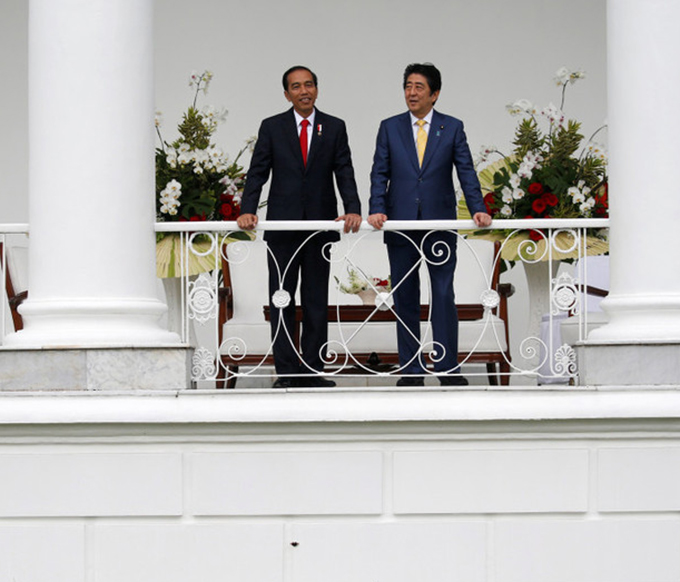
Japanese Prime Minister Shinzo Abe (right) talks with Indonesian President Joko Widodo at the Bogor Palace, West Java, on Sunday. Image: Beawiharta/Jakarta Globe/R

Indonesia and Japan have agreed to step up maritime security and start discussions on a major railway project to link Jakarta and Surabaya in East Java, say the two countries’ leaders.

Japan has historically been one of Indonesia’s biggest investors, but it was dealt a blow in 2015 when President Joko “Jokowi” Widodo’s government awarded the contract for a high-speed train project linking Jakarta and Bandung, West Java, to China.

The tensions surrounding the railway deal seemed to have eased on Sunday, when Japanese Prime Minister Shinzo Abe said after a meeting with Jokowi in Bogor, West Java, that his country would cooperate with Indonesia to build railways and other types of infrastructure.

The two leaders also discussed North Korea, with Abe saying that the country’s development of nuclear capabilities and missiles has reached “a new level of threat”.

North Korea said last week that it can test launch an intercontinental ballistic missile at any time from any location chosen by leader Kim Jong-un. The county also said the United States’ hostile policy towards it was to blame for its arms development.

Solving disputes peacefully
On the South China Sea, Abe said Japan believes in the importance of upholding international law and solving disputes peacefully.

“The South China Sea issue has drawn the attention of the international community and it directly affects peace in the region,” Abe said.

Maritime security cooperation is of utmost importance for fellow maritime nations, Japan and Indonesia, he added.

“Japan will actively encourage cooperation in maritime security and the development of Indonesia’s remote islands,” the prime minister said.

China claims almost the entire South China Sea, which has around $5 trillion worth of trade passing through annually. Brunei, Malaysia, the Philippines, Taiwan and Vietnam also lay claim to parts of the sea.

Although Indonesia is not part of the dispute, it does object to China’s claim to the waters around the Natuna Islands.

Railway wars
Winning the contract in 2015 for the Jakarta-Bandung high-speed railway, estimated to cost $5.5 billion, was a coup for China, which is vying for influence in the region under its “One Belt, One Road” policy as part of its ambitions to become a global train supplier.

The roughly 600km Jakarta-Surabaya project is likely to cost less than the Jakarta-Bandung railway, as it will run at a slower speed, while most of the land for the project has already been secured, according to Indonesia’s transport minister.

The minister was reported to have said in October that the government invited Japan to work on the Jakarta-Surabaya project, which is aimed at slashing journey times between the capital and the East Java city by more than half, to around five hours.

Japan and Indonesia also plan to develop the Masela gas block in Maluku Province and Patimban Port in West Java, Jokowi said.

On other regional issues, Abe said North Korea’s kidnapping of Japanese citizens is a very important challenge for his administration to resolve.

Pyongyang admitted in 2002 to kidnapping 13 Japanese citizens a decade ago. Abe has made resolving the emotive issue a signature pledge of his political career.

]]>

PMC seminar: Can the Democracy Coalition retain power in Tonga?

]]>

Pacific Media Centre

Dr Michael Horowitz

Event date and time: 

Thursday, January 26, 2017 – 16:00 17:30

PMC SEMINAR: Can the Democracy Coalition retain power in Tonga? By Dr Michael Horowitz, Academic Dean, ‘Atenisi Institute

Introduced by PMC director Professor David Robie

Twenty-two years after Tonga’s insurgent “constitutional convention” of 1992, a coalition of democrat and independent MPs elected the founding leader of the Democracy Party, ‘Akilisi Pōhiva, Prime Minister. Within five months, a contingent of a raucous demonstration of the Catholic Women’s League – a former pillar of the democratic movement – was chanting “Heigh-hee, heigh-ho, ‘Akilisi’s gotta go”; by October 2015, the former Education Minister was demanding the PM’s detachment from that portfolio. Yet a threat by the putative leader of the aristocratic opposition to bring down the coalition – lodged last August in Auckland – has yet to be realised. As the coalition government embarks on its third year, is it possible to assess its durability?

About Dr Horowitz: Dr Horowitz is academic dean of the university at ‘Atenisi Institute in Tonga, which is planning to establish a media academy on its second campus in the ‘Isileli district of Nuku’alofa. He holds US postgraduate degrees in social science from the New School in New York and the College of Public Affairs at Oregon’s Portland State University.

Dr Horowitz’s analyses of US politics and culture have appeared in the Village Voice, Playboy, and the Psychiatric Times, among other periodicals, while academic articles and reviews have been regionally published in Sites, Journal of Pacific History and Journal of Pacific Affairs.

When: Thursday, January 26, 2017 – 4-5.30pm
Where: WG703, Sir Paul Reeves Building, Auckland University of Technology, City Campus

More information: david.robie@aut.ac.nz

]]>

‘No one can stop me’, says Duterte on possible martial law in Philippines

AsiaPacificReport.nz

Al Jazeera’s Jamela Alingogan reports from Manila on a game-changing president marking six months in office. Video: AJ YouTube

Philippines President Rodrigo Duterte has said he would consider declaring martial law if the drug problem deteriorates, adding “no one can stop” him from making such a decision.

President Rodrigo Duterte … drawing back from the US and forging closer ties with China. Image: Radio Television Malacañang (RTVM)

“I have to protect the Filipino people. It is my duty. And I tell you now, if I have to declare martial law, I will declare it,” Duterte told a gathering of businessmen in his hometown of Davao at the weekend.

“I don’t care about the Supreme Court. No one can stop me,” he said. “The right to preserve one’s life and my nation … transcends everything else, even the limitations.”

Under the 1987 Constitution of the Philippines, the president can declare martial law up to 60 days “in case of invasion or rebellion”.

The constitution makes no mention of drug violence as a justification for declaring it. Congress and the Supreme Court also have the power to review any such declaration.

But Duterte said that his duty “to preserve the Filipino people, and the youth of this land” is sufficient to suspend the writ of habeas corpus

“Not about invasion, insurrection. Not about danger. I will declare martial law to preserve my nation. Period,” he said.

Death toll continues to climb
It is not the first time that Duterte has openly discussed declaring martial law. Last Thursday he said the constitutional provision giving Congress and the Supreme Court power to review martial law declaration needed to be revised.

But he also said earlier in January that he had no plans of declaring martial law, saying it was “nonsense”, adding that it did not improve the lives of Filipinos when it was declared in the past.

In 1972, then President Ferdinand Marcos declared martial law, citing the threat of communist insurgency in the country.

In August of last year, President Duterte was angered when the Chief Justice sent him a letter questioning his decision to release the names of judges accused of links to the illegal drug trade.

“If this will continue and if you will try to stop me, then fine. Would you rather I declare martial law?” Duterte was quoted as saying.

Duterte won the May 2016 presidential election largely on a platform of fighting the illegal drug trade.

As of mid-December, less than six months into his presidency, more than 6000 people have been killed as part of that war on drugs. Dozens more have been reported killed since January 1, 2017.

Report from Al Jazeera English.

]]>

Flashback: Honouring independent journalist and film maker Mark Worth

]]>

AsiaPacificReport.nz

Land of the Morning Star … the 2004 documentary on West Papua made by Mark Worth.

From Pacific Media Watch / Australians for a Free West Papua Darwin

Australian award-winning journalist and film maker Mark Worth died in West Papua on January 15, 2004 – suspiciously just two days after the ABC announced his documentary, Land of the Morning Star, would be screened across Australia.

Many of Mark’s friends and colleagues deemed his sudden death as suspicious and many called on the Australian government for a thorough investigation.

Mark Worth … suspicious death in 2004 in the cause of West Papuan independence. Image: NFSA video still

Yet the Australian government predictably left any investigation up to the Indonesian government, which buried his body so quickly that no one was able to properly establish his cause of death, which was officially left as mere pneumonia. His death remains an unresolved issue with many.

Mark Worth’s sudden death shocked Papuans and all involved in Free West Papua campaigns in West Papua, PNG, Australia and the world.

Mark Worth had worked tirelessly exposing the truth about the cruel occupation of West Papua from inside West Papua, which ultimately, many assume was the real cause of his sudden death.

Mark had “worked closely with Papuan rebels for more than 15 years, making documentaries for SBS, ABC and the Nine Network and also producing radio and print stories”.

Questions remain unanswered and many have likened his suspicious death to the 1975 Balibo Five murders in East Timor.

A few days following his death, Pacific Media Watch published this report:

 SUSPICIOUS DEATH OF MARK WORTH, JOURNALIST, FILM MAKER AND CAMPAIGNER FOR JUSTIUCE FOR WEST PAPUA

Saturday, January 17, 2004 – PMW:

SENTANI (RW/Pacific Media Watch): The death of Australian print, radio and film journalist Mark Worth has shocked Papuans and all those involved in the campaign to free West Papua from brutal repression by the Indonesian military.

Mark died from unknown causes in a hotel room in Sentani, West Papua, yesterday, January 15, 2004. Mark is survived by his Papuan wife Helen and baby daughter Insoraki.

Mark was born in PNG and spent most of his life in PNG and West Papua. He spent most of the last 15 years producing radio programs, writing articles and producing documentary films about the West Papuan people and their struggle for self-determination. Mark’s influential documentary films include the “Act of No Choice”.

His death must be treated as suspicious when recent events in West Papua are considered, and because it came just two days after the announcement by ABC television that his latest documentary Land of the Morning Star would premier on Australian television on Monday, 2 February, 2004.

Mark described this film as his “life-time project”, and he spent the best part of the last ten years researching, collecting footage and interviewing Papuans to make what will be a lasting memorial to this committed journalist.

Recent weeks have seen a major escalation in intimidation and provocation by Indonesia. In the last few days five Papuans have been sentenced to between 20 years and life for their alleged involvement in a raid on a military post in Wamena.

By contrast, the nine soldiers also involved received sentences of just 6 to 14 months. Papuans students are also being held in prison in Jakarta after a demonstration and face 20 years in jail, and seven highland leaders are being held in jail in Jayapura.

And this week infamous former police chief of East Timor, Timbul Silaen, who was charged with gross human rights violations during the 1999 East Timor atrocities, took up his post as Papuan police chief.

And on Monday, in an act that shows there is no limit to Indonesia’s provocation, a small island off East Timor was bombed by the Indonesian navy.

Mark was widely believed to have been linked to the recent footage, which featured on SBS Dateline last November, of OPM leaders making appeals to the international community for help to bring about peaceful dialogue to solve the problems West Papua.

Two days after the footage was screened, 10 Papuans, including one of the leaders who featured in the film, were shot as they slept in a raid by 200 Indonesian soldiers. Their bodies were later displayed like hunting trophies.

When Mark Worth’s high profile and reputation as an honest and influential journalist is considered, along with the recent events, is it any wonder that many view his death as suspicious? It is vital that Mark’s death be fully and independently investigated.

When West Papua finally gains independence, Mark’s contribution to that freedom will long be remembered by Papuans.

Please watch the full version of the critically acclaimed documentary Land of the Morning Star below by Mark Worth

Thank you Mark Worth for your amazing accomplishments in support of exposing the truth about the occupation of West Papua.

You will always be remembered and honoured.

We give the greatest respect to Mark Worth’s family and friends.

You will never be forgotten.

Papua merdeka!!

Remembering Mark Worth – Janet Bell interview – 2005

Flashback report by Australians for a Free West Papua Darwin

]]>

Honouring independent journalist and film maker Mark Worth

]]>

Report by David Robie. This article was first published on Café Pacific

Mark Worth … suspicious death in the cause of West Papuan independence. Image: NFSA video still
From Australians for a Free West Papua Darwin

ON this day we honour Australian award-winning journalist and film maker Mark Worth who died in West Papua on January 15, 2004 – suspiciously just two days after the ABC announced his documentary, Land of the Morning Star, would be screened across Australia.

Many of Mark’s friends and colleagues deemed his sudden death as suspicious and many called on the Australian government for a thorough investigation.

Yet the Australian government predictably left any investigation up to the Indonesian government, which buried his body so quickly that no one was able to properly establish his cause of death, which was officially left as mere pneumonia. His death remains an unresolved issue with many.

Mark Worth’s sudden death shocked Papuans and all involved in Free West Papua campaigns in West Papua, PNG, Australia and the world.

Mark Worth had worked tirelessly exposing the truth about the cruel occupation of West Papua from inside West Papua, which ultimately, many assume was the real cause of his sudden death.

Mark had “worked closely with Papuan rebels for more than 15 years, making documentaries for SBS, ABC and the Nine Network and also producing radio and print stories”.

Questions remain unanswered and many have likened his suspicious death to the 1975 Balibo Five murders in East Timor.

A few days following his death, Pacific Media Watch published this report:

 SUSPICIOUS DEATH OF MARK WORTH, JOURNALIST, FILM MAKER AND CAMPAIGNER FOR JUSTIUCE FOR WEST PAPUA

Saturday, January 17, 2004 – PMW:

SENTANI (RW/Pacific Media Watch): The death of Australian print, radio and film journalist Mark Worth has shocked Papuans and all those involved in the campaign to free West Papua from brutal repression by the Indonesian military.

Mark died from unknown causes in a hotel room in Sentani, West Papua, yesterday, January 15. Mark is survived by his Papuan wife Helen and baby daughter Insoraki.

Mark was born in PNG and spent most of his life in PNG and West Papua. He spent most of the last 15 years producing radio programs, writing articles and producing documentary films about the West Papuan people and their struggle for self-determination. Mark’s influential documentary films include the “Act of No Choice”.

His death must be treated as suspicious when recent events in West Papua are considered, and because it came just two days after the announcement by ABC television that his latest documentary Land of the Morning Star would premier on Australian television on Monday, 2 February.

Mark described this film as his “life-time project”, and he spent the best part of the last ten years researching, collecting footage and interviewing Papuans to make what will be a lasting memorial to this committed journalist.
Recent weeks have seen a major escalation in intimidation and provocation by Indonesia. In the last few days five Papuans have been sentenced to between 20 years and life for their alleged involvement in a raid on a military post in Wamena.

By contrast, the nine soldiers also involved received sentences of just 6 to 14 months. Papuans students are also being held in prison in Jakarta after a demonstration and face 20 years in jail, and seven highland leaders are being held in jail in Jayapura.
And this week infamous former police chief of East Timor, Timbul Silaen, who was charged with gross human rights violations during the 1999 East Timor atrocities, took up his post as Papuan police chief.

And on Monday, in an act that shows there is no limit to Indonesia’s provocation, a small island off East Timor was bombed by the Indonesian navy.

Mark was widely believed to have been linked to the recent footage, which featured on SBS Dateline last November, of OPM leaders making appeals to the international community for help to bring about peaceful dialogue to solve the problems West Papua.

Two days after the footage was screened, 10 Papuans, including one of the leaders who featured in the film, were shot as they slept in a raid by 200 Indonesian soldiers. Their bodies were later displayed like hunting trophies.

When Mark Worth’s high profile and reputation as an honest and influential journalist is considered, along with the recent events, is it any wonder that many view his death as suspicious? It is vital that Mark’s death be fully and independently investigated.

When West Papua finally gains independence, Mark’s contribution to that freedom will long be remembered by Papuans.


Please watch the full version of the critically acclaimed documentary Land of the Morning Star below by Mark Worth

Thank you Mark Worth for your amazing accomplishments in support of exposing the truth about the occupation of West Papua.

You will always be remembered and honoured.

We give the greatest respect to Mark Worth’s family and friends.

You will never be forgotten.

Papua merdeka!!

Remembering Mark Worth – Janet Bell interview – 2005

]]>

Endangered – the frontline journalism of outrage

]]>

AsiaPacificReport.nz

War Reporters, a short video launched by Reporters Without Borders (RSF) last year to honour journalists facing “danger zones”. Its release coincided with the publication of RSF’s 50th book in the “100 photos for press freedom” series – this one dedicated to the work of Robert Capa.

REVIEW: By David Robie

Media coverage of the decapitation and other atrocities against journalists has heightened global awareness of just how dangerous the profession of journalists is when covering war zones, corruption and human rights violations under dictatorships.

“Although violence against journalists is not a new phenomenon, the trend has worsened,” writes New Zealand-based media academic, political scientist and analyst Maria Armoudian in her new book Reporting from the Danger Zone: Frontline journalists, their jobs, and an increasingly perilous future.

Researcher Dr Armoudian, lecturer in politics and international relations at the University of Auckland and author of the 2011 book Kill the Messenger, provides sobering statistics in her “danger zone for journalists” analysis.

Since Wall Street Journal’s Daniel Pearl was kidnapped and beheaded by Pakistani extremists in 2002, at least five journalists have been decapitated on the job.

Four years ago, in 2012, Paris-based media freedom advocacy agency Reporters Sans Frontières (RSF) reported a 33 percent rise in journalist killings. This followed the world’s worst single massacre of journalists at Ampatuan on the southern island of Mindanao in the Philippines in November 2009 when at least 34 were killed.

To this day there has been no justice for the families of the victims.

The mounting death toll has been accompanied by a 37 percent rise in abductions (to 119) between 2013 and 2014, writes Armoudian, citing RSF statistics.

The author also summarises other media freedom organisation tallies, noting “hundreds more have been imprisoned of exiled”.

Armoudian goes to great pains to stress that it is the local journalists who bear the brunt of the violence and slayings, “accounting for more than 75 percent of journalists killed or imprisoned, and 90 percent of the abductions.

“The attacks signal a dark era for journalism and a stark departure from previous decades when combatants, at minimum, tolerated journalists, treating them as civilians, and often sought their sympathies.” (p. 1)

What has changed? The social media revolution and the realisation by extremist groups that they no longer need journalists to tell their story.

In fact, making martyrs of journalists make good video footage. They are the “collateral damage” of insurgencies.

This research project was funded by the University of Auckland, which covered a grant from the Faculty Research Fund.

The research for Danger Zone drew largely on interviews with 32 journalists worldwide, including New Zealand’s Jon Stephenson, the country’s only “war correspondent” but nobody from the Asia-Pacific. Twenty four of the journalists agreed to be named in the book while the rest chose to remain anonymous due to the continuing occupational dangers they face.

An Auckland University of Technology journalism graduate, Corazon Miller, now a reporter with The New Zealand Herald (who recently gained a scoop interview with controversial Philippines president Rodrigo Duterte), and a Pacific Media Centre (PMC) associate, also assisted with research and transcripts.

Danger Zone has seven chapters with the introduction entitled “Why ethical journalism matters”. The other chapters explore the “origin of stories” (sourcing), the foreign correspondents’ “afflictions”, “staying alive”, “living in a danger zone”, the “first casualty” and a conclusion.

Many of the journalists with long experience recount how difficult and risky the job has become.

Carol Williams, a veteran correspondent who has reported on the break-up of Yugoslavia and the Ukraine conflict, for example, recalls that human rights stories “just happened to occur on my turf”.

She had started off as a foreign correspondent covering nuclear disarmament and the superpower relationship during the Cold War. But she became motivated by witnessing

“some of the most horrible things that were done to children. In Sarajevo, the Serbs would shoot into schools and hospitals. Little six-year-old kids [were] seeing their teachers blown up in front of them …” (p. 21)

Freelance American journalist Dahr Jamail, with little previous journalism experience, was motivated by his “personal outrage”.

“I saw the selling of the [Iraq] War and was completely outraged and decided, ‘Well, I will go in.’ And one thing I can do as a US citizen is go in a report on how this is impacting [on] the Iraqi people because that’s the phase of the story that was totally omitted from the mainstream [media].” (p. 19)

Pulitzer Prize-winning journalist Roy Gutman, author of How We Missed the Story, argued that journalism in conflict zones provides change-makers and hope as an antidote for hopelessness.

“Journalism is one of the few means [that] we, maybe the only means, that I certainly had, or that we have as the general public, to expose horrible practices in the hope that somebody will do something about it. And that’s what journalism is all about.” (p. 21)

He exposed Serbian concentration camps and ethnic cleansing “killing fields” in Bosnia … and “that story did have impact, and have a wallop”.

It is pleasing to see Jon Stephenson, the only journalist to take on the NZ Defence Force establishment on a matter of truth and integrity – and win, featuring in this book several times.

In one chapter, Stephenson explains how difficult it is, especially as a freelancer with limited resources available, to get to a remote and dangerous conflict zone. His form of independent “embedding”, if it can be called that, is by becoming immersed with ordinary people, not the elites.

On his first trip to Afghanistan, Stephenson flew to India, took a train to the Pakistani border, and then made a long walk across the harsh countryside into Pakistan via Wagah.

“I just walked across the border … from the moment I arrived in Pakistan, I started collecting info on what the locals felt … on buses, and even in a hotel, I’d talk to the hotel clerk and … I met an MP from the Pakistani parliament. He invited me to his home in Islamabad. I interviewed the Saudi ambassador to Pakistan who I met on the roof of the Marriott being interviewed by CNN. And I just started there really and worked my way up.” (p. 110)

Stephenson met the family of Abdul Haq, one of the major resistance leaders during the so-called jihad against the Soviets, and ended up in a family compound in Peshawar with some other journalists.

As well as the analysis, Danger Zone provides some “helpful resources” for journalists. However, while useful, including some key links such as the Dart Centre for Journalism and Trauma, there are notable omissions, such as Reporters Sans Frontières/Reporters Without Borders (RSF), which runs an extensive safety programme for freelance journalists in particular. This is a curious oversight because RSF is mentioned in many citations.

Pacific Media Centre, which has been the most active unit on this issue in New Zealand with a Pacific Media Watch freedom project dating back to 1996, and is associated with RSF is also not listed. This is strange given the fact that Danger Zone originated in Auckland and that the PMC, based at the neighbouring university, has produced several publications on conflict and peace journalism.

There is also no mention of the world’s worst atrocity against journalists, the Ampatuan massacre in the Philippines.

However, these are minor criticisms. Essentially this book is inspirational for a new generation of journalists in a troubled era for journalism and a helpful resource for media school libraries.

It is also encouraging that all the interviewees for this project “expressed compassion and empathy for victims of violence, abuse, and failed institutions, and most were vicariously traumatised as a result”. Ethical journalism is alive and defiant in the face of mounting pressures.

But, warns Dr Armoudian, far more work is needed from scholars, international media law experts, “and journalists themselves”, in developing safer ways to secure vital information for democracies.

Reporting from the Danger Zone: Frontline journalists, their jobs, and an increasingly perilous future, by Maria Armoudian. New York and London: Routledge, 2017. 155pp. ISBN 978-1-138-84005-8

References:
Armoudian, Maria (2011). Kill The Messenger: The media’s role in the fate of the world. New York: Prometheus Books.

Gutman, Roy. (2008). How We Missed the Story: Osama Bin Laden, the Taliban, and the hijacking of Afghanistan. Washington, DC: United States Institute of Peace Press

]]>

Biman Prasad: COP23 presidency — facing the gravity of the task for Fiji

]]>

AsiaPacificReport.nz

The narrative
It is noteworthy that there was no communications or consultations nationally, regionally or internationally as Fiji lobbied to get the presidency for COP23 in Marrakech. Even our fellow members of the Pacific and SIDS (Small Islands Developing States) were caught unaware.

A robust consultation nationally would have helped government appreciate the gravity of the task which Fiji as a nation was committing to, both in terms of the costs of undertaking this and our capacity to do so.

Coming straight after Severe Tropical Cyclone Winston, as many of our citizens are still struggling to get their lives together, a legitimate question is whether this should be really our priority. This has been further exacerbated by the recent revelation of over F$11 million costs because of the recent floods.

Does the government have the resources for accepting such an extravagant international agenda, when nationally it is in dire need of resources to assist with the recent disasters?

The government should be open and reveal details such as the expected costs and arrangements of hosting both the UNFCCC (United Nations Framework Convention on Climate Change) COP23 and the Oceans Conference and the cost of consultants if any. Aren’t these fundamental values; openness, transparency, inclusiveness in the UN ways of doing things?

It is extraordinary that Fiji has opted to take the leadership on two of the most important issues on the international agenda for 2017. The taxpayers of this country have a right to know how much of their money is being spent on these commitments, especially when the wealthier members of the Asia-Pacific group opted not to take on this responsibility.

The PM talked effusively about his “need” to travel the world and host pre-COP meetings. This comes at a significant cost to the nation when the leader of our executive branch takes (not seeks) approval by way of a New Year’s message, to traipse all over the world.

Fundamentally, citizens and taxpayers of this country, must to be consulted extensively on what positions we are taking on many of the vexed issues within the climate change and oceans agenda with a clear view in mind of the benefits to us or in economic terms, the return on investment. After all it is still unclear what tangible benefits we derived from the chairmanship of the G77 and recently the SBI within the UNFCCC.

Now that Fiji has cajoled the UN membership into taking on this huge privilege and responsibility for the COP23 presidency, the National Federation Party will advocate that this critical issue of climate change and environmental leadership is only possible through genuine and meaningful partnership, backed by a strong track record at the national level.

As members of the Opposition, we will strongly advocate for transparency in multilateral environmental negotiations that should, in the first instance, be taken to the people’s house for robust debate and scrutiny

We offer the following observations.

COPs: Unravelling

The ‘technicalese’
It is widely recognised that COP23 will be a “technical” COP where work on the “rule book” for implementing the Paris Agreement will continue. We also know that the technical capacity within government is extremely limited.

Does the Climate Change Unit, now situated in Ministry of Economy have the required expertise to deal with this issue? Perhaps the Prime Minister’s office and the Ministry of Economy should consider where the Climate Change Unit should be based, given the COP23 will be handled by the PM’s office.

It becomes manifestly evident that the move of climate change to the Ministry of Economy is with one objective in mind — to access global climate change funds. If this is the mind-set which is the driver of our engagement at these negotiations, it is a zero sum game.

The much lauded Green Growth framework that was echoed at the PIDF (Pacific Islands Development Forum) and again in the 2016/2017 Budget supplement remains glaringly non-existent at the implementation level. High-level narratives can no longer cut it.

The strength of our participation in our negotiating bloc AOSIS (Alliance of Small Island States), which corralled the world into the acceptance of the 1.5 degree benchmark has been because of the strength and exceptionalism of our technical arguments, driven by our environment ministries and their performance on our reporting obligations.

All of which were based on science and research. It isn’t the cutting edge science alone that won these debates, but rather the ingenuity of our technical specialists in putting forward suggestions that AOSIS members had to work with, based on our limitations.

Over the years, Fiji’s contributions in the negotiations has been almost non-visible as is evident from the lack of communications to UNFCCC Secretariat on matters seeking parties’ views, the dearth of Fiji participants taking the lead on any of the technical issues on behalf of AOSIS (in spite of a delegation size of over 40 — one of the highest from any developing country!) and our abysmal record in terms of fulfilling our reporting obligations under the UNFCCC. The fact that Fiji’s INDC report, supported by off-shore technical assistance reached the UNFCCC late, is telling.

Fiji cannot claim to be impoverished by a lack of intellect on climate change. There are many individuals, civil societies and institutions who are experts on climate change and multilateral environmental fora and who would only be willing to provide assistance, if they are politely requested to.

Indeed, if the mantra of this government on trade is to “Buy Fiijan Made”, this should surely also extend to our local knowledge and expertise that we should be aggressively promoting if we are sincere about COP23 being Fijian made.

That being said, being completely inclusive does not ensure sincerity.

The genesis of the PIDF, another publicly assisted body that is yet to show any tangible benefit at the ground level, was advocated for by certain IGOs. It remains to be seen how taxpayers paying about $100,000 for parking for the PIDF complex a few years ago, has added any real value to our people.

If citizens and taxpayers are subjected to a COP23 presidency that is held up by publicly funded offshore contractors with no obligation or commitment to Fiji, and whose ultimate interests and agendas leave us wide open and vulnerable as a COP president, the zero sum game then becomes riddled with added vulnerabilities that our people then become liable for.

A genuine SIDS presidency by Fiji is possible but it can only be meaningful if we reach out to involve our AOSIS family. It would be important to define the key issues that our COP23 presidency will promote.

This is a great opportunity to bring to the top of the climate agenda the specific issues of small island states. Clearly the identification of these issues should be done through inclusive consultations nationally, sub-regionally, regionally as well as with our fellow members of the AOSIS.

Paris Agreement
The Paris Agreement recognises the participation of the civil society and the private sector as vital to the goal of implementing the Paris agenda. The government needs to reach out to the civil society groups and the business sector in an open, transparent process where these can contribute meaningfully to the process.

Fiji should begin by signing the Doha amendment to the Kyoto Protocol and lobby to have this ratified so tangible actions are taken by countries for the next three to four years before the Paris Agreement comes into effect.

Given the PM’s stated goal to get the industrialised nations to reduce the emissions, and the concerns that the current commitments would lead to nearly 30C temperature rise, actions taken before 2020 will be vital in our attempts to reduce global emissions. The Doha amendment will require these countries to take pre-2020 actions according to the Kyoto Protocol commitments.

These are not new ideas, the whole world is aware of the changes that need to take place, and industrialised nations continue to lag behind.

What will make Fiji’s COP 23 presidency different where decades of international pressure has failed to curb the world’s worrying 3-degree trajectory? These are valid strategic and tactical negotiation aspects that only a sincere and meaningful “Fijian Made” COP23 presidency can unleash.

From the ground up
The greatest strength to any negotiation tactic is to “show not tell”. Around the world, technological innovations are happening at breakneck speed. What seemed impossible, is now possible and many of these great ideas are coming from places least expected.

Inquisitive young minds are encouraged to break the mould and venture into start-ups. All this is possible if policies and incentives are in place to encourage radical innovation.

Imposing reduced tariff’s for electric cars as a policy by the Ministry of Economy is old-school thinking.

Our record on renewables and energy efficiency can be enhanced greatly through use of solar, wind and ocean power, through the use of efficient energy appliances, and proper policies and plans at sectoral levels that should all converge nationally.

However, Fiji’s NDC lacks depth and scope, as it merely talks about the electricity sector (where we are fortunate to have a significant contribution from hydro but contributions of other renewables is less than 1 percent) but fails to consider opportunities in transport (the largest growing sector for emissions), agriculture, forestry, tourism etc. Cabinet has yet to adopt the draft Energy Policy that was developed over two years ago.

Loss and damage, a key negotiation push is being timidly approached nationally.

Conversations with the insurance industry are necessary but there is much in the national policy space that can also be explored so that there is parity in the burden.

Chance for new narrative
Citizens should all actively look forward to detailed announcements on the preparations for the COP23. Questions like which particular ministries or arms of government will be directly involved; who will be the key experts advising Government; meaningful strategies for the participation of NGOs and the private sector; anticipated costs and how Government should raise revenue, should be answered both in public spaces and in the august house.

As always, the NFP stands ready to assist but the record of FijiFirst government on bipartisanship in matters of national importance will prove us right again.

While time ticks on, Mother Nature the final arbiter, is under no obligation to the Qorvis narrative.

Professor Biman Prasad is the leader of the opposition National Federation Party (NFP). This article has been republished from The Fiji Times with the permission of the author.

Fiji to chair next COP23 climate summit

President Bainimarama’s 2017 New Year message – video

]]>

Muslims pledge support for Catholics in new Indonesian blasphemy case

]]>

AsiaPacificReport.nz

Jakarta’s Christian governor Basuki Tjahaja Purnama, center, known by his nickname “Ahok”, is escorted by anti-terror police as he leaves the North Jakarta court in Jakarta on December 20, 2016, to fight allegations of insulting the Quran that could see him jailed under tough blasphemy laws in the world’s largest Muslim-majority country. Image: UCA News

By Ryan Dagur in Jakarta

Muslim activists have joined growing calls for a hardline Muslim cleric to be charged with blasphemy for insulting Christianity.

Rizieq Syihab, leader of hardline group the Islamic Defenders Front, is accused of mocking Christians following a sermon on Christmas Day in which he is reported to have said: “If God gave birth, then who would be the midwife?”

Angry Catholic students filed a blasphemy complaint the next day. The case has won the support of more than 140 lawyers and comes amid Jakarta’s Christian Governor Basuki “Ahok” Purnama blasphemy trial.

At a meeting on January 9 at the Catholic student’s headquarters in Jakarta, Muslim members of the Interfaith Student Forum and Student Peace Institute, declared they also backed the blasphemy accusation against Syihab.

They said his comments not only hurt Christians but also caused division among Muslims.

“As Muslims we deeply regret [Syihab’s comment],” said Slamet Abidin of the Interfaith Student Forum. “He should not have messed with the religious beliefs of others.”

“We are determined to help push this through the legal process,” he said.

Teaching tolerance
Islam teaches tolerance and values. But the cleric’s behavior has damaged the reputation of Islam as a tolerant religion, he added.

Doddy Abdallah of the Student Peace Institute also said ignoring Syihab’s behavior will help foster extremism.

“Radicalism is like a virus, and if not eradicated it will undermine religious life in Indonesia,” he said.

The West Java chapter of the Indonesian Islamic Students Movement (PMII), the youth wing of the Nahdlatul Ulama, the largest Muslim organisation in Indonesia, has also condemned Syihab’s comments, declaring them “against the Indonesian Constitution and state ideology.”

According to Angelo Wake Kako, chairman of the Indonesian Catholic Students Association, said police questioned Syihab after the association filed the case against the cleric in December.

“While we wait for further developments, we will continue to dialogue with many parties [to gather support for our cause],” he said.

Syihab was accused of violating Article 156 section (a) of the Criminal Code on blasphemy, which carries a maximum punishment of five years in prison.

Ryan Dagur is a correspondent of United Catholic Asian News (UCAN).

]]>

Concern growing in Indonesia over Rohingya ‘genocide’ crisis

]]>

AsiaPacificReport.nz

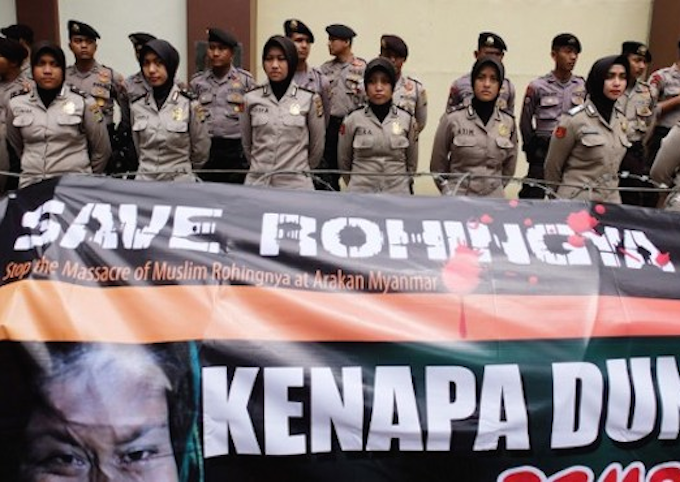
Indonesian police form a human barricade as Muslims hold a rally outside Myanmar’s embassy against “ethnic cleansing” in Myanmar of Rohingya Muslims in Jakarta on November 25, 2016. Image: UCA News/AFP

By Ryan Dagur and Katharina R. Lestari in Jakarta

There is rising concern in majority Muslim Indonesia that the treatment being meted out to ethnic Muslim Rohingya by military forces in Myanmar could lead to regional tensions.

Islamic organisations have joined calls to end the conflict while Jakarta is making efforts to deal with the crisis which has forced tens of thousands to flee, amid a bloody military crackdown in Myanmar’s ethnically divided Rakhine State after border police were attacked and killed in October.

The United Nations estimated at least 65,000 refugees were in camps in Bangladesh, while Dhaka has said some 50,000 Rohingya have crossed its border in the last two months.

Nahdatul Ulama, Indonesia’s largest Islamic organisation has said the conflict was totally unjustified and had injured human values.

“Muslims in general feel the pain because of the Rohingya’s suffering,” the organisation’s leaders said in a statement.

They called on world leaders, Southeast Asian countries and the UN to take concrete measures to end the violence and show humanitarian solidarity

Muhammadiyah, Indonesia’s second largest Islamic organisation said the Rohingya crisis was “violating and trampling human rights”.

Act firmly call
Anwar Abbas, its chairman, called on the Organisation of Islamic Cooperation,­ an international organisation with 57 member countries, ­ to act firmly against the Myanmar government.

“If this continues then it is not impossible to invite new tensions that threaten the peace of the world,” he warned.

He also expressed deep disappointment over inaction by Myanmar’s leader, State Counsellor Aung San Suu Kyi, and urged the revocation of her Nobel Peace Prize.

In Malaysia, thousands of people, led by Prime Minister Najib Razak took to the streets on December 4, branding the Rohingya situation as “genocide”.

Similar but smaller protests have also occurred in Indonesia.

In November, hundreds of Indonesians protested outside the Myanmar embassy in Jakarta, calling for an end to the “genocide.”

Indonesia’s government has made diplomatic overtures with Foreign Affairs Minister Retno Marsudi meeting Aung San Suu Kyi twice last month: on December 6 and December 19.

Diplomatic efforts
Marsudi said that such diplomatic efforts have been taken to try and bridge communications between Myanmar and Bangladesh, whose relations have continued to deteriorate because of conflicts in their border areas.

“I’m carrying out diplomacy carefully and without creating a tumult, because the Rohingya conflict is a very sensitive issue related to a fully sovereign state; the sovereignty of a state must be respected,” she told Antara news agency.

Daniel Awigra, Asean program manager at the Jakarta-based Human Rights Working Group said Indonesia can be an example of the process of democratisation for Myanmar.

Indonesia was built on diversity and so is Myanmar, he said. So Myanmar could see Indonesia as a state with credible democracy.

However, “what needs to be paid attention to is the agenda of sending humanitarian aid for Rohingya, investigation into crimes and security sector reform as well as the elimination of the 1982 citizenship law which rejects Rohingya identity,” he said.

Father Agustinus Ulahayanan, secretary of the Bishops’ Commission for Ecumenical and Inter-religious Affairs, said the Rohingya issue “is about ethnicity and politics”.

He thanked Muslim leaders for not linking the issue to religious sentiments.

Never close its eyes
For the Catholic Church, he said, the Catholic community will never close its eyes to any humanitarian crisis.

“I heard that a few dioceses had launched a solidarity movement. Even a diocese, of which I cannot mention for a certain reason, had collected money during a Sunday mass to help our Rohingya brothers and sisters,” he said.

Similarly, Sahat Martin Philip Sinurat, chairman of the Indonesian Christian Student Movement, called on the Indonesian government not to link the Rohingya issue to religious sentiments.

The Rohingya issue is an issue of citizenship, not a religion-based one, he said.

Ryan Dagur and Katharina R. Lestari are correspondents for Union of Catholic Asian News (UCA News).

]]>

Vanuatu company accused of exporting kava ‘trash’ throws industry in turmoil

]]>

AsiaPacificReport.nz

Tainted kava threatens Vanuatu’s kava export industry. Pictured is ground Vanuatu kava sold by a US retailer. Image: Vanuatu Daily Digest

By Len Garae in Port Vila

The writing is on the wall for the fate of Peter Colmar’s kava exporting company, Sarami Plantation, now that the Minister of Agriculture, Matai Seremaiah has said: “I strongly recommend that the Vanuatu Commodities Marketing Board (VCMB) terminate his export licence forthwith”.

The minister sent the short instruction to the Acting Director-General (ADG) of Trade, George Borugu, this week.

The minister recommended to the ADG to ask the board to take drastic steps to deal with Sarami Plantation in the face of growing concerns abroad, especially from Dr Mathias Schmidt in Germany and the Vanuatu Ambassador to the European Union, Roy Mickey Joy, in Brussels, both of whom fought tooth and nail to successfully defend the Pacific kava-producing countries’ export market in Europe.

Their tireless commitments since the kava ban in 2001, finally resulted in the ruling by the German Administrative Court to lift the kava ban in 2014.

In his urgent email to Ambassador Joy this week, Dr Schmidt wrote: “Today on Tuesday, January 10, I received a complaint from the US: they are being drowned in two-day kava, all exported from Peter Colmar in Santo. He is operating as ‘Sarami Plantation’, shipping ground, leaves and stalks as ‘kava’ to the US via New Zealand.”

Dr Schmidt listed the following export figures for 2016:

• Kumars Import: 25.82 tons

• Naturex Inc.: 24.52 tons

• Concentrated Alie Corps.: 7.02 tons and

• Starwest Botanicals: 2 tons

Dr Schmidt explained: “That’s almost 60 tons of non-noble non-root material sold as kava in 2016 by just one exporter. I thought the Vanuatu Kava Act had been changed, but if someone like Sarami Plantation can sell such quantities without any consequences, there must be more than just one person closing their eyes.

‘Next catastrophe’
“We need to stop this before the next catastrophe happens.”

In his letter to the Director of Biosecurity, Ambassador Joy wrote: “I am shocked and alarmed by the way and the manner in which Mr Peter Colmar has continued to conduct his shipment with ‘blind eyes’ from your staff and even those in the Customs and Border Controls.

“I am lost for words but can only compel the way and the easy manner by which the ‘Sarami Plantation’ has continued to effectively trade its kava shipment against all odds and without any sense of regularity control or SPS from our authorities.”

Ambassador Joy said he was disappointed that he and his exceptional team had spent six solid years and substantial resources to eventually revive the kava trade in Europe, only for one company to come in and destroy everything by exporting trash instead of noble kava.

He continued: “I am appealing to you to launch a swift investigation into the conduct of ‘Sarami Plantation’ and withdraw its export licence as soon as possible.”

The ambassador also copied his letter to the Prime Minister’s Office.

Meanwhile, the owner of the export company, Peter Colmar, lives in China and is understood to visit Vanuatu on a regular basis.

No call back
The Daily Post called Sarami Plantation in Luganville to speak to someone responsible concerning the reports leveled at the company.

 The switchboard said the person was out and that he would return our call an hour or so later. The person did not return our call.

In the latest development, all kava growers and exporters have from now until the end of next month to clean up their operations and cease for good, from the sale or export of two-day kava or kava mixed with ‘makas’ (adulterated kava).

The new Kava Export Standard is going to come into force on March 1 and all kava exporters are expected to comply with it.

The Biosecurity Director has already given the warning to all kava farmers and exporters from Luganville and Port Vila. He is reiterating the warning again because he has received pictures of dishes of ‘makas’ from his officers in Luganville only two days ago.

The director said: “My officers went to a particular nakamal and found kava ‘makas’ placed on the roof to dry. When they asked why, the owner confirmed a company is buying the ‘makas’ for export.”

He said Sarami Plantation is reported to be buying and mixing kava ‘makas’ with real kava for export to the United States.

The report has already reached the European Union.

Appeal to government
Asked to comment, he replied: “We at Biosecurity are appealing to the government to gazette the Kava Act Amendment of 2015 to give us extra-legal enforcement power to enforce kava export.

“While the existing law already provides us with legal power, we need the extra legal backing to put stricter control measures against farmers and exporters and other people for that matter, in particular owners of kava bars who sell ‘makas’ to the exporters”.

As of the middle of next month, all farmers are warned to stop selling two-day kava to buyers for local consumption and kava exporters.

The new law comes into effect on March 1 and if kava farmers and exporters are caught still selling and exporting two-day kava, the Director of Biosecurity reiterated that they would go one step further by blacklisting those farmers by advising exporters not to buy anymore kava from them.

“We are prepared to take such drastic measures to clean up the industry of kava export”, he confirmed.

Len Garae is a senior Vanuatu Daily Post journalist.

]]>

Cartoons: Malcolm Evans on inside the New Zealand Herald editorial office

]]>

AsiaPacificReport.nz

Always happiest with a pencil in his hand, Malcolm Evans has been a professional cartoonist since the 60s and is one of the best in New Zealand. Approaching that milestone himself now, he tells everyone he’s twenty eight and often behaves like someone half that age. His cartoons are featured in The Daily Blog, Asia Pacific Report, Pacific Journalism Review and many publications.

]]>

Florida airport shootings – few basic questions being raised

]]>

AsiaPacificReport.nz

Surveillance footage of the accused guman Esteban Santiago opening fire at Fort Lauderdale Airport in Florida last Friday. Video: TMZ website

OPINION: By David Robie

Just having missed the shootings by a US veteran at Florida’s Fort Lauderdale-Hollywood International Airport last Friday by less than a couple of hours after returning from a Caribbean vacation, I have been following the aftermath with intense interest.

From the safety of Little Havana in Miami, I have monitored the Spanish and English-language press (almost 60 percent of the population are Hispanic speakers) and live local television reports on the Fort Lauderdale massacre.

What has struck me most is that several key issues have barely been covered in the media soul-searching, topmost being the bizarre gun culture itself.

A professor commenting on CNN about another issue – the fate of the so-called Obamacare universal health law after Donald Trump is inaugurated next week – compared the US culture unflatteringly with the European citizens’ sense of “commonwealth” described his countryfolk as “still cowboys”.

This sentiment was reflected in at least one letter in the press. Writing in a letter to the editor in the Los Angeles Times, Barbara Rosen noted with irony:

Once again, there’s carnage.

I travel the world to countries where people have no guns but have universal health coverage. How do I explain to them that in my country we let people have semiautomatic weapons but we take away their health coverage?

So proud.

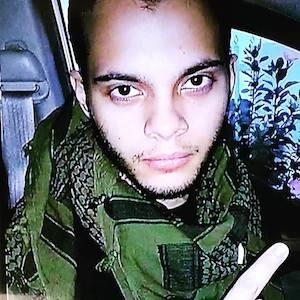
Accused US veteran Esteban Santiago. Image: CNN/APN

Key issues barely covered in US media reportage include:

·       What is it about the militarist culture that leads young soldiers to fundamentally question the morality of their actions in Afghanistan, Iraq and elsewhere and drive them to carry our vengeful acts against their fellow citizens?

·       Why was there hardly any public social mourning for the airport victims (5 killed, several of them bound for holiday cruises at Port Everglades; 8 wounded)? Are Americans so used to these senseless killings that it has become something of a “norm”?

·       Is there a serious flaw in basic security design at US airports?

I’ll start with the last question first. Having just personally experienced massive airport security getting into the United States for a start (beginning with first seeking a visa waiver first a couple of months earlier, a tedious process that still lead to family fellow travellers missing the first connecting flight from Los Angeles because “Homeland Security” couldn’t find passport numbers in their system) just before Christmas, this is worth a closer look.

Orlando Sentinel reporting on the massacre aftermath; FBI special agent Marlin Ritzman speaking at a media conference. Image: David Robie

As another traveller noted in the LA Times: “What is striking, and unreported, is that this relatively small and contained crime scene (the shooter did not even try to move around or escape), located in the open public [baggage] area outside of the security area for the terminal at Fort Lauderdale-Hollywood International Airport, morphed into an airport-wide shutdown because of a serious flaw in basic security checkpoint design.

Traveller Mike Post added that the exit lanes from the terminal gates that led to the baggage claim areas had no physical barriers and only limited unarmed security:

Terrified passengers fleeing the baggage area can simply turn around and run back through the exit corridor, ignoring all those ominous warnings, and in seconds destroy hours’ worth of security screening as they surge back into the gate area, rendering the entire terminal and airfield unsecure and at risk.

This type of event was foreseeable. Such a lack of foresight and imagination by our airport security professionals is inexcusable.

When we left Florida, after travelling for four hours by bus to Orlando International Airport to start our homeward journey (we had connecting flights to Fort Dallas, Texas, and Los Angeles to Auckland with American Airlines — Qantas flag booking), two of our five suitcases for four people had their padlocks cut open by Homeland Security. A notice from Transport Security Administration was deposited inside the bags by the time we left LA for Auckland. It said:

To protect you and your fellow passengers, the Transportation Security Administration (TSA) is required by law to inspect all checked baggage. As part of this process, some bags are opened and physically inspected. Your bag was among those selected for physical inspection.

During the inspection, your bag and its contents may have been searched for prohibited items. At the completion of the inspection, the contents were returned to your bag.

If the TSA security officer was unable to open your bag for inspection because it was locked, the officer may have been forced to break the logs on your bag.

The TSA notice apologised for the action but said the agency was “not liable” for damage.

A US gun culture T-shirt. Image: David Robie

The lack of public mourning over the Fort Lauderdale deaths was quite extraordinary for us, having recently visited Nice’s Promenade des Anglais Rotunda where on public display is “the outpouring of community love” for the victims of Tunisian truck driver who went on a shooting rampage on Bastille Day last year.

USA Today reported that four days after the 26-year-old accused Alaska-based gunman Esteban Santiago – decorated for his combat service in Iraq — opened fire inside Fort Lauderdale Airport, no vigils or public memorials had been held for victims.

Previous mass shootings have stirred emotions from people in the communities in which the tragedies took place…

While people hurt in the shooting are being supported by their families and friends, there has been a lack of visible response from the general Broward County community.

In addition to a lack of memorials, no official GoFundMe accounts have been created. A single bouquet of pink flowers was left on a bench outside the baggage claim area of Terminal 2. Less than an hour later, it was gone.

And another. Image: David Robie

The newspaper also quoted the head of the department of psychiatry and behavioural sciences at the University of Miami Miller School of Medicine, Dr Charles B. Nemeroff, saying US citizens had become “inert” to this sort of tragedy, “as if it is almost a routine part of life” in America.

Rarely did I see reports raising the basic issue about the US gun culture and how urgent it is to change the Second Amendment about the American citizens’ constitutional right to “bear arms”.

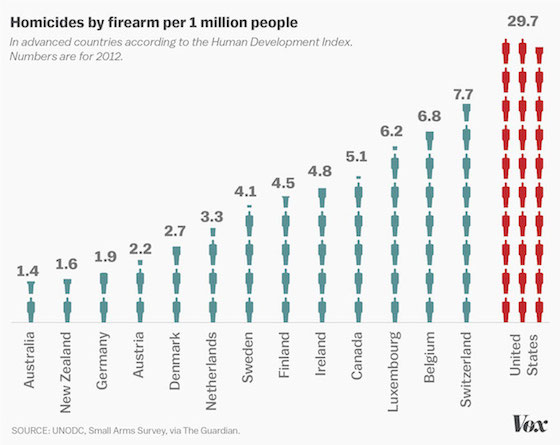
According to The Guardian, no other developed country in the world has “anywhere near the same rate of gun violence as the USA. The US has nearly six times the gun homicide rate of Canada, more than seven times that of Sweden, and nearly 16 times German’s rate, according to United Nations data compiled by The Guardian.

The gun deaths are also a major reason why the United States has a far higher suicide rate (including non-gun deaths) than other developed nations.

There are more than 310 million civilian guns in the United States, almost equivalent to one for every man, woman and child in the country with a population of 324 million.

Homicides by firearm globally. Graphic: The Guardian/Vox

David Robie is editor of Asia Pacific Report.

]]>

Florida airport massacre – basic questions not being raised

]]>

Report by David Robie. This article was first published on Café Pacific


Surveillance footage of the accused guman Esteban Santiago opening fire at Fort Lauderdale Airport last Friday. Video: TMZ website

By DAVID ROBIE

JUST having missed the shootings by a veteran US soldier at Florida’s Fort Lauderdale-Hollywood International Airport last Friday by less than a couple of hours after returning from a Caribbean vacation, I have been following the aftermath with intense interest.

From the safety of Little Havana in Miami, I have monitored the Spanish and English-language press (almost 60 percent of the population are Hispanic speakers) and live local television reports on the Fort Lauderdale massacre.

What has struck me most is that several key issues have barely been covered in the media soul-searching, topmost being the bizarre gun culture itself.

A professor commenting on CNN about another issue – the fate of the so-called Obamacare universal health law after Donald Trump is inaugurated next week – compared the US culture unflatteringly with the European citizens’ sense of “commonwealth” described his countryfolk as “still cowboys”.

This sentiment was reflected in at least one letter in the press. Writing in a letter to the editor in the Los Angeles Times, Barbara Rosen noted with irony:

Once again, there’s carnage.

I travel the world to countries where people have no guns but have universal health coverage. How do I explain to them that in my country we let people have semiautomatic weapons but we take away their health coverage?

So proud.

Accused US veteran Esteban Santiago. Image: CNN/APN
Key issues barely covered in US media reportage include:

·       What is it about the militarist culture that leads young soldiers to fundamentally question the morality of their actions in Afghanistan, Iraq and elsewhere and drive them to carry our vengeful acts against their fellow citizens?

·       Why was there hardly any public social mourning for the airport victims (5 killed, several of them bound for holiday cruises at Port Everglades; 8 wounded)? Are Americans so used to these senseless killings that it has become something of a “norm”?

·       Is there a serious flaw in basic security design at US airports?

I’ll start with the last question first. Having just personally experienced massive airport security getting into the United States for a start (beginning with first seeking a visa waiver first a couple of months earlier, a tedious process that still lead to family fellow travellers missing the first connecting flight from Los Angeles because “Homeland Security” couldn’t find passport numbers in their system) just before Christmas, this is worth a closer look.

Orlando Sentinel reporting on the massacre aftermath;
FBI special agent Marlin Ritzman speaking at a media
conference. Image: David Robie
As another traveller
noted in the LA Times: “What is striking, and unreported, is that this relatively small and contained crime scene (the shooter did not even try to move around or escape), located in the open public [baggage] area outside of the security area for the terminal at Fort Lauderdale-Hollywood International Airport, morphed into an airport-wide shutdown because of a serious flaw in basic security checkpoint design.

Traveller Mike Post added that the exit lanes from the terminal gates that led to the baggage claim areas had no physical barriers and only limited unarmed security:

Terrified passengers fleeing the baggage area can simply turn around and run back through the exit corridor, ignoring all those ominous warnings, and in seconds destroy hours’ worth of security screening as they surge back into the gate area, rendering the entire terminal and airfield unsecure and at risk.

This type of event was foreseeable. Such a lack of foresight and imagination by our airport security professionals is inexcusable.

When we left Florida, after travelling for four hours by bus to Orlando International Airport to start our homeward journey (we had connecting flights to Fort Dallas, Texas, and Los Angeles to Auckland with American Airlines — Qantas flag booking), two of our five suitcases for four people had their padlocks cut open by Homeland Security. A notice from Transport Security Administration was deposited inside the bags by the time we left LA for Auckland. It said:

To protect you and your fellow passengers, the Transportation Security Administration (TSA) is required by law to inspect all checked baggage. As part of this process, some bags are opened and physically inspected. Your bag was among those selected for physical inspection.

During the inspection, your bag and its contents may have been searched for prohibited items. At the completion of the inspection, the contents were returned to your bag.

If the TSA security officer was unable to open your bag for inspection because it was locked, the officer may have been forced to break the logs on your bag.


The TSA notice apologised for the action but said the agency was “not liable” for damage.
A US gun culture T-shirt. Image: David Robie
The lack of public mourning over the Fort Lauderdale deaths was quite extraordinary for us, having recently visited Nice’s Promenade des Anglais Rotunda where on public display is “the outpouring of community love” for the victims of Tunisian truck driver who went on a shooting rampage on Bastille Day last year.

USA Today reported that four days after the 26-year-old accused Alaska-based gunman Esteban Santiago – decorated for his combat service in Iraq — opened fire inside Fort Lauderdale Airport, no vigils or public memorials had been held for victims.

Previous mass shootings have stirred emotions from people in the communities in which the tragedies took place…

While people hurt in the shooting are being supported by their families and friends, there has been a lack of visible response from the general Broward County community.

In addition to a lack of memorials, no official GoFundMe accounts have been created. A single bouquet of pink flowers was left on a bench outside the baggage claim area of Terminal 2. Less than an hour later, it was gone.

And another. Image: David Robie
The newspaper also quoted the head of the department of psychiatry and behavioural sciences at the University of Miami Miller School of Medicine, Dr Charles B. Nemeroff, saying US citizens had become “inert” to this sort of tragedy, “as if it is almost a routine part of life” in America.

Rarely did I see reports raising the basic issue about the US gun culture and how urgent it is to change the second Amendment about the American citizen’s right to “bear arms”.

According to The Guardian, no other developed country in the world has “anywhere near the same rate of gun violence as the USA. The US has nearly six times the gun homicide rate of Canada, more than seven times that of Sweden, and nearly 16 times German’s rate, according to United Nations data compiled by The Guardian.

The gun deaths are also a major reason why the United States has a far higher suicide rate (including non-gun deaths) than other developed nations.

There are more than 310 million civilian guns in the United States, almost equivalent to one for every man, woman and child in the country with a population of 324 million.

Homicides by firearm globally. Graphic: The Guardian/Vox

]]>

Hela ‘no Bougainville’, says former PNG defence force chief Singirok

]]>

AsiaPacificReport.nz

Police and soldiers in Papua New Guinea wait to board a flight to Hela Province in the Highlands. Image: Eric Tlozek/ABC/PNGMineWatch

By Catherine Graue of Pacific Beat

As hundreds of police and soldiers begin their work in Papua New Guinea’s Hela Province this week, there have been comparisons made with the civil war in Bougainville in the 1990s.

The defence forces are in Hela as part of a government security call-out with concerns warring clans are using high-powered guns, while landowners are also disgruntled as they have not received royalty payments from the PNG LNG project.

While there was no once single cause for the Bougainville war, the Panguna mine played a central role; with the mine’s operations and sharing of its revenue a major sticking point between Bougainville and the PNG government.

Jerry Singirok was commander of the PNG Defence Force during the Bougainville crisis, which lasted for a decade and resulted in the deaths of tens of thousands of people.

He said it was not fair to compare Hela with what happened in Bougainville and said the situation in Hela should be easy for security forces to contain.

Pipe Dreams … a warning in 2012 about the future violence in Hela.

PNG Mine Watch reports that in December 2012, the anti-poverty advocacy group Jubilee Australia published a report warning that the Hela development would lead to increased violence in Papua New Guinea, PIPE DREAMS: The PNG LNG Project and the Future Hopes of a Nation.

The report examined in detail the potential costs and benefits of the Exxon-Mobil LNG project and concluded “it is very likely the project will exacerbate poverty, increase corruption and lead to more violence in the country.”

In one part of the report, the authors, Luke Fletcher and Adele Webb, canvased the serious possibility the LNG project would likely fuel clan violence or, even more seriously, conflict between local people in the Hela Province and security forces representing the Government in defending the project.

“With these scenario’s now being played out on the ground and army and police units being deployed to Hela Province it is poignant to revisit the report and two pages in particular,” PNG Mine Watch reports.

 Catherine Graue is a reporter for the ABC’s Pacific Beat.

]]>

Human rights groups protest over 500 arrests of Papuan demonstrators

]]>

AsiaPacificReport.nz

Independence protesters march in Wamena, West Papua, on Monday. Image: Free West Papua/TeleSur

Jakarta-based based human rights watchdog Institute for Policy Research and Advocacy (Elsam) and its local partner in Papua, Elsham Papua, have condemned intimidation and violence by police officers against activist Whens Tebay during mass arrests in West Papua  this week, reports the Jakarta Post.

The two groups said Whens went to monitor the rally, which was held to promote West Papuan independence, before the police forcibly dispersed it.

More than 500 people were arrested during the self-determination protests on the 55th anniversary of Indonesia’s military takeover of the region on Monday.

Thousands marched across the region to support West Papuan freedom and to condemn decades of brutal treatment of indigenous Melanesians by Indonesia, reports TeleSur.

A total of 528 people, including several children were arrested in the peaceful rallies across Indonesia’s most eastern province of Papua. A number had already been detained the night before the planned protests and activists reported that a number of people were beaten and badly injured before being arrested.

Activists also said that several who were detained were interrogated without a lawyer and at least one protester was tortured by Indonesian police.

Journalists were banned from several areas and the headquarters of the West Papua National Committee in Jayapura was vandalised.

15 locations
Demonstrations took place in at least 15 locations and several people were arrested after applying for demonstration permits with authorities, according to civil rights lawyer Veronica Koman, who is representing independence activist Filep Karma.

Karma has been detained since 2004 for peacefully protesting for his people’s independence.

“This year alone over 4800 people have been unlawfully arrested and many others killed and tortured by the Indonesian military and police,” said exiled West Papua independence leader Benny Wenda in a statement.

Monday’s protests coincided with the anniversary of “Operation TRIKORA,” which was carried out when the Indonesian government invaded West Papua on December 19, 1961, after Melanesian West Papuans first raised their Morning Star flag on December 1.

The region was then annexed by Indonesia in 1969 in a controversial referendum after winning independence from Dutch colonialism in 1963. Independence supporters say that the 1969 annexation is illegal and that Indonesian control has amounted to genocide.
Indigenous West Papua Sends Solidarity to Standing Rock

Throughout Indonesia’s hard rule of the mineral-rich area, around half a million Melanesian West Papuans are thought to have been killed by Indonesian authorities and pro-independence supporters face restrictions of movement and assembly, media blackouts, and many also have been held as political prisoners.

Protesters were also throwing their support behind the full membership of the United Liberation Movement for West Papua, ULMWP, to the Melanesian Spearhead Group, MSG. The group includes other Melanesian nations, Vanuatu, Fiji, Papua New Guinea and the Solomon Islands.

A meeting is due to be held this month in Vanuatu to discuss membership, which would give West Papua an international platform to push for independence.

A number of nations from the MSG have already publicly backed West Papua’s struggle for self-determination and condemned Indonesian human rights abuses in the area.

Indigenous West Papuans send solidarity to Standing Rock

]]>

Gary Juffa: Shedding PNG blood for corporate interest – didn’t we learn?

]]>

AsiaPacificReport.nz

The deployment of military troops to Hela province is reminiscent of tragic events that unfolded about 28 years ago that sparked off a crisis and left more then 20,000 Papua New Guineans dead.

When Bougainvilleans decried the unfair treatment of landowners, pollution and lack of the government’s care for fairness and future, the government reacted by sending Mobile Force troops. Their brutal effort at reprisal triggered off one of the bloodiest moments in Papua New Guinea’s short history as an independent nation.

It is to be forever known as the Bougainville Crisis.

A crisis that could have been avoided, saving many lives and preventing the destruction of a people and their future had the government exercised restraint.

Instead, the Bougainville Crisis saw our blood shed for corporate interest in a bloody 10-year struggle.

We are still rebuilding, still recovering.

Will things ever return to normal? Who knows. We can only hope.

Fundamental lesson
The fundamental lesson from that terrible period for Papua New Guinea should be that such confrontations should be avoided as much as possible, and peaceful options be exhausted first and that human consideration supersede corporate interest.

Diplomacy and tact and traditional means of conflict resolution must be exhausted before any such decision is even considered.

Even then there are a variety of possible meditation platforms such as having third party negotiators and international organisations be considered to broker a peaceful way forward.

Some 300 shipments of liquefied natural gas (LNG) have left our shores with not a single toea returning to landowners. Of course there is bitterness and a sense of anxiety and much concern as to whether they will see any benefit at all.

What are the possible outcomes of the troop deployment?

Do the benefits justify the effort?

All it will take is one mistake that may result in injury or death and we will have another crisis on our hands.

And Hela has the grave potential to be far worse then Bougainville…no doubt foreign intervention would be on the cards.

I hope common sense prevails and we find peaceful resolutions and not the kind of use of force that may lead to regrettable events in the future.

Gary Juffa is an opposition MP in Papua New Guinea’s Parliament and governor of Northern province. He writes on his blog Juffa#TakeBackPNG and his articles are republished by Asia Pacific Report with permission.

]]>

Merry Christmas and a Hepi Niu Yia 2017 from the Pacific Media Centre

]]>

Pacific Media Centre

The famous Father Christmas effigy on Farmers Corner in Queen Street, Auckland. Image: David Robie/PMC

Pacific Media Centre

21 December, 2016

A very Merry Christmas and a Hepi Niu Yia 2017 for all from the Pacific Media Centre team.

We’ll be back on deck in mid-January.

Pacific Media Centre

]]>

West Papua Media on innovative digital security and safety project

]]>

AsiaPacificReport.nz

An example of a documentary video made by a partner group of West Papua Media, AwasMIFEE. Since joining Indonesia officially in 1969, there were only seven oil palm companies in Papua until 2005. But in 2014 the number jumped to 21 companies, with another 20 companies gearing up to start operations. This documentary, Mahuzes, is part of Ekspedisi Indonesia Biru series, and tells of the now threatened life for a Papuan hunter and gather community.

By West Papua Media

For the first time in a decade, West Papua Media has been taking a break from regular publication to focus on improving our infrastructure, and work on several innovative new projects that will support credible, quality journalism on the ground in West Papua.

We feel without a current sustainable funding base and savings in the bank, we are unable to ethically provide the correct amount of support currently needed for our brave clandestine stringers and journalists to expose themselves in the field at this point.

We are working hard to create the mechanisms so that they are armed always with real time digital security and support when they do venture into the field, and are able to report safely.

These mechanisms we are working hard to develop so that anyone who needs to tell a story of their world – in Papua to begin with – is able to do so, and have their voice heard, and treated with respect.

Currently the amount of fake media, recycled
and out of context torture photos and misreporting is creating a situation where social media is now dismissed by the powerful around the world as rumour and propaganda.

The work we are currently doing is supporting the capacity of West Papuan people inside West Papua to get their own voices heard with the stories they want to tell.  Not the stories that outsiders want told for their own clickbait donation agendas, or misreported, or not told full stop.

We want to be able to support every rally, every campaign, and to be able to tell every story West Papuans want to tell the the world, especially of those sectors of the population that don’t get a voice currently.

Bypassing media ban
We will of course continue to assist foreign journalists to bypass the media ban in West Papua by assisting with SAFE organisation and fixing for undercover stories.

However, our main focus is to continue our pioneering work of the last ten years ensure that Jakarta’s foreign media ban is redundant, through the effective and strong real time multimedia reporting capacity of indigenous Papuan journalists being supported.

So our current work is focused on organising West Papua Media’s back archives, our digital media assets, and also restructuring our project to deliver a more robust, intuitive and involving website, with the ability for people on the ground to collaborate with us, safely, with their identities and locations safe.

We have been creating an innovative new digital asset library, with new technologies of verification and safe asset tracking (that will not put the creator’s security at risk)  that will ensure that any creative content, whether photos, videos, or any content and artwork provided to us, will be able to be tracked across the internet, and to enable licensing that will mean money will flow back to the creators so they can sustain their work (and get new equipment etc), or to enable training and supply to new witness journalists to operate effectively and safely.

Please contact us via our contact page if you would like to assist.  You can of course donate to us via a variety of methods, just visit westpapuamedia.info/donate .

We really need your generous financial support to enable this to be reborn in early 2017.

Until then, our work includes rewriting and translating for our side project “eyeSAFEMoJO – the Safe Witnesss Journalism Project“, which can be found at isafemojo.press,  with tasks including:

  • a list of SAFEApps for enabling journalists and human rights workers on the ground in Papua to collect information safely using mobile tools, without threat of state surveillance and threats by using these unsafe apps and social media; and
  • A new Safe Witness Journalism Guide, with graphical how-to’s and updated tactics specific to West Papua with lessons learnt from the last few years of changes in the media environment.

Visit West Papua Media for more information

]]>

Hepi Krismas and all the best for 2017 from the Asia Pacific Report team

]]>

AsiaPacificReport.nz

Santa Claus at Ponsonby Central in the heart of the city with the largest Pacific Islander population – Auckland, Aotearoa/New Zealand. Image: David Robie/PMC

Wishing you all the best for Christmas and 2017 from our team here at Asia Pacific Report and the Pacific Media Centre.

David Robie
Editor

]]>

‘We’re not losing control to “radicals”,’ says Indonesian minister

]]>

AsiaPacificReport.nz

Al Jazeera’s Inside Story this week features the “blasphemy” trial against Indonesia’s Christian Basuki “Ahok” Tjahaja Purnama and asks if the 1969 law is being misused against the Jakarta governor.

Rights groups in Indonesia have long accused the government of using the country’s 1969 blasphemy law to persecute religious minorities, but for the first time the law is being used against a high-ranking politician.

A senior Indonesian cabinet minister said the government is not losing the fight against “radicalism” despite the success of Islamic groups in attracting hundreds of thousands of people to protests against the capital’s Christian governor.

Luhut Binsar Pandjaitan, who is close to President Joko “Jokowi” Widodo, said on Thursday that the government needs to reinforce Indonesia’s founding ideology “Pancasila” – whose five principles include national unity and social justice. He said it has been neglected since the fall of dictator Suharto in 1998 ushered in democratic rule.

Pandjaitan told a Jakarta Foreign Correspondents Club event: “We are not losing control.”

The Jakarta governor, Basuki “Ahok” Tjahaja Purnama, is on trial for alleged blasphemy and faces up to five years in prison.

A sprawling Southeast Asian nation of 250 million people, Indonesia is the world’s most populous Muslim country.

Massive protests demanding Ahok’s arrest have challenged the image of Indonesia as practising a moderate form of Islam and shaken the secular government.
Muslims in Indonesia protest over Christian governor

The blasphemy furore has also given a national stage to the Islamic Defenders Front, previously better known as a morals vigilante group with members involved in protection rackets.

Its leader, Rizieq Shihab, told a December 2 protest in Jakarta that Indonesia would be peaceful if there was no blasphemy and other problems such as gays.

Members of the Islamic Defenders Front shout slogans during a demonstration in Jakarta. Image: Achmad Ibrahim/Al Jazeera/AP

Pandjaitan suggested that the government has Shihab in its sights.

“We have quite detailed data about him. We’ll see what happens. We know what we are going to do,” he said. “The president is very brave, to do whatever is necessary for the benefit of this country. No hesitation at all.”

A November 2 protest against Ahok in Jakarta turned violent, with one death and dozens of police and protesters injured.

Critics say Widodo’s government has not done enough to contain the religious and ethnic tension that is mounting in the run-up to a city governor election in February.

Purnama – a Christian and the first ethnic Chinese in the post – will compete for re-election against two Muslims – Agus Harimurti Yudhoyono, a son of former president Susilo Bambang Yudhoyono, and a former education minister, Anies Baswedan.

Ethnic Chinese make up just over 1 percent of Indonesia’s 250 million people, and they typically do not enter politics.

]]>

AWPA condemns the arrest of 6 KNPB members in West Papua

]]>

AsiaPacificReport.nz

Flashback: On 19 December 1961, President Sukarno issued the “People’s Triple Command” (Trikora) on calling for what he termed the “liberation of Dutch New Guinea”. Image: Jubi

The Australia West Papua Association has condemned the arrest of six National Committee for West Papua (KNPB) members in Nabire, West Papua, today.

Four members were arrested at the police station when they went to report a planned peaceful demonstration to be held on Monday, December 19. Two other members were arrested when the security forces raided the home of resident Zadrak Kudiai.

The planned rally on Monday is planned to show support for West Papua becoming a full member of the Melanesian Spearhead Group (MSG) but also to remember that on 19 December 1961, the then President Sukarno issued the “People’s Triple Command” (Trikora) calling for what he termed the liberation of Dutch New Guinea.

But in fact this was the call to invade New Guinea, said AWPA in a statement.

This put pressure on the Dutch authorities to agree talks with Jakarta eventually leading to the “betrayal of the West Papuan people by the international community”.

Joe Collins of AWPA said: “It is ironic that the new Indonesian Ambassador to New Zealand said he “has made it his mission to inform the people of the South Pacific nation about the improved conditions in Papua and West Papua once he has been cleared to commence his duties in Wellington next year”.

Collins added thousands of people had been arrested at peaceful rallies since May and the six in Nabire were the latest to be jailed. This was because they were “doing the right thing by informing the police of the planned rally”.

“Hopefully any rallies that take place will be allowed to go ahead peacefully and there will not be a repeat of the brutal crackdowns at other peaceful rallies in the past,” Collins said.

]]>

Massive tourism development proposal for Port Vila poses urban challenge

]]>

AsiaPacificReport.nz

An architectural rendering of the proposed resort at Melcoffe. Port Vila’s urban planning processes are practically non-existent – so why is Govt pushing for a development of this scale at this location?

COMMENTARY: By Bob Makin in Port Vila

“An ambitious new plan to improve Vanuatu’s aviation and tourism sectors” is relegated to second place on Radio Vanuatu News today.

But the Vanuatu Daily Post links work for the new Bauerfield terminal and a massive hotel project at Melcoffe on page one.

Today’s Vanuatu Daily Post with the “new horizons” story.

Certainly the projects are huge and China Civil Engineering Construction Corporation is a large company and is considered to have served Vanuatu well so far, the new jobs signed for yesterday having the additional security of a “bankable feasibility study” by March next year for independent consideration and protection of government finances.

This is a matter which will invite serious criticism and the Vanuatu Daily Digest has strong views on the subject.

An eight level five star resort is planned for immediately opposite the Daily Post building, adjacent to the Russet Plaza building, on Fatumauru Bay, costing Vt 3 to 4 billion (NZ$38 to $51 million).

The Vanuatu Daily Digest believes “no large scale commercial or tourist development should take place until the Port Vila Municipal Council employs a team of qualified town planners, and has solid zoning and urban development plans” in place to balance transport, infrastructure and community needs with commercial development.

Urban planners must be made to present their findings publicly and justify obvious bottlenecks as with the developments opposite Kaiviti and the Russet Plaza itself.

The new Bauerfield terminal is planned to be on the other side of the present runway, to the north of the existing terminal.

An architectural rendering of the proposed new terminal building for Bauerfield International Airport.

Airports Vanuatu Limited chairman Bakoa Kaltongga said the project was worth US$60–90 million (Vt 6.5–9.7 billion) and would bring to reality the Code E status for the airport to enable longer haul aircraft to use Bauerfield in their schedules, especially assisting Asian business and pleasure travellers.

In other news, an administrative change to legislation which will enable newly elected MPs to be sworn in as soon as elected rather than await the next sitting is the lead item on Radio Vanuatu News today.

This was voted on this week, before Parliament was dissolved. It sounds so much more efficient.

]]>

Brother seeks answers from Australia over NZ death at Balibo

]]>

AsiaPacificReport.nz

The Death of the Balibo Five … a Footprint Films extra including clips from the film Balibo and interviews with the film director, Robert Connolly, and cast. More at: www.balibo.com

By Duncan Graham

Greig Cunningham wants to know how and why his brother Gary died. The New Zealand news cameraman was killed in 1975 by Indonesian Special Forces in what was then East Timor – now Timor-Leste.

In his four-decade fact hunt, the retired Australian accountant’s latest stopover has been the brothers’ birthplace, New Zealand.

Gary Cunningham … brother seeking seeking access to secret documents about his death at the hands of Indonesian Special Forces. Image: File

In the capital Wellington he asked Foreign Minister Murray McCully to pressure the Australian government for release of secret legal documents about his older sibling’s death.

After the meeting, Cunningham said McCully had agreed to contact the Australian government for the papers “but suspects they will refuse”.

However, the minister agreed to open the files about Gary held by the New Zealand government once public servants can access the archives. These have been inaccessible since a major earthquake hit Wellington in mid-November. Several office blocks have been closed until security can be assured.

Cunningham’s quest has also taken him to Timor-Leste several times, but he has never visited Indonesia because he says he fears for his safety. He has heard that others have been threatened for asking questions about one of the ugliest incidents still affecting relations between Australia and its northern neighbour.

Cunningham says he wants to meet the former soldiers allegedly involved to hear their side of the story. Two are still alive.

“This is not about money,” he said. “I find that idea repulsive. Nor is it about vengeance. The Cunninghams don’t do that.

“Settling this issue would let Indonesian-Australian relationships improve. There has been no justice. What happened was wrong. That needs to be acknowledged so we can draw a line.”

Gary, 27, was a New Zealander shooting film for an Australian TV network. He was on assignment with four other newsmen, two Britons and two Australians in Balibo, a tiny town on the border with Indonesia.

The corpses were cremated. Some witnesses alleged the bodies were dressed in military fatigues and photographed with weapons in an attempt to portray the crews as not genuine journalists.

The Indonesian government claimed the media men were killed in crossfire during a clash with Timorese guerrillas. This explanation is still officially accepted by Australia, though not by the victims’ families.

Books have been written and a play and film, Balibo, produced about the Balibo Five, a term that’s become Australian shorthand for public concerns about relations with Indonesia

Shortly before the men were shot, Indonesian troops had entered the former Portuguese colony to suppress the independence movement. The Western media described this as an invasion but Indonesia said it was “defence action” to protect its borders.

Six weeks later another Australian journalist Roger East, 53, was investigating the deaths of his colleagues when arrested by Indonesian soldiers. He was executed in the capital, Dili, along with many Timorese and his body thrown in the sea.

Constant agitation for justice by the men’s families eventually forced a coronial court inquest in Australia. This concluded that “the Balibo Five … were shot and or stabbed deliberately and not in the heat of battle” and that this had been done to prevent reporting on the Indonesian military’s movements.

As this meant a war crime, the Australian Federal Police got involved. Two years ago their investigation was abandoned, allegedly because of insufficient evidence. Cunningham has so far been refused access to the AFP’s “independent legal advice” which apparently supports this decision.

“I’ve got no quarrel with individual officers, but what the Australian government has done to us is just appalling,” he said. “There’s been political interference to appease Indonesia – it’s just a cover up.”

Because his brother was a Kiwi, Cunningham sought release of all historical records through the NZ government. In 2007, former Foreign Minister Dr Michael Cullen told him New Zealand would “carefully consider” the coroner’s findings and regularly raise the issue with the Indonesian government.

The families and former employers of the dead journalists have established the Balibo House Trust to “honor the memories of the Balibo Five by working with the Balibo Community to enrich their lives.”

It has set up a kindergarten, learning center and tourist enterprise to “foster awareness of the significance of Balibo to relationships between Australia, Timor-Leste and Indonesia”.

Gary has been recognised by the Timor-Leste government with an award collected by his brother last year.

“The Timorese see the newsmen as heroes,” said Cunningham. “They think of them as family. Why haven’t their own governments given recognition?”

Cunningham acknowledged the issue had remained alive because journalists were victims.

“Red Cross workers might have been forgotten by now,” he added dryly.

Last year, a War Correspondents’ Memorial, which included the names of the Balibo Five, was opened in Canberra by Prime Minister Malcolm Turnbull who said “democracy depends on a free and courageous press”.

The killings are barely known in Indonesia, where the award-winning 2009 Australian feature film Balibo is banned. However, bootleg DVD copies have apparently sold well in Jakarta, with young buyers keen to know more about the recent history of their nation.

Before East Timor gained independence in 1999, former Indonesian Foreign Minister, the late Ali Alatas, called it the “pebble in the shoe” in his nation’s relationship with Australia.

Cunningham, 65, said that will remain the situation till the truth about the Balibo Five killings is known.

“People talk about revelations damaging the national interest, but this happened 41 years ago. More recently the Australian government was caught out bugging the phone of former President Susilo Bambang Yudhoyono; what could be more damaging than that?

“I’m still passionate about finding out the truth. Even when I’ve gone this matter will not go away until resolved. Gary’s son, John Milkins, will keep this going. So will Gary’s grandson.

“This is an opportunity for Indonesia to acknowledge the facts and get a better relationship with Australia. It needs to be settled.”

Duncan Graham is a contributor to Strategic Review.

]]>

PNG orders in state troops to quell Hela’s ‘gun-toting cowboys’

]]>

AsiaPacificReport.nz

PNG security forces … full powers to enforce law and order. Image: Loop PNG

By MALUM NALU in Port Moresby

The Papua New Guinea government has allocated K11 million (NZ$4.9 million) for a special call-out operation involving police officers and soldiers to deal with escalating tribal fights in Hela province.

The National Executive Council made the decision yesterday following reports of an increase in violence and concern over public safety in the province, home of the PNG liquefied natural gas (LNG) project.

Tari-Pori MP James Marape said after the NEC meeting that he would preside over the K11 million allocated by the government in Tari on Friday.

He warned the “gun-toting cowboys of Hela” that their days were numbered and to surrender their guns to police.

“We will come after you and I will be right behind the police and army in this exercise.”

Prime Minister Peter O’Neill said in a statement that “internal disputes” were impacting on law and order in the province.

“These problems have the potential to impact on the (2017 general) election and the operation of important projects in the area,” he said.

O’Neill said cabinet had approved the call-out for police and soldiers in Hela.

‘Full powers’
“Police will have full powers to ensure law and order (is maintained) and to deal with people who cause trouble,” he said.

“This includes the immediate arrest of people seeking to initiate violent acts or making threats against government officials or projects in the province.

“The government will consult with ExxonMobil and Oil Search Limited to provide logistical support to supplement the security operation.”

The National Security Advisory Council will monitor, risk assess and provide further recommendations to him and the National Security Council.

Marape warned people with guns to surrender them “if you want to evade the fury of government because this call-out will run from now until Dec 31, 2017”.

He said those “who feel their guns can make them continue to break laws and become murderers” would be arrested.

Gun clean-up
“My district will offer the personnel all the support in this call-out,” Marape said.

“I will request a gun clean-up to take place first in my villages and in my electorate.

“From Dec 17 [tomorrow] to February 28, 2017, we will have a guns surrender moratorium and after that, we will go after those who have guns.”

Marape urged Komo-Margarima MP Francis Potape and Koroba-Lake Kopiago MP Philip Undialu to stop competing over who heads the province because it was fuelling the violence.

Malum Nalu is a senior journalist with The National.

]]>

Indonesia faces chance to prove it is more ‘journalist-friendly’ in 2017

]]>

AsiaPacificReport.nz

By Colette Davidson

When journalist and media activist Victor Mambor wants information from inside Papua, Indonesia, he knows how to get it — he has to ask someone who isn’t Papuan.

“I’m Papuan so when something happens, I ask the police about it but they don’t give me an answer,” says Mambor. “My friend, who isn’t Papuan, can ask the same thing and get an answer.”

The situation epitomises how Mambor has had to operate in order to fill the pages of his Papuan-based newspaper, Jubi.

“If you want to be a real journalist in Papua and committed to ethics, it’s very hard, from the reporting to the salary,” says Mambor. “There’s a double standard for Papuan journalists and a lot of discrimination.”

The Indonesian government has used the long-standing conflict in Papua to justify implementing harsh rules in the region, offering limited opportunities and restricted access to journalists. While authorities may withhold information from local Papuan journalists — who are identified by their family name or physical characteristics — foreign journalists have little chance of even accessing the region.

But while the lack of access to Papua means that coverage of the region remains limited, some say that the coming year will be a test for Indonesia as it gets set to host UNESCO’s World Press Freedom Day celebrations on May 3, 2017.

Many Papuan journalists say they are fed up with the censorship, self-censorship and dangers that go along with reporting from and about the region and they are ready to let the world know.

Human rights abuses
Papua and West Papua have a long-standing history of human rights abuses, ever since the Free Papua Movement (OPM) began its low-level guerrilla war against the Indonesian state in the 1960s. Since then, West Papuans have protested for independence, accusing the Indonesian government of violence and abuses of freedom of expression.

In an attempt to mask the suppression of Papuan nationalism, the Indonesian government has long made outside access to Papua a challenge.

For journalists who do tackle the task of reporting on Papua, the primary focus is often related to the environment, with topics on resource extraction or corruption — topics very difficult and dangerous to report on.

Recently, the Indonesian government looked ready to open access to Papua, when President Joko Widodo made an announcement in May 2015 stating that the government would lift restrictions on foreign media access. But Phelim Kine, the deputy Asia director of Human Rights Watch in New York, says that the announcement hasn’t pulled much weight.

“It was never followed up by any written decree, so while it was a rhetorical opening to Papua, foreign media still can’t get in,” says Kine. “And if they do get in, they’re subject to surveillance and harassment that makes effective reporting very difficult.”

Kine says journalists routinely self-censor material, and that the Indonesian government and security forces in Papua often place informers into media organisations to monitor and influence coverage. At other times, an intelligence operative will be required to follow a journalist into the region, restricting what they can report on and how sources offer testimony.

The result is that little or no coverage exists about the realities inside Papua, where civilians — especially in remote areas — are victims of civil, social and economic rights violations.

Stolen land
Many in the region have no access to health or education services, or risk having their land stolen by the police or military. Because of their isolation, they have no one to whom they can report the violations.

But as much as authorities within Papua have tried to censor incriminating material, much of the news that comes out of the region remains negative, says Lina Nursanty, the World Association of Newspapers and News Publishers’ (WAN-IFRA) Indonesian Media Freedom Committee chair and a West Java-based freelance editor.

“Whenever we hear anything about Papua, it’s always about a tribal war or human rights abuses,” says Nursanty. “The news we get from there is always violent.”

As hosts of next year’s UNESCO World Press Freedom Day celebrations, Indonesia has the challenging task of convincing the world that it deserves to act as a platform for media freedom.

Nursanty says that while attending last year’s Press Freedom Day event in Helsinki, she joined a meeting with the Indonesian ambassador, where the discussion of Papua was at the top of the agenda.

“The Indonesian Press Council representative said that our biggest homework for next year is press freedom in Papua,” says Nursanty.

The Indonesian press council is currently creating a press freedom index for each region. And while the country’s overall index is improving, many Papuan journalists say it is not enough.

World Press Freedom Day
Mambor says that at next year’s World Press Freedom Day, he is willing to expose the truth about Papua, even if it puts his personal safety at risk.

“We need to take the opportunity to tell the world about what’s happening in Papua,” says Mambor. “We need to say how we are not granted freedom of the press and about the discrimination there. I’m already past paranoia. I’ll talk about what’s going on. I’m not worried. Sometimes you have to take the risk.”

The WAN-IFRA Indonesia Media Freedom Committee is organising a joint reporting trip to Papua at the beginning of 2017. The initiative will see 10 Indonesian media organisations provide a week of joint coverage from the region, working with local Papuan journalists to shift the national news agenda and provide more detailed coverage of issues of importance to Papuans.

]]>

Peter S. Kinjap: Development and injustice – expect the worst in ‘celebrity nation’ PNG

]]>

AsiaPacificReport.nz

“Celebrity” development in Port Moresby … but the ordinary people lack medical supplies in public hospitals, good roads and bridges in the provinces, and suffer silently over lack of government services. Image: IPSNews

OPINION: By Peter S. Kinjap in Port Moresby

Development or modernisation is no magic potion. There is still unfairness and injustice.

Wealth is still limited to a small handful of people. Most continue to be left behind.

This is a global phenomenon. We see it in Papua New Guinea. Those who felt disempowered in the United States just elected Donald Trump president last month. The disempowered also took Britain out of Europe.

The struggle to find a better life extends from one community to another around the globe. It seems that now, in democracies, people may be exercising the power of numbers.

In Papua New Guinea, Prime Minister Peter O’Neill thinks developing flyovers, arenas and palatial buildings in Port Moresby will somehow solve the suffering of the majority in every part of our country.

Billions of kina spent on sports and political fame and glory while the majority of communities scattered across the country despair about whether they will ever get even basic services.

Who told Peter O’Neill that it is time to boost PNG as a celebrity nation? Who advised him that massive spending on sports will help economic growth? PNG is not ready to become a celebrity at the expense of a suffering majority.

A huge proportion of taxpayers’ money has been spent in Port Moresby which has less than 10 percent of the total Papua New Guinean population of almost eight million.

Shocking deficiency
There is shortage of medical supplies in public hospitals, a shocking deficiency of good roads and bridges in the provinces and millions of people in rural communities suffer silently because of a lack of required government services.

The O’Neill-Dion government is creating a lot of debt, constraining the future growth of the economy. O’Neill has never expressed sorrow or even understanding about how much pain he is inflicting on the country’s economy.

The suffering has been going on way too long.

We read in the media of a petition from landowners from the land that gave birth to the liquefied natural gas project. They want their payments but the government does not have money.

How can this be possible? And next year is the election on which the government will spend many millions of kina.

The problems are too big for this limited government budget. Yet our leaders want to tell the rest of the world that we are fine and OK to host world events that cost a lot of money.

Something is wrong somewhere. Never believe in development. It brings injustice. Expect the worst.

Columnist Peter S. Kinjap writes a Travel Diary blog on social issues.

]]>

Out-of-date textbooks put sustainable development at risk, says report

]]>

AsiaPacificReport.nz

The cover image of the GEM gender report. Image: Kate Holt/UNESCO

By Kate Redman in Paris

A new study by the UNESCO Global Education Monitoring (GEM) Report shows secondary school textbooks from the 1950s until 2011 missed or misrepresented key priorities now shown as crucial to achieve sustainable development.

With textbooks only revised every 5-10 years, the analysis reveals the need for governments to urgently reassess their textbooks to ensure that they reflect core values for sustainable development, including human rights, gender equality, environmental concern, global citizenship and peace and conflict resolution.

Released around International Day of Human Rights, the analysis looked at secondary school textbooks in history, civics, social studies and geography.

The materials were drawn from the Georg Eckert Institute in Germany, which holds the most extensive collection of textbooks from around the world in these subjects.

The paper had the following key findings:

Human rights:
· The percentage of textbooks mentioning human rights increased from 28 percent to 50 percent between 1970-1979 and 2000-2011, with the greatest increase in sub-Saharan Africa.

· But, from 2000-2011, only 9 percent of textbooks discussed rights of people with disabilities and 3 percent cover the rights of LGBTI people.

· Only 14 percent of textbooks from 2000-2011 mention immigrant and refugee rights.

Gender:
· The percentage of textbooks mentioning women’s rights increased from 15 percent in the 1946-1969 period to 37 percent in the 2000-2011 period. Only a sixth of textbooks in Northern Africa and Western Asia mention women’s rights at all.

· Despite the explicit messages advocating against gender inequality, gender bias remains a significant problem. Many textbooks, including in Algeria, France, Italy, Spain, Uganda, Pakistan, Iran, Turkey, Kenya and Zimbabwe show women in submissive or traditional roles like cleaning and serving men.

· Some countries like Vietnam, have revised their textbooks to better illustrate gender equality.

Environmental issues:
· During 2000-2011, environmental protection or damage was discussed in half of all textbooks; more than double the percentage between 1970-1979.

· From 2000-2011, only 30 percent of textbooks discussed environmental issues as a global problem.

Peace:
· Only 10 percent of textbooks from 2000-2011 explicitly mention conflict prevention or resolution. Sri Lanka is one country that has introduced reconciliation mechanisms into textbooks recently in order to promote peace and social cohesion.

· Over half of 72 secondary school textbooks analysed in 15 countries related Islam and Arab societies to conflict, nationalism, extremism or terrorism.

Global citizenship:
· From 2000-2011, 25 percent of textbooks mention global citizenship, compared with 13 percent in the 1980s.

· But, 60 percent of countries’ textbooks in the late 2000s have no mention of activities outside of their borders.

Aaron Benavot, Director of the GEM Report UNESCO, said: “Textbooks convey the core values and priorities of each society and are used extensively in classrooms around the world to shape what students learn.

“Our new analysis shows the extent to which most former students now in their 20s were taught from textbooks that had little if anything to say about the core values of sustainable development.

“Textbook revision is infrequent, and often involves slight revisions, rather than overhauls of content. In addition, governments simply don’t realise just how out of touch their textbooks are. Our research shows that they must take a much closer look at what children and adolescents are being taught.”

The GEM Report calls on governments to urgently review the content of their textbooks to ensure values are in line with the principles in the new UN Sustainable Development Agenda (SDGs).

It calls for the values of the SDGs to be built into national guidelines used during textbook review, and taught in workshops for textbook writers and illustrators.

A checklist of highly relevant textbook content that governments should look out for when reviewing currently approved textbooks is included in the paper.

A separate version of that list is available for teachers and students to use in classrooms, enabling them assess their own textbooks, and hold their governments to account.

The full GEM report on sustainable futures

]]>

Arab Spring opened some media freedoms in spite of the overall clampdowns, shows researcher

]]>

AsiaPacificReport.nz

The Arab Spring opened the door to some greater freedoms in Middle East news media and some social change in spite of reverses from the political upheaval in the region.

In a study of four countries in the Middle East in the period immediately following the Arab Spring in 2010-2012 — Egypt, Libya, Tunisia and Yemen,  Majid A. Al Zowaimil argues the scrutiny of the media in terms of government power structures was a measure of some success for the revolution.

Al Zowaimil graduated yesterday with his Master of Communication Studies thesis, entitled After the Arab Spring: An analysis of the future of Journalism in the Middle East, which was completed under the umbrella of the Pacific Media Centre in AUT’s School of Communication Studies.

“The findings of this study not only examine the state of journalism within a shifting social and political climate in the Middle East, but also question how we measure social change with regards to freedom of expression and the presence of democracy,” he says.

“Examining the treatment of journalism prior to the Arab uprisings suggested the urgent need for restructuring systems of power that governed the lives of citizens living in Egypt, Libya, Tunisia and Yemen.

“Prior to the uprisings, restrictions on journalism deliberately limited communication between state governance and the civilian population,” Al Zowaimil wrote.

Journalism in the Middle East had long suffered from the effect of autocratic and corrupt political regimes, which saw control of the media as being vital to their continued ability to exert power over their nations.

Significant factors
However, following the Arab Spring uprisings, there had been a marked increase in the number of governments willing to give their press freedom to report, even to the point of criticising the actions of the current government.

“This has removed one of the most significant factors influencing the quality and objectivity of journalists in the Middle East.”

“However, there are still other significant issues which remain, including the volatile political situation, the subtle influence of political parties or what is referred to as ‘deep state’, and the level of conflict which exists in the region as a whole.”

Al Zowaimil interviewed 11 prominent journalists from the four Middle East and North Africa (MENA) member countries.

External reports from international organisations such as Freedom House, Committee to Protect Journalists (CPJ), and the Freedom Online Coalition (FOC) were also used to judge participants’ commentaries in the evidence-based research.

Findings showed that considerable challenges still remain even after the end of the Arab Spring events.

Al Zowaimil writes that it was clear that the Arab Spring altered the social climate of all of these nations in one way or another, however the positive impact this may have had on press freedom is inconsistent, when comparing all four nations.

Political power fluctuations, deep state, absence of government, and civil institutions’ role have contributed to empowering or denying journalism and press freedom in Middle East since the end of the uprisings.

Measuring shifts that have occurred in media, as a civil institution after a social revolution, would be a crucial factor on deciding whether such revolution has achieved its ultimate goals, argues Al Zowaimil.

The full thesis

]]>

Across the Ditch: Last Bulletin for 2016 + Big Events of 2016

Across the Ditch: Australian radio FiveAA.com.au’s Peter Godfrey and EveningReport.nz’s Selwyn Manning deliver their last bulletin for the year and discuss some of the big issues that have impacted on Kiwis in New Zealand throughout 2016.

FIRST UP: Weather comparison + Currency market + News roundup

BIG EVENTS OF 2016:

* Solid Energy (a Government owned company) announced that it will seal the entrance to the Pike River coal mine,Back in November 2010, a series of explosions inside the mine killed 29 miners and contractors. Their bodies still lie inside the mine. Despite mine experts asserting that the mine is now safe to enter and safe enough for the bodies to be retrieved, Solid Energy has insisted that the entrance to the mine be permanently seals. The families of the dead men have kept up a blockage in recent months preventing contractors from being able to seal it off.

* Former leader of the Labour Party, former minister of foreign affairs, minister of trade, minister of defence, Phil Goff winning the Auckland mayoralty.

* The 2016 Kaikoura earthquake was a magnitude 7.8 (Mw) earthquake in the South Island of New Zealand that occurred two minutes after midnight on 14 November 2016. The quake tore apart multiple fault lines and caused devastation both inland and along the coast around Kaikoura – the seabed rose and the coastline remains 1.5 meters higher than it was prior to the quake. State Highway One and the main trunk rail line were destroyed and remain unusable. No one was killed in the quake, but communities were isolated and in some cases destroyed. The cost of the rebuild is a work-in-progress and couple be in excess of $10 billion.

* Other locations were also shaken. Wellington suffered significant damage with buildings rendered unsafe. For example, the New Zealand Defence HQ began to lean, and is now being deconstructed. The Inland Revenue Building was evacuated after stress and cracks were identified.

* Just after two week’s later National Party leader and Prime Minister of New Zealand, John Key, announced that he would resign as PM in early December and exit politics in 2017. He was Prime Minister of New Zealand for eight years and was for much of that time one of the most popular political leaders in NZ’s history peaking in 2011 when around 60 percent of people polled preferred Key as their prime minister. His popularity sank to to around 36 percent in November this year – perhaps due to the domestic economy showing signs of concerns, homelessness being at its worst ever, the price of housing being well beyond reach for most Kiwis, and a palpable indifference to using his leadership to drive ahead with hands on interventionist solutions to the countries economic and social challenges.

And now, New Zealand now has a new prime minister, Bill English who last week was our finance minister and now finds himself in the hot seat. After numerous National MPs expressed interest in campaigning for the leadership, back room deals and number counting saw English formerly elected uncontested by the Nationals caucus, as was his deputy Paula Bennett. The new cabinet ail be announced next week.

In sport, the All Blacks reached a new world record with the most unbeaten run of international class A tests in the history of the game (18 tests). The All Blacks were beaten by Ireland in a game in November played in Chicago.

New Zealand athletes notched up the most medals ever won at an Olympic Games with 18 medals, including four golds, nine silvers, and five bronze medals.

And our international singing sensation Lorde is expected to release her long awaited second album some time soon!

Across the Ditch is broadcast live weekly on Australia’s radio FiveAA.com.au and webcasts on EveningReport.nz LiveNews.co.nz and ForeignAffairs.co.nz.

]]>

PNG seabed mining an environment experiment based on ‘false hope’, say critics

]]>

AsiaPacificReport.nz

Nautilus deep-sea mining project “faces significant technological and financial uncertainties”. Image: Deep Sea Mining Campaign
Nautilus Minerals has “pedalled false hope” for experimental seabed mining at the Papua New Guinea Petroleum and Mining Conference in Sydney, claims the Deep Sea Mining Campaign. Non-government organisations and civil society in PNG have raised serious doubt about the commercial and environmental viability of the Solwara 1 seabed mining project. Natalie Lowrey of Deep Sea Mining campaign said in a statement: “Despite securing bridge financing with its two biggest shareholders to continue the Solwara 1 project, Nautilus faces significant technological and financial uncertainties. “They are yet to demonstrate that seafloor resource development is commercially viable and environmentally sustainable. “The Nautilus Annual Information Form for the Fiscal Year ending 2015 highlights the potential for equipment damage, mechanical failure and operational failure and it warns that the projected yields and costs for Solwara 1 should be viewed with a low level of confidence.” According to the form’s section on risk factors, Nautilus had not completed and did not intend to complete a preliminary economic assessment, pre-feasibility study or feasibility study before embarking on mining at the Solwara 1 site, said Lowrey. The form also acknowledged that the impact of any seabed mining operation on the environment would only be determined by monitoring after Solwara 1 had been developed. Middle of fishing grounds Jonathan Mesulum, from the PNG Alliance of Solwara Warriors, said: “This does nothing to reassure local communities. The proposed Solwara 1 site is right in the middle of our fishing grounds and ocean currents operating at the Solwara 1 site would bring pollutants to our shores.” Christina Tony, from the Bismarck Ramu Group in PNG, said: “These admissions formally confirm what community members and activists have asserted for some time, that Nautilus and the PNG government are using the Bismarck Sea as their testing ground and that Solwara 1 is indeed experimental sea bed mining. “The business case for Solwara 1 is extremely weak and is a huge risk for the PNG government. It will not generate revenue, employment or business opportunities for the local communities whose lives and livelihoods depend on the ocean. “Our former prime minister and governor of New Ireland province, Sir Julius Chan, cast his doubts about experimental seabed mining as a serious environmental risk for our seas which are the gardens for our people.” The Parties to the Nauru Agreement (PNA), which control the world’s largest sustainable tuna purse seine fishery, warned this week that without caution and adherence to the precautionary principle, sea bed mining would go down the same track as the tuna fishery- foreign companies over exploiting Pacific Island resources with no tangible benefits delivered to local populations. The National Fisheries Authority in PNG has also expressed its concerns over seabed mining in the country. Deep Sea Mining Campaign
]]>

Disney’s Moana: First Pacific princess the real deal

]]>

AsiaPacificReport.nz

The Moana trailer … “magical but also our reality.”

By Vaimoana Tapaleao of The New Zealand Herald

You know the film is something special when the opening scene brings a tear to the eye.

It is the call of song from an ancestor: the voice of a woman singing the language of our forefathers. Her chant and her words are the welcoming scene for Disney’s movie of the moment: Moana.

She’s been a long time coming, but Disney’s first Pacific princess has finally arrived.

This one is different, though. There are no ballgowns or diamond tiaras. Her hair is not straight, it’s wavy and the kind our mothers had to try to tame with the Pasifika version of gel: coconut oil.

This princess has a pig for a pet and, my gosh, her legs actually have calves.

Walking into the movie theatre to see this film was a weird experience.

As a Samoan woman, there was a sense of expectation for this film from the day Disney announced it was happening. There was also something close to dread: “Will they get it right?”

Te Vaka drums and vocals
As New Zealand Pacific band Te Vaka opened with a series of harmonies, drums and vocals unique to our part of the world, I began to breathe again.

“Home,” I thought.

A lot of controversy surrounded Moana.

A lot of controversy surrounded Moana, even before the girl who would lend her voice to her was cast.

People questioned the right a big-time international franchise had to create it.

When images of Maui, voiced by Dwayne ‘The Rock’ Johnson, were released, people slammed the depiction of the revered demi-god who looked like an obese ogre.

Maui fished up the islands, and then deep-fried them, the memes said.

Disney was accused of cultural appropriation when it released a kids’ costume, a brown jump-suit with tattoos, just before Halloween. Disney answered the only way that would calm the waters, with an apology and removing the costume from shelves.

The thing is, however, this is the first time in Disney history that the people on screen actually look like us.

Mirror image of our backyard
In an earlier review of the film, an overseas-based writer said it was somewhat unrealistic because the scenery appeared magical.

The writer most probably has never stepped foot in the Pacific, because the Polynesia depicted in the film is an animated yet mirror image of our backyard.

The glittering sea-through ocean.

The glittering see-through ocean looks like the one the village kids splash in behind my mum’s family fale in Savai’i.

Tamatoa, Sina, Tui, Fiti and hell, even the chicken Hei Hei (Ho!) – are all names that belong to family and church members, or words I grew up hearing.

The siapo (tapa cloth) hanging in the fale are the same as ones at home and the pe’a tattoo worn by Moana’s father, Tui, is the same as one seen on old photos of my great-grandfather.

The way the lava meets the sea, the way the blow holes spit out jets of water near the beach and even the lushness of the plants, frangipani trees and teuila, or red ginger, yeah, it is magical, but it is also our reality.

As a kid, a lot of people would ask about the origins of my name.

“Where is it from?” The answer has always been: Samoa – but it’s also Tongan, Māori, Hawai’ian, Tahitian … actually, it’s from the whole of the Pacific.

In the same way, Moana belongs to us. She is not just another Disney princess. She is a daughter of the South Pacific, and for that, I am proud.

Vaimoana Tapaleao is The New Zealand Herald’s Pacific Affairs and People reporter. An award-winning journalist, she is also a graduate of Auckland University of Technology and won the Pacific Media Centre’s Storyboard Award for diversity reporting in 2007.

]]>

Chinese naval training ship in Fiji for goodwill visit

]]>

AsiaPacificReport.nz

The Chinese training ship at Suva’s Kings Wharf. Image: Newswire

The Chinese naval training ship Zhenghe has travelled to Fiji on a goodwill visit.

The ship is carrying 349 crew on board, including 169 trainees, of whom 17 are women.

This is part of a long-term training exchange programme between Fiji and China and a global goodwill exchange programme.

Fiji’s Ministry of Defence Permanent Secretary Osea Cawaru welcomed the Commander, Yan Zhenming, who is also the director and head of the Dalian Naval Training School in North China where some Fiji naval officers have been sent for training.

Cawaru thanked China for offering training to the Fiji naval officers and hoped the friendship would continue in the future.

“We hope to strengthen the two countries bilateral ties further through today’s visit and hope to continue the exchange program for our Fijian naval officers training,” PS Cawaru said.

Commander Yan Zhenming said the ship departed China on October 24 and its first stop was in Jakarta, Indonesia, followed by visits to Sydney and  Auckland, before arriving in Fiji last Friday.

“We have two foreign cadets on board from Jakarta. The ship is 30 years old and has trained 30,000 Chinese cadets. It haS visited 30 countries so far and we are looking forward to having Fijian naval officers to be part of the ship,” Commander Yan Zhenming said.

]]>

Parkop calls on PNG to use state veto power to revoke land leases

]]>

AsiaPacificReport.nz

By Cedric Patjole in Port Moresby

Papua New Guinea’s National Capital District Governor Powes Parkop is calling on the state to use its veto powers to revoke land leases given to private companies or individuals and return them for public use.

Parkop said many of the ongoing court battles between the National Capital District Commission (NCDC) and companies or individuals over state land could be avoided if the Lands Minister and Secretary revoked leases given under suspicious circumstances.

‘The Minister and Secretary for Lands, they can just in one go, clean it out, say that it belongs to the public, and that’s it. They have the power to revoke whatever lease that has been granted out.

“Because at the end of the day, the land that is in the city belongs to the state and remains state land,” Parkop said.

The NCDC recently concluded one battle with the National Court recognising NCDC lease over land which the Koki Betelnut market sits, which has cost a considerable amount of money.

Legal battle
Parkop said with the legal battle over Unagi Oval, more than K1 million (NZ$440,000) has been spent on legal fees alone.

He added the Jack Pidik Park has been leased to a private developer and is recognised by Supreme Court decision well before Parkop entered politics.

“This is another case in which we are wasting unnecessary public funds, unnecessary time, because of the incompetency and the corruption in the department of lands.

“I’ve said this before and I will say it again. Lands Department is full of corruption. Why should we have to go to court to spend public money to correct something that can be corrected by the lands department or should not happen in the first place?” Parkop questioned.

Parkop said the Minister and Secretary for Lands were the custodians of state lands and had a legal and moral duty to protect it for the people.

Cedric Patjole is a Loop PNG reporter.

]]>

Phillip Knightley: The supreme investigative journo and storyteller

]]>

AsiaPacificReport.nz

Phillip Knightley … “always sceptical, fiercely intelligent, courageous, witty, highly sociable, politically astute” … Image: SBS

OBITUARY: By Richard Lance Keeble

Phillip Knightley, the investigative reporter who has died aged 87, was a wonderful storyteller. Once he told my students at City University (where I was a journalism lecturer from 1984 to 2003) how, when he was a rookie reporter in the late 1940s on a suburban Australian rag, the news appeared to have dried up for the next edition so his editor asked him to invent a story.

Phillip promptly wrote a “report” about a man (he dubbed him “the hook man”) who terrorised women on the local buses by lifting up their skirts with a clothes peg. So the front page splash headline: “‘Hook man’ terrorises women on the buses” duly appeared on the Friday.

Not surprisingly, Phillip worried about the response of the local cops to his invented “exclusive”. Monday passed without any call from the cops.

Then on Tuesday, he received a call from the local police station. “Is that Knightley?” the cop asked abruptly. “Yes,” he responded nervously. “Well,” the cop continued, “you know that ‘hook man’ – we’ve caught him!”

In every respect, that was a typical Phillip story: extremely funny – but was it true or false: fact or fiction? In reality, the story as well as being extremely entertaining was a device to encourage his audience to be sceptical.

Indeed, Knightley was for me the supreme journo: always sceptical, fiercely intelligent, courageous, witty, highly sociable, politically astute – as well as being a brilliant writer and storyteller.

Vast achievements
His achievements in journalism and publishing were vast: major roles in The Sunday Times’s investigations into the thalidomide scandal and Kim Philby, the British intelligence chief exposed as a Soviet spy; twice awarded the Journalist of the Year award; closely involved in the work of the International Consortium of Investigative Journalists – and so on.

But his contribution to the development of journalism education in this country was substantial too. His major texts (The First Casualty, his seminal history of war reporting; The Second Oldest Profession, on spying, and his autobiography, A Hack’s Progress) are essential reading for all journalism students.

They capture the best elements of journalism: original, clear writing, the synthesis of a vast amount of often complex information, a political awareness, an immediacy; a sense of history and a fascination with the complexities of human nature.

As he wrote at the end of A Hack’s Progress: “So my advice for the new generation of journalists is to ignore the accountants, the proprietors and the conventional editors and get on with it. And your assignment is the same as mine has been – the world and the millions of fascinating people who inhabit it.’

Moreover, Phillip clearly enjoyed the contact with students and his appearances at City University and more recently at the University of Lincoln (after I became a professor there in 2003 and where Phillip was appointed a Visiting Professor) always drew big, appreciative crowds.

He was also inspirational in smaller, workshop settings, forever keen to share his knowledge of investigative techniques and his spin on various tricky ethical/political dilemmas. For instance, intriguingly, he never had a bad word to say about cheque-book journalism.

Phillip spent a lot of his career writing on the intelligence services – but he was never seduced by the lure of the secret world and very critical of the hacks who got too close to the spooks. As he wrote: “…although journalism is riddled with people working for intelligence services, I would stay clear of the game.”

In his autobiography, he concluded wryly: “The main threat to an intelligence agent comes not from the security service in the country against which he is operating but from his own centre, his own people.”

Highly managed operation
And he bravely revealed that the Philby scoop was, in fact, a highly managed operation. The Secret Intelligence Service (MI6) “knew beforehand what we were about to publish each week. The editor-in-chief of The Sunday Times, Denis Hamilton, had come to an agreement with the service.” So much for intrepid investigative reporting!

Phillip was also an activist journalist. For instance, in 1999, I organised a meeting at the Freedom Forum in London protesting at Fleet Street’s coverage of the Nato attacks on Serbia and Phillip immediately agreed to speak on a panel.

At international forums and in media articles (in both the prestigious press and alternative, progressive journals), he constantly criticised government and military moves to censor and sanitise the reporting of war – and journalists’ failure to confront the secret state effectively.

As he reflected: ‘I know now that the influence journalists can exercise is limited and that what we achieve is not always what we intended. It is the fight that counts.’

Richard Lance Keeble is joint editor of Ethical Space: The International Journal of Communication Ethics. This obituary was first published on the Ethical Space blog. Knightley’s journalism career began in Fiji.

]]>

WJEC16: Student shootings in PNG, j-schools, corruption and climate change

]]>

AsiaPacificReport.nz

Heavily armed Papua New Guinea police in camouflage fatigues confront students before opening fire on them on 8 June 2016. Image: PMC video

The shootings of university students in Papua New Guinea in June, journalism education in the Pacific, climate change challenges in the Asia-Pacific region and corruption are topics in a series of Pacific Media Centre videos.

Originally filmed in live streaming sessions at the Fourth World Journalism Education Congress (WJEC) at Auckland University of Technology in New Zealand on 14-16 July 2016 and at a pre-conference organised by the Journalism Education and Research Association of Australia and the Pacific Media Centre, these videos are now available on the PMC’s YouTube channel:

Participants from the Asia-Pacific region were assisted with funding by the NZ Institute of Pacific Research, Asia New Zealand Foundation, Transparency International New Zealand and the Pacific Media Centre.

16 July 2016: Journalism education in the Pacific:
(Chair: Professor David Robie (PMC). Speakers: Emily Matasororo (UPNG – PNG), Dr Shailendra Singh (USP – Fiji), Dave Mandavah (VIT – Vanuatu), Misa Vicky Lepou (NUS – Samoa). Responder: Eliki Drugunalevu.

1: Speakers (including dramatic footage of the UPNG shootings in June)

2: Discussion

15 July 2016: After COP21, climate change journalism education in the Asia-Pacific:
(Chair: Professor David Robie, Professor Cispin Maslog (Philippines), Dr Hermin Wahyuni (Indonesia), Jose Maria G Carlos (Philippines), and Misa Vicky Lepou (Samoa). Responder: Dr Shailendra Singh, USP).

1: Crispin Maslog

2: Hermin Wahyuni

3: J M Carlos

4: Misa Vicky Lepou

5. Discussion

13 July 2016: Media and corruption in the Pacific:
(Organised by Transparency International New Zealand in association with the Pacific Media Centre and Journalism Education and Research Association of Australia (JERAA). Facilitated by Fuimaono Tuiasau, Transparency International NZ. Speakers: Alex Rheeney, chief editor, PNG Post-Courier; Dr Shailendra Singh, USP – Fiji; and Kalafi Moala, Taimi ‘o Tonga. Responder: Associate Professor Camille Nakhid.)

1: Speakers

2: Discussion

Thanks to Marcel Allen (Centre for Teaching and Learning – CfLAT, Auckland University of Technology).

Asia Pacific Report coverage of WJEC16

]]>

Indonesian anticorruption activist George Aditjondro dies in Palu

]]>

AsiaPacificReport.nz

George Junus Aditjondro (right) … “His works and audacity to speak up put him into trouble several times.” . Image: Tribun Jogja/Hasan Sakri Ghazali/The Jakarta Post

By Ruslan Sangadji in Jakarta

Activist, researcher, scholar and former Tempo magazine journalist George Junus Aditjondro has died in Palu, Central Sulawesi. He was 70 and is survived by his widow, Erna Tenge, and son from his earlier marriage, Enrico Suryo Aditjondro.

Since 2012 when a stroke affected his health, Aditjondrohad difficulty speaking. He died in Bala Keselamatan Hospital in Palu on Saturday morning.

Aditjondro was known as a passionate critic of what he saw as corrupt power. During the Soeharto regime he researched the business empire of the “Cendana family”, referring to Soeharto’s family that resided on Jl. Cendana in Central Jakarta.

He also wrote about military business in Indonesia.

A prolific writer and researcher, Aditjondro , who earned his PhD degree from Cornell University, had written dozens of books and hundreds of papers. His works and audacity to speak up had put him into trouble several times.

He had to leave Indonesia during the Soeharto era and he went to Australia from 1995 to 2002. He taught sociology at Newcastle University in Australia and was a guest lecturer at Murdoch University.

He also taught at Satya Wacana Christian University in Salatiga, Central Java, when he was part of a trio of passionate critics from the university at that time: Ariel Heryanto, Arief Budiman and Aditjondro himself.

Controversial books
After he returned home from Australia, he wrote more controversial books, including Dissecting Cikeas Octopus: Behind the Scene of Bank Century Scandal, which discusses then president Susilo Bambang Yudhoyono. The book looks into Yudhoyono and how four foundations allegedly helped raise money for his 2009 election campaign.

During the launch of the book in 2009, he was accused of violence against Ramadhan Pohan, a politician from Yudhoyono’s Democratic Party. Ramadhan accused Aditjondro of hitting him with a book.

Read also: George Aditjondro: Of watchdog and octopi

His last controversial criticism was in 2011 when he lived in Yogyakarta while his wife finished her PhD at Gadjah Mada University (UGM).

In a discussion at UGM about the controversial Sultan Ground, in which the Yogyakarta Sultanate marked plots of lands in the province as “Sultan Ground”, he criticised the sultanate. Several residents said he insulted the sultan and he was barred from his own home in Yogyakarta. Later he tried, to no avail, to apologise in person to Sultan Hamengkubuwono IX.

In September 2014 he moved to Palu after his Poso-born wife Erna completed her doctorate degree from Geography School at UGM. In Palu he researched and wrote about military and police operations in conflict-ridden Poso in Central Sulawesi. He joined Tanah Merdeka Foundation in Palu and did his research as an activist in the foundation.

Aditjondro was born on May 27, 1946, in Pekalongan, to a Javanese father and Dutch mother. Before Erna, he married Bernadetta Esti and they had a son, Enrico Suryo Aditjondro.

After his separation with Bernadetta, Aditjondro , who loved to keep his hair long, married Erna, 60, a scholar at Economic School in Tadulako University.

Ruslan Sangadji is a Jakarta Post journalist.

]]>

Greenpeace video shows NZ oil seismic blasts ‘betrayal’ over climate change

]]>

AsiaPacificReport.nz

The Schlumberger seismic survey vessel, Amazon Warrior, seismic blasting approximately 120 nautical miles off the East Coast of New Zealand’s North Island. Video: Nigel Marple/Greenpeace

Greenpeace NZ has released aerial footage from a reconnaissance flight of the world’s biggest seismic ship, the Amazon Warrior, blasting for oil 120 nautical miles off the Wairarapa Coast.

The reconnaissance is the latest stage of the organisation’s surveillance and monitoring of the ship, which will be searching for oil on behalf of Chevron and Statoil for the next several months.

Greenpeace climate campaigner, Kate Simcock, said in a media release the goal of the surveillance was to show New Zealanders what the government is allowing to happen far out of sight in our oceans.

“In order to find oil, this ship is blasting sound waves through the ocean into the seafloor every 10 seconds, 24 hours a day, from arrays that are the length of 80 rugby fields,” she said.

“This is the very oil that science says can’t be drilled and burnt if we are to avoid a climate catastrophe.

“The oil industry describe these blasts as comparable in sound to an underwater volcano: Just imagine how distressing it is  to the dolphins and whales for whom this ocean is their home,” Simcock said.

“It’s a complete betrayal that our government has invited this climate-wrecking beast to roam our unique coastlines. This is a wilful attempt to threaten the future of our children and grandchildren all in the name of short term profit for a select few.”

An unprecedented alliance of Māori communities have voiced opposition to deep water drilling on the East Coast.

The Schlumberger seismic survey vessel, Amazon Warrior. Image: ©Nigel Marple/Greenpeace

Almost 70 Māori hapū from Cape Runaway to Kaikoura have called on Statoil and Chevron to cease their operations and leave New Zealand. More than 10,000 New Zealanders have signed on to the letter.

In the last month, Auckland Council, Christchurch City Council, Environment Canterbury, Dunedin Council and Gisborne Council voted to oppose offshore oil prospecting, exploration and drilling.

“With the change of prime minister, the government should quit this mad oil program once and for all.  We’re calling on new Prime Minister Bill English to face the planetary climate emergency and listen to iwi, public and local government opposition, and ditch deep sea drilling now.”

Simcock said Greenpeace made the 120 nautical mile trip to find the seismic blasting ship because it seems to have been avoiding coming into port where it could face protest.

This included illegally switching off its mandatory AIS tracking safety device for days on end, throughout the 7.8 earthquake and tsunami threat, and having people and supplies delivered to it by boat and helicopter.

“The Marine Mammal Impact Assessment (MMIA) was also not published until we asked for it. These examples highlight why it’s more important than ever to have citizens monitoring this climate-killing industry. They’re clearly not being regulated well by the government.

“This oil exploration machine may think it can avoid making land in New Zealand, and do its dirty business out of sight and out of mind, but we want them to know it’s not safe from protest out on the ocean either. The Amazon Warrior can run but it can’t hide – we have it in our sights.

“Our message to the government and the oil industry is this: The ocean isn’t as big as it may seem.

“We will show New Zealanders exactly how you are blasting our marine environment and causing distress to our unique whales and dolphins – all in the name of climate-wrecking oil – and we will peacefully resist you until you leave our waters.”

Greenpeace media release

]]>

Duterte’s War: ‘He was alive when they hammered the nails into his head’

]]>

AsiaPacificReport.nz

Duterte’s War: ‘He was alive when they hammered the nails into his head’ | Asia Pacific Report

Duterte’s War: ‘He was alive when they hammered the nails into his…

]]>