

Page 122

Racist threats made to Asian communities accused of stripping rockpools

Source: Radio New Zealand

People harvesting sea life at Army Bay. Protect Whangaparoa Rockpools

Calls for Asians to be deported and threats of physical violence are among some of the latest social media comments aimed at people accused of stripping rockpools and breaching fishing rules.

On Saturday, at least a hundred people demonstrated at Army Bay in Auckland’s Whangaparāoa for the protection of local rock pools, and residents earlier told RNZ that rockpools were being stripped bare of sea life – including shellfish, or any animal life that lives in the pools.

The term “bucket people” has been widely used on social media to refer to those accused of over-harvesting, and many have anecdotally pointed to tourism buses and visitors, blaming them for the depletion of the rockpools.

The Ministry for Primary Industries (MPI) said Whangaparāoa has a recreational fishing compliance rate of 93 percent between November 1, 2025, and January 5, with 14 non-compliance incidents across 189 inspections conducted in the period – four involved excessive taking of shellfish (cockles), seven were for undersized snapper, two involved illegal netsetting, and non involved tour buses.

Over the past week, more posts on the controversy have appeared on Facebook pages, targeting the Asian community – including one person who wrote they were prepared to give a few “knuckle burgers and black eye rings” to those breaking the rules; there have also been several posts calling for the gatherers to be deported.

Meanwhile, there have also been posts by rockpools protection advocates calling out the racist comments and urging people to focus on the environmental cause.

On Monday, fisheries minister Shane Jones pointed to what he called “unfettered immigration” when interviewed on the topic, and said he’s seeking urgent advice from fisheries on the issues.

Asian New Zealanders nervous about racial tensions arising from rockpools issues

A Chinese New Zealander living near Whangaparāoa said he doesn’t personally collect shellfish, but is worried about the rising tensions over the issue.

The man, who did not want to be named, said he’s now nervous about taking his kids to the beach.

“Eventually we’ll get targeted, like if we go to the beach, even if we don’t bring the bucket, and we just relax on the beach, and people may come up and say something hurtful to me,

“My kids are going to grow up here in New Zealand, they’re going to contribute to society, what are they going to feel like? They’re going to be like ‘I’m surrounded by people who hate us only because of our looks’”, he said.

The man said he’s seen videos posted to social media by people filming the contents of people’s buckets, and urging people to throw things back into the ocean.

He said he feels it violates people’s private space and that the residents doing the patrolling shouldn’t be behaving like law enforcement.

He said Asian communities are left with the blame when the government has failed to revise the limits on gathering shellfish.

A Wellington woman, who posted a photo of her Chinese husband holding a bucket of mussels on Facebook earlier this month, was shocked to see dozens of racist comments under the post.

The woman said the photo came from a family outing to the beach with her in-laws and kids, and the mussels collected came under the limit for seven people.

She said the post explained their awareness of gathering limits, but that didn’t stop the abuse.

“It’s just like, ‘These Chinese people bring their family and hoard everything from New Zealand, they don’t know the rules, they should be deported’, those kinds of things,” she said, noting that about one of five of the over 260 comments were hurtful.

The woman said her family hasn’t been to the beach since the online abuse.

Rockpools protection advocate: no place for racism

Rockpools protection advocate Mark Lenton, who leads the “Protect Whangaparāoa Rockpools” group, said racism is not helpful to the cause and will not be tolerated on their Facebook page.

“There’s no place for this uneducated bigotry, which only amplifies a lack of intelligence, and it’s not a good look for the author,

“So look, we do not encourage it in any way, and any comments raised and deleted, and the author is banned,” he said.

Lenton said such comments are the quickest thing that will undermine their credibility as a group.

He said he’s been talking to gatherers at Army Bay and makes the point that even when people gather within the limits, the sheer volume of gatherers is causing problems for the marine ecology.

“We’re really focused on an attitude change here, we’re really trying to amplify conservation,” he added.

Lenton said he estimates that on any given day at low tide during the weekends, there may be 100 to 300 gatherers on the beach.

Researcher of Asians in Aotearoa: “bucket people” trope dehumanizing

Auckland based writer and researcher of Asian diasporas, Tze Ming Mok, said she’s concerned that certain ministers in government may be more interested in whipping up division against a small minority than they are in constructively addressing the issue.

Mok said the term “bucket people” is creepy and is yet another racial slur being created, which dehumanises communities.

“The stereotype of the rapacious Asian stripping the coastlines is a trope and a stereotype that has been wielded against us since at least the early 90s, and the thing is that we have approached this issue in good faith, constructive ways before,

“By building relationships between new migrants, government, iwi and local communities so we can all learn and educate each other, and protect our ecosystems together,” she said.

Meanwhile, Lenton said he didn’t think the term “bucket people” was discriminatory.

“The term bucket people does not discriminate by age, by gender, nor by race,

“It is simply a collective term that accurately describes people who rape and pillage rock pools and coastal sea life to fill their buckets,” he said.

Auckland-based university student of Chinese descent One Wang, who has an interest in researching the relationship between tauiwi and Te Tiriti o Waitangi, said the labelling and online bullying around the rockpools issues have diverted attention away from the environmental issue itself.

“At this point our focus should be on the whenua, on papatūānuku, and on moana, what people could help with is make information and education accessible to all people who interact with marine life, so they can do that responsibly,” said Wang.

Wang said it’s been devastating to see the environmental impacts on moana, but equally devastating to see how quickly blame has been directed at an entire ethnic group.

Ngati Manuhiri, whose rohe extends from Mangawhai to the Okura river mouth south of Whangaparāoa, has applied for a two-year-ban on harvesting shellfish from the city’s Eastern Coastline.

The minister is expected to make a decision next month.

Sign up for Ngā Pitopito Kōrero, a daily newsletter curated by our editors and delivered straight to your inbox every weekday.

– Published by EveningReport.nz and AsiaPacificReport.nz, see: MIL OSI in partnership with Radio New Zealand


Kiwis smashing it abroad: Lawyer swaps robes for national colours on field

Source: Radio New Zealand

Across borders and industries, New Zealanders are carving out space, building influence and exporting creativity. In this series, RNZ speaks to Kiwis making their mark abroad, those coming home, and those living somewhere in between.

When Wellington lawyer Natalie Olson pulled on the Thai national women’s football jersey for the first time, it was a moment she never imagined would happen — let alone so quickly.

The Thai-born 23-year-old represented the country at last year’s Southeast Asian Games, the region’s biggest sporting event, after a breakout season with Wellington United that saw her score 35 goals, netting her the Golden Boot in the Women’s Central League.

Natalie Olson with fellow Thailand national women’s football players after the team won bronze at the Southeast Asian Games at the end of last year.

Supplied / FA Thailand

– Published by EveningReport.nz and AsiaPacificReport.nz, see: MIL OSI in partnership with Radio New Zealand

Record-breaking year sets Sharesies investors up for 2026 investments

Source: Radio New Zealand

Sharesies logo. Supplied

Last year was a record-breaking year for the do-it-yourself (DIY) Sharesies investment platform, with investors well-positioned for further investments in 2026.

Investor confidence jumped to a three-year high in the last three months of 2025, with the index peaking at 62 in October, before market volatility dampened enthusiasm to end the quarter at 45.

The index ranked the confidence of more than 930,000 Sharesies customers in New Zealand and Australia from zero to 100.

“Record trading in October was followed by subdued sentiment in November and returning stability in December,” Sharesies head of data and analytics Jordan Cunningham said.

Sharesies savings accounts saw an uptick in deposits in November, compared with the buying of shares in October.

However, the share market picked up again following the Reserve Bank’s interest rate cut in late November.

Still, net deposits for 2025 hit a record $1.7 billion at the end of December, compared with $815 million the year before.

“There were several weeks in December where the total amount of deposits were double that of withdrawals,” Cunningham said.

“We’re still really seeing those positive indications of strong net buying over selling and that strong growth in the net deposits.

“This suggests investors were positioning themselves for the year ahead.”

She said an ongoing trend was a declining investor preference for NZX companies, with Fisher & Paykel Healthcare, Meridian Energy and Infratil down in the ranking.

“That has been driven by the increasing focus on US.markets. We have still seen growth in investing in the NZX, but it really hasn’t kept pace with the growth we’ve seen in US markets.

“Almost 80 percent of our trading volumes now are on US [markets], compared with about 10-15 percent in NZX.

“It’s really hard for even those blue chip NZX companies to keep pace with the growth that we’re seeing [in the US], both in trading volumes and also a price.”

By contrast, she said gold-themed, exchange-traded funds saw strong net buying during the quarter.

“Tough to know what’s going to continue, given the global uncertainty that we face really.”

Sign up for Ngā Pitopito Kōrero, a daily newsletter curated by our editors and delivered straight to your inbox every weekday.

– Published by EveningReport.nz and AsiaPacificReport.nz, see: MIL OSI in partnership with Radio New Zealand

Black Caps batter Bevon Jacobs takes sensational Super Smash form into India T20 series

Source: Radio New Zealand

Bevon Jacobs has been the form batter of the domestic Super Smash competition. Photosport

Bevon Jacobs’ scorching Super Smash form has not gone unnoticed, even if it’s not quite enough to secure a spot at next month’s T20 World Cup.

The Auckland Aces batter was an unlucky omission from the Black Caps squad, a casualty of the its increasing depth.

National coach Rob Walter admits it would be nice to have a squad of 20 for the tournament.

“Unfortunately, there are only 15 spots, but most importantly, we have a guy who is performing very well at home, who is very confident in his game and would be ready to jump at an opportunity, if it came his way.”

Jacobs has been sensational in the domestic T20 competition, hammering six consecutive half-centuries at an average of 90 across seven innings.

‘Watching him go about his business and seeing him play the way he has played, long may that continue,” Walter said. “He has a real hunger for growth, and it’s nice to be in position where we have players in and out of the squad, who can come in and do a job for their country.”

Jacobs will get the chance to press his claims further, as he joins the Black Caps in India for a five-match T20 series.

Staying on in India after his strong performances in the one-dayer will be Kristian Clarke, who played a starring role in his maiden series, claiming seven wickets – including master Virat Kohli twice – across the three games.

“A lot has been made about what a historical achievement it was and the make-up of squad makes it more special – eight newbies in India for the first time,” Walter said. “It is a unique experience, and I was chuffed at how they rose to the occasion and delivered.”

Although the World Cup is just around the corner, Walter said the side were still focussed on the task at hand.

“It’s incredibly important to be present in this series and not look beyond that,” he said. “Playing in India is part of the cricketing experience growing up that you dream about and that doesn’t change.”

A newlook side will contest the T20 series, with just a handful backing up from the one-dayers, but Walter has no concerns about losing momentum with the personnel change.

Black Caps celebrate their one-day series win in India. Photosport

“The foundations have been set for some time now,” he said. “We expect those players to fit back into the group quite seamlessly.

“Everyone has been very active, so its more about coming together.”

The Black Caps will sweat on the fitness of allrounder Michael Bracewell, who suffered a calf injury in the series win at Indore.

“The prognosis is fairly positive, so we are hopeful his name will still be on that list.”

Walter said his 11 for the World Cup were pretty well set in stone.

“It is a broad continuum of conditions that you can be thrown in India, but we have a pretty strong idea and some wonderful combinations.

“Any team you put on the field, you expect them to compete to win.”

The first T20 at Nagpur begins at 2.30am Thursday NZT.

Black Caps T20 Squad v India

Mitchell Santner (c), Michael Bracewell, Mark Chapman, Devon Conway, Jacob Duffy, Zak Foulkes, Matt Henry, Kyle Jamieson, Bevon Jacobs, Daryl Mitchell, James Neesham, Glenn Phillips, Rachin Ravindra, Tim Robinson, Ish Sodhi

*Kristian Clarke (games 1,2 & 3)

Black Caps T20 World Cup squad

Mitchell Santner (c), Finn Allen, Michael Bracewell, Mark Chapman, Devon Conway, Jacob Duffy, Lockie Ferguson, Matt Henry, Daryl Mitchell, Adam Milne, James Neesham, Glenn Phillips, Rachin Ravindra, Tim Seifert, Ish Sodhi

Sign up for Ngā Pitopito Kōrero, a daily newsletter curated by our editors and delivered straight to your inbox every weekday.

– Published by EveningReport.nz and AsiaPacificReport.nz, see: MIL OSI in partnership with Radio New Zealand

Weather live: Storm bringing gales, heavy rain with ‘high chance’ of red warnings

Source: Radio New Zealand

Follow the RNZ liveblog at the top of the page for the latest updates.

Bands of heavy rain are expected to spread south across the motu on Wednesday, as orange heavy rain warnings continue for Northland, Coromandel, Rotorua and Gisborne. It comes after days of downpours flooded areas of the north, washing out roads and cutting power.

People in Auckland and Waikato are also warned to expect strong gales through the day, as well as potential heavy rain across the region and in large parts of the South Island.

Follow the RNZ liveblog at the top of the page for the latest updates.

Sign up for Ngā Pitopito Kōrero, a daily newsletter curated by our editors and delivered straight to your inbox every weekday.

– Published by EveningReport.nz and AsiaPacificReport.nz, see: MIL OSI in partnership with Radio New Zealand

What is going on with the Beckham family feud?

Source: Radio New Zealand

Many people find the Christmas holidays strain their family relationships, but few go to the extent of issuing lengthy statements on social media about them. If you’re the first-born son of a mega-famous and wealthy power couple, however, it’s the easiest way to stoke a gossip fire that’s been smoking for months.

Brooklyn Peltz-Beckham, the eldest child of Victoria and David Beckham has released an explosive six-page statement addressing the strained relationship with his parents.

The 26-year-old said he had been subject to “endless attacks from my parents, both privately and publicly, that were sent to the press on their orders”.

Former England footballer David Beckham (5L) and his wife Victoria Beckham (3R) pose on the red carpet with their children, and partners, (from L) Mia Regan, Romeo Beckham, Cruz Beckham, Harper Beckham, Brooklyn Beckham and Nicola Peltz Beckham upon arrival to attend the Premiere of “Beckham” in London on October 3, 2023.

HENRY NICHOLLS

– Published by EveningReport.nz and AsiaPacificReport.nz, see: MIL OSI in partnership with Radio New Zealand

Election date announcement due as MPs gather for caucus retreats

Source: Radio New Zealand

PM Christopher Luxon giving his State of the Nation speech on Monday. RNZ / Calvin Samuel

Prime Minister Christopher Luxon will announce this year’s general election date, as National MPs gather for their first caucus meetings of the year away from Parliament.

National MPs will meet in Christchurch, while Labour MPs will also hold a caucus meeting in Auckland.

Luxon is expected to announce this year’s election date at about 12.30pm Wednesday.

On Monday, Auckland Business Chamber chief executive Simon Bridges pressed him on whether it would be held on 7 November.

“You’re going to find out very shortly, my friend, very shortly,” Luxon responded, before asking Bridges whether he would put money on that date.

He also indicated his ministers would not be reshuffled at the retreat, repeating his stance that he would only reshuffle when he needed to.

“I don’t feel a compunction to do this political thing every year where it’s done. I do it when I feel there’s a need to sharpen up or to change the profile of the individual leading the assignment, or there’s a different set of tasks that we need to be done by a certain personality.”

Luxon earlier told Newstalk ZB that National “may have some retirements”, which would necessitate a reshuffle.

So far, the only National MP to announce they will retire at the end of their term is New Lynn’s Paulo Garcia, who is not a minister.

The MPs have been in Christchurch since Tuesday afternoon, gathering privately for a dinner at their hotel.

Luxon gave his State of the Nation speech on Monday, when he indicated National would shy away from any “extravagant” election promises this year.

He did not announce any policies, other than to speak about National’s previously announced pledge to raise the default KiwiSaver contribution rate, if re-elected.

Luxon is also not expected to announce any policies at the retreat.

Meanwhile, Labour is gathering in West Auckland for its own caucus retreat.

Leader Chris Hipkins has attempted to rebuild relationships in Auckland, after Labour lost key seats in the Super City in 2023 and saw its party vote fall.

Labour leader Chris Hipkins would not reveal any more retirements from his party. RNZ / Mark Papalii

Hipkins would not reveal what would be discussed at the retreat, nor would he be drawn on any reshuffles or departures.

While figures like Grant Robertson, Kelvin Davis, Rino Tirikatene and David Parker have retired over the course of the term, Christchurch Central MP Duncan Webb is the only Labour MP to confirm they will stepping down at the election.

Hipkins would not say whether any more had told him over the summer they would be leaving, saying it was up to his MPs to announce their plans.

“I’ve always been very clear that, where any MP indicates that to me, it’s their business to announce that and I always leave them the space to do that. Simply speculating on whether there had been or there hadn’t been would be unfair on anybody, had there been that conversation.”

Later this week, parties (minus ACT) will visit Rātana Pā for the annual commemorations, before Parliament’s first sitting week of the year next week.

The sitting block will last only a week though, with Parliament then breaking for a week and politicians heading to Waitangi.

The Prime Minister has yet to confirm if he will attend Waitangi this year, after opting to spend the occasion last year with Ngāi Tahu in Akaroa instead.

Sign up for Ngā Pitopito Kōrero, a daily newsletter curated by our editors and delivered straight to your inbox every weekday.

– Published by EveningReport.nz and AsiaPacificReport.nz, see: MIL OSI in partnership with Radio New Zealand
Whangārei Mayor Ken Couper says some storm damage ‘as bad as you see in north’

Source: Radio New Zealand

Whangārei Mayor Ken Couper visits the damages areas around Ōakura. Supplied / Whangārei District Council

Whangārei Mayor Ken Couper says the storm damage he witnessed on Tuesday was as severe as any he’s seen in Northland.

A precautionary state of emergency is already declared for the Whangārei District as large areas of the country brace for more bad weather.

Northland and Coromandel Peninsula are under an orange heavy rain until Thursday, with MetService saying there’s a high chance of upgrading to red.

There are also heavy rain warnings for Bay of Plenty and Gisborne, and MetService has issued strong wind watches for Auckland and Waikato from 8am .

Couper visited the areas worst hit by Sunday’s deluge, including the seaside settlement of Ōakura, northeast of Whangārei, to see the effects for himself.

“It was as bad as you see in the north, in terms of the damage to property, the hillsides coming down behind houses, the damage to the wastewater infrastructure, things like that. It is quite localised, thank goodness, but where it’s bad, it’s bad.”

However, Couper said the people he spoke to were unbowed.

“They’re a resilient bunch. They’re used to living remotely.

“They look after themselves. They acknowledge they’ve had a hit, but they’re very pro-active about getting on with life.”

Whangārei Mayor Ken Couper speaking to residents. Supplied / Whangārei District Council

Residents in Ōakura in particular were “extremely upset” about damage to the community hall they had worked so hard to renovate little more than a year ago.

“It’s been taken out by the slip behind it, so they’re very sad about that, but people aren’t down in the dumps. They’re just frustrated with the fact that they have now a big clean-up job.”

Couper said the damage already caused and the prospect of more extreme weather in coming days had persuaded him to declare a state of emergency, which came into force at 4pm Tuesday and would last an initial seven days..

Ōakura Community Hall was badly impacted by the flooding. RNZ/Peter de Graaf

“With a further weather event coming, we felt that it was wise to declare a state of emergency, which allows certain powers to be released, if required. We didn’t want to wait until it’s proved that it is required – we wanted to get ahead of the game.”

Couper said those extra powers included the right for police to order evacuations or close roads, if they believed lives were in danger.

The council’s emergency operations centre was already up and running, and Northland Civil Defence was engaged in a full regional response.

“They are ready to respond, and are in place should this weather event come along and cause us more trouble.”

Emergency Management Minister Mark Mitchell visited Whangarei on Tuesday and supported the council’s decision to declare an emergency early.

“We certainly didn’t take that decision lightly and there was a full discussion with all the emergency services before the decision was made.

“Our hillsides and roading network are already saturated, we have 47 slips, there are cracks above those slips and any more rain will potentially cause more problems. Part of our community is significantly affected already and we have people in emergency shelters.”

Couper said Northlanders looked out for each other when the going was tough and he expected that would happen again, if there was more extreme weather in coming days.

“I think now is a time for us to demonstrate how resilient and how connected we can be as a community, and of course, we will. We always do up here in the north.

“It’s just a case of being prepared, as much as we can.”

Sign up for Ngā Pitopito Kōrero, a daily newsletter curated by our editors and delivered straight to your inbox every weekday.

– Published by EveningReport.nz and AsiaPacificReport.nz, see: MIL OSI in partnership with Radio New Zealand

When should you fix your home loan?

Source: Radio New Zealand

Reserve Bank data shows the average two-year special rate has dropped from about 7 percent at the peak to just over 4.5 percent at the end of last year. RNZ

The big interest rate question this year will likely be when interest rates start to rise materially again – but borrowers might want to fix their home loans soon, forecasters warn.

Rates have generally been falling since 2024. Reserve Bank data shows the average two-year special rate has dropped from about 7 percent at the peak to just over 4.5 percent at the end of last year.

The main banks are now advertising two-year specials of 4.69 percent or 4.75 percent.

When the Reserve Bank indicated in its latest official cash rate update that it did not necessarily expect to cut rates further, it prompted wholesale markets to lift and some fixed rates to shift higher.

Reserve Bank governor Anna Breman indicated that the market may have moved too far.

BNZ chief economist Mike Jones said interest rates would likely be on hold for now.

“There seems to be a growing risk that interest-rate hikes, although they are a way off, might come a little bit earlier than our expectations,” he said.

“Formally, that’s still the first lift in the OCR coming in February of 2027, but from what we’ve seen from the data recently, there’s a risk it could be late 2026. That’s something the markets are now already pricing.”

He said wholesale markets had now priced in a full 25-basis-point hike by the end of the year, so retail rates may not move a lot, even if that proved true.

“I think we’re in a position we can probably draw a line under the downtrend in mortgage rates, but we can’t see mortgage rates jumping a whole lot any time soon either.

“It does seem to us like we’re in for a period of consolidation, I think, in mortgage rates… but it’s also watching and waiting nervously for what we see offshore in particular, because it is quite a heightened environment for geopolitical risk and risks generally.”

ASB economists said the OCR and mortgage rates were now lower than they had expected in forecasts made early last year. They expected short-term rates to stay at their current levels this year, before rising as the economy improved.

Longer-term fixed rates of more than two years could increase more over 2026.

“Major global central banks have also been cutting policy rates over 2025, at different paces,” they said. “That has impacted global interest rate markets, including markets where New Zealand banks compete for funding.

“Longer-term NZ mortgage rates eased over 2024 to reflect the combination of the global and local outlook. Our view now is that longer-term rates are under upward pressure, reflecting longer-term inflation expectations and global central bank actions.

“In addition, it is very significant that wholesale interest rates rose in immediate response to the RBNZ’s November OCR cut, after the RBNZ in effect downplayed the prospects of any further OCR cuts.

“In early 2026, the wholesale interest rates that influence term mortgage rates for one-year terms and onwards are past their lows for the easing cycle, and that’s put upward pressure on both longer-term mortgage rates and term deposit rates.”

Infometrics chief forecaster Gareth Kiernan said he expected the OCR to stay at 2.25 percent until November, but inflation was still likely to come in higher than the bank anticipated this week.

“There are questions about how quickly that headline inflation rate might moderate and, if that’s the case, well, maybe the Reserve Bank does need to raise a little bit sooner rather than later, but at this stage, we’re still sticking to the end of the year.”

He said it would make sense for most people to think about fixing their home loan rates for longer.

“There doesn’t seem to be a lot of evidence that those retail rates will be coming down any further now. Previously, I think I talked about you’ve probably got until the middle of this year before you start to see upward pressure, but obviously, the market has turned a little bit quicker.

“It’s just a question now, for me, whether, if you’re going to go at three or four or five years, whether you’ve maybe missed the boat a little bit on some of those.”

Reserve Bank data shows three-year special rates hit a trough of about 4.8 percent in November, before increasing. The main banks are all now advertising rates more than 5 percent.

At Squirrel, David Cunningham expected little movement. He said banks were competing hard with things like cash back, rather than trying to tempt borrowers with new lower rates.

Jones said BNZ had also reduced its expectations for house-price rises this year.

“They were already pretty modest at 4 percent for the calendar year, but we’ve tapered them back a little to 2 percent. From what we’re seeing, particularly on the supply side, we think some of those risks we’ve been talking about for a while, about kind of sideways for longer, seem to be crystalising.

“It’s a market that looks pretty well balanced at the moment. It has been for most of the last 12 months, where you’ve got a bit of extra demand, you’ve got a faster pace of sales, but that’s been matched off pretty well by the supply side and new listings.

“We basically just think that market – all that sort of balanced type of conditions – will remain in play for longer.”

Sign up for Money with Susan Edmunds, a weekly newsletter covering all the things that affect how we make, spend and invest money.

– Published by EveningReport.nz and AsiaPacificReport.nz, see: MIL OSI in partnership with Radio New Zealand

View from The Hill: defiant Nationals break with Liberals over hate bill, putting strain on Coalition

Source: The Conversation (Au and NZ) – By Michelle Grattan, Professorial Fellow, University of Canberra

The Nationals have defied shadow cabinet solidarity, voting in the Senate against the government’s hate crime legislation, which passed late Tuesday night with the support of the Liberals.

The Nationals’ action puts new strain on Coalition relations, and is destabilising for Opposition Leader Sussan Ley, who did the deal with Anthony Albanese to support the legislation in return for concessions.

The four Nationals senators voting against the legislation were frontbenchers Bridget McKenzie, Ross Cadell and Susan McDonald, and backbencher Matt Canavan.

The Nationals’ vote against the bill came after the failure of the party’s amendments to refer the legislation to a committee and to insert more guardrails around the provision enabling hate-promoting organisations to be banned.

Nationals leader David Littleproud said in a statement before the vote, “The Nationals support the intent of the legislation, but we must get it right.

“The legislation needs amendments to guarantee greater protections against unintended consequences that limit the rights and freedom of speech of everyday Australians and the Jewish community,” he said.

“We cannot risk the consequences of getting this legislation wrong.

“If The Nationals’ amendments are not supported in the Senate, the Party will oppose the Bill.”

Littleproud insisted the Nationals’ position “does not reflect on the relationship within the Coalition.

“The Coalition has secured significant improvements to the legislation, but The Nationals’ Party Room has concluded that more time is required to more fully examine and test the Bill before it is finalised.”

How Ley reacts to the Nationals’ action will be a fresh test for her.

Liberal or Nationals backbenchers can vote as they choose without consequences. (Liberal Senate backbencher Alex Antic voted against his colleagues.) But it’s another matter for frontbenchers, who are bound to collective solidarity.

When the Coalition split briefly after the May 2025 election, one issue was the question of solidarity. Ley flagged to Littleproud she would not countenance defiance by Nationals frontbenchers. Littleproud said at the time he had accepted as “more than reasonable” Ley’s requirement for shadow cabinet solidarity.

The extraordinary agonising within the Nationals on Monday and Tuesday over the hate crime legislation underscored the uneasy relationship between the Liberals and their flaky minor partner.

On Sunday the shadow cabinet arrived at a position on the legislation: Ley negotiated changes with the government on Monday. The resulting agreement to support the bill was then endorsed by a Liberal Party meeting.

But the Nationals, internally split, could not make up their collective mind on whether to support or oppose the bill. In particular, they were unhappy about the breadth of the provision on banning extremist organisations, such as Hizb ut-Tahrir.

Canavan summed up this view when he told the ABC the measure gave the minister “way too much power to ban groups that go far and beyond organisations that would be encouraging or supporting violent acts”.

By lunchtime Tuesday the Nationals had had multiple meetings of their party room.

The back story to their division and dithering was One Nation’s surge, highlighted in two polls at the weekend. In Newspoll, One Nation was polling 22%, above the Coalition on 21%.

With Barnaby Joyce’s defection, the Nationals are increasingly seeing One Nation as an existential threat. They are worried both about the minor party’s support on the ground and the possibility of more defections.

Littleproud’s lack of authority over his party was shown by what happened in Tuesday’s vote on the legislation in the House of Representatives.

Littleproud issued a statement saying the Nationals hadn’t had time to deal with their concerns before the house vote. “Therefore The Nationals’ position is to abstain from voting in the House of Representatives, so that we can put forward amendments to the bill in the Senate to fix these issues.”

Despite this, two Nationals from Queensland, Colin Boyce and Llew O’Brien, voted against the legislation. Former leader Michael McCormack voted for it. In other words, the handful of Nationals in the house spread themselves across all possible positions.

McCormack said later this was the only legislation that would ban Hizb ut-Tahrir and neo-Nazi groups and “I couldn’t in all conscience vote against a bill that does that”.

The Senate early Tuesday evening passed the government’s gun reform legislation, with the Greens voting with the government and the Coalition voting against.

Michelle Grattan does not work for, consult, own shares in or receive funding from any company or organisation that would benefit from this article, and has disclosed no relevant affiliations beyond their academic appointment.

ref. View from The Hill: defiant Nationals break with Liberals over hate bill, putting strain on Coalition – https://theconversation.com/view-from-the-hill-defiant-nationals-break-with-liberals-over-hate-bill-putting-strain-on-coalition-272437

Eugene Doyle: Look where appeasing a bully has led the West – Greenland, and then?

COMMENTARY: By Eugene Doyle

Donald Trump is a classic example of why you don’t let bullies prosper. “Trump is cutting the last threads of the tattered cloth of ‘the rules-based international order’  — the self-serving system that touted international law as long as it didn’t apply to the US and its allies.

The Canadians, the Danes, the Panamanians and the rest of us should wake up to reality and see we are objects, we are mere “things” to the Americans, not allies with some deeply shared “values”. 

I wrote that in January 2025 in this article that I reproduce today. It provides a useful backgrounder, including historical precendents, to help us navigate through the times we are living through right now.

What do Panama, Canada and Greenland have in common? Could Trump be getting the US back to brass tacks, to a core strategy of dominating the Western hemisphere? Possibly, and he may be blowing away the fraudulent rhetoric about rules-based international order, territorial integrity, international law and the crusade to expand democracies.

Trump said this week that the US is prepared to use military force to assert control over Panama and Greenland.

“We need Greenland for national security purposes.  People don’t even know if Denmark has any legal right to it but even if they do they should give it up because I’m talking about protecting the free world,” Trump said.

The world’s largest island is bigger than France, Germany, Spain, the United Kingdom, Italy, Greece, Switzerland, and Belgium combined. It’s literally bigger than Texas (300 percent bigger) — and the US wants it.

“The US may pose a greater risk to the territorial integrity of the European Union than the Russians do. If they get antsy with the US, Trump will ‘tariff them’. Image: www.solidarity.co.nz

A greater risk
Think about that.  The US may pose a greater risk to the territorial integrity of the European Union than the Russians do. If they get antsy with the US, Trump will “tariff them”.

The Danes, like the rest of Europe, are frightened of the US. In response to Trump’s Greenland gambit, Foreign Minister Lars Lokke Rasmussen timidly said this week that Denmark was “open to a dialogue with the Americans on how we can cooperate, possibly even more closely than we already do, to ensure that American ambitions are fulfilled”.

To ensure American ambitions are fulfilled. And this was the country that gave us the Vikings. If Ragnar Lodbrok, Eric Bloodaxe or Bjorn Ironside had been around when Donald Trump Junior swooped into Nuuk for his photo op, his skull would have been used as a drinking tankard for a blót sumbl feast that same evening.

Top independent strategists have for years despaired of the strategic brainlessness of US foreign policy — the Midas Touch in reverse, as Professor Mearsheimer calls it.  Wherever they went — from Vietnam to Iraq, Afghanistan, Ukraine and Gaza — Americans embroiled themselves in conflicts of little strategic worth and left behind piles of bodies, millions of implacable enemies and a litany of failures.

President Trump . . . His rough woo-ing of Canada to become the 51st state, and his threat to use military force to seize both Greenland and the Canal, speak to a back-to-basics focus for American imperialism. Image: RSF

Trump’s rough woo-ing of Canada to become the 51st state, and his threat to use military force to seize both Greenland and the Canal, speak to a back-to-basics focus for American imperialism — a shift in US policy that will bring it closer to its core strategic interests.

That’s quite appropriate for a man who counts President Teddy Roosevelt (1901-09) as a role model. There is a whiff of the Rough Rider (Roosevelt’s cavalry which kicked over the Spaniards in Cuba in 1898) about Trump’s recent utterances.

Outside the American Museum of Natural History in New York you could see a magnificent statue of Teddy Roosevelt, cowboy kerchief around his neck, six-shooter hanging off his hip, astride a proud steed with two bare-chested Noble Savages — an African and an American Indian — walking on either side of the Great White Man.

Punkish metal spikes
I particularly like the slightly punkish metal spikes sticking out of his hair to stop birds crapping on his head.  After 82 years, the City finally woke up to the fact that this was a racist, colonialist trope and took the statue down in 2021.

It is ironic that just four years after doing so an even bigger monument to Roosevelt is going up: Trump redux is lifting entire passages out of the Roosevelt playbook.

Roosevelt greatly increased the influence and interests of the United States, building on the recent seizures of the Philippines, Puerto Rico, Hawai’i, Cuba and Guam.  He wanted to Make America Great and to do so he would,”speak softly and carry a big stick”.

Big stick diplomacy – the willingness to use the military – was increasingly unleashed to assert US hegemony and business interests.

General Smedley D Butler, author of War is a Racket, spent his entire 33-year career (1898-1931) enforcing the rules as defined by Theodore Roosevelt and his successors. Smedley eventually realised he was fighting as “a high-class muscle man for Big Business, for Wall Street and the bankers. In short, I was a racketeer, a gangster for capitalism.”

Like thousands of Marines he fought for the US in countries up and down the Americas, Caribbean and Asia, including Cuba (1898), Venezuela, Panama, Dominican Republic, Mexico, the Philippines, Haiti, Honduras, Nicaragua and China.

President Roosevelt’s greatest legacy was the building of the Panama Canal. The US intervened militarily in Panama to drive out the Colombians and “liberate” Panama so the US could build the Canal.

‘Literally as one man’
He said that the people of Panama rebelled against Colombia “literally as one man” — to which a senator retorted, “Yes, and the one man was Roosevelt!”

Is history repeating itself – as tragedy or comedy? Image: www.solidarity.co.nz

Is history repeating itself — as tragedy or comedy?  If Trump’s threats all sound either nuts or 19th century it’s because it is both those things — which doesn’t mean they won’t happen.

Here’s where it gets interesting.  I think Trump has a very good point for a number of reasons (clue: none of them relate to international law or respect for the sovereignty of nations).

Greenland has a ton of energy, fishing and mineral resources the Americans would love to lay their hands on. The Arctic maritime routes are slowly opening and if you look at a map of the Arctic you’ll realise the USA has very little real estate, to use Trumpspeak, up there and Russia has a vast amount.

The third reason is equally important: incorporating Canada and Greenland into the US would give the country an enormous boost at a time when it is slipping behind China in all critical areas.

According to the IMF, the Chinese have already overtaken the US in share of global GDP based on purchasing power parity (19-15 percent).  By 2035 this gap will likely explode out to 25 percent to 14 percent in Beijing’s favour.

How should the US respond?  Its current China containment strategy of sanctions, tariffs and threats are failing as China’s manufacturing and tech sectors greatly outperform the US.

Losing its proxy war
Military planners say the US would almost certainly lose a conventional war against China over Taiwan; the US is already losing its proxy war in Ukraine. A course correction seems inevitable.

Trump is cutting the last threads of the tattered cloth of “the rules-based international order” — the self-serving system that touted international law as long as it didn’t apply to the US and its allies.

The Canadians, the Danes, the Panamanians and the rest of us should wake up to reality and see we are “objects”, we are mere things to the Americans, not allies with some deeply shared “values”.

Trump is refreshingly candid: he wants stuff and he’s prepared to dispense with the preachy posturing that we got with Blinken and Biden.  America is not your friend.

Eugene Doyle is a writer based in Wellington. He has written extensively on the Middle East, as well as peace and security issues in the Asia Pacific region, and he contributes to Asia Pacific Report. He hosts the public policy platform solidarity.co.nz

This article was first published at Solidarity on 11 January 2025 under the title “A man, a plan, a canal:  Trump might be on to something”.

Article by AsiaPacificReport.nz

Caitlin Johnstone: In this dystopia you can’t vote against wars. But you can gamble on when they’ll start

Report by Dr David Robie – Café Pacific.

COMMENTARY: By Caitlin Johnstone

I can’t get over the fact that people were casting bets on whether the US would bomb Iran the other day. It just says such dark things about the type of civilization we are living in.

In this dystopia, Americans are never given the option to vote for a president who won’t bomb foreign countries in wars of aggression. But they do have the option to gamble on when those bombs will be dropped.

They’re not allowed to vote against war, militarism and imperialism, but they can go to an app on their smartphone and place bets on how the war, militarism and imperialism will unfold.

Preventing your government from raining military explosives onto foreign countries full of civilians who are just trying to live their lives? No. Thumbs down. You don’t get to do that.

Pouring money into “prediction market” scams like Kalshi and Polymarket with bets on when those military explosives will end the lives of those foreign civilians? Yes. Thumbs up. You are encouraged to do that.

You’re allowed to get rich making an app which lets Westerners gamble on military atrocities of immense humanitarian consequence.


In this dystopia . . .                                              Video: Caitlin Johnstone

You’re allowed to get rich starting a company that manufactures missiles, sells those missiles to the US government, and then pays think tanks and lobbyists to convince US decision makers to use those missiles in gratuitous acts of mass military violence.

You’re allowed to get rich buying stocks in the arms industry and then funding the political campaigns of politicians who pledge to help start wars.

As long as it’s profitable and sits within the extremely broad parameters of acceptable liberal norms, it’s perfectly legal.

But when it comes to doing anything that might eat into those profits by making the world a less violent place, there’s not even a viable option at the ballot box.

Our world looks the way it looks because our entire civilisation is driven by the mindless pursuit of profit.

It’s profitable to start wars, so the wars never end.

It’s profitable for corporations to destroy the ecosystem and offload the costs of industry onto the environment, so it keeps happening.

It’s profitable for capitalists to keep wages down and worker’s rights at a minimum, so wealth inequality gets worse and worse.

It’s profitable for plutocrats to manipulate legislation and government policy using campaign funding and corporate lobbying, so the government gets more and more corrupt and oligarchic while society gets more and more unjust and oppressive.

As long as we have systems in place which cause mass-scale human behaviour to be driven by the pursuit of profit, things are going to keep getting more and more violent, abusive, poisoned, polluted, unjust, unhappy, and dystopian.

This will continue until we as a collective decide we’ve had enough and force new systems into place. Until then the object in motion shall remain in motion.

Caitlin Johnstone is an Australian independent journalist and poet. Her articles include The UN Torture Report On Assange Is An Indictment Of Our Entire Society. She publishes a website and Caitlin’s Newsletter. This article is republished with permission.

This article was first published on Café Pacific.

Pharmacy error found by HDC: Endometriosis patient given antidepressant, left seriously ill

Source: Radio New Zealand

The woman was mistakenly given the antidepressant sertraline instead of the Siterone branded cyproterone she was perscribed for her endometriosis. AFP/ Science Photo Library

A young woman was left seriously ill after she was mistakenly given an antidepressant by a pharmacy instead of the prescribed pain relief for endometriosis.

The woman, in her mid-20s, said she fainted and remained unconscious for about 15 minutes, and suffered other severe symptoms, which left her seeking medical help.

She had earlier been diagnosed with endometriosis, which caused severe pelvic pain, and was prescribed cyproterone, branded Siterone, to ease the pain.

However, when she collected a repeat prescription as scheduled, she was mistakenly given the antidepressant sertraline, which carried the brand name Setrona.

The woman told the Health & Disability Commissioner that the antidepressant, sertraline, taken in conjunction with other prescribed medication she took for anxiety, caused “serotonin syndrome”, described as a toxic state caused mainly by excess serotonin in the central nervous system.

She fainted and had other symptoms, including nausea, diarrhoea, uncontrollable sweating, a racing heart, hypertension, and hypotension.

She sought help at a hospital after-hours clinic and required “multiple” GP visits afterwards.

The woman then notified the pharmacy of the dispensing error once she became aware of it, Deputy Health & Disability Commissioner Dr Vanessa Caldwell said in a decision released today.

Caldwell found the dispensing error was a “significant incident” because of the apparent harm caused.

Similar brand names led to error

The pharmacy stated that the error was the result of confusion caused by similarities between the brand name of the prescribed medication and the medication dispensed in error.

It has since revised its standard operating procedure for dispensing to emphasise that medications should be processed under their generic names, not brand names.

Caldwell found the pharmacist who checked the prescription in breach of a section of the health consumer’s code, and was critical of the technician who prepared it.

The pharmacy told the HDC that in June 2024, its dispensing software had identified that the woman was due for her repeat prescriptions.

After it was processed, it was dispensed by a pharmacy technician who selected the medications, applied computer-generated labels, and placed the medications in a basket for checking by a pharmacist.

The medication was then checked, bagged up and placed on a shelf for collection.

Caldwell said, based on evidence from the pharmacy, it appeared the technician misread the label and selected sertraline 50mg instead of cyproterone 50mg.

She said the error was not picked up by the pharmacist when he did a final check, likely for the same reason.

Caldwell said she notified the pharmacist of the pending HDC investigation last February, and a month later, he accepted that his conduct was in breach of the code.

He and the pharmacy had since apologised to the woman, placed additional warning signs on the medicine shelf next to the two medications in question, and further staff training on standard operating procedures and the dispensing process had been completed.

Caldwell said the HDC’s office had said in a similar case that it was a “fundamental patient safety and quality assurance step in the dispensing process” to adequately check the medication being dispensed against the prescription.

This involved checking that the correct medicine, dose, form, strength, and quantity were being dispensed, and checking for any interactions.

Caldwell said a check of therapeutic appropriateness, or that it was the correct medication for the indication, would have identified the error, the same as checking whether the medication would interact negatively with the woman’s other prescribed medication.

Responsibility lay with pharmacist

She said while the onus was on the technician to dispense the medication correctly, the ultimate responsibility for the final check lay with the pharmacist.

She said that by not carrying out the final check adequately, he failed to adhere to industry standards and the pharmacy’s own operating procedures.

Among a list of recommendations, including that the technician also apologise to the woman, Caldwell advised the pharmacy do a random audit of medication for 20 prescriptions, to assess staff compliance with the dispensing and checking procedures.

The pharmacy then had to report the outcome to the HDC and any action plan to address the findings.

* This story originally appeared in the New Zealand Herald.

– Published by EveningReport.nz and AsiaPacificReport.nz, see: MIL OSI in partnership with Radio New Zealand

Māori local councillors set direction for the next three years.

Source: Radio New Zealand

New Plymouth District Councillor and Te Maruata co-chair Dinnie Moeahu. Supplied / NPDC

Te Maruata – the national committee of Māori elected members within LGNZ – is celebrating the largest ever cohort of Māori elected members in local government.

But it is also looking towards the challenges ahead in the next three years, culminating in 2028 where Māori wards at 24 councils will be phased out.

Members of Te Maruata met in Wellington in December 2025, with Dinnie Moeahu and Aubrey Ria elected as co-chairs for the next three years.

Gisborne District Councillor Aubrey Ria said almost two-thirds of Māori elected members are new to their roles.

“Our network has grown to over 160 Māori elected members this term, up from 145 members in 2022 – this is our largest-ever number. This includes 64 Māori ward councillors across 37 local councils and 13 Māori constituency members across 5 regional councils,” she said.

New Plymouth District Councillor, Dinnie Moeahu said among the key challenges for the next triennium will be the RMA reforms, the governments rates capping directive, as well as the proposal to ditch regional councils, which he said “wasn’t anticipated at all.”

“But we do know that at least we’ve got a full term with a strong level of Māori representation across Aotearoa at a local government level to hopefully help continue to influence and provide education and awareness to kaupapa that is deeply entrenched and embedded in hapū, iwi.”

Among the key concerns with the local government shake up is where will the provisions of Te Tiriti o Waitangi land and whether there will be a tangata whenua voice in the Combined Territories Boards which are proposed to replace regional councils, he said.

Moeahu said the widespread introduction of Māori Wards saw an increase in Māori participation in local government from 2019 onwards.

“So 2028 will severely impact Māori representation on councils and the aftermath of that, again, will still be determined. So currently right now, we’ve got three years to help our communities, to build bridges, to advocate on behalf of our communities.”

Under the Local Government Act there are statutory obligations to Māori and Moeahu said there may be a portion of elected members that may not be aware of how that works practically inside councils.

“But with the growth of Māori representation there’s been this ability to walk alongside elected members, councils and communities to identify that there’s a lot of good things that are coming from te ao Māori. I know from Ngā Iwi o Taranaki, from that standpoint, I mean, we’re one of the biggest, if not the biggest, developers in our region, one of the biggest employers across the construction sector in our regions, therefore one of the largest ratepayers in our region.”

A lot of iwi who have completed their Treaty Settlements are now reinvesting in their communities, he said.

“Working alongside Māori isn’t a negative. It’s actually really beneficial for the hauora of our community. So that’s something that a Māori perspective can offer to council and the reasons why it’s important to build and strengthen these relationships from a council standpoint with hapū and iwi, because collectively we can make some real positive impacts that’ll benefit the entire community.”

– Published by EveningReport.nz and AsiaPacificReport.nz, see: MIL OSI in partnership with Radio New Zealand

It may not be perfect, but history shows Australia cannot turn its back on the UN

Source: The Conversation (Au and NZ) – By Jon Piccini, Senior Lecturer in History, Australian Catholic University

US President Donald Trump’s invitation of selected world leaders, including Prime Minister Anthony Albanese, to join a “Board of Peace” has sparked a predictable mix of deep concern and morbid humour.

One particular point of contention is that the proposed body, which Trump suggests could be a “more nimble and effective international peace-building body”, might undermine the United Nations’ role as the preeminent global institution.

Albanese has not yet said if Australia will accept Trump’s invitation. However, history suggests it would be unwise to join the new venture. Putting aside the grave legal and ethical risks of the proposed board, Australia has long exercised a constructive influence at the UN, which has reinforced rather than undermined national interests and bilateral partnerships.


Read more:
Should Australia join Trump’s ‘Board of Peace’? Here are 5 key points to consider


Australia at the founding of the UN

Australia was a founding member of the wartime alliance that became the “United Nations” in 1942. Labor Attorney-General H.V.“Doc” Evatt emerged as an unexpected champion of the “smaller nations” at the UN’s founding conference in San Francisco in April-June 1945.

Evatt’s success in achieving an expanded role for the General Assembly as a parliament of the world meant its “international prestige stands very high”.

‘Doc’ Evatt played a leading role in the founding of the UN.
National Archives of Australia

In 1946, Australia was elected to the first UN Security Council, and Evatt became president of the General Assembly in September 1948.

This was not unbridled internationalism, however. At the same time, Evatt worked assiduously to ensure Australia’s interests would be guaranteed. Under the UN Charter, Evatt happily reported to parliament on his return from the negotiations, “internal matters such as the migration policy of a state will not fall within the scope of the organisation”. Evatt had helped secure a seemingly watertight protection of “domestic jurisdiction” to protect the White Australia immigration policy.

Furthermore, Australia played an outsized role in crafting the 1948 Universal Declaration of Human Rights, one of the UN’s key documents. Australian representative in the drafting committee, ANZAC veteran William Hodgson, ensured aspects of the Labor government’s postwar agenda, including full employment and welfare, appeared in the document.

Importantly, none of this precluded Australia from strengthening bilateral and multilateral partnerships outside of, but not in conflict with, the UN. Examples of this include the ANZUS treaty (1951) and the South East Asian Treaty Organisation (1954).

Decolonisation and the UN

The UN of Evatt’s day changed radically in the era of decolonisation. New nations in Asia and Africa joined in droves, shifting the organisation’s focus to issues of anti-colonialism and racial discrimination.

On both counts, Australia was in a less than enviable position. However, it was able to use the UN as it found its place in a very new world – and eventually, as a forum to “sell” its progress.

On the one hand, Australia was empowered by the UN to bring Papua New Guinea to independence. Canberra’s lacklustre pace in achieving decolonisation saw Australia regularly targeted by both Soviet and non-aligned nations in the trusteeship council in the 1950s and 1960s.

However, by the late 1960s, and particularly under the Labor government of Gough Whitlam from 1972-5, the pace of independence accelerated. In the eyes of the UN, Australia went from colonial recalcitrant to dutiful nation builder when independence was achieved in 1975.

Whitlam’s government also brought an end to the White Australia Policy, which despite Evatt’s hopes, was indeed the subject of intense international criticism. It also signed on to numerous declarations, conventions and treaties, including the International Convention on the Elimination of all forms of Racial Discrimination.

Such engagement ensured that Australia, as Whitlam put it, “will enjoy a growing standard as a distinctive, tolerant, co-operative and well regarded nation”.

Punching above our weight

Australians have continued to play constructive and powerful roles at the UN until this day. Elizabeth Reid, Whitlam’s advisor on women, became director of the UN’s development program (1989-1998). Another Australian, James Ingram, become the first Australian head of a UN body when he assumed the role of executive director of the World Food Program (WFP) in 1983.

In the 1990s, Australia’s engagement with the UN became particularly pronounced. Australian Lieutenant-General John Sanderson led the 16,000 member United Nations Transitional Authority in Cambodia (1992-3). In 1999, after sustained protest, the Howard government agreed to head the UN’s International Force East Timor (INTERFET) operation, which brought an end to Indonesia’s bloody rule over East Timor. This in turn safeguarded the independence referendum carried out under the auspices of the UN.

The UN record on peace is less than stellar. But the record of the parties presently involved in the peace board is vastly less promising still. On a larger scale, the post-1945 international order that Australia played no small part in bringing about has been an unprecedented success in avoiding another global conflagration.

Is it perfect? Of course not. And Australia has often fallen dramatically short of its obligations to the United Nations, most recently in terms of refugee and Indigenous rights.

It was a comparative accident that Evatt found himself, and Australia, in a place to shape the UN in ways that advantaged smaller and middle powers. This board seems to offer a very different, and much less advantageous, vision of the world to a power like Australia.

Roland is an ARC Future Fellow.

Jon Piccini does not work for, consult, own shares in or receive funding from any company or organisation that would benefit from this article, and has disclosed no relevant affiliations beyond their academic appointment.

ref. It may not be perfect, but history shows Australia cannot turn its back on the UN – https://theconversation.com/it-may-not-be-perfect-but-history-shows-australia-cannot-turn-its-back-on-the-un-273896

Should Australia join Trump’s ‘Board of Peace’? Here are 5 key points to consider

Source: The Conversation (Au and NZ) – By Amin Saikal, Emeritus Professor of Middle Eastern Studies, Australian National University; The University of Western Australia; Victoria University

US President Donald Trump has announced the formation of his “Board of Peace”, inaugurating the second phase of his 20-point peace plan for Gaza.

The board has already caused controversy. Moreover, the implementation of the second phase is set to be more complex and problematic than the first phase that forged a very shaky ceasefire between Israel and Hamas.

Australia has been invited to join the board. It has welcomed the advent of the board and second phase. But it has yet to state if it will accept the invitation. There are a number of issues for the Albanese government to consider here.

From the scant information available, the Board of Peace is to be chaired permanently by Trump, with a veto power. It is to be the ultimate decision-making authority in overseeing the application of the second phase.

Its initial members are largely made up of Trump loyalists, some of them well-known for their pro-Israel stance. In addition to Trump’s son-in-law Jared Kushner, US Secretary of State Marco Rubio and US Special Middle East Envoy Steve Witkoff, they include former British Prime Minister Tony Blair. It is not yet clear to what extent Israel has been consulted on the board or what its role will be.

Many Palestinians and their supporters distrust Blair for his “pro-Israeli” stance, which was evidenced when he headed the Quartet (comprised of the United States, Russia, the European Union and the United Nations). The Quartet was set up in 2002 to mediate the Israeli–Palestinian conflict, but was abandoned as ineffective in 2012. Blair is also widely criticised for his role in the 2003 US invasion of Iraq, which left the country in a mess.

No Palestinian is appointed to the board at this stage, but invitations to join the board have gone out to about 60 countries, with a reported membership fee of US$1 million (A$1.49 million) for three years and US$1 billion (A$1.49 billion) for a permanent seat.

The board’s charter outlines its pre-eminence in resolving conflicts, with no mention of Gaza or a two-state solution. This has led some critics to claim Trump envisions the body to function as an alternative to the UN Security Council, given his opposition to the UN and other international organisations.

The Palestinians were not consulted about the board, which appears to be a “colonial solution” imposed on the Palestinians, negating their right to self-determination.

Five critical issues need to be addressed in the second phase of the peace plan: stabilisation, governance, demilitarisation, Israeli withdrawal from Gaza, and reconstruction. Each one appears highly problematic to achieve.

1. Stabilisation. No international peacekeeping force has yet been established. Neither the size nor the composition of the force is finalised. Washington has been in discussions with several countries, but none has fully committed and received Israel’s approval.

Israel has already objected to the participation of two Muslim countries, Turkey and Pakistan. The only Muslim state that has indicated a commitment is Indonesia. One of the significant tasks of the force is to create security and train a Palestinian police force for maintaining civil order.

2. Governance. In the realm of governance, a 15-member technocratic committee for administration of Gaza has been designated, with the former deputy minister of reconstruction and development of the Palestinian Authority, Ali Sha’ath, named as its head. Sha’ath is a trained civil engineer and well-experienced for the job. But the committee has not been fully formed, although some Gazan figures, who are not linked to Hamas, have been approached.

3. Demilitarisation. Demilitarising Gaza and Israeli withdrawal will be the most contentious items. Under the plan, Hamas is obliged to totally disarm, but the group has always said it would do so when an independent Palestinian state comes into existence. Yet the US and Israel want Hamas removed immediately from the scene.

In fact, the peace plan makes no mention of a “two-state solution” or linkage between Gaza, the West Bank and East Jerusalem, which the Palestinians aspire to have as their future independent state. And Trump has said if Hamas refuses to disarm, there will be “hell to pay”.

4. Israeli withdrawal. Similarly, a thick cloud shrouds Israel’s position on total withdrawal from Gaza. Prime Minister Benjamin Netanyahu has never explicitly committed himself to a pullout. He has stressed Israel’s security and the need for its control of Gaza.

The Israel Defence Forces (IDF) still occupies 53–58% of the Strip, and since the start of the ceasefire, it has gained more territory beyond the designated yellow line, in repeated violations of the ceasefire. In the process, more than 450 Palestinians have been killed. Israel has blamed Hamas for killing three of its soldiers and for ceasefire breaches. It has also accused Hamas of deliberately delaying the return of the last hostage’s body, though it may be buried under rubble and might never be found.

5.Reconstruction. With Israel having dropped about 85,000 tons of bombs, destroying about 80% of Gaza, the task and cost of rebuilding the Strip will be gigantic.

An estimated US$70 billion (A$104.25 billion) is required, and as yet no country, including the oil-rich Arab states, has volunteered to make a substantial contribution. In the past, Trump has floated the idea of turning Gaza into a Middle East Riviera. Kushner, who is a favoured investor in the area and closely allied with some of the oil-rich Arab states, Saudi Arabia in particular, has mentioned the private sector could shoulder the heavy burden in this respect. However, nothing as yet is on the table.

Meanwhile, the two million displaced Gazans are in desperate need of food, shelter and health care, with more than one-third living in conditions of famine. The latest storms and floods have worsened their living conditions. Israel has not opened the Rafah crossing with Egypt, and has banned all humanitarian organisations that could ease the situation, including most importantly, the United Nations Relief and Works Agency. The Gazans’ desperation is beyond description.

Having said all this, the fate of the peace plan is very much in the hands of the all-powerful Trump. The president has a lot of leverage over Netanyahu and Israel, given all the help he has provided to ensure their survival. He is also in a position to lean heavily on Hamas and the three mediators – Egypt, Qatar and Turkey – to ensure the success of the plan.

But whether he will do this or allow Netanyahu, whom he has praised as a “war leader” without whom Israel would not “exist”, to sink the plan in pursuit of realising his ambition of “Greater Israel”, is an open question.

Amin Saikal does not work for, consult, own shares in or receive funding from any company or organisation that would benefit from this article, and has disclosed no relevant affiliations beyond their academic appointment.

ref. Should Australia join Trump’s ‘Board of Peace’? Here are 5 key points to consider – https://theconversation.com/should-australia-join-trumps-board-of-peace-here-are-5-key-points-to-consider-273794

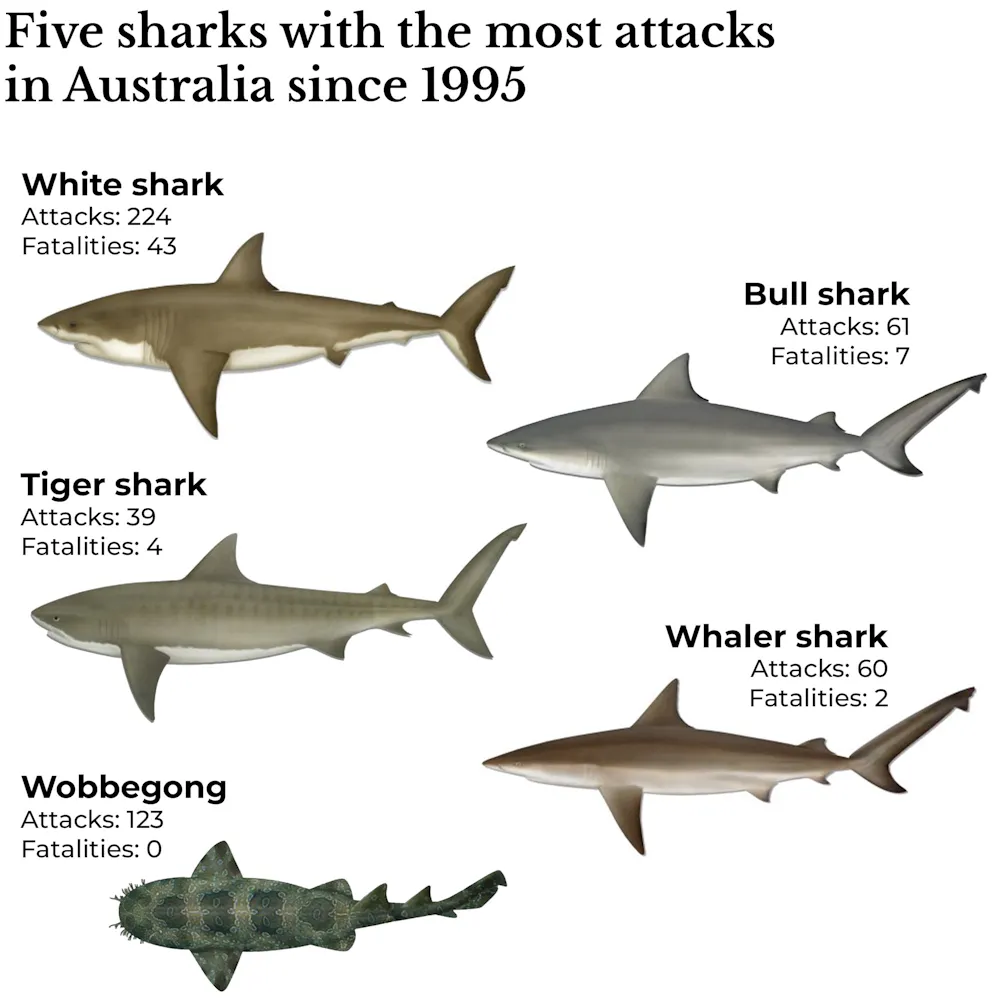
Bull sharks are spending longer in Sydney Harbour and other summer grounds. Here’s how you can stay safe

Source: The Conversation (Au and NZ) – By Vic Camilieri-Asch, Postdoctoral Research Fellow, Queensland University of Technology

Four people have now been bitten by sharks in the last two days in New South Wales, including three in Sydney Harbour. Two people are in critical condition.

The shark species responsible isn’t yet known. But some of these incidents likely involved the highly adaptable bull shark (Carcharhinus leucas). This unique fish species can tolerate a wide range of water salinity, from oceans to brackish estuaries, and even freshwater rivers.

Bull sharks have long been found in warmer Australian waters, ranging from south-west Western Australia, all the way around the Top End and down the east coast as far as the New South Wales-Victorian border.

The movements of bull sharks in Sydney Harbour have been studied for several years. Their presence is more likely when waters are warmer over summer. But they’re staying longer than before. Last year, researchers found that bull sharks were spending on average an extra day per year in their summer grounds (shallower coastal waters, estuaries and rivers) as ocean temperatures rise due to climate change.

Record heavy rains in Sydney flushed plenty of nutrient-rich water from farms and wastewater treatment plants into the river system, including the harbour. This nutrient runoff attracts more prey such as baitfish and larger fish, and in turn larger predators such as sharks. Stormwater also makes harbour waters murkier, which means that bull sharks rely more on hearing and electroreception than sight to locate food sources. This can lead to bites due to mistaken identity.

Although human activity (noise and movements) in the water can attract sharks, humans are not a food source for bull sharks. Almost all encounters and negative interactions from these sharks come from an exploratory bite. Unfortunately for those affected, the bites can be very serious.

What could be behind these incidents?

Bull sharks are unique among sharks in that they can tolerate fresh, brackish and salt water. Most other shark species don’t use estuaries or rivers as part of their home range or lifecycle. This ability to tolerate and adapt to different salinity levels is one reason bull sharks are found in both coastal waters and river systems around the world, including estuaries.

Once mature, female bull sharks will return to their home rivers to give birth to live young. Newborns are small adult replicas. As they grow, juvenile and sub-adult bull sharks travel down river systems and tend to live in the lower estuaries for the first five years of their life to avoid larger predators. During that time, they opportunistically feed on a range of prey to get bigger before moving into the open ocean.

Bull sharks are very opportunistic feeders. Scientists have found an astonishing variety of things in bull shark stomachs, such as wood, metal and other inorganic matter, though fish are their prey of choice.

Estuaries and harbours tend to have murkier water than the open ocean, as rivers often carry plenty of sediment and nutrients. This means bull sharks have to rely on senses other than sight, such as sound, which travels well underwater, smell, as well as their close-range ability to sense weak electrical fields caused by the movements of living creatures. Many shark bites are likely due to the habit bull sharks have of opportunistically biting in case it might be food.

Over the last week, pulses of stormwater have made Sydney Harbour murkier and more nutrient-rich, attracting baitfish and the predators who follow them.

Bull sharks, like other sharks, learn patterns quickly. Many species of shark have learned to associate the specific sound made by fishing boat engines with food. When fish are hooked or trapped in a net, sharks may be able to get a free feed. Dolphins do the same thing.

How can people stay safe?

Authorities have shut down at least 20 beaches in Sydney’s Northern Beaches for 48 hours.

This is a good move, as it will give the murkiness some time to clear. But it may take longer than this to fully clear.

As shark experts, we would recommend going further:

  • avoid swimming in murky water wherever possible
  • avoid swimming in Sydney Harbour after heavy rain
  • avoid surfing at nearshore beaches until the dirty water clears
  • avoid swimming where people are fishing, especially where fish cleaning occurs
  • avoid swimming where baitfish are common, including where other marine predators such as dolphins are hunting
  • monitor local council and state fisheries websites for updates on staying shark smart this summer.

It’s important not to overstate the risks. Almost all the negative interactions reported in the Australian database of shark incidents come from exploratory bites, or incidental bites of people fishing or even feeding sharks.

Queenslanders have had to adapt to the year-round presence of bull sharks in their rivers and coastal waters for many years. People don’t swim in bull shark hotspots such as the Gold Coast canals or the Brisbane River. Authorities recommend avoiding swimming and surfing up to a few days after heavy rain.

As the oceans warm, bull sharks are likely to spend more time in Sydney Harbour as well as other NSW estuaries. Sydneysiders and NSW residents may have to adapt to their extended presence.


Read more:
4 shark bites in 48 hours: how what we do on land may shape shark behaviour


Vic Camilieri-Asch receives funding from various state, national and international government organisations and foundations, consults for industry councils via a small consultancy (Shark Ethology Australia)

Bonnie Holmes receives funding from state and local government organisations and foundations

ref. Bull sharks are spending longer in Sydney Harbour and other summer grounds. Here’s how you can stay safe – https://theconversation.com/bull-sharks-are-spending-longer-in-sydney-harbour-and-other-summer-grounds-heres-how-you-can-stay-safe-273897

To sustain prosperity as its population shrinks, China will have to invest big at home

Source: The Conversation (Au and NZ) – By Yixiao Zhou, Associate Professor in Economics and Director of China Economy Program, Australian National University

China’s economy met the government’s official growth target in 2025, with official figures showing real gross domestic product (GDP) expanded by 5%.

Exports played an outsized role in delivering this headline growth. Despite a simmering trade war with the United States, China finished up the year with a record-breaking trade surplus of US$1.2 trillion as it lifted exports to new markets in the rest of the world.

Yet behind these headline figures, China’s economy continues to face some stubborn headwinds. Consumer spending remains subdued. Exports – while strong – face mounting global uncertainty. And government expenditure is constrained by public sector debt pressures.

Adding to this, China’s population continued to shrink for the fourth straight year in 2025 as the birth rate reached a record low, reinforcing concerns an ageing population will hold back the economy in coming years.

A shrinking population isn’t necessarily incompatible with rising living standards. What matters is whether productivity growth can compensate for a smaller workforce.

For China, that means domestic investment, rather than consumption or expansionary government spending, is likely to be the key mechanism for sustaining growth.

Problems at home

Recent data suggest China’s weak household consumption is not merely a temporary, post-pandemic phenomenon but instead reflects deeper structural factors.

While China’s GDP growth reached its annual target in 2025, retail sales grew by only 0.9% year-on-year in December, the slowest pace since late 2022.

This highlights the fragility of consumer demand, despite policy measures aimed at supporting spending.

Although the services sector continues to expand and accounts for more than half of GDP, household consumption as a share of the economy remains low by international standards.

High savings rates, lingering uncertainty linked to the property downturn, and concerns about job and income security continue to weigh on spending decisions.

This is consistent with long-running trends identified in academic research. Policies to stimulate consumption can boost spending in the short term, but they have not fundamentally altered households’ preferences to save rather than spend.

Strong exports

Manufacturing output remained resilient, and net exports contributed significantly to overall expansion. This helped offset weak domestic demand.

China’s exports to the US did fall in 2025. But a shift to new markets in Southeast Asia, South America, Europe and Africa more than offset this decline.

However, China’s reliance on net exports as a source of growth is vulnerable. While exports contributed unusually heavily to growth in 2025, this pattern may be difficult to repeat amid protectionist pressures and potential tariff escalations.


Read more:
Have US tariffs failed to bite? China’s trade surplus hits a record US$1.2 trillion


Constraints on government spending

In theory, government spending could step in to stabilise demand. Right now, that’s difficult in practice.

Local governments face high debt burdens, falling revenues from land sales and rising pressures related to social programs and maintaining infrastructure.

This limits their capacity for large-scale government spending without making financial risks worse.

Despite this, China continues to generate very high national savings. In 2024, China’s national savings reached 43.4% of GDP. Meanwhile, consumption as a share of GDP – the reverse side of the savings rate – remained around 20 percentage points below the global average.

Turning savings into investment

If a country’s savings are not absorbed domestically through productive investment, they end up fuelling a current account surplus. This can expose an economy to tensions with trading partners.

In 2025, investment in fixed assets (long-term investments such as buildings and equipment) fell 3.8%, with property investment plunging by about 17%.

This signals both the scale of the investment decline in the real estate sector and the need to pivot investment toward higher-returning sectors, such as manufacturing, services and technology.

In the long run, channelling China’s high national savings into efficient domestic investment could have greater impact than government stimulus measures. That’s as long as capital is allocated to productive firms and sectors rather than bridges to nowhere.

A shrinking population

China’s shrinking population adds a further important dimension to this challenge. Population contraction is not necessarily incompatible with rising living standards.

But it creates a need to boost productivity, through technological progress, innovation and upskilling the labour force.

Official statistics already show technology-intensive services and high-value manufacturing segments are expanding faster than the rest of the economy.

China’s 2025 growth outcome masks a set of enduring structural realities. Consumer spending is likely to remain subdued, exports face increasing global uncertainty, and fiscal policy is constrained by debt burdens.

The key policy challenge, therefore, is not to reverse demographic trends at any cost. It is to accelerate the transition toward a more productive, capital- and knowledge-intensive growth model.

Yixiao Zhou does not work for, consult, own shares in or receive funding from any company or organisation that would benefit from this article, and has disclosed no relevant affiliations beyond their academic appointment.

ref. To sustain prosperity as its population shrinks, China will have to invest big at home – https://theconversation.com/to-sustain-prosperity-as-its-population-shrinks-china-will-have-to-invest-big-at-home-273894

Valentino shaped the runway – and the red carpet – for 60 years

Source: The Conversation (Au and NZ) – By Jye Marshall, Lecturer, Fashion Design, School of Design and Architecture, Swinburne University of Technology

Valentino, who died on Monday at 93, leaves a lasting legacy full of celebrities, glamour and, in his words, knowing what women want: “to be beautiful”.

The Italian fashion powerhouse has secured his dream of making a lasting impact, outliving Karl Lagerfeld and Yves Saint Laurent.

Valentino was known for his unique blend between the bold and colourful Italian fashion and the elegant French haute couture – the highest level of craftsmanship in fashion, with exceptional detail and strict professional dressmaking standards.

The blending of these styles to create the signature Valentino silhouette made his style distinctive. Valentino’s style was reserved, and over his career he built upon the haute couture skills he had developed, maintaining his signature style while he led his fashion house for five decades.

But he was certainly not without his own controversial views on beauty for women.

Becoming the designer

Born in Voghera, Italy, in 1932, Valentino Clemente Ludovico began his career early, knowing from a young age he would pursue fashion.

He drew from a young age and studied fashion drawing at Santa Marta Institute of Fashion Drawing in Milan before honing his technical design skills at École de la Chambre Syndicale de la Couture Parisienne, the fashion trade association, in Paris.

He started his fashion career at two prominent Parisian haute couture houses, first at Jean Dessès before moving to Guy Laroche.

He opened his own fashion house in Italy in 1959.

His early work had a heavy French influence with simple, clean designs and complex silhouettes and construction. His early work had blocked colour and more of a minimalist approach, before his Italian culture really came through later in his collections.

He achieved early success through his connections to the Italian film industry, including dressing Elizabeth Taylor fresh off her appearance in Cleopatra (1963).

Elizabeth Taylor wearing Valentino while dancing with Kirk Douglas at the party in Rome for the film Spartacus.
Keystone/Getty Images

Valentino joined the world stage on his first showing at the Pritti Palace in Florence in 1962.

His most notable collection during that era was in 1968 with The White Collection, a series of A-line dresses and classic suit jackets. The collection was striking: all in white, while Italy was all about colour.

He quickly grew in international popularity. He was beloved by European celebrities, and an elite group of women who were willing to spend the money – the dresses ran into the thousands of dollars.

In 1963, he travelled to the United States to attract Hollywood stars.

The Valentino woman

Valentino’s wish was to make women beautiful. He certainly attracted the A-list celebrities to do so. The Valentino woman was one who would hold themselves with confidence and a lady-like elegance.

Valentino wanted to see women attract attention with his classic silhouettes and balanced proportions. Valentino dressed women such as Jackie Kennedy, Audrey Hepburn, Julia Roberts, Gwyneth Paltrow and Anne Hathaway.

His aristocratic taste inherited ideas of beauty and old European style, rather than innovating with new trends. His signature style was formal designs that had the ability to quietly intimidate – including the insatiable Valentino red.

Red was a signature colour of his collections. The colour provided confidence and romance, while not distracting away from the beauty of the woman.

French influence

Being French-trained, Valentino was well acquainted with the rules of couture.

With this expertise, he was one of the first Italian designers to be successful in France as an outsider with the launch of his first Paris collection in 1975. This Paris collection showcased more relaxed silhouettes with many layers, playing towards the casual nature of fashion.

A model in the Valentino Spring 1976 ready to wear collection walks the runway in Paris in 1975.
Guy Marineau/WWD/Penske Media via Getty Images

While his design base was in Rome, many of his collections were shown in Paris over the next four decades. His Italian culture mixed with the technicality of Parisian haute couture made Valentino the designer he was.

Throughout his career, his designs often maintained a classic silhouette bust, matched with a bold Italian colour or texture.

Unlike some designers today, Valentino’s collections didn’t change too dramatically each season. Instead, they continued to maintain the craftsmanship and high couture standards.

Quintessentially beautiful” is often the description of Valentino’s work – however this devotion to high beauty standards has seen criticism of the industry. In 2007, Valentino defended the trend of very skinny women on runways, saying when “girls are skinny, the dresses are more attractive”.

Critics said his designs reinforce exclusion, gatekeeping fashion from those who don’t conform to traditional beauty standards.

The Valentino runways only recently have started to feature more average sized bodies and expand their definition of beauty.

The $300 million sale of Valentino

The Valentino fashion brand sold for US$300 million in 1998 to Holding di Partecipazioni Industriali, with Valentino still designing until his retirement in 2007.

Valentino sold to increase the size of his brand: he knew without the support of a larger corporation surviving alone would be impossible. Since Valentino’s retirement, the fashion house has continued under other creative directors.

Valentino will leave a lasting legacy as the Italian designer who managed to break through the noise of the French haute couture elite and make a name for himself.

The iconic Valentino red will forever be remembered for its glamour, and will live on with his legacy. A true Roman visionary with unmatched craftsmanship.

Jye Marshall does not work for, consult, own shares in or receive funding from any company or organisation that would benefit from this article, and has disclosed no relevant affiliations beyond their academic appointment.

ref. Valentino shaped the runway – and the red carpet – for 60 years – https://theconversation.com/valentino-shaped-the-runway-and-the-red-carpet-for-60-years-273891

Auckland duty lawyers consider further industrial action over pay, conditions

Source: Radio New Zealand

Dennis Ansley has been a duty lawyer in Auckland for more than 38 years. Supplied

An Auckland duty lawyer isn’t ruling out further action, after not working for a week to raise awareness for poor pay and conditions.

Duty lawyers are paid by the Justice Ministry to give free legal advice to those appearing in court who cannot afford a lawyer.

Last year, some duty lawyers announced they would make themselves unavailable to work for a week in January.

Dennis Ansley has been a duty lawyer in Auckland for more than 38 years and told RNZ other lawyers were pulled in to plug the gap during last week’s industrial action.

“The Ministry [of Justice] brought in people from other courts, including Tauranga, and replaced those of us on the roster, who were taking industrial action,” he said. “There was very little disruption to the courts, except there were new lawyers here that didn’t know the system in Auckland.”

He said their message had been delivered.

“We’ve got publicity, we’ve got awareness now,” he said. “People are talking about it.”

Ansley said he had messages of support from other lawyers.

“I’ve had a lot of calls since from lawyers all over the country, as far as Southland, who had read about what happened and offered their support.”

Communication had been an issue, Ansley said.

“If we plan something next time – and I’ve already got something in mind – the communication will be far better,” he said.

Potential future action would be better planned and more effective, Ansley said, although he hoped more industrial action wouldn’t be necessary.

He said he had yet to hear from the justice minister or ministry.

“Talk to us,” he urged officials. “Instigate the recommendation from the review of the duty lawyer scheme, which was to urgently look at our remuneration, because of the problems with attraction and retention of lawyers onto the duty lawyer roster.

“It’s in a crisis stage now and it needs to be addressed.”

Ansley said that review was with the minister.

The Criminal Bar Association said the hourly rates and work conditions imposed on duty lawyers were far below those of lawyers in private practice.

President Annabel Cresswell said they stood with duty lawyers for a country where everyone could access justice, no matter their income.

“The treatment and pay provided to duty lawyers by successive governments has made this work unsustainable or even unsafe,” she said. “That is, in turn, a breach of the rights of all New Zealanders to access justice and fairness in our courts.”

Cresswell said duty lawyers spent every day at the frontlines of an under-resourced justice system.

“They take care of those who cannot afford legal fees in the most high-pressured conditions, dealing with addiction issues and mental health challenges.

“This service needs to be preserved.”

The government must support duty lawyers to protect the right of the most vulnerable in court, Cresswell said.

Ministry of Justice acting national service delivery group manager Louisa Carroll said the courts were not disrupted during the industrial action.

“The ministry was advised of a possible reduction in duty lawyer availability in Auckland, Christchurch and Gisborne/Hawke’s Bay,” she said. “Only one duty lawyer from a different region was rostered to maintain coverage, in accordance with the Duty Lawyer Operational Policy.”

Local duty lawyers were rostered where possible, she said.

“The Legal Aid Triennial review includes a review of remuneration across the legal aid scheme, including proposals related to the duty lawyer service that were outlined in the discussion document.

“The proposals are currently with the minister for consideration.”

Sign up for Ngā Pitopito Kōrero, a daily newsletter curated by our editors and delivered straight to your inbox every weekday.

– Published by EveningReport.nz and AsiaPacificReport.nz, see: MIL OSI in partnership with Radio New Zealand

Tennis: Lulu Sun loses to qualifier at Australian Open

Source: Radio New Zealand

Lulu Sun of New Zealand at the Australian Open. LUKAS COCH/Photosport

New Zealand’s Lulu Sun was beaten by Linda Fruhvirtova of the Czech Republic 6-3, 7-5 in the first round of the Australian Open in warm conditions on court 13.

It was the first match of the year for Sun who has been trying to recover from a wrist injury. Fruhvirtova had come through qualifying winning three matches.

Twenty-four-year-old Sun held significant leads in both sets, 3-1 in the first, after breaking her opponents serve in the first game of the match and again 3-1 in the second.

The left-handed New Zealander, ranked 86th, looked to fight back in the second set after being down 3-5 and held off several match points before winning her own serve and breaking her opponents to level the scores 5-5.

However, Fruhvirtova ranked 132 then broke Sun’s serve to go ahead 6-5 and then held her own serve to win the match.

Erin Routliffe and her new doubles partner Asia Muhammad are in action on Wednesday afternoon.

Sign up for Ngā Pitopito Kōrero, a daily newsletter curated by our editors and delivered straight to your inbox every weekday.

– Published by EveningReport.nz and AsiaPacificReport.nz, see: MIL OSI in partnership with Radio New Zealand

What makes Cornwall Park so special?

Source: Radio New Zealand

Cornwall Park is one of New Zealand’s biggest, busiest and beloved city parks in the middle of urban Auckland.

The New Zealand Gardens Trust has just awarded the park five stars for their gardens and named it a Garden of National Significance.

The park has been operational since the early 1900s when it was gifted to the city by Sir John Logan Campbell, CEO Murray Reade told RNZ’s Summer Times.

The park, run by a trust and funded by an original endowment from Logan Campbell, spans 172 hectares, 70 of which are a working farm.

“We’ve got a fully operational farm, we’ve got 7000 to 9000 trees. we’ve got 25,000 to 35,000 plants we plant every year, three kauri stands.

“And we get probably in excess of 2 million people a year, we think that’s conservative, using the park,” Reade says.

The NZ Gardens Trust has built a national network of gardens, both private and public, assessed by horticulturists and landscape architects.

Five-star Gardens of National Significance are recognised for their presentation, design and plant interest throughout the year.

Other five-star gardens around the country include Olveston in Dunedin, the Christchurch Botanical Gardens, Wellington Botanical Gardens, and the Winter Garden, Dunedin.

“So, we’re very privileged, I think, to be perceived in that cohort of gardens,” Reade says.

The farm employs two full-time farmers who runs cattle and sheep, he says.

‘We’ve got around about 100 head of cattle, simmentals, they’re a particular breed, they’re large animals, but very docile given the nature of the environment they’re in. And we’ve got about 1000 head of sheep.”

Cornwall Park is famous for its flower gardens, he says, each year they plant 25,000 annuals and 10,000 bulbs.

They also manage native flora and fauna, with a number of significant kauri groves.

– Published by EveningReport.nz and AsiaPacificReport.nz, see: MIL OSI in partnership with Radio New Zealand

Plans for a Super Liquor store in Lake Hāwea was approved despite record community objections

Source: Radio New Zealand

Lisa Riley and her son on the site of the proposed Super Liquor store. Supplied/Lisa Riley

Plans for Lake Hāwea’s first standalone liquor store have been approved despite record community opposition.

Queenstown Lakes District Licensing Committee has approved a liquor licence for a Super Liquor franchise in the Longview subdivision, where more than [www.rnz.co.nz/news/national/573991/record-number-of-objections-to-liquor-licence-in-lake-hawea 500 submissions] argued it should not be allowed to operate.

A three-day hearing took place November where the applicant, Keyrouz Holdings Ltd, set out its case.

In a decision published on Tuesday, the committee said the applicant – which operates several Super Liquor franchises around the south – had “considerable experience” and could supply liquor responsibly.

The committee noted the company had sold alcohol safely in its other stores and had the resources to do the same in Lake Hāwea.

Earlier, residents voiced concerns that the store would be too close to children, too far from healthcare, and sent the wrong signal about the town’s priorities.

Some argued there were already enough liquor outlets in the town – with four existing off-licences – while others argued the company should not have applied for a licence before building the store.

The committee rejected claims that Lake Hāwea faced unique risks due to demographics or limited healthcare, adding that those factors did not disqualify a recent grocery store licence application in the area.

Lake Hāwea was not uniquely vulnerable, it said.

The site of the proposed liquor store on Longview Drive. Supplied/Lisa Riley

The committee decided it was impractical to require a completed building before granting a licence – instead issuing a legal waiver requiring Queenstown Lakes District Council to provide a Certificate of Public Use or Building Code Compliance Certification before the licence could take effect.

The Sale and Supply of Alcohol Act did not limit the number of licensed premises in a community, the committee noted.

The Super Liquor will be able to sell alcohol from 9am – 9pm, Monday to Sunday.

The committee imposed a ban on single-unit sales of mainstream beer and RTDs, a requirement for frosted glass on the exterior, and a total prohibition on external product or price advertising.

Community vows to keep fighting

Community group Voices Against Hāwea announced on Tuesday afternoon that it would appeal the decision.

Resident Lisa Riley called the committee’s decision deeply disappointing but not unexpected.

She said during the hearing: “It was clear that the threshold being applied was so high that community and public health concerns were never realistically going to succeed.”

“There was a strong sense that unless harm could be proven with near certainty before the store even exists, the decision had effectively already been made.”

The appeal will argue that the decision gave too little weight to widespread and consistent community opposition, set an unrealistically high bar for public health evidence, and overlooked long-term risks in a rapidly growing residential area, Riley said.

The appeal will also contend that approving a liquor licence before the business is built could lock in its use before the community has fully formed, she said.

Sign up for Ngā Pitopito Kōrero, a daily newsletter curated by our editors and delivered straight to your inbox every weekday.

– Published by EveningReport.nz and AsiaPacificReport.nz, see: MIL OSI in partnership with Radio New Zealand

Much-loved teacher and sportsman killed in Northland’s Bay of Islands

Source: Radio New Zealand

Harry Darkins, 36, was a teacher at Auckland’s Ormiston Junior College before his death. ONERAHI CENTRAL CRICKET CLUB / SUPPLIED

A much-loved teacher and sportsman in the Auckland and Northland communities is being mourned following his death on a road in Northland’s Bay of Islands.

Harry Darkins, 36, died after being struck by a vehicle on Puketona Rd in Haruru, near Paihia, in the early hours of Sunday.

Darkins had worked at a number of schools in Northland and Auckland including Whangārei Intermediate School, Whangārei Boys High School and more recently, Auckland’s Ormistion Junior College. He was also a keen sportsman playing cricket for Onerahi Central Cricket Club and Northern Māori Cricket.

Sam Walker, from Onerahi Central Cricket Club, said words couldn’t cut the loss the community was feeling.

“Harry will be missed by so many people, he engaged and helped so many within the community that this is a huge loss, everyone from the club is thinking of his family at this time, so tragic.”

The club said Darkins was a “massive force” in the club who played in both senior teams and served on the club’s committee until he moved to Auckland to teach at Ormiston Junior College.

“Even whilst teaching in Auckland, Harry regularly made the trip north to play for the club, nothing was ever too much hassle for Harry who was willing to help out in any way possible.

“Harry will be a massive loss to the club and community and many of us have lost a great friend far too soon.”

Whangārei Boys High School said Darkins was both an old boy of the school who graduated in 2006, and a staff member until 2022.

Darkins was a past student and teacher at Whangārei Boys’ High School. (File photo) RNZ / Angus Dreaver

He worked primarily as a PE and health teacher who also served as a year level Dean.

“Harry’s strength, dedication, and unwavering commitment to our boys were evident in everything he did. Beyond the classroom, he gave enormously to the life of the school as our First XV coach, proudly committed to the anchor and all it represents.

“He was passionate about young people, deeply loyal to this kura, and leaves behind a lasting legacy through the many students and colleagues whose lives he shaped.”

The school said he would be remembered with great respect, appreciation and fondness.

The principal of Whangārei Intermediate School, Haley Read, said on social media, Darkins had aspirations of becoming a school principal and spoke with real excitement about the next step in his journey.

“Harry was an exceptional teacher with strengths across PE and health, mathematics, and inquiry learning. He was thoughtful, organised, and deeply committed to his students offering meaningful guidance and mentoring.

“His passing is a tremendous loss to education and to the many communities he was part of. Our thoughts are with Harry’s whānau, friends, colleagues, and students at this incredibly difficult time. At this time, funeral arrangements have not yet been confirmed.”

IPCA investigation underway

Northland District Commander Superintendent Matt Srhoj, said at the time of the crash a marked police patrol car was in the area and had spoken with a group of pedestrians seen walking on the road.

“The crash occurred a short time later, where a member of the public’s vehicle struck one of the pedestrians.”

Srhoj said due to the patrol car being present just before the crash police had decided to refer the incident to the Independent Police Conduct Authority (IPCA).

A critical incident investigation would also be carried out.

The driver of the vehicle which hit Darkins stopped immediately, Srhoj said, and the vehicle had been seized by police.

“This is an incredibly tragic event for all concerned, and our thoughts are with the pedestrian’s family at this difficult time.

“Support is also in place for our two frontline members who were in the police vehicle at the time the crash occurred.

“This has been devastating for them, and it is the last thing anyone would have wanted to happen.”

As part of the investigation police wanted to hear from anyone in the area or with information.

Srhoj said police particularly wanted to hear from anyone travelling through Haruru between 11.55pm on Saturday, January 17 and 12.10am on Sunday, January 18.

Anyone with dash camera footage or who saw the pedestrians should call police on 105 using the reference number 260118/4319.

Sign up for Ngā Pitopito Kōrero, a daily newsletter curated by our editors and delivered straight to your inbox every weekday.

– Published by EveningReport.nz and AsiaPacificReport.nz, see: MIL OSI in partnership with Radio New Zealand

Why Fletcher Building is selling its construction division to French giant Vinci

Source: Radio New Zealand

Six months after announcing a potential sale was on the cards, Fletcher Building revealed on Tuesday that a binding agreement had been reached, and its construction division would be sold to French giant Vinci.

The market reaction was generally positive — for years the construction division had been problematic for Fletcher Building, and the source of some high-profile cost blowouts and delays.

Fletcher Building is set to receive $316 million from the sale (potentially rising to $334m), which includes Brian Perry Civil, Higgins and Fletcher Construction Major Projects, but excludes its South Pacific operations.

Generate Wealth investment specialist Greg Smith said the sale was “broadly positive”.

“They’re exiting a structurally low-margin, high-risk construction business that you could arguably say has destroyed value for more than a decade,” he said.

“It’s really only consumed capital over the past 10-15 years, it’s absorbed cash, and it’s generated write-downs and volatility.”

Smith said the construction arm delivered some large projects that had left some “nasty surprises”, notably the NZ International Convention Centre.

In a note, Forsyth Barr senior analyst Rohan Koreman-Smith acknowledged the construction division’s troubles, and also viewed the sale as a positive.

“The construction division has been a significant drag of FBU’s cash flow, with major cost overruns in several key projects (including the NZ International Convention Centre) resulting in $1.6bn of significant items over the last decade,” he said.

Craigs Investment Partners investment director Mark Lister said Fletcher was receiving a “good price” for the business.

“More importantly, it’s the right strategic move,” he said. “It will help the company pay down debt and that needs to come down a little bit further.”

Lister said it moved Fletcher a step closer to resuming dividend payments, while sorting out its balance sheet.

The industry impact

Smith said the arrival of Vinci would mean a new player with the ability to scale in the New Zealand construction market.

“[They are] possibly one that has a more sophisticated approach to pricing projects and pricing risks, and, of course, deeper pockets as well,” he said.

“They will be a very attractive bidder potentially for a number of projects that many players would be interested in bidding for … including the Warkworth to Te Hana expressway.”

Lister did not think there would be any obvious impact on the industry.

“It’s not going to be a negative, we don’t lose this player, it will just change ownership,” he said.

“[Vinci is] a very global business … and it’s listed on the Paris stock exchange, so this is a big company that knows what they’re doing.”

Sign up for Ngā Pitopito Kōrero, a daily newsletter curated by our editors and delivered straight to your inbox every weekday.

– Published by EveningReport.nz and AsiaPacificReport.nz, see: MIL OSI in partnership with Radio New Zealand

UFC: Predictions, previews and wish-list for 2026

Source: Radio New Zealand

New Zealand’s Carlos Ulberg has all but guaranteed his shot at gold this year. AAP / Photosport

The most pulsating, unpredictable and primal sport on the planet is set to deliver more chaos, drama, and stunning feats of violence in 2026.

Vicious knockouts, ingenious submissions, blood feuds, and iconic mic moments

Jonty Dine looks at the year ahead in the world’s premier mixed martial arts organisation.

History at the White House

In news that feels more like a deleted scene from Idiocracy, the house in which the Emancipation Proclamation was drafted, the New Deal was conceived, and the Cuban Missile Crisis was avoided, is set to play host to cage fighting. Historically the fighting at 1600 Pennsylvania Ave has been of the verbal variety, but in 2026 the decorum will be dropped as President Donald Trump invites the UFC to his backyard.

Heavyweight score settled

The sport’s most prestigious title has been held hostage for the better part of two years as Jon Jones refused to defend his tile before finally vacating. However, continuing the curse, the long awaited unification bout between Tom Aspinall and Cyril Gane ended in a brutal eye poke, rendering Aspinall unable to continue. With the rematch all but locked in, here’s praying the fight gods finally allow for an undisputed baddest man on the planet.

Black Jag ready to pounce

New Zealand’s most promising title prospect heading into 2026 has all but guaranteed his shot at gold this year. Ulberg has been on a tear since his sole loss inside the octagon in 2021, blitzing his way through the division with a stunning nine-fight winning streak. The City Kick Boxing star can no longer be denied and a fight with champion Alex Pereira will bring together two of the most powerful strikers in the sport.

Women’s renaissance

With the Lioness back to claim her throne and a superstar arrival in Kayla Harrison, the women’s division is set for a much needed injection of excitement. Amanda Nunes relinquished her title in 2023 after conquering the MMA world, but she is back to prove the cage is only big enough for one queen of the jungle.

A Notorious return

Once the face of the sport, rewriting the book and ascending to mainstream superstardom, it’s been a depressing downfall for Conor McGregor. Since snapping his leg in a round two TKO loss to Dustin Poirier in 2021, the Irishman has not stepped back into the cage, indulging in the party lifestyle he once described as ‘weakness for the soul.’ It’s been a disastrous few years for the former double champ, and with his stock at an all time low, a return to the octagon remains his only hope of redemption.

Conor McGregor of Ireland walks in the Octagon before his lightweight bout against Dustin Poirier in 2021. AFP / Getty Images North America

Poatan’s treble

Without a doubt the most exciting man in the sport today, Alex Pereira’s rise came in devastating fashion as he left a trail of destruction in his wake. Having surged through both middleweight and light heavyweight, Poatan could yet pull off the greatest feat in mixed martial arts history and become a three division champion in the worlds biggest combat sports organisation with a move to heavyweight.

Kiwi comeback

Titles are likely out of reach now for three of the greatest kiwis to enter the cage in Israel Adesanya, Dan Hooker and Kai Kara-France. However, the trio still have plenty of fight in the tank and all popular with the fan base. Adesanya is set to make his comeback in March against Joe Pyfer following his brutal KO loss at the hands of Nassourdine Imavov. In the twilight of his fight career, Adesanya will want to go out on his feet.

Hooker BMF

Few fighters embody the BMF life quite like New Zealand’s Dan Hooker. The Hangman has stood toe to toe with the best lightweights in the world and has engaged in some of the bloodiest battles in UFC history, most notably, his war with Dustin Poirier. Hooker vs Max Holloway for the BMF title would be a savage exhibition of violence, exactly what the belt was born to represent.

The Prates problem

Current pound for pound king Islam Makachev made an underwhelming welterweight debut despite stealing the strap from Jack Della Maddalena through a suffocating grappling performance, fans will be desperate for some fireworks during his title reign and Brazilian boogeyman Carlos Prates, who has won all his UFC fights by way of knockout, could be just the spark.

Talbot’s time

Bantamweight looked set for a long reigning champion in Merab Dvalishvili who had three effortless defences in the bank and was nearing GOAT status. However, Russia’s Petr Yan put an emphatic end to Dvalishvili’s dominance with a stunning upset in December, taking back the title he loss via disqualification in 2022. Fresh off his win over another former champ in Henry ‘Triple C’ Cejudo, fan favourite Payton Talbot presents a thrilling challenge to the new division king.

Sign up for Ngā Pitopito Kōrero, a daily newsletter curated by our editors and delivered straight to your inbox every weekday.

– Published by EveningReport.nz and AsiaPacificReport.nz, see: MIL OSI in partnership with Radio New Zealand

NPD–Gull merger plan lands at Commerce Commission

Source: Radio New Zealand

The companies announced their proposed merger late last year. RNZ / Dan Cook

The Commerce Commission says it has received an application from discount fuel retailers NPD and Gull to merge their national operations.

The merger would create a network of 240 fuel stations, making it the third-largest behind Z Energy and BP.

The companies announced their proposed merger on Christmas Day, saying each site would retain its distinctive brand – Gull sites are most common in the North Island, and NPD in the South Island.

The South Island-based Sheridan family would own 50 percent of the merged company, with Barry Sheridan, the current NPD owner and chief executive, set to become group CEO.

Australian private equity firm Allegro Funds, which owns Gull, would hold the remaining 50 percent.

The Commission said it will only grant clearance if it is satisfied the merger will not substantially lessen competition in the New Zealand market, either now or in the future.

It said it’s investigation of the proposed merger is at a preliminary stage based on the material that it has received from both companies, but other issues could yet emerge as its investigation progresses.

Interested parties have until 3 February 2026 to submit comments on the proposed merger.

The Commission has set a 16th March 2026 deadline to either approve, or decline the merger.

The Automobile Association believed a proposed merger between two fuel companies should drive down pump prices.

AA principal policy advisor Terry Collins had previously said both companies had a low-cost business model.

“What that means is that the savings are passed onto customers. When Gull first arrived with that model in New Zealand it became known as the Gull effect because it dropped the prices and competitors had to match it,” he said.

“Now you’ve got two strong companies with a similar model seeking to merge their business and utilise their assets a lot more efficiently. If they do that, then we’ll obviously see lower prices as they pass them on, but how much savings they can make and pass on is yet to be seen.”

Collins believed merging would be a smart business move for both companies.

Sign up for Ngā Pitopito Kōrero, a daily newsletter curated by our editors and delivered straight to your inbox every weekday.

– Published by EveningReport.nz and AsiaPacificReport.nz, see: MIL OSI in partnership with Radio New Zealand

80 campers trapped in Whangaruru return home after having to hike over massive slip

Source: Radio New Zealand

Low-lying Bland Bay, on the Whangaruru Peninsula, is highly susceptible to flooding. Peter de Graaf

About 80 campers trapped at Whangaruru since Sunday have finally made it home after earlier having to walk to safety over a massive slip.

Jude Thompson, of the Whangaruru Residents and Ratepayers Association, said the campers were staying at the popular DOC Puriri Bay campsite when the deluge hit.

The torrential rain sent floodwaters pouring through the campground and triggered a 50-metre-wide slip across the only access road.

Thompson said many tents were flooded or swept away, and campers had to hike over the slip to safety.

From there, rescuers shuttled the campers about a kilometre to Tūparehuia Marae in Bland Bay.

“The local community were able to provide them with food, clothing and bedding. Many of them literally only had what they were standing in, so they were very happy to be looked after by the local hapū.”

Since then, Thompson said DOC and its contractors had worked hard to clear the slip, and by late Monday campers were able to return to collect their vehicles and what was left of their camping gear.

“Some of their belongings have washed away and much of what they had was destroyed in the floodwaters … So I guess they’ll be looking to replace that, and maybe some of those items will appear further down the coast.”

The main road south from Whangaruru was still closed due to a washout, but the campers were able to get home by heading north via Russell.

The campground at nearby Bland Bay was also affected by flooding, but more importantly by a lengthy power cut which meant the toilets couldn’t be used.

Fortunately, those campers were able to stay across the road at Tūparehuia Marae.

Thompson said the local hapū, Te Uri o Hikihiki, had carried out a major upgrade after Cyclone Gabrielle, including the installation of solar power to boost resilience in future natural disasters.

Up to 100 people were staying at the marae at any one time, she said.

“The campground, which has a small but very well-supplied shop, was able to bring the kai they had over to feed everyone at the marae, because of course there was no access in or out of the community.”

Thompson said the Whangaruru community was worried by the prospect of more severe weather later today and on Wednesday.

“We’re highly concerned for our area with both the hillsides and the flats very sodden. Our treasured pā, Whakatūria, has already had significant slips down into Bland Bay.”

She urged residents to prepare for power outages by charging up devices, storing drinking water, and readying buckets of water for toilet flushing.

Anyone who might have to evacuate to higher ground should also pack a “go bag” with warm clothes, some food, a torch, a phone and medication.

Thompson said the road had already flooded this morning just south of Punaruku, so residents between there and the washed-out bridge at Ngaiotonga were once again cut off.

She said the Northern Regional Council and the local community had done “a significant amount” of flood mitigation work, but the rivers had been overwhelmed by Sunday’s torrential rain.

Sign up for Ngā Pitopito Kōrero, a daily newsletter curated by our editors and delivered straight to your inbox every weekday.

– Published by EveningReport.nz and AsiaPacificReport.nz, see: MIL OSI in partnership with Radio New Zealand

Man in home detention after obtaining more than $2m in mortgage fraud

Source: Radio New Zealand

Gurraj Singh Bhachu pleaded guilty in the Auckland District Court last September. RNZ / Liu Chen

A man has been sentenced to nine months’ home detention after obtaining more than $2 million through mortgage fraud.

Gurraj Singh Bhachu pleaded guilty in the Auckland District Court last September to 12 charges relating to four properties.

The Serious Fraud Office said he faked documents relating to business income and cash gifts, and gave false information to banks and property lawyers to get bank loans totalling $2,862,650 for three residential properties.

“He also made false representations to obtain control of residential properties, either for himself or others.”

Bhachu left the country in 2019, and was arrested and charged when he returned in December 2023.

Serious Fraud Office Director, Karen Chang, said deliberately providing false information to banks for a mortgage undermined the integrity of the lending system.

“The banks were misled in a number of ways, including the financial position of the borrower and the level of risk to the bank. This affects the ability of hard-working New Zealanders to obtain lending for their own homes,” she said.

The Serious Fraud Office has charged six others in the same case, claiming they were part of a scheme to fraudulently obtain credit and properties.

Bhachu was the second to be sentenced after Francis Peters, who was sentenced in August 2024 to nine months and two weeks’ home detention for four charges of obtaining by deception.

The group is alleged to have obtained more than $8.6 million in lending, and tried to get a further $2.9m.

Charges have also been filed against Christopher Peters, Robert Peters, Gerard Peters and Serene Peters for obtaining $1.8m by deception in an alleged investment fraud, the Serious Fraud Office said.

“Christopher and Robert Peters have also been charged with obtaining those funds by forgery as an alternative charge,” it said.

Those two were expected to face trial in February, while trial dates for the other defendants had not been set.

Sign up for Ngā Pitopito Kōrero, a daily newsletter curated by our editors and delivered straight to your inbox every weekday.

– Published by EveningReport.nz and AsiaPacificReport.nz, see: MIL OSI in partnership with Radio New Zealand

ER Report: A Roundup of Significant Articles on EveningReport.nz for January 20, 2026

ER Report: Here is a summary of significant articles published on EveningReport.nz on January 20, 2026.

4 shark bites in 48 hours: how what we do on land may shape shark behaviour
Source: The Conversation (Au and NZ) – By Shokoofeh Shamsi, Professor in Veterinary Parasitology, Charles Sturt University samriley/iNaturalist, CC BY-NC Beachgoers in Australia are on high alert following four shark incidents in New South Wales in 48 hours. On Tuesday morning, a surfer was bitten by a shark at Point Plumer, on the state’s mid-north

Deep sea mining is the next geopolitical frontline – and the Pacific is in the crosshairs
Source: The Conversation (Au and NZ) – By Viliame Kasanawaqa, Doctoral Researcher, Macmillan Brown Centre for Pacific Studies, University of Canterbury When the United States recently escalated its confrontation with Venezuela – carrying out strikes in Caracas and capturing President Nicolás Maduro – the moves were framed as political intervention. But the raid also reflected

Sexualised deepfakes on X are a sign of things to come. NZ law is already way behind
Source: The Conversation (Au and NZ) – By Cassandra Mudgway, Senior Lecturer in Law, University of Canterbury Yui Mok/Getty Images Elon Musk finally responded last week to widespread outrage about his social media platform X letting users create sexualised deepfakes with Grok, the platform’s artificial intelligence (AI) chatbot. Musk has now assured the United Kingdom

The way Earth’s surface moves has a bigger impact on shifting the climate than we knew
Source: The Conversation (Au and NZ) – By Ben Mather, ARC Early Career Industry Fellow, School of Geography, Earth and Atmospheric Sciences, The University of Melbourne Our planet has experienced dramatic climate shifts throughout its history, oscillating between freezing “icehouse” periods and warm “greenhouse” states. Scientists have long linked these climate changes to fluctuations in

Why Keir Starmer had to speak out against Trump over Greenland after staying quiet on Venezuela
Source: The Conversation (Au and NZ) – By Jason Ralph, Professor of International Relations, University of Leeds The Labour government came into office promising to “use realist means to pursue progressive ends”. US president Donald Trump’s recent actions over Venezuela and Greenland have tested Keir Starmer’s ability to deliver on that promise. When the prime

How George Orwell’s Nineteen Eighty-Four predicted the global power shifts happening now
Source: The Conversation (Au and NZ) – By Emrah Atasoy, Associate Fellow of English and Comparative Literary Studies & Honorary Research Fellow of IAS, the University of Warwick and Upcoming IASH Postdoctoral Research Fellow, the University of Edinburgh, University of Warwick Orwell’s dystopian masterpiece envisaged a world dominated by three rival blocs that are constantly

Research reveals a surprising line of defence against cyber attacks: accountants
Source: The Conversation (Au and NZ) – By Charlene Chen, Senior Lecturer in Accounting, Macquarie University Egor Komarov/Unsplash When Optus, Medibank and non-bank lender Latitude Financial were hit by separate cyber attacks in the past few years, millions of Australians felt the fallout: stolen personal data, disrupted services and weeks of uncertainty. Each breach raised

Lead, arsenic and other toxic metals abound in tattoo inks sold in Australia – new study
Source: The Conversation (Au and NZ) – By William Alexander Donald, Professor of Chemistry, UNSW Sydney Lucas Dalamarta/Unsplash In recent decades, millions of Australians have embraced body art – an estimated 30% of adults have a tattoo. Over a third of those with tattoos have five or more pieces. Trend reporting from industry and lifestyle

A year on from his second inauguration, Trump 2.0 has one defining word: power
Source: The Conversation (Au and NZ) – By Bruce Wolpe, Non-resident Senior Fellow, United States Study Centre, University of Sydney As Donald Trump celebrates the anniversary of his second inauguration as president of the United States and begins his sixth year in office, his greatest asset is power. He covets absolute power. The greatest threat

I think I’m grinding or clenching my teeth. Why? And can anything help?
Source: The Conversation (Au and NZ) – By Arosha Weerakoon, Senior Lecturer and General Dentist, School of Dentistry, The University of Queensland Andrea Piacquadio/Pexels Day or night, many of us grind or clench our teeth, and don’t even realise we’re doing it. Here are three questions to ask yourself. At least once a week, do

The yellow-legged hornet eradication is on track – but the next few months are crucial
Source: The Conversation (Au and NZ) – By Phil Lester, Professor of Ecology and Entomology, Te Herenga Waka — Victoria University of Wellington Jonathan Raa/Getty Images New Zealand now has a genuine chance to stamp out one of the most damaging invasive insects to reach our shores: the Asian yellow-legged hornet. But what happens over

Thinking of a tutor for your child? 5 things to consider first
Source: The Conversation (Au and NZ) – By Ben Zunica, Lecturer in Mathematics Education, University of Sydney SolStock/ Getty Images As the new school year approaches, many parents may be thinking about getting a tutor for their child. Media reporting estimates one in six Australian students get tutoring at some point in their schooling, to

Uncanny, curious and awesome: an expert in psychology breaks down what we feel in the face of Ron Mueck’s sculptures
Source: The Conversation (Au and NZ) – By Lisa A Williams, Associate Professor, School of Psychology, UNSW Sydney Ron Mueck Woman with Sticks 2009 (detail), mixed media, 170 × 183 × 120 cm, Collection Fondation Cartier pour l’art contemporain, Paris, acquired 2013 © Ron Mueck, photo: museum Voorlinden, Wassenaar, the Netherlands, Antoine van Kaam I

Most UPNG students don’t want independence for Bougainville, new survey shows
ANALYSIS: By Anna Kapil and Stephen Howes It is well known that the people of Bougainville want independence. In the 2019 referendum, 98.3 percent of them voted for it. And in 2025, Ishmael Touroma, a strong advocate of independence, was re-elected to the position of President of the Autonomous Region of Bougainville, further confirmation of

View from The Hill: Liberals tick off deal on hate crime measures
Source: The Conversation (Au and NZ) – By Michelle Grattan, Professorial Fellow, University of Canberra While federal parliament devoted Monday to emotion-filled Bondi condolence speeches, behind the scenes government and opposition inched to a deal to pass on Tuesday Labor’s fall-back measures relating to hate. Late Monday, the Liberal Party room ticked off on the

One year into Trump’s second term – repressive US president on track to join world’s worst press freedom predators
After winning re-election in 2024, Donald Trump promised to be a dictator “on day one”. When it comes to press freedom, he has kept his word, extending the war on the press he launched while running for his first term with grave attacks on access to reliable information worldwide. Reporters Without Borders (RSF), which monitors

Life after the ‘Big 4’: are tennis’ modern stars cutting through like they used to?
Source: The Conversation (Au and NZ) – By Robert Joseph Gill, Associate Professor in Media and Communication, Swinburne University of Technology, Swinburne University of Technology Tennis’ four Grand Slams (the Australian, French and United States Opens, as well as England’s Wimbledon tournament) attract millions of spectators and billions of viewers each year. Melbourne’s Australian Open

Citizen scientists are spotting more and more rare frogs on private land
Source: The Conversation (Au and NZ) – By Jodi Rowley, Curator, Amphibian & Reptile Conservation Biology, Australian Museum, UNSW Sydney The green and golden bell frog (Litoria aurea) Jodi Rowley, CC BY-NC-ND Almost two-thirds of Australia is privately owned. But most of our scientific understanding of how threatened species are faring comes from research done

ER Report: A Roundup of Significant Articles on EveningReport.nz for January 19, 2026
ER Report: Here is a summary of significant articles published on EveningReport.nz on January 19, 2026.

Earring-sized transmitters introduced in war against yellow-legged hornets

Source: Radio New Zealand

A sign warning of yellow-legged hornets on the North Shore in Auckland. RNZ / Isra’a Emhail

Earring-sized transmitters are being attached to worker hornets as Auckland’s war on the insect pest continues.

Biosecurity New Zealand said the new technology imported from the Netherlands had been a success in helping hunt down nests of yellow-legged hornets.

Since October last year, 43 queen hornets had been found in the Glenfield and Birkdale areas on Auckland’s North Shore.

The pest, not known to be established in New Zealand, was considered a biosecurity concern due to the potential impact on honeybee and wild bee populations.

Yellow-legged hornets are an invasive species, and a danger to local honey and wild bees. (File photo) Biosecurity NZ

Biosecurity Commissioner Mike Inglis said since Christmas, they had been luring workers to feeding stations and attaching small radio transmitters to them to observe their movements.

“Tiny transmitters weighing less than 160mg are then attached to the workers, and we’ve been able to track their flight path back to the nests using signals from the transmitter to a radio receiver.”

He said they were also using thermal drones to pinpoint where nests were and to assess how big the population inside was.

He said the technology had helped find hundreds of workers and three hornet nests in the past three weeks.

Biosecurity Commissioner Mike Inglis. (File photo) RNZ/Marika Khabazi

“We’ve been able to destroy the nests with any queens and workers inside them. So far its been very successful.

“Our focus is on locating and destroying queens to stop them from producing any new generations.

“It’s really important as we go through the summer, and more workers build secondary nests sometimes in higher up trees, that we continue to use these trackers alongside thermal drones, so we can locate these nests and destroy them, and hopefully the queen is in that secondary nest.”

Two specialists from the United Kingdom who had experience managing yellow-legged hornets arrived in New Zealand this week.

“Every summer, they have incursions in Europe. In terms of using the technology to find secondary nests, particularly in taller trees, and how you deal with that we’re really keen to get their advice.

“They’re already included in our technical advisory group, so we’ve built a good relationship. The first week they’re here, they’ll be involved in operations on the ground, working with our staff.”

Inglis said between $2m and $3m had been spent on the hornet eradication operation.

A hornets’ nest. Supplied

He said the highest cost had been staffing.

“We’ve got over 575 beekeepers engaged in an 11km search zone. We also engage beekeepers throughout the country, making sure there are eyes and ears on the ground.

“There’s up to 170 staff involved in this response at any given time. A variety of entomologists, people answering notifications from the public, staff on the ground, and contractors.

“It’s a heavy investment, but it’s absolutely worth it to make sure we’re on top of this and we eradicate the hornet.”

Biosecurity earlier said it had received almost 10,000 reports of possible sightings this summer.

Biosecurity encouraged anyone who believed they had seen a suspected yellow-legged hornet, located a possible nest, or had taken a clear photo to report it online at report.mpi.govt.nz or by calling Biosecurity NZ’s exotic pest and disease hotline on 0800 809 966.

Sign up for Ngā Pitopito Kōrero, a daily newsletter curated by our editors and delivered straight to your inbox every weekday.

– Published by EveningReport.nz and AsiaPacificReport.nz, see: MIL OSI in partnership with Radio New Zealand

4 shark bites in 48 hours: how what we do on land may shape shark behaviour

Source: The Conversation (Au and NZ) – By Shokoofeh Shamsi, Professor in Veterinary Parasitology, Charles Sturt University

samriley/iNaturalist, CC BY-NC

Beachgoers in Australia are on high alert following four shark incidents in New South Wales in 48 hours.

On Tuesday morning, a surfer was bitten by a shark at Point Plumer, on the state’s mid-north coast. He was taken to hospital with minor injuries to one of his legs.

This came after a man was bitten by a shark on Monday evening, while surfing at Manly, on Sydney’s northern beaches. He suffered major wounds to his leg and was rushed to Royal North Shore hospital in a critical condition.

Only a few hours earlier, a shark knocked an 11-year-old boy into the water at Dee Why – just north of Manly – and bit a chunk out of his surfboard. And on Sunday afternoon, a 12-year-old boy was bitten by what authorities believe was a bull shark while swimming at a popular beach in Sydney Harbour. He is still in a critical condition in hospital.

It can be tempting to blame these incidents on sharks alone. But there’s emerging evidence the pollutants, pesticides and parasites we send into the ocean from land could shape not just where and when sharks and people cross paths – but also shark behaviour.

Recognising this bigger picture helps shift the focus from blaming sharks to addressing human impacts, supporting smarter policies that protect both public safety and ocean health.


Australian Shark Incident Database, NSW Government SharkSmart

A deeper reality

When shark attacks occur, the pain is real and profound. People are injured, families are shattered, and lives are changed forever. No discussion about ecology should ever minimise the human cost. Fear and anger in these moments are entirely understandable.

Yet public debate often moves quickly from grief to blame, with sharks portrayed as the problem to be removed.

This framing offers a sense of control. But it can also obscure a deeper reality: we still know surprisingly little about the many pressures shaping shark health and behaviour.

What happens on land doesn’t stay on land. When heavy rain washes into the ocean, it doesn’t just carry pollutants and microorganisms with it. It also changes the water itself. Salinity shifts, visibility drops, oxygen levels change and temperatures can fluctuate.

Think about how unsettled you would feel if the air you breathe, the water you drink and the streets you walk suddenly changed overnight. Marine animals experience similar disruption.

Heavy rainfall and heightened risk

The four recent shark incidents in New South Wales followed an intense rainstorm that flushed runoff from land into the state’s coastal waters, reducing visibility and carrying pollution and waste into the sea.

A 2019 study found tiger and white sharks are more likely to attack after heavy rainfall.

This is partly because heavy rainfall flushes out more nutrients to sea, which leads to higher fish populations near the shore. In turn, this attracts sharks.

Heavy rainfall also creates a very turbid, silty environment. Runoff-driven changes in water quality can disrupt the sensory cues sharks rely on, potentially increasing stress and altering behaviour, while reduced visibility also limits people’s ability to assess risk.

Pollutants and parasites

On land, scientists have long recognised that environmental pollutants can interfere with how the nervous system works.

For example, exposure to certain pesticides is linked to neurological diseases in people, such as Parkinson’s disease, because these chemicals can disrupt nerve cell function, energy production and brain signalling pathways.

Emerging research shows similar processes occur in animals. For example, experiments in laboratory rats exposed to a common chemical used in pesticides displayed significant long-term deficits in mood, anxiety, depression and aggressive traits. While these findings don’t automatically translate to wildlife in the ocean, they help explain how chemicals can affect the brain.

There’s also growing evidence that pollutants and pharmaceutical contaminants can alter swimming behaviour, aggression, memory and stress responses in freshwater fish such as Nile tilapia and zebrafish.

Although we know far less about these effects in marine species, the pattern is clear: chemicals entering aquatic environments can influence animal behaviour.

Pollution isn’t the only thing moving from land into the ocean. Microorganisms do too. One of the most striking examples is Toxoplasma gondii, a microscopic parasite best known for infecting humans and domestic animals. On land, it’s shed by cat faeces, and its hardy eggs can survive for months in soil and water.

Research shows these parasite stages can be washed into rivers, estuaries and coastal waters, where they’re taken up by fish and other marine animals. Toxoplasma has been detected in species ranging from fish to dolphins and sea otters.

What makes this parasite particularly important is its ability to influence behaviour. In studies on land, toxoplasma infection has been shown to reduce fear responses, increase risk-taking and alter how the brain processes threats.

Emerging evidence suggests similar effects may occur in marine animals, with potential consequences for predator–prey interactions and ecosystem balance.

Toxoplasma has not yet been reported in sharks, largely because sharks are rarely examined for this parasite.

This gap reflects limited investigation, rather than clear evidence that sharks are unaffected. This doesn’t mean parasites cause shark incidents. But it does highlight how microorganisms originating on land can enter the ocean and influence animal health and behaviour in subtle ways we are only beginning to understand.

Long-term solutions lie upstream

One practical step to reduce the risk of shark attacks is clearer public guidance around swimming after major rain or similar events, when water quality and visibility change rapidly.

Temporary beach closures and consistent warnings following heavy rainfall are low-cost, evidence-based measures that reduce risk without targeting wildlife.

Longer-term solutions lie upstream – in policy and research.

Investment in stormwater management, wastewater infrastructure and runoff reduction helps stabilise coastal conditions and improve ocean health. It can also help reduce biological pressures by limiting parasite exposure.

There is also a clear need to invest in research in areas that remain poorly studied. Even major research efforts on iconic species such as great white sharks have tended to focus on movement and behaviour, while largely overlooking parasites and disease.

Shokoofeh Shamsi receives funding from from various government and research organisations for work in parasitology and environmental health. She is Editor-in-Chief of the journal Marine and Freshwater Research and the Director of the Food Safety Information Council of Australia, a not-for-profit organisation focused on evidence-based food safety communication.

ref. 4 shark bites in 48 hours: how what we do on land may shape shark behaviour – https://theconversation.com/4-shark-bites-in-48-hours-how-what-we-do-on-land-may-shape-shark-behaviour-273889

Vehicle of interest in Auckland’s Onehunga shooting seized by police

Source: Radio New Zealand

Police at the scene of the shooting in Onehunga on Friday. Kim Baker Wilson / RNZ

A van believed to be have been atthe scene of a shooting in the Auckland suburb of Onehunga has been seized by police.

Police were called to a house on Arthur Street on 16 January following reports several people had arrived at a house and fired shots toward the front of the home.

A man inside the home was critically injured.

Detective Senior Sergeant Matt Bunce said a dark-coloured van that was considered a vehicle of interest had been seized by police in recent days.

He said the Toyota van had been seen pulling up in front of the house that day just after 11am.

“As the van pulled into the driveway a group of people got out and fired shots towards the victim through the closed front door, before getting back in the van and driving away.”

CCTV helped police identify the van, Bunce said and it was found in Māngere on Saturday.

“The person who reported the van to us thought it looked suspicious and called to tell us its location.

“Subsequently, we’ve now got another piece of the puzzle to help the investigation as the van has been forensically examined.”

The injured man remained in hospital in a stable condition, Bunce said.

The investigation was ongoing, he said and he was pleased with how it was progressing.

Information could be reported online at 105.police.govt.nz, or by calling 105. The reference number 260116/9278 should be used.

Anonymous reports could be made through Crime Stoppers, by calling 0800 555 111.

Sign up for Ngā Pitopito Kōrero, a daily newsletter curated by our editors and delivered straight to your inbox every weekday.

– Published by EveningReport.nz and AsiaPacificReport.nz, see: MIL OSI in partnership with Radio New Zealand

Fire crews put out blaze at Christchurch Hospital

Source: Radio New Zealand

RNZ / Nathan Mckinnon

Firefighters have extinguished a fire at Christchurch Hospital.

Eight crews were called to the hospital after being alerted by an automatic alarm about 12.25pm.

A fire was found in a power supply room.

RNZ / Nathan Mckinnon

Fire and Emergency says crews remain at the hospital going through salvage operations.

Police are assisting with traffic control.

Health NZ is yet to respond to requests for comment.

Sign up for Ngā Pitopito Kōrero, a daily newsletter curated by our editors and delivered straight to your inbox every weekday.

– Published by EveningReport.nz and AsiaPacificReport.nz, see: MIL OSI in partnership with Radio New Zealand

Four-vehicles crash in Lindis Pass

Source: Radio New Zealand

Lindis Pass (file photo). 123rf

A multi-vehicle crash has been cleared off State Highway 8 in the Lindis Pass.

Police were called to the four-vehicle crash near Birchwood Road between Omarama and Tarras shortly after 11am on Tuesday.

The northbound lane was previously blocked, but Waka Kotahi said the lane has been cleared and traffic is flowing again.

St John were contacted but said their assistance was not needed.

Sign up for Ngā Pitopito Kōrero, a daily newsletter curated by our editors and delivered straight to your inbox every weekday.

– Published by EveningReport.nz and AsiaPacificReport.nz, see: MIL OSI in partnership with Radio New Zealand

20-year-old man dies after staff miss major red flag his bowel had ruptured

Source: Radio New Zealand

Unsplash / RNZ composite

  • Man with Prader-Willi Syndrome died of multi-organ failure from a complication of undiagnosed diabetes, triggered by perforated bowel that went unnoticed
  • Care staff failed to recognise the severity of his condition or seek timely medical assistance, according to the Health and Disability Commission report
  • He was not supervised, monitored, nor cared for adequately when he became unwell, investigation shows.

Caregivers at a secure residence for people with intellectual disabilities failed to notice that a 20-year-old man was dying under their watch after suffering a perforated bowel the week before, an investigation has found.

In a report released on Tuesday, the Health and Disability Commission has found “severe systemic shortcomings” in the care by the unnamed provider, including poor staff training and oversight.

The man, referred to as “Mr B” in the report, had the rare genetic condition Prader-Willi Syndrome, which causes people to eat life-threatening quantities of food if unsupervised.

He died in May 2023 after being rushed to the hospital three days earlier, critically ill with diabetic ketoacidosis – a buildup of acids in the blood – triggered by sepsis from the undiagnosed rupture in his small intestine.

His parents complained to the health watchdog that the provider and individual staff members did not adequately care for their son, and failed to manage his Prader-Willi syndrome, which allowed his weight to balloon 20kg in six months.

Furthermore, they said staff failed to recognise clear warning signs that he was seriously unwell in the days before he was hospitalised.

Staff accounts ‘differ’

According to the provider’s account, Mr B “went about his day as usual” (except he declined to attend a morning outing) before his condition suddenly deteriorated.

“At handover (3pm), staff were advised that Mr B had spent most of the day in his room. Staff member A recollected that Mr B had been unwell during the day, but the provider noted that this was not staff member B’s recollection.”

At about 4pm, Mr B called out that he was “dizzy and thirsty”, and was brought drinks.

“The staff member stated that Mr B said that he had felt sick since breakfast and that the morning staff did not check on him, and he had had nothing to eat since breakfast (which is in contrast to a statement by the other staff member, who advised that Mr B had had lunch).”

As he said he was unable to eat solid food, he was given some Weet-Bix softened with milk and reportedly “felt better”.

Staff members checked on him after that, but when they came in to wake him for his medication at 8pm, his speech was slurred, he had wet the bed, and he told them “he could not really move”.

Shortly after taking his medication, staff noticed he seemed “hot” and had developed a red rash on his skin, dry lips and dark bags around his eyes with visible veins on his stomach.

After phoning the duty manager and the on-call health advisor, they were advised to call 111.

Mr B was picked up by ambulance at 8.48pm and taken to the hospital.

The company conceded it had been struggling with staff recruitment and retention at the time, but based on its own review, it said “the actions taken by [staff] were appropriate in the circumstances”.

Care failings ‘severe’

However, an expert adviser to the Commission, John Taylor, who has 37 years’ experience in the disability sector, including working closely with people with Prader-Willi Syndrome, said the service provided to Mr B “severely departed from the expected standard of care in a number of aspects”.

Systemic failures included the ineffective management of Mr B’s syndrome, inadequate leadership oversight, poor record-keeping, and inadequate staff member supervision of Mr B.

Its many failings contributed to Mr B’s rapid weight-gain, and “food incidents” such as Mr B eating an entire plate of ham and “drinking all the milk” in the fridge, he wrote.

From 20 May 2023, there were “multiple failures” in passing on essential information in shift handovers, such as Mr B’s loss of appetite – a major red flag in someone with Prader-Willi Syndrome – frequent bathroom visits, abdominal pain and distension.

“Staff did not recognise the severity of [Mr B’s] condition and failed to seek timely medical assistance.

“They also failed to check on him, monitor his condition or provide adequate hydration.”

Instead, they relied entirely on Mr B to “self-report” health problems.

“It appears that he was largely left alone in his room with no proactive checking. On the morning he was taken to hospital, it appears that the usual staff member didn’t turn up to work and a reliever was called in and this reliever was unaware [Mr B] was in the house for quite some time.”

Death ‘avoidable’

Deputy Commissioner Rose Wall said the company failed to put safety plans in place to “mitigate staff shortages”.

“I accept Mr Taylor’s advice, and I am critical that Mr B was not supervised, monitored, and cared for adequately when he became unwell. I am concerned that the provider staff members’ recollection of events on 27 May 2023 varied greatly, which raises doubts about the accuracy of the staff statements.”

It was “more likely than not” that Mr B was seriously ill much earlier than indicated by staff (due to their lack of knowledge of PWS), and the lack of adequate supervision also explained how he came to eat something that caused his intestinal perforation and subsequent abscess.

“Accordingly, I disagree with the provider’s statement that Mr B was receiving appropriate services.”

Mr B’s worsening health and ultimately his death were “avoidable”, Wall said.

“I am very critical that the provider did not engage in learning about PWS [Prader-Willi Syndrome], and it did not provide appropriate training and resources to its staff members to allow it to provide a safe standard of care to Mr B.

“There was also a missed opportunity to utilise the family resources available to the provider that had been provided by Mrs A, who effectively had been supporting Mr B to manage his PWS when he was residing at home.”

Wall has told the provider to apologise to the man’s family, and made several recommendations, including that it audit management plans for compulsory care residents, revise operating procedures, train staff and review its daily notes and shift handovers.

Provider makes changes

The provider accepted the finding of a breach and the Commission’s recommendations.

It said it had made “numerous changes” since Mr B’s death, including recruiting more staff, creating a new quality manager role, and changed the way it grouped residents in care homes.

“Mr B’s death and the investigation into care provided to him has been taken very seriously by our team, and we are committed to using the learnings from this investigation to support improvements in our services.”

Sign up for Ngā Pitopito Kōrero, a daily newsletter curated by our editors and delivered straight to your inbox every weekday.

– Published by EveningReport.nz and AsiaPacificReport.nz, see: MIL OSI in partnership with Radio New Zealand

Why Timothée Chalamet is perfect for Marty Supreme

Source: Radio New Zealand

Actor Timothée Chalamet has a restless energy that made him perfect for the part of table tennis player Marty Mauser in the new film, Marty Supreme, the movie’s director says.

Set in 1950s New York, Marty Supreme –loosely based on American table tennis player Marty Reisman – is written and directed by Josh Safdie, known for previous films including Daddy Longlegs, Good Time, Uncut Gems.

Alongside Chalamet as the amateur table tennis player dreaming of superstardom are Gwyneth Paltrow, Odessa A’zion, Kevin O’Leary, Tyler Okonma, Abel Ferrara, and Fran Drescher in supporting roles.

Timothée Chalamet in Marty Supreme.

A24

– Published by EveningReport.nz and AsiaPacificReport.nz, see: MIL OSI in partnership with Radio New Zealand

‘Heavy blow’ for Breakers with Rob Baker’s season over

Source: Radio New Zealand

Rob Baker has ruptured his ACL. AAP / Photosport

American import Rob Baker will miss the remainder of the New Zealand Breakers’ NBL season after sustaining a significant knee injury.

Baker suffered the injury during the team’s 104-86 road victory against the Cairns Taipans on Saturday.

Scans in Melbourne confirmed he had ruptured the Anterior Cruciate Ligament (ACL) in his right knee.

He will require surgery and faces a rehabilitation period that will keep him off the court for the rest of the campaign.

Breakers head of basketball operations, Dillon Boucher, said the news was a heavy blow for both the player and the club.

“We are absolutely devastated for Rob. Since arriving, he has been a consummate professional and a vital part of our starting group. To see his season end like this, especially after such a gritty win in Cairns, is heartbreaking.

“Rob has the full support of the entire BNZ Breakers organisation. We will do everything we can to assist him through his surgery and rehabilitation process.”

Baker will remain with the team in the immediate term as he prepares for surgery.

The club will evaluate its roster options over the coming days.

They are in Melbourne to play their final Ignite Cup game against the South East Melbourne Phoenix. The team returns home to Spark Arena for a fixture against the Adelaide 36ers on Friday.

Sign up for Ngā Pitopito Kōrero, a daily newsletter curated by our editors and delivered straight to your inbox every weekday.

– Published by EveningReport.nz and AsiaPacificReport.nz, see: MIL OSI in partnership with Radio New Zealand

Fire crews battle blaze at Christchurch Hospital

Source: Radio New Zealand

File photo. RNZ / Nate McKinnon

Firefighters are working to extinguish a fire at Christchurch Hospital.

Fire and Emergency confirmed eight crews are at the hospital after being alerted by an automatic alarm about 12.25pm.

A fire was found in a power supply room.

A St John spokesperson said their assistance was not required at present.

Health NZ has been approached for comment.

Sign up for Ngā Pitopito Kōrero, a daily newsletter curated by our editors and delivered straight to your inbox every weekday.

– Published by EveningReport.nz and AsiaPacificReport.nz, see: MIL OSI in partnership with Radio New Zealand

Man arrested after person hit by vehicle and assaulted in Taranaki

Source: Radio New Zealand

Police were called to Ihaia Road in Ōpunake at around 10.15pm on Monday. RNZ / Marika Khabazi

A 37-year old man has been arrested after a serious assault in Taranaki last night.

Police were called to Ihaia Road in Ōpunake at around 10.15pm on Monday after reports a person had been seriously assaulted.

Detective Sergeant Chris Allemann said when officers arrived, they found a person who had been hit by a vehicle and subsequently assaulted.

The injured person was flown to Waikato Hospital by helicopter, where they remain in a critical condition.

Detective Sergeant Allemann said a man was taken into custody at an address on King Street in the Taranaki town at 8.45am on Tuesday.

He was due to appear in the Hawera District Court later on Tuesday charged with wounding with intent to cause grievous bodily harm.

Ihaia Road, which had been cordoned off, had since reopened.

Sign up for Ngā Pitopito Kōrero, a daily newsletter curated by our editors and delivered straight to your inbox every weekday.

– Published by EveningReport.nz and AsiaPacificReport.nz, see: MIL OSI in partnership with Radio New Zealand