Imagine yourself graduating from high school, with the world before you.
But now you must decide what career you want to pursue. You hope for a job that will pay the bills, but also one you will enjoy. After all, you will spend a large portion of your waking hours at work.
But how can you make a reliable choice – beyond what your parents might be pushing for, or what your final year results will get you direct entry into.
Our study published today in the Proceedings of the National Academy of Science found different professions attract people with very different psychological characteristics.
When looking for a new career, you might visit a career adviser and answer a set of questions to identify your interests and strengths. These results are used to match you with a set of potential occupations.
However, this method relies on long surveys, and doesn’t account for the fact that many occupations are changing or disappearing as technology transforms the employment landscape.
21st century job search
We wondered if we could develop a data-driven approach to matching a person with a suitable profession, based on psychological traces they reveal online.
In our research, we identified more than 100,000 Twitter users, each of whom included one of 3,513 job titles in their user profile.
Then, using a tool available through IBM’s cloud-based artificial intelligence engine Watson, and its Personality Insights service, we gave each profile a score across ten personality-related characteristics, based on the language in their posts.
We used a variety of data analytics and machine learning techniques to explore the personality of each of the occupations.
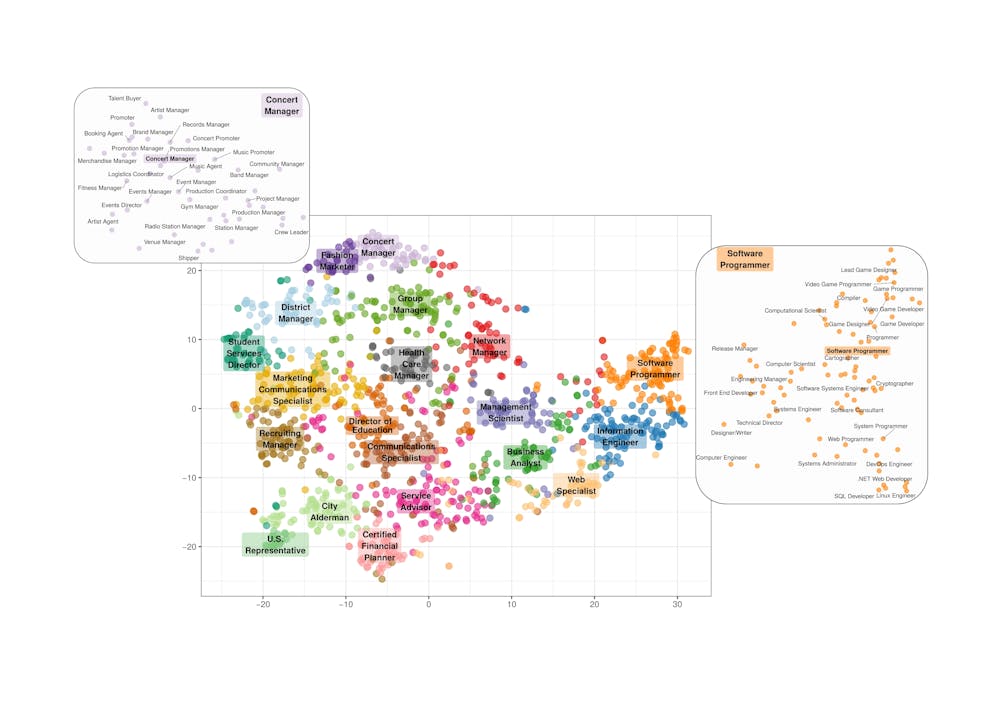
For example, to create the “vocation compass map” we used an unsupervised machine learning algorithm to cluster occupational personality data into twenty distinct clusters, grouping the occupations that were most similar in terms of personality.
An occupational map
Work has long been thought to be more fulfilling if it fits who we are as a person, in terms of our personality, values, and interests.
Our results confirmed this, and we found that different occupations tended to have very different personality profiles.
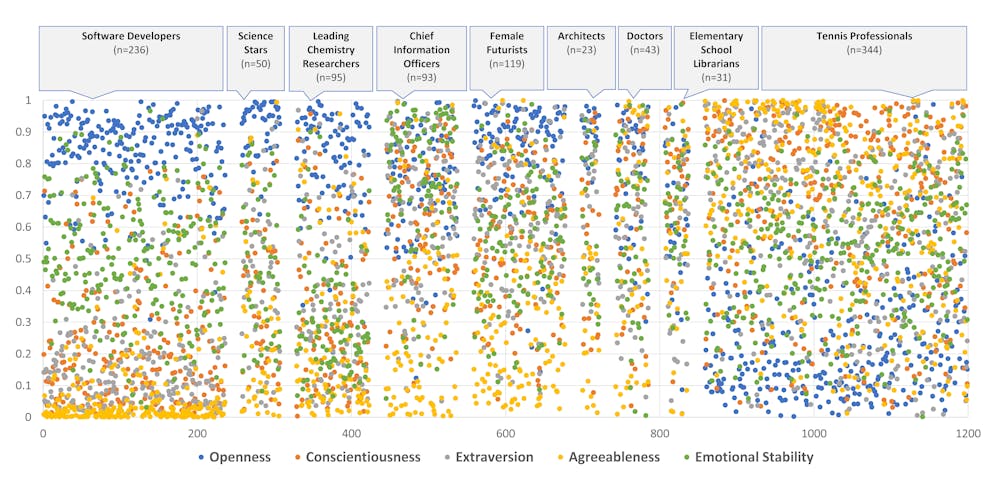
For instance, software programmers and scientists were generally more open to experiencing a variety of new activities, were intellectually curious, tended to think in symbols and abstractions, and found repetition boring. On the other hand, elite tennis players tended to be more conscientious, organised and agreeable.
Our findings point to the possibility of using data shared on social media to match an individual to a suitable job.
People belonging to different occupations generally have distinct personality traits. This figure shows the digital fingerprints of 1,200 individuals across nine occupations. Each dot corresponds to a user – with people grouped. within their self-identified occupation.Paul X. McCarthy
We used machine learning to cluster more than one thousand roles based on the inferred personality traits of people in those roles.
We found many similar jobs could be grouped together.
For example, one cluster included different technology jobs such as software programming, web development, and computer science. Another group included gym management, logistic coordination, and concert promotions.
The Vocations Map we created has clusters based on the predicted personalities of 101,152 Twitter users, across 1,227 occupations.Marian-Andrei Rizoiu
However, while many of the combinations aligned with existing occupation classifiers (current formal groupings that governments and other organisations use to group jobs together), some clusters included roles not traditionally grouped together.
For instance, cartographers, grain farmers and geologists ended up grouped together and shared similar personality traits to many of the technology professionals.
A data-driven vocation compass
With our results, we explored the idea of building a data-driven vocation compass: a recommendation system that could find the best career fit for someone’s personality.
We built a system that could recommend an occupation aligned to people’s personality traits with over 70% accuracy.
Even when our system was wrong, it wasn’t far off, and pointed to professions with very similar skill sets. For instance, it might suggest a poet becomes a fictional writer.
Professions are quickly changing due to automation and technological breakthroughs. And in our connected, digital world, we leave behind traces of ourselves. Our work has offered one approach to using these traces in a productive way.
This approach may one day be used to help people find their dream career, or at the very least, better our understanding of the hidden personality dimensions of different roles.
The only Australian achievement on display at last week’s COP25 conference was “blue carbon”, paraded in three minor side events on including carbon stored in coastal ecosystems in national carbon reporting.
Blue carbon, which is the storage of organic carbon in mangroves, seagrasses and tidal salt marshes, is irrefutably important. But it is not a panacea for climate change. Australia has been using it as a smokescreen for inaction and a tool to bully our Pacific island neighbours.
How much longer can the Coalition government defend inadequate climate commitments dependent on insufficient carbon conservation measures?
What is blue carbon?
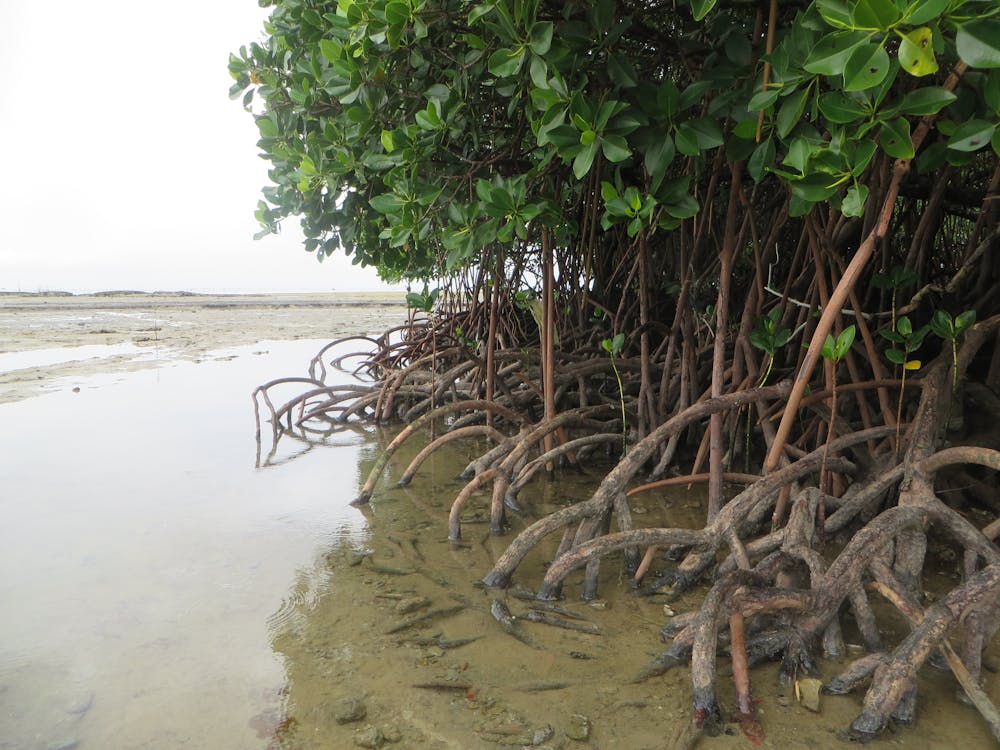
Ecosystems like mangroves, seagrasses and tidal salt marshes are very good at storing carbon. They pull it out of oceans and atmosphere and store it in their roots and mud. It can remain there for thousands of years.
Mangroves in Fiji can store carbon in their roots and mud for thousands of years.Oli Moraes, Author provided
Beyond carbon storage, these landscapes provide habitat, spawning grounds and nurseries for fish, invertebrates and turtle species. They also provide protection for coastal communities from extreme weather events and rising sea level.
Shrimp farming, coastal development and agricultural expansion are a global threat to coastal ecosystems. These areas are also susceptible to heat waves, cyclones and storms, which climate change is intensifying.
When mangroves, seagrasses and tidal marshes are cut down, cleared or degraded, the carbon that was safely stored in mud is released back into the ocean and atmosphere as blue carbon emissions, further contributing to global warming.
During 2017’s COP23 climate summit presided over by Fiji, the then Australian minister for foreign affairs, Julie Bishop, announced Australia would invest A$6 million in protecting and managing Pacific blue carbon ecosystems.
Yet our government claims the moral high ground through modest blue carbon conservation efforts.
Most wickedly, the government’s own emissions data show Australia’s pollution continues to rise. It looks increasingly like we won’t reach our own inadequate targets of 26-28% below 2005 levels by 2030. The issue of Australia using carbon credits already earned under the Kyoto Protocol, which has been derided as exploiting a loophole, has been postponed until next year.
This is totally at odds with what regional leaders called for during the Pacific Island Forum in August. Earlier this month, former prime minister of Tuvalu Enele Sopoaga said Australian Prime Minister Scott Morrison “denies climate change is happening in the Pacific”.
It is completely disingenuous for our leaders to use blue carbon as an example of Australia’s support of our Pacific neighbours in the climate crisis.
The Paris Agreement will not force Australia to undertake ambitious climate mitigation until the late 2020s. We will then be forced to buy expensive international carbon credits through schemes like blue carbon conservation and restoration.
Rather than curbing our emissions now, Australia is sinking more research dollars into cheaper carbon credits to meet these future commitments. It’s clear Australia is bullying the Pacific into bailing us out on our failure to act.
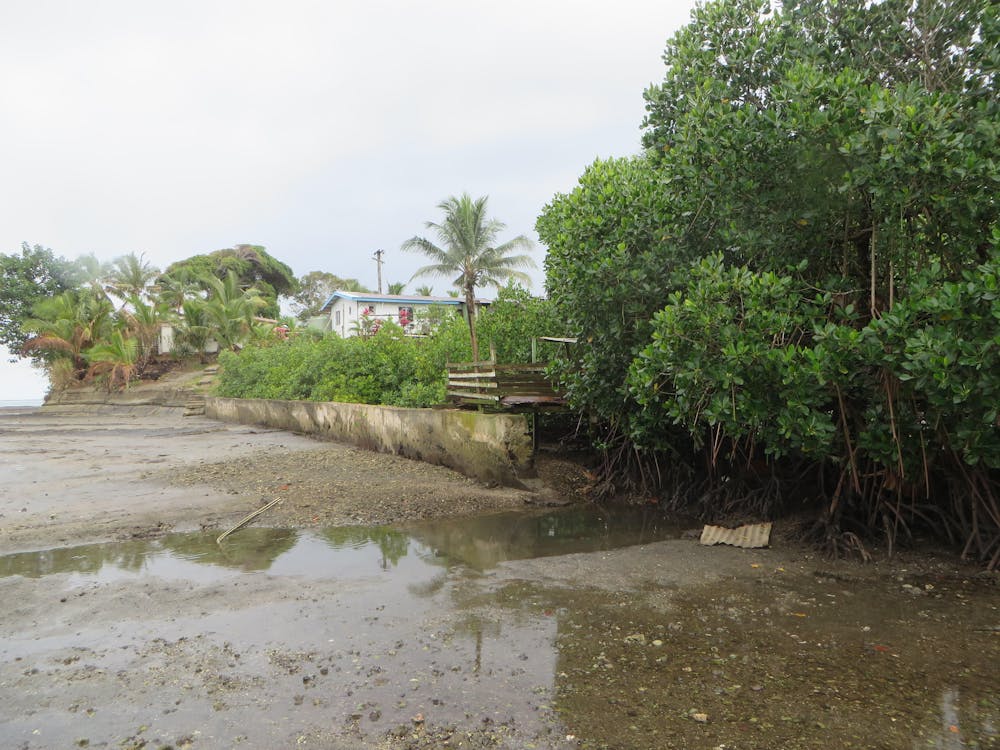
Coastal ecosystems are getting squeezed between rising seas and human construction.Oli Moraes, Author provided
Blue carbon is not a silver bullet
A UN oceans report released earlier this year highlights problems with countries depending on blue carbon as their main form of climate change mitigation.
The report says blue carbon would offset only about 2% of current global emissions and would not be an effective replacement for the “very rapid reduction of greenhouse gas emissions” required to avoid catastrophic climate change.
While recent studies in Australia found sea-level rise could improve coastal ecosystems’ ability to sequester more carbon, the UN report states: “[…] under high emission scenarios, sea level rise and warming are expected to reduce carbon sequestration by vegetated coastal ecosystems”.
If emissions keep rising, the speed and scale of climate change will overwhelm blue carbon ecosystems’ ability to adapt. This problem will be compounded by “coastal squeeze” as rising seas butt up against human infrastructure, leaving coastal plants with shrinking habitats.
This demonstrates the perverse reality Pacific islands now face.
Australia is essentially telling our Pacific neighbours, who are on the front line of climate change: “We will protect your coastal carbon sinks in the short term for international credit, while continuing to burn and export coal, oil and gas.”
In the long term, Pacific islands will be devastated and even destroyed by cyclones and storms. Because those mangroves won’t be able to adapt in time to the hot, acidic and rising seas.
Source: The Conversation (Au and NZ) – By Jon C. Day, PSM, Post-career PhD candidate, ARC Centre of Excellence for Coral Reef Studies, James Cook University
For some years, Australia has been on notice: the world is watching how we care for the Great Barrier Reef. The iconic natural wonder is the largest living organism on the planet. But its health is deteriorating.
In 2017 UNESCO, the United Nations body that granted the reef world heritage status, asked Australia to report back on how the reef was faring.
Australia this month submitted its latest report. It provides a wealth of information on many threats to the reef, such as water quality and crown-of-thorns starfish.
But the report’s overall message is that the reef’s world heritage values are fine and the threats are in hand, when the reality is far different.
Bleached coral on the Great Barrier Reef.OVE HOEGH GULDBERG
A global jewel
The Great Barrier Reef was listed as a World Heritage Area in 1981. It was recognised as globally significant or, in the parlance of the world heritage committee, having “outstanding universal value”.
UNESCO considered listing the reef as “in danger” but in 2017 decided against it. Australia was asked to report back to show it was protecting the reef’s outstanding universal value.
But Australia’s report is deficient. It claims the reef “maintains many of the elements” that make up its outstanding universal value – yet its methodology fails to properly assess this.
Why the report is deficient
The report relies on assessments made by the Great Barrier Reef Marine Park Authority in its five-yearly outlook report released in August. Our analysis shows four flaws in that otherwise commendable report have carried over to the report to UNESCO.
First, instead of assessing the world heritage values themselves, the report assessed the four natural criteria for which the reef was granted world heritage status.
These four broad criteria cover the reef’s exceptional natural beauty; its evolution over millennia; its outstanding demonstration of significant ecological and biological processes; and its enormous biodiversity of habitats and species.
Each of these criteria comprise many “values”, or features. The outlook report assesses the status and trends of these values but fails to identify which are specifically world heritage values – which is what UNESCO really needs to know.
A photo depicting two threats to the Great Barrier Reef: coal ships anchored near Abbot Point and a flood plume.Matt Curnock
Here’s an example. The biodiversity criterion encompasses coral reefs, sandy and muddy habitats, mangroves and seagrass, dugongs, whales, dolphins, turtles and birds.
For biodiversity, the report gives an overall grade of “poor”. But this obscures the fact large areas of coral – a key world heritage value – are in very poor health.
This method is used despite the federal government’s own legislation specifically requiring the reef’s world heritage values, not the criteria, be assessed.
Second, the latest assessment is measured against results in 2014. So it does not show the degradation since the reef was listed 38 years ago.
Third, the report wrongly assesses the reef’s “integrity”, an important part of its outstanding universal value. Integrity refers to the “wholeness and intactness” of the area and its threats, and requires separate investigation. Instead, the report assumes the assessments of the criteria answer the integrity question.
Fourth, both reports fail to acknowledge Indigenous people’s links to the reef are clearly part of its outstanding universal value.
In essence, the report to UNESCO sends the message Australia is well in control of the threats to the reef. This is misleading, and does not accord with the 2019 outlook report which downgraded the reef’s prospects from “poor” to “very poor”.
These criticisms may seem semantic. But the report will be critical when the world heritage committee meets next year in China to assess how the reef is faring.
What the report should have said
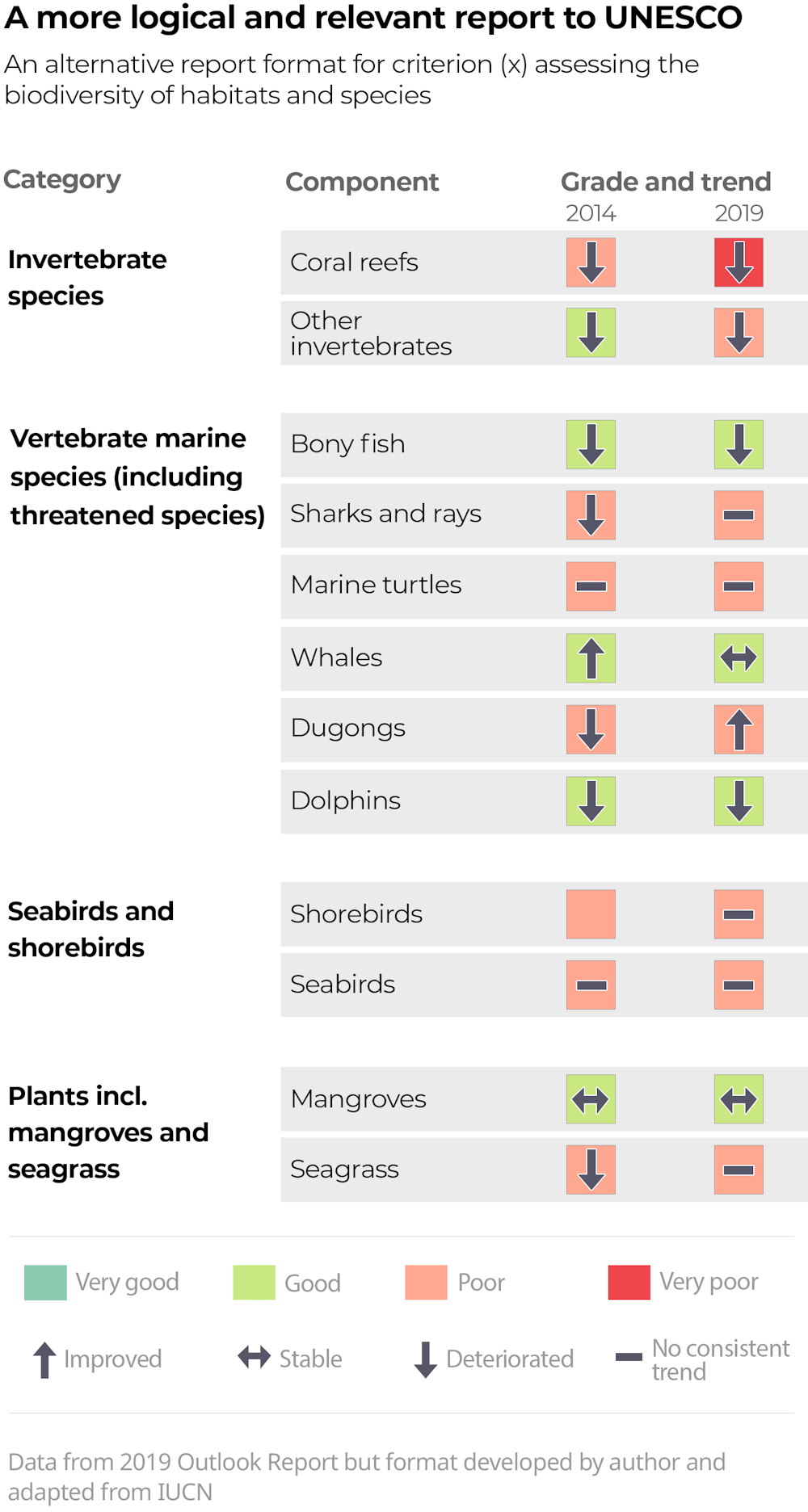
The table below demonstrates a more logical and relevant way of reporting back to UNESCO. Information in the outlook report is rearranged in this example against one of four world heritage criteria.
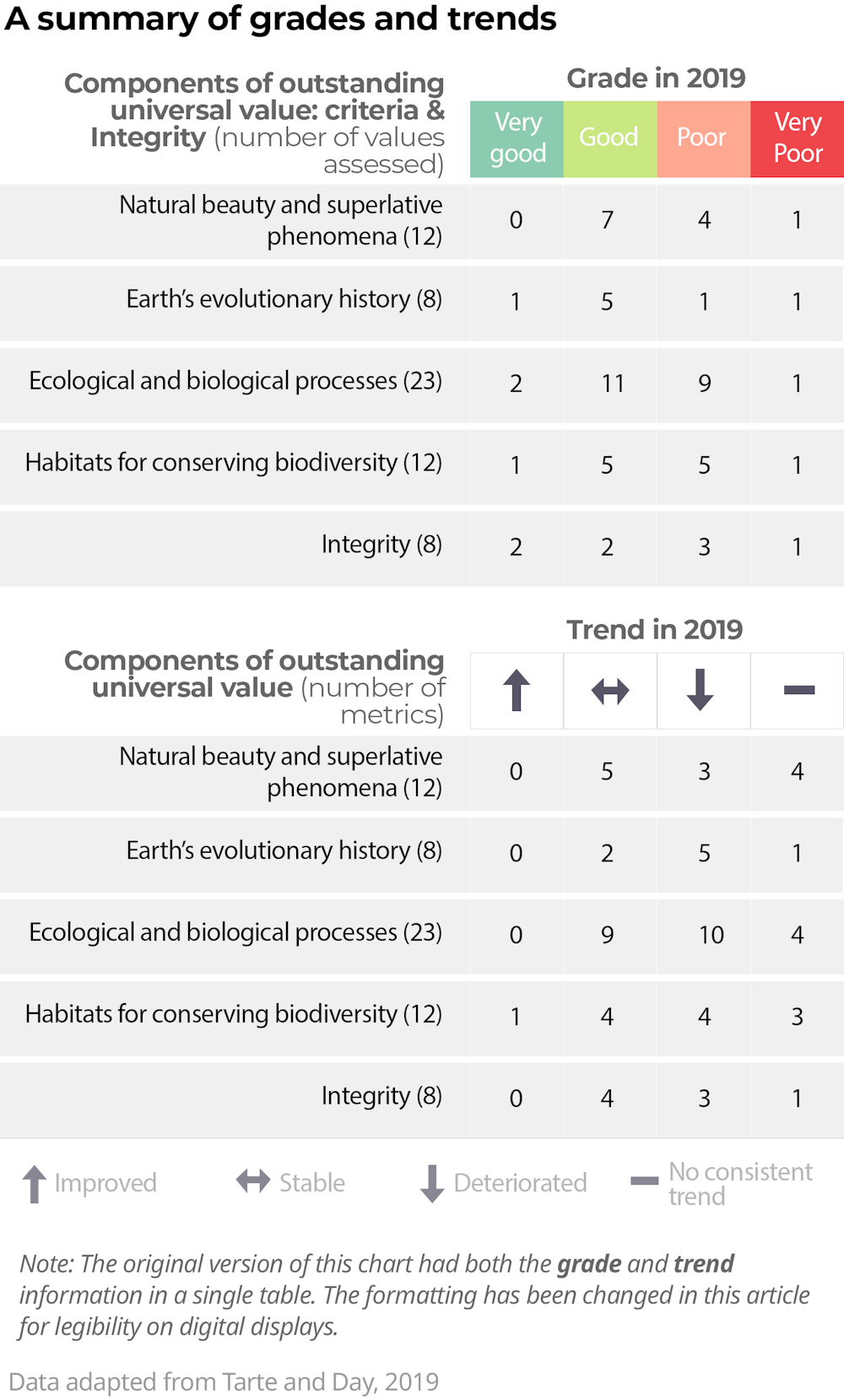
If a summary against all four criteria, plus integrity, is necessary, it would be better presented as per the table below showing the grades and trends of all relevant values.
Problems with the government’s report to UNESCO extend beyond the issues outlined above. The government acknowledges climate change is the biggest threat to the reef, and limiting temperature rise to 1.5℃ this century is widely accepted as the critical threshold for reef survival.
But the government’s report fails to explain how Australia is reducing emissions in line with this goal. A recent analysis suggests if Australia’s efforts were matched globally, warming would not be kept within 2°C, let alone 1.5°C.
Without clear and unambiguous information, the world heritage committee cannot draw an informed conclusion about whether the Great Barrier Reef should be listed as “in danger”. The listing would not fix the problems – but it might force Australia to act.
Digital technologies are often put forward as a solution to environmental dilemmas.
The spread of the internet came with claims of a huge reduction in printing, and by replacing paper with bytes, we thought we’d reduce our negative environmental impact
But this early promise of solving environmental problems may not be delivering because digital devices, like most technologies, also have environmental impacts.
Devices are powered by electricity – often produced in coal-fired plants – and are manufactured from materials such as metals, glass and plastics. These materials also have to be mined, made or recycled.
So, while digital technologies can facilitate environmental benefits, we shouldn’t assume they always do. My research published this year shows much more needs to be done to debunk such myths.
Measuring digital eco-footprints
It’s difficult to measure the environmental impacts of our digital lives, partly because the digital ecosystems that facilitate the internet are complex.
The United Nations Environment Assembly defines a digital ecosystem as “a complex distributed network or interconnected socio-technological system”.
Simply, digital ecosystems are the result of humans, digital infrastructure and devices interacting with one another. They rely on energy consumption at multiple scales.
The term “digital ecosystem” relates to ecological thinking, specifically in terms of how human-technological systems work.
However, there’s nothing inherently environmentally sustainable about digital ecosystems.
It’s worthwhile considering digital ecosystems’ environmental impacts as they grow.
In 2017, it was reported in Nature that internet traffic (to and from data centres) was increasing at an exponential rate. At that stage, it had reached 1.1 zettabytes (a zettabyte equals one trillion gigabytes).
As our digital use continues, so do our carbon emissions.
Dangers of data centres
Data centres majorly contribute to the carbon emissions of digital ecosystems. They are basically factories that store, backup and recover our data.
In April last year, it was estimated data centres around the world used more than 2% of the world’s electricity, and generated the same amount of carbon emissions as the global airline industry (in terms of fuel use).
While there is debate about the impact of flying on climate change, we’re less likely to evaluate our digital lives the same way.
According to British Open University Professor John Naughton, data centres make up about 50% of all energy consumed by digital ecosystems. Personal devices use another 34%, and the industries responsible for manufacturing them use 16%.
Tech giants such as Appleand Google have committed to 100% renewable targets, but they’re just one part of our giant digital ecosystem.
Also, on many occasions, they rely on carbon offsets to achieve this. Offsets involve people and organisations investing in environmental projects to balance their carbon emissions from other activities. For instance, people can buy carbon offsets when booking flights.
Offsets have been critiqued for not effectively reducing the carbon footprints of wealthy people, while absolving guilt from continued consumption.
A carbon-filled road ahead
With more digital technologies emerging, the environmental impacts of digital ecosystems are probably going to increase.
Apart from the obvious social and economic impacts, artificial intelligence’s (AI) environmental implications should be seriously considered.
A paper published in June by University of Massachusetts Amherst researchers revealed training a large AI machine could produce five times as much carbon as what one car (including fuel) emits over a person’s lifetime, on average.
Also, this figure only relates to training a large AI machine. There are various other ways these machines suck energy.
Similarly, bitcoin mining (an application of blockchain) continues to consume large amounts of energy, and is increasing on a global scale. According to the International Energy Agency, bitcoin mining uses more energy than some countries, including Austria and Colombia.
Putting the ‘eco’ back in digital ecosystem
The digital ecosystem that supports our devices includes storage systems and networks that aren’t in our homes or workplaces, such as “the cloud”. But we should still take responsibility for the impact of such systems.
Satellites are in space. Wires run beneath footpaths, roads and oceans.
All the while, the Internet of Things is creeping into old technologies and transforming how we use them. These underground and distant aspects of digital ecosystems may partly explain why the growing environmental impacts of digital are sidelined.
There are some ways people can find out more about responsible tech options. A 2017 guide by Greenpeace rated digital tech companies on their green credentials. It assessed a range of corporations, including some managing digital platforms, and others hosting data centres.
But while the guide is useful, it’s also limited by a lack of transparency, because corporations aren’t obliged to share information on how much energy is needed or supplied for their data centres.
The responsibility to make our digital lives more sustainable shouldn’t lie solely with individuals.
Governments should provide a regulatory environment that demands greater transparency on how digital corporations use energy. And holding these corporations accountable should include reporting on whether they are improving the sustainability of their practices.
One immediate step could be for corporations that produce digital devices to move away from planned obsolescence. One example of this is when companies including Apple and Samsung manufacture smartphones that are not designed to last.
Digital sustainability is a useful way to frame how digital technologies affect our environmental world.
We need to acknowledge that technology isn’t just a source of environmental solutions, but also has the potential for negative environmental impact.
Only then can we start to effectively transition to a more sustainable future that also includes digital technologies.
As for the wreckage wrought by the current bushfires, GoFundMe reported that by the end of November, more than 700 campaigns were launched in response.
Australia is now ranked third globally in donations per capita, with one in ten contributing to a GoFundMe campaign this year. Regional towns are the most generous donors, with Wagga Wagga, Mackay, and Launceston ranking highest.
What’s more, GoFundMe fundraisers specifically highlighting climate change increased by more than 65% in 2019.
Between bushfires, devastating floods, and a drought with no end in sight, crowdfunding campaigns reflect a weary resolve amid the perceived inadequacy of government responses to natural disasters.
Crowdfunding previously played only a relatively minor role in Australian life. But several recent campaigns illustrate the increasing influence crowdfunding might serve in forms of advocacy and activism.
Volunteer firefighting crews, stretched to their limits after weeks on the frontlines, have attempted to crowdfund equipment and supplies.
In fact, the most successful Australian GoFundMe campaign ever – raising $2 million from more than 45,000 donors – is for the Port Macquarie Koala Hospital, treating koalas injured during the fires.
But some close observers within charitable and philanthropic groups still advise donors to consider directing their contributions through registered charities.
One local brigade’s efforts to fundraise better protective masks were met with warnings from the rural fire service against establishing campaigns “without the appropriate authority”.
Not just advocacy, political activism too
Other campaigns in GoFundMe’s top ten most successful this year reveal that, at their best, such causes can simultaneously serve as direct advocacy for marginalized people and wider activism to address underlying injustice.
An immensely praiseworthy example – and the third most successful campaign this year – is “FreeHer”.
This campaign raises funds for Indigenous women in Western Australia imprisoned for inability to pay fines (such as Ms Dhu, who died in police custody after being held for unpaid fines).
The FreeHer campaign achieved immediate impact and sent a resounding message that such practices are wholly intolerable. The WA government subsequently repealed the laws.
In contrast, Anning’s arch-nemesis “Egg Boy” (Will Connolly) was far more successful – the eighth-highest fundraiser this year – with well-wishers raising substantial funds for Connolly’s legal fees.
When his expenses were covered pro bono Connolly donated the funds to victims of the Christchurch mosque shooting.
However, concerns have been raised that crowdfunding election campaigns could harm electoral integrity, largely due to the difficulty of tracing the source of donations.
Who gets a soapbox?
Conspicuously absent from GoFundMe’s list of most successful campaigns was one that might have otherwise finished on top.
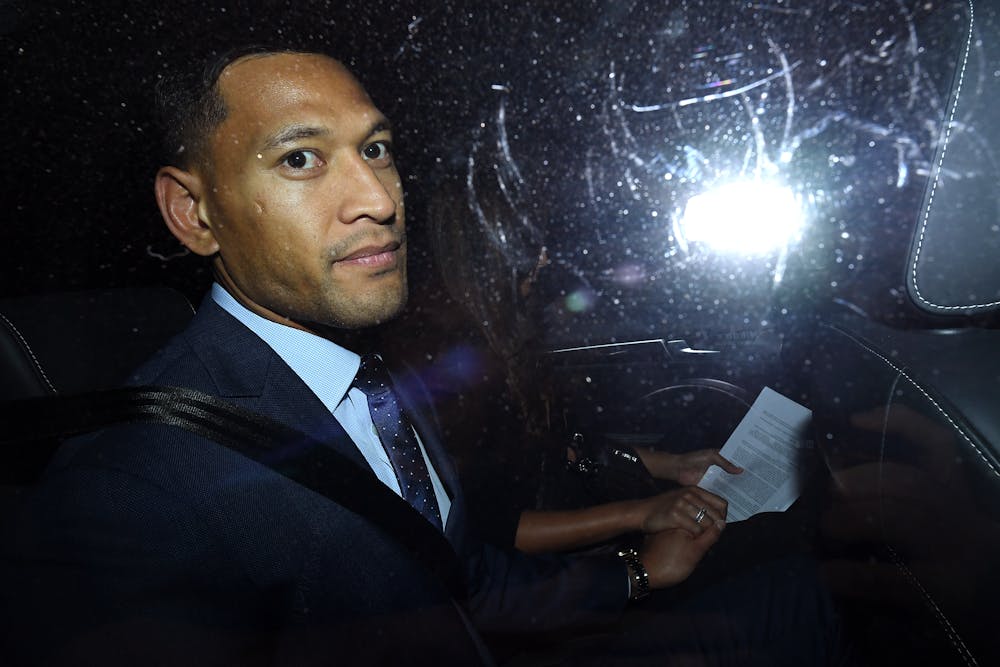
Rugby Australia terminated Israel Folau’s contract after he posted on social media that gay people will face damnation unless they repent.AAP Image/Joel Carrett
The campaign’s de-listing from GoFundMe – and rejection from the Australia-based MyCause platform – fed into narratives of Christians feeling “bullied”.
Why? Well, GoFundMe and MyCause are private companies, but to many they also represent the public square, presumably open to all. Such companies can act as gatekeepers, barring campaigns they believe may harm their reputation.
Perhaps the most infamous example was between 2014 and 2016, when GoFundMe banned campaigns directly raising money for an abortion. GoFundMe later relented, and have recently partnered with the ACLU and Planned Parenthood in support of reproductive rights.
The enthusiasm of the Australian Christian Lobby to host Folau’s campaign after it was de-listed – raising over A$2 million in two days – could also foretell a more ideologically-driven array of crowdfunding platforms. The furore may have even given the Morrison government an easier task in selling the Religious Discrimination Act.
Competing for attention in markets of sympathy
Crowdfunding can achieve wondrous outcomes, but less heartening is how often it’s needed to correct failures of the state, or suffering caused by private interests.
An obvious example is medical expenses, which easily comprises the most common type of campaign, despite the very low chances of success and threat of further harm.
It’s these heart-wrenching campaigns many pointed to when criticising Folau’s claim he was in “the fight of my life”.
Social crowdfunding platforms are effectively markets for sympathy, where “the crowd” weigh claims to moral worthiness. Such mechanisms create few winners and many losers. And suffering can be compounded in witnessing how much one’s life is worth in the eyes of others.
Crowdfunding is a popular tool of recognition and redistribution, promising new ways to govern ourselves and determine what values we hold.
But we must ensure it doesn’t become an altar of “sacrificial citizenship”, where good people falling on hard times must prove they are uniquely deserving above all others.
Platforms of public appeal cannot be a substitute for good governance and institutional protections.
Weight gain can creep up on us. Over the winter months we enjoy foods that create a feeling of comfort and warmth. Many of these foods tend to be higher in calories, usually from fat or added sugars.
As we enter the summer months, some of us start to think about getting in shape – and how we’re going to look in a bathing costume.
These concerns might be met with the temptation to seek a “quick fix” to weight loss. But this sort of approach is likely to mean finding yourself back in the same position this time next year.
Looking past the quick fix and fad diets to longer-term solutions will improve your chance of keeping the weight off and staying healthy all year round.
Extra body fat is a risk factor for developing chronic diseases including type 2 diabetes and heart disease. With two in three Australians carrying too much body fat, many of us may be well-intentioned, but not making the best choices when it comes to what we eat.
Weight loss is largely a balance of choosing the right foods and being physically active in order to tip our internal energy balance scales in the right direction.
For the most part, quick-fix diets are based on calorie restriction as a means of weight loss. They focus on different strategies to get you to eat fewer calories without having to actively think about it.
Fad diets tend to share similar characteristics, such as eating fewer varieties of foods, fasting, and replacing meals.
But weight loss isn’t just about swapping one or two foods for a month or two; it’s about establishing patterns to teach our bodies new habits that can be maintained into the future.
Fad diets and quick fix options can be limited in several respects. For example, they can be difficult to stick to, or people on them can regain weight quickly after stopping the diet. In some cases, there is insufficient research around their health effects in the longer term.
Exercise is also an important part of losing weight.From shutterstock.com
Let’s take a look at the way some of these characteristics feature in three popular diets.
Juicing/detoxification
Juicing or detoxification diets usually last two to 21 days and require a person to attempt a juice-focused form of fasting, often in combination with vitamin or mineral supplements in place of all meals.
People on this diet lose weight rapidly because of the extremely low calorie intake. But this is a severely restricted type of diet and particularly difficult to follow long term without a risk of nutrient deficiency.
Also, while it might hold appeal as a marketing buzzword, detoxification is not a process the body needs to go though. Our livers are efficient at detoxifying with very little help.
An intermittent fasting diet involves a combination of fasting days and usual eating days. The fasting strategies include complete fasting (no food or drinks are consumed on fasting days) and modified fasting (20-25% of calories is consumed on fasting days).
This diet leads to weight loss due to an overall decrease in calorie intake. But it’s hard to stick with the fasting pattern as it results in intense hunger. Similarly, this diet can lead to binge eating on usual eating days.
But even though people are allowed to eat what they want on non-fasting days, research shows most do not over-eat.
Overall, for people who are able to stick with intermittent fasting, we don’t have enough evidence on the benefits and harms of the diet over time.
Long term energy restriction without fasting may result in the same weight outcomes and may be a better approach to continued weight management.
The paleo diet
The palaeolithic (paleo) diet was designed to reflect the foods consumed by our Stone Age ancestors before the agricultural revolution.
The paleo diet excludes processed foods and sugars. This recommendation lines up with the current evidence-based dietary recommendations. However, the paleo diet also excludes two major food groups – grain and dairy foods.
Developing new healthier habits can take time and perseverance, but will pay off.From shutterstock.com
While short-term weight loss might be achieved, there’s no conclusive proof of benefit for weight loss and nutritional balance in the long term. People who follow the paleo diet might be at risk of nutritional deficiencies if they’re not getting any grains or dairy.
So it’s worth taking cues from the paleo diet in terms of limiting processed foods and sugars. But if you’re thinking of adopting the diet in its entirety, it would be important to seek support from a health professional to ensure you’re not missing out on essential nutrients.
Things to look out for
So how can you tell if a diet is likely to lead to long term weight loss success? Here are some questions to ask:
can the foods be easily bought at the supermarket?
If the answer to these three questions is “yes”, you’re likely on to a good one. But if you’re getting at least one “no”, you might want to think carefully about whether the diet is the right choice for sustained weight loss.
Of course, seeing results from a diet also depends on your level of commitment. While it may be easier to stay committed in the shorter term, if you want to keep the weight off year round, it’s important to make checking in with your food choices part of your ongoing routine.
The COP25 climate meeting in Madrid concluded over the weekend. As in past meetings, the talks failed to make much progress on international climate action. And again, the views and needs of women were largely ignored.
Among the aims of the COP, or conference of parties to the Paris Agreement, was working towards “ambitious and gender-inclusive climate action”. That is, recognising the need to integrate gender considerations into national and international climate action.
The first step to achieving this aim would be gender parity at international climate conferences such as the Madrid COP. While we don’t yet know how many of the 13,000 registered governmental delegates were women, based on past numbers they are unlikely to make up more than a quarter.
This is not the only forum where the experiences of women are ignored. Our research, spanning Kenya, Cambodia and Vanuatu, has found women are working collectively to strengthen their communities in the face of climate change. But their knowledge about climate risk is dismissed by scientists and political leaders.
Bridging climate awareness
When women are excluded from local and national-level governance, the absence of their voices at regional and global levels, such as COP meetings, is virtually assured.
Our work across Africa, Asia and the Pacific found scientists – generally male – lack awareness of the knowledge women hold about the local consequences of climate change. At the same time, those women had little access to scientific research.
In places where the labour is divided by gender, women and men learn different things about the environment.
Though the women in our research generally did not know about government policies or programs on climate change and disaster risk reduction, they were very aware of environmental change. In Kenya, the pastoralist women we spoke to are acutely aware of the link between their physical insecurity and extreme drought.
As droughts become more intense, pastoral communities who depend on livestock and grazing land are severely impacted. The loss of livestock can trigger communal conflicts and displacements as violence is used in retaliation for cattle rustling.
Moreover, given the prevailing practice of “bride prices” among pastoral households, early marriages for young women and girls are a way to secure cattle. Despite laws against female genital mutilation in Kenya, it is practised to secure higher bride prices, due to beliefs that the practice makes girls more valuable.
This everyday knowledge is crucial for identifying the full risk posed by climate change. However, women told us their knowledge was not always recognised within their communities – let alone at the national level. They blamed this on discrimination against women taking up decision-making roles, poverty and gender-based violence which dissuades women and girls from participating.
Valuing women
Even when countries have policies for gender equality in climate change responses, that doesn’t mean women are actually given an equal voice. According to female community leaders and women working in government and non-government organisations in Cambodia, Kenya and Vanuatu, gender equality issues in climate change policies tend to be confined to “women-only programs”.
Gender inclusion is primarily addressed in social welfare programs, rather than ministries responsible for energy, meteorology, land and natural resources.
To address these gaps, we need to to take women’s varied expertise seriously. This begins with supporting their leadership within communities and villages.
Women’s access to education and careers in climate-relevant sciences is also crucial. Ideally, this will progressively bring in broader groups of women and girls to participate in climate change decision-making.
Climate change action
Our research found programs for mitigating climate change are also perfect opportunities to support peace, community development and women’s rights.
In Kenya, for example, one member of a women’s network responding to drought and conflict told us: “[W]e support each other. We want a collective voice because then we have more power.”
These networks help women with female-specific issues, such as natural disasters that make women extremely vulnerable to abuse from men.
But even in day-to-day life, these forums are valuable for women who would otherwise be barred from political activism. In areas where authoritarian rule or discriminatory customs limit democratic spaces, women’s networks for climate response are a rare opportunity for public deliberation on policy-making.
Global evidence now shows environmental projects are more effective when gender considerations are taken into account. Our research adds to this knowledge base by documenting how women’s networks mobilise in response to climate change.
For example, the Women I Tok Tok Tugeta (Women Talk Together) network in Vanuatu has created a Women’s Weather Watch that provides early warning of disasters.
It also makes clear that relying on scientific knowledge or technological solutions alone will be insufficient in these complex environments, where climate change, gender discrimination and conflict all come together.
When we look at COP25, we can’t help but mourn the lack of women’s knowledge from the countries most affected by climate change. By supporting women at all levels, from the village to the global stage, this vital perspective can inform the creation of robust, sustainable and effective solutions to our climate crisis.
The authors would like to acknowledge the contributions of Melissa Bungcaras and Michelle Higelin, and ActionAid Australia.
More students from advantaged backgrounds study subjects that will get them a higher ATAR (Australian Tertiary Admissions Rank) in New South Wales, while students from lower socioeconomic families are over-represented in subjects that contribute less to the score.
Our new study showed subjects such as advanced English are studied by students with an average higher socio-economic status than students studying standard English.
Advanced English is weighted around 13 marks higher than standard English by the Universities Admissions Centre, which uses these points to calculate the ATAR. Students with a higher ATAR are more likely to get into a university course of their choice.
We examined who studies which subjects, and the benefits of studying some subjects over others in the NSW year 12 curriculum, or the Higher School Certificate (HSC).
We also calculated most advanced English students were likely in the top 20% of their year in reading in NAPLAN in years 3, 5, 7 and 9. But most standard English students were likely in the bottom 20% for each of their NAPLAN years.
We saw similar patterns across many subjects, including between mathematics and general mathematics, between physics, chemistry and senior science, and between economic and business studies.
We also found more advantaged students took vocational education and training (VET) subjects at a much lower rate than their less advantaged counterparts. This included VET subjects that contribute to an ATAR, and other VET subjects done in year 12.
If some subjects are more likely to get you into university, and these are not being accessed equally, we have an unequal system. This means the NSW curriculum and the system it operates in legitimises social status and later opportunity based on student family background.
What we did
We looked at 73,371 non-identifiable student records, analysing the subjects students took and their grades in the HSC. We developed a scale for student socio-economic status using information on parents’ occupation and education level, as well as the students’ gender and school location.
To determine the weight of subjects, we referred to the HSC scaled mean used by the Universities Admission Centre to calculate a student’s ATAR.
There are options within subject areas, each having greater or less weight towards an ATAR. For instance, mathematics has a mean 12 points higher than standard mathematics; physics and chemistry are 12 points higher than senior science; and economics is eight points higher than business studies.
We have used the ATAR as a proxy for measuring student outcomes. This is because ATAR is the basis on which places in university courses are determined, and because it is often the focus of conversations to summarise how a student went in the HSC.
An unequal curriculum
The socio-economic status of a student’s parent(s), school location and student gender continue to exercise significant influence on completing the HSC, the subjects a student studies in the HSC, and ultimately their results.
There is a hierarchy among the subjects in the NSW curriculum.Adapted from Roberts, Dean, & Lommatsch (2019)
The options weighted higher, and which therefore contributed more to an ATAR, were overwhelmingly studied by students from higher socio-economic families, and by students in the city.
Prior achievement also played a role in determining the subjects students took. Our calculations show most physics and chemistry students were likely in the top 20% of numeracy in NAPLAN when they were in years 3, 5, 7 and 9; but most senior science students were likely in the bottom 20%.
Most mathematics students were likely in the top 20% of numeracy in NAPLAN when they were in years 5, 7 and 9; but most standard mathematics students were in the bottom 40%. And economics students had higher NAPLAN grades than those in business studies.
There was also a gender divide.
A much higher proportion of females studied advanced English than males. And city students took the subject at nearly twice the rate of outer regional students.
This was also the case for physics, chemistry and economics when compared to senior science and business studies.
Mathematics was studied more by males but general mathematics studied about equally by males and females. However only a small proportion of outer regional students studied mathematics compared to major cities.
Similar patterns could be seen in languages and within vocational education subjects. Students can study one VET subject from a limited range and sit an optional exam to have it contribute to their ATAR or study approved VET courses towards the HSC (and not the ATAR).
Students from higher socioeconomic backgrounds took digital technology VET subjects. But students from less advantaged families took more retail, metal, engineering and hospitality subjects.
VET subjects were also studied at about three times the rate in outer regional and remote areas than in major cities, and twice as much in less advantaged areas than more advantaged ones.
This research shows family and home is highly related to what students do at school, overwhelmingly sorting students into subject pathways that reinforce their current place on the social ladder.
The higher your ATAR, the more likely you are to get into a more prestigious university course, which will give you more job options.
We need to look at the way subjects are arranged in the school curriculum, and ensure all students have genuine access to subjects that enhance their post-school options.
National, state and city governments aspire to increase prosperity through globally competitive and more liveable cities. Through “world class” infrastructure, buildings and public spaces they aim to increase a city’s competitive advantage in attracting investment and talent. Research shows city governments, not states, nearly always deliver these projects overseas. The controversies in the Australian examples are largely the result of excluding local government.
Globally, mixed-use megaprojects have increasingly been seen as vehicles to make cities competitive as well as responding to local transport and housing issues. My research for a forthcoming book, Mixed-Use Megaprojects and the Competition for Capital, examines such projects on government land in Sydney, Melbourne, New York and Copenhagen.
The research examined projects in terms of governance, narrative, urban form, connectivity and public benefit. The findings underscore the argument that state governments lack the structural capacity or nimbleness to manage the subtle interplay of various place-based programs necessary to coordinate enablers of modern competitiveness.
Compared to developments overseas, the Australian examples have several things in common:
more property industry influence
less strategic coordination with other land assets and transport projects
less public benefit outcomes
less commitment to legislated planning frameworks
less engagement with local knowledge.
The Barangaroo development in Sydney is perhaps the archetype of these patterns.
Despite much controversy over Barangaroo, one thing can be agreed. The poor relationship between the city and state governments has contributed to a loss of trust in planning.
Firstly, this is a skills mistake. The city council has sophisticated capabilities and consistent place-based planning, design and approvals processes. These have been developed over decades.
The city also has established consultation processes and deep experience dealing with a range of stakeholders involved in inner-city development.
When the state intervenes to deliver a project and excludes the city, these processes and their advantages disappear.
Secondly, this is a political mistake. A sophisticated enemy is created that has working relationships with local stakeholders and constituents. With decades of planning work and expert knowledge disregarded, city governments are compelled to scrutinise the process and criticise the state from the sideline.
The City of Sydney appears to be winning the political, if not material, battle of Barangaroo. The lord mayor has outlasted seven state premiers in the project’s lifetime along with numerous measures intended to reduce lord mayoral efficacy.
But the battle is the problem and it’s sure to continue under current patterns of (non)rules. Consider the following examples.
This ministerial power makes projects highly sensitive to political fluctuations. Longer-term planning objectives can be destabilised as a result.
The unsolicited proposal process has been another trust-breaker. Traditionally, government established the need for infrastructure within a metropolitan plan. It would call for tenders from the private sector, then evaluated those tenders in a competitive process. Now private sector participants are encouraged to approach government with development “ideas”.
A prime example involves the Crown Casino complex at Barangaroo. This proposal required major changes to the approved plan. It more than doubled the allowable floor space of the previous hotel-in-the-harbour proposal it had been encouraged to replace to restore trust in planning.
The Copenhagen City & Port Development Corporation is an arm’s length delivery authority, owned 95% by Copenhagen municipality and 5% by the state. It is responsible for delivering a number of mixed-use megaprojects.
As with all city areas, Copenhagen municipality develops the “Lokalplan” for precincts under standard processes and approves individual buildings and public spaces. North Harbour has been delivered as adopted in 2009.
In New York, a private developer has delivered the Hudson Yards project above state railyards under the city’s standard planning process (ULURP). The state’s involvement is limited to the air rights lease.
This did not protect the Hudson Yards project from criticism. Nevertheless, it went through the lengthy standard consultative process and has been delivered according to the rezoning since 2005.
Hudson Yards, the largest private real estate development in the United States, opened this year in New York, having gone through the city’s standard planning process.Justin Lane/EPA
As an aside, the city governments of both European and US cases have adopted mandatory affordable housing laws. They are now delivering 25% in their megaprojects.
As an indulgence, let’s say we were in Copenhagen or New York. The casino complex, hotel-in-the-harbour, or doubling of the site’s floorspace would require revisiting the city’s Lokalplan or ULURP. This process would include public review and approvals by multiple city government agencies. In Sydney, one person, the state minister, decides on major changes to the plan.
This research shows the approaches needed to improve city competitiveness and fairness tend to be done better by city governments than by state governments. Yet in Australia the state has absolute control of these complex, city-based projects. Whether as part of a new metropolitan sphere of governance or not, it is time to empower local city governments in the transformation of our cities.
Western philosophy is a series of footnotes to Plato, the old saying goes. And The Republic (c. 375 BCE), featuring Plato’s teacher Socrates in dialogue with several friends, is unquestionably central to Plato’s thought.
There are few subjects that Plato’s masterpiece does not touch or play on: political theory, education, myth, psychology, ethics, epistemology, cultural criticism, drama and comedy.
Little surprise then, that The Republic continues to be claimed by people with the most diverse convictions and agendas.
The Nazis pointed to the text’s seeming advocacy of eugenics. Yet Martin Luther King Jr nominated The Republic as the one book he would have taken to a deserted island, alongside the Bible.
Karl Popper famously accused The Republic of being a blueprint for illiberal, closed societies. Yet today, we can hear its echoes in the dazzling hyper-libertarian utopias envisaged by the Silicon Valley set.
The Republic’s famous allegory of the cave, which suggests that people’s ordinary sense of reality may be illusory, continues to shape our cultural imagination. It has been revisited again and again in literature, as well as in classic sci-fi films like The Matrix.
So, how can we make sense of this extraordinary text today?
Keanu Reeves in The Matrix (1999): the film revisits some of Plato’s ideas outlined in The Republic.Warner Bros., Village Roadshow Pictures, Groucho Film Partnership
Divided into ten “books”, the Republic is mostly taught as a text championing a series of radical prescriptions concerning the best city (polis) or regime (politeia).
At a certain point, Plato’s Socrates tells his young friends that the best city will be one in which the population is divided into three castes. On top will be a ruling caste of (yes) philosopher-guardians.
The second class will be “auxiliaries” or soldiers who will share everything in common, including wives and children. Indeed, Socrates depicts men and women as absolutely equal in all decisive senses. The third class are craftspeople and traders more recognisable to us today.
Less amusing is the proposed power of Socrates’ enlightened guardians to “breed” men and women as breeders selectively mate horses, dogs or fighting birds. The best warriors will get to sleep with the most beautiful women. There will be rigged “lotteries” so that the lesser-credentialed think it is just bad luck that they cannot “hook up” with the alphas.
Babies will be taken from their mothers by the rulers to a kind of state crèche. More ominously, children born with defects will be “hidden away” (katakrypsousin).
Everything is to be arranged so everyone can say “mine” about the same things. Each person will not know who their immediate biological family is. So, they will consider all their fellow-citizens as brothers and sisters, mothers and fathers.
We can understand at this point why Nazi educationalists looked to The Republic as a precedent for some of their programs. Contemporary dreamers of a “dark enlightenment” wherein techy people “with high IQs” can “opt out” of wider society are also finding their way back to the future as depicted in The Republic Book V.
Why many other defenders of political liberty admire Plato’s text is less clear. But, as mentioned, there are many other things the book discusses than Socrates’ seemingly ideal “city in speech”.
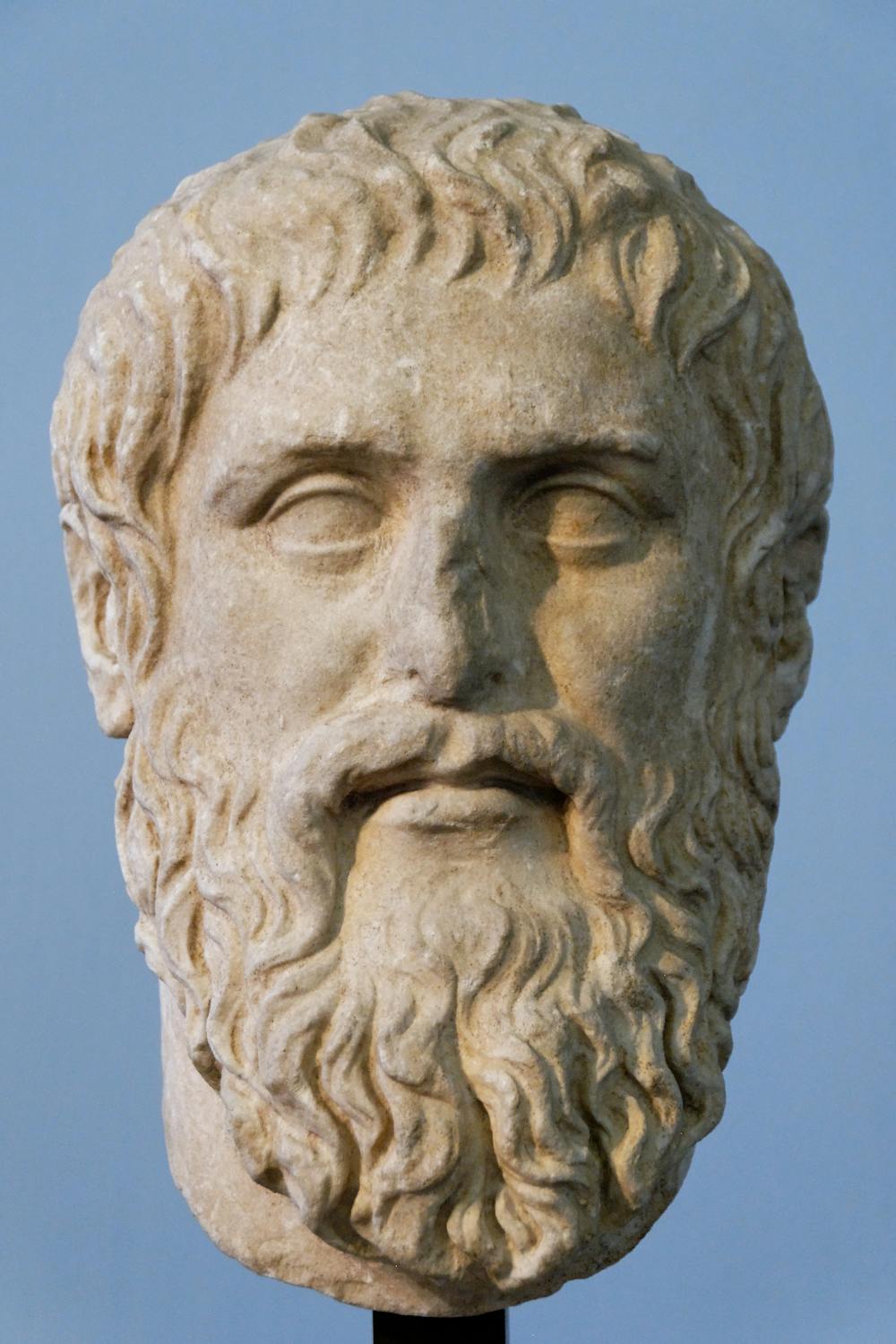
A Roman copy of the portrait of Plato made by Silanion ca. 370 BC for the Academia in Athens.Wikimedia Commons
The Republic’s principal concern is the question of what justice is. Does being just benefit the just persons themselves, or those whom they aid, or both? Is it good for a person to live a just life?
To answer, The Republic sets up a connection between types and parts of the human psyche (mind, soul) and different political systems. For some systems and people, honour and its pursuit is considered the highest good. In other societies, like our own, the pursuit of money as the means to pleasure, power, and satisfying desires is predominant.
But then, it is almost impossible to imagine how such a ruling elite could ever be created without great injustices. How everybody else could be “persuaded” to accept their claims to rule is also unclear – as is grasping just how Plato’s guardians could get ordinary citizens to give up their kids to the state for the greater good.
The cycle of regimes
Given these problems with the utopian interpretation of The Republic, some modern commentators take seriously Socrates’ repeated hints that we should consider what he is saying with a grain of salt.
In the wider context of the dialogue, Socrates presents the image of the three-caste city in order to provide his friends with an image of what a just individual soul would be like. Such a soul would be one in which wisdom rules over the desires for honour and pleasures. “Justice” would apparently be something like the inner harmony of the soul’s parts.
The famous “best city”, which has produced such divided reactions from commentators, is therefore a methodological model. If we can glimpse justice in something as big as a city, Socrates suggests, we might know what to look for in a person.
Small wonder that Socrates warns his friend: “you should know, Glaucon, that in my opinion, we will never get a precise answer using our present methods of argument”.
Portrait of Plato in Raphael’s The School of Athens fresco, 1509.Wikimedia Commons
If there is a political message in The Republic at all, it is not about creating a recipe for the ideal city.
The true meaning of the Republic instead lies in how it stages the inescapable difficulties of political life, given what Isaiah Berlin called the crooked timber of human nature.
In fact, not just Socrates’ kallipolis (beautiful city), but each of the political regimes that he examines in The Republic prove flawed and unstable.
Regimes led by honour-loving nobles (timocracies) can only survive based on elites’ harshness towards inferiors, sowing grapes of wrath. Such elites tend over time to become scornful of public duties, and as they age, to turn from matters of war to finance:
finding ways of spending money for themselves, then they stretch the laws relating to money-making, then they and their wives disobey the laws altogether.
This vision sounds oddly prophetic after the Global Financial Crisis of 2007-8. Oligarchies hollow out the middle classes. By lending money at interest, they create “a considerable amount of drones and beggars in the city”. At a certain point, these “have-nots” rightly revolt. Democracies follow.
But Plato is no simple friend of democracies, either. Socrates asserts that the democratic citizens’ love of freedom tends to undermine traditional authorities. Teachers become afraid of students and parents of their children. As the generations mix, “the old stoop to play … and pleasantry, imitating the young for fear of appearing disagreeable and authoritarian …”
These passages have appeared prescient to many conservatives since the 60s.
A moral vacuum ensues in which demagogues can arise, promising to make the city great again. At this point, Socrates warns, democracies can devolve into tyrannies.
In these deeply unjust regimes, a single man can play out his hubris and pathologies on entire peoples, after removing his foes by force or fraud.
What, then, does The Republic say positively about justice?
An iconic exchange in The Republic pits Socrates against the sophist Thrasymachus. The latter argues that “might” (boldness, strength and cunning) “makes right”.
Socrates’ claim that justice involves harming no one, and cultivating the knowledge to benefit others and oneself, sounds to the “beast-like” Thrasymachus as naive as it still sounds to “realists” today.
Glaucon and Adeimantus, amongst Socrates’ other companions, also wonder whether treating others justly is not a recipe for individual unhappiness. Anticipating Mr Tolkein, Glaucon puts Socrates’ view to the test by imagining a magic ring conferring invisibility. Wouldn’t even Socrates take advantage of this power to feather his own nest on the quiet?
Unbelievably, Socrates replies “no”.
The argumentative arc of The Republic in fact closes in book IX, at the end of the account of a tyrant’s life. Here, we are made to see that the tyrant’s amoral pursuit of egoistic appetites, which people often imagine as the best of all possible lives, is a recipe for misery and paranoia.
In one of the mathematical plays that dot the text, Socrates tells us that such a monomaniac will be exactly 729 times less happy than a wise person. For the author of The Republic, grinning with irony, it is exponentially better to be just than to live unjustly.
Only when we see this can we grasp why Plato spills so much ink in The Republic on how to educate a lover of wisdom, turning them away from the lures of money, fame, flattery and power. The famous images of the divided line, the cave, and the Good beyond being are each produced in the course of describing such an ideal education.
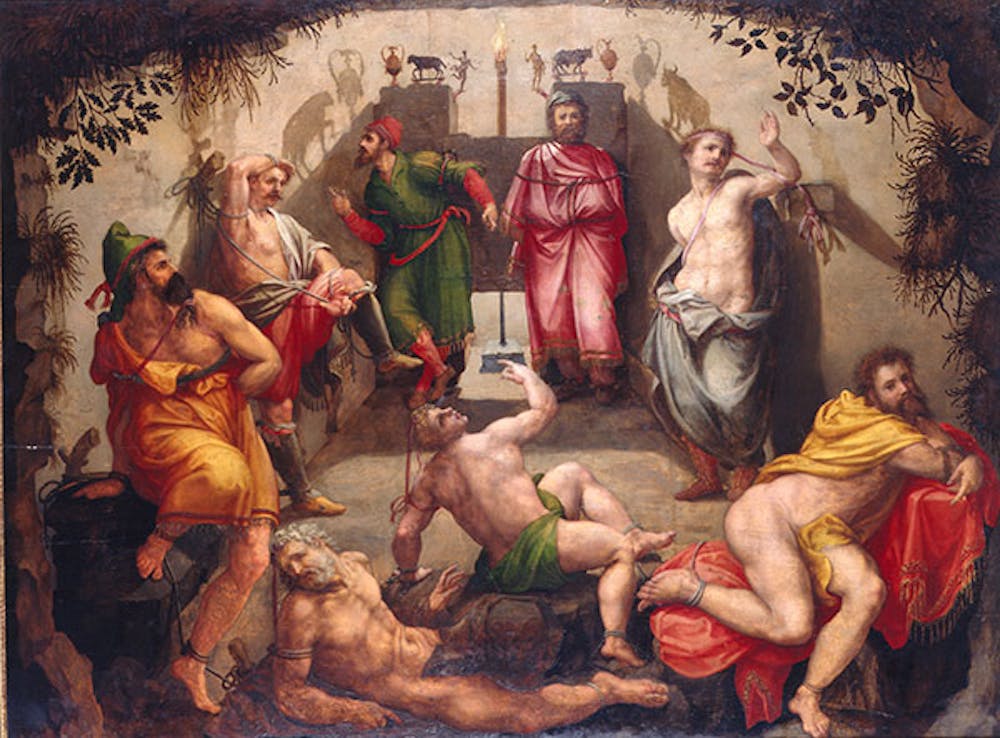
In the cave allegory mentioned above, Socrates depicts ordinary people in a cave, seated for their whole lives watching images projected on the walls by “hidden persuaders” (sophists, probably, and politicians). Not knowing any better, they assume that the images they see are real things. Plato’s image itself seems an uncanny anticipation of modern culture industries and today’s ubiquitous screen technologies.
A 16th century painting depicting Plato’s cave, attributed to Michiel Coxie.Wikimedia Commons
Justice for such a person is voluntarily “going back down” into the cave to help others likewise turn their souls around. It is surely no mere chance that the first word of the Republic is Socrates telling us that “I went down yesterday to the Piraeus …”
striving to examine everything by essential reality and not by opinion, holding on his way through all this without tripping in his reasoning …
The Republic itself can be read as as a masterclass in this kind of training. For this reason, it rightly remains a classic text, and a timeless challenge to readers of all persuasions.
The mid-year budget update has seen the government downgrading its forecast for Australia’s economic growth in 2019-20 by 0.25%, and slashing the projected surplus by A$2.1 billion, to $5 billion. The forecast for wage growth has also been reduced, and unemployment is projected to be slightly higher than was envisaged at budget time.
The figures indicate a worsening economy, but the government has sought to put a positive spin on the situation, saying the Australian economy is showing resilience.
Joining this podcast is finance minister Mathias Cormann and shadow treasurer Jim Chalmers to talk about the figures and the outlook.
New to podcasts?
Podcasts are often best enjoyed using a podcast app. All iPhones come with the Apple Podcasts app already installed, or you may want to listen and subscribe on another app such as Pocket Casts (click here to listen to Politics with Michelle Grattan on Pocket Casts).
You can also hear it on Stitcher, Spotify or any of the apps below. Just pick a service from one of those listed below and click on the icon to find Politics with Michelle Grattan.
The tech giant started experimenting with this earlier this year. Soon, end-to-end encryption will be standard for every Facebook message.
But Australian, British and United States governments and law makers aren’t happy about it. They fear it will make it impossible to recover criminal conversations from Facebook’s platforms, thus offering impunity to offenders.
For instance, this was a major concern following the 2017 London terror attacks. Attackers used WhatsApp (Facebook’s end-to-end encrypted platform), and this frustrated police investigations.
But does Facebook’s initiative place the company between a political rock and an ethical hard place?
What is end-to-end encryption?
End-to-end encryption is a method of communicating more securely, compared to non-encrypted communications.
It involves using encryption (via cryptographic keys) that excludes third parties from accessing content shared between communicating users.
When the sender wants to communicate with the receiver, they share a unique algorithmic key to decrypt the message. No one else can access it, not even the service provider.
Now, it supposedly wants to protect the privacy of the same users.
One possible reason Facebook is pushing for this development is because it will solve many of its legal woes.
With end-to-end encryption, the company will no longer have backdoor access to users’ messages.
Thus, it won’t be forced to comply with requests from law enforcement agencies to access data. And even if police were able to get hold of the data, they would still need the key required to read the messages.
Only users would have the ability to share the key (or messages) with law enforcement.
Points in favour
Implementing end-to-end encryption will positively impact Facebook users’ privacy, as their messages will be protected from eavesdropping.
This means Facebook, law enforcement agencies and hackers will find it harder to intercept any communication done through the platform.
And although end-to-end encryption is arguably not necessary for most everyday conversations, it does have advantages, including:
1) protecting users’ personal and financial information, such as transactions on Facebook Marketplace
2) increasing trust and cooperation between users
3) preventing criminals eavesdropping on individuals to harvest their information, which can render them victim to stalking, scamming and romance frauds
4) allowing those with sensitive medical, political or sexual information to be able to share it with others online
5) enabling journalists and intelligence agencies to communicate privately with sources.
Not foolproof
However, even though end-to-end encryption will increase users’ privacy in certain situations, it may still not be enough to make conversations completely safe.
This is because the biggest threat to eavesdropping is the very act of using a device.
End-to-end encryption doesn’t guarantee the people we are talking to online are who they say they are.
Also, while cryptographic algorithms are hard to crack, third parties can still obtain the key to open the message. For example, this can be done by using apps to take screenshots of a conversation, and sending them to third parties.
A benefit for criminals
When Facebook messages become end-to-end encrypted, it will be harder to detect criminals, including people who use the platform to commit scams and launch malware.
Facebook Messenger can also help criminals organise themselves, as well as plan and carry out crimes, including terror attacks and cyber-enabled fraud extortion hacks.
Freedom from invasive surveillance also facilitates freedom of expression, opinion and privacy, as observed by the United Nations High Commissioner for Human Rights.
In a world where debate is polarised by social media, Facebook and similar platforms are caught amid the politics of security.
It’s hard to say how a perfect balance can be achieved in such a multifactorial dilemma.
Either way, the decision is a political one, and governments – as opposed to tech companies – should ultimately be responsible for such decisions.
As we come to the end of 2019, you’d be forgiven for being confused about the health of the economy.
Treasurer Josh Frydenberg regularly points out that jobs growth is strong, the budget is heading back to surplus, and Australia’s GDP growth is high by international standards.
The opposition points to sluggish wages growth, weak consumer spending and weak business investment.
Monday’s Mid-Year Economic and Fiscal Outlook (MYEFO) provides an opportunity for a pre-Christmas stock-take of treasury’s thinking.
1. Low wage growth is the new normal
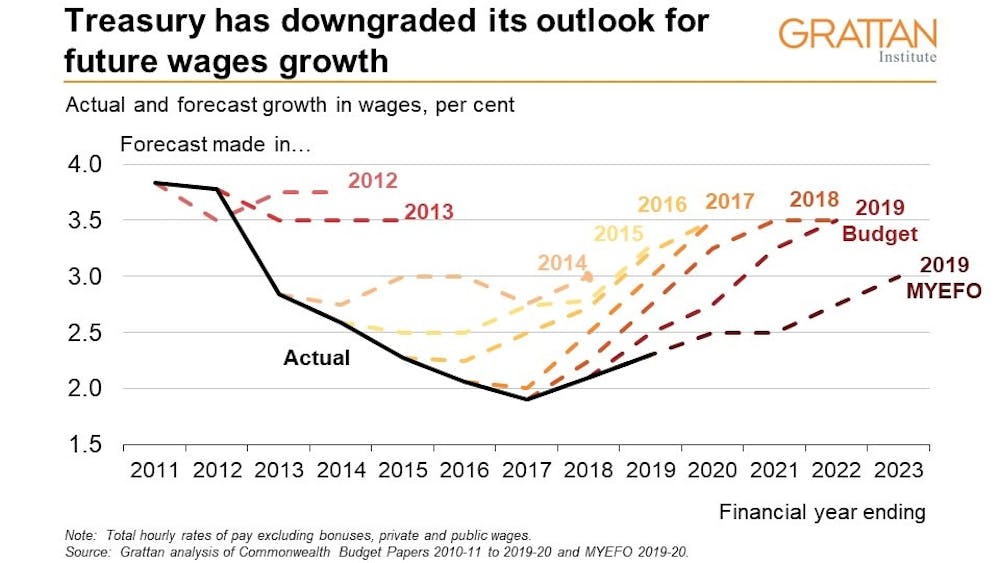
Rightly grabbing the headlines is yet another downgrade to wage growth.
In the April budget, wages were forecast to grow this financial year by 2.75%. In MYEFO, the figure has been cut to 2.5%.
Three years ago, when Scott Morrison was treasurer, the forecast for this year was 3.5%.
Each time wages forecasts missed, treasury assumed future growth would be even higher, to restore the long-term trend.
Today’s MYEFO is a long-overdue admission from treasury that labour market dynamics have shifted – in other words, lower wage growth is the “new normal”.
Even by 2022-23, wages are projected to grow at only 3% (and even that would still be a substantial turnaround compared to today).
Of course, wages are still rising in real terms (that is, faster than inflation), a fact Finance Minister Mathias Cormann is keen to emphasise.
But Australians will have to adjust to a world of only modest growth in their living standards for the next few years.
2. Economic growth is underwhelming, especially per person
Economic growth forecasts have received a pre-Christmas trim.
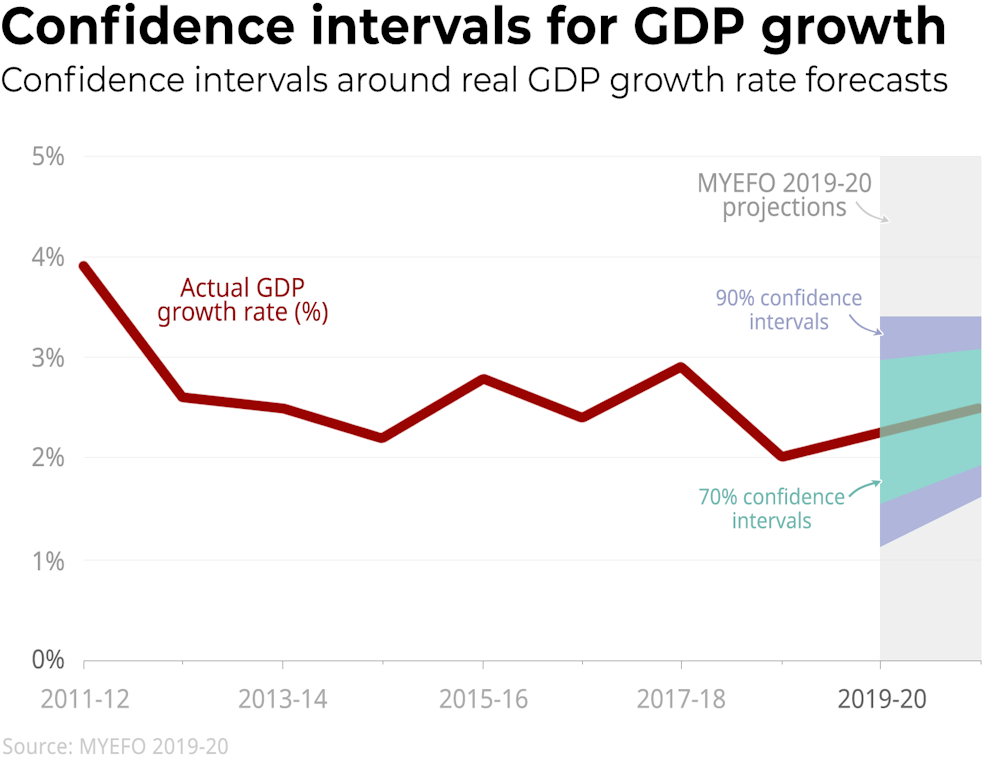
Treasury now expects the economy to grow by 2.25% this financial year, down from the 2.75% it expected in April.
Particularly striking is the sluggishness of the private economy, with consumer spending expected to grow by just 1.75%, despite interest rate and tax cuts, and business investment idling at growth of 1.5%, down from the 5% forecast in April.
The longer term picture looks somewhat better, with growth forecast to rise to 2.75% in 2020-21 and 3% in 2021-22, although treasury acknowledges there are significant downside risks, particularly from the global economy.
The government has made much of the fact our economy is strong compared to many other developed nations. But much more relevant to people’s living standards is per-person growth. Australia’s international podium finish looks less impressive once you account for the fact Australia’s population is growing at 1.7%.
As one perceptive commentator has noted, while Australia is forecast to be the fastest growing of the 12 largest advanced economies next year, it is expected to be the slowest in per-person terms.
3. The government is at odds with the Reserve Bank
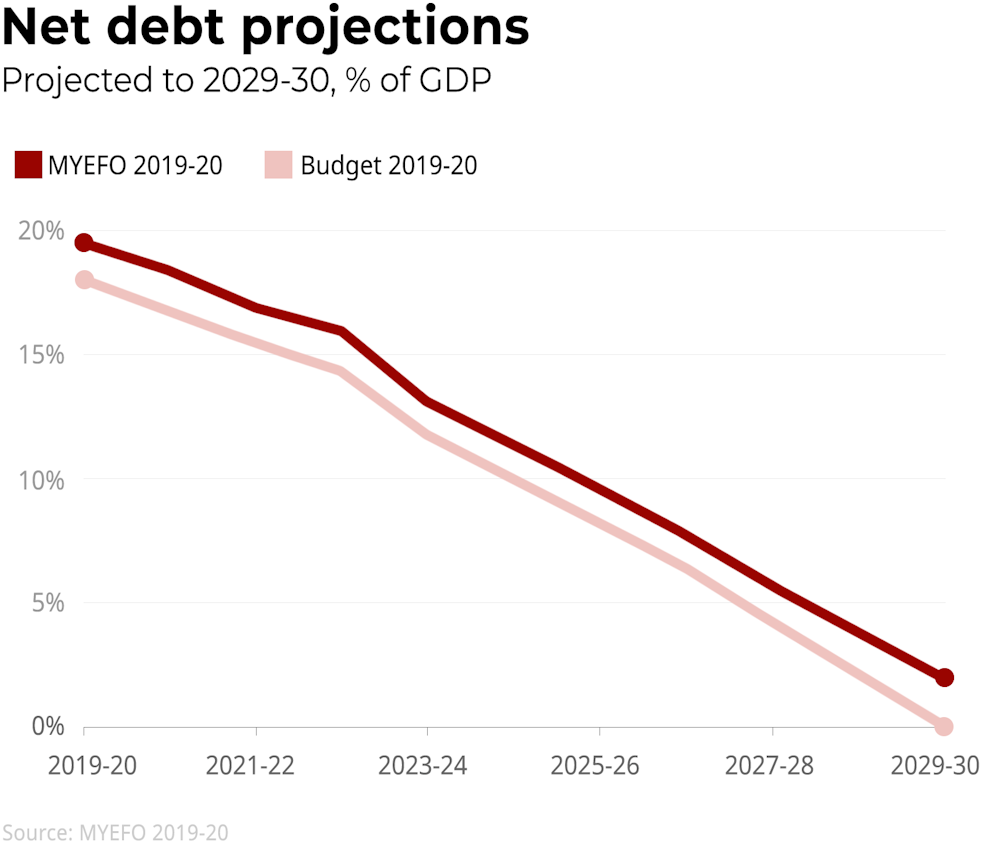
You can imagine the government’s collective sigh of relief that it is still on track to deliver a surplus in 2019-20, albeit a skinny A$5 billion instead of the the $7 billion previously forecast.
Given the treasurer declared victory early by announcing the budget was “back in the black” in April, missing would have been awkward, to say the least.
And another three years of slim surpluses are forecast ($6 billion, $8 billion and $4 billion respectively).
The real issue for the treasurer is how to deal with the growing calls for more economic stimulus, including from the Reserve Bank.
Depending on what happens to growth and unemployment in the first half of 2020, he will come under increased pressure to jettison the future surpluses to support jobs and living standards.
4. High commodity prices are a gift for the bottom line
High commodity prices are the gift that keeps on giving for the Australian budget.
Iron ore prices in excess of US$85 per tonne, well above the US$55 per tonne budgeted for, have helped to keep company tax receipts buoyant.
Treasury is maintaining the conservative approach it has taken in recent years by continuing to assume US$55 per tonne.
This provides some potential upside should prices stay high – Treasury estimates a US$10 per tonne increase would boost the underlying cash balance by about A$1.2 billion in 2019-20 and about A$3.7 billion in 2020-21.
The budget bottom line remains tied to the whims of international commodity markets for the near future.
5. The surplus depends on running a (very) tight ship
The forecast surpluses over the next four years are premised on an extraordinary degree of spending restraint.
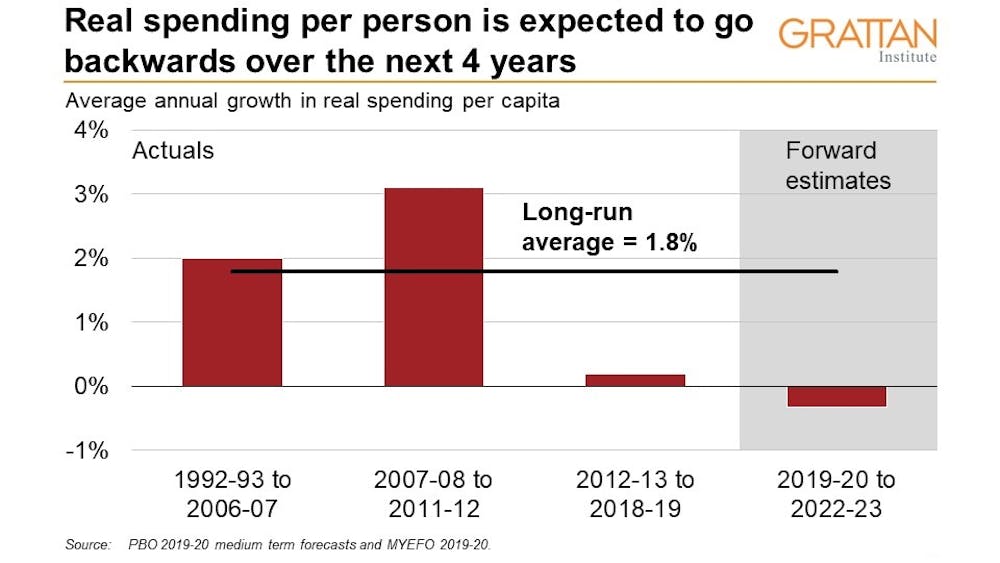
This government is expecting to do something no government has done since the late-1980s: cut spending in real per-person terms over four consecutive years.
The budget dynamics are helping. Budget surpluses and low interest rates reduce debt payments, and low inflation and wage growth reduce the costs of payments such as the pension and Newstart.
But the government is also expecting to keep growth low in other areas of spending, in almost every area other than defence and the expanding national disability insurance scheme.
As the Parliamentary Budget Office points out, it is hard to keep holding down spending as the budget improves.
It is even more true while long term spending squeezes on things such as Newstart and aged care are hurting vulnerable Australians.
Where does it leave us?
The real lesson from MYEFO is that Australians are right to be confused: there is a disconnect between the health of the budget and the health of the economy.
MYEFO suggests both that the government is on track to deliver a good-news budget surplus underpinned by high commodity prices and jobs growth, and that the economy is in the doldrums with low wage growth in place for a long time.
Top of Frydenberg’s 2020 to do list: how to reconcile the two.
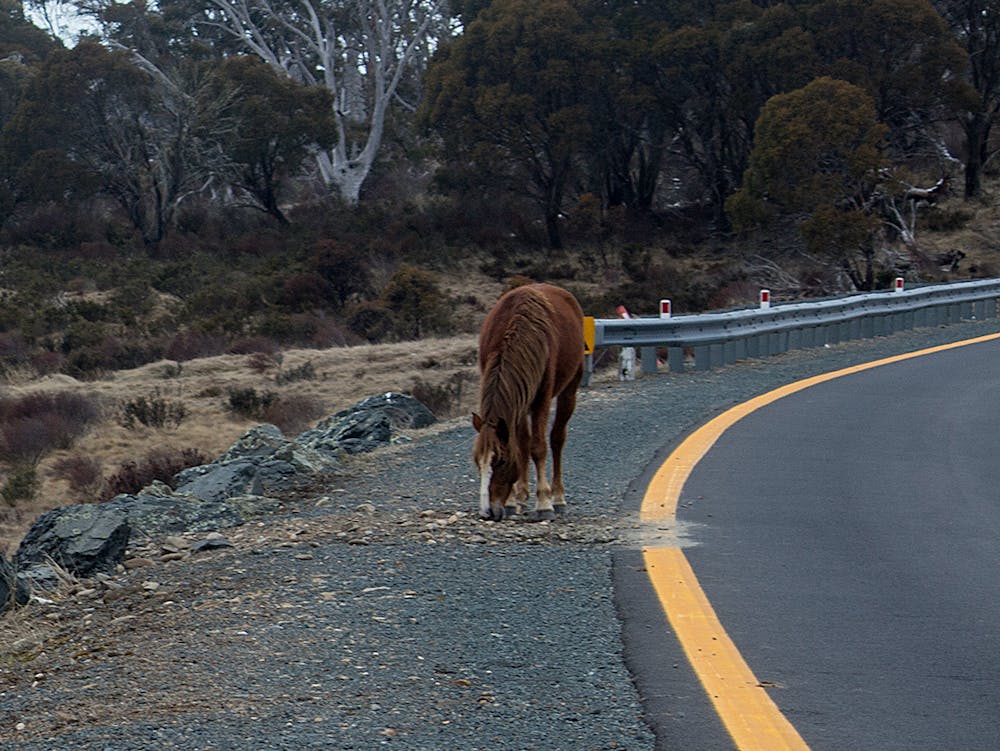
Feral horse numbers have more than doubled in the past five years in the Australian Alps, according to results just released from the Australian Alps Feral Horse Aerial Survey. In one of the three survey blocks, North Kosciuszko, feral horse numbers have risen from an estimated 3,255 in 2014 to 15,687 in 2019, a near five-fold increase.
Scientists warned the government that very high numbers of horses would be the inevitable consequence of its inaction over horse management.
With no horses removed in 2017 or 2018, and only 99 removed this year, the population has been allowed to grow at about 23% per year, close to the maximum of about 25% known for feral horses.
More than just allowing numbers to increase, the NSW parliament legislated to protect feral horses within Kosciuszko National Park, effectively prioritising the preservation of horse populations over native alpine species and environmental values, where they are in conflict.
This was despite the strong advice from scientists, and amid substantial controversy around the origins and timing of the bill.
A potentially fatal feral horse problem
High feral horse numbers forced the closure of the popular Blue Waterholes campground in November, after substantial risks and several injuries to visitors were reported. Freedom of information requests were needed to bring to light crashes between cars and feral horses in Kosciuszko.
Despite the NSW government trying to keep this information from reaching the public, several incidents of feral horses being struck by vehicles have now been reported.
The community group Reclaim Kosci has warned it is only a matter of time before someone is killed in a collision with a feral horse unless numbers are drastically and rapidly reduced.
Government warned of potentially deadly car crashes with feral horses.Shutterstock/Trevor Charles Graham
Besides impacts on people, the lack of effective feral horse policy in NSW has now set the stage for another mass animal welfare disaster.
The prolonged drought hitting Australia has worsened the impacts of horses in the high country. Plants already struggling to survive are being trampled and grazed, and areas around standing water resemble feedlots.
These impacts will worsen over summer, both for the national park and the horses themselves, with herds suffering in the heat and struggling to survive. Horses starved to death along the snowy river in Kosciuszko in 2018.
Now many more animals are at risk of this fate because scientifically-supported solutions have been dismissed by NSW deputy premier John Barilaro.
Natural wildlife threatened
Evidence presented at the Kosciuszko Science Conference and research published earlier this year showed how a broad range of Alpine species and ecosystems were being affected by feral horses. These effects will now be more intense and occur across more of Australia’s ecologically sensitive and biodiverse alpine environments.
For example, the native broad toothed rat depends on dense vegetation along watercourses. With feral horses eating out or trampling plants along streams, these delightful, rotund fur-balls may lose their homes, and hence be more exposed to the elements and predators.
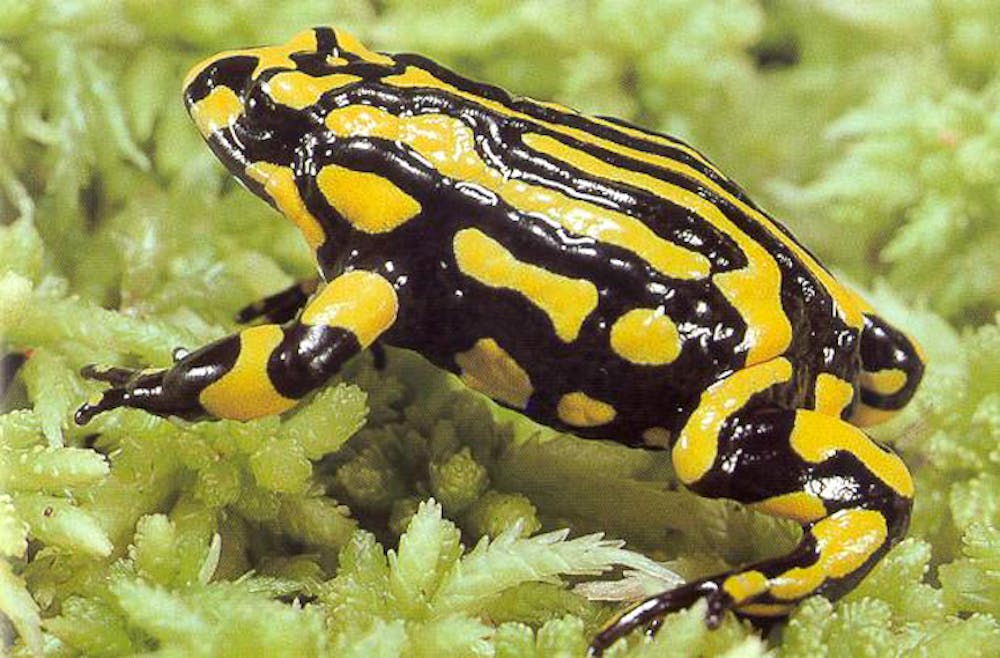
Corroboree frogs will now be under enormous pressure. We already know feral horses destroy the wetlands these iconic yellow-striped black frogs depend on for breeding. This destruction will likely now impact many more swamps, reducing breeding success and reducing options for reintroduction of this critically endangered frog.
Another species, the Stocky Galaxias, teeters on the brink of extinction. This small native fish now only lives in a 3km stretch of stream in Kosciuszko National Park. Feral horses trample the river banks and rip out vegetation that causes silt to accumulate in the stream.
This is disastrous for the fish, which breed beneath boulders in the stream. If silt fills up the gaps beneath boulders, there is no place for the fish to lay eggs.
The high numbers of feral horses in Kosciuszko mean this process of stream destruction will likely worsen, potentially hastening the demise of this species unique to Kosciuszko National Park.
These committees will need to consider all options for resolving this human safety, animal welfare, and ecological crisis. Although trapping is crueller and many times more expensive than aerial culling, if the trapping effort is substantially ramped up across the park, it could potentially limit population growth and reduce horse numbers.
Aerial culling, despite being the most cost-effective and humane method to lower the horse population size and reduce impacts, is misrepresented by the pro-brumby lobby and sections of the media as cruel, and hence has been deemed unacceptable. These costs, and animal welfare and political trade-offs, must be carefully considered by the committees.
The scientific committee said the draft plan for action will be open for comment in February 2020 to meet NSW environment minister Matt Kean’s deadline for a final plan by May 1, 2020. This rapid timeframe is absolutely essential, as the increase of feral horses in the Alpine National Park will not abate any time soon without urgent and substantial control measures.
In the aftermath of the tragedy at Whakaari/White Island on December 9, many are analysing the risks of adventure tourism, particularly volcano tourism, and asking pointed questions.
It is a sensitive time, with 15 people now confirmed dead, many hospitalised in critical condition, and two bodies yet to be retrieved from the disaster zone.
We question whether the tourists caught up in the events actually knew the risks they faced, and whether other tourist groups may be unaware of the potential risks that their travel decisions may carry.
Although geologists are monitoring Whakaari/White Island, some volcanic activity cannot be predicted.
The websites for White Island Tours and the promotion pages on the Bay of Plenty website are currently not viewable. But the Trip Advisor site for Whakaari calls it “New Zealand’s most active volcano”. It mentions the need for gas masks and hard hats and describes conditions of a still active volcano, including steam vents and sulphurous fumes.
But it is doubtful that cruise ship passengers, such as those from the Ovation of the Seas, would have done such research. Cruises offer a variety of shore excursions when in port, ranging from passive sightseeing to adventure activities.
Many tourists will assume endorsed excursions have been properly vetted by their cruise company and assume there is negligible risk to personal safety. But this may not be the case.
Major cruise lines such as Royal Caribbean visit multiple destinations with very different regulatory environments. The assumption that shore excursions will be safe may be misplaced, both by the cruise line and the visitors they book on such excursions. This is now clear from the events at Whakaari but also in previous incidents, such as last year’s fatal bus crash in Mexico.
Local supporters gather on the quayside as a boat that carried families for a morning blessing at White Island returns during a recovery operation to retrieve the remaining bodies.AAP/David Rowland, CC BY-ND
Adventure capital
New Zealand is known as an adventure tourism destination, but its regulatory systems have undergone recent change. After 37 deaths over four years, then prime minister John Key ordered an urgent safety audit in 2009.
This resulted in a shift, from 2013, from a voluntary system under Outdoors New Zealand and the regulatory system under Worksafe NZ to the New Zealand adventure activity certification scheme. Some tour operators have found this audit system too onerous. Striking the right balance between risk management while allowing the adventure tourism sector to thrive has proved difficult.
But the case of Whakaari/White Island is unique in many ways. The island is privately owned. GeoNet monitors volcanic activity and rates the threat level. The tour companies then assess the risk and determine if visits can proceed or should be temporarily suspended.
Three companies have operated tours to Whakaari/White Island, including the Māori-owned White Island Tours (owned by Ngāti Awa). The other two are helicopter companies Kahu and Volcanic Air Safaris. White Island Tours was accredited under AdventureMark, which is a Worksafe NZ approved certification body.
We must await the Worksafe investigation to know whether it was reasonable to allow the tours to go ahead when volcanic risk rating had risen from level 1 to level 2. We also still await the full human toll, knowing that recovery for survivors may take years. It is also clear that the impact on Ngāti Awa and the Whakatāne community has been profound.
Inherent risk in active environments
In laying out these complexities in which small private tour companies and large internationally owned cruise ships took thousands of visitors to Whakaari each year, we underscore how difficult an assessment of risk might be for some visitors.
Adventure tourists typically make an assessment weighing up risks against the thrills they seek to achieve. New Zealand’s reputation for adventure tourism is built in part on well developed policy settings and regulatory regimes, and an expectation among visitors of high adventure safety standards.
Risk – both perceived and actual – is carefully managed to ensure that perceived risk is high but actual risk is as low as humanly possible. The reputation of the sector and, indeed, the interests of the wider New Zealand tourism industry hinge on high safety standards. For example, bungy jumping appears to be very high risk, but its commercial viability comes from the highly controlled operation, which means actual risk is in fact very low.
Set against this are longstanding activities that take visitors into spectacular settings to experience firsthand the wonders of nature. Such environments do present inherent risk even if many decades may pass between natural events.
The Pink and White Terraces – the largest silica sinter deposit on earth – were a spectacular visitor attraction in the mid-19th century, and the centrepiece of Māori tourism development. That was until they were completely destroyed by the eruption of Mount Tarawera in 1886.
New Zealand’s most stunning natural vistas – Aoraki/Mount Cook, the fjords of Te Wahipounamu world heritage area, towering glaciers and raging rivers – are the result of millions of years of seismic activity on the Pacific and Australian tectonic plate boundary. These environments are dynamic and, at times, very destructive.
These settings contrast adventure tourism activities. Risk may be perceived as low or non-existent given that these environments may be largely inactive for years.
In a complex international environment, the ultimate decision to participate in activities in dynamic and potentially destructive environments rests with the visitors.
Ultimately, visitor welfare depends on informed visitor choice. This case highlights the need for consent forms to be signed in many more cases, beyond those already used in adventure tourism and medical tourism.
Such documents should make clear the nature of the possible risks. Elevated risk levels on the day of the visit as well as changing risk levels in the days prior to the scheduled visit should be clearly communicated. Participation should only proceed after informed consent is secured.
Such an approach does not obviate the need for accreditation, audits, regulations and strict oversight by relevant authorities. But it does ensure that tourists play their part in deciding what risks are worth taking on their holidays.
We cannot undo the events that unfolded at Whakaari/ White Island, but we can honour lives lost by making absolutely sure that we learn from this tragedy.
The United Nations’ COP25 climate talks concluded on Sunday morning in Madrid, almost 40 hours overtime. After two weeks of protracted talks meant to address the planetary warming emergency, world leaders spectacularly failed to reach any real outcomes.
The degree to which wealthy nations, including Australia, blocked progress on critical points of debate incensed both observers and country delegates.
These points included robust rules for the global trading of carbon credits, increased commitments for finance to help developing nations tackle climate change, and most importantly, raising ambition to a level consistent with averting catastrophic climate impacts.
Australia’s Emissions Reduction Minister Angus Taylor, far left, with other delegates to the COP 25.JUAN CARLOS HIDALGO
High hopes
COP25 was a conference of “parties”, or nations, signed up to the Paris Agreement, which takes effect in 2021. I attended the conference as an observer.
Emissions reduction targets of nations signed up to Paris put Earth on track for a 3.2℃ temperature increase this century. However the Intergovernmental Panel on Climate Change says warming must be kept below 1.5℃ to avoid the most devastating climate impacts.
Much was riding on the outcome in Madrid. However, it failed to deliver.
One of the key agenda items was Article 6 of the Paris Agreement, involving international carbon trading between nations.
The previous COP in Poland failed to reach consensus on these trading rules, and after this latest meeting, many contentious issues remained unresolved. These include:
how to ensure that an overall reduction in global emissions is achieved and that the rules prevent double counting (or emissions reduction units being counted by both the buying and selling nation)
whether a levy would be applied to proceeds from carbon trading to finance adaptation in developing nations
the recognition of human and indigenous peoples’ rights, and social and environmental safeguards, given the harms caused by previous carbon trading mechanisms
critically for Australia, whether countries could use “carryover” carbon credits from the Kyoto Protocol to meet commitments under the Paris Agreement.
An indigenous woman from Amazon reacts during COP25, which largely failed to deliver.JUAN CARLOS HIDALGO/EPA
The question of Kyoto credits
Australia was pushing to allow use of Kyoto Protocol units, for which it drew scathing criticism from other nations, international media and observers. It plans to meet more than half its Paris target via this accounting loophole.
Brazil, India, South Korea and China also want to carry over credits earned under the Clean Development Mechanism, a trading scheme under Kyoto.
No consensus was reached. The negotiations for rules for carbon markets will now continue at COP26 in Glasgow next year, just weeks out from the Paris Agreement’s start date.
The argument will not be easily resolved. Five of the last seven COP meetings failed to reach a decision on carbon market rules, indicating the extent of international divisions, and calling into question the disproportionate focus on carbon trading, given its limited ability to address climate change.
In Madrid, 31 nations signed up to the San Jose principles, seeking to ensure environmental integrity in carbon markets. Upholding these principles would mean emissions must go down, not up as a result of trading carbon.
Steam rises a German coal-fired power plant. The COP25 failed to make progress on cutting emissions from coal and other sources.EPA/FRIEDEMANN VOGEL
Other failures
The conference also discussed measures to strengthen the governance and finance arrangements of the Warsaw International Mechanism, a measure designed to compensate poor nations for climate damage.
Little progress was made on mobilising finance from developed nations. The US, which will soon exit the Paris Agreement, played a key role in stymieing progress. It resisted efforts for broad governance arrangements, and pushed for language in the rulebook which would exclude high-emittiong nations from liability for the loss and damage experienced by vulnerable countries under climate change.
At Glasgow, all nations under Paris are required to submit new emissions reduction commitments. It was widely expected that the Madrid meeting would strongly urge nations to ensure these targets were more ambitious than the last. Instead, the final text only “reminds” parties to “communicate” their commitments in 2020.
President of COP25, Carolina Schmidt (right), and UN official Ovais Sarmad.EPA/MAST IRHAM
‘Crime against humanity’
When the COP finally closed on Sunday morning, the meeting had failed to reach consensus on increasing emissions reduction ambition to the level required.
The results are disheartening. The world has let another chance slip by to tackle the climate crisis, and time is fast running out.
The implications of this were perhaps summed up best by the low-lying Pacific island state of Tuvalu, whose representative Ian Fry said of the outcome:
There are millions of people all around the world who are already suffering from the impacts of climate change. Denying this fact could be interpreted by some to be a crime against humanity.
The forecasts for economic growth and wages growth have been adjusted down, but are still optimistic, subject to downside risks, especially if international economic conditions deteriorate.
The lower wage growth forecast is an acknowledgement of the new reality that wage growth is not climbing and remains low.
Uncertainties abound
One key variable is iron ore prices: these affect both economic growth (gross domestic product) and company tax collections.
Recent high prices due in part to mining disasters in Brazil will not continue indefinitely.
Iron ore prices peaked in July at US$120 per tonne but are forecast to fall back to US$55 per tonne by the June quarter 2020.
The key determinant will be demand from China. Its steel mills might require more, or less, than expected.
MYEFO has a sensitivity analysis showing 2019-20 tax receipts could be lower than expected by A$0.8 billion or higher than expected by A$0.5 billion (and lower by $1.1b or higher by $1.3b in 2020-21) depending on how quickly prices fall.
Housing versus households
Another expected source of increased revenue is a recovery in capital city housing markets.
While this won’t have as large an impact on the Commonwealth as it will on the states which are reliant on stamp duties (see for example the recent NSW budget update) the Commonwealth still benefits.
The assumption on households
that some of the recent weakness in consumption reflects timing factors and that the household saving ratio will fall as households increase their consumption in response to higher after-tax income
seems optimistic.
However the treasury acknowledges
there is a risk that consumers remain cautious and the fall in the household saving ratio is slower than expected.
It is possible that households will remain nervous about the future and save rather than spend; or that we are seeing deeper shifts in preferences away from consumer spending.
Surplus before spending
MYEFO includes previously-announced new spending on infrastructure projects, drought and aged care, but there were no major additional announcements.
This is in line with the government’s determination to have a surplus this year, even if smaller than expected at budget time.
The underlying cash surplus of $5.0 billion forecast for 2019-20 is indeed small – a fraction under 1% of the total receipts number, $502.5.
MYEFO graphs the confidence we can have in the surplus forecasts: there is considerable uncertainty.
Governments can always introduce either spending cuts or additional revenue raising measures in pursuit of a surplus.
The question is why. It is puzzling that having a surplus has become a sign of good economic management.
Surplus for the sake of surplus
Arguably what is more important is people’s real incomes, whether their chance of unemployment is rising or falling, whether they will be looked after in old age, have their health needs met, and be able to offer their children a good education.
There is a good argument against debt – government debt has to be paid off before the money spent servicing it can be spend on other needs, and excessive debt exposes a country to risk.
Within reasonable bounds though, neither ratings agencies nor international financial markets care if a budget is $5b in surplus or $5b in deficit – these are for all intents and purposes the same number in terms of the government’s impact on the economy.
The government is no longer projecting net debt will fall to zero by 2029-30 – instead, it will fall to 1.8% of GDP (still much lower than the 2019-20 net debt of $392.3 billion or 19.5% of GDP).
This is however a heroic projection, based on estimates of the structural budget position that are unlikely to be be realised.
The structural estimates (estimates of where the budget would be were it not for whatever was happening in the economy at the time) have surpluses growing every year up to 2029-30; an unlikely scenario in the face of an ageing population together with other pressures on government spending.
The impact of ageing will be analysed in more depth in the next Intergenerational Report to be produced by Treasury.
This may explain why the Treasurer today announced the next five-yearly Intergenerational Report will not be published in March next year as scheduled, but held over until July, after the budget and after the report of the government’s retirement incomes inquiry.
Likely costs left out
There are several gaps in the estimates of spending.
There is no provision for additional spending on the new services delivery model, Services Australia, previously known as the department of human services, which runs Centrelink. Modelled on Services NSW, which offers a better customer experience, it will be expensive.
Services NSW meets its costs by charging other government agencies, spreading costs across government. There is less scope for this in the Commonwealth, and therefore a potentially higher direct call on the budget.
Although the announced funding for aged care is included, most observers of the work of the aged care royal commission expect this is only a first instalment.
Other pressures on the budget are not included for technical reasons. For example, possible future disasters are not included in the forward estimates because they are unpredictable.
Should climate change make Australia more prone to frequent and costly disasters, future budgets will face additional pressure.
There are thus numerous uncertainties around MYEFO – among them the growth path of the Chinese economy and its impact on iron ore prices, consumer demand, wages, spending pressures.
The projections might be achieved if all goes well – but there are considerable risks all will not.
New draft alcohol guidelines, released today, recommend healthy Australian women and men drink no more than ten standard drinks a week and no more than four on any one day to reduce their risk of health problems.
This is a change from the previous guidelines, released in 2009, that recommended no more than two standard drinks a day (equating to up to 14 a week).
(If you’re unsure what a standard drink looks like, use this handy reference.)
The guidelines also note that for some people – including teens and women who are pregnant or breastfeeding – not drinking is the safest option.
The National Health and Medical Research Council looked at the latest research and did some mathematical modelling to come to these recommendations.
It found the risk of dying from an alcohol-related disease or injury is about one in 100 if you drink no more than ten standard drinks a week and no more than four on any one day.
So, for every 100 people who stay under these limits, one will die from an alcohol-related disease or injury.
This is considered an “acceptable risk”, given drinking alcohol is common and it’s unlikely people will stop drinking altogether. The draft guidelines take into account that, on average, Australian adults have a drink three times a week.
Why did the guidelines need updating?
Recent research has shown there is a clear link between drinking alcohol and a number of health conditions. These include at least seven cancers (liver, oral cavity, pharyngeal, laryngeal, oesophageal, colorectal, liver and breast cancer in women); diabetes; liver disease; brain impairment; mental health problems; and being overweight or obese.
Some previous research suggested low levels of alcohol might be good for you, but we now know these studies were flawed. Better quality studies have found alcohol does not offer health benefits.
The new guidelines are easier to follow than the previous guidelines, which gave recommendations to reduce both short-term harms and longer-term health problems. But some people found these confusing.
Although most Australians drink within the previously recommended limits, one study found one in five adults drank more than the guidelines suggested and almost half could not correctly identify recommended limits.
The draft new guidelines are easier to follow than the old ones.sama_ja/Shutterstock
Although women tend to be more affected by alcohol than men, at the rates of consumption recommended in the guidelines, there is little difference in long term health effects so the guidelines apply to both men and women.
The recommended limits are aimed at healthy men and women, because some people are at higher risks of problems at lower levels of consumption. These include older people, young people, those with a family history of alcohol problems, people who use other drugs at the same time (including illicit drugs and prescribed medication), and those with physical or mental health problems.
The guidelines are currently in draft form, with a public consultation running until February 24.
After that, there will be an expert review of the guidelines and the final guidelines will be released later in 2020. There may be changes to the way the information is presented but the recommended limits are unlikely to change substantially, given they’re based on very careful and detailed analysis of the evidence.
What’s the risk for people under 18?
The draft guidelines recommend children and young people under 18 years drink no alcohol, to reduce the risk of injury and other health harms.
The good news is most teenagers don’t drink alcohol. Among 12 to 17 year olds, only 20% have had a drink in the past year and 1.4% drink weekly. The number of teenagers who have never had a drink has increased significantly in the last decade, and young people are having their first drink later.
However, we know teenagers are more affected by alcohol than adults. This includes effects on their developing brain. We also know the earlier someone starts drinking, the more likely they will experience problems, including dependence.
The idea that if you give teenagers small sips of alcohol it will reduce risk of problems later has now been debunked. Teens that have been given even small amounts of alcohol early are more likely to have problems later.
What’s the risk for pregnant and breastfeeding women?
The guidelines recommend women who are pregnant, thinking about becoming pregnant or breastfeeding not drink any alcohol, for the safety of their baby.
We now have a much clearer understanding of the impacts of alcohol on the developing foetus. Foetal alcohol spectrum disorder (FASD) is a direct result of foetal exposure to alcohol in the womb. Around one in 67 women who drink while pregnant will deliver a baby with foetal alcohol spectrum disorder.
Foetal alcohol spectrum disorder is characterised by a range of physical, mental, behavioural, and learning disabilities ranging from mild to severe – and is incurable.
Worried about your own or someone else’s drinking?
If you enjoy a drink, stick within these recommended maximums to limit the health risks of alcohol.
If you have trouble sticking to these limits, or you are worried about your own or someone else’s drinking, call the National Alcohol and other Drug Hotline on 1800 250 015 to talk through options or check out these resources online.
The government has shaved its forecasts for both economic growth and the projected surplus for this financial year in its budget update released on Monday.
The Australian economy is now expected to grow by only 2.25% in 2019-20, compared with the 2.75% forecast in the April budget.
The projected surplus has been revised down from A$7.1 billion at budget time to $5 billion for this financial year.
By 2022-23 the surplus is projected to be tiny A$4 billion, less than half the $9.2 billion projected in April.
The revenue estimates have also been slashed, down from the pre-election economic and fiscal outlook (PEFO) by about $3 billion in 2019-20 and $32.6 billion over the forward estimates.
The official documents sought to put as positive a spin as possible on the worse economic figures:
Australia’s economy continues to show resilience in the face of weak momentum in the global economy, as well as domestic challenges such as the devastating effects of drought and bushfires.
While economic activity has continued to expand, these factors have resulted in slower growth than had been expected at PEFO.
The revised figures forecast growth will be 2.75% next financial year.
The impact of the drought is reflected in the fact farm GDP is expected to fall to the lowest level seen since 2007-08 in the millenium drought.
The downgrades will fuel calls already being made by the opposition and some stakeholders and commentators for economic stimulus.
But the government, which since the budget has brought forward some infrastructure and announced spending on aged care and drought assistance, is continuing to resist pressure for stimulus now, wishing to hold out until budget time.
The budget update – formally called the mid-year economic and fiscal outlook (MYEFO) – contains more bad news for workers’ wages.
Wages are forecast to rise in 2019-20 by 2.5%, compared with the forecast of 2.75% in the budget.
Employment growth remains at the earlier forecast level of 1.75% for this financial year, but the unemployment rate is slightly up in the latest forecast, from 5% at budget time to 5.25% in the update.
In its bring forward of new projects, the government is putting an extra $4.2 billion over the foreword estimates into new transport infrastructure projects.
Its extra spending on aged care will be almost $624 million over four years, in its initial response to the royal commission. This is somewhat higher than the $537 million announced by Scott Morrison in November.
While the projected surplus has been squeezed, the government continues to highlight the priority it gives it, saying that despite the revenue write downs, it expects cumulative surpluses over $23.5 billion over forward estimates.
Spending growth is estimated to be 1.3% annual average in real terms over the forward estimates. Payments as a share of GDP is estimated at 24.5% this financial year, reducing to 24.4% by 2022-23, which is below the 30 year average.
Treasurer Josh Frydenberg said the update showed “the government is living within its means, and paying down Labor’s debt”.
he said “the surplus is never been an end in itself, but a means to an end. An end which is to reduce interest payments to free up money to be spent elsewhere across the economy.”
The government’s economic plan was “delivering continued economic growth and a stronger budget position.
“MYEFO demonstrates that we have the capacity and the flexibility to invest in the areas that the public need most.”
Source: The Conversation (Au and NZ) – By Dwan Price, Molecular Biologist and Postdoc @ Deakin AIRwatch pollen monitoring system., Deakin University
Food allergens are the scourge of the modern school lunchbox. Many foods contain proteins that can set off an oversized immune reaction and one of the fiercest is the humble peanut.
Around 3% of children in Australia have a peanut allergy, and only 1 in 5 of them can expect to outgrow it. For these unlucky people, even trace amounts of peanut can trigger a fatal allergic reaction.
But what sets the peanut apart from other nuts? Why is it so good at being an allergen?
To answer this, we have to explore the pathway from allergen to allergy, and just what it is about an allergen that triggers a response from the immune system.
Before coming into contact with the immune system, an allergen in food needs to overcome a series of obstacles. First it needs to pass through the food manufacturing process, and then survive the chemicals and enzymes of the human gut, as well as cross the physical barrier of the intestinal lining.
After achieving all of this, the allergen must still have the identifying features that trigger the immune system to respond.
Many food allergens successfully achieve this, some better than others. This helps us to understand why some food allergies are worse than others.
The most potent allergens – like peanuts – have many characteristics that successfully allow them to overcome these challenges, while other nuts display these traits to a lesser extent.
Strength in numbers
The first characteristic many allergenic foods have, especially peanuts, is strength in numbers. Both tree nuts and peanuts contain multiple different allergens. At last count, cashews contain three allergens, almonds have five, walnuts and hazelnuts have 11 each and peanuts are loaded with no less than 17.
Each allergen has a unique shape, so the immune system recognises each one differently. The more allergens contained in a single food, the higher the potency. Additionally, many of these allergens also have numerous binding sites for both antibodies and specialised immune cells, further increasing their potency.
Stronger through scorching
The first hurdle for a food allergen is the food manufacturing process. Many nuts are roasted prior to consumption. For most foods, heating changes the structure of proteins in a way that destroys the parts that trigger an immune response. This makes them far less potent as allergens.
This is not the case for many tree nuts: allergens in almonds, cashews and hazelnuts survived roasting with no loss of potency.
And for the major peanut allergens, it’s even worse. Roasting actually makes them more potent.
From here, the allergen will have to survive destruction by both stomach acid and digestive enzymes within the human gut. Many nut allergens have the ability to evade digestion to some degree.
Some simply have a robust structure, but peanut allergens actively inhibit some of the digestive enzymes of the gut. This helps them safely reach the small intestine, where the allergens then need to cross the gut lining to have contact with the immune system.
This is where peanut allergens really stand apart from most other allergens. They have the ability to cross the intestinal cells that make up the gut lining. Given their relative sizes, this is like a bus squeezing itself through a cat flap.
Peanut allergens accomplish this remarkable feat by altering the bonds that hold the gut cells together. They can also cross the lining by hijacking the gut’s own ability to move substances. Once across, the allergens will gain access to the immune system, and from there an allergic response is triggered.
Peanut allergens attack the bonds that hold intestinal cells together.Dr Dwan Price, Author provided
The combination of multiple allergens, numerous immune binding sites, heat stability, digestion stability, enzyme blocking, and the effect on the gut lining makes peanut a truly nasty nut.
Where to from here?
This leaves us with a nagging question: if peanuts are so potent, why doesn’t everyone develop a peanut allergy? We still don’t know.
Recently, a potential vaccine developed by researchers from the University of South Australia has shown promise in reprogramming the immune system of mice and blood taken from people with peanut allergy. Will this translate to a potential treatment for peanut allergy? We will have to wait and see.
For now, the more we learn about the action of allergens, and the more we understand their effects on our body, the more we can develop new ways to stop them. And eventually, we might outsmart these clever nuts for good.
Source: The Conversation (Au and NZ) – By Robyn J. Whitaker, Senior Lecturer in New Testament, Pilgrim Theological College, University of Divinity
This article is part of a series exploring gender and Christianity
“God made Adam and Eve, not Adam and Steve,” is a line I’ve heard more than once in Christian circles. The Bible is often evoked to support so-called traditional views about gender. That is, there are only two binary genders and that is the way God intended it. But is this really the case?
Claims about gender in the Bible usually begin with the creation narratives. But the Adam and Eve story is also not as straightforward as it might appear when it comes to gender, namely because in English, we miss the Hebrew wordplay.
Adam is not a proper name in Hebrew, but rather the transliteration into English of a Hebrew word a-d-m. Using the imagery of God as potter, “the adam” is a humanoid being created out of the adamah (the earth).
Biblical scholar Meg Warner writes we might best translate this person as “earth creature”. The first human appears genderless.
In fact, gender roles are only introduced into the story when a counterpart is made for the earthling, when this human being is separated into two. At that point, they both become gendered: “Eve” is called woman (ishah) taken from the man’s (ish) rib.
Some Christians have read a gender hierarchy into this text as Eve is called a helper – or “helpmate” in the old English versions – for Adam. This term, “helper”, does not indicate a subordinate status. It is a word frequently applied to God in the Bible, and so without any sense of inferiority.
On the sixth day, God created a gender spectrum
There’s no doubt traditional male-female gender roles are common in the Bible. After all, this is an ancient text that reflects the values of the societies from which it emerged.
In these societies, masculinity was the ideal and polygamy not uncommon. This makes it all the more astonishing there are moments of gender subversion and gender diversity found within the Bible’s pages.
Another creation story is found in the very first chapter of Genesis 1. It states:
God created the human in God’s image, in the image of God s/he created him; male and female God created them.
At first glance, this might seem obvious: God made two different, discrete sexes. But if we look at this line in its context, we see this creation account follows a poetic structure made up of a series of binaries that indicate the breadth of God’s creation: light and dark, seas and dry land, land creatures and sea creatures.
In the structure of the Genesis poem, these binaries are not discrete categories, but indications of a spectrum.
The sea and dry land merge on tidal plains. Some animals inhabit both land and sea. Darkness and light meet in the in-between spaces of dusk and dawn. God didn’t create night or day, but night and day, inclusive of everything in between.
If we apply this same poetic logic to humanity, a case can be made for sex and gender diversity built into the very fabric of creation. A creative diversity categorically called “good” by God.
Intersex and asexual affirmations
Queer and feminist scholars have highlighted other moments of gender subversion in the biblical text.
For instance, Jacob is “smooth” and “stays in the tent” – traditional female attributes in the ancient world. Yet he is chosen over his hairy, hunter brother to lead God’s people. Rabbi Jay Michaelson describes Jacob as “gender non-conforming”.
The Adam and Eve story is also not as straightforward as it might appear when it comes to gender.Shutterstock
Megan DeFranza is a theologian who works on the place of intersex people in Christianity. While acknowledging that intersex is a modern term, she argues we find traces of intersex persons in the Bible in the language of eunuchs.
Jesus’ comment in Matthew 19:12 that “some are born eunuchs” is acknowledgement he was aware of intersex people and passes no judgement on those who don’t fit traditional male-female sex categories. In this passage, Jesus both affirms heterosexual marriage as well as intersex and asexual persons.
This is not an isolated case of affirmation. Isaiah 56 speaks of God being pleased with eunuchs who come to the temple and in Acts 8, a eunuch is fully included in the new Christian community through baptism. In neither case is change required of them before they can join the community in worship.
Being an ancient text, the Bible obviously doesn’t use the same language nor reflect contemporary understandings of gender, including transgender or intersex persons.
So we cannot simply pull a sentence or two from the Bible as if it offers the final word on sex and gender. Not only does the Bible reflect a pre-scientific worldview but also because the multiplicity of voices will never be captured in this kind of proof-texting.
What we can say is that the Bible affirms in various ways the potential goodness of all humanity and the inclusion of those who diverge from male-female gender norms.
While many churches remain unsafe places for transgender and gender-diverse people, it is imperative to highlight these subversive moments in an otherwise patriarchal text that challenge narrow perspectives, both then and now.
Less than 1% of these people have been permanently resettled. This means more refugees than ever are living with insecure or temporary visas.
Our research, published today, shows living in this state of uncertainty is associated with poorer mental health outcomes, compared to refugees with secure, or permanent, visas.
But the news isn’t all bad. Insecure visa holders are also more likely to be engaged with the wider community.
In Australia, refugees have two potential resettlement pathways. Some will be granted refugee status before arriving in Australia and provided with permanent visas.
The rest arrive in Australia without a valid visa and subsequently apply for refugee status. They may only be granted temporary visas (for example, temporary protection visas, safe haven enterprise visas, or bridging visas) and may never receive a permanent visa. So there’s a large group of insecure visa holders living in the Australian community.
Insecure visa status is linked to poorer mental health
We surveyed 1,085 Arabic, Farsi, Tamil and English-speaking people from a refugee background. Our sample comprised 76% secure visa holders and 24% insecure visa holders. We compared the mental health, past and current experiences, and social engagement between those with a secure visa and those without.
We measured participants’ mental health outcomes based on their responses to standardised questions. Scores that indicated the presence of a mental illness were classified as a “probable diagnosis”.
In line with previous research on this topic, we show insecure visa holders reported significantly higher rates of mental illness compared to secure visa holders.
For example, around 49% of insecure visa holders had a probable diagnosis of post-traumatic stress disorder (PTSD) versus 30% of secure visa holders. Further, about 43% of insecure visa holders had a probable depression diagnosis versus 17% of secure visa holders.
Refugees with insecure visas who engage with social groups report higher levels of mental health.From shutterstock.com
Insecure visa holders reported having experienced twice the number of traumatic events before coming to Australia, compared to secure visa holders. They were especially likely to have been exposed to interpersonal trauma, such as torture or sexual assault.
Notably, insecure visa holders showed greater severity of mental health symptoms even after accounting for important factors such as prior exposure to trauma.
Insecure visa holders were 2.4 times more likely to report suicidal intent (that is, having a plan and/or having taken steps to end their life) compared to those with secure visa status.
Despite demonstrating substantially poorer mental health, insecure visa holders were no more functionally impaired in their daily lives (for example, in taking care of household responsibilities and other day-to-day tasks) compared to secure visa holders.
The importance of social connection
We also looked at our study participants’ social engagement. Insecure visa holders reported higher levels of engagement with social groups across the wider Australian community than secure visa holders: for example, they were more likely to be actively involved in sports groups and to volunteer for charity groups.
Insecure visa holders were also more likely to receive assistance from a charity or NGO, and non-refugee members of the Australian community, compared to secure visa holders.
We found this social engagement was associated with mental health benefits for insecure visa holders. For example, insecure visa holders who were members of more groups reported less suicidal intent than insecure visa holders with low group membership.
Ultimately, implementing more inclusive policies, which aim to facilitate a sense of permanence and security, is critical for supporting the mental health and well-being of refugees.
And despite experiencing significant psychological symptoms, refugees with insecure visas strive to form social connections and be productive members of the Australian community, which benefits their mental health.
So these findings also point to the role of the Australian community. Many of us will be able to empower refugees through fostering social connections.
Christmas is just around the corner. If you’re wondering what to get your child, your friends’ children, your nieces, nephews or basically any very young person in your life – I highly recommend picture books.
Many people can remember a favourite book when they were a kid. Some of my favourites were the Berenstain Bears with Papa Bear trying, unsuccessfully, to teach his children how to ride a bike or gather honey.
Sadly, a 2011 report from the UK showed the number of young people who say they own a book is decreasing. The report also showed a clear relationship between receiving books as presents and reading ability.
Children who said they had never been given a book as a present were more likely to be reading below the expected level for their age.
There are lots of benefits of reading aloud to young children, including developing children’s language and print awareness. These include knowing that the squiggles on the page represent words, and that the words tell a story.
Such knowledge gives children a head start when they go on to reading at school.
Adults should discuss ideas in books with children, as they occur, as opposed to just reading a book from start to finish. Talking about the pictures, or what has happened, can lead to rich conversations and enhance language development.
The more words you know, the simpler it is to recognise them and comprehend the meaning of the text. Children who read more become better readers and more successful students.
It’s important to have conversations with your kids about what you’re reading.from shutterstock.com
2. Books can increase children’s maths and science skills
Picture books show children maths and science concepts through a story, which helps kids grasp them easier.
Some books (like How Many Legs and How Big is a Million) explicitly explore concepts such as numbers. Other stories, like the Three Little Pigs, have concepts embedded in them. Children can learn about the properties of materials when adults talk about the strength of hay, sticks and bricks.
A study in the Netherlands found kindergarten children who were read picture books, and were engaged in discussions of the maths concepts in the books, increased their maths performance, compared to a control group of children who weren’t read these books.
Three Little Pigs can teach children about the properties of hay, bricks and sticks.from shutterstock.com
Early Learning STEM Australia has created a booklist which gives parents and teachers ideas for books that contain STEM (science, technology, engineering and maths) ideas. These include:
Lucy in the City, where a cat loses her way home and an owl helps her
Dreaming Up, which contrasts children’s constructions with notable works of architecture.
3. Books are mirrors and windows
Nearly 30 years ago, children’s literature professor, Rudine Sims Bishop, wrote how books can be windows, through which we see other worlds. These windows can become sliding doors when we use our imaginations and become part of them.
Books can also be mirrors, when we see our own lives and experiences in them. In this way, they reaffirm our place in the world.
Books can help kids see into other worlds.from shutterstock.com
Children need both types of books to understand people come from different cultures and have different ways of thinking and doing things. Books can show that children of all cultures are valued in society.
Children who never see themselves represented in books may feel marginalised. Unfortunately, the majority of books feature white children or animals, so many children only experience books as windows.
Examples of books that show the lives of Indigenous children include Big Rain Coming and Kick with My Left Foot (which is also a great book about left and right).
4. Books can counter stereotypes
Children learn gender stereotypes from a very young age. Research shows by the age of six, girls are already less likely than boys to think girls are “really, really smart” and they begin to avoid activities thought to be for “really, really smart” children.
Picture books can challenge these and other stereotypes. Reading books that portray atypical behaviours such as girls playing with trucks or with girls in traditional male roles such as being doctors, scientists or engineers, can change children’s beliefs and activities.
Children who have more books at home end up more educated.from shutterstock.com
The City of Monash in Melbourne has created a list of children’s picture books that promote gender equality and challenge gender stereotypes. This includes one of my favourite books, The Paperbag Princess, who saves herself from a dragon and decides not to marry the prince after he complains she is a mess.
5. Just having more books makes you more educated
A study that looked at data from 27 countries, including Australia, found children growing up in homes with many books got three years more education than children from bookless homes. This was independent of their parents’ education, occupation and class.
Adults need to model good reading habits and their enjoyment of reading. Giving children a love of reading can be the best present we ever give.
With summer holidays around the corner, many Victorians may be thinking about offering their homes through a home-share platform, such as Airbnb, while they get away themselves. Airbnb’s terms of service describe home-share arrangements as a “licence”. Legally, a licence can be terminated at any time and a guest who does not leave is a trespasser.
However, in 2016 the Victorian Supreme Court decided home-share arrangements may constitute a lease. This decision indicates residential tenancy law may apply to all home-share arrangements where the host is away from the premises.
This would impose significant legal obligations on hosts, who would be regarded as landlords. Guests, if considered tenants, would have all the associated legal protections.
For example, if a guest refuses to leave the premises, the host/landlord would have to follow the eviction process required by tenancy law. This has happened in California. Australian courts will eventually have to decide this issue.
How did the court arrive at its decision?
The court’s decision involved a tenant who offered the premises to guests on Airbnb. The court decided the tenant had breached the terms of the lease by subletting the premises. The tenant was evicted, as tenants cannot sublet without the landlord’s consent under tenancy law.
The court focused on the relationship between the tenant and the guest and determined that the host had given “exclusive possession” of the premises to guests. In Victorian tenancy law, exclusive possession is required to create a lease.
The court said it did not matter that each guest’s stay was only a few days, or that the Airbnb terms described the arrangement as a “licence” rather than a lease.
Although the court’s decision applied to tenants in this case, logically the decision applies to all whole-of-premises home-share arrangements, including where the host owns the premises. This is because the legal test for creating a lease is the same as that for creating a sublease.
The decision is controversial because home sharing on Airbnb is similar to boarding arrangements (where the host provides accommodation and services such as cleaning), hotel rooms and serviced apartments. These arrangements are usually regarded as a licence, not a lease. This is because the host has access to the property during the guest’s stay (for example, to do cleaning), so exclusive possession is not given to the guest.
In fact, Airbnb arrangements are unlike typical tenancy agreements. They specify check-in and check-out times, furniture, linen and towels are usually provided, and “house rules” (for example, on noise levels and smoking) may restrict the guest’s use of the premises.
The situation may be different in other Australian states and territories, which, unlike Victoria, exclude from residential tenancies legislation agreements for the purpose of a holiday. However, not all home sharing is done for holiday purposes. For example, it’s also used for travel for business.
Legal uncertainty remains
The court’s decision means tenants who provide rented premises on Airbnb without the landlord’s consent may breach their own tenancy agreement and be evicted. However, the court stated that the particular circumstances of each case must be examined.
For example, hosts who provide only part of the premises (such as a bedroom and shared used of a kitchen) but who continue to reside in the premises will not be subletting. This is because they have not provided exclusive use of the premises.
However, if the host is away from the premises, then residential tenancy law may regulate home-share arrangements. This would give guests (now considered a tenant) stronger legal protections, including protection from eviction. The decision shows a court can ignore the description of the arrangement in an agreement if it determines exclusive possession has been provided.
Airbnb provides support to hosts and guests in the case of a dispute over a stay. It also provides compensation to hosts (akin to insurance) if guests damage the property or cause the host financial loss. However, if a host is found to have obligations under residential tenancy law, these obligations belong to the host/landlord, not to Airbnb.
The contentious aspect of the Supreme Court’s decision is its treatment of short-term hotel-like accommodation as a lease. However, it strongly suggests that residential tenancy law may regulate whole-of-premises home-share arrangements. That’s likely to come as a shock to Airbnb hosts – owners and renters alike.
As Christmas shopping ramps up, you may be getting a lot of emails offering you attractive discounts for a short period only. You may see flash sales or special deals that exhort you to “buy now” to avoid missing out.
These digital “time-limited” offers, as they are called, are actually an old sales tactic.
Those in the game of selling cars, for example, have long used the trick of alluding to that other very interested buyer who’s likely to return and snap up the bargain that’s before you. Telephone salespeople routinely offer deals that must be accepted during the call. Want time to think about it? Too bad.
Online time-limited sales work on the same basis, but with technology taking it to a whole new level. Now retailers can bombard you with offers that are highly customised and super-short – a deal, perhaps, for something you might have been searching online for, and now available at a discount only until midnight.
But for these tactics to work, our research suggests, requires finding a Goldilocks zone between being too pushy and not all. Time needs to be limited to deter you from searching elsewhere for a better deal. But paradoxically you also need enough time to convince yourself that buying is the best decision.
Experimenting with time limits
To find out what makes time-limited offers effective, I and my colleagues Robert Sugden and Mengjie Wang from the University of East Anglia ran experiments to see what leads people to accept or reject such offers.
What we found is that these offers leverage risk-aversion. That is, the more you dislike risk, the more likely it is you will take the bait and buy now.
In our experiments, using university students, we asked participants to complete 30 “price search” tasks. These tasks involved giving participants a “budget” and asking them to buy a product from six different price offers, shown to them sequentially with a few seconds between each. Any unspent money they got to keep.
Time-limited offers seek to deter you from searching elsewhere for a better deal.www.shutterstock.com
In half of the tasks they could consider all six offers before making their choice. In the other half, one of the first three offers would be time-limited, lapsing after either four or 12 seconds, which they could only accept before the next offer appeared.
We also varied, when participants accepted a time-limited offer, between showing them no more offers or showing all remaining offers immediately. This was to test if greater feedback (increasing the possibility of regret) reduced the probability of a time-limited offer being chosen.
Participants then did 15 related risk-taking tasks based on their choices in the tasks with time-limited options. This helped us determine what was going on with their choices.
A time paradox
Overall our results point to choosing time-limited options being linked to risk aversion. People generally prefer to secure a certain cake now over the uncertain possibility of a better cake in the future. We really do believe the old proverb that a bird in the hand is worth two in the bush.
But there was a catch – and a big one. Somewhat paradoxically, people also need to think things through to jump on the time-limited offer. Time-limited offers were accepted more when participants had 12 seconds to decide rather than four seconds.
This indicates people need enough time to reflect on the task to decide they are better off going for the “safe” deal.
As we warn in our paper, one should be wary about extrapolating too directly from laboratory behaviour to real markets, but our results suggest time-limited offers do not rely on limits to the consumers’ ability to make a rational decision. When they work it is because they are mechanisms of search deterrence – restricting the consumers’ opportunities to compare available offers – amplified by risk aversion.
So businesses may be shooting themselves in the foot when they create offers that are too short, too pushy. If you’re like most people, you need time to reflect on the risk of not buying. If the offer is too fast and furious, you’re likely to just be turned off.
Source: The Conversation (Au and NZ) – By Benjamin Nickl, Lecturer in International Comparative Literature and Translation Studies, University of Sydney
Jojo Rabbit is not Disney Studios’ first foray into Hitler parody. In 1943, it produced der Fuehrer’s Face – an anti-Nazi film inside Donald Duck’s nightmares.
Now, Disney is the Australian distributor of Jojo Rabbit, a story of a young boy whose imaginary friend (and buffoonish life coach) is Adolf Hitler.
In this dark satire, from the Polynesian-Jewish-New Zealand director Taika Waititi who brought us Hunt for the Wilderpeople, Nazi Germany is in its waning days. The Germans have all but lost the second world war but 10-year-old Johannes “Jojo” Betzel (Roman Griffin Davis) believes he, and he alone, will be the Aryan hero to turn the tide.
The boy’s imaginary friend, a hilariously incompetent Hitler (played by Waititi in blue contact lenses and the trademark moustache), cheers him on. When asked to kill a rabbit to get into the Hitler Youth, Jojo baulks, though he does almost manage to kill himself in a grenade stunt.
“You’re still the bestest, most loyal little Nazi I’ve ever met,” the fantasy Fuhrer enthuses.
Through children’s eyes
Themes and images of children have often been central in films exploring WWII. Steven Spielberg famously used “the girl in red coat” to create a powerfully moving symbol of innocence in Schindler’s List (1993).
Germany Year Zero (1948) focused on the life of children in Berlin.Tevere Film
Immediately after the war, a stream of films, including Roberto Rosselini’s Germany Year Zero (1948), Gerhard Lamprecht’s Somewhere in Berlin (1946), and Fred Zinnemann’s The Search (1948) looked at wartime trauma through injuries acquired by children.
Like Jojo’s grenade mishap, their wounds were permanent.
In war films, children’s perspectives don’t diminish the ghastliness of war. Quite the contrary. When war and its pervasive horror spills over from the battlefield and intrudes on their youth, viewers are appalled at its spread.
Containing that disease of war, curing it even, is where Waititi’s takedown of fascist group-think truly begins.
How will Jojo escape the brainwash army of Reichswehr propaganda parrots like Rebel Wilson’s Fräulein?
There are several steps. The first one for Jojo is finding out his mother has been hiding a Jewish girl in the attic.
Scarlett Johansson gives an enchanting performance as a single mum who tries to keep the embers of humanity and love in Jojo’s heart alive as he gets lost in Nazi doctrines of vile anti-Semitism.
Scarlett Johansson tries to counter Nazi brainwashing.Twentieth Century Fox
Jojo starts falling for Elsa Korr (Thomasin McKenzie), the hideaway in his attic, as her humanity – and his pre-pubescent hormones – triumph over fascist indoctrination. Through Jojo’s eyes, we see Elsa turn from monster into human as he comes back from the brink of fanatic hatred.
Waititi hides that innocent, simple love story under slapstick and a ton of special effects. The latter don’t always work. And some of the jokes fall flat.
But what works is the message that Jojo is both manipulated and self-manipulating. His Nazi hate is a cage of his own making, and Elsa is the key to unlocking it. She teaches him that empathy for those who we think are different from us is powerful.
Irreverent or irresponsible?
Hitler comedies have a long history. In 1940, Charlie Chaplin released The Great Dictator. Mel Brooks created The Producers in 1968.
Like Waititi, those filmmakers experienced how mining sombre Holocaust themes and hateful iconography for the ridiculous splits public reactions along extreme lines. The critics bemoaned that Levy committed only halfheartedly to a funny Hitler, making the film the worst thing a comedy can be: too harmless.
Wnendt faced another issue. He intercut his film with hidden camera footage of Germans reacting to the lead actor dressed as Hitler. People thought this was too much realism.
Waititi says he didn’t look at these forerunners and didn’t do any research on Hitler. He looked to literature instead.
Jojo Rabbit uses the masterful dramatic novel Caging Skies by New Zealand-Belgian author Christine Leuens as source material. The book doesn’t have the same generous scoops of comedy and tragedy found in Ladislav Fuks’ Mr. Theodore Mundstock, or in The Nazi and the Barber by Edgar Hilsenrath.
It’s all the more reason to recognise what Waititi has tried to accomplish. He had to negotiate between a book adaptation, Holocaust memory, and Hollywood.
Commenting on his motivation for making the film, Watiti, whose mother is Jewish, said: “I just want people to be more tolerant and spread more love and less hate”.
Jojo Rabbit opens across Australia on Boxing Day, check listings for advance screenings.
At the December 12 UK election, the Conservatives won 365 of the 650 House of Commons seats (up 48 since the 2017 election), Labour 202 (down 60), the Scottish National Party (SNP) 48 (up 13) and the Liberal Democrats 11 (down one).
The Conservatives won 56% of the seats and will have an 80-seat majority over all other parties. It is the Conservatives’ largest seat haul since 1987, and Labour’s lowest since 1935.
Popular votes were 43.6% Conservatives (up 1.2%), 32.1% Labour (down 7.9%), 11.6% Liberal Democrats (up 4.2%), 3.9% SNP (up 0.8%), 2.7% Greens (up 1.1%) and 2.0% Brexit party.
The Lib Dems thus lost a seat despite a 4% vote share increase, while the Greens won one seat and Brexit party none – that’s first-past-the-post. The Conservative vote share was the highest since 1979 for any party. Labour had a lower vote share in 2015.
In Scotland, the SNP won 48 of the 59 seats (up 13), the Conservatives six (down seven), the Lib Dems four (no net change) and Labour one (down six). Lib Dem leader Jo Swinson lost her seat. On popular votes, the SNP led the Conservatives by 45% to 25%, an 8% swing to the SNP.
The election means Britain will Leave the European Union by January 31 under Prime Minister Boris Johnson’s Brexit deal, which was blocked by the previous parliament. Johnson has promised not to extend the transition period to implement a trade deal beyond December 2020, so January 2021 is likely to be when the real Brexit occurs.
This election was a realignment along Brexit referendum leave/remain lines that had been predicted to occur in the 2017 election. A key problem for Labour was that, while “leave” won the referendum by a narrow 51.9% to 48.1% margin, it carried 64% of seats owing to remainers clustering in the big cities.
I wrote for The University of Melbourne’s Election Watch that working class voters, who supported leave by 64-36, were likely to deliver Johnson a majority. There were many traditional Labour seats that flipped to the Conservatives, such as former Labour PM Tony Blair’s old seat of Sedgefield.
In the December 5-6 YouGov poll, Labour leader Jeremy Corbyn had a net -47 approval rating, while Johnson was at -13. Corbyn was at -34 with remainers and -67 with leavers, while Johnson was respectively at -61 and +42. Labour’s vote fell with both leavers and remainers, as this chart shows.
Much of Corbyn’s problems were caused by his reluctance to move from Labour’s successful 2017 pro-Brexit policy; this reluctance hurt him with remainers while leavers detested any move towards remain. As I argued in this Poll Bludger article, an explicitly pro-remain Labour leader would probably have been destroyed by accusations of betraying the Brexit referendum.
Corbyn’s left-wing agenda had far less appeal in 2019 than 2017 owing to greatly improved real wage growth. Before the June 2017 election, annual real wage growth had fallen to -0.5%. In the latest available data, real wage growth is up 1.7%. With the US economy continuing to perform well, it would be inadvisable for Democrats to select a left-wing nominee, such as Bernie Sanders or Elizabeth Warren.
It’s not just UK Labour that has suffered from the desertion of lower-educated working class voters: the left unexpectedly lost the last US presidential election and last Australian federal election owing to this. Swings to the left among better-educated voters are not compensating yet.
After performing badly at the last three UK elections and the Brexit referendum, the UK polls did well this time. Most polls had the margin between the Conservatives and Labour at nine to 12 points, and four polls had it at either 11 or 12 points – the actual margin is 11.5 points.
Trump’s ratings rise
In the FiveThirtyEight aggregate, Donald Trump’s ratings with all polls are currently 41.9% approve, 53.2% disapprove, a net approval of -11.3%, up 1.4% since my November 20 US politics article. With polls of registered or likely voters, Trump’s ratings are 43.1% approve, 52.7% disapprove, a net approval of -9.6%, up 1.4% since November 20.
In the FiveThirtyEight impeachment tracker, 47.4% support removing Trump from office and 45.8% are opposed (46.8-45.2 support November 20).
In current general election head to head polling according to RealClearPolitics averages, Trump trails Joe Biden by 9.8%, Warren by 7.2%, Sanders by 8.4% and Pete Buttigieg by 4.1%.
In a Quinnipiac poll conducted in early December, Trump had a 54-42 approval rating on the economy – a record high for him. If the US economy continues to be strong until the November 2020 election, Trump has a good chance of re-election, especially given his likely Electoral College advantage.
In November, the US economy created 266,000 jobs, and the unemployment rate slipped 0.1% to just 3.5%. The US conducts two employment surveys every month: the headline jobs growth is from the establishment survey, and the unemployment rate from the household survey.
In this case, the household survey was weaker, with just 83,000 jobs added and the drop in unemployment explained by a fall in participation.
Owing to inflation of 0.3% in November, there was no real change in wages in that month. Over the year to November, real weekly and hourly wages were up a modest 1.1%.
Democratic contest
Seven weeks from the February 3 Iowa caucus, Biden leads in the national RealClearPolitics Democratic average with 28.4%, followed by Sanders at 18.2%, Warren at 15.8%, Buttigieg at 9.2% and Michael Bloomberg at 5.2%. No other candidate has more than 3%.
In Iowa, it’s Buttigieg 22.5%, Sanders 19.3%, Biden 18.0% and Warren 16.3%. In New Hampshire (February 11), it’s Sanders 19.0%, Buttigieg 17.7%, Biden 14.3% and Warren 13.3%. Biden continues to dominate in South Carolina (February 29) with 35%.
The next Democratic debate will be held on December 19; seven candidates have qualified. There will be four debates in January and February 2020, with the first on January 14.
Australian Newspoll: 52-48 to Coalition
Newspoll has become completely conducted using online methods; previously, it used a mixture of online methods and robopolling.
Since my last Conversation article, there have been two Newspolls by the new method. In late November, the Coalition took a 51-49 lead, (50-50 in the final Newspoll using the old method in early November).
In the latest Newspoll, conducted December 5-8, the Coalition had a 52-48 lead, a one-point gain for the Coalition. Primary votes were 42% Coalition (up one), 33% Labor (steady), 11% Greens (down one) and 5% One Nation (steady).
Scott Morrison had a net approval of -3, up six points. Anthony Albanese had a net approval of -1, also up six points. Morrison led as better PM by 48-34 (46-35 previously). The new Newspoll series appears to give the leaders harsher personal ratings than the old one.
Voters were asked to rate the leaders according to nine attributes. You can read about those results at The Poll Bludger.
So for all the talk of narrowing polls, tactical voting, and possible shocks leading to a hung parliament, Boris Johnson achieved a crushing victory over Jeremy Corbyn and the Labour Party in the UK’s general election of 2019. With an 80 or so seat majority in the House of Commons, Johnson can now deliver on his core promise to “get Brexit done”.
He can also shape the broader social and economic environment in tune with the instincts of those around him. They are, almost to a man and a woman, hard-right libertarian figures with a barely concealed contempt for the welfare state, the National Health Service, social benefits and all the other elements that compose the post-war consensus.
One of the tricks Johnson managed to pull off in this election was to paint himself as a saviour of public services, and and a leader untarnished by ten years of Tory austerity policies. The British public is in for a rude awakening when it finds out Johnson’s brand of rambling One Nation populism was a cover for a much tougher and more conservative agenda than many voters realise.
So the puzzle that many commentators are trying to figure out is how it is that a right wing figure of this kind could get one over on Corbyn who pitched his entire campaign on the promise to protect the health service and promote public ownership of key sectors such as the railways and the post office?
What became clear as the night unfolded is that former Labour constituencies in the Midlands and the north of the country have been, and still are, in favour of Brexit. Johnson promised to get Brexit done, and Labour did not. For much of the electorate, this was enough of a reason to cross well established political divides and tribal loyalties.
But it’s also clear that many voters didn’t trust Jeremy Corbyn. They saw him as too beholden to sectional interests, too evasive, too metropolitan and too left wing. Johnson, by contrast, came across as a capable if lovably bumbling figure who was able to articulate not only a clear line on Brexit, but also to distance himself from the legacy of destructive Tory policies. In the end it was Corbyn, not Johnson, who proved to be political Vegemite.
This proved a winning formula across England and most of Wales. But elsewhere, the story was rather different. In Scotland, the Nationalists improved their result from 2017, often at the expense of the Liberal Democrats, and indeed the latter’s leader Jo Swinson, who lost her seat to the Scottish National Party (SNP).
This sets up an important byline for 2020 which is the matter of Scottish independence. With Brexit now almost certain to go forward at the end of January 2020, the pressure will immediately mount to allow Scotland to have another independence vote on the back of the SNP’s crushing performance.
The Scottish National Party’s strong performance, led by Nicola Sturgeon, will lead to a push for independence vote.AAP/EPA/Robert Perry
While the picture is less clear in Northern Ireland, the overall trend was towards increased support for the nationalist parties at the expense in particular of the Democratic Unionist Party, which similarly lost its parliamentary leader Nigel Dodds.
While the dynamics in Northern Ireland are quite different from those of Scotland, the realisation that Brexit will now take place is bound to provoke a sustained debate on the need for a border poll on the future of Northern Ireland itself. This may take some years to resolve, but the line of travel is becoming clearer, and it points towards the reunification of Ireland. Johnson’s triumph may thus herald the break-up of the UK – to be greeted, it seems, by English indifference.
But the clearest takeaway remains the state of progressive politics in the UK. The centrist Liberal Democrat party had a very bad election. The Green party managed to increase its share of the vote but only managed to win one seat. The Labour Party was sent packing in many of its traditional working class heartlands in the North.
As long as progressive and left politics is spread amongst these various parties, it seems unlikely that we can expect a recovery any time soon, certainly as far as electoral politics is concerned. The Labour Party will now hunker down to decide whether it is going to row back towards the centre under a leader such as Kier Starmer, or whether it is going to maintain the more radical position associated with Corbyn, McDonnell and the Momentum faction that now dominates many local constituency parties.
With the victory of Johnson demonstrating the importance of a charismatic and effective leader, attention will turn to the next generation of Labour politicians. It is difficult at this juncture to be confident there is a serious challenger waiting in the wings of the current Labour Party who can provide an effective counterpoint to the ebullient Johnson. But it must. More of the same will not turn the tide.
The right does not have a monopoly on effective communicators and charismatic leaders. But what it does have is a keener appreciation of the dynamics of the moment: that policies do not sell themselves; they have to be sold by someone who has an ability to connect, to articulate a position that voters feel comfortable with, and which chimes with their own experience, values, hopes and fears.
Some call this populism. But the reality is simpler: this is – and always has been – the formula for winning elections. It’s a formula the left would do well to memorise.
Scott Morrison has rejected or sidelined a number of recommendations from the long-awaited Thodey review of the public service that might have constrained his and his government’s power.
Not surprisingly, a proposal to ensure changes to the machinery of government “are well planned and evaluated” received short shrift.
The Thodey panel urged there be “principles to inform the Prime Minister’s deliberations” on such changes, and evaluations of how changes had worked should be published.
“Noting” the recommendation, the government’s terse response said: “Decisions on machinery of government changes are a matter for the Prime Minister and will be guided by the Prime Minister’s judgement”.
The report was released on Friday, with a point-by-point response.
But Morrison had already preempted it with his announcement of an extensive shake up of departments and departmental heads, as well as earlier setting out his views on the service.
His changes, announced this month, cut the number of departments from 18 to 14. But they have raised questions about how a department such as infrastructure, transport, regional development and communications will operate, given it will have four cabinet ministers and several juniors.
The wide-ranging Thodey panel’s Independent Review of the Australian Public Service has made 40 recommendations; the government says it agrees fully or “in part” with a majority.
But while only a minority were rejected outright or “noted”, these, plus the rejected sections of those accepted “in part”, have sent a very clear message: the government has no intention of countenancing reforms that would circumscribe its power.
For example, it has rejected the recommendation to clarify and reinforce the public service’s leadership roles and responsibilities. Its response was that things are fine and further clarity in legislation unnecessary.
A suggestion for putting more process around the appointment and termination of secretaries did not go down well. After all, Morrison has just sacked five secretaries.
“The Government considers that current processes and arrangements governing the appointment and termination of secretaries and agency heads work effectively,” the response said, adding a commitment to the “apolitical nature of the APS.”
A proposal for a legislative code of conduct for advisers, with enforcement provisions, was dismissed. “The government expects all ministerial staff to uphold the highest standards of integrity and it uses a range of mechanisms to ensure they are held to account for these standards,” was the response.
The idea ministerial offices should have at least half of their ministerial policy advisers with public service experience also fell on deaf ears.
A recommendation for the public service to work closely with the states to jointly deliver improved services received the thumbs down.
Under the recommendation the Council of Australian Governments would set and publicly report on certain national priorities “with clear, shared metrics for success”. But the government said “existing arrangements are effective”.
Dealing with the inquiry led by David Thodey, a former CEO of Telstra, which was set up by Malcolm Turnbull, seems to have been a somewhat fraught process. Some months ago the panel was told to reflect on the priorities the Prime Minister had set out. Then the release of the final report has been held off until after Morrison’s announcement of his restructuring.
Morrison’s emphasis is heavily on the public service’s delivery role, which he wants substantially improved. He sees its advisory role primarily in terms of how best to implement an agenda set by the government.
His foreword to the government’s response repeats his now oft-stated point: “In the Westminster system of parliamentary democracy, it is the Ministers who are accountable to the public. It is Ministers who provide policy leadership and direction”.
In its review, the Thodey panel says the public service is not broken, but it “is not performing at its best today and it is not ready for the big changes and challenges that Australia will face between now and 2030”.
The service needs to
work more effectively together
partner with the community and others to solve problems
make better use of digital technologies and data to deliver services
strengthen its expertise and professional skills
use dynamic and flexible means to deliver priorities responsibly
improve leadership and governance arrangements.
Stressing the need to strengthen the service’s capability, the report says the impact of doing this “will be profound. By 2030, the APS can be a place where the most talented, motivated people aspire to work”.
For their last video for the year, University of Canberra Vice-Chancellor Deep Saini and Michelle Grattan look backwards to the big issues which have shaped political discourse. They discuss the surprise election results, and the ongoing natural disasters which have become increasingly political issues. They also discuss the biggest issues the government faces as we go into 2020.
This article is part of our Gender and Christianity series.
To understand contemporary Christian ideas about gender, and specifically masculinity, we need to go all the way back to the values that shaped Christian origins in the first century.
The pattern across Greek, Roman and Jewish society was that men were the heads of households, and households were the primary economic unit. Women managed the internal affairs, while men managed the external ones.
Most men, at around 30 years old, married a girl barely more than half their age. With such an age difference, the girls were less experienced and less emotionally mature. So men believed themselves to be superior to women – a fallacious conclusion that, to them, seemed obvious.
Females were failed males, argued Plato, and people often read Genesis in the Bible as saying man was made in God’s image, while woman was made in man’s.
Paul, one of the most influential Christian leaders, argued that male and female, slave and free, were all loved by God and were one in Christ, but women should dress like women, even in leadership, and should normally leave public discourse to men.
This tension – between equality and the conformity to social norms – still has a long way to go for women in some Christian circles and in the wider community.
For men, how they saw themselves shaped how they saw God, and they saw God shaped how they saw themselves. This also had implications for how they saw women.
Jesus is the exception
Powerful men, kings and fathers were most often used to portray God. Greek sculpture, Roman macho ideals and oriental images contributed to an image of God who behaved just like such men: he was concerned primarily with power and control and, at best, fatherly benevolence.
But other voices challenged such masculine models – including Jesus of Nazareth. In Mark’s gospel, Jesus declares:
The Son of Man came not to be served but to serve and to give his life a ransom for many.
In a three-step narrative, it depicts Jesus’ disciples reflecting traditional aspirations of power, arguing who would be the greatest, wanting the top jobs and trying to persuade Jesus that to be the Messiah he has to win, not lose.
Every time, Jesus refutes their values. Mark then subverts their assumptions by depicting Jesus as a king enthroned on a cross and wearing a crown of thorns. This turned the disciples’ values upside down. Here was a model of being a person, including being a man, which put love and service at the centre.
A 19th century depiction of Jesus by artist Bernhard Plockhorst. Jesus challenges the Christian view of masculinity.Wikimedia Commons, CC BY
Elsewhere, Jesus had appealed to parental compassion, arguing we need to see God as caring and compassionate, not as aloof and unforgiving, much less obsessed with power and control.
Such a radical alternative model of masculinity was difficult to sustain.
What often prevailed was the notion that Jesus was, in effect, an exception to the masculine ideal and the way God is. This notion is still alive and well for many today, who see God’s love and forgiveness as only temporary, and believe God will finally resort to violent punishment of those who refused to respond.
Such violence, sometimes horrendously depicted as being tormented with fire, was deemed fair, because God is just and had made the options clear. This is a view many will still defend.
Two opposing Christian views of masculinity
So there’s not one Christian view of masculinity, but at least two. They are diametrically opposed and reflect two very different understandings of God.
One sees greatness in power and control and the right to exercise violence when one is in the right, and is depicted predominantly in male terms.
The other sees greatness in love and compassion; it confronts violence and abuse of power.
What people value in their God, they value in life. Today, this might mean men can conclude that if they are right, they, too, have the right to be dominating. That may show itself in physical cruelty, but also in the subordination or exclusion of women.
In religious contexts, it can be associated with appeals to the authority of the Bible above reason and reasonable love, whether in church communities or in the home.
But where people give priority to reason and the reasonable love that lies at the heart of the Christian tradition, the effect for both men and women is liberating.
Significant social changes also play a role here. If, in the first century, women were deemed inferior and lived pregnancy to pregnancy, nearly half of them not surviving beyond the age of thirty, over the past half century effective contraception has helped even the playing field for women to engage in leadership as much as men. Though sadly that is still not the case in many communities including churches.
For many men, schooled in traditional models of masculine superiority, this has caused a crisis of identity.
Despite the advent in the 20th century of pop psychology, which gave men permission to cry, many still have not made it.
Sadness morphs into anger and anger, violence, towards others and sometimes towards themselves. We need to call out the myth of masculine superiority and the abuse it generates.
Calls are growing for a national bushfire plan, including from former prime minister Malcolm Turnbull, who says they are an issue of national security and the federal government must provide hands-on leadership.
It’s true that more people are living in high-risk bushfire areas, emergency services are stretched and the climate is rapidly changing. Future crises are inevitable. We must consider the prospect of a monstrous bushfire season, the likes of which we’ve never seen.
But bushfires aren’t the only catastrophe Australia must prepare for. If we are to create a national crisis plan, we must go much further than bushfire planning.
In the decade since Victoria’s Black Saturday fires, we have improved fire predictions, night-time aerial firefighting, construction codes and emergency warnings. All of these have no doubt saved many lives.
There are calls for more resources to fight fires, as part of a coordinated national plan. But few people have proposed an all-encompassing vision of such a plan.
For a start, it should not be confined solely to bushfires. Far more people die during heatwaves and residential housefires. Tropical cyclones, floods and hail each cost our economy more.
Any plan must provide a strategic vision across these various facets for at least the next ten to 20 years.
A national firefighting force?
Calls for a national firefighting force to supplement existing state resources are fundamentally short-sighted. A national force – quite apart from the level of duplication it would create – would spend much of its time idle.
Even during severe fires, such as those now raging, there would be limits to its usefulness. At a certain point, the size and energy of the fires means no amount of firefighting technology will extinguish them all.
Research conducted by Risk Frontiers, the Australian National University and Macquarie University through the Bushfire and Natural Hazards Cooperative Research Centre, has focused on better planning and preparedness for catastrophic events.
This research concludes it is unrealistic to resource the emergency management sector for rare but truly catastrophic events. It is wildly expensive to remain 100% prepared for the worst-case scenario.
Depsite the smoke blanketing Sydney, we need to think beyond bushfires.AAP Image/Neil Bennett
Instead of simply scaling up existing arrangements, we need to think differently.
Bush firefighting could be improved by innovation and research. Future investments must focus on rapidly detecting and extinguishing ignitions before they spread out of control.
Everyone is responsible
States and territories are traditionally responsible for emergency management in Australia. But almost by definition, a catastrophic disaster exceeds one’s capacity to cope – inevitably drawing on nationwide resources.
This means preparing for catastrophic disasters is everyone’s responsibility.
Existing plans allow for assistance across state borders, and between state and federal governments. But there is no national emergency legislation defining the Commonwealth’s role, or assigning responsibility for responding to a truly national disaster.
The Australian Defence Force has a well-defined support role in natural disasters, but should not be relied on due to its global commitments.
However, resource-sharing between states could benefit from more investment in programs that enable emergency services to work better together.
Bushfire haze at the SCG in Sydney during a cricket match.AAP Image/Craig Golding
International help in massive emergencies also needs better planning, particularly around timing and integration with local agencies.
Non-government organisations, businesses and communities already make valuable contributions, but could play a more central role. We could look to the US, which successfully uses a whole-of-community approach.
This might mean emergency services help community organisation provide aid or carry out rescues, rather than do it themselves. These organisations are also best placed to make sure vulnerable members of the community are cared for.
The most important task is to reduce the risk in the first place. The vast majority of disaster-related spending goes on recovery rather than risk reduction. Calls from the Productivity Commission and the Australian Prudential Regulation Authority (APRA) for more disaster mitigation funding have been largely ignored.
The federal government’s recent National Disaster Risk Reduction Framework highlights the need to identify highest-priority disaster risks and mitigation opportunities.
This would see priority investments in flood mitigation and strengthening of buildings against cyclones in northern Australia. (This will also help address insurance affordability.)
Land-use planning needs to be improved to reduce the chance that future developments are exposed to unreasonable risks.
Finally, communities have the most critical role. We must understand our local risk and be ready to look after ourselves and each other. Governments at all levels must facilitate this spirit of self-reliance. Local leadership is crucial to any crisis plan and communities need to be involved in its construction.
Eastern Australia’s bushfire crisis has triggered emotional arguments for throwing resources at the problem. But planning must be careful and evidenced-based, taking into account the changing face of natural disasters.
Source: The Conversation (Au and NZ) – By Kath Albury, Professor of Media and Communication, Faculty of Health, Arts and Design, Swinburne University of Technology
Popular commentary on dating apps often associates their use with “risky” sex, harassment and poor mental health. But anyone who has used a dating app knows there’s much more to it than that.
Our new research shows dating apps can improve young people’s social connections, friendships and intimate relationships. But they can also be a source of frustration, rejection and exclusion.
Our study is the first to invite app users of diverse genders and sexualities to share their experiences of app use, safety and well-being. The project combined an online survey with interviews and creative workshops in urban and regional New South Wales with 18 to 35 year olds.
While dating apps were used to meet people for sex and long-term relationships, they were more commonly used to “relieve boredom” and for “chat”.
The most popular apps used were Tinder (among LGBTQ+ women, straight women and men), Grindr (LGBTQ+ men), OK Cupid (for non-binary participants), and Bumble (straight women).
Dating apps are commonly used to relieve boredom and for chat.Oleg Ivanov/Unsplash
We found that while app users recognised the risks of dating apps, they also had a range of strategies to help them feel safer and manage their well-being – including negotiating consent and safe sex.
Safe sex and consent
The majority of survey participants frequently used condoms for safe sex. Over 90% of straight men and women frequently used condoms.
Just over one-third of gay, bisexual and queer men frequently used PreP (pre-exposure prophylaxis) to prevent HIV transmission.
Half (50.8%) of straight people said they never or rarely discussed safe sex with potential partners on dating/hook-up apps. Around 70% of LGBTQ+ participants had those conversations to some extent.
Amber (22, bisexual, female, regional) said she was “always the one that has to initiate a sex talk over messages”. She used chat to discuss what she liked, to assert her need for condom use, to give an account of her own sexual health, and to feel “safer”.
Some gay and bisexual men’s apps – such as Grindr and Scruff – allow for some negotiation around sexual health and sexual practices within the profile. Users can share HIV status, treatment regimes, and “date last tested”, as well as stating their preferred sexual activities.
Red flags
Many participants discussed their practices of reading a profile for “red flags”, or warning signs that their physical or emotional safety might be at risk. Red flags included lack of information, unclear photos, and profile text that indicated sexism, racism, and other undesirable qualities.
Apps that require a mutual match before messaging (where both parties swipe right) were perceived to filter out a lot of unwanted interaction.
Many participants felt that red flags were more likely to appear in chat rather than in user profiles. These included pushiness and possessiveness, or messages and pictures that were too sexual, too soon.
Charles (34, gay/queer, male, urban), for example, defined red flags as:
nude photos completely unsolicited or the first message that I get from you is just five pictures of your dick. I would think that’s a straight up signal that you’re not going to respect my boundaries […] So I’m not going to have an opportunity to say no to you if we meet in real life.
Negotiating consent
Consent emerged as a key concern across all areas of the study. Participants generally felt safer when they were able to explicitly negotiate the kinds of sexual contact they wanted – or didn’t want – with a prospective partner.
Of 382 survey participants, female respondents (of all sexualities) were 3.6 times more likely to want to see app-based information about sexual consent than male participants.
Amber, 22, recommended negotiating consent and safe sex via chat:
It’s a fun conversation. It doesn’t have to be sexting, it doesn’t have to be super sexy […] I just wish it was easier just to discuss sex in a non-sexual way. Most of the girls that are my friends, they’re like, “it’s way too awkward, I don’t talk about sex with a guy”, not even when they’re having sex.
However, others worried that sexual negotiations in chat, for example on the topic of STIs, could “ruin the moment” or foreclose consent options, ruling out the possibility that they might change their mind.
Chelsea (19, bisexual, female, regional) noted:
Am I going, “okay so at 12 o’clock we’re going to do this” and then what if I don’t want to?
Safety precautions
When it came to meeting up, women, non-binary people and men who had sex with men described safety strategies that involved sharing their location with friends.
Ruby (29, bisexual, female, urban) had an online group chat with friends where they would share details of who they were meeting with, and others described telling female family members where they planned to be.
Anna (29, lesbian, female, regional) described an arrangement she had with her friends for getting out of bad dates:
If at any point I send them a message about sport, they know that shit is going down […] So if I send them a message like, “How is the football going?” they know to call me.
While all participants described “ideal” safety precautions, they did not always follow them. Rachel (20, straight, female, regional) installed an app for telling friends when you expect to be home, but then deleted it.
Amber said:
I tell my friends to only meet up in public even though I don’t follow that rule.
Managing disappointment
For many participants, dating apps provided a space for pleasure, play, connecting with community or meeting new people. For others, app use could be stressful or frustrating.
Rebecca (23, lesbian, female, regional) noted that apps:
definitely can send someone into a deep depression as well as an ego boost. If you’ve been on the app and had little to no matches or no success, you begin to question yourself.
Henry (24, straight male, urban) felt that many straight men experienced apps as a space of “scarcity” in contrast to “an abundance of choice” for women.
Regina (35, straight, female, regional) suggested that app users who felt unsuccessful were likely to keep this to themselves, further increasing feelings of isolation:
I think when people are having a hard time with the apps they are quite private about it. They’ll only share with friends who they know are regular or current users and might disclose their use – even bordering on addiction to swiping – in a sensitive moment.
Participants shared a range of personal strategies for managing the distress associated with app use including taking time out, deleting apps, turning off “push” notifications and limiting time spent on apps.
While most participants welcomed more attention to apps among health professionals and public health agencies, they cautioned them against defining apps as “risky” spaces for sex and relationships.
As Jolene (27, queer, female, urban) said:
app dating is just part of regular dating life and therefore health promotion should fully integrate it into their campaigns, rather than it be something niche or different.
Source: The Conversation (Au and NZ) – By Louise Grimmer, Senior Lecturer in Marketing, Tasmanian School of Business and Economics, University of Tasmania
Australian shoppers are set to spend $52.7 billion this Christmas. In the words of the retail industry, we are “stampeding” to empty our wallets, both online and in stores.
The shopping frenzy is not good for the planet. It generates a mountain of waste including plastics, and decorations, wrapping paper and party paraphernalia only used once. It also involves thousands of air and road miles to transport goods, which creates up to 650kg of carbon dioxide per person.
But amid the spending spree, consumers are becoming more concerned about environmental impacts. A recent survey of shoppers found one-quarter would prefer to receive a “socially conscious or eco-friendly” Christmas gift.
If you’re one of those people, read on to find out what Australian retailers are doing to help the environment.
Supermarkets are leaders in the retail field on climate action.AAP/Tracey Nearmy
The climate crisis
Responding to climate change is in the interests of retailers. The Department of the Environment and Energy has warned Australian businesses will be affected by higher temperatures, altered rainfall, bushfires, heatwaves, drought and storms. These can affect food production, the movement of goods and people’s ability to shop, among other things.
In Australian retail, supermarkets are leading the way on climate action.
Coles recently announced a deal with renewables developer Metka EGN. The supermarket giant will buy around 10% of its electricity from three new solar plants in New South Wales.
Woolworths has a goal to reduce greenhouse gas emissions to 60% below 2015 levels by 2030, and is installing natural refrigerants, or reducing refrigerant leaks, to reduce pollution.
Other retailers are also getting on board. Officeworks, in partnership with Greening Australia, is planting two trees for every one used, based on the weight of paper products bought by customers. It aims to both repair the environment and tackle climate change.
A YouGov report found 75% of Australian adults have thrown clothes away in the past year; 30% tossed more than ten garments. As fabrics break down, they release approximately three to four times their mass in methane and other greenhouse gases.
Zara stores are reducing their electricity and water use.AAP
Some major clothing retailers are responding. For example H&M offers a garment recycling service to prevent clothes from going to landfill. Customers hand in a bag of old clothes which are either reused, reworn or recycled. H&M is also among several global brands to offer clothing rentals.
By the end of this year, all Zara clothing stores, including in Australia, will be eco-efficient. Such stores use at least 20% less electricity and 40% less water than conventional stores.
Turning the tide on plastic
In Australia, Coles and Woolworths were heavily criticised recently over their plastic toy giveaways.
Woolworths responded with the Discovery Garden promotion which gave out free plants. However Coles relaunched its plastic promotion, Little Shop minis, claiming a poll revealed 96% of customers who collected the items still had them, and the packaging could be recycled.
Woolworths is the first Australian retailer to commit to introducing TerraCycle’s zero-waste resusable packaging system, Loop. Shoppers would purchase certain products in packing that can be returned and reused.
Woolworths and Coles also dumped single use plastic bags in 2018, before many state governments had legislated for a ban.
Non-grocery retailers are also getting on board. For example IKEA now allows shoppers to return, recycle and reuse old furniture.
Coles and Woolworths are acting on plastic bag waste.AAP
Why retailers are acting
There are compelling financial reasons for retailers to go green.
So people who care about the environment are more likely to shop with retailers who have a higher level of environmental performance. If the values differ, this creates mental discomfort in the consumer known as cognitive dissonance, and they are likely to shop elsewhere.
But the retailer’s actions must be authentic. Consumers are becoming more alert to the problem of greenwashing, when businesses make misleading claims about their green credentials.
And retailers can always do more. The World Economic Forum says for supermarkets, this should include all stores moving towards becoming packaging-free, selling only local, seasonal produce and clearly labelling all products to indicate their carbon footprint.
Supermarkets should aim to become packaging-free.AAP
An eco-friendly Christmas
A number of online resources can help you have an eco-friendly Christmas. Buy goods produced locally, re-use or don’t use wrapping paper, reduce food waste with better storage and compost what you must dispose of. Recycle wrapping, send an e-card or gift voucher instead of a physical card or present, and plan well to avoid buying excess presents and food.
Be mindful of giving for giving’s sake. About $400 million was spent on unwanted gifts last Christmas, many of which probably went to landfill. The most unwanted presents included underwear, socks, pyjamas, candles and novelty items.
Or perhaps avoid the retail frenzy altogether, and consider having a present-free Christmas. The planet, and your wallet, will thank you.
The Autonomous Region of Bougainville, a chain of islands that lie 959 kilometres northwest of Papua New Guinea’s capital, Port Moresby, has voted unequivocally for independence.
The referendum saw 85% voter turnout during three weeks of voting, with 97.7% of voters choosing independence from Papua New Guinea over the second option, which was remaining, but with greater autonomy from PNG. As the Bougainville Referendum Commission stated, the numbers told an important story, reflecting the support for independence across genders and age groups.
It’s a momentous event, not only because it could a new country, but also because the referendum marks an important part of a peace agreement signed almost 20 years ago. The 2001 Bougainville Peace Agreement ended the deeply divisive nine year conflict (1988-1997) that lead to the deaths of approximately 20,000 people, or about 10% of Bougainville’s population.
The referendum, however, is non-binding. The ultimate outcome will be determined by a vote in Papua New Guinea’s National Parliament following negotiations between the Papua New Guinean government and the Autonomous Bougainville Government.
But as former President James Tanis said to me hours after the result was announced:
we survived the war, ended the war, delivered a successful referendum, what else can now stop us from becoming a successful independent nation?
China’s interest in Bougainville
For the broader region, an independent Bougainville has a number of implications. Firstly, it sends a strong signal for other self-determination movements across the Pacific, including in New Caledonia which will hold a second referendum for independence in 2020.
There are also geopolitical implications. The referendum has taken place during a period of heightened strategic anxiety among the Pacific’s so-called traditional partners – Australia, New Zealand and the United States, as well as the United Kingdom, France and Japan.
There have long been concerns China will seek to curry influence with an independent Bougainville. As one Bougainvillean leader informed me, Chinese efforts to build relationships with Bougainville’s political elite have increased over the past few years.
Beijing’s interest in Bougainville is two-fold: first, it is seeking to shore up diplomatic support in the Pacific Islands region, thereby reducing support for Taiwan which lost a further two Pacific allies this year. And second, to access to resources, namely fisheries and extractive minerals.
Although it will be tempting for many in Canberra, Washington and Wellington to view an independent Bougainville through the current strategic prism – adhering to narratives about debt-trap diplomacy – doing so undermines the importance of local dynamics and the resilience of Bougainville people.
An independent Bougainville navigating a more disordered and disruptive international environment will need nuanced grounded advice, rather than speculation.
The road ahead for Bougainville will be challenging and it will need its friends – particularly New Zealand and Australia.
The much vaunted respective “Pacific Reset” and “Pacific Step Up” policies provide entry points for the kind of genuine engagement and support that Bougainville will require in the coming years.
Celebration with cautious anticipation
Following the result’s announcement, Papua New Guinea’s Prime Minister James Marape said his government had heard the voice of Bougainvilleans, and the two governments must now develop a road map that leads to lasting political settlement.
And Bougainville Referendum Commission chairman Bertie Ahern urged all sides to recognise the result and said the vote was about “your peace, your history, and your future” and reflected “the power of the pen over weapons”. Acknowledging the result is non-binding, Ahern said:
the referendum is one part of that ongoing journey.
And here lies the challenge. The post-referendum period was always going to be one of celebration, cautious anticipation and the management of expectations.
As one of Bougainville’s formidable women leaders told me, there are concerns about security in the post-referendum period as expectation turns to frustration if there are perceived delays in determining Bougainville’s future political status.
What’s more, the negotiations are likely to take a long time, since there’s no deadline they’re required to meet.
There are, however, critical milestones that still need to be hit first. This includes the Autonomous Bougainville Government elections, the first elections following the referendum, so will likely see intensified politicking as politicians jockey for a potential role in building an independent Bougainvillean state.
The Papua New Guinea’s national elections are also scheduled for 2022. The risk in both cases is that Bougainville’s future becomes a political pawn.
An independent Bougainville will face significant challenges and diverse choices.
Not least of which is Bougainville’s economic security and the choices that will need to be made about the Panguna Mine, the gold and copper mine at the heart of much of the conflict, and fisheries, once the new nation’s 200-mile Exclusive Economic Zone is created.
A young nation built on a past mired by the extremes of resource nationalism, Bougainville has difficult decisions to make about how it secures its economic self-reliance.
Humans have a “natural” lifespan of around 38 years, according to a new method we have developed for estimating the lifespans of different species by analysing their DNA.
Extrapolating from genetic studies of species with known lifespans, we found that the extinct woolly mammoth probably lived around 60 years and bowhead whales can expect to enjoy more than two and a half centuries of life.
Our research, published today in Scientific Reports, looked at how DNA changes as an animal ages – and found that it varies from species to species and is related to how long the animal is likely to live.
The ageing process is very important in biomedical and ecological research. As animals grow older, they experience a decline of biological functions, which limits their lifespan. Until now it has been difficult to determine how many years an animal can live.
DNA is the blueprint of living organisms and it is an obvious place to seek insights into ageing and lifespan. However, no-one has been able to find differences in DNA sequences that account for differences in lifespans.
Lifespans among vertebrates varies greatly. The pygmy goby (Eviota sigillata) is a small fish that lives only eight weeks, whereas individual Greenland sharks (Somniosus microcephalus) have been found that lived for more than 400 years.
Knowing the lifespan of wild animals is fundamental for wildlife management and conservation. For endangered species, lifespan can be used to understand what populations are viable. In industries such as fisheries, lifespan is used in population models to determine catch limits.
However, the lifespan of most animals is unknown. Most estimates come from a small number of individuals living in captivity whose ages at death were known. For long-lived species it is difficult to obtain a lifespan as they may outlive a generation of researchers.
Over the past few years researchers have developed DNA “clocks” that can determine how old an animal is using a special type of change in the DNA called DNA methylation.
DNA methylation does not change the underlying sequence of a gene but controls whether it is active. Other researchers have shown that DNA methylation in specific genes is associated with the maximum lifespan of some mammals such as primates.
Despite DNA methylation being linked to ageing and lifespan, no research until now has used it as a method to estimate the lifespan of animals.
In our research, we have used 252 genomes (full DNA sequences) of vertebrate species that other researchers have assembled and made publicly available in an online database. We then compared these genomes to another database of known animal lifespans.
Using this data, we found that we could estimate the lifespan of vertebrate species by looking at where DNA methylation occurs in 42 particular genes. This method also lets us estimate the lifespans of long-lived and extinct species.
Using DNA analysis, scientists can now estimate the lifespans of long-lived and extinct species.CSIRO, Author provided
Extinct species
We found the lifespan of the bowhead whale, thought to be the world’s longest lived mammal, is 268 years. This estimate is 57 years higher than the oldest individual that has been found, so they may have a much longer lifespan than previously thought.
We also found the extinct woolly mammoth had a lifespan of 60 years, similar to the 65-year span of the modern-day African elephant.
The extinct Pinta Island giant tortoise had a lifespan of 120 years by our estimate. The last member of this species, Lonesome George, died in 2012 at age 112.
Interestingly, we found Neanderthals and Denisovans, which are extinct species closely related to modern humans, had a maximum lifespan of 37.8 years.
Based on DNA, we also estimated a “natural” lifespan modern humans of 38 years. This matches some anthropological estimates for early modern humans. However, humans today may be an exception to this study as advances in medicine and lifestyle have extended the average lifespan.
As more scientists assemble the genomes of other animals, our method means their lifespans can readily be estimated. This has huge ecological and conservation significance for many species which require better wildlife management.
Source: The Conversation (Au and NZ) – By Mark Evans, Professor of Governance and Director of Democracy 2025 – bridging the trust divide at Old Parliament House, University of Canberra
A new, ongoing survey on how young Australians understand and imagine their democracy is already challenging long-held stereotypes.
The survey – conducted for Democracy 2025 – will eventually draw on the 90,000 students and teachers who engage with the Museum of Australian Democracy’s learning program, Ignite.
Here, we capture some key findings from the baseline survey of 857 school visitors, aged 12 to 17, who travelled to the museum from all over Australia this year.
Our findings are optimistic – they challenge the idea that young voters are apathetic, and show that future voters are champions of democracy, committed to changing the direction of Australian politics.
In short, it’s not that young people don’t like politics; rather, they want to do politics differently to older generations and want to see a different agenda of change.
Democracy is safe
The responses captured in the chart below show two thirds of future voters believe democracy is the best option for the future government of Australia.
Most of the remaining respondents are not sure, and only a small percentage think democracy is not the best option. No respondents answered “definitely not”.
Contrary to the argument there has been a generational decline in support for democracy, these findings suggest that if you look at those approaching voting age, democracy is safe in their hands.
This good news is reinforced by the findings shown in the chart below, with two-thirds expressing some interest in politics. Yet compared to current voters, nearly twice as many young voters say they have no interest in politics.
That interest will most likely grow as future voters reach adulthood, not least because there are key issues they feel passionately about.
We also asked future voters to identify the top issues they cared about most. Mental health, bullying, gender equality and climate change were identified as the most important issues, and recognition for Indigenous Australians came fifth.
While future voters we surveyed were wedded to the same core issues, female respondents felt more strongly about each issue. We also found there were greater differences over equal gender rights and Indigenous recognition.
Other issues of concern to older generations, such as job security, cost of living or Australia becoming a republic, were not viewed as pressing. Even age-appropriate issues such as lowering the voting age to 16 years or abolishing university tuition fees didn’t register.
These choices are interesting. Do they tell us about how young Australians view their lives now, and how they see future challenges? Or do they reflect the success of school debates on these issues?
It’s also worth noting these issues are not at the forefront of the core political agenda. Future voters might be about to reshape politics around a small “l” liberal policy agenda.
Where future voters learn about politics
Another question we asked was where future voters get their information about politics. We expected the internet to be top here, but were surprised by the focus on traditional sources such as school, TV, family, friends and the community.
Is the internet seen as a source of entertainment, rather than political engagement? Or is this finding part of the standard story of socialisation, where political understanding is mostly taken from sources closer at hand?
In any case, it’s clear young Australians are informed through mainstream sources and are not captured by internet radicals or fake news.
We also wanted to know if future voters think they are being well prepared for their role as citizens? This involves understanding their rights and responsibilities, their role as voters and their participation options.
There is another positive message to be taken from the chart below, in that it shows almost half of future voters think they are being well prepared for this role.
But it also tells us about half our respondents fall into categories suggesting they’re not sure, or very clearly believe they’re not being prepared for the future.
In school report terms, citizenship education could be given the assessment: “reasonable progress is being made, but must try harder”. We may need to re-ignite the way we teach or talk about politics to future voters.
While we’ve provided only a glimpse of the findings we have generated, there is still considerable food for thought and debate. Not least, we show that far from demonising young Australians, we should consider them the sail of Australian democracy, not the anchor.