

Source: The Conversation (Au and NZ)
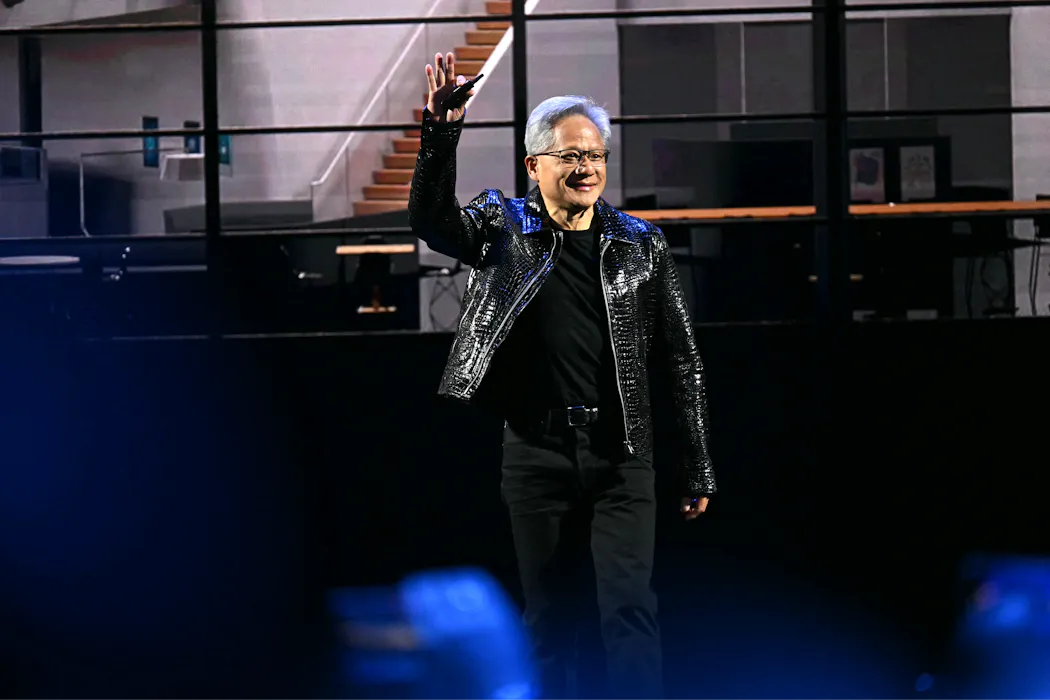
It’s hard to think of Nvidia without picturing Jensen Huang. Rarely seen without his signature black leather jacket, Huang has led chipmaker Nvidia since co-founding it in 1993, turning it into a central player in the artificial intelligence (AI) boom.
Earlier this month, Huang resigned as president, chief executive officer and a member of Nvidia’s board, in the wake of a bombshell scandal involving affairs and alleged corporate espionage.
Days later, the board linked his departure to “personal behavior inconsistent with the company’s code of conduct, standards and cultural norms”. It said it did “not intend to reinstate” him.
This week, however, it voted unanimously to bring him back, following a remarkable intervention by US President Donald Trump.
Many analysts have already weighed in on why the US government intervened. But there’s a deeper, more fundamental question here about corporate power.
If a chief executive is seen as too valuable to lose, can a company’s board still hold them to account? If it can’t, what exactly is the board for?
Read more:
Trump had 4 reasons to ‘convince’ Nvidia to rehire Jensen Huang. Here’s why it matters globally
The ‘key person risk’
Sometimes, the “hero” leader of a company can become its biggest vulnerability. In corporate governance, this is called “key person risk”. It is the danger a company comes to depend so heavily on one person that losing them would do serious damage.
This problem often grows out of success. A founder who builds a business and shapes its culture becomes its public face. Staff, customers and investors start to see the person and the company as one.
Think of Steve Jobs, co-founder and longtime chief executive of Apple, or even the fictional media magnate Logan Roy in the TV series Succession.
Nvidia itself recognised this risk before Huang’s brief removal. Its 2026 annual report warned the company was “highly dependent on the services” of its longstanding executive team, and that failing “to ensure effective succession planning, transfer of knowledge, and smooth transitions” could hinder its success in the long term.
Despite this, when Huang left, no permanent successor was ready. Nvidia’s chief financial officer, Colette Kress, stepped in temporarily while the board searched for a replacement.
Who’s watching the boss?
So, what is a board actually for? Shareholders can’t supervise the managers in a large company like Nvidia; instead, they elect a board of directors to do it for them. While the board isn’t involved in daily operations of the company, it approves big decisions, watches the chief executive and, if needed, replaces them.
It’s designed to solve something economists call the “principal-agent problem”. A company’s managers (the agents) may put their own interests ahead of the owners’ (the principals).
That’s why independence matters. Independent directors don’t work for the company and have no close financial or personal ties to its management. Filling a board with the chief executive’s employees (such as other senior executives) and friends is like letting students mark their own exams.
Nvidia’s U-turn shows how fragile independence can be. A committee of independent directors is still investigating claims that Huang was targeted by China’s top spy agency.
Huang is also due to answer questions from US lawmakers behind closed doors on December 1. The board brought him back before either had finished.
The board acknowledged that its decision to rehire Huang was heavily influenced by the US government. It said it was “confident” Huang posed “no national security risk”, based on “input from senior US government levels”.
We have seen other boards cave under pressure before. In November 2023, OpenAI’s board fired its chief executive, Sam Altman. Within days, nearly all of its 770 staff threatened to quit. Altman returned, and the board that sacked him was replaced.
Independent of whom?
On paper, there are strong safeguards to protect board independence. For example, the Nasdaq stock exchange, where Nvidia is listed, requires most directors to be independent. The committees that check a company’s accounts and set executive pay must be fully independent.
But these rules fall short in three ways.
First, the board itself gets to decide who counts as “independent”.
In 2024, a US court found several Tesla directors who approved Elon Musk’s pay deal were too close to him to be independent. A higher court later restored the deal on other grounds.
Second, directors get much of their information from the very executive team they are meant to be keeping in check.
And third, a board without its own independent leader often struggles to push back against a chief executive. Nvidia only appointed its first-ever board chair on the day Huang resigned.
Why no one should be irreplaceable
“Key person” risk can’t be removed, but it can be managed.
Boards can train a credible successor, appoint an independent chair before a crisis hits, and finish investigations before deciding. They should also explain their reasoning in public.
An independent board that isn’t able to fire and replace a chief executive is just a cheer squad – not the umpire it’s supposed to be.
This matters well beyond Silicon Valley. Many retirement funds around the world own shares in Nvidia. For the sake of protecting millions of people’s long-term savings, retirement funds and others representing shareholders should be advocating for better governance than we’ve seen at Nvidia so far.

Anish Purkayastha does not work for, consult, own shares in or receive funding from any company or organisation that would benefit from this article, and has disclosed no relevant affiliations beyond their academic appointment.
Original source: https://analysis1.mil-osi.com/2026/11/25/jensen-huangs-controversial-return-to-nvidia-poses-the-question-whats-the-point-of-a-board/