

Source: The Conversation (Au and NZ)
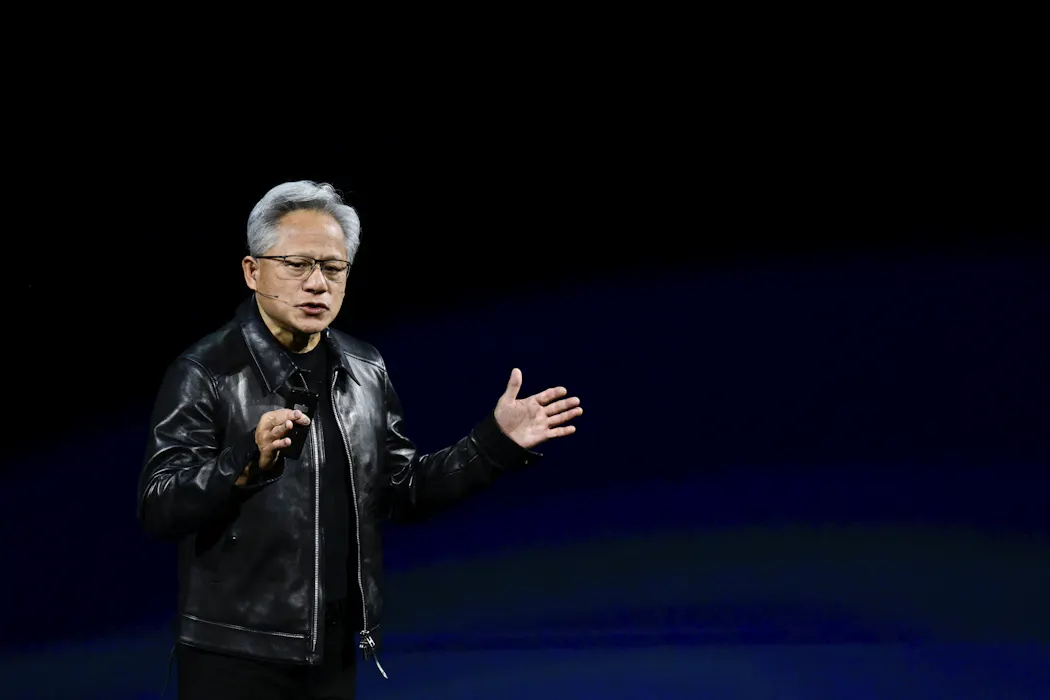
Jensen Huang has returned to the helm of Nvidia. But the extraordinary events surrounding the US chipmaker’s co-founder over the past two weeks have offered New Zealand investors a reminder of the risks of the artificial intelligence (AI) boom.
Huang resigned as chief executive on November 12 following revelations of extramarital affairs, including one with a Chinese businesswoman reportedly suspected by US intelligence of espionage.
Despite initially ruling out his return, Nvidia’s board reinstated Huang on November 23, saying it was satisfied he posed no national security risk. The decision reportedly followed lobbying from US President Donald Trump.
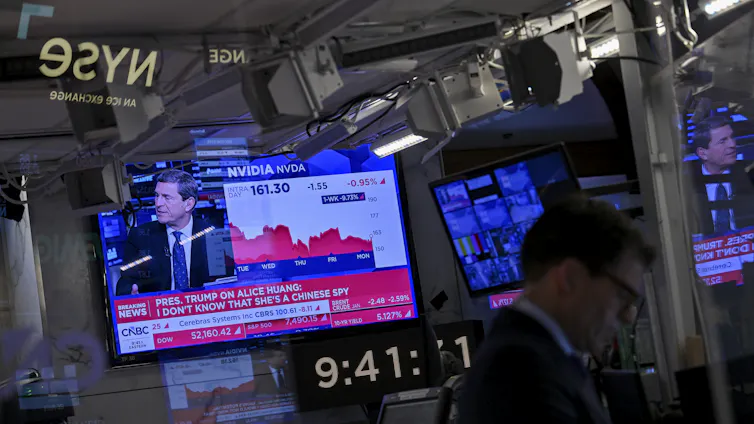
The turmoil sent Nvidia’s shares on a rollercoaster ride. Between their October peak and mid-November, nearly NZ$1.3 billion was wiped from the value of the New Zealand Superannuation Fund’s Nvidia holdings, as the chipmaker’s share price fell about 30%.
Nvidia’s underlying business remains strong. In its latest earnings report, the company reported quarterly revenue of US$115.8 billion, more than double the same period last year.
But the episode illustrates how uncertainty surrounding one of the world’s biggest tech companies can affect New Zealanders’ retirement savings – including KiwiSaver members who may have little idea how much of their money is invested in tech giants.
How exposed are our savings to big tech?
At its last full disclosure in June, the Super Fund’s five largest overseas shareholdings were Nvidia, Apple, Microsoft, Amazon and Google’s owner, Alphabet. Together, they were worth about NZ$10.6 billion – about one dollar in every five the fund holds directly in overseas shares.
But this isn’t necessarily a deliberate bet on tech. A handful of US tech companies make up about one third of the benchmark US sharemarket index, the S&P 500. Funds investing broadly in world markets therefore hold large positions in these companies.
KiwiSaver funds have similar exposure. As of September 30, Nvidia accounted for about 5.5% of investments in Kernel’s High Growth fund and Generate’s Focused Growth fund, and 5.2% in Simplicity’s High Growth fund. By comparison, it made up less than 2% of Fisher Funds’ KiwiSaver Plan Growth fund.
For someone with $50,000 in either of the first two funds, that meant about $2,750 was tied to Nvidia shares alone. While investing in several big technology companies might spread the risk, some vulnerabilities are easy to overlook.
One concerns leadership. In less than two weeks, Nvidia’s founder resigned, the board ruled out his return, and then reinstated him. Each development brought new uncertainty for investors, showing how quickly events involving a single executive can affect a company’s fortunes.
Angela Weiss/Getty Images
Another is how closely these companies depend on each other. Anthropic, the freshly floated AI company behind Claude, has committed to spending more than US$250 billion on computing capacity from Google, Amazon and Microsoft.
Three of the Super Fund’s five largest holdings are partly dependent on the same customer. When AI spending rises, their fortunes may rise together. If it slows, they could fall together.
Nvidia has guaranteed up to US$118 billion of its partners’ data centre costs, including US$105 billion for an Ohio campus leased to OpenAI. It has made no payments so far, but these guarantees tie its fortunes more closely to its customers.
A further risk lies in government policy. On November 16, the US Commerce Department issued a rule requiring licences to export advanced AI chips to five countries, while limiting remote access to US chips through overseas data centres.
Decisions made in Washington can quickly change the earnings outlook for these companies.
Why some funds are more exposed than others
Index funds, often called passive funds, track a market index. They hold companies in proportion to their size, so as tech companies rise in value, their weight increases. Exposure also depends on which index they follow.
As of September 30, the index-based high growth funds from Kernel and Simplicity had more of their overseas shares in Nvidia, Apple and Microsoft than the main global share index, MSCI’s All Country World Index.
Active managers can hold more or less than that index. Generate leaned into Nvidia and Microsoft. Milford’s growth funds held about twice the index’s share of Microsoft, with Apple at or below it. Fisher Funds held less than the index in all three.
Neither approach is automatically safer. Research by investment analysis firm Morningstar on funds sold in Australia found many actively managed global share funds performed worse than index funds while big tech shares were rising – partly because they held less of them.
But when those shares fall, as Nvidia’s did earlier this month, the funds holding the most feel it first.
What can KiwiSaver members do?
The Super Fund is built to ride out falls over decades. Many KiwiSaver members have less time, especially those close to 65 or saving for a first home.
One step is to check a fund’s largest holdings. Every KiwiSaver fund publishes its ten largest investments each quarter, available on Sorted’s Smart Investor website.
Another is to consider whether the fund type matches the investment timeline. High growth funds generally suit money that won’t be needed for at least ten years. For shorter timeframes, a more balanced fund may be appropriate.
It’s important to avoid selling in a panic. Switching to a conservative fund after a market fall can lock in losses and mean missing a recovery.
The AI boom may continue. But Nvidia’s turmoil shows how, when so much of New Zealanders’ savings is concentrated in a few companies, their troubles can quickly become ours.

Sara Ali does not work for, consult, own shares in or receive funding from any company or organisation that would benefit from this article, and has disclosed no relevant affiliations beyond their academic appointment.
Original source: https://analysis1.mil-osi.com/2026/11/23/nvidias-ceo-is-back-but-the-turmoil-has-exposed-the-ai-booms-risks-for-nz-investors/