

Source: The Conversation (Au and NZ)
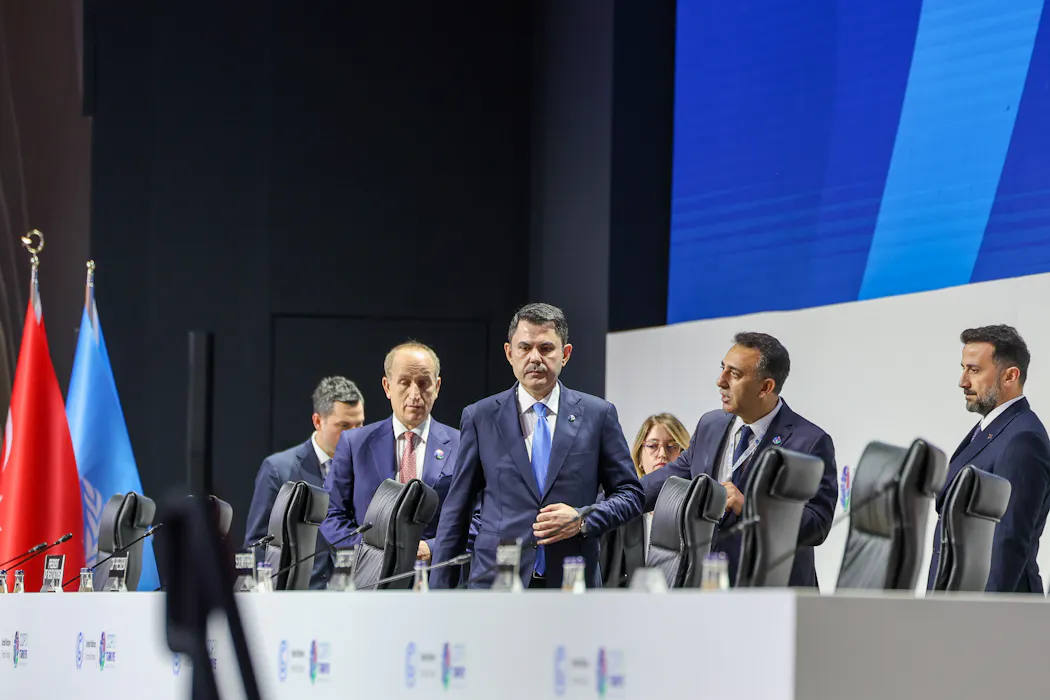
After stretching almost two days overtime, the COP31 climate summit in Antalya, Turkey, collapsed after countries failed to agree on an overarching deal to combat climate change.
The breaking point was a draft text with no mention of a phase-out of fossil fuels. Nearly 40 countries, including those in the European Union, the United Kingdom, Panama and vulnerable Pacific island nations such as Vanuatu and the Marshall Islands, formally objected to the final text.
EU representatives called a climate deal that ignored phasing out fossil fuels “unconscionable”.
But the summit also failed to deliver on several other significant issues. It was billed as the “implementation COP”, but delivered very few of the goals set by its co-presidents, Turkey and Australia.
The rejection of the final text centred on other interrelated concerns: a lack of response to science that shows the world is about to breach 1.5°C of warming and inadequate financing for developing countries to respond to climate change.
The aim was to triple adaptation financing to US$120 billion a year. That figure is now off the table, even though adaptation needs in the Global South alone are estimated at around US$500 billion a year.
Talks about a just transition mechanism also made little progress. Even the goal for clean electricity to supply 35% of the world’s energy use by 2035 was only supported as a voluntary pledge by 90 countries.
Science in the firing line
I attended the summit in my role as chair of the World Climate Research Programme. My job, alongside other UN agencies, was to make sure the best available science underpinned the negotiations.
It was disheartening to watch how hard that science was fought.
The International Panel on Climate Change (IPCC) delivers its major reports every six or seven years and is currently working on its latest assessment. In between, the UN Environmental Programme’s (UNEP) annual Emissions Gap and Adaptation Gap reports and the World Meteorological Organization’s State of the Global Climate report show how far off track nations are from meeting commitments made under the Paris Agreement.
According to UNEP’s recent “overshoot” report and the 2026 Global Carbon Budget report, the world will reach 1.5°C of long-term warming around 2030.
This breaches the lower limit of the Paris Agreement. For small island states and the least developed countries, the 1.5°C line is existential and non-negotiable.
For the first time, COP31 discussed the concept of overshoot and how warming could be brought back down to 1.5°C again. This discussion split the room.
Petrostates argued for carbon capture and removal, but at a scale that does not yet exist. Saudi Arabia, India and Russia, and at times China, discredited rigorously peer-reviewed findings. Small island states, meanwhile, refused any backsliding.
Delay tactics
Another flashpoint was an attempt to wave away the annual science reports altogether.
Saudi Arabia, India and Russia objected to citing any findings other than the IPCC assessments, dismissing annual reports as “grey literature”. Meetings and press conferences were hastily convened, where I and other scientists behind these reports had to set out just how robust they are.
The biggest fight of the summit was over the timing of the IPCC’s next major report, its Seventh Assessment Report. The above countries were accused of pushing for a delay until 2029.
Read more:
Why fossil fuel-producing countries are stalling this crucial climate report
Dozens of European, African and Pacific nations want the report delivered earlier so it can inform the 2028 Global Stocktake when the world will measure its progress against the Paris Agreement goals. Pushing back the science until after the stocktake is a way of making sure the reckoning has nothing to measure against.
The COP31 summit’s worth will be remembered for its outcome. Organisers will have to weigh the enormous cost and carbon footprint of flying in 92,000 people against the failure to agree on a final text.
I cannot help asking whether these summits have had their day, and whether a new model is needed now. Climate change will not wait for the negotiators. If the system built to act on the science cannot even agree to hear it on time, we must find one that will.

Tim Naish receives funding from the Ministry of Business Innovation and Employment. He chairs the Joint Scientific Committee of the World Climate Research Programme (WCRP) and attended COP31 on a World Meteorological Organisation (WMO) badge as a climate science expert.
Original source: https://analysis1.mil-osi.com/2026/11/23/cop31-collapse-countries-reject-deal-without-mention-of-transition-away-from-fossil-fuels/