

Source: The Conversation – UK
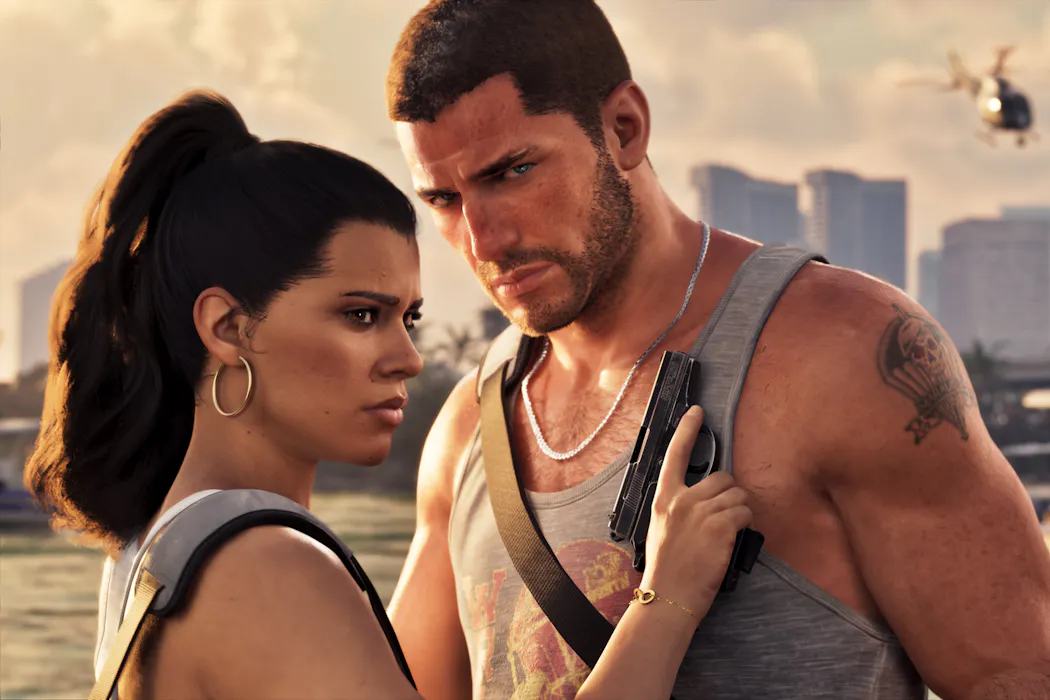
When gaming studio Rockstar announced that its much-delayed new Grand Theft Auto game (GTA VI) would come out in mid-November, most other large scale studios decided to either hold off or push for an earlier release for their titles to avoid being eclipsed.
Growing up, my experience of the universe started with GTA II (1999), its impressive leap to 3D with GTA III (2001), and then Vice City (2002) and San Andreas (2004), which my friends would play during sleepovers. For many players, GTA simply meant sandbox chaos: stealing cars and indulging in gratuitous mayhem.
As I became an adult gamer, I delved lightly into GTA IV (2008) and V (2013), only to realise that the franchise was technically not an American game. Created in Scotland and developed largely by British studios (though today’s massive global teams make it a truly international production), the franchise built its reputation on a distinctly European caricature of the United States: louder, more violent, hyper-capitalist and absurdly unhinged.
Indeed, beneath the violence lay a sharp, progressive satire that the younger audience sometimes missed.
A reality where an alligator is a weapon
Replaying bits of GTA V made this irony impossible to ignore. There are in-game radio ads promoting cigarettes for children, fossil-fuel monopolies funding anti-green energy campaigns and toxic wellness brands peddling self-loathing. It was an exaggerated fun-house mirror held up to American culture; a culture that has since seemed to step through the looking glass.
Over the past decade, following two terms of Donald Trump’s presidency and a steady escalation of political spectacle, the gap between American reality and Rockstar’s satire has shrunk. We exist in a world where a US president openly muses at a press briefing about injecting disinfectant to counter a deadly virus. Then there was the entirely serious state department run by a tech mogul (Elon Musk) named Doge (The US Department of Government Efficiency) – a nod to the his cryptocurrency, dogecoin, which is named after a viral 2013 dog-themed meme.
You have to ask whether the parody has become reality, or whether reality has simply become a parody of itself.
In media theory, the French philosopher Jean Baudrillard coined the term “hyperreal”: a state in which simulations and exaggerated representations become so pervasive that we can no longer distinguish the copy from the original.
Nowhere is this clearer than in the viral side-by-side images comparing GTA VI’s fictional state of Leonida with real-life news footage from Florida. For years, “Florida man” headlines (an internet trope cataloguing the state’s notoriously bizarre, surreal crime blotters, fuelled largely by Florida’s unusually broad public-records laws) have read like rejected GTA mission briefs. For instance, the story of a Florida man who was charged with assault with a deadly weapon in 2016 after tossing a three-and-a-half-foot alligator through a fast-food drive-thru window. That was real life, not a game.
When the real world already operates at maximum absurdity, how do you satirise it?
Early critical consensus around GTA VI points to a striking tonal shift. While players can still cause chaos, if they choose, the game’s narrative pulls in the opposite direction. They are no longer casting players as unhinged sociopaths like GTA V’s Trevor, a volatile, meth-dealing career criminal whose playable storylines leaned into torture, mass rampages and grotesque shock value. Instead, protagonists Jason and Lucia are grounded characters whose ambitions are remarkably modest: surviving, protecting each other and scraping together a decent life.
Critics have even noted how the game subtly nudges players toward empathy, rewarding small, mundane acts of care, like texting a partner, doing a food shop or throwing rubbish in a bin. In this GTA, unprovoked street massacres feel weirdly out of step with the story.
As Rockstar co-studio head Rob Nelson observed in interviews around the release, earlier GTA titles were about the illusion of the American Dream. Today, that dream has shrunk to simply affording a home and looking after your family. In a culture saturated with cynicism, sincerity itself has become the unexpected, almost punk rebellion. It is a bleak take, perhaps, yet also a sign of growth.
This evolution matters far beyond gaming circles. Video games have matured into one of our most revealing cultural barometers. When a blockbuster franchise famous for shock value pivots away from scorched-earth parody toward bittersweet intimacy, it tells us something profound about our current political moment. When reality grows dark and surreal enough on its own, satire no longer needs to be as outrageous.

Gaspard Pelurson does not work for, consult, own shares in or receive funding from any company or organisation that would benefit from this article, and has disclosed no relevant affiliations beyond their academic appointment.