

Source: The Conversation – UK
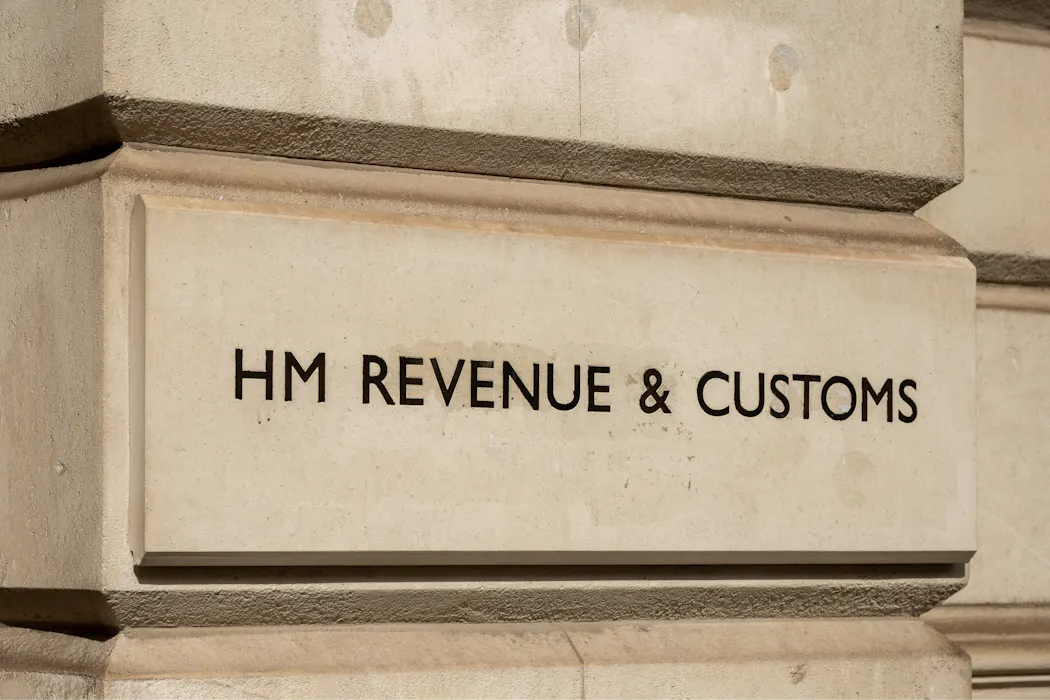
There are huge companies making vast amounts of money in the UK. And some of those firms pay very little tax on the money they make.
This makes some people angry. It seems unfair, after all, that a company the size of Starbucks – worth over US$100 billion (£75 billion) – paid no corporation tax in the UK last year. Or the year before that.
Research suggests that some companies manage to do this by using a variety of clever strategies (not readily available to smaller firms) that help them to legally shift profits out of countries with higher tax rates to countries with lower tax rates.
In theory, each of these complex arrangements could be forensically examined by the UK’s tax authorities.
But doing so in practice would be a considerable burden in terms of scrutiny and enforcement. There could also be time-consuming appeals processes and legal challenges.
An international approach is also problematic. One country imposing a tax on global profits raises difficulties for tax authorities in confirming the veracity of international declared accounts.
But if the UK really wanted to do something about international firms paying zero (or nearly zero) corporation tax, there are options.
What if, for example, the tax authority charged Starbucks a flat, minimum level of corporation tax per outlet based on what comparable domestic businesses in the area pay?
If Starbucks chose to close stores rather than pay up, this would be fine.
The coffee shop market is a popular one, or in economic terms, “highly contestable”. So if Starbucks decided to abandon its branch on your local high street, another coffee shop – let’s call it “Moonpounds” – is likely to step in.
And while there may be dedicated fans of Starbucks coffee, there are others who are not, and who would happily spend their money at other coffee chains, or indeed independent coffee shops.
Moonpounds would retain jobs and contribute more effectively to the local economy and tax base – and not channel profits abroad.
The idea here is that whether or not a particular multinational corporation continues operating in the country should be of no interest to the tax authority, which should respond to threats with a shrug. It’s an approach to taxation one might term “existential indifference”.
Under a principle of existential indifference, threats of ceasing trading should be ignored. Similarly, impassioned defences based on job losses and VAT receipts to the exchequer should be ignored as jobs and VAT receipts would also be provided by new market entrants.
This means that there are many potential new entrant businesses that could easily replace a given Starbucks cafe if it closed. They would routinely be contributing more to the vibrancy of the local economy and the UK exchequer.
Supported by Smith?
The same theory applies to many other big businesses.
Delivering items to people’s homes is another highly contestable market. And there are plenty of tech companies that would be happy to help with your internet searches. The same goes for cloud data storage or app sales.
For many of these services provided by large companies, there are plenty of potential new entrants and competitors who would be happy to take over.
The idea of pushing taxes on big firms who employ lots of people can sometimes be seen as anti-business or anti-growth. But the idea of fairness in the corporate world was something that past economic thinkers encouraged.
In the 18th century, for example, Adam Smith, the “father of economics”, was not an advocate of taxing profits. Yet he was also not in favour of tax outcomes causing persistent income or revenue inequality.

Indran5/Shutterstock
In the 20th century, John Maynard Keynes primarily viewed corporation tax as just one lever of fiscal policy to be increased or decreased depending on the stage of the economic cycle. He also viewed taxation as an appropriate response to excess profits.
Economic thought on taxing the profits of big international companies has now evolved to the position where even the Organisation for Economic Co-operation and Development (OECD) actively promotes a minimum corporation tax rate (15%) to stop multinational companies from shifting profits to low-tax havens and to try to obstruct the competitive lowering (or race to the bottom) of tax rates among countries.
The OECD appears to support the idea that effective and fairer corporation taxes can be designed with sufficient political will. And that political will should not be weakened by the worry that some international firms will leave along the way.

Alan Collins has previously received funding from various grant providing bodies including the Economic and Social Research Council, Engineering and Physical Science Research Council and the European Commission. He is a very passive member of the Labour Party.
Original source: https://analysis1.mil-osi.com/2026/11/18/the-uk-shouldnt-worry-about-taxing-big-companies-that-threaten-to-leave/