

Source: The Conversation (Au and NZ)
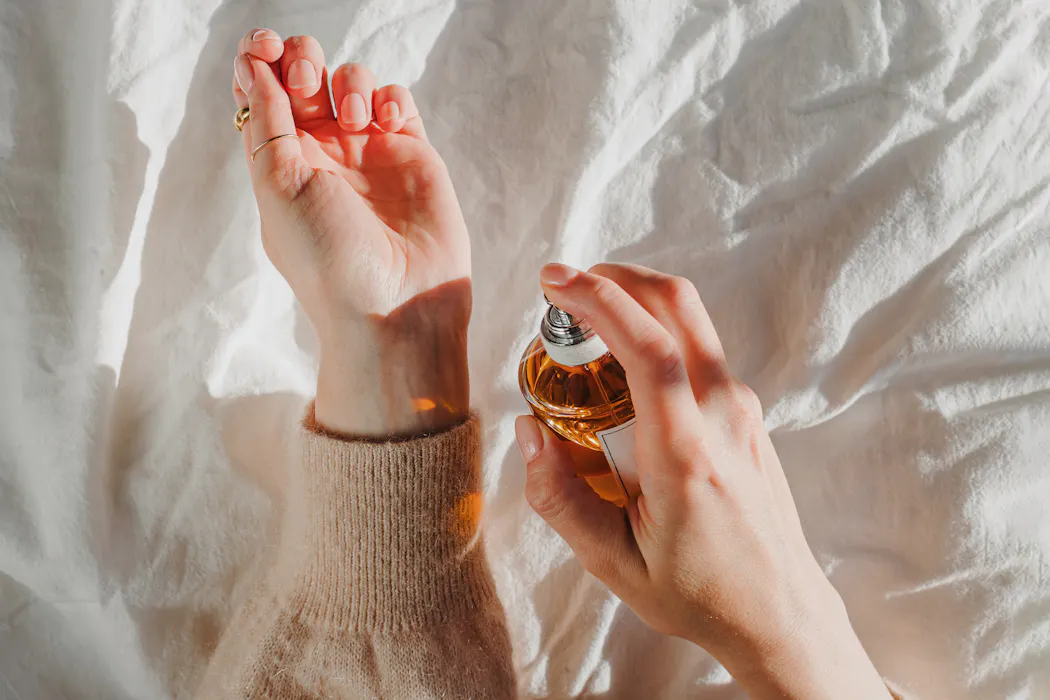
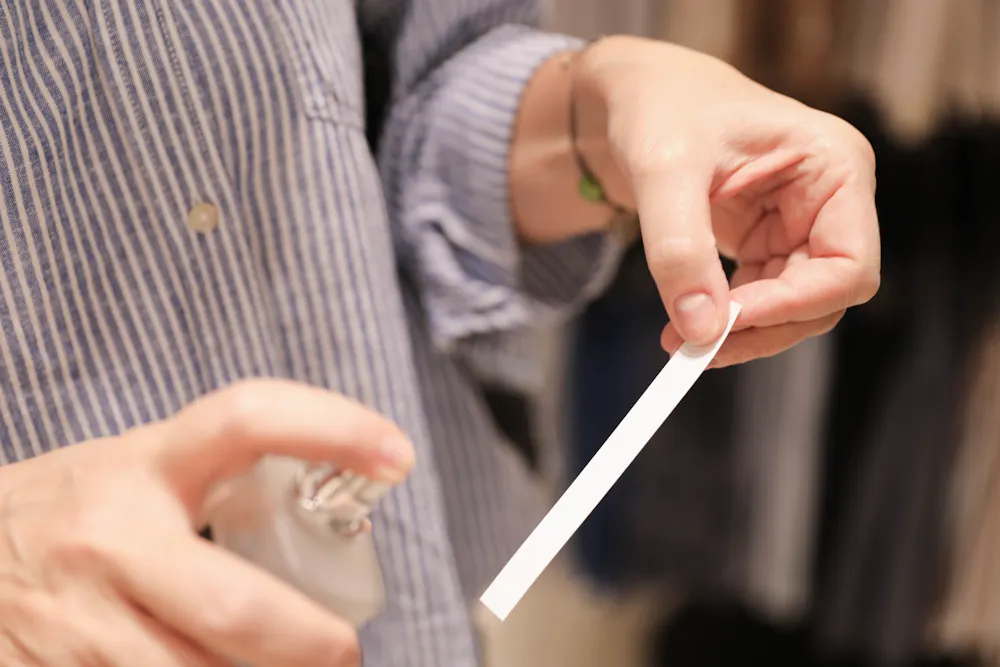
Have you ever sprayed a perfume in a department store on a paper strip and loved the smell, but it didn’t perform the same when you sprayed it on your skin? It’s a common experience.
It all has to do with how the molecules in the perfume evaporate and interact with your skin. That chemistry also explains why the same perfume may smell amazing on you, but on someone else it can smell completely different, and sometimes not nearly as pleasant.
That’s because each of us has different “skin chemistry”. As a result, perfumes will behave differently, and the smell our noses detect will vary.
To understand why and how this happens, first we need to look at what is a perfume, chemically speaking.
What’s in a perfume?
Simply put, a perfume is a mixture of various fragrance molecules, typically dissolved in alcohol. Perfumers carefully combine these ingredients into what are known as “top”, “middle” and “base” notes.
Top notes, such as citrus compounds like limonene, are highly volatile, will evaporate quickly, and not stay on the skin for long.
Middle notes, often floral or fruity molecules, emerge after the top notes fade because they’re less volatile and stick around for longer.
Base notes, including musks, woods and resins, are the heaviest or largest molecules, so they evaporate more slowly and will linger the longest.
When a perfume is sprayed onto paper, the fragrance molecules evaporate (change from liquid to gas) in a relatively predictable way. Their ability to escape into the air is mainly determined by intermolecular forces – interactions between molecules.
The stronger those forces are, the harder it is for a molecule to break away and change from liquid to gas. Molecule size and shape also play a role here. So, the top notes evaporate first because they’re small and have weak intermolecular forces, while base notes are the opposite.
Knowing all this about the molecules is what lets perfumers create fragrances that will release their notes fairly predictably.
But it gets more complicated once fragrance hits the skin.

Jay Huang/Unsplash
How skin chemistry enters the picture
While a paper tester strip is a fairly neutral surface, we have various molecules on the skin. These interact with the perfume and can not only change the order of the molecules being released, but also alter or mask the resulting scent.
The main skin factors that will influence the scent of perfume are:
- moisture content and oiliness
- temperature
- pH level
- microbiome.
Moisture and oiliness
Hydration is one of the main factors. Dry skin tends to absorb heavier or larger fragrance molecules more readily, while moist or oily skin provides a better surface for fragrance molecules to sit on and evaporate gradually.
This often improves how long the perfume lasts and its projection – how much others around you can smell it. This is why the same perfume could last all day on one person, but only for a couple of hours on another.
Temperature
Warmer skin increases evaporation, causing perfumes to develop more quickly and sometimes smell stronger. A person with naturally warmer skin may experience top notes disappearing much faster. Base notes may become noticeable within minutes rather than an hour. This can make it seem as though the perfume “skips” the top notes.
pH level
The natural acidity of the skin, often referred to as skin pH, may also subtly influence fragrance performance. Human skin is slightly acidic, typically around pH 4.5 to 5.5.
While most fragrance ingredients remain stable within this range, subtle pH changes could cause fragrance ingredients to react differently. As a result some floral notes may weaken, some musks may become more prominent, some citrus notes may smell sharper or disappear rapidly.
Skin microbiome
Perhaps the most fascinating factor is our skin microbiome. Our skin is home to billions of microorganisms, including bacteria and fungi. These microbes interact with compounds found in sweat and skin oils, producing volatile organic compounds that contribute to each person’s unique scent profile.
The microbes can also metabolise fragrance molecules. This can produce new odours, enhance some notes, or suppress others. It’s another reason why a fragrance could smell wonderful on one person and unpleasant on another.
Gabrijelagal/Getty Images
Perfumes can be fickle
All this means that when you apply a perfume, it’s not interacting with a neutral surface, like a piece of paper. It’s combining with your own unique chemical background. A floral fragrance that smells fresh and rosy on one person may seem sharper, sweeter or even slightly sour on another, because it’s blending with different molecules on that person’s skin.
Even the same perfume on the same person can smell slightly different from one day to the next. Changes in hydration, hormone levels, diet (spicy or garlicky foods can make you smell differently), ambient temperature and skin condition can all affect fragrance performance.
It pays to keep all this in mind when buying and using fragrances.
First, never judge a fragrance solely on a paper test strip. They’re good for a first impression, but can’t predict how a perfume will behave on your skin. Always test a fragrance on your wrist and wear it for several hours before deciding whether to buy it.
Second, don’t be disappointed if a perfume smells different on you than on paper or on your friend’s wrist. Biologically we’re all unique and you might have better luck with a different fragrance.
Finally, if you want a fragrance to last longer, applying an unscented lotion before spraying can often help – it will make the perfume evaporate slower.

Magdalena Wajrak does not work for, consult, own shares in or receive funding from any company or organisation that would benefit from this article, and has disclosed no relevant affiliations beyond their academic appointment.
Original source: https://analysis1.mil-osi.com/2026/11/17/why-does-the-same-perfume-smell-different-on-different-people-skin-chemistry-explained/