

Source: The Conversation (Au and NZ)
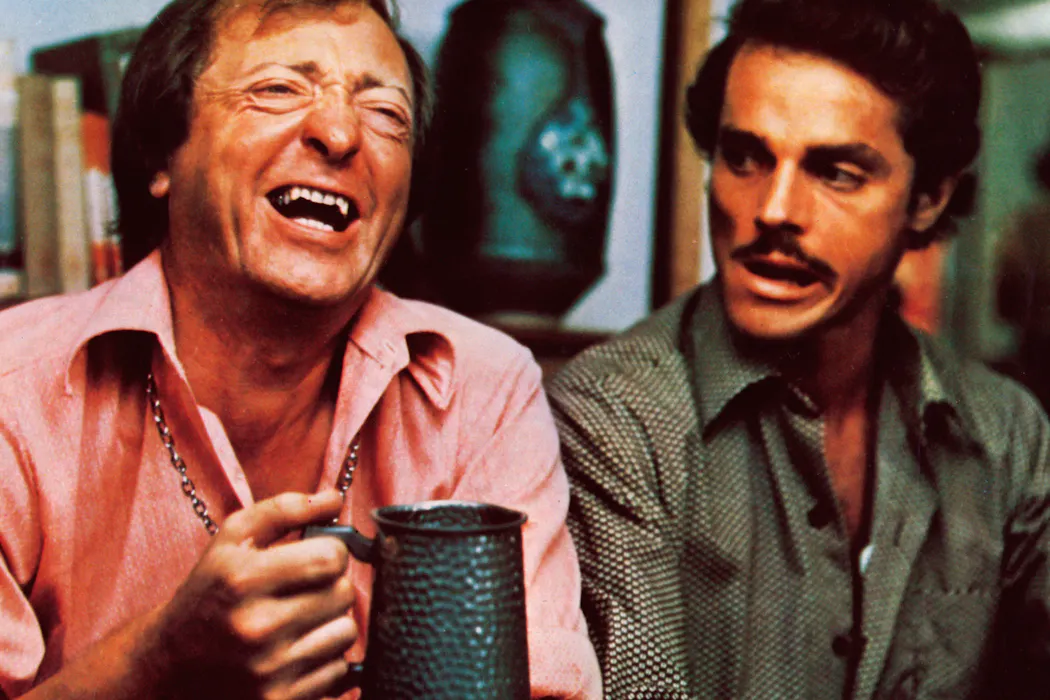
November marks the 50th anniversary of the release of Bruce Beresford’s adaptation of David Williamson’s play Don’s Party. Featuring a who’s who of Aussie stage and screen, big and small, it is a terrific blend of 70s ocker culture. It also remains a biting examination of a mostly left-leaning middle class.
Don Henderson (John Hargreaves) invites a group of mates and their long-suffering partners to his suburban home on election night, 1969.
These “friends” include the always watchable Ray Barrett as Don’s university mentor, and a scene-stealing Graham Kennedy in his first dramatic role as the recently separated Mack.
Most of them (with a few centre-right and apolitical guests to spice things up) aspire to a very specific brand of left, middle-class radicalism. After decades of conservative rule, they gather around the television, drinks in hand, to watch the political tide turn in their favour.
Unfortunately for the mood of the evening, the tally room reveals disappointment for the lefties at the shindig. The night turns for the worse, as a mix of domestic problems, bruised egos and smouldering resentment comes to the surface with the continued alcohol consumption.
Exposing themselves
Most of the partygoers arrive with an explosive mix of academic smugness (Williamson lectured in psychology and engineering at Swinburne in the 1960s, and these characters seem very real) and alcohol-fuelled optimism.
The Labor supporters at the party genuinely believe history is finally turning their way, towards reform. The rest of the party don’t seem to care one way or another, as long as they get a “screw” (the characters’ term, not mine).
Despite being set on election night in 1969, where the incumbent Liberal–Country coalition government, led by Prime Minister John Gorton, was facing a Labor party led by Gough Whitlam, it’s easy to see the film’s response in 1976, exactly a year after the Dismissal. Dreams have been shattered – in the play, in the film and in real life.
Now all that is left is to fight among themselves and take their clothes off – and they certainly do that.
The term “swinging dicks” is used both metaphorically and literally, notably when the men jump the fence to go skinny dipping in the neighbours’ pool. Whatever civility gets stripped away as the booze and inhibitions get looser and looser.
In 1970, Australia had introduced an R rating for films and, by the time Don’s Party was released in 1976, Australian cinema was in the midst of its “sexploitation” period.
Here the men’s exposure is on many, many levels. These men’s progressive values get exposed as skin-deep. Beneath the egalitarianism and social justice lies careerism, one-upmanship, ego, a desire for status and the expectation that they can still “pull the birds”.
The men use sarcasm, verbal sparring and pretend mateship to mask their deep-seated insecurities. They overcompensate – terrified of being perceived as unintelligent, sexually inadequate or professionally stuck.
Being mostly losers in an election that they thought was a shoo-in, combined with excessive booze, doesn’t help much.
Thankfully, while the men strut and peacock, the female characters mostly are the voices of reason. Kath (the always-watchable Jeanie Drynan) and Jenny (Pat Bishop, who won the Australian Film Institute award for her role) anchor the story. They’re often smarter, more pragmatic and over their partners’ arrested development. Often all three at once.
These women, along with artist Kerry (the wonderful Candy Reymond), manage to almost keep the night together, especially after the election results. They deliver reality checks that pop their partners’ self-importance party balloons.
They know the blokes’ liberated attitudes toward marriage and sex are merely an excuse to behave like spoiled brats. When the men are exposed, it isn’t a shock to the female characters – it just confirms what everyone, men and women, already knew.
The next day
Five decades later, the film is an exemplar of the Australian new wave, brilliantly performed by its ensemble cast (including a cameo by none other than Gorton playing himself) and skilfully executed by Beresford and cinematographer Don McAlpine, from Williamson’s script.
Apart from the sequel play in 2011, Don Parties On, the original play and film continue to inspire the creative arts, especially in its depiction of Australian middle-class angst and its presentation of Australian suburbia. A couple of decades after its release, the band You Am I paid homage to the film with their music video for What I Don’t Know ‘Bout You, directed by Matt Hartley.
The video clip features prominent actors like Ben Mendelsohn, Matt Day, Tania Lacey, and Nadine Gardener recreating scenes from the film. The clip also features a young Stephen Curry, fresh off The Castle, in the Graham Kennedy role, meta-foreshadowing his performance as Kennedy nearly a decade later in The King.

Gregory Ferris does not work for, consult, own shares in or receive funding from any company or organisation that would benefit from this article, and has disclosed no relevant affiliations beyond their academic appointment.
Original source: https://analysis1.mil-osi.com/2026/11/16/dons-party-at-50-remains-a-biting-examination-of-australias-left-leaning-middle-class/