

Source: The Conversation – USA (3)
Curious Kids is a series for children of all ages. If you have a question you’d like an expert to answer, send it to CuriousKidsUS@theconversation.com.
Why does your body store fat in your butt? – Ellen, age 8, Cambridge, Massachusetts
Have you ever wondered why some parts of your body are firm, like your elbows, while other areas, like your butt, are squishier?
The difference is due to what scientists call fat distribution, and researchers are still trying to understand why bodies store fat in some places but not in others.
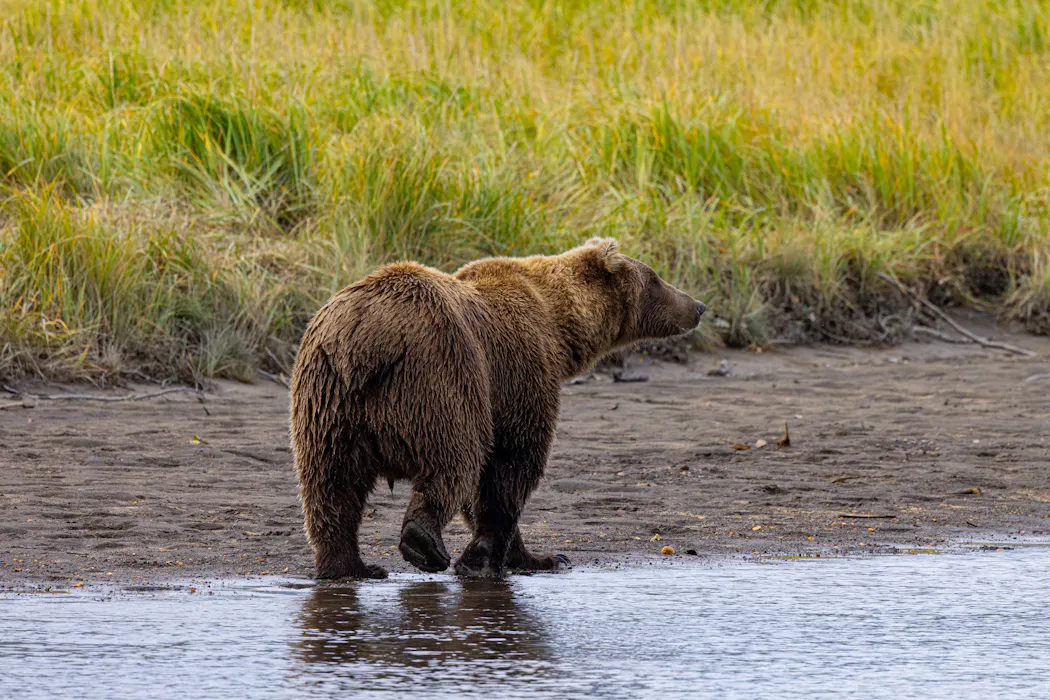
All animals have fat in their bodies, even insects. Bears even put on up to 400 pounds (180 kilograms) of additional body fat, the equivalent of 544 large cheese pizzas, to survive hibernation.
Fat is an important and constantly changing part of all bodies, including those of humans and our evolutionary ancestors.
What is fat?
Fat, also called adipose tissue, is one kind of connective tissue that helps hold your body together.
For a long time, scientists thought that adipose tissue was mainly a storage place for the extra energy your body doesn’t use from the food you eat. While fat is a great source of stored energy, it also has many other functions. There are even different kinds of fat.
Visceral fat serves as a sort of protective bubble wrap, surrounding and filling in the spaces between your internal organs. Subcutaneous fat, the layer of fat between your skin and your muscle that you can pinch, is a protective cushion and helps to keep you warm by insulating you like a coat.
Fat also produces and responds to hormones, a type of chemical messenger, to regulate how your body uses energy and to tell you when you are hungry or full.
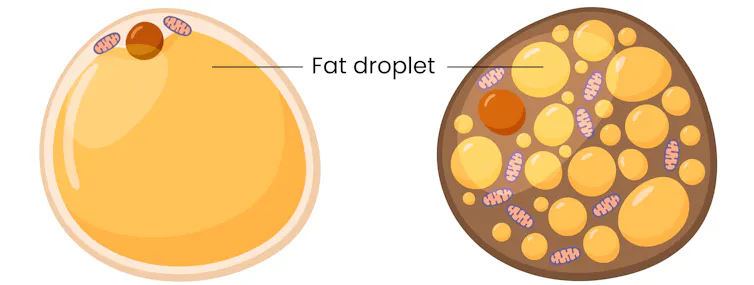
Different kinds of fat also have different jobs. White fat is the kind of fat most people are familiar with and performs the functions mentioned above.
You may be less familiar with brown fat, which is brown because it contains a lot of mitochondria: the parts of your cells that produce the energy your body needs to perform all its functions.
Not all animals have brown fat, but humans do. Scientists know that brown fat performs a special function to heat your body when you get cold. It doesn’t store energy, like white fat does, to help your body move.
Vitalii Dumma/iStock via Getty Images
When you were a baby, you had a lot of brown fat along your torso to help keep you warm because your body wasn’t mature enough to maintain your body temperature. As you grow older, you have less brown fat. It is only located just above your collar bone and along your major deep blood vessels, like your aorta.
Why do humans store fat where we do?
Researchers don’t know enough yet about brown fat to know why it is in just a few parts of the body. It is possible that it’s near the neck and around major blood vessels to help insulate the blood and keep overall body temperature in a healthy warm range.
As for white fat, there appear to be three main factors that determine where your fat gets stored: genetics, hormones and age.
Certain genes direct fat to accumulate in the butt, while other genes tell it to collect on the torso.
Hormones like estrogen, which affects almost every system in all bodies but is typically higher in females, direct more subcutaneous fat to gather in the butt, thighs and backs of the arms. Cortisol, the stress hormone, seems to direct visceral fat to accumulate in the belly area.
But why isn’t fat evenly distributed throughout the body? Well, having a lot of fat around your elbows and knees would limit your ability to bend your arms and legs. Storing a lot of fat around your head would possibly put your brain at risk of overheating. Other parts of your body, like hips, butts, breasts and thighs, don’t have these risks – maybe that’s why we store fat there.
Why do people have fat at all?
Don’t be fooled: A lot of animals that look fat, like a hippopotamus, actually aren’t. Hippos only have around 2% body fat, the percentage of how much of your body mass comes from fat; while the average human woman has over 30% body fat.
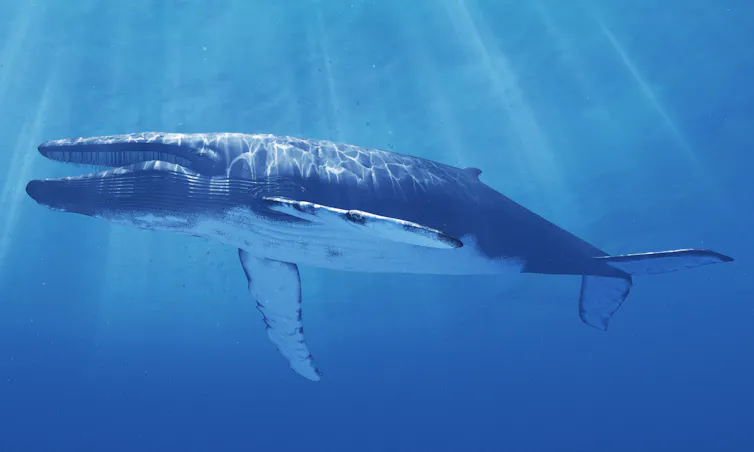
In the rest of the animal kingdom, biologists typically only see a lot of body fat among hibernating or marine mammals. For the hibernators, the fat serves as energy storage for long, cold winters. For marine mammals like seals and whales, that extra fat is like a giant puffy coat helping to keep them warm in the cold depths of the ocean.
SCIEPRO/Science Photo Library via Getty Images
Humans do not hibernate, nor do we live in the ocean, so why do we have a lot more fat than all other primates and most mammals?
Anthropologists like me, who study how the human body has evolved over time, think it has to do with the lifestyle of our evolutionary ancestors who had to gather and hunt to survive. Gathering and hunting were not always reliable food sources. We think our ancestors developed the ability to put on extra fat as a food insurance policy. When food was difficult to find, they could rely on their extra fat stores to carry them through until food became available again.
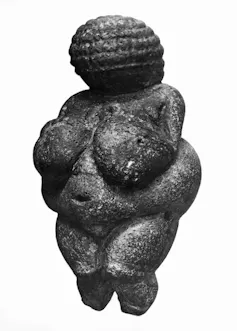
Researchers are still trying to determine when this extra fat storage evolved. We have one line of evidence from small stone figures known as Gravettian statues.
Culture Club/Hulton Fine Art Collection via Getty Images
These ancient statues from 25,000 to 28,000 years ago depict feminine figures who carry a lot of extra body fat. Archaeologists have found them all throughout Europe and Russia.
The way the ancient artists depicted fat on these figures matches how fat looks on bodies today. This accuracy has led researchers to believe that the makers of the Gravettian statues knew how individuals with greater body fat actually looked, meaning at least some people at this time did put on a lot of extra fat.
Europe and Russia back then were much colder than they are today, supporting the idea that our ancestors would have needed the extra fat to get through the extremely cold winters when food was harder to find.
So, the next time you poke at your butt fat, remember that fat is a really important part of our bodies, performs lots of different functions, and is likely evolutionarily ancient for us humans.
Hello, curious kids! Do you have a question you’d like an expert to answer? Ask an adult to send your question to CuriousKidsUS@theconversation.com. Please tell us your name, age and the city where you live.
And since curiosity has no age limit – adults, let us know what you’re wondering, too. We won’t be able to answer every question, but we will do our best.

Cara Ocobock receives funding from the National Science Foundation and the Office of Naval Research.
Original source: https://analysis1.mil-osi.com/2026/11/16/why-does-your-body-store-fat-in-your-butt/