

Source: The Conversation – USA (3)
The American Cancer Society announced on Nov. 12, 2026, that it has released major changes to its prostate cancer screening guidelines to improve detection and treatment of the disease.
The Conversation asked Dr. Andrew Wolf, a physician at the University of Virginia who was one of the lead authors of the new guidelines, to walk readers through the changes and why they were made.
What are the new screening recommendations?
The biggest change is that we are making a proactive recommendation to screen for prostate cancer. Previously, we recommended that people talk with their healthcare provider to decide whether or not screening is right for them.
Our new recommendations vary by age and by a person’s risk of developing prostate cancer.
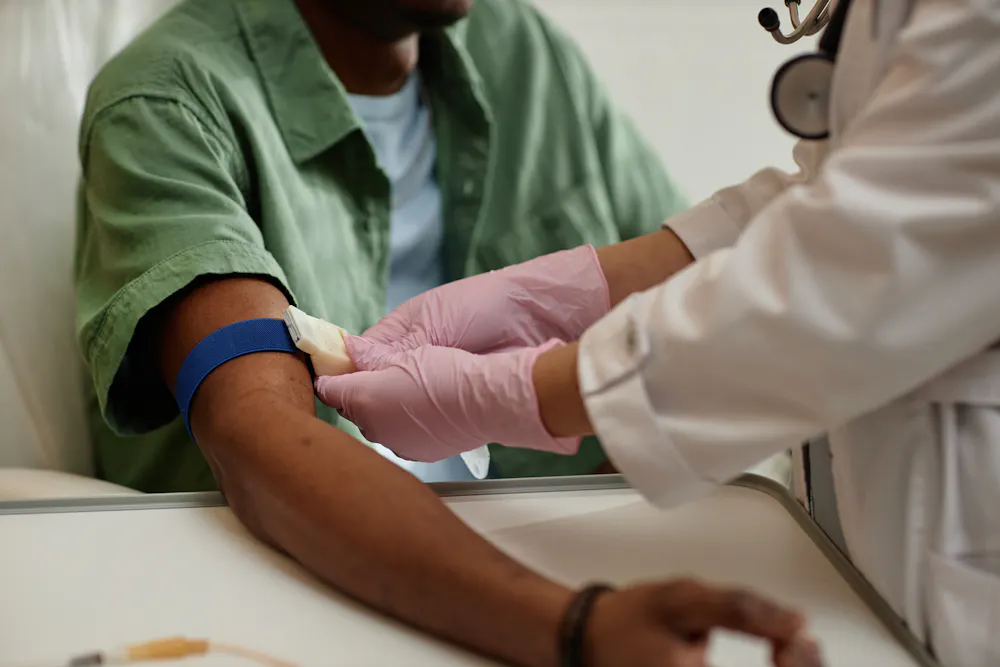
For people at average risk of developing prostate cancer, we recommend they be screened with the prostate-specific antigen, or PSA, blood test every two years from age 50 through 69. PSA is a protein that prostate cells make. Cancer and other conditions can cause PSA levels to rise.
People at higher risk, including Black men and men with a strong family history of prostate cancer, should be screened annually from age 45 to 69. A strong family history means having a family member who was diagnosed with prostate cancer before age 65, or multiple family members diagnosed at any age. People with a single family member diagnosed at age 65 or older should be screened every two years from age 45 years to age 69 years.
For people ages 70 to 74, we recommend they talk with their healthcare provider about whether or not to continue screening. Because there is uncertainty about the benefit of screening for people in this age group, decision-making around screening depends on their personal preferences, overall health status and life expectancy.
For those over age 74, we recommend against prostate cancer screening. The potential harms of screening, such as more invasive follow-up tests and treatment, are likely to exceed the benefits for people in this age group.
Finally, we recommend against using a digital rectal exam to screen for prostate cancer, as it is less effective than the PSA test. The digital rectal exam may still be helpful when further evaluating elevated PSA levels or symptoms related to the prostate gland.
SeventyFour/iStock via Getty Images
Why were the screening guidelines updated?
The past decade has seen mounting evidence supporting the benefits of using the PSA blood test to screen for prostate cancer.
The ability of the PSA test to reduce the risk of death from prostate cancer or of being diagnosed with metastatic disease are actually greater than researchers previously thought.
At the same time, there have been significant developments to reduce the potential harms associated with prostate cancer screening, including false positive PSA test results and diagnosis and treatment of prostate tumors that are unlikely to harm patients in the long-term.
Who is most at risk for prostate cancer?
Black men have an approximately two-thirds higher risk of developing prostate cancer compared with white men. They are also at greater risk for having more advanced disease at the time of diagnosis. These disparities are likely due to a combination of genetic, environmental, social and healthcare access factors.
Men with a family history of prostate cancer in a close relative – such as a parent, sibling or child – are also at elevated risk.
There are also a number of genetic mutations, such as BRCA2, that confer significantly elevated risk of prostate cancer. Though screening recommendations for these cases are beyond the scope of our guideline, several professional medical organizations, including the National Comprehensive Cancer Network and the American Urological Association, have issued recommendations for screening people with these high-risk mutations.
Why has the PSA test been so controversial?
For years, clinicians believed that the benefits of PSA screening were uncertain and didn’t necessarily outweigh the potential harms. This stance was in part because of the results of two large prostate cancer screening trials that were published in 2009. One, a U.S. study, found no benefit to screening; the other, a European study, found only a relatively small benefit.
However, it later became clear that the U.S. study was seriously flawed in such a way that it couldn’t have shown a benefit: Almost 90% of the men in the control group – that is, the group that wasn’t supposed to get screened – actually did get screened, and many of the men with abnormal PSA levels didn’t follow-up.
Conversely, most of the men in the European study who were randomized to standard care – no testing – instead of screening did not, in fact, get a PSA test, so it was more of a true comparison of the effect of screening versus not screening.
After researchers followed patients for over two decades in the European study, the effects of screening became clear: Screening reduced the risk of dying from prostate cancer by 13%. And about 500 men needed to be screened to avert one death from prostate cancer.
This may not sound very impressive, but it’s comparable to other routinely offered cancer screening tests, such as mammography for breast cancer. And the proportion of people needing to be screened to save a life would be significantly lower if extrapolated to a lifetime of screening starting at age 45 or 50, rather than the average number of two screenings that men received in the study.
Why are there differences in guidelines?
The U.S. Preventive Services Task Force also has its own prostate cancer screening guidelines. The task force’s guidelines currently recommend that clinicians not screen for prostate cancer unless the patient indicates a preference to proceed. At the time of the task force’s last update in 2018, it determined that the potential benefits and harms of screening were too closely balanced to recommend screening.
The task force has been in the process of updating those guidelines over the past several years. It is possible that their update will more closely align with that of the American Cancer Society.
I do think we have both sufficient evidence of benefit and sufficient reduction of the risks to now proactively recommend screening. Where the two guidelines do align is that both recommend that patients be informed of the benefits, risks and limitations of prostate cancer screening so they know what they’re getting into.
It is likely that our new screening recommendations will be covered by most insurers. However, patients may have out-of-pocket costs for further testing their doctor orders as a result of an abnormal PSA level.

andreswd/E+ via Getty Images
What would you say to people hesitant about screening?
Even though the benefits far outweigh the risks, there may be legitimate reasons why some people may not wish to undergo screening.
Some people might want to avoid the possibility of needing to get a prostate biopsy, which is how clinicians diagnose prostate cancer if a patient has an elevated PSA and an abnormal follow-up MRI scan or biomarker test. Prostate biopsies are uncomfortable, and they may cause some bleeding or occasionally an infection.
Some people may want to avoid the possibility of needing to undergo active surveillance if they discover they have a tumor that isn’t growing aggressively. Active surveillance involves periodic biopsies, MRI scans or both, which can be inconvenient and anxiety-provoking.
Some people may want to avoid the potential side effects of treating early-stage prostate cancer with surgery or radiation, which can cause sexual, urinary and bowel problems.
Forgoing screening, however, also means forgoing the opportunity to find cancer at its earliest stages, when the chance for a cure is very high.

Andrew Wolf serves as Chair of the American Cancer Society’s Guideline Development Group. This is a volunteer position. Opinions expressed in this article are those of the author and do not necessarily reflect those of the American Cancer Society.