

Source: The Conversation (Au and NZ)
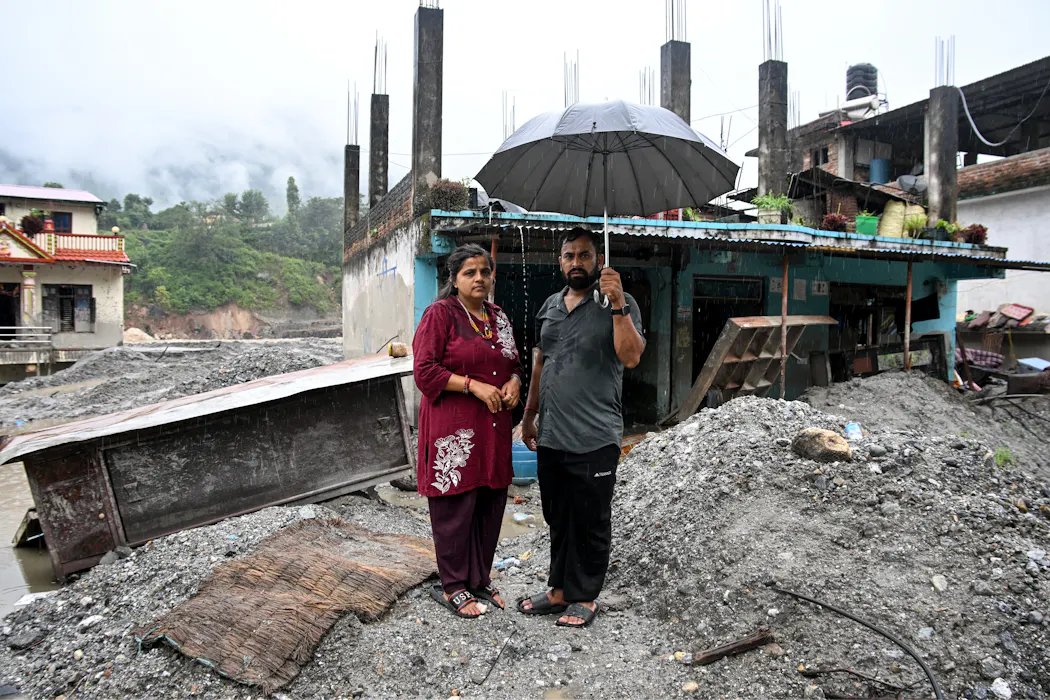
Earlier this year, a massive flash flood ripped through Nepalese and Tibetan townships along the Bhote Koshi river system, leaving more than 1,400 people dead and at least 5,000 missing.
Climate change contributed to the glacial mountain collapse that triggered the floods. But Nepal, a developing country of about 30 million people, only produces 0.05% of the world’s carbon emissions.
Left with a multi-billion dollar reconstruction bill, Nepal is a clear-cut example of the need for greater climate finance – the funding to help developing countries protect their people and economies against climate disasters, and rebuild when they happen.
But time and time again, United Nations climate summits fall short of agreements that would provide enough climate finance to match the magnitude of climate change. Will COP31 be any different?
Read more:
Climate disasters will send many countries into a debt spiral – but there’s a way out

Gokhan Balci/Getty
What is climate finance?
Climate finance is the funding that helps countries protect their people and economies from the damage wrought by global warming. It includes projects like building sea walls to protect from floods and sea-level rise, developing drought-tolerant crops or enhancing infrastructure so buildings and transport networks can withstand extreme weather. Climate finance can also fund investments that mitigate – or reduce – carbon emissions, such as renewable energy and electric transport.
Since climate diplomacy began in 1995 with the first UN climate summit, developing countries – particularly in the Pacific – have fought for greater availability of climate finance.
Their argument is this: wealthy countries should lead on climate finance because they developed with the benefit of fossil fuels, and contribute the most to climate change. In comparison, developing countries have limited resources, and emit negligible amounts of greenhouse gases but suffer disproportionate climate consequences.
At the 2024 climate summit in Baku, Azerbaijan, a new finance agreement was reached. Developed countries committed to raise US$300 billion (A$436 billion) a year for the world’s poorest nations by 2035. This might sound ambitious, but it is nowhere near enough to address the global need.
At the recent pre-COP31 talks in Fiji, Pacific leaders made it abundantly clear climate finance was crucial for the survival of vulnerable countries.
What is climate ‘loss and damage’?
Developing countries, such as those in the Himalayas as well as small island nations, are particularly vulnerable to climate change because of their geographic exposure, reliance on sectors such as agriculture and lower capacity to adapt. The concept of “loss and damage” reflects the unavoidable and irreversible harm from climate change.
The push to secure an official UN-backed loss and damage fund was a contentious and decades-long process, fraught with resistance from wealthy nations. So developing nations were jubilant at the close of COP27 in Eygpt in 2022, when wealthy countries finally agreed to establish a fund to respond to loss and damage.
This fund made its first call for submissions at COP30 in Belém in 2025, and received almost 180 requests totalling US$2.8 billion (A$4 billion) by the June 2026 deadline. While pledges to the fund now exceed US$820 million (A$1.2 billion), there is a significant financing gap compared to the demand.
What exactly this fund will pay for, and how, is unclear. However, the catastrophe on the Nepal-Tibet border served as the first litmus test. Nepal made an urgent appeal to the fund and asked for an emergency payout of the maximum allowable amount of US$20 million (A$29 million).
At its first ever extraordinary meeting, the fund’s board decided to set aside US$21.6 million (A$31 million). This is only about 0.7% of Nepal’s actual economic loss and damage cost. And it doesn’t include non-economic losses related to health, culture or nature.
The speed of that decision is historic in the notoriously snail-paced UN process. Other countries will have to wait until December 2026 for the outcome of their submissions.

Burak Kara/Getty Images
How Australia should act
As the president of COP31 negotiations, Australia’s climate minister Chris Bowen has an opportunity to elevate the topics that Turkey is strategically avoiding. These include the need for a fossil fuel phase-out – only by reducing greenhouse gas emissions can disasters such as the one in Nepal be prevented. Australia must also be an ally to island nations across the Pacific.
In terms of finance, Australia should rally more support for the Pacific Resilience Facility. This Pacific-owned and led fund acts as a self-sustaining financial model. It relied on an endowment fund structure designed to generate predictable, continuous returns, eliminating the need for repeating donation cycles or accumulating national debt. This fund aims to directly benefit communities on the ground, including addressing loss and damage. But it requires more long-term investment.
Ultimately, no amount of finance can respond to the damage that climate change is already causing across the globe. It is absolutely vital that COP31 genuinely focuses on eliminating its root cause: the human use of fossil fuels.

For my research I liaise with the office of the Minister for Climate Change and Energy, Chris Bowen. I also work with various stakeholders in the Pacific.
Original source: https://analysis1.mil-osi.com/2026/11/11/nepal-tibet-floods-showed-the-need-for-greater-climate-finance-is-the-world-listening/