

Source: The Conversation – USA (2)
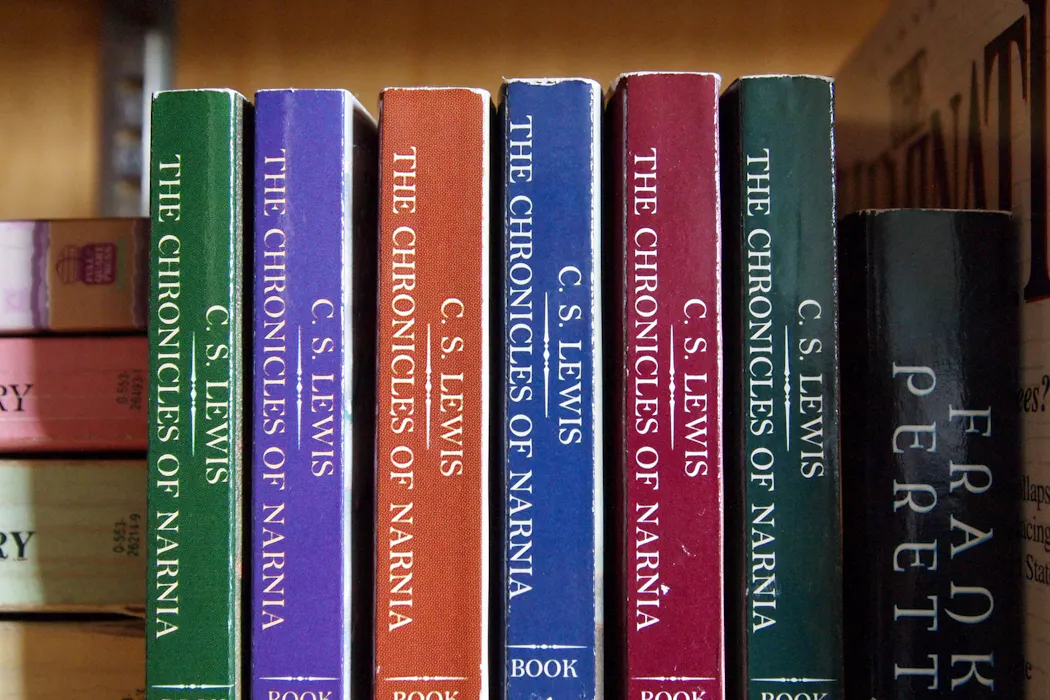
As Netflix teases glimpses of Greta Gerwig’s newest project, an adaptation of C.S. Lewis’ novel “The Magician’s Nephew,” many Narnia fans are worried. In particular, there’s been online chatter about the new film’s depiction of the great lion Aslan: Will he really look like David Bowie, with the voice of Meryl Streep?
For many readers, Aslan is not just a literary character, nor an ordinary hero: He is a representation of Jesus. Aslan sings the entire world of Narnia into existence and performs Christ-like acts throughout Lewis’ “Chronicles of Narnia,” which have sold over 120 million copies worldwide since the series’ publication in the 1950s.
As a scholar of medieval history and literature, I’ve taught and written about Lewis and “Lord of the Rings” author J.R.R. Tolkien, who were close friends and colleagues for more than 30 years. Lewis himself was a medievalist at Oxford, and both of their popular literary series are steeped in their knowledge of medieval languages, literature, mythology and theology.
Both authors acknowledged the ethical and religious themes of their fiction. Yet Lewis rejected the idea that “The Chronicles” were simply an allegory.
‘True myth’
“The Magician’s Nephew,” published in 1955, was actually the last book in the series to be completed. Yet it serves as a prequel, narrating the creation of Narnia and the first appearance of its legitimate ruler, Aslan – the Turkish word for “lion.”
Later in the series, Aslan sacrifices himself to save a young British boy, Edmund Pevensie, from the White Witch, Jadis. Aslan is resurrected through his knowledge of “deeper magic,” and royal power passes to the four Pevensie children.
Christian readers have long seen the series as an imaginative retelling of events from the Gospels, intended for children but offering much to adult readers as well. Critics like Philip Pullman, who wrote the 1990s fantasy trilogy “His Dark Materials,” have denounced “The Chronicles” as religious “propaganda.”
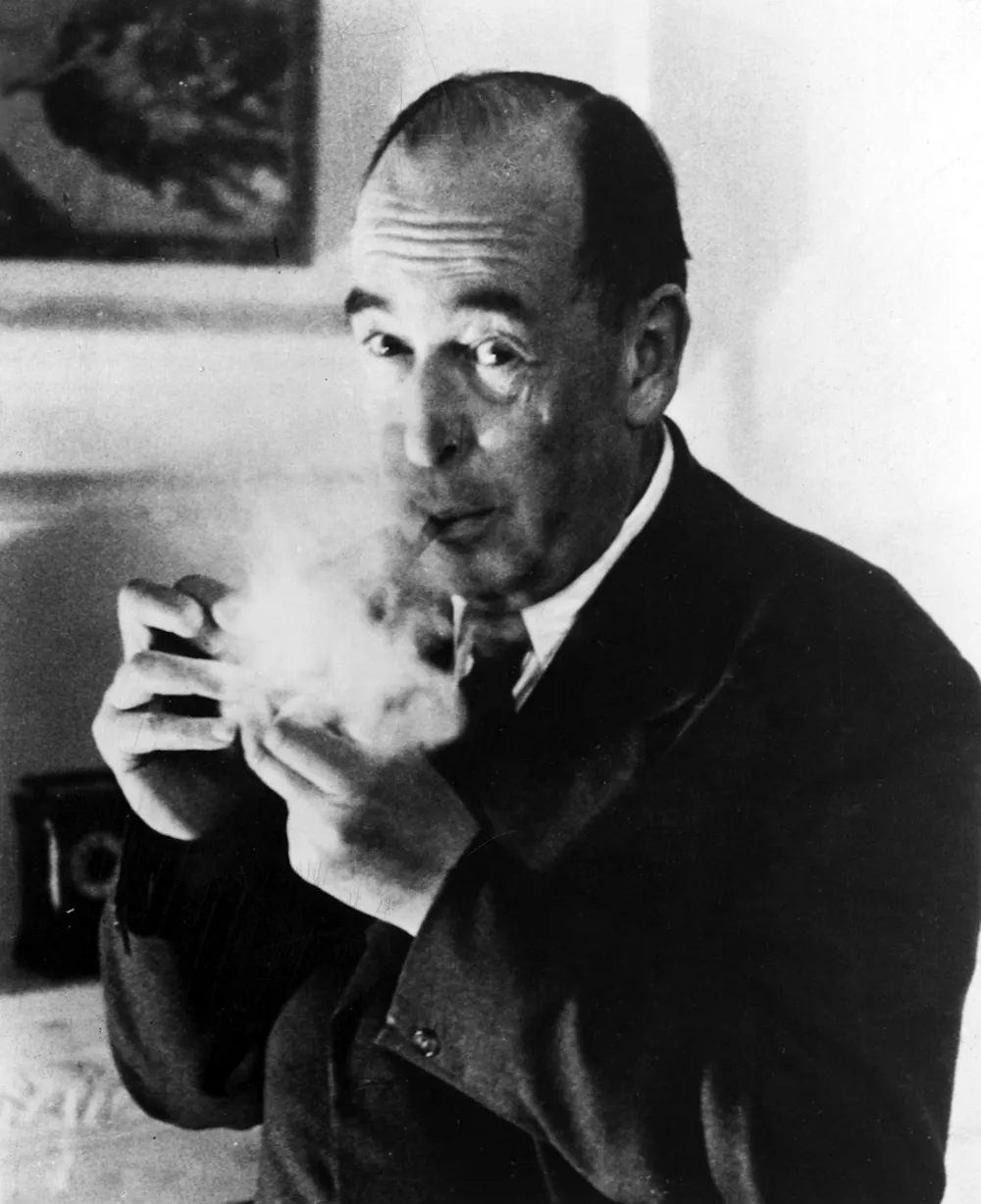
John S. Murray/Harcourt, Brace and Company via Wikimedia Commons
Adding to the book’s religious appeal was Lewis’ own very public faith. An atheist since his youth, he returned to worshipping in the Church of England after a famous late-night conversation with Tolkien in September 1931.
The two English professors had bonded over their interest in Norse myths, which Lewis called beautiful “lies breathed through silver.” For the devoutly Catholic Tolkien, however, ancient myths pointed to truths, not lies, and ultimately to the Gospels. He and other Christian friends at Oxford helped Lewis come to accept Christianity as the “true myth.”
Almost immediately, Lewis began writing Christian apologetics, intellectual defenses of his faith, as well as fiction infused with Christian symbolism and theology. In 1947, he appeared on the cover of Time magazine – well on his way to becoming arguably the most famous Christian apologist of the 20th century.
‘Supposals’
But what did Lewis himself say about Aslan?
His letters and scholarly work indicate that “The Chronicles” were not meant to be allegorical. In other words, Aslan was not simply a stand-in for Jesus, and the series was not an extended metaphor.
Rather, Lewis called the books “supposals:” a way of asking, “What if?”
Aslan gives “an imaginary answer to the question, ‘What might Christ become like if there really were a world like Narnia and He chose to be incarnate and die and rise again in that world as He actually has done in ours?” Lewis wrote in a 1958 letter. “This is not allegory at all.”
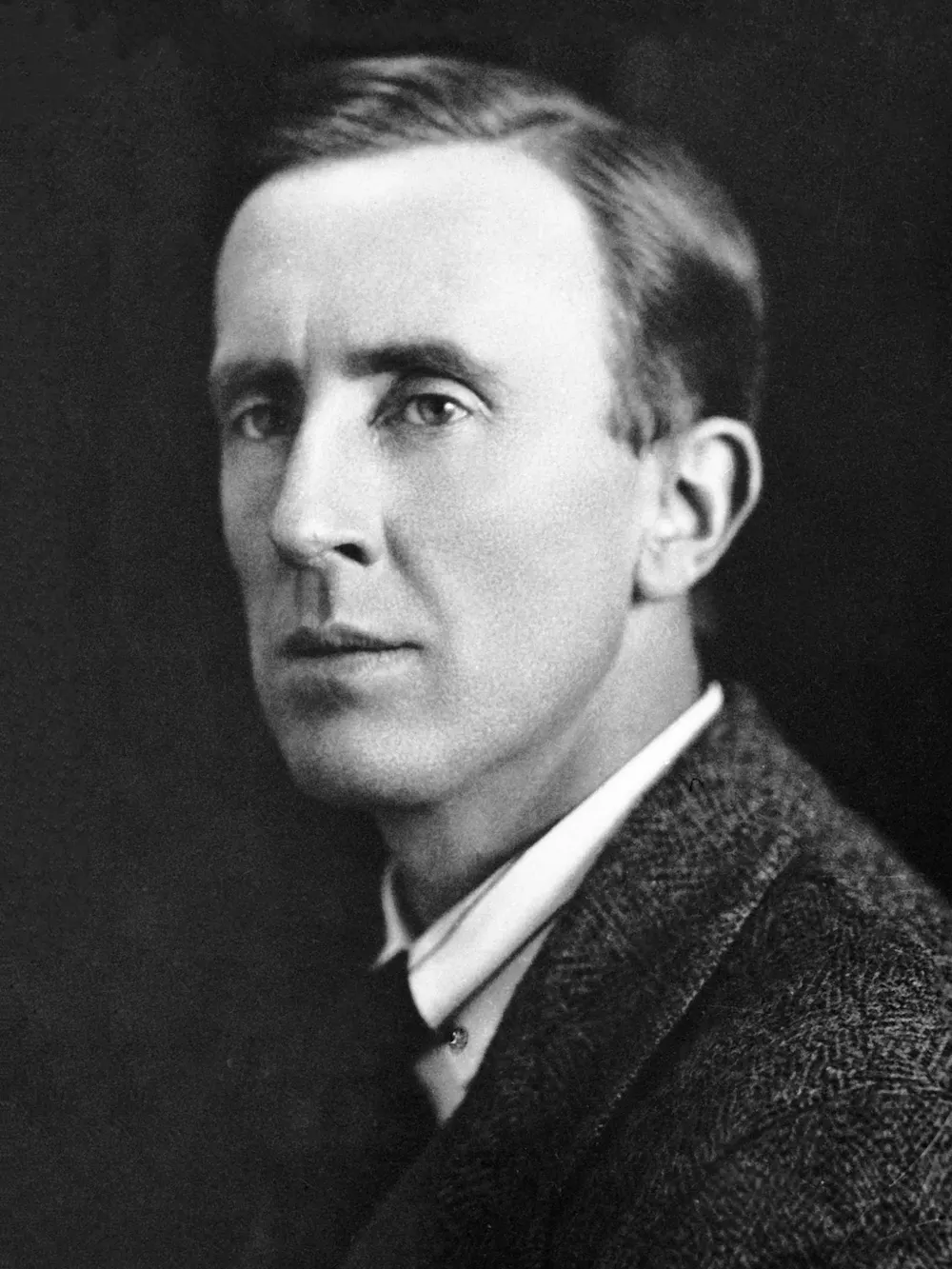
Wikimedia Commons
Neither Lewis nor Tolkien approved of easy allegorical readings of their fiction. Both professors argued that imaginative literature was not simply the product of the author and their time, a sealed treasure waiting for a biographical key to unlock its meaning.
And both men knew formal allegory quite well. Lewis’ 1936 book “The Allegory of Love” established his reputation as a critic of medieval and Renaissance literature. His 1933 novel “The Pilgrim’s Regress” was an allegorical exploration of his own conversion, with characters that personified various abstract concepts and ideologies.
Tolkien wrote the allegorical short story “Leaf by Niggle” as a way to explore his own doubts about ever finishing “The Lord of the Rings.” Like his earlier novel “The Hobbit,” “The Lord of the Rings” only came to fruition through Lewis’ constant encouragement.
Narnia came to Lewis’ mind in bits and pieces. During World War II, when he took young evacuees from bombed cities into his home, a lion had haunted his dreams. A few other mental pictures came to him – a faun carrying packages, a lamppost in the snow – and he began writing. Aslan “just insisted on behaving in His own way,” Lewis later wrote to one schoolgirl.
“The Chronicles” were not an allegory, he insisted, but symbolic. As he described in “The Allegory of Love,” “The symbolist leaves the given [facts] to find that which is more real.” Myth and symbols can, if used correctly, point to philosophical or theological truths more effectively than realistic fiction, making their created worlds feel more real.
Scrutiny – and virtue
For fans of “The Chronicles,” Narnia feels “real” in this sense – an escape to truth, rather than an escape from truth. Adapting these stories to film, however, always runs the risk of moving further away from what Lewis captured so brilliantly in his prose.
In 2018, the author’s estate sold Netflix the rights to adapt the book series to screen, and Gerwig was later tapped to write and direct at least two Narnia films. Douglas Gresham, one of Lewis’ stepsons, has an executive producer credit on “Narnia: The Magician’s Nephew,” and has generally been enthusiastic about the project.
Gerwig herself has expressed her “reverence” for Lewis’ work. “It was the book of my childhood,” she said at a press event in 2024. “It was the book series that I loved, and I lived through, and I spent so much time imagining myself inside of Narnia.”
Intense scrutiny of the project should surprise no one. As with her film “Little Women,” Gerwig is adapting a beloved novel. And this time, it is a novel written by a very public atheist-turned-Christian whose works have inspired the faith of countless others. Still, her “Magician’s Nephew” should not be judged by a trailer and a handful of interviews.
Lewis likely never expected that “The Chronicles” would turn into a live-action film, but he did believe in the power of imaginative art – whether ancient, medieval or modern – to move one toward truth. The virtues Faith, Hope, Charity and Prudence are frequently depicted in the medieval and Renaissance literature that Lewis loved and taught. Fans and filmmaker alike might benefit from remembering these virtues as well.

Christopher A. Snyder does not work for, consult, own shares in or receive funding from any company or organization that would benefit from this article, and has disclosed no relevant affiliations beyond their academic appointment.
Original source: https://analysis1.mil-osi.com/2026/11/06/what-c-s-lewis-said-about-narnias-most-famous-character-the-jesus-like-lion-aslan/