

Source: The Conversation – UK
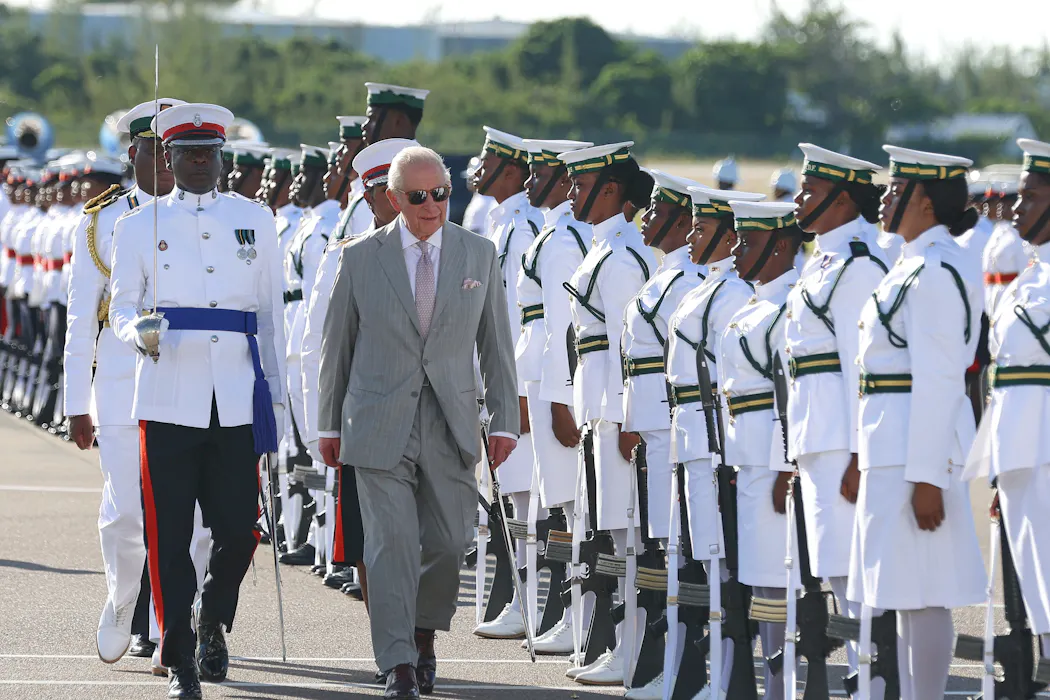
The royal tour of the Caribbean is the king’s first visit to this region of the Commonwealth as monarch. It comes at a time of protests and growing demands for slavery reparations, as well as an apology for the royal family’s historic role in the trade.
The visits will include two republics which do not recognise him as monarch – Guyana and Barbados – and the constitutional monarchies of the Bahamas and Barbados (though all are independent nations).
Against this backdrop, historian Anthony Seldon described this tour as potentially “the biggest risk” of the king’s reign. Charles is in the region not just as a head of state and of the Commonwealth, but as the head of a family that personally benefited from slavery.
Prime Minister Andy Burnham has also travelled to the Caribbean for the Commonwealth heads of government summit. Burnham has said he is open to the idea of an apology for Britain’s role in the slave trade, but has made clear that he does not believe reparations are the right answer.
The last time Charles visited the Caribbean was to oversee the transition of Barbados to a republic in 2021. Eight Caribbean nations retain the British monarch as head of state. Guyana, which was also included in this tour, became a republic in 1970.
The king knew he could not escape uncomfortable exchanges on this tour. There is increasing local pressure from the Caribbean Reparations Commission on Charles to offer a formal apology for Britain’s role in the slave trade. On the king’s first night in the Bahamas, at a youth rally in the capital Nassau, he referred to “the great suffering and injustices of the past”. There were some protesters, but they remained outside.
Royal tours have always been risky. After the last royal visit to the Caribbean, to mark the platinum jubilee in 2022, the traditional format looked to be in need of a rethink. “Tone deaf” images of William and Kate in Jamaica, dressed in imperial white in an open-top Jamaica Defence Force Land Rover, and greeting children through a wire fence went viral.
It was a jarring reminder of the colonial past, overshadowing the entire tour, which also saw protests in Belize and the Bahamas. Afterwards, William said that foreign tours offered “an opportunity to reflect”.
The historic role of the tour
The risks of this autumn’s tour will have been weighed carefully by the Royal Visits Committee (part of the Cabinet Office). The history of the royal tour can explain why the risks were considered to be worth taking.
As part of “The Visible Crown” research project, I have examined the royal family’s connections to the Caribbean, looking in particular at visits since Elizabeth II took the throne in 1952. What I’ve found is that the survival of the monarchy in the Caribbean can in part be explained by the history of its carefully managed visibility.
The royal visit as we know it was invented to legitimise the Commonwealth and sustain the British monarchy during the period of imperial decline and constitutional change.
For some of the islands, Elizabeth’s tour to the Caribbean in 1966 was the first time a monarch had ever visited. At that time, officials threshed out their “philosophy of the royal visit”. They knew that the tours needed to present an image of Elizabeth that would make sense of her role in countries that had either become newly independent, or were about to become independent, as well as in those that might choose to become republics.
That image would be as the mother figure for the new “family of nations” – the Commonwealth. The royal tour has remained largely unchanged since: visits should be short, but frequent – a change from the longer imperial tours. They should have the feel of a family party and the monarch must be easily visible.
Informality and accessibility were priorities: garden parties, walkabouts in the sun and street celebrations as well as the more sombre guards of honour and speeches in the host nation’s parliament would become staples.
The formulaic itineraries endorsed the values of continuity, protection and compassion. Children were always involved – visits to children’s homes, schools and hospitals afford opportunities to show a caring, healing monarch invested in their future.
Official footage of the 1966 Caribbean tour pauses on a child in St Lucia holding a placard: “We love you, come back soon”.
The choreographers of royal tours are aware of the strange capacity for these rituals to rouse emotion and cultivate loyalty. After Elizabeth’s visit to Jamaica in 1983, the country’s high commissioner reported back to the British government that “the warmth of popular feeling” generated by her visit demonstrated “afresh the widespread attachment to the crown”. Charles now has to remake the royal tour in his own image. But in fact, his age is on his side, lending him vulnerability.
As my work on the history of royal ceremonies has shown, the British monarchy has always deployed and adapted symbols, rituals and pageantry to legitimise itself and sustain significance in a changing world. The modern Commonwealth tour and its insistence on visibility is informed by the early modern tradition of the royal progress. Elizabeth I, like Elizabeth II, knew that she had to be “seen to be believed”, and frequently moved through London and around the country greeting subjects. Then, as now, there were protests as well as cheers.
In the context of the Caribbean however, a tour’s display of royal power reinforces a complex and longstanding alignment between supposedly legitimate authority and whiteness. But constitutional reform was also part of the agenda of this current trip. Several Caribbean leaders have recently stated their intention for their nations to become republics: Jamaica, Bahamas, and Antigua and Barbuda.
But as a recent survey by researchers at the University of West Indies has revealed, support for republicanism varies significantly between nations. It is not strong enough, according to many of the constitutions, to bring about reform.
The king’s (unelected) role as head of the Commonwealth matters to him, as it did to his mother. This position preserves the global status of the British monarchy. This tour was an opportunity, then, to bind the Caribbean Commonwealth, and to legitimise Charles as its father figure. He may not need to say sorry for Britain’s role in slavery for this trip to be considered a success.

Alice Hunt receives funding from The Arts and Humanities Research Council.