

Source: The Conversation – USA (2)
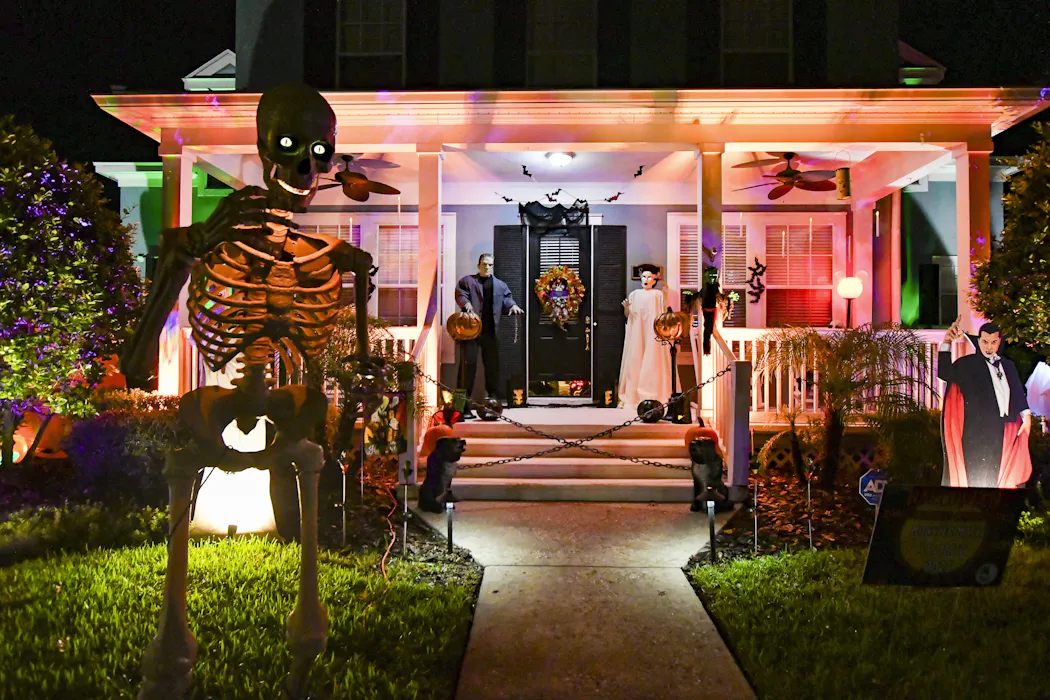
Halloween is one of the few holidays centered around children. When else can students come to school dressed like astronauts, monsters and witches, or ring strangers’ doorbells to ask for candy?
But of course there’s a darker side to the holiday.
Horror’s bloody images lurk in the shadows – from ghouls leering over people’s lawns to skeletons hanging from trees – whether invited or not. Thoughtful adults might wonder, what is the right amount of scary for a child?
As a professor of children’s literature, and a writer of children’s books, I turn to the great author and illustrator Maurice Sendak for a hint.
A child’s mother once told Sendak that her pre-schooler was terrified of his classic 1963 book “Where the Wild Things Are,” which brings the reader into the world of an imaginative child, Max, after his mother sends him to his room without dinner. Through his imagination, Max journeys to a world of fantastical creatures called Wild Things.
No matter how many times this mother read “Where the Wild Things Are” to her young child, he screamed.
“What are you, a sadist?” Sendak answered. “Read him something else.”
“Why,” he continued, “would any one book be right for every child?”
When considering the benefits and drawbacks of scary books to get in the spirit of Halloween, some possible choices come to mind, along with some reminders to both overly cautious and sometimes careless adults.

Lokman Vural Elibol/Anadolu via Getty Images
Facing your jitters head on
To start, Felicia Bond’s 1987 “The Halloween Performance,” later republished as “The Halloween Play,” is a perfect Halloween picture-book classic, appealing to all ages and offering humor and suspense.
Bond is the illustrator of the 1985 children’s best seller, “If You Give a Mouse a Cookie,” and subsequent books. An adorable young mouse features in this Halloween story, as well.
The plot revolves around a mysterious “small but important part” that Roger, a nervous, brown mouse, has landed in the school Halloween performance.
Costumed skeletons and witches don’t bother him – but his jitters about performing on stage do.
Roger overcomes stage-fright to shine in the school performance. He may inspire other children to overcome their own feelings of nervousness at Halloween and make fun memories.
Frog and Toad show that fear can be fun
Frog and Toad are Arnold Lobel’s beloved, amphibian best friends from his children’s series published in the 1970s.
Though they have very different personalities, both Frog and Toad enjoy the thrill of playing with fear. In “Shivers,” a story in the book “Days with Frog and Toad,” Frog tells Toad a tale about “the old dark Frog” who combs the woods in search of tasty children.
Toad keeps asking, “Is this real?” Frog answers like any good storyteller, “Maybe it is and maybe it isn’t.”
Together the duo enjoy scaring themselves into a teeth-chattering but delightful evening.
They show young readers that, in the right doses, fear can be fun: ask any kid scream-laughing on a roller-coaster.
In another story, “Dragons and Giants,” Frog and Toad test their own heroism after reading fairy tales about dragons and giants.
“The people in this book are brave,” said Toad.
“They fight dragons and giants, and they are never afraid.”
“I wonder if we are brave,” said Frog.
Frog and Toad looked into a mirror. “We look brave,” said Frog. “Yes, but are we?” asked Toad.
Frog and Toad are both fearful and brave, as most of us are.
Wise children’s stories reinforce the truth that it’s natural to be both, sometimes at the same time. “Frog and Toad” features color illustrations in subtle greens and browns, leaving enough space for kids to imagine new facets of themselves – the timid and the bold.
Scary stories can be a natural part of childhood
Fear is inevitably woven into the fabric of children’s lives.
Nightmares, for example, spring from unknown sources, though studies show they are intensified by trauma, emotional disturbances and exposure to violence.
Bad dreams – like scary stories – work as fire drills for the developing brain.
“Bad dreams may even provide evolutionary protection for the young, by allowing children to practice bravery while they are safely at home and in bed,” writes Dierdre Barrett, editor of the book “Traumas and Dreams.” She notes that children are smaller and more “vulnerable to many more threats than adults. Nightmares … reflect this vulnerability.”
Recognizing the difference between fantasy and reality is a form of practicing fear management – which strengthens resilience and resistance.
Maybe that’s why some older elementary school kids actively seek out frightening reading.
When written well and thoughtfully, such books provide more delight than dismay. The only hair-raising thing about Alvin Schwartz’s “Scary Stories” is Stephen Gammell’s high-contrast, dreamlike art. Schwartz, a writer and folklorist, gathered spooky tales from all over the United States and compiled them into three of the most popular children’s books of the 1980s.
While Schwartz retells classic folklore tales with humor and goosebumps in equal measure, Gammell’s powerful drawings nudge children wordlessly toward the ghoulish. It’s a good match: The three-book series has proven irresistible to young readers for 40 years.

Alvin Schwartz/Stephen Gammell, CC BY
At the darkest haunting edge of the children’s horror genre, books like Roald Dahl’s “The Witches” totter between imaginatively eerie and terror-producing.
In this book, ordinary-seeming women unmask themselves as grotesquely evil witches. Their goal is to capture human children, transforming them into mice that they will trap and kill.
Navigating scary things, safely
What constitutes protection and when does it deny the child a chance to explore their fears? I believe we want our children to enjoy adventures, to test themselves and discover inner courage when they least expect it.
We also don’t want them to be haunted for life. The right books for the right child at the right time can help children and adults safely navigate those waters.

I wrote the book “Monster Mama,” with pictures by Stephen Gammell, who also illustrated the “Scary Stories” series.
Original source: https://analysis1.mil-osi.com/2026/10/23/boo-feeling-scared-on-halloween-can-be-fun-for-children-but-can-sometimes-push-their-limits/