

Source: The Conversation – UK
In the northern hemisphere, days are getting shorter and temperatures are dropping – autumn has arrived. A common sign that winter is coming is trees losing their leaves. But, did you know that autumn also sparks changes in animals’ sexual behaviour – including ours?
For example, humans actually have a breeding season. The hormone testosterone surges in autumn, particularly in males, linked to a decrease in daylight and increased social activity indoors. This leads to more conceptions around November and December, with a subsequent peak in births the following August and September, nine months after the hormone surge. No wonder the most common birthday worldwide is September 26.
Here are five more seasonal changes in sexual behaviour in the natural world.
Seasonal fighting
Red deer spend most of the year in separate male and female herds. However, the autumnal increase in testosterone, typical of animals that mate during the autumn, triggers male red deer to become more aggressive and begin the “rut”. This is a time when the males engage in antler-locking fights to win access to groups of females known as harems. The holder of a harem gets to mate with the females in his group, and father offspring. Hence, competition is fierce.
Mating during the autumn ensures that the females give birth in late spring, when food is abundant and the weather is more favourable, increasing offspring survival. Red deer are also responding to climate warming, bringing their births forwards by almost two weeks.
Autumnal bisexuality
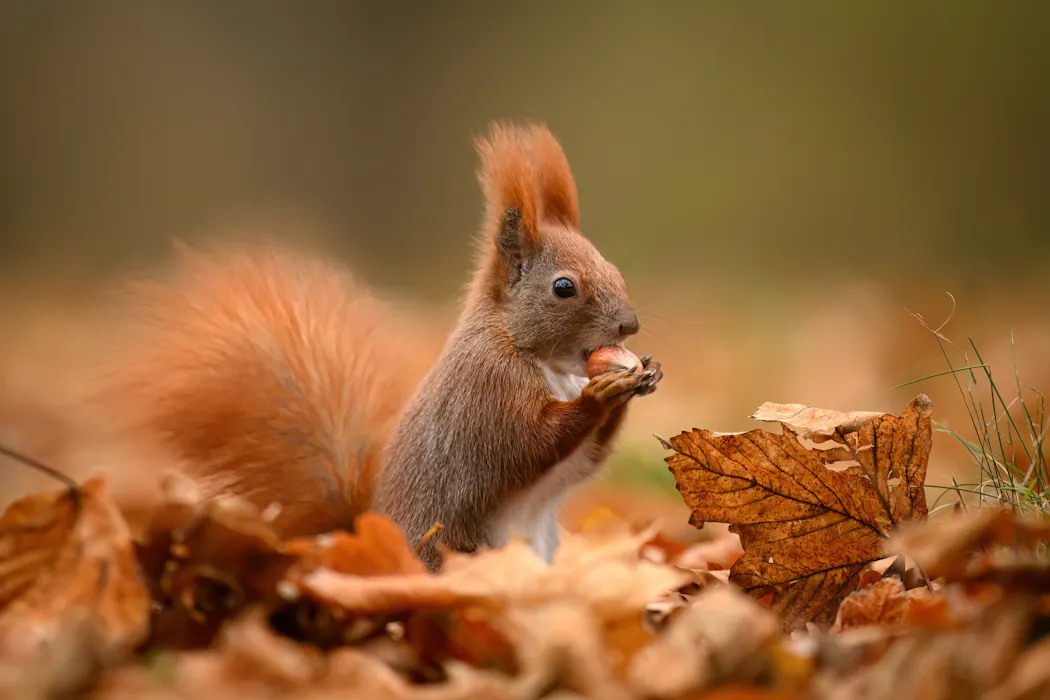
Although heterosexuality is prevalent during the reproductive season, autumn brings a return to homosexual behaviour for many species. This “seasonal bisexuality” has been observed anecdotally in species including red foxes, red squirrels and bats, with many species appearing to switch fluidly between hetero- and homosexual couplings.
Interestingly, this behaviour is not due to a lack of partners of the opposite sex. In fact, male walruses engage almost exclusively in homosexual behaviour until they reach maturity around four years old. The walruses then engage in a seasonal phase of heterosexual couplings in the summer, but return to same-sex relationships in the autumn.
Reproductive strategies
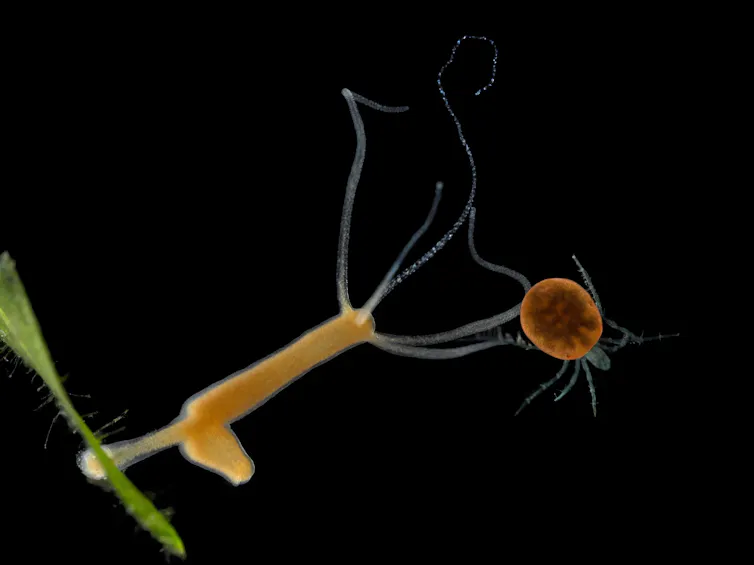
Some freshwater species, such as the brown hydra, a sedentary anemone-like creature, alternate their reproductive strategies, changing from asexual to sexual reproduction in the autumn. During favourable conditions in spring and summer, when the environment is warmer, hydra reproduce asexually. In this process, part of the hydra grows until it is large enough to bud off from the main body, creating a clone of the original hydra. Clones can be produced every two to three days, allowing the hydra to exploit the favourable climate.
Ernie Cooper/Shutterstock
However, when the temperature drops, the hydra switch to sexual reproduction. Although sexual reproduction uses more energy, it results in eggs that can withstand the severe conditions of winter. The eggs remain dormant until conditions become more favourable, eventually developing into hydra.
Sex changes
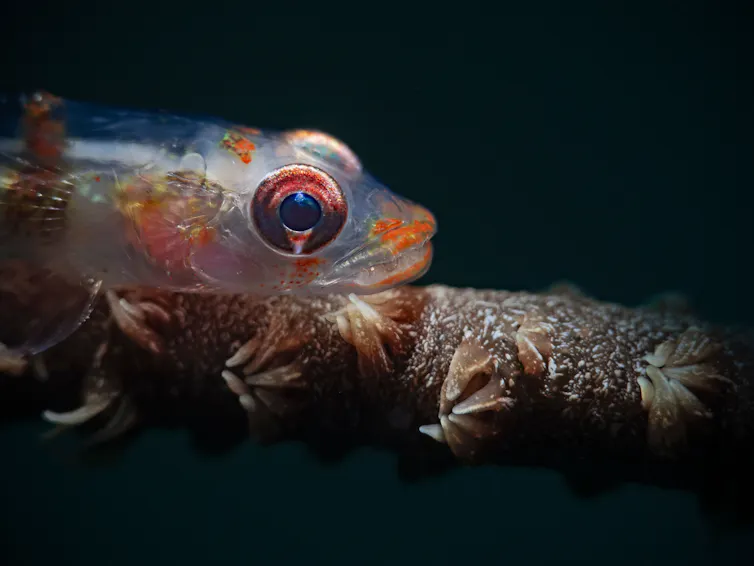
Autumn can also cause some animals to change sex. Several animals, including invertebrates, reptiles and fish, change sex based on age, size or social circumstance. For example, if two female coral goby end up isolated on coral, one will change sex to become male. Similarly, if two males end up together, one will transition into a female. This is because it is too risky for the fish to swim to other coral in search of a member of the opposite sex. The fish can also change back to their original sex once breeding, which normally starts in autumn, is complete.
scubaluna/Shutterstock
Northern shrimp, however, maximise reproductive success by changing sex with the season. The shrimp start life as small males, and only mate during the autumn. After a couple of years, when the males are large enough, they transition into females around the autumn breeding season. Once mated, the female stores the sperm and carries the eggs through the winter months until fertilisation. This ensures the eggs hatch in the spring when conditions are most favourable. The shrimp will live as females for the rest of their lifespan, which totals five to eight years.
The larger size of the female maximises the number of eggs that she can carry under her abdomen. Yet, reproductive success is not linked to size in the males.
Seasonal penises
Although many animals have a seasonal surge in testosterone that noticeably changes the size of testes, few display a change in penis length, as I explain in my book The Twelve Penises of Christmas. The highly competitive nature of duck mating means that males grow huge penises during the breeding season (spring time), often surpassing the length of their body. As the penis is cumbersome when at its full extent, the penis shrinks to around 10% of its full size during the autumn.
Read more:
Cuffing season: an evolutionary explanation for why people want to settle down for the winter months
Forced copulations are frequent in ducks, so have resulted in the evolution of long, spiral-shaped penises. To prevent fertilisation from unwanted males, females have evolved labyrinth-like vaginas that twist in the opposite direction and have several dead-ends. The females only relax the complex vagina when they want the copulation to happen.
So when you next encounter wildlife on a walk through the crispy autumn leaves, remember the local animals may have a more complicated personal life than you may think.

Louise Gentle works for Nottingham Trent University.
Original source: https://analysis1.mil-osi.com/2026/10/23/how-autumn-changes-animal-sexual-behaviour-including-that-of-humans/