

Source: The Conversation – UK
When people think about democracy, they tend to think about national elections, parliaments or the policies of national governments. Even the recent byelection in Holborn and St Pancras showed that democratic events are often framed around what they mean for the fortunes of the national leaders, rather than what they mean for daily life within a community.
But this focus on the national level and on the procedures associated with democracy is shortsighted. Our work, bringing together political theory and local politics, is aimed at developing a deeper understanding of democracy. This is particularly important when democracies around the world are coming under threat from authoritarian leaders and insurgent populist movements.
We argue that politics at the local level, especially in cities, has a critical role to play in resisting authoritarianism. But what can cities do to promote democracy?
1. Standing up to authoritarianism
Cities have long had a strong connection to democratic values. The practices of self-governance in the city-states of ancient Greece or Renaissance Italy bore this out.
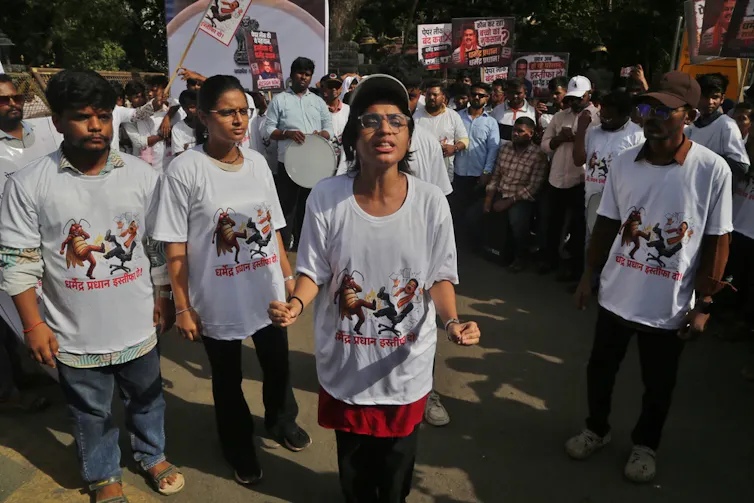
Today, cities often provide a progressive counterweight to reactionary and authoritarian politics at the national level. In the US, for example, residents in the city of Minneapolis rose up to resist deportations by Immigration and Customs Enforcement (ICE) officials. And in India, gen-Z “cockroach” protests centred on Delhi are challenging alleged electoral fraud and government corruption.
But cities are not inherently democratic. Many elect authoritarian mayors enact regressive policies targeted against migrants or LGBTQ+ rights. And urban politics often fails to live up to democratic ideals by sidelining the voices of citizens and exacerbating economic inequality or feelings of social exclusion.
Sutter light/Shutterstock
These dynamics can contribute to rising xenophobia and anti-democratic sentiment at the national level. So to understand why cities matter for democracy, it is important to look beyond the outcomes of elections or the agendas of individual mayors or civic movements. Instead, the deeper, more complex and often mundane ways that cities can promote democracy are what really count.
2. Challenging top-down politics
The everyday practices of governance within cities can play an important role in resisting authoritarianism and strengthening democracy. Technocratic forms of governance (that is, those that are top down and led by experts) still tend to dominate. But many cities are challenging this. They are using their legal and political autonomy to experiment with approaches that help to democratise local politics.
For example, they can give greater decision-making power to citizens by engaging them directly in policymaking at the local level. This could be through citizens’ assemblies or letting them play a role in planning the local budget. In turn, urban citizens organising themselves in communities or movements can strengthen democracy from the bottom up.
3. More economic influence for citizens
Urban economics is still generally dominated by the pursuit of growth. This can end up giving the private sector significant power over a city’s future. But some cities are experimenting with alternative approaches.
For example, community wealth building has been adopted in cities such as Cleveland, Ohio, in the US and Preston in the UK. This model promotes community-owned businesses, worker cooperatives, community banks and local control of land and real estate. By engaging citizens in economic decision-making, cities can nurture local democratic culture.
4. Providing the space to organise
Democracy is something that cuts across all aspects of urban life. This includes relations with formal institutions, such as councils. But it also takes in everyday aspects of city living, such as citizens’ relationships with the public spaces in their area.
Physical space within cities is increasingly being commercialised and privatised. But public spaces continue to be important for democratic culture. People use them to protest and put pressure on national and local governments, as happened during housing protests in cities across Spain.
The shared space of urban life can also encourage new forms of political and even moral community. These can push back against the polarisation often associated with national politics.
In an age of rising authoritarianism, urban policymakers can support democracy across multiple dimensions. Cities can certainly democratise government and economic institutions. But their most important contribution may be providing the space and support for citizens to affirm democratic values in their everyday lives.

Marta Wojciechowska receives funding from UK Research and Innovation
James Hickson and Joe Hoover do not work for, consult, own shares in or receive funding from any company or organisation that would benefit from this article, and have disclosed no relevant affiliations beyond their academic appointment.
Original source: https://analysis1.mil-osi.com/2026/10/22/four-ways-cities-can-help-protect-democratic-values/