

Source: The Conversation (Au and NZ)
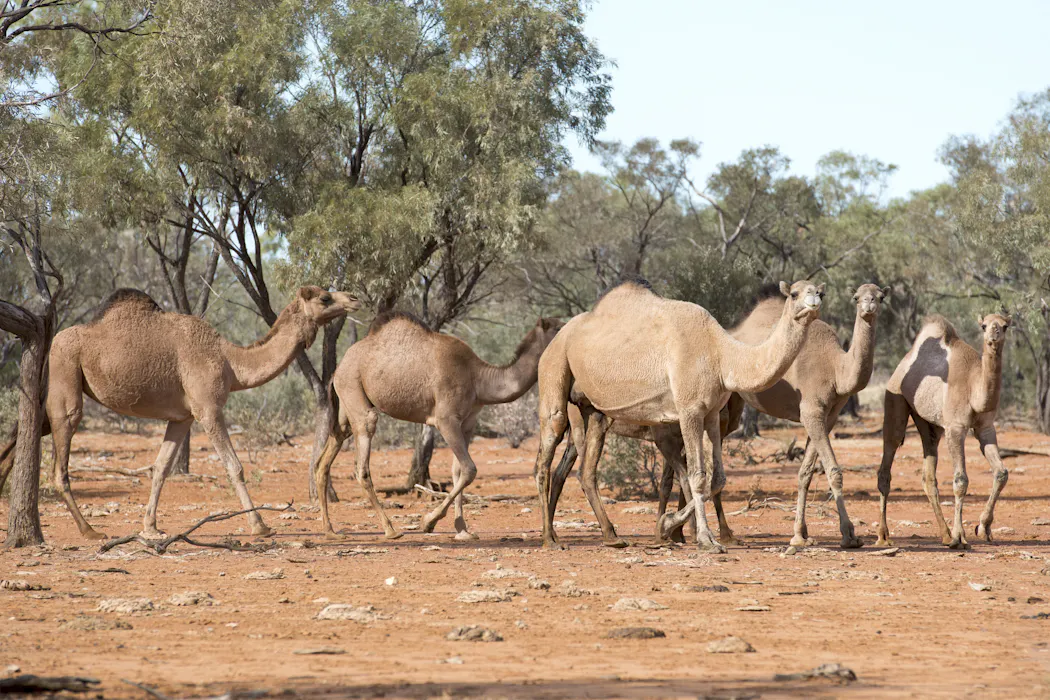
Millions of large feral animals roam Australia. Pigs, camels, deer, horses, water buffalo, cattle and goats were introduced deliberately as transport, livestock or to hunt. Many have since established wild populations.
Governments spend millions every year trying to keep feral animal numbers down because these animals can have strong effects on ecosystems by eating plants and trampling. In recent decades, populations of these largely herbivorous feral species have grown.
Every Australian knows common myna birds are bad, rabbits are worse and feral cats kill native animals unchecked.
But how do we decide what makes an introduced species “good” or “bad” – and will we ever concede that some species are here to stay?
Our new series on invasive species explores these questions.
Dozens of native species have gone extinct since colonisation and many others are in decline. In response, conservationists have rightly focused on reducing threats to surviving species to stave off further extinctions. Feral animals are thought to contribute to the problem, alongside fragmented habitats, climate change and the end of most First Nations’ fire regimes.
But there’s a paradox here. Some feral animals are abundant in Australia – but threatened, endangered or extinct in the wild in their original regions. For these species, Australia is acting as a last refuge.
How can a feral animal be threatened?
Wild herds of dromedaries (one-humped camels) haven’t roamed the deserts of North Africa and the Middle East for about 2,000 years. The species is now considered extinct in the wild. It survived as a domesticated animal – until Australia imported camels as pack animals for the dry interior.
In the early 20th century, many were left to fend for themselves. Large wild herds of dromedaries once again roam, but this time in Australia’s arid rangelands and deserts.
Other large endangered herbivores roaming Australia include banteng, water buffalo, horses, donkeys, and three species of deer. Many of these have domesticated populations in other countries, but are threatened with extinction in the wild.
Banteng are especially noteworthy. Endemic to Southeast Asia, these wild bovines were brought to Australia’s tropical north to provide meat and milk for an attempted British settlement on the Couburg Peninsula near Darwin. When the settlers withdrew, the banteng were left behind. They thrived.
In modern time, banteng have become critically endangered in their home range due to hunting, habitat loss and disease. One of their most important strongholds is now the Northern Territory.
Of the six deer species introduced to Australia, three are at risk globally. In the 1860s, hog deer were introduced in Victoria as a game species. They, too, are now endangered in their original range in South and Southeast Asia.
Javan rusa deer and sambar deer are considered vulnerable and declining in their native ranges, but both have well-established populations in Australia.

Rudolf Ernst/Getty
A dilemma for conservation
For decades, Australian authorities have treated feral animals as pests to be controlled or eradicated.
These actions are driven by care for Australia’s native species. Free-roaming deer, cattle and camels can compete with native species and livestock for food, as do all large wild herbivores.
In response, large numbers of dromedaries, deer and banteng are shot or poisoned every year.
But is this the right approach, given that Australian populations of these animals may represent an unexpected insurance policy against extinction?
Globally, around 20% of introduced mammal species are threatened in their native range, while roughly 50% of all introduced megafauna (animals weighing over 45 kilograms) are either threatened or extinct where they originally evolved.

Martin Auldist/Getty
Should introduced species be conserved?
Debate over introduced species is often polarised. Many conservationists argue they should be controlled because they threaten native wildlife, agriculture and ecosystems.
Others argue conservation should value all species in a world of global reshuffling, particularly when introduced populations may help prevent extinction.
Both arguments have merit. The challenge is to avoid reducing the issue to a simple choice: kill or protect.
European rabbits are endangered in their native range in Western Europe. But Australia’s rabbits can have strong effects on soil and chow through plants, particularly in land cleared for farming. Blanket protection of Australia’s rabbits would have little support. By contrast, there’s a case to be made to protect banteng.
Too often, there’s little space for these difficult questions to be raised and worked through in conservation.
The limits of control
Eradication is no longer the goal for most introduced species. Few see the eradication of all feral rabbits, cats, foxes, camels, deer, goats, horses and pigs from the continent as a possibility.
Management has often shifted, quietly, towards containment, damage reduction or local control. We should be more explicit about this reality.
Eradication makes most sense on islands, inside fenced reserves, or when an introduced population is small, new and causing abrupt changes. Once a species is widespread, long established, hard to remove or globally important, we should give up on eradication.
Instead, we could ask whether introduced species are the drivers of a changing environment – or passengers. For instance, as farms and cities expand, habitat becomes fragmented. Dingoes are often killed to protect livestock.
These changes can make herbivores (feral and native) more abundant by creating edge habitat with novel food sources, while foxes can benefit from fewer dingoes. Conservation authorities might profit from focusing on these drivers, rather than running expensive culling campaigns every year.
What might we discover if we wrestled with these complexities openly and transparently to understand which feral species might have conservation value?
How to think about conserving ferals
In recent research, we examined what conservation of threatened feral populations could look like.
We found conservation priorities wouldn’t change much. The main change would be that some landscapes in Europe, the southwestern United States and central Australia would become more globally valuable as a way to prevent extinction of species, such as fallow deer and the African wild ass.
Moving to recognise banteng and other species as worthy of some protection in Australia wouldn’t overturn existing conservation work. What would change is the story we tell. Rather than thinking of Australia as a land where the richness of nature is dwindling, we could also think of it as an unexpected refuge for species that are threatened elsewhere – and recovering here.
Wild dromedaries no longer roam the deserts of the Middle East and North Africa. Banteng and hog deer are vanishing from the rainforests and plains of their original homes. Australia may be the last place on Earth to see these species wild and free. Don’t we have responsibilities to protect them?

Daniel Ramp receives funding from the Australian Research Council and other public and private funding bodies. He is a Board Director for Voiceless, an animal protection charity.
Erick Lundgren receives funding from the Centre for Open Science and Synthesis in Ecology and Evolution at the University of Alberta, Canada
Jens-Christian Svenning receives funding from multiple Danish and European research public and private funding bodies.
Martin Schlaepfer receives funding from various Swiss governmental entities.
Original source: https://analysis1.mil-osi.com/2026/10/19/feral-and-threatened-endangered-camels-banteng-and-hog-deer-have-found-an-unexpected-refuge-in-australia/