

Source: The Conversation – USA
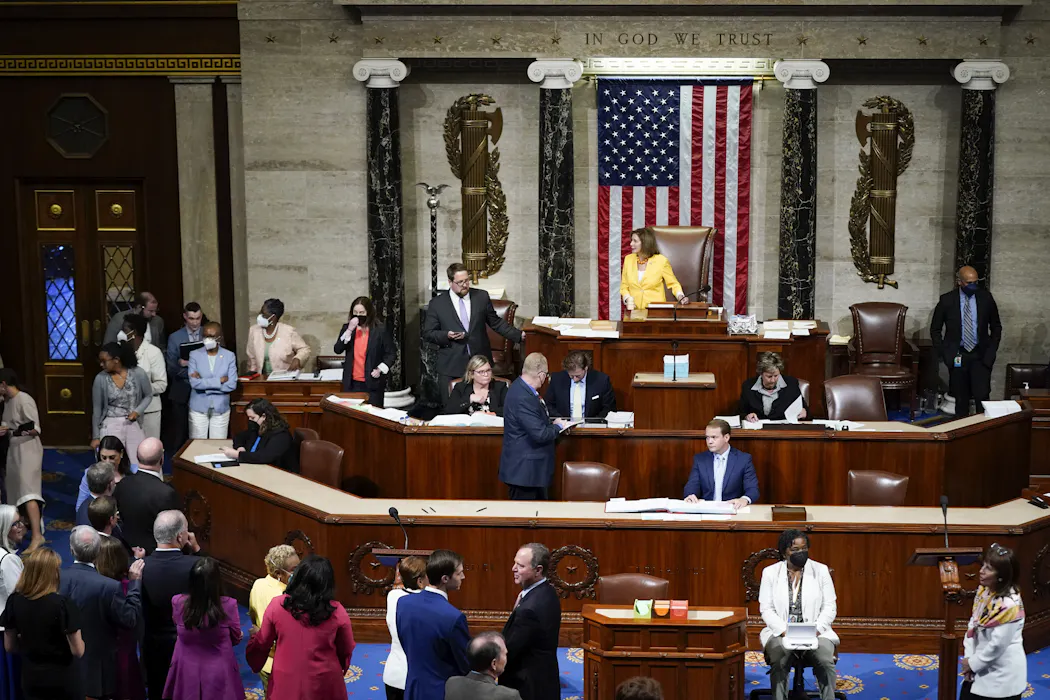
A massive federal spending effort to combat climate change passed in 2022 without a single Republican vote in the U.S. House or the Senate. But the billions of dollars it authorized benefited Republican and Democratic politicians alike – so long as they were already in the House of Representatives – according to an analysis I conducted with several fellow researchers. The results suggest that incumbents can still reap electoral rewards when federal money reaches their districts, even if they opposed the bill that provided it.
Enacted in 2022, the Inflation Reduction Act squeaked through the Senate only through a tiebreaking vote cast by Vice President Kamala Harris. It authorized spending US$370 billion to combat climate change and lower greenhouse gas emissions, primarily through subsidies such as a tax credit of up to $7,500 for buying an electric vehicle and incentives for making commercial buildings more energy efficient, rather than by imposing new fees or taxes.
Before the 2024 election, over $204 billion had been spent on clean energy projects around the country, through a combination of private investment and federal incentives.
While Republicans opposed the legislation, 79% of the law’s investment went to Republican congressional districts.
Even when Republicans vote against climate legislation at the national level, at least some favor investing in clean energy technology at the state and local level, because those investments bring local economic benefits. Many Republican districts, which are often large and more rural, are well suited to these kinds of projects.
Benefits of federal investment
Elected officials are sometimes accused of “pork barrel politics,” seeking to direct federal taxpayer spending to their own congressional districts. In part that’s because voters see federal investment as creating local jobs and stimulating economic growth.
Although no Republican voted for the Inflation Reduction Act in 2022, some Republican lawmakers began defending parts of the law as investments reached their districts. In August 2024, heading into the election, 18 Republican House members urged House Speaker Mike Johnson to preserve the law’s clean energy tax credits, which they said “created good jobs in many parts of the country – including many districts represented by members of our conference.”
That support continued after the election. In March 2025, after Republicans retained control of the House and party leaders began considering cuts to the law’s programs, even more Republican House members called for preserving the clean energy tax credits, which could be used, for example, to finance a large wind energy project or construction of a battery factory. The lawmakers argued that repealing the credits while major projects were still under construction would jeopardize investments already underway and the jobs tied to them.

Logan Cyrus/AFP via Getty Images
The bill’s funding affected the 2024 election
Our analysis finds that Inflation Reduction Act funding helped incumbent House members of both parties in the 2024 election.
During the campaign, both Democrats and Republicans highlighted benefits of the investments funded by the act. Republicans usually used language like “economic development opportunities,” while Democrats directly mentioned the act itself.
Some districts got nothing, and one got nearly $8 billion. Some of the largest investments were in Republican-held districts in North Carolina and Georgia to expand capacity at electric vehicle plants already under construction. These companies were eligible for corporate tax breaks from the law and hoped to benefit from increased consumer demand because of the law’s tax credit for people purchasing electric vehicles.
In Mississippi’s 2nd Congressional District, which got $588 million in funding from the Inflation Reduction Act, Rep. Bennie Thompson, a Democrat, received 61.8% of the vote in 2024, up from 60% in 2022. In Michigan’s 5th District, which got almost $2 billion under the law, Rep. Tim Walberg, a Republican, received 65.7% of the vote in 2024, up from 62% in 2022.
We found that the more money a representative’s district got from the Inflation Reduction Act, the more the candidate improved their electoral performance in 2024 over how they had done in 2022.
When we conducted our statistical analysis, we accounted for multiple factors that could influence election results, including the district’s support for Trump, the incumbent’s previous vote share, campaign spending and district demographics. Using statistical methods to isolate the effects of Inflation Reduction Act funding, we found that doubling the amount of federal investment in a congressional district led to about a 0.9 percentage-point increase in the incumbent’s 2024 vote share relative to their 2022 result.
Our analysis showed that both Democratic and Republican incumbents saw electoral benefits from Inflation Reduction Act investment, even though Republicans in Congress had universally opposed the legislation. While some incumbents still lost votes or their seats, the data showed that greater Inflation Reduction Act investment helped them perform better than they otherwise would have.
These results indicate that voters may respond more to the money coming into their districts than to the underlying purpose of that funding.
While previous federal spending projects helped incumbent House members in elections, we found no direct evidence that district economies improved between 2022 and 2024. Instead, it’s more likely that incumbents claiming credit for the investments on the campaign trail explained why election results improved with Inflation Reduction Act funding. The lesson is that voters pay attention to actual or promised investments that might come into their areas.

Samuel Corum/Getty Images
Dismantling the subsidies and tax breaks
Upon taking office in 2025, the Trump administration and the Republican majority in the House rolled back many of the law’s climate provisions. A massive package of tax breaks and spending cuts sometimes referred to as the “One Big Beautiful Bill Act” removed tax credits for energy efficiency improvements and electric vehicle purchases.
The Trump administration has also moved to expand fossil fuel production on federal lands.
This evidence indicates that presidential priorities can outweigh even direct benefits to House members on highly polarized issues. The fact that some climate-related tax credits remained even after passage of the big budget bill does indicate that economic development policies may remain appealing to Republican leadership.
These electoral benefits indicate voters may reward investments even when the policies that created them remain politically contentious. Economic investments in fighting climate change can generate local political benefits across party lines, even if those benefits are not enough to overcome national divisions over climate change.

Kayla Morton does not work for, consult, own shares in or receive funding from any company or organization that would benefit from this article, and has disclosed no relevant affiliations beyond their academic appointment.
Original source: https://analysis1.mil-osi.com/2026/10/19/federal-spending-on-climate-change-before-2024-election-boosted-incumbents-of-both-parties/