

Source: The Conversation (Au and NZ)
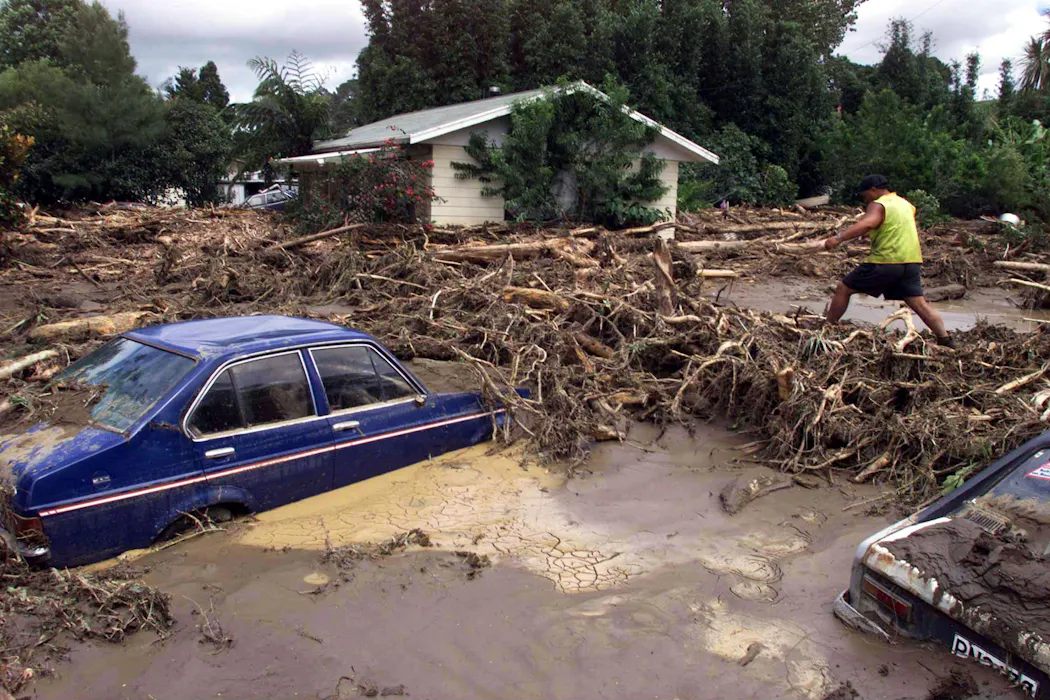
Every election seems to return to the same themes: the economy, health, housing and the cost of government. But one challenge cuts across these and will confront whichever government is elected.
Whether they feature in the campaign or not, natural hazards affect the economy, health and wellbeing, where we build, insurance premiums, and the liabilities we transfer to future communities and taxpayers.
New Zealand’s geography makes it particularly vulnerable to floods, tsunamis, coastal erosion, severe storms, earthquakes, landslides, wildfires and droughts. Climate change and ongoing development will further increase exposure and risk, and require adaptation strategies.
The costs are substantial. Insurance claims from a single event, the 2023 Auckland anniversary weekend floods, resulted in more than NZ$2 billion in insured losses. But figures like these only capture part of the costs, with additional impacts associated with disruption, infrastructure damage or adverse health effects.
Each political party may pursue different policies, but all operate within the same hazard landscape. Their decisions will have tangible consequences: how often hazards become disasters, how severe their impacts are, how quickly adaptation or recovery occurs, and how many people are affected.
As researchers who have spent decades working on natural hazards, we offer three key observations that should inform the next government’s agenda.
A challenge beyond election cycles
A generation ago, the biggest challenge was understanding New Zealand’s natural hazards. Today, there is investment in hazard science and mapping, risk modelling, and post-disaster inquiry.
We know more about the communities and infrastructure exposed. We also have increasingly sophisticated tools for understanding climate impacts, and advances in artificial intelligence will further improve modelling and forecasting.
But this is only the starting point. We need to understand how science translates into risks and consequences. And we will have to act to protect what we value.
This requires more than data. It demands stronger links between science, policy and practice, investment in capability, and a willingness to make long-term decisions despite uncertainty.
Above all, natural hazard risk and resilience must be treated as an enduring national challenge separate from electoral cycles.
The reality is that New Zealand is a risky place to live and build, which demands ongoing investment. But science only delivers value when it translates into action: how we build and use land, invest in infrastructure, adapt and reduce risk, or strengthen resilience.
Exposure and risk are increasing
Despite better information, New Zealand continues to place people, assets and infrastructure in hazard-prone locations.
Every decision about housing, transport, water infrastructure or urban expansion influences future risk. Some decisions reduce risk; others embed and increase it.
This reflects a fundamental tension in public policy: the short-term certainty of economic development versus the long-term uncertainty of costs.
Take the fast-tracked development in South Auckland, for example, which has proposed thousands of homes on flood-prone land. Despite concerns raised by Auckland Council and others, it passed central government’s fast-track consenting process and is now the subject of a High Court appeal (at the time of writing, the court’s decision was pending).
Increasing consenting speed and reducing red tape can enable development. But it can also weaken safeguards that help ensure homes and infrastructure are built in places with lower exposure to natural hazards.
This is not just an issue for future ratepayers, Auckland Council and the government have committed around NZ$1.25 billion to buy more than 1,100 properties where there is an intolerable risk to life. Reducing exposure is essential to prevent significant future costs.
The answer is not to stop growth, but rather to direct it to where people will not inherit avoidable risk. While we already seek to do this, stronger and clearer policy settings are needed to protect communities and ratepayers.
Acting on natural hazard information is also not solely a government responsibility, nor just about housing. Science must be able to support decisions across the private sector, infrastructure providers, or iwi and mana whenua.
Invest now or pay later
Natural hazard resilience requires ongoing investment in science, infrastructure, policy, emergency management and community preparedness.
Infrastructure ages, protection requires maintenance, expertise is lost through under-investment, and community preparedness fades between emergencies. Financial pressures may defer investment until something breaks.
Political parties frequently emphasise financial prudence. Yet one of the clearest lessons from disasters is that failing to invest in resilience increases costs that are already being borne by communities, ratepayers and governments.
A commonly cited estimate suggests every dollar invested in resilience saves eight in avoided losses. To employ the old adage, that’s the difference between the fence at the top of the cliff and the ambulance at the bottom.
Yet resilience investment often struggles to attract sustained funding. As a recent report from the insurer IAG stated, “natural hazard risk is rising faster than New Zealand’s ability to manage it”. Similarly, the Climate Change Commission has warned adaptation progress is not keeping pace with risk.
This is not just about reducing harm; it is also sound financial management. Investment in people is equally important, from emergency management professionals to the critical role iwi and marae play during disasters.
The good news is that New Zealand has world-leading science and strong science-practice networks, growing awareness of risk, and many examples of communities and sectors responding effectively under pressure.
The challenge now is to harness what we know and make the best decisions about where we build or adapt, what we invest in, the risks we are willing to accept – and who bears them.
The next government will not choose which hazards we face. But it will choose the levels of risk and liability we live with, how well prepared we are, and how effectively we recover.
While those issues haven’t dominated the current election campaign, the choices made may prove among the most consequential of the next decade.

Iain White receives funding for research associated with the New Zealand Natural Hazards and Resilience Platform and the Natural Hazards Commission Toka Tū Ake. He is also New Zealand’s National Contact Point for Climate, Energy and Mobility for the European Union’s Horizon Europe research program.
Bill Fry leads the Data and Enabling Technologies programme for the New Zealand Natural Hazards and Resilience Platform. He sits on the Global Tsunami Model, NZ UNESCO National Decade Committee, ITU/WMO/IOC JTF for Smart Cables and the global DRR GEO working group. He chairs the WG2 of the Pacific Tsunami Warning and Mitigation System and holds several other UN-IOC leadership roles. He has previously received or currently receives funding from Natural Hazards Commission Toka Tū Ake, MBIE Endeavour Fund, Royal Society of New Zealand Marsden Fund and EU Horizons.
Julia Becker leads the Living with Risk theme for the New Zealand Natural Hazards and Resilience Platform. She is also an Associate Director for Te Hiranga Rū QuakeCoRE, a Centre of Research Excellence (CoRE) funded by the New Zealand Tertiary Education Commission, and has received funding from the Natural Hazards Commission Toka Tū Ake and MBIE Endeavour research programmes.
Liam Wotherspoon leads the Next Generation Risk Assessment programme for the New Zealand Natural Hazards and Resilience Platform. He is also an Associate Director of Te Hiranga Rū QuakeCoRE, a Centre of Research Excellence (CoRE) funded by the New Zealand Tertiary Education Commission. Liam receives funding from the Natural Hazards Commission Toka Tū Ake and Endeavour research programmes.
Melanie Mark-Shadbolt leads the Vision Mātauranga programme for the New Zealand Natural Hazards and Resilience Platform. She is also the CEO of Te Tira Whakamātaki, an environmental not-for-profit and home to Hono: the Māori Emergency Management Network. TTW and Hono receive funding from philanthropic organisations, private industry and individuals, and government agencies including NEMA, MBIE, and DOC.
Original source: https://analysis1.mil-osi.com/2026/10/18/natural-hazards-dont-obey-electoral-cycles-the-next-government-faces-crucial-choices/