

Source: The Conversation (Au and NZ)
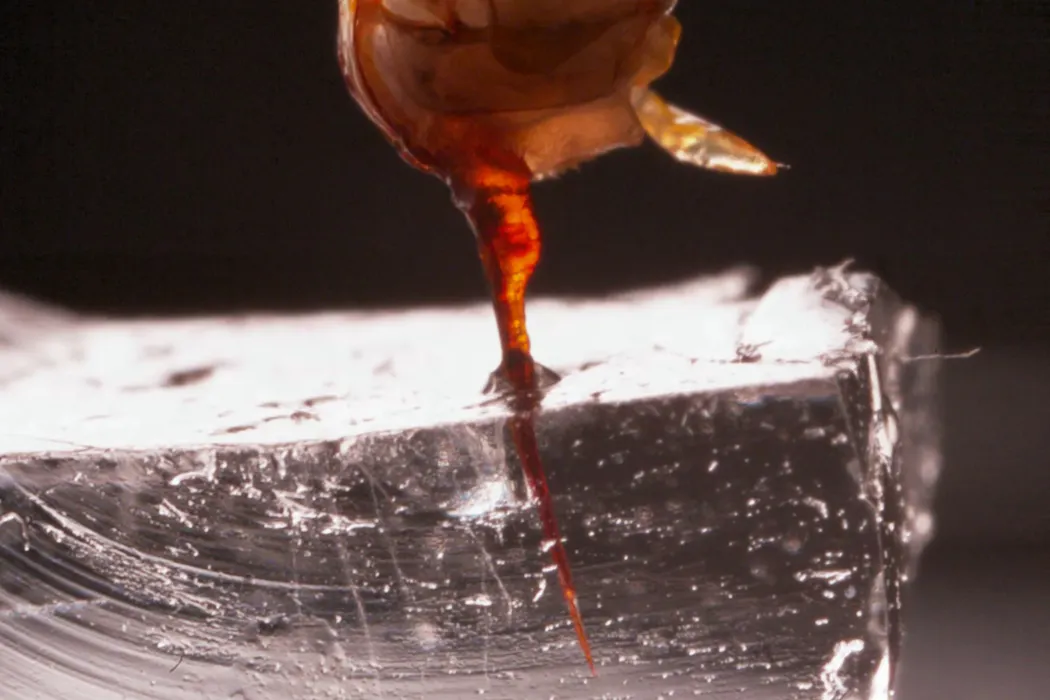
If you’ve ever been stung by a honeybee, you might know they have a special trick: they insert the stinger into your skin and leave it behind. As they fly away, the needle-like appendage keeps stinging you.
Losing the stinger can kill the bee by damaging its internal organs, so they don’t do it lightly. However, it means that even if the bee is crushed or brushed off, the stinger will continue to do its job – defending the hive. In fact, it takes over a minute to finish pumping after it enters the skin.
The stinger is effectively a fully autonomous micro-pump. But how does it work all on its own?
Most venomous animals store venom in a venom sac – more or less a very unpleasant water balloon. Circular muscles around this balloon squeeze and release the venom. But scientists have known for a while that honeybees are equipped with something different.
A honeybee’s venom sac empties into a pumping chamber, which contains little pumping elements called valves. This was illustrated as early as 1910 but we’ve never known exactly how these valves work.
In our study published today, we filmed the pumping elements inside the bee stinger in action for the first time.
What we did
Since the bee stinger detaches from the body, we could observe it unobstructed. Using a clear gel that mimics human skin as a target, we detached the stingers and then filmed them in action pumping venom.
What we found was very unusual. Imagine the pumping chamber of the stinger as a cylinder. An inlet at the top delivers fresh venom and an outlet at the bottom delivers venom into the skin.

Ramirez-Esquivel et al., 2026
Inside this cylinder we have two valves, both moving to pump the venom. On the downstroke, the valve opens up like a parachute, spanning the diameter of the cylinder and creating a seal.
As the valve moves down, it pushes venom out through the outlet. At the bottom of the cylinder the valve reverses direction and collapses, a bit like an umbrella, allowing it to move back to the top of the cylinder.
Simple, right? Well, the thing is there are two valves inside the cylinder, and they are moving in opposite directions. This means they have to be able to both move past each other while still making a seal and pumping venom; and allow the pumping chamber to refill.
What we discovered is that the valves are acting as collapsible pistons. By pumping in opposite directions, they deliver a continuous flow of venom.
Studying the stinger mechanism required hundreds of hours of filming. In all that time handling live bee stingers I only got stung once – I count that as a win.
Taking an even closer look
The filming helped us understand how the stinger is moving. However, it’s so small, so difficult to see, and has such a complicated shape, that we needed different microscopes to understand what it looks like.
We took three-dimensional scans of the stinger to make a model of its structure, and compared this model to images that better captured the material properties and details of the stinger.

Ramirez-Esquivel et al., 2026
Looking at the stinger from different angles was key to understanding what was actually going on.
To confirm our findings, we then took our 3D scans and used them to make a simplified, up-scaled version of the stinger.
After testing a lot of different plastics, we 3D-printed the pumping chamber and the valves using rigid and flexible materials, and replicated the pumping principle that we observed in the real stinger.

Ramirez-Esquivel et al., 2026
Although many of us are familiar with using 3D printers to make small toys and gadgets, normal consumer printers can also be used for rapid prototyping in science.
The honeybee stinger is an unusual pump. Most pumps in nature are either reservoirs that are constricted by muscles (snake venom glands) or chambers that are deformed by muscular contractions (your lungs).
Honeybee stingers work more like the pistons in your car engine, if those pistons were two to a cylinder and also highly deformable. We think this unusual pump design could find applications for human-made pumps in microfluidics (a discipline that controls tiny amounts of liquids), drug delivery, or continuous flow pumps.

Fiorella Ramirez Esquivel receives funding from the Australian Research Council and the Office of Naval Research Global.
Original source: https://analysis1.mil-osi.com/2026/10/12/how-does-a-honeybee-stinger-actually-pump-venom-first-ever-video-shows-it-in-action/