

Source: The Conversation – USA
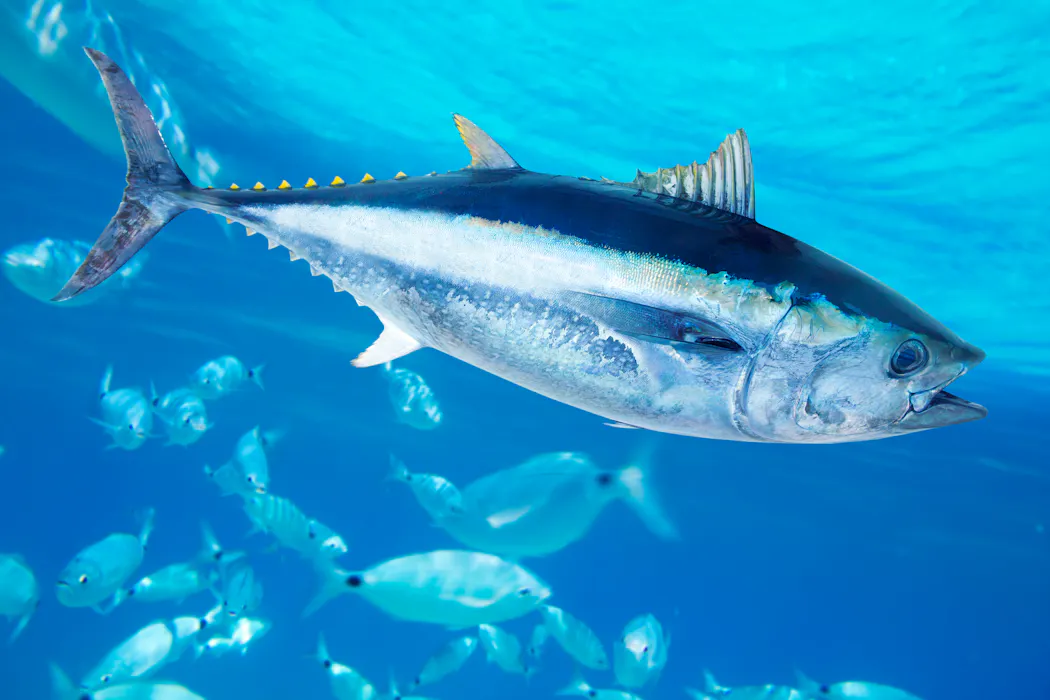
From a humble mayonnaise-laden sandwich to an expensive piece of sashimi, tuna is a prized source of food for people around the world. Once an inexpensive, easily shipped canned protein source, today’s bluefin tunas can fetch millions of dollars at auction. Millions of tons of tuna are harvested every year, supporting a global industry worth around US$40 billion annually.
But tunas are more than just the pink flesh found in cans and sushi, and humanity’s story with these fish goes back further than you might expect.
As a biologist and an archaeologist interested in long-term human-environment interactions, we wanted to investigate the deep record of people’s relationship with tunas.
We drew on the expertise of 18 leading researchers worldwide and studied a variety of sources, from the skeletal remains of tunas in archaeological sites to ancient rock art, paintings on frescos and vases, written historical records and ethnographic accounts from Indigenous communities. This data helped us understand where, when and why people caught tunas, and what cultural and environmental forces shaped these early fisheries. In turn, this provided new insights into how past harvests compare with the millions of tons caught today.

DeepAqua/iStock via Getty Images Plus
An apex predator of the ocean
“Tuna” is a common name given to a group of 15 fish species. The major market species include eight “true tunas” in genus Thunnus along with skipjack tuna (Katsuwonus pelamis).
Tunas are among the largest predators in the open ocean, with some species reaching almost 10 feet (over 3 meters) in length and living for over 40 years. Tuna are champion swimmers; Pacific bluefin tuna can migrate 5,000 miles (8,000 kilometers) across the northern Pacific in a matter of months.
Tuna are also ecologically important apex predators and serve as sentinels of ocean health. However, most scientific research has focused on the past 75 years, with assessments of the health of tuna populations benchmarked against the year 1950. The focus on recent decades raises a variety of questions about the deeper history of fishing for tuna prior to the past century.

Sue O’Connor
A deep and dynamic history
The oldest definitive evidence of tuna fishing, in the form of skeletal remains of what were likely skipjack tuna, comes from East Timor in southeast Asia about 44,000 years ago. Likely aided by deepwater channels that brought tunas close to shore, this early example of tuna fishing is somewhat unusual – most areas of the world don’t contain evidence of tuna fishing until 10,000 years ago or more recently.
Ancient fishers in Japan and Korea, for instance, captured tunas beginning at least 7,000 years ago, with a rich culinary tradition and large-scale harvests that trace their way to the present day love for these fishes in the region.

Fundación Casa Medina Sidonia
The northeastern Atlantic Ocean and Mediterranean Sea are home to one of the world’s oldest and most important tuna fisheries, focused on Atlantic bluefin tuna. A few ancient tuna bones found in a Neanderthal site in Gibraltar dating to around 26,000 years ago may have been obtained by Neanderthals scavenging. However, by 9,000 to 11,000 years ago, thousands of tuna bones were deposited in Greece in a cave overlooking Kiladha Bay. The number of sites across Europe with tuna remains increases rapidly in the archaeological record after about 8,000 years ago.
These early fishers used a variety of methods to catch tuna, including hook and line, harpoons, and traps or nets. They often took advantage of topographic features where fish could be driven close to shore. This tuna fishing is captured in written records, paintings and other art, showing the cultural importance of these fish to ancient European societies. The ancient Greeks deemed tuna worthy of sacrifice to the gods and used them as offerings to Poseidon.
By 3,000 years ago, a commercial Atlantic bluefin tuna fishery had formed in the Mediterranean, with large-scale trade and specialized nets and traps. By the 16th and 17th centuries, people may have caught tens of thousands of tons annually. This fishery was made possible by the predictable migration patterns of Atlantic bluefin and coastal access to tunas – no dangerous oceanic voyages necessary.

Iain McKechnie
For over 5,000 years, Indigenous people on North America’s northwest coast, particularly in Nuu-chah-nulth territory, had an important and complex fishery for Pacific bluefin tuna.
Ethnographic accounts from native elders describe how during unique warm-water events in late summer, people voyaged out at night into the fjords, aided by natural bioluminescent plankton. With spotters overlooking the fjords and communicating from land, fishers set fires in canoes to lure tuna close enough to harpoon. People would spear these massive fish, some perhaps more than 6 feet (2 meters) in length and weighing 640 pounds (290 kilograms). Bluefin tuna vertebrae have been found in 23 regional archaeological sites.
In Southern California, people also captured tunas, particularly around Santa Catalina Island, where Indigenous fishers caught Pacific bluefin, yellowfin, albacore and skipjack tunas for 6,000 years, leaving the fishes’ skeletal remains in regional archaeological sites.

Charles E. Rotkin/Corbis/VCG via Getty Images
However, it wasn’t until the 19th and 20th centuries that commercial and sport fisheries for tuna developed in the area. Tuna experienced a meteoric rise in popularity during World War I and World War II. Often centered around canneries in Los Angeles and San Diego, Southern California commercial and industrial tuna fisheries benefited from Japanese and Portuguese immigrant fishing communities, which helped spawn a global industry for tuna.
Emergence of oceanic exploitation
Tuna consumption by people is obviously nothing new. But how has the scale of tuna harvest changed through time?
Using the quantity of tuna bones present in archaeological sites as a rough metric, we found that even the largest of these ancient fisheries – those in the Mediterranean – likely only removed thousands of tonnes of tuna over millennia, which pales in comparison to the millions of tons of tuna now removed from the oceans every year.
This contrast brings up important questions: What are the consequences of oceanic exploitation exploding over such a relatively short period of time? How can people sustainably manage tuna populations? There are no easy answers, and three of the commercially important tuna species – southern bluefin, Pacific bluefin and bigeye tuna – remain endangered, vulnerable or near threatened. However, in several regions a combination of effective governance, monitoring and harvest controls have stabilized tuna populations even with intensive harvests.

Heritage Art/Heritage Images/Hulton Archive via Getty Images
The deep history of tuna fishing also highlights the human capacity for innovation. For more than 44,000 years, people have found ways to locate, catch and share tunas. That same capacity, channeled into international cooperation and science-based management, may help maintain global tuna stocks at sustainable levels – even if they’ll likely never again reach precommercial fishing levels of abundance.

Emma Elliott Smith receives funding from Smithsonian Institution.
Torben Rick does not work for, consult, own shares in or receive funding from any company or organization that would benefit from this article, and has disclosed no relevant affiliations beyond their academic appointment.
Original source: https://analysis1.mil-osi.com/2026/10/12/hooked-on-tuna-people-have-been-harvesting-these-ocean-predators-for-44000-years/