

Source: The Conversation (Au and NZ)
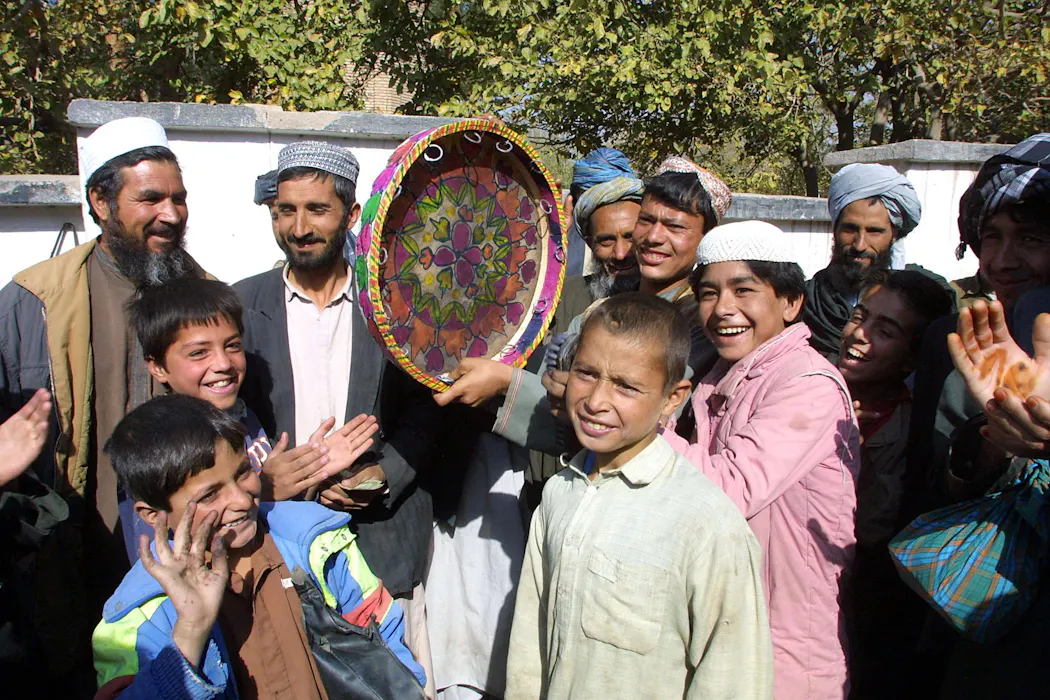
Twenty-five years ago this week, the United States launched strikes in Afghanistan, targeting al-Qaeda training camps and Taliban military installations. It marked the beginning of the first military campaign in the US-led “global war on terror”.
This war, supported by an international coalition that grew to include about 50 nations, came in direct response to the September 11 2001 terrorist attacks. It was to be, in the words of then-US President George W. Bush:
A war against all those who seek to export terror, and a war against those governments that support or shelter them.
Today, a quarter of a century later, the Taliban have returned to power. The women and girls of Afghanistan face severe oppression. And the country is grappling with economic and humanitarian crises.
The 25th anniversary of 9/11 has triggered a new wave of Western commentary on the war on terror and its complicated legacy. Yet, an important voice is still missing from much of the commentary: that of the people of Afghanistan themselves.
The people were the most profoundly affected by the conflict and its aftermath. And it is their longtime hopes for democracy that live on.
An unexpected opportunity
All three of us were born, raised and displaced during the first or second decades of conflict that preceded 2001, including the Taliban’s first period of rule from 1996 to 2001. Like many others, we experienced the US-led intervention that followed 9/11 as an unexpected yet welcome opportunity.
The US push for democracy and women’s rights appeared to offer the chance to build a more stable and democratic state.
There was a wave of optimism when the Taliban were first ousted in late 2001. Millions of Afghan citizens from diverse backgrounds enthusiastically participated in elections. New independent media outlets were formed. Many families sent their sons and daughters to schools and universities.
This wasn’t because they were adopting alien, Western values and systems. It was because these opportunities aligned with a century of domestic struggles. Many people in Afghanistan wanted a constitutional and responsive system of government that could also end decades of conflict and instability.
Afghanistan’s long struggle towards democracy
Some mainstream Western narratives frame the two decades of intervention as a well-intentioned attempt to export democracy. They suggest Afghanistan was a society whose values were antithetical to democracy and modern governance.
This is reflected in orientalist tropes portraying the country as “the graveyard of empires”.
However, long before 2001, Afghanistan had its own rich tradition of struggle for political reforms.
The first movements calling for constitutional government emerged in the early 20th century. The reformist King Amanullah Khan’s 1923 constitution laid the groundwork for citizens’ democratic rights.
In 1964, a new constitution was adopted, ushering in a new era of modernisation, free press and parliamentary debates. The “decade of democracy” that followed saw expanding (even if limited) civil rights.
The 1973 coup brought this chapter to a close. In the decades that followed, Afghanistan underwent communist rule, Soviet occupation, and a civil war before the Taliban first seized power in 1996.
Power, patronage and corruption
During the two decades of Western intervention that followed 2001, many international policies inadvertently empowered unaccountable local actors. Some policies also entrenched systemic corruption.
The presidential system built after 2001 was heavily centralised. Politics was often characterised by informal personal networks and patronage. The concentration of power in the office of the president was also detached from changing social and security dynamics.
Afghanistan’s major cities experienced genuine social and economic transformation. But rural communities often bore the brunt of ongoing military operations, night raids and institutional neglect. The Taliban successfully exploited these rural grievances and structural flaws to justify their insurgency.
The Taliban’s return to power
The tragic collapse of the republic in August 2021 did not reflect popular dissatisfaction with republican government. Rather, as many observers have argued, it was the product of deep structural problems that developed during two decades of international intervention.
Democracy promotion and state building became central stated objectives of the intervention. In practice, these goals frequently took a back seat to more immediate counterterrorism priorities.
Equally important, billions of dollars in foreign aid were directed towards the security sector.
Much of the remaining assistance was absorbed by the high security costs associated with delivering services and maintaining the international presence.
The language of human rights and democracy were therefore often used to justify contradictory and short-term military actions. And many of these interventions subverted the development of democratic processes and rule of law.
Women’s rights without women’s voices
In the West, women and girls had been portrayed as the primary groups to be rescued from the oppressive regime of the Taliban in the 1990s. But Afghan women were excluded from 80% of the peace negotiations that took place between 2005 and 2020. They were completely left out of the bilateral US–Taliban talks that produced the 2020 Doha Agreement.
In the aftermath of the withdrawal, some narratives still portray the Taliban and its policies as expressions of Afghan culture, religion and tradition. This argument is often made with little supporting evidence – particularly given the Taliban have shown no willingness to subject its rule to popular scrutiny.
The Taliban do not derive their authority from public consent. This de-facto authority instead claims the right to govern through conquest and intimidation. And it has consistently avoided testing its authority through elections or other measures of public opinion.
Five years on from the Taliban’s return, women are deeply, systematically excluded from public life.
Our research into this most recent period finds gender apartheid extends beyond Taliban decrees. Families, communities, institutions, humanitarian responses and international diplomacy can either reinforce or challenge it.
The regime has constructed a more bureaucratic and comprehensive system of gender apartheid. More than 120 decrees now regulate women out of education, employment, movement and public life.
International responses have swung between condemning the Taliban and working with it. There’s no coherent international strategy.
Now what?
Despite its flaws and eventual failures, the period that followed 2001 has altered the social fabric of Afghanistan in ways that cannot be easily undone.
Millions of citizens have experienced public life and global connectivity, and taken part in debates about human rights. This includes a vibrant generation of youth, scholars, journalists and civic activists now living both inside the country and across a global diaspora.
The new generation is resisting the Taliban’s autocratic rule. Authoritarian control should never be confused with societal consent.
Twenty-five years after the US response to the 9/11 attack, the people of Afghanistan tragically remain caught between foreign rivalries, neglect and Taliban repression. If any lesson should be learned, it’s this: sustainable peace cannot be built by treating Afghanistan as a theatre of security competition and foreign policy experiments.
International engagement should be coordinated and conditional. Women must have a say in decisions and aid must reach women-led organisations.
If engagement with the Taliban is deemed necessary, diplomatic access and privileges should be tied to measurable benchmarks on education, work and movement. There should also be support for the International Criminal Court and UN accountability mechanisms.
For a lasting solution, the world must move beyond narratives of simplistic cultural determinism. Afghanistan’s enduring local aspirations – for rights, dignity and responsible government – still run deep.

Niamatullah Ibrahimi is a voluntary member of the board of Wattle Pathways, an education social enterprise dedicated to addressing education inequity in Australia. This article has no connection to his membership of the board of Wattle Pathways.
Farkhondeh Akbari and Safiullah Taye do not work for, consult, own shares in or receive funding from any company or organisation that would benefit from this article, and have disclosed no relevant affiliations beyond their academic appointment.
Original source: https://analysis1.mil-osi.com/2026/10/09/the-war-on-terror-failed-afghanistan-but-the-peoples-hopes-for-democracy-live-on/