

Source: The Conversation – UK
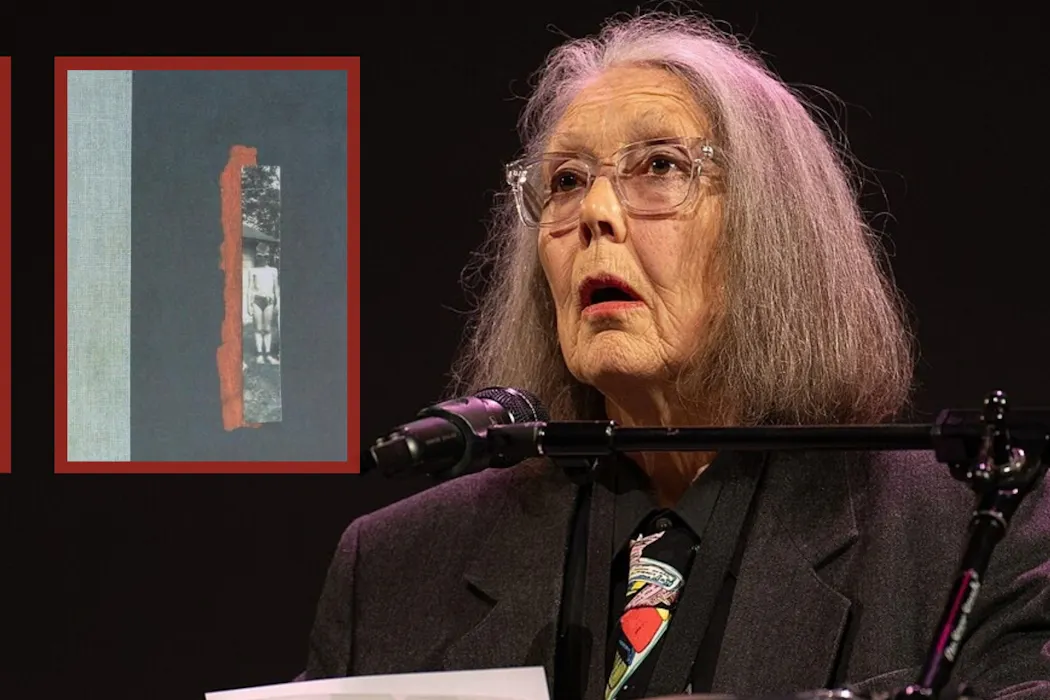
For over four decades, Anne Carson has been quietly redrawing the map of contemporary literature. Poet, translator, classicist, essayist, performer and visual artist, she has produced a body of work that refuses easy categorisation.
Yet what is most striking about Carson, the 2026 Nobel prize winner in literature, is not her formal originality, extraordinary though that is. It is her ability to make thinking itself like a literary event.
At a time when scholarship and creative writing are often treated as separate pursuits, Carson has shown how deeply they belong together. Her work is a reminder that thought and imagination don’t compete with one another, but continually enrich each other. The result is a body of writing that is at once intellectually demanding and creatively daring.
Carson moves effortlessly between ancient and modern worlds, not by collapsing historical difference but by inhabiting it. In her hands, antiquity is never a repository of cultural authority or a storehouse of exemplary texts. It is a living, unsettled terrain of voices, fragments, silences and absences.
This is perhaps most evident in her treatment of ancient Greek literature. Carson’s Sappho, Simonides, Sophocles and Euripides, do not emerge as objects of scholarly reconstruction. They are interlocutors. Their words cross centuries in order to illuminate experiences that continue to elude us: desire, grief, longing, estrangement, mortality. Carson’s dialogue with antiquity reveals that the ancient world survives not because it is preserved, but because it continues to generate new meanings.
Again and again, her composition returns to questions of distance. Between lovers. Between languages. Between the living and the dead. Between what can be known and what must remain elusive. Desire in Carson is rarely a movement towards possession; it is an encounter with absence. Her writing dwells in the gaps and intervals that structure human experience, finding there both pain and possibility. Few contemporary authors have written so perceptively about longing and the many forms it takes.
This concern with distance is inseparable from her radical experimentation with form. Fragmentation, quotation, interruption and collage become ways of thinking through memory, desire and loss. Publications such as Eros the Bittersweet (1986), Autobiography of Red (1998), The Beauty of the Husband (2001), Nox (2010) and Float (2016) continually challenge readers’ expectations of what poem, an essay, a translation, or a book might be. Yet Carson’s formal innovations never feel merely innovative. They arise from the demands of the subjects she explores. Form is never decoration; it is inquiry.
Carson’s influence
What distinguishes Anne Carson from many of her contemporaries is the combination of intellectual audacity and emotional restraint. She approaches language, literature and human experience with uncommon boldness – yet her work remains marked by a profound attentiveness to absence, uncertainty and what cannot fully be said. Witty, sometimes devastating and almost always unpredictable, her writing asks a great deal of its readers, but rewards that attention with rare intensity. Readers have the sense, reading Carson, of an author who discovers new possibilities within language while remaining acutely aware of its limits.
The influence of Carson’s output is already evident in a younger generation of writers and scholars who move freely between criticism, translation, poetry and creative prose. Many, including myself, have learned from her example that these activities need not be separated from one another. What Carson has bequeathed is not a method to imitate but a sense of intellectual freedom: a willingness to experiment, to embrace uncertainty and to trust that rigorous thinking can itself become an act of literary creation.
The Nobel prize has often recognised writers who enlarge our understanding of what literature can be. Anne Carson belongs unmistakably in that company. Her oeuvre has transformed the relationship between poetry and scholarship, antiquity and modernity, thought and feeling. More importantly, it has shown countless readers that literature remains one of the most powerful ways of encountering what is distant, difficult and other.

Laura Jansen does not work for, consult, own shares in or receive funding from any company or organisation that would benefit from this article, and has disclosed no relevant affiliations beyond their academic appointment.
Original source: https://analysis1.mil-osi.com/2026/10/08/anne-carson-wins-nobel-prize-in-literature-how-she-discovered-new-possibilities-within-language/