

Source: The Conversation – UK

A laboratory worker at the Irkutsk Anti-Plague Research Institute in Siberia, Russia, has died just days after falling ill with an undisclosed illness.
While reports of suspected plague have been circulating in the media, Russia’s consumer health watchdog has described the illness as pneumonia of unknown cause. The World Health Organization also stated the official cause of death has not yet been confirmed. Plague therefore remains only a possible explanation.
While this is a tragic death and an important investigation, it’s certainly not a reason to panic or sign that the Black Death has returned. The availability of treatment, rapid testing and contact tracing mean the outlook of plague is very different today.
Why is plague suspected?
It’s currently not clear what the laboratory technician’s cause of death was. But as the research institute where she worked studies plague bacteria, health authorities are right to consider plague as a potential cause of illness.
The illness that she experienced – a form of pneumonia that ended in her death just a few days of contracting it – also resembles symptoms of pneumonic plague.
This form infects the lungs, usually after bacteria are inhaled and the illness can progress within a day or two. Symptoms include fever, cough, shortness of breath and often blood-stained sputum (mucus that is coughed up from the lungs).
But many other infections that cause pneumonia can look similar. Only laboratory tests can tell them apart. Health authorities routinely classify plague cases as suspected, probable or confirmed, so “suspected” is a normal classification at this early stage.
What might have happened?
We don’t yet know how the laboratory worker became ill, and speculation helps no one. Early media reports of a broken sample tube have been denied by officials.
What we can say is that laboratory-acquired infections are rare but well-documented – and they tend to follow familiar patterns.
The last documented case of laboratory-acquired plague was in Chicago in 2009. As in the case in Russia, the researcher died within days of falling ill. Yersinia pestis, the bacterium that causes plague, was confirmed in his case – but investigators couldn’t establish how he became infected. It may also prove hard to establish how the laboratory worker in Russia was infected, if plague is in fact confirmed.
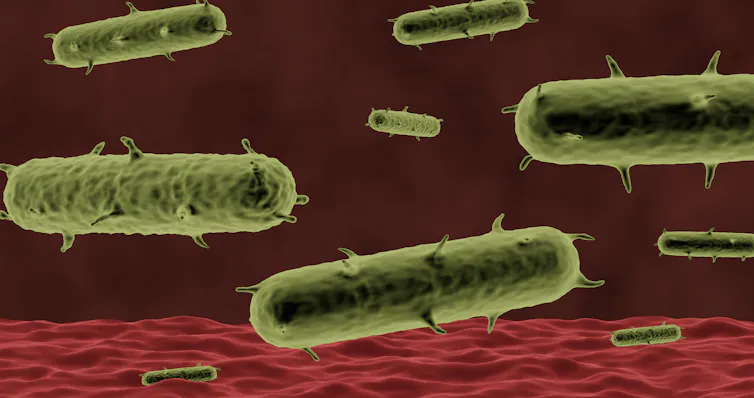
For respiratory pathogens, such as pneumonic plague, there are many potential routes of transmission in a lab. The main risk is inhaling tiny droplets that may be released if a tube breaks, a sample spills or a culture is handled outside normal biosafety protocols. Needle-stick injuries and splashes to the eyes are other routes.
MohamadOuaidat/ Shutterstock
Laboratories handling dangerous pathogens use specially designed facilities, protective equipment and strict safety protocols. While these measures help reduce the risk of accidents, it can never eliminate this risk entirely.
What’s currently being done?
Authorities have identified nearly 200 people who had contact with the laboratory worker since she became unwell. They are currently under medical observation as a precaution.
Containment is a well-established protocol that is used in many infectious disease outbreaks. This involves isolating and treating cases, identifying and following-up with close contacts, offering preventive antibiotics where necessary and quarantine if needed.
Monitoring contacts quickly means anyone who falls ill can be isolated and treated early. It also protects people regardless of what the cause of the illness turns out to be.
Is plague today different from the Black Death?
When we think about plague, we usually think of the Black Death – nightmarish plague doctors in terrifying masks and helpless medieval people covered in painful lumps ailing in bed. The Black Death killed millions globally, but today’s scenario is very different. We have access to antibiotics, laboratory tests and robust surveillance systems that make plague far less of a public health risk than it was in the medieval era.
Plague still thrives where people live in close contact with animals that carry fleas. Better housing, sanitation and rodent control reduce our exposure to fleas infected with plague – and therefore reduce our risk of getting bitten and contracting bubonic plague.
In places where plague occurs naturally, good hygiene and careful handling of sick, dead or hunted wild animals also lowers the risk of infection.
Bubonic plague cases are sporadic, and it rarely spreads between people. Typically, there are a few hundred cases per year worldwide, mostly in the Madagascar and the Democratic Republic of Congo – though cases have been regularly reported in recent years in the United States, China, Mongolia and Peru.
Pneumonic plague is much less common. It develops when the bacteria are inhaled, or when untreated bubonic plague spreads to the lungs. It can pass from person to person, but this usually requires close contact with someone who is already unwell.
The percentage of patients who die from plague depends on whether treatment was received quickly. Untreated, bubonic plague kills an estimated 30% to 60% of patients. Untreated pneumonic plague, however, is fatal for nearly 100% of people who contract it.
Importantly, plague can be treated effectively with antibiotics that are widely available. Recent reviews have found that, if treated, only around one in six people who contract either bubonic or pneumonic plague will die from the infection.
But it’s critical signs of plague are recognised early. Early symptoms of pneumonic plague – such as fever, headache, weakness and a cough – resemble many other illnesses. Most doctors outside endemic regions will never have seen a case, let alone suspect it. Minimising the delay between infection, suspicion and treatment is key. This is why awareness and rapid testing matter, especially for those who may have been exposed.
The risk to the public from this single suspected case in Siberia is very low, both within Russia and further afield. What matters now is whether any of those under observation fall ill, whether laboratory results confirm plague and whether investigation reveals how the laboratory worker became infected.

Josephine Bourner does not work for, consult, own shares in or receive funding from any company or organisation that would benefit from this article, and has disclosed no relevant affiliations beyond their academic appointment.
Original source: https://analysis1.mil-osi.com/2026/10/07/russian-plague-scare-an-expert-explains-what-we-know-so-far-and-why-theres-no-need-to-panic/