

Source: The Conversation – Canada
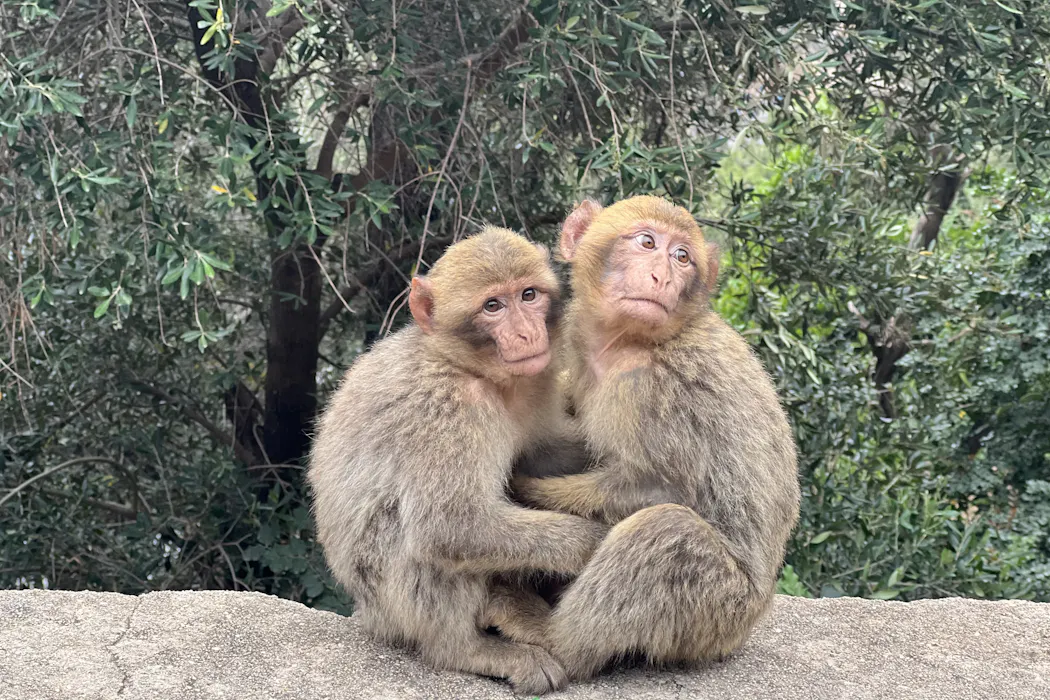
One of the hardest challenges in wildlife conservation arises when the habitat of a species in need of protection overlaps with land used by humans. Wolves and bears can kill livestock, elephants can damage homes and properties and wild boar can damage crops.
In such situations, conservation is not only about protecting wildlife. It is also about finding ways to reduce conflict between people and animals. That challenge grows further when the animals involved are highly adaptable and can learn to overcome attempts to keep them away from humans.
This is the case with the Barbary macaque, an endangered primate native to North Africa. In Béjaïa province, northern Algeria, macaques and people share a mountainous landscape where many families engage in small-scale farming.
In our recently published research, colleagues and I surveyed 94 farms to understand the severity of farmer-macaque conflict, the crops most affected, when crop-foraging occurs, the deterrents farmers use and the farm and landscape characteristics associated with frequent crop-foraging.
The Barbary macaque is legally protected in Algeria, and hunting it, or using prohibited methods such as poison, can result in fines and prison sentences. Few farmers reported using poisoned bait or guns.
However, continued crop losses could increase hostility toward the species if farmers lack practical ways to protect their crops. Therefore, it is vital to develop ways of protecting animals that minimize troublesome encounters with humans.
A heavy economic burden
About one-third of the surveyed farms had been abandoned because of crop losses associated with Barbary macaques.
On average, farming contributed about 35 per cent of household income, and for some families it was their only source of income. For these households, crop damage represents a substantial economic burden.
The problem was also frequent. Around 68 per cent of farms experienced daily crop-foraging by the macaques during conflict periods, while over half of farmers reported damage to infrastructure such as roofing materials and drip-irrigation systems.
None reported physical aggression by macaques or concerns about disease transmission. This indicates that the conflict was mainly economic, affecting crops, property and livelihoods.
Respondents told us that some crops were particularly attractive to the macaques. Figs were affected on almost all the farms, closely followed by apples and pears, grapes and tree nuts. These fruits were consumed whole rather than partially.
Timing also mattered. Macaque crop-foraging peaked from July to September, when most local figs ripen, and declined from late fall into winter, as acorns, a key wild food, become abundant in the oak forests. Incursions were especially common at dawn and dusk, when human activity was lower.
Not all farms faced the same level of risk. Larger cultivated areas experienced more frequent crop-foraging, while altitude and proximity to human settlements appeared to matter less.
The farmers we surveyed already used many methods to protect their crops. These include most commonly guarding fields with dogs, traditional fences and using slingshots. But simply using more methods was not associated with less frequent crop-foraging by macaques.
This suggests the macaques alter their behaviour depending on the obstacles they encounter and learn to circumvent them.
A changing landscape

(Rassim Khelifa), CC BY-NC-SA
Béjaïa province lost an estimated 50,400 hectares of forest cover between 2001 and 2023, about 40 per cent of its baseline cover.
The largest annual loss came in 2023, a year of deadly wildfires in the region. Agricultural land, meanwhile, showed no sign of expansion between 2014 and 2021.
This indicates that recurrent wildfires in the forests and shrublands that provide natural food for macaques caused the biggest damage to their habitat.
Our study cannot establish that habitat loss has led to the increase in encounters reported by farmers, but the pattern suggests that conservation measures should not focus only on farms.
Making coexistence possible
Almost all of the farmers we surveyed had received no wildlife-conflict management training, indicating a major opportunity for education and technical support.
In addition, more effective deterrents, including electric fencing and motion-activated devices, should be tested under local conditions. Buffer zones planted with crops that are less attractive to macaques, such as citrus, may also help protect high-value orchards.
Financial support is also important. Algeria’s conservation strategy for the Barbary macaque has proposed compensation for losses, but such measures have not been implemented in our study area. Compensation or subsidy programs could reduce the economic burden on farmers while also reducing incentives for killing the animals.
Protecting the Barbary macaque requires more than protecting the animals themselves. It requires safeguarding their habitat, developing safe and effective deterrents, enhancing environmental education and continuing research to better understand and manage encounters with humans.
Mohammed Khalil Mellal, a researcher at the Agrifood Technologies Research Center in Béjaïa, Algeria, co-authored this article.

Rassim Khelifa receives funding from the Natural Sciences and Engineering Research Council of Canada and Tier 2 Canada Research Chair. He is a member of the Quebec Centre for Biodiversity Science and an expert with the IUCN SSC Dragonfly Specialist Group.
Original source: https://analysis1.mil-osi.com/2026/10/04/protecting-endangered-species-must-include-supporting-habitats-and-nearby-human-settlements/