

Source: The Conversation – France
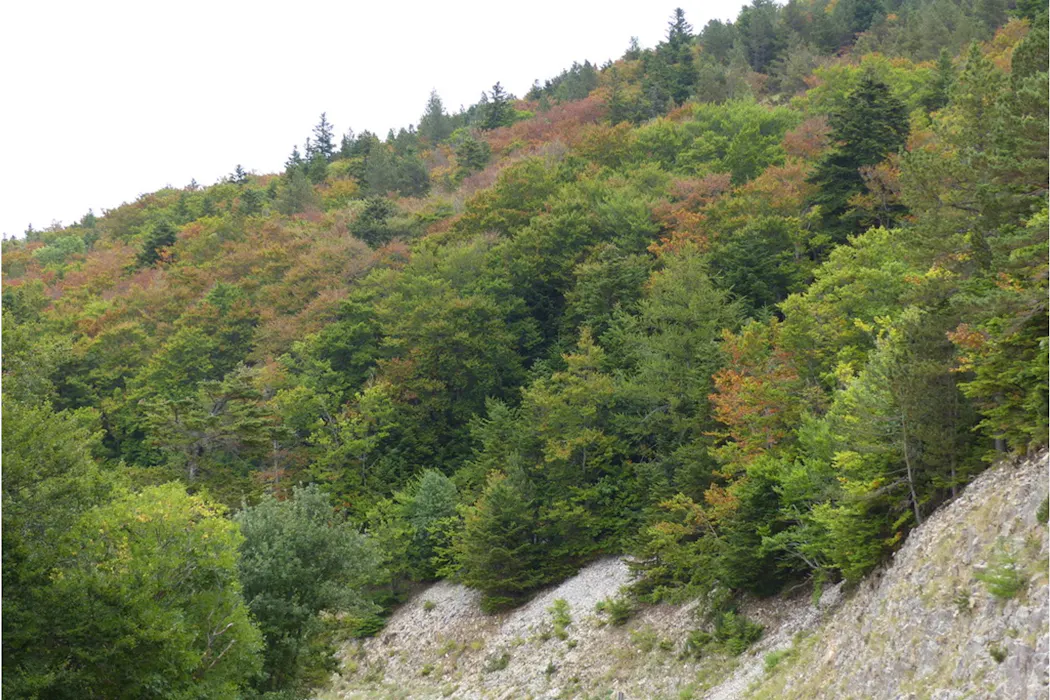
To survive during periods of drought, trees halt photosynthesis, a highly water-intensive process during which, for every molecule of CO₂ absorbed by a tree leaf, an average of around 400 water molecules are released. Entire forests then may end up emitting more CO₂ than they capture.
This is alarming given that droughts are becoming increasingly frequent and that forests play a key role in climate change mitigation policies. Although quantifying the CO₂ captured by the world’s forests remains a difficult task. It is estimated that they capture around a quarter of the CO₂ emitted by human activities.
However, when faced with extreme water shortages, forests can cease to act as carbon sinks. To understand why, we need to look at the leaves of the trees.
Water: the currency of CO₂
Tree leaves are the main point of entry for CO₂ into the forest ecosystem. They act as genuine chemical factories, capturing solar energy to convert CO₂ that is present in the air into sugar (i.e. photosynthesis). These sugars meet the plant’s energy needs. They also enable trees to grow and, in doing so, to store more CO₂ emitted by human activities.
The surface of the leaves is partly covered with stomata, tiny slits that can open and close. It is through these pores that CO₂ enters the tree. This movement of CO₂ requires no energy from the tree. It occurs naturally from the environment where CO₂ is more abundant – the atmosphere – to the environment where it is less so, in this case the interior of the leaf.
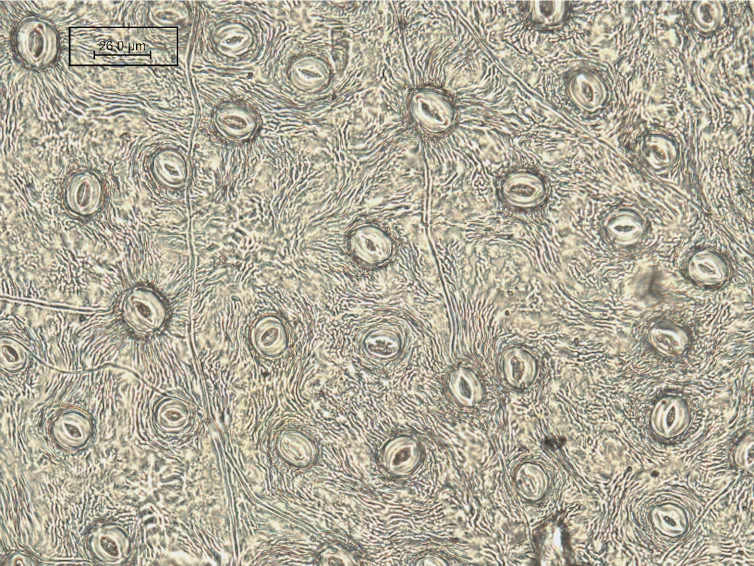
Julien Lamour, Fourni par l’auteur
However, the opening of the stomata does not just allow CO₂ to enter. It also results in water loss for the tree, as the cells inside the leaves contain far more water vapour than the atmosphere, even in the most humid regions. This is known as tree transpiration. On average, for every molecule of CO₂ absorbed by a stoma, around 400 water molecules escape at the same time.
Stomatal transpiration is essential for plant growth and metabolism. It can amount to several hundred litres of water – the equivalent of several bath tubs – per day, depending on the size of the tree during the growing season, and several tens of thousands of litres per day for one hectare of forest. These large quantities of water are drawn from the soil by the tree’s roots.
A fragile stream of water rising against gravity
To transport water from the roots to the leaves, plants need an efficient hydraulic system. The driving force behind this transport network, which works against gravity, is the evaporation of water at the stomata. This creates a tension that “pulls” the columns of water upwards, like a giant straw, thanks to the strong cohesion between water molecules.
This principle was formulated at the end of the 19th century by the Irish botanist Henry Horatio Dixon, and was thus termed “tension-cohesion”. It explains how transpiration is a passive mechanism, requiring no energy expenditure on the part of the tree.
Yet the force required to lift water to the treetops is colossal. Imagine that water is drawn up as if through a straw several tens of metres long, but that this straw is filled with obstacles: the walls of the vessels, the cells… The result? The force required to lift the water to the top of the tree is equivalent to that needed to pump water from a well several hundred metres deep!
In these extreme conditions, water is in what is known as a “metastable” state, meaning that it can suddenly turn into a gas if the pressure rises any further: if this happens, it is known as cavitation. When cavitation occurs, it generates air bubbles within this network, known as the tree’s hydraulic system. Gas embolisms then prevent the flow of water, causing the hydraulic system to fail. The leaves and other tissues of the tree gradually dehydrate until they dry out irreversibly.
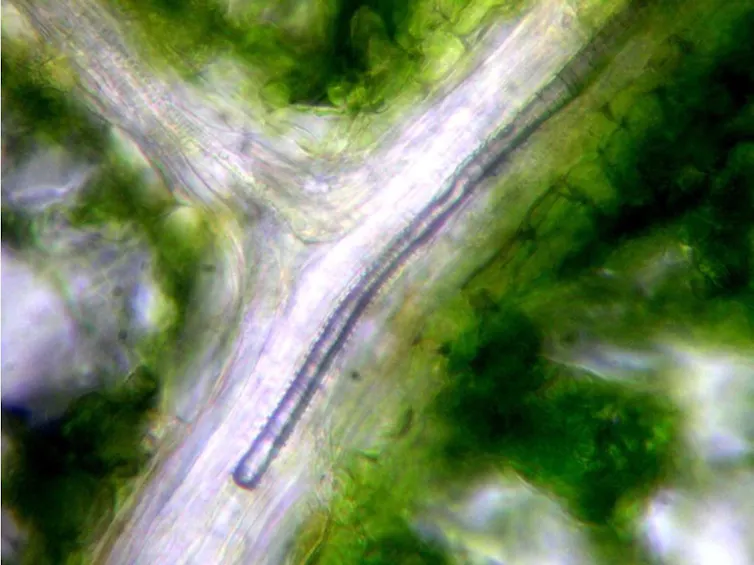
Hervé Cochard, Fourni par l’auteur
Cavitation is an irreversible phenomenon that occurs during extreme droughts, often linked to a lack of rainfall combined with heatwaves. In such situations, on the one hand, it becomes increasingly difficult to extract water from the soil as it dries out; this is known as soil drought. On the other hand, as the atmosphere heats up, the air becomes drier and evaporation from the leaves accelerates, which increases stress on the plant and speeds up the depletion of soil moisture. This is known as atmospheric drought.
The thirst versus hunger dilemma
During periods of drought, trees therefore face a dilemma: whether to open their stomata to facilitate the photosynthesis necessary for the tree’s metabolism and growth, or to close them to conserve water and protect their hydraulic system from irreversible damage.
The evolution of trees over geological time has led to the emergence of a behaviour that resolves this dilemma. The stomata open and close dynamically, within a matter of minutes, to minimise water loss when conditions are unfavourable for photosynthesis, such as when light levels decrease. In drought conditions, all vascular plants close their stomata.
Meanwhile, forests will continue to emit CO₂. Firstly, CO₂ resulting from the consumption of sugars produced by photosynthesis and required for their metabolism. Secondly, CO₂ emitted by trees that die as a result of drought and thereby release into the atmosphere the carbon they had stored during their lifetime. These two factors can therefore cause a forest to cease being a carbon sink and become a carbon source, a reversal that can be exacerbated by certain types of forestry practices, particularly those based on large-scale intervention.
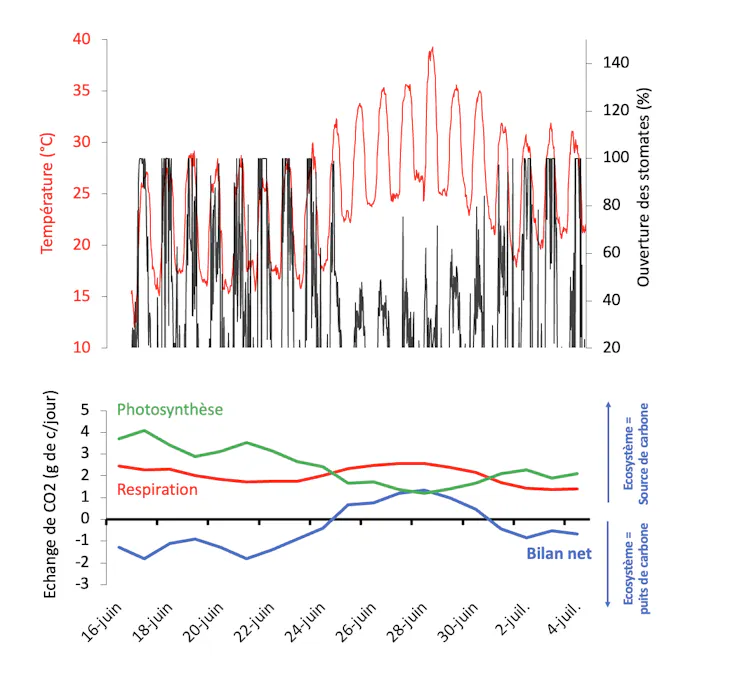
Fourni par l’auteur
However, drought tolerance can vary considerably from one tree to another and from one species to another, depending on the vulnerability of its water-conducting system to embolism. Stomatal closure has evolved to make the most of the available water, taking into account the species’ ability to resist embolism.
A tree with a more vulnerable hydraulic system, such as the birch, will tend to close its stomata earlier than a tree with a more resistant hydraulic system, such as the holm oak. In fact, all trees operate at the threshold of embolism, even the most resistant ones living in very arid areas. Consequently, all the world’s forests are vulnerable to an increase in droughts caused by climate change.
Indeed, when droughts exceed the reference conditions to which trees are adapted, the physiological impacts become critical, because, even after the stomata have closed, residual water loss continues through the leaves and stems’ cuticles. This phenomenon can lead to leaf drop, embolism within the vascular system and the desiccation of buds, ultimately resulting in the death of the tree.
Water regulates the carbon cycle, and vice versa
Therefore, to understand and predict forests’ ability to act as carbon sinks, we must understand and predict how water varies over time and space.
It has sometimes been argued that climate change and the increase in atmospheric CO₂ concentrations would have a fertilising effect on vegetation, based on a seemingly irrefutable logic: more CO₂ means more photosynthesis, more growth and larger carbon sinks. However, this overlooks the fact that climate change also means more intense and frequent droughts, which deprive trees of their “currency”.
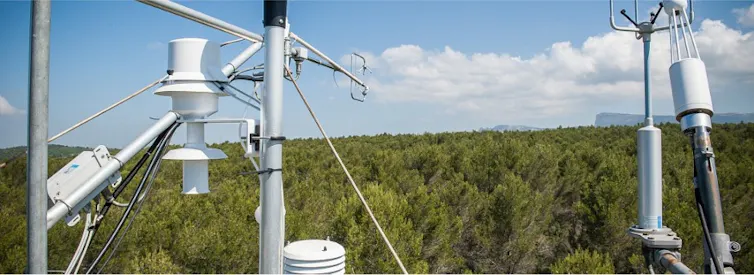
Guillaume Simioni, Fourni par l’auteur
And besides, even if the trees had enough water, CO₂ increases photosynthesis, but also reduces stomatal opening, because the more CO₂ there is in the air, the more of it can be absorbed with a smaller stomatal opening. This is beneficial for the plant, as it conserves water, but on a large scale, it reduces transpiration and forest-engineered rainwater recycling, in turn. The water that is transpired by trees is therefore critical for the stability of climatic conditions across the continents.
For instance, it is estimated that up to 50% of rainfall in western Amazonia comes from water transpired by the eastern part of the Amazon basin and carried by the trade winds. The closure of stomata in the east may therefore reduce rainfall in the west. And these knock-on effects could jeopardise the stability of this famous “green lung”.
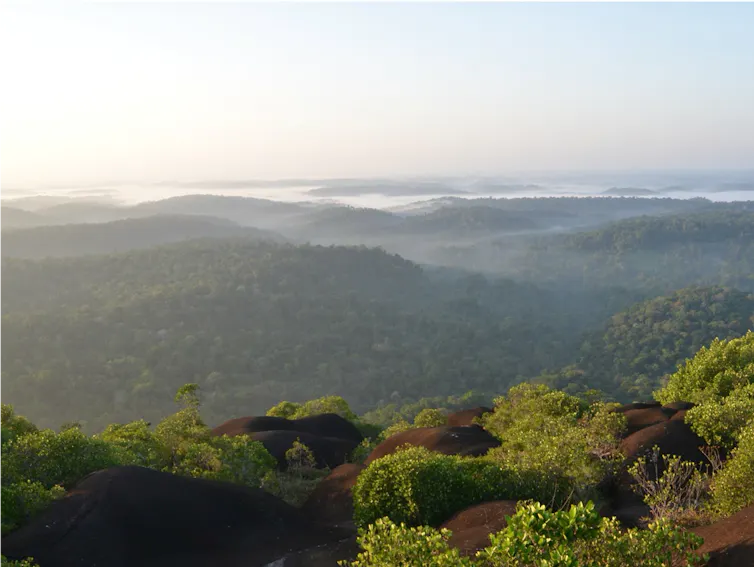
Isabelle Maréchaux, Fourni par l’auteur

A weekly e-mail in English featuring expertise from scholars and researchers. It provides an introduction to the diversity of research coming out of the continent and considers some of the key issues facing European countries. Get the newsletter!

Nicolas Martin received funding from France’s national research agency (ANR) and Horizon Europe. This article is the fruit of research work carried out across the PsiHub workshop network (psihub.inrae.fr/past-workshops), funded by INRAE-ECODIV. He is also a member of the board of directors of the Forêt Méditerranéenne association.
Hervé Cochard received funding from France’s national research agency (ANR), FAEDER, and the H2020 European research fund, and from the French Ministry for Agriculture and Food Sovereignty.
Isabelle Maréchaux received funding from Labex Center for the study of biodiversity in Amazonia, ANR-10-LABX-25-01 , France’s national research agency (ANR) Biodiversa + European Research programme. This article is the fruit of research work carried out across the PsiHub workshop network (psihub.inrae.fr/past-workshops), funded by INRAE-ECODIV.
Julien Lamour received funding from the “Next Generation Ecosystem Experiments – Tropics” project, a research US government-backed program geared towards gaining a better understanding of the role tropical forests play in the climate, and the French national research agency’s “Amazonian Landscapes in Transition” project.
Original source: https://analysis1.mil-osi.com/2026/09/28/without-water-forests-lose-their-ability-to-absorb-co%e2%82%82/