

Source: The Conversation – UK
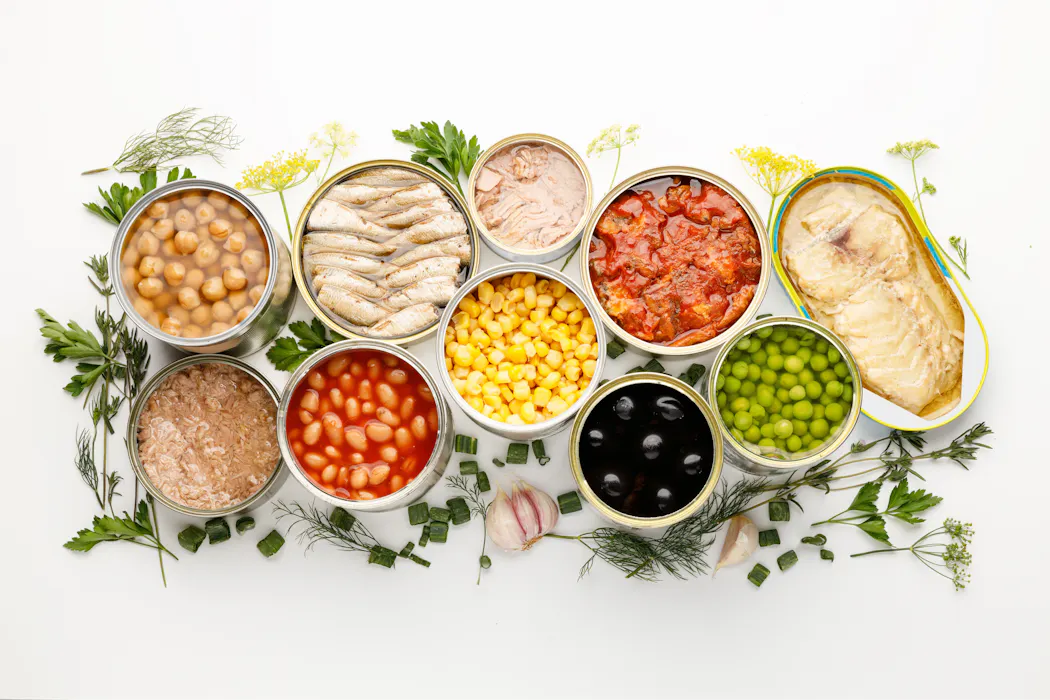
A UK government watchdog has said UK homes aren’t prepared for the possibility of food supply disruptions that could come from disasters like cyberattacks, power cuts, disease outbreaks or extreme weather.
The current government recommends that the public stock up on non-perishable food that doesn’t need cooking. But this vague guidance doesn’t really give us much to go on. So what should we buy to ensure we’re eating well in the event of a disaster?
Well, there are a couple of things to bear in mind.
First, eating only ready-to-eat or canned food long-term is never going to be ideal from a health perspective. This is because you’ll be missing out on fresh produce and all the vitamins it contains. And you could be getting a lot of salt in your diet, which tends to be high in canned foods.
Second, how long you’ll be “surviving” on these foods is key when building your stockpile. If it’s just a few days, it’s not really a big deal if the foods you’re eating are all that nutritionally balanced. But nutrition becomes key the longer you need to rely on your cupboard.
So for argument’s sake, let’s imagine you need to get by on your own supplies for a few weeks. Here’s how to do it in the healthiest way possible.
Protein
Let’s start with protein, which is important for maintaining muscle levels and keeping our metabolism functioning. On top of that, it’s one of the most filling types of nutrition. When food is limited for a few days or weeks, keeping hunger at bay is important.
Tinned meats, such as chicken, stewed steak or meatballs, can be useful and easy-to-eat sources of protein. Tinned fish, such as salmon, sardines, mackerel, herring and tuna, can also be good to stock up on. They’re also great sources of omega-3 fatty acids which are beneficial for the health of our brain, heart, skin and eyes.
You can boost nutrition if you get your sardines in tomato sauce. Tomatoes are rich in lycopene, a powerful antioxidant that is linked with lower levels of inflammation.
The only caveat with tinned fish is that pregnant women should eat no more than four cans of tuna per week. Women and girls of childbearing age should also limit consumption of oily fish (such as salmon) to no more than two portions a week. This is due to the potential mercury and pollutant content in these fish.
Tinned beans can also be a fantastic source of protein, as well as fibre and other vitamins and minerals. This is still true for baked beans, which also have the benefit of coming in a tasty tomato sauce.
Try buying lower salt versions of baked beans, or stock up on beans that have been canned in water (not salted water) to keep sodium levels down. That said, draining salted water from canned beans and fish before consuming goes a long way in reducing salt intake.
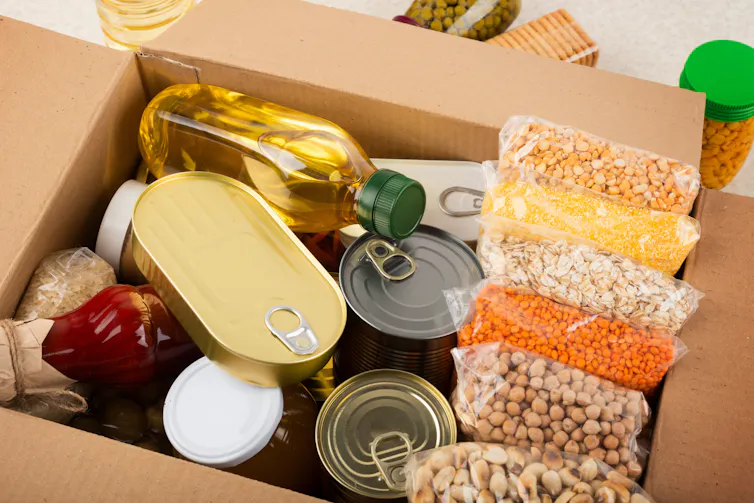
Mikhailov Studio/ Shutterstock
A few cartons of long life milk or skimmed milk powder can also be useful to have on hand. These can be added into meals for both calcium and protein.
Carbs
Carbs are a really valuable source of energy, which is why they should be a priority when building your stockpile. If you still have access to power and water, dried carbs such as brown rice, wholegrain pasta, porridge oats and wholemeal couscous are excellent staples to have. Microwave pouches of rice or grains can also be convenient.
Opting for wholegrain carbs gives you more fibre, vitamins and minerals. Fibre is hugely important for keeping you regular as well as for keeping you feeling fuller for longer, stabilising blood sugar after meals and feeding a healthy gut mircrobiome.
Read more:
Frozen and tinned foods can be just as nutritious as fresh produce – here’s how
Having plenty of canned or jarred vegetables can also go a long way in ensuring you get important vitamins and minerals in your diet. Foods such as carrots, green beans, potatoes, tomatoes, sweetcorn, beans, peas and lentils contain nutrients such as iron, calcium, potassium and B vitamins, which are needed for a healthy metabolism.
Whole nuts and seeds are a useful, shelf-stable snack that can be a good source of vitamins, minerals, fibre and unsaturated fats as well.
Other key staples
Making sure the food in your emergency stockpile is tasty can’t be overstated. You don’t get any nutrition from the food you don’t eat, so stock up on jarred sauces or canned soups (just be careful of the salt content). You can mix these with your canned beans, veggies and proteins to make a relatively tasty, nutritionally-complete meal.
Some comfort foods in small amounts might also be worth having. Think canned rice pudding, custard, canned fruit in juice (also a great source of fibre and minerals) and maybe some jam, honey and biscuits. These could all help with the monotony of living off your stockpile for a few weeks.
One last thing worth considering is having a multivitamin and mineral supplement on hand. A diet of canned, ready-to-eat or dried food is probably going to be deficient in some nutrients, particularly vitamin C, which is very sensitive to processing.
Vitamin C is vital for immunity and maintaining healthy connective tissue, so a supplement can be useful. Taking vitamin C can also help you absorb iron – making it even more useful when diet quality isn’t the best.
Having a stockpile of unopened bottles of water is also a good idea. Around three to four litres per person per day is recommended – though you may also want to include extra for cooking and sanitation.
A food shortage is never going to be an ideal situation. But it is certainly possible to build a healthy stockpile for your home. Just don’t forget a can opener.

Graeme Close is affiliated with NutritionX, a sports supplement company.
Richard Kirwan has received funding from The Rank Prize Fund and the Liverpool Clinical Commisioning Group.
Original source: https://analysis1.mil-osi.com/2026/09/14/how-to-build-a-nutritious-emergency-food-stockpile/