

Source: The Conversation (Au and NZ)
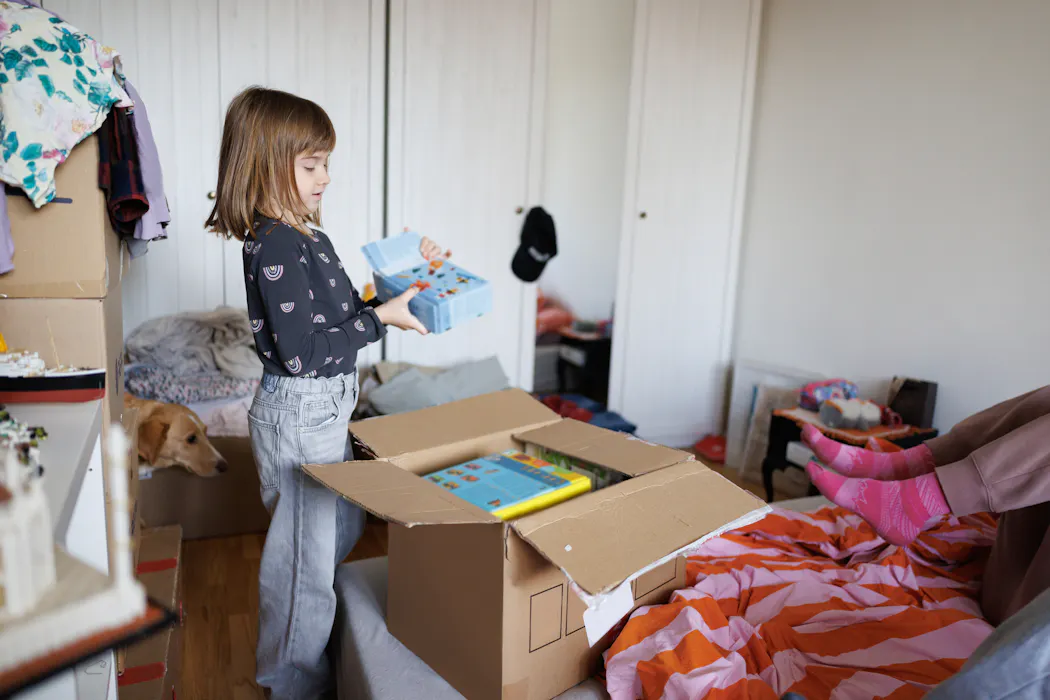
As cost-of-living pressures increase and the rental crisis worsens, many families are moving houses more often.
New research, published by the Australian Housing and Urban Research Institute last month, shows children growing up in rental properties move houses every 2.3 years on average.
In Australia, more than 30% of households rent properties.
Moving houses can be a stressful time at any age. But it can be particularly difficult for kids during early childhood and primary school years.
Impacts on children
Research shows relocation can impact children’s wellbeing and development and potentially disrupt their sense of safety and belonging. It can also distance them from their social and emotional supports, such as friends, neighbours, sport coaches and babysitters, as well as the local services and schools they are familiar with.
These impacts can be greater when children relocate frequently.
For some children, there can even be a temporary regression in their concentration skills and ability to learn. There may also be changes in:
-
toileting
-
sleep
-
eating
-
emotional states
-
difficulty with routines
-
difficulty separating from parents
-
playing with others.
Our research
Our survey study of 41 parents, published this year, looked at the challenges Australian Defence Force families face when relocating frequently.
Parents communicated how their frequent moves impact their children. One parent explained the emotional toll on her child:
He was very out of control emotionally, having tantrums, and he developed a stutter. We didn’t really know how to support him through the stress.
Another parent said:
Our eldest often asks to go back to our last posting location, and often talks about his “old friends” […] telling us that he “just really misses them” […] we struggle to help him […] he doesn’t understand.
These experiences show why children may need support to understand and adjust to a move.
It’s not all bad
There can be good things that come with relocation too.
Moving to a more suitable house or community with greater access to services and opportunities can be beneficial in the long term.
During a relocation, children can also learn positive ways of coping with change from their parents.
So what can adults do to help kids adjust more easily?
Our research with parents and educators provides insights into practical ways children can be supported.
Break the news gently
Choosing when to tell kids about a move is important. Children often listen to adult conversations, so be mindful to have these conversations privately and away from children if you’re not ready to break the news just yet.
When you are ready to tell them for the first time, you might invite family members or other trusted people over to provide kids with extra support. During the discussion, talk about what will stay the same and what will be different. This lets children know exactly what to expect.
It’s important to give children space to express their emotions and acknowledge how they feel before moving into discussions about the positive aspects of the move.
Research and connect
Looking online with children for information about their new house and community may help make the move feel more familiar. This might include research on local schools, early learning services, community facilities, museums, parks, landmarks, art galleries and social and sporting groups.
You can make family connections early on by connecting with local groups on social media before moving.
It’s also good to make plans together to stay in touch with extended family, friends and neighbours. This helps children maintain their current relationships after the move.
Use stories to support children
To encourage children to share their feelings about an upcoming move, parents can read them storybooks about relocation. Children can empathise with the characters and safely practise their emotions.
Adults and children might even create their own short family stories. This can help kids better understand the process of relocation and the emotions that typically come with it.
If you’re making the family story into a homemade book, you can get creative by adding maps, pictures, photos or timelines too. Here are some simple online templates to get you started.
Engage them in play
Adults might go a step further and act out the family story and storybooks about relocation with children.
Research shows play can help kids to process and make sense of change. Adding elements of role play and puppet play can help children connect what is happening in a story with their own experiences.
You might incorporate actions into playtime such as packing boxes, writing to-do lists and driving removal trucks to show children what might happen during a move.
Moving can be stressful for families, and during a housing crisis there may be little or no time to prepare. When planning is possible, these practical strategies may help make the transition a little easier for children.

Marg Rogers received project funding from The Ian Potter Foundation, the Foundation of Graduates of Early Childhood Studies, the Canadian Institute of Military Veteran Health Research, the Canadian Forces Morale Welfare Service, the Trenton Military Family Resource Centre, Combat Stress, and the Australian government (Medical Research Future Fund). Marg also received commonwealth funding through the Manna Institute for her postdoctoral fellowship.
Michelle Gossner does not work for, consult, own shares in or receive funding from any company or organisation that would benefit from this article, and has disclosed no relevant affiliations beyond their academic appointment.
Original source: https://analysis1.mil-osi.com/2026/09/09/moving-houses-can-be-especially-stressful-for-kids-heres-how-to-support-them-during-a-relocation/