

Source: The Conversation – UK
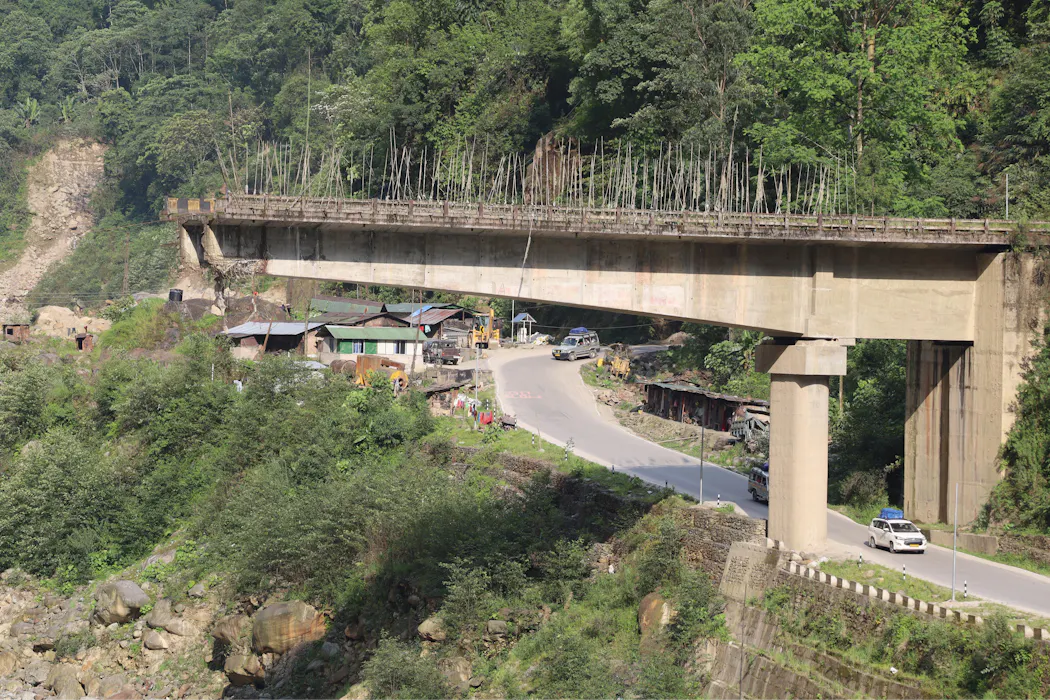
Debris flowing down a Himalayan valley. Towns and villages washed away. Thousands of people affected. Not the recent devastating catastrophe on the Nepal-Tibet border, but a similar disaster in the Indian eastern Himalayas in 2023.
That climate change-related disaster was triggered by a glacial lake outburst flood, or glof. It happened under the cover of darkness on the night of October 3. The resulting 270 million cm³ debris flood devastated the people and infrastructure of the Teesta river valley.
One of us, Rinchen, has been researching the impacts of and recovery from that 2023 disaster. During this research, focus-group participants in the state of Sikkim discussed the ongoing impacts of the flood on their surroundings and mental health. “The foundation of the hills [in the Teesta Valley] has been weakened,” one explained. “The rainy season has become extremely difficult – our whole area is sliding.”
Cascading hazards and entrenched political and economic inequalities have led to false starts in reconstruction and ongoing suffering, in lieu of meaningful recovery, since 2023.
Read more:
As Bolivia’s glaciers melt, new lakes threaten mountain communities
A local environmental charity has warned how recurring road and bridge collapses caused by landslides and floods in the years since the 2023 glof are isolating communities.
No glacial lake was involved in the onset of the 2026 disaster in Nepal-Tibet, which experts are already confident was linked to climate change. But despite differences in the processes that triggered the disasters, the impacts have been devastatingly similar.
The Bhotekoshi valley in the Nepal-Tibet border region will now be more unstable than before August 2026. Attempts to build back better there will need to bear this new geophysical reality in mind, if they are to avoid generating new disaster risks through dangerous resettlements.

AP Tolang/Shutterstock
Inequalities in recovery and reconstruction
The 2023 disaster affected both Sikkim, which borders China to its north, and the Kalimpong district in the state of West Bengal.
In Sikkim, construction of industrial and military infrastructure continues apace. The Teesta III Chungtang dam that was destroyed by the glof is currently being rebuilt.
On the other hand, funding for relocation and long-term rehabilitation following the disaster has been much slower to arrive, and difficult to access.
The picture is worse in Kalimpong. Having suffered a decades-long political conflict around a demand for Indian statehood, fragmented state authorities there are under-resourced and dysfunctional – one of many drivers of disaster vulnerability in Kalimpong.
Unlike in Sikkim, the flood was not recognised as a disaster in West Bengal. As a result, very limited government funds have been mobilised to support the hundreds affected there.
Given inadequate funding of recovery in both states, Rinchen’s research shows that many people affected by the 2023 disaster and who are vulnerable to the next one would like to move. But they have no means of doing so. Almost three years later, hundreds are still living in unsafe temporary accommodation.
Those now leading recovery and reconstruction in Nepal should also be cognisant of how divisions along the intersections of geography, caste, class, race, gender and ability generate uneven and incomplete recovery outcomes, as witnessed since the 2023 glof. This is leaving aside the complexity of the response on the Chinese-Tibetan side of the border.
The distribution of resources to those affected will be particularly challenging given the geographical scale of the disaster. The dead and missing come from all over Nepal, and are spread over hundreds of kilometres.
Disaster management policies tend to be rigid. They are organised around quantifiable metrics, strict timeframes and lines on maps that struggle with this scale of complexity.
By being compassionate, recovery and reconstruction efforts can make space for grief. They can catalyse fundamental changes that contribute to more just and equitable futures.
Beyond and across the Himalayas
The residents of the Himalayan communities affected by both these disasters suffer from “double exposure”. They have benefited the least from a fossil-fuel led model of global economic development, while being some of the most geographically exposed to climate-related disasters.
The role of hydroelectric power dams in both disasters adds further complexity. People affected not only bear the brunt of climate change consequences, but also responses to climate change.
There are important lessons to be learned across the Himalayas about disasters like these. Trans-boundary cooperation will be key to that process.
These disasters, and recovery from them, are intrinsically connected to failures by rich, powerful countries and institutions to get serious about phasing out fossil fuels, addressing global inequality and maintaining peace. The disasters will reignite vital debates about what “development” means in the Himalayas – and who will benefit from it.

Peter McGowran received funding from the UK Natural and Environment Research Council and the former UK Department for International Development for his doctoral research in India.
The study on GLOF was undertaken as part of Coalition for Disaster Resilient Infrastructure (CDRI) one year fellowship.