

Source: The Conversation – USA (2)
The case against social media has gotten so well rehearsed that most people can easily merge it into ordinary conversation: It makes people lonely. It sorts them into camps. It hands them a room full of people who already agree with them and calls that a community.
I’ve given this speech myself, with feeling, having read my phone notifications in the host’s powder room 11 minutes earlier.
I am a pediatrician, health communicator and researcher at the University of Pennsylvania, and diagnosing is in my blood. Two decades of research, a surgeon general’s advisory on loneliness and Meta’s recent settlement of up to US$17 billion, pending court approval, all describe the same thing. What we recite are the symptoms. The more interesting question is what these symptoms diagnose.
Simply put, our dependency on social media creates a deficiency disease. It’s not something toxic we’re ingesting; it is something our lives online have stopped us from receiving.
I figured out that cost while standing in a field in Harford Park with a dog leash wrapped around my ankles.
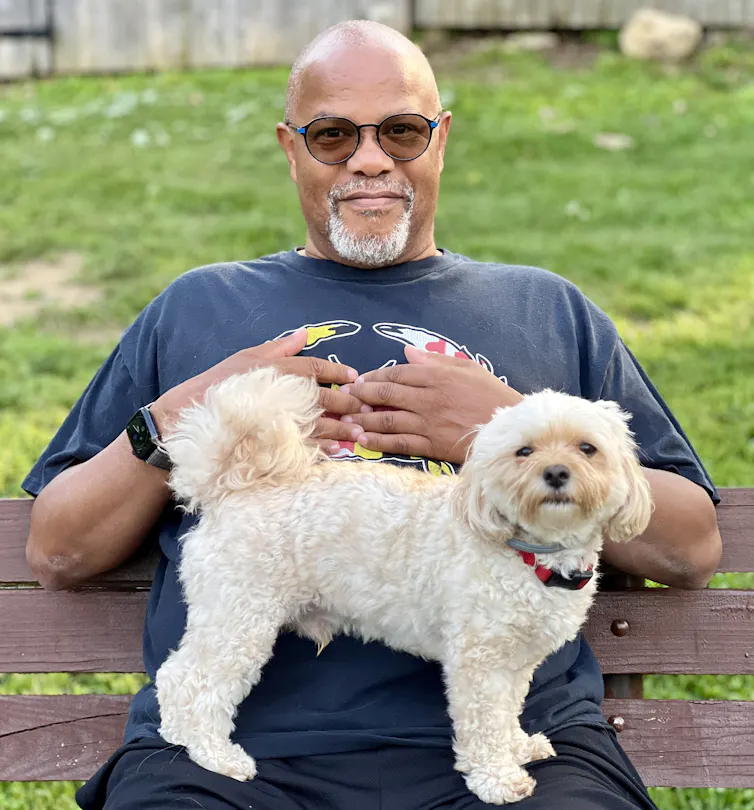
Kevin B. Johnson, CC BY-NC-SA
A corner bar without the alcohol
Harford Park in Wayne, Pennsylvania, is 30 acres of rolling grass and mature trees the township designated for off-leash dogs in 1997.
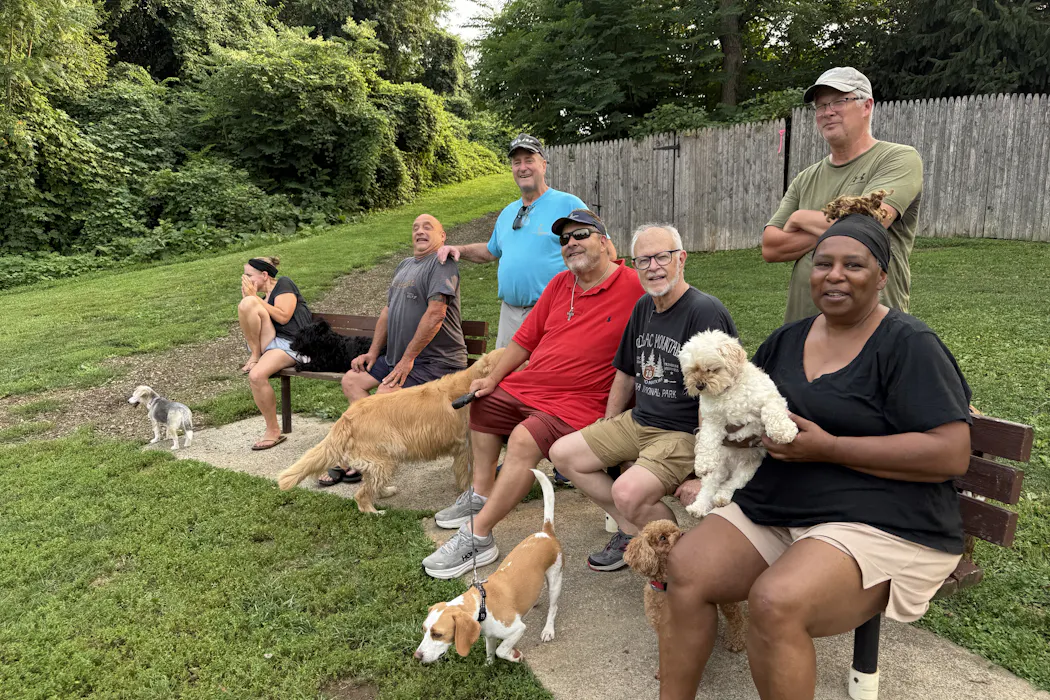
I go most afternoons. So do the same 15 or 20 people, which is how I ended up tangled in someone else’s very long leash on a Tuesday, concentrating hard enough on my own feet that I stopped talking and just listened.
Two conversations were running at once. In one, a regular who is having a rough year was getting gently harassed about the weight he’d put on against his doctors’ advice — first by me, then by three other people who piled on uninvited. In the other, someone was arguing about Dr. Anthony Fauci, and the regulars chimed in on both sides. Gossip, complaints and dogs greeting dogs became the backdrop.
As I worked to free my ankles, it clicked: The dog park, like the local knitting club or the Saturday pickleball group, does the job a corner bar used to do. There are regulars and running jokes, and once a person is known, a spot in the conversation is reserved for them.
What makes these places work is that a shared focus on one small part of a life opens into something fuller. Regulars may share a taste in dog breeds or beer, but they are not colleagues, political soulmates or relatives. They differ on favorite restaurants, income, age, religion, values and beliefs. They are together because a golden retriever and a nervous rescue mutt need to run in the morning, and there is a field nearby.
Chance encounters can increase empathy
Sociologist Ray Oldenburg called places like this third places and defined them as “public places that host the regular, voluntary, informal, and happily anticipated gatherings of individuals beyond the realms of home and work.” Oldenburg noted the erosion of places that once manufactured accidental encounters, such as main streets, neighborhood pubs, general stores and even the drugstore soda fountain.
Off-leash parks have been among the fastest-growing amenities in U.S. city park systems for two decades. A study in the Journal of Urban Affairs found dog park users reported higher social capital and neighborhood cohesion.
The park is not a utopia. It’s a corner bar without the booze.
Thomas Pettigrew and Linda Tropp’s meta-analysis of 515 studies provides the best evidence for why these accidental connections matter. They found that contact between groups generally reduces prejudice, but the quality and circumstances of that contact matter. The more interesting finding came later, when they tested how it works: The effect runs less through learning facts about the other group than through reduced anxiety, more empathy and more perspective.
That is exactly what the park does. The man I disagree with about nearly everything hasn’t changed his mind, and neither have I. What changed is that his politics is now maybe the eighth thing I know and appreciate about him, behind his dog’s bad hip, his sense of humor, the awful year he had and his love of what Philadelphians call “wooder ice.”
That shift, from opinions to a person, is why “just show people the other side” keeps failing online. When sociologist Christopher Bail and colleagues paid Republicans and Democrats to follow bots representing the views of the opposite party on Twitter, the Republicans came out substantially more conservative than they went in. Democrats shifted slightly left, though not significantly. Exposure to opinions is not the same thing as exposure to a person. The feed gave people arguments. The corner bar gives people other people.
Making room for tolerance and trust
If the places people gather shape their health, as a growing body of research suggests, then the shift from communities set by geography to communities assembled by algorithm creates a slow burn of intolerance and mistrust.
There are now decades of research on social media and anxiety, and a growing body of experimental work about what algorithmic curation does to what people see. Almost none of it treats the encounter pattern as a health exposure.
Social platforms have mastered what German American sociologist Herbert Gans called selective homogeneity. They sort people by interests, identities, tastes and grievances, then make it easy to stay among people who feel familiar.
They are like virtual Levittowns – the postwar suburban developments outside Philadelphia, among other places in the Northeast, where thousands of identical houses went up on farmland and were sold to buyers screened by price. In early Levittowns, covenants barred Black families outright.
In 1958, Gans moved into a Levittown in New Jersey and stayed two years doing research on its residents. He found that although original settlers and those who moved in by choice were happy, their rebellious teenage offspring, who had the fewest places to go and the least to do in those communities, were not.
This was an early, real-life sorting of the type that algorithms would make all too common 60 years later.
By contrast, repeated, low-stakes, in-person contact like the interactions between regulars at a dog park or corner bar creates room for tolerance and trust. People come back. They notice an absence. They share attention around a task, a place or a dog, rather than around presenting themselves or defending a position.
Deficiency diseases are easily treatable. Nothing has to be taken away; instead, something has to be given back.
Read more of our stories about Philadelphia and Pennsylvania, or sign up for our Philadelphia newsletter on Substack.

Kevin B. Johnson receives funding from the National Institutes of Health.
Original source: https://analysis1.mil-osi.com/2026/09/04/dog-parks-are-an-antidote-to-the-isolation-and-divisions-that-social-media-can-fuel/