

Source: The Conversation (Au and NZ)
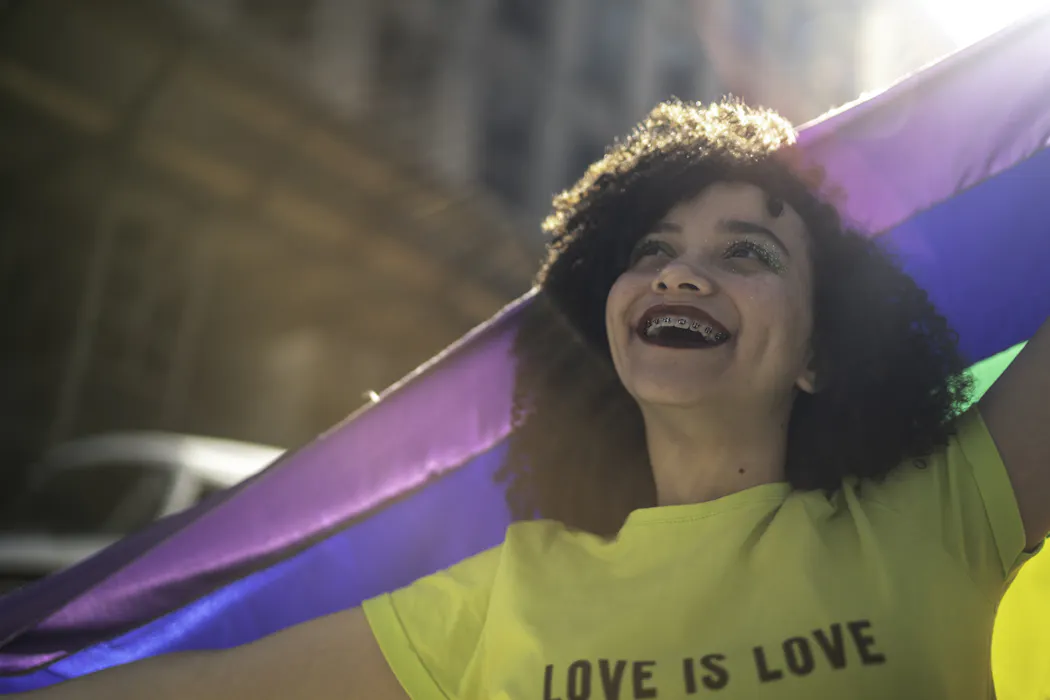
Today is Wear it Purple Day – when students and staff across high schools and universities are invited to wear purple items of clothing to recognise and celebrate gender and sexuality diverse (GSD) young people. Workplaces are also encouraged to take part.
The initiative began in 2010 to better support GSD youth in the face of widespread discrimination and bullying.
Many kids and teachers go to school today wearing purple T-shirts and headbands. But how well do Australian schools actually include GSD students? And how well does the school system educate all students about gender and sexual diversity?
A growing demographic
The number of young people self-identifying as GSD has been growing steadily in Australia.
About 9.5% of 16 to 24-year-olds identify as gender or sexuality diverse. This compares to 7.5% of 25 to 34-year-olds and 3.9% of 35 to 44-year-olds.
Other research suggests proportions of GSD people might be closer to 20% in the 18–24 age group.
Schools have a role to play
Research tells us discrimination can lead to GSD young people feeling shame, isolation and loneliness. This can significantly affect their mental health and increase rates of self-harm and suicide.
Schools can either be a part of the problem or help young people. For example, school cultures that assume being straight and cisgender are the “default” sexuality and gender identities can make environments hostile for GSD students. Whereas high schools that offer inclusive environments can increase GSD students’ sense of school belonging.
However, a 2021 national study found GSD young people overwhelmingly reported homophobic language was common at high school, and school staff did not proactively respond to discrimination.
Research suggests school education on gender diversity and sexuality is necessary to promote inclusion. It does this by confronting discriminatory attitudes and normalising GSD identities.
What schools teach (and don’t teach)
But surveys suggest this is not reliably happening in Australian schools.
A 2026 La Trobe University survey asked more than 4,000 high school students across Australia, aged between 14 and 18, about their experiences of sex education, sexual health and school-based relationships. It found just 23% reported learning about gender or sexuality diversity in their relationships and sexual health education at school.
In 2021, one author of this article, Jacqueline Ullman, surveyed nearly 2,400 GSD high school students across the country.
The results similarly showed less than 10% reported learning about gender and/or sexuality diversity within their health and physical education classes.
No standardised approach
Currently, Australia doesn’t have a standardised approach to the inclusion of GSD people, issues, or topics in school policies or curriculum. This has led to differing approaches across states, school sectors and individual schools.
There is a national Respectful Relationships Education Framework, which encourages schools to teach about harmful rigid gender roles and gender stereotypes. However, even this framework has received criticism for not doing enough to include diverse sexualities.
There has typically been backlash from right-wing politicians and Christian lobby groups during national discussions about the inclusion of gender and sexuality diversity in high schools. This has previously prevented programs, such as Safe Schools, from being widely introduced in schools.
Parental support is there
Research suggests that most parents do want to see this kind of education included in their children’s school learning.
Nationally representative research from 2021, in the years following the 2016 and 2017 Safe Schools debate, showed more than 80% supported gender and sexuality diversity-inclusive relationships and sexual health education across public primary and high schools.
In 2023, a survey of more than 2,400 Australian parents from religious and non-religious schools showed most had positive attitudes towards gender and sexuality diversity-inclusive education. Their support ranged from 62–94%, depending on the school sector.
What would help students feel more included?
Research shows a whole-school approach is needed to support GSD young people in high schools.
This might involve schools teaching about GSD identities and issues, regular professional development for staff, and school policies that ensure gender and sexuality diversity are recognised and celebrated.
Students are also more likely to feel accepted when schools:
-
have systems in place to guide students towards support services for GSD individuals
-
outwardly show support for GSD causes
-
establish gender and sexuality alliances, such as pride groups.
When a whole-school approach has these mechanisms in place, young people are more likely to feel comfortable talking with a trusted adult at school, to share their identity with peers, and to feel less distress and more hope for their present and future.
Read more:
‘I can be myself more’: what students told us about pride groups in schools
If this article has raised issues for you, or if you’re concerned about someone you know, call Lifeline on 13 11 14, Kids Helpline on 1800 55 1800, or QLife on 1800 184 527. Aboriginal and Torres Strait Islander people can also call 13YARN on 13 92 76.
The Suicide Call Back Service is a free nationwide service providing 24/7 phone and online counselling to people affected by suicide. Call or visit their website.

Jacqueline Ullman receives funding from the Australian Research Council.
Emily Gray receives funding from the Australian Research Council. She is co-chair of the Gender and Education Association, a registered charity in the United Kingdom.
Victoria Rawlings receives funding from the Australian Research Council. She is a member of the NSW LGBTIQA+ Advisory Council.