

Source: The Conversation (Au and NZ)
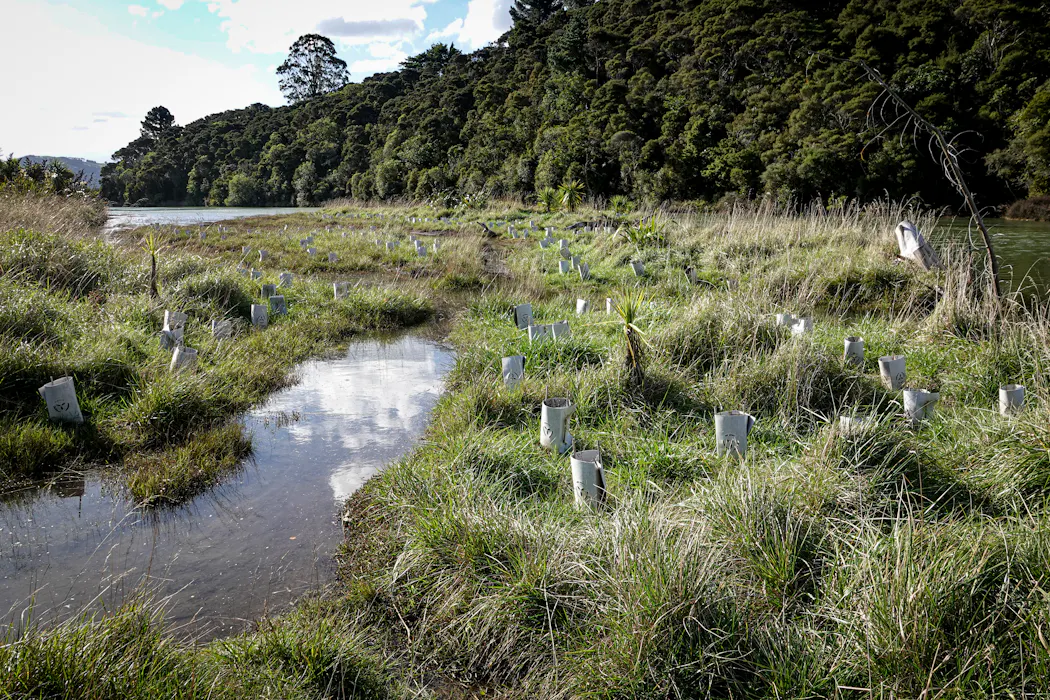
Two major reports released in recent weeks help illustrate the scale of New Zealand’s climate adaptation challenge – and some of the biggest barriers to tackling it.
The Climate Change Commission has found the country’s adaptation efforts are still not keeping pace with growing climate risks, with progress uneven and some areas slipping further behind.
It cited the potential for working more with nature to reduce those risks, but found this was being hampered by a lack of action, supportive policy and funding.
Meanwhile, an analysis from the Parliamentary Commissioner for the Environment highlights a parallel obstacle: that information needed to make good environmental decisions is often fragmented, inaccessible or difficult to combine.
In our warming world, both reports reflect the need for a more strategic approach that nature-based solutions can help provide. Rather than relying solely on engineered defences, these solutions use natural systems to help manage climate impacts.
Protecting a community from flooding, for example, might involve restoring an upstream wetland, giving a river more room to move or strategically revegetating parts of a catchment – potentially reducing the need for ever-larger stopbanks.
But knowing which of these approaches will work – and where – depends on having the right information, along with the right system to support it.
Turning information into action
For all their promise, nature-based solutions won’t work equally well everywhere.
A wetland might reduce flooding in one part of a catchment but make little difference elsewhere. Similarly, re-vegetating an erosion-prone slope may deliver far greater benefits than planting already stable farmland.
Nor does every restoration project necessarily qualify as a nature-based solution.
Such interventions need to address a defined problem, work at an appropriate ecological scale and produce measurable benefits once implemented. International standards also require these projects to be practical, well governed and monitored over time to ensure they are working.
In recent research, we argued that strategic native re-vegetation needs to work at three levels: national priorities, ecological processes across landscapes, and decisions made on individual farms and other whenua (land).
The landscape, such as a river catchment, is where these ecological processes come together, while individual farms and properties are where action typically happens.
A federated environmental data system proposed by the parliamentary commissioner could provide an important foundation for this kind of strategic thinking. But better-organised data alone won’t be enough.
What’s missing is what we call a “landscape intelligence” system. This would bring together information about ecosystems, hazards, land use and communities, alongside the tools needed to turn that information into practical decisions.
New Zealand already has many working examples to show both the potential of using better information for climate adaptation – and its limitations. Our own work in Doubtless Bay, Te Tai Tokerau, is one of them.
The catchment faces a range of climate-related risks, alongside declining freshwater and coastal habitats. Through the Department of Conservation’s Ngā Awa programme, restoration ecologist Adam Forbes and I worked with hapū and other community members to explore how revegetation could support climate adaptation.
We combined local knowledge with spatial data to identify potential nature-based solutions and to map environmental vulnerabilities across the catchment. This showed where problems such as erosion, poor water quality and flooding overlap – and where revegetation or wetland restoration could deliver several benefits at once.
But maps can only take us so far. They can’t tell us whether a landowner can afford the recommended work, how restoration costs should be shared among those who benefit, or whether nature-based solutions, engineering or a combination of the two would work best.
Making those decisions requires more than good environmental information. It also requires modelling and economic analysis, Te Tiriti-informed governance and credible ways of financing the work.
The cost of waiting
The costs of climate change are already being felt by communities across New Zealand. Yet 97% of government spending on natural hazards since 2010 has gone towards response and recovery, compared with just 3% for risk reduction and resilience.
The longer New Zealand delays investing in climate adaptation, the greater those costs are likely to become. All the while, catchment groups, hapū, landowners and volunteers are developing local plans, gathering environmental information and putting nature-based solutions and restoration projects into practice.
Much of this work is being done with limited support, with no clear pathway for turning local priorities into sustained public investment.
That is not a durable national adaptation strategy. Communities cannot be expected to build long-term responses to climate change around volunteer labour, fragmented information and temporary grants.
New approaches to nature finance, such as those being developed by the digital platform Toha Network, could help share the costs of nature-based solutions across the public and private sectors.
When carefully designed and put in the right places, these solutions can reduce risks from flooding, erosion and water scarcity, while delivering wider ecological and social benefits.
New Zealand already has capable scientists and communities ready to act. What it lacks is a national system that makes effective nature-based solutions easier to identify, fund, deliver and evaluate.
Bringing these pieces together will be crucial if “working with nature” is to move from an attractive policy aspiration to a practical part of adapting to climate change.

Bradley Case has received research funding from the Department of Conservation.
Original source: https://analysis1.mil-osi.com/2026/08/26/working-with-nature-can-help-nz-adapt-to-climate-change-where-is-the-plan-to-do-it/