

Source: The Conversation – Canada
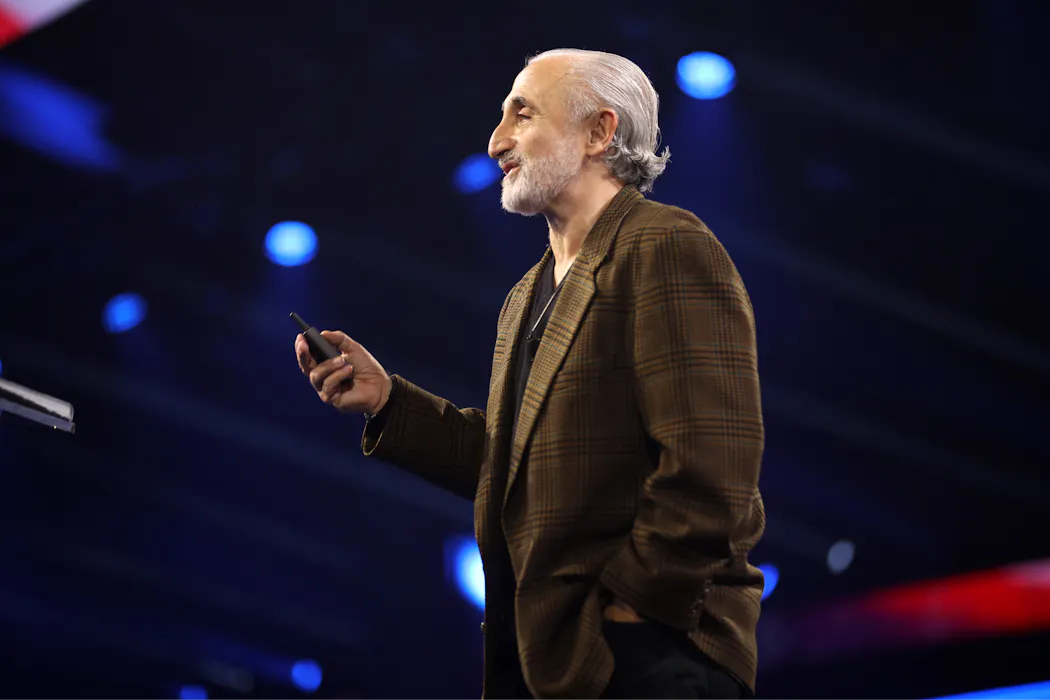
In a few days, Gad Saad, a longtime right-wing Concordia University marketing professor, starts a new position at the University of Mississippi.
His move to the United States has been described as a Jewish professor leaving Canada for his own safety on the front page of the National Post.
Antisemitism has risen in Canada and elsewhere, and there’s no reason to doubt Saad faced death threats and intimidation. The question raised here is whether Saad’s account of his time at Concordia — and his larger narrative about Canada as an authoritarian nation captured by woke ideology — tells the whole story. There is reason for skepticism.
Canada is home to a disproportionate number of hard-right and far-right internet sensations, from Jordan Peterson to Lauren Southern, Ezra Levant and, more recently, Saad himself.
Born in 1964 in Lebanon, educated at McGill and Cornell, Saad has moved from scholarship to a popular writer, polemicist and self-help author on the right with The Parasitic Mind (2020) and The Saad Truth about Happiness (2023).
Saad recently published Suicidal Empathy, a book that became a bestseller, likely in part due to the amplification on X provided by his new friend Elon Musk.
Now a darling of the MAGA right, Saad has significant influence because of his critiques on what he alleges is a “mind virus” of radical feminism, postmodernism and left-wing “woke” and anti-Israel politics.
Cancelled panel discussion
But how much of what Saad says can be trusted?
It the early years of his career, Saad was a serious scholar, creating a substantial record of publications in a new field in business schools applying evolutionary theory to understand marketing.
Saad also raised reasonable questions about the reluctance of social scientists to use the insights of biological sciences.
And for those who had concerns about how controversial speakers were de-platformed in the United States and Canada in the period between 2017 and 2020, some of Saad’s arguments represented legitimate views amid necessary societal debates.
But he was not a good-faith commentator on these issues. Saad’s recent books are rife with stories that over-simplify political complexity, remove inconvenient facts and place him and his allies on the side of uncomplicated truth without allowing for the perspectives of others.
An example is the 2017 free-speech controversy at Ryerson University in Toronto — now Toronto Metropolitan University — involving a cancelled panel discussion with Jordan Peterson, Oren Amitay, Faith Goldy and Saad himself.
Ryerson cancelled the event after a security review, saying it could not provide the necessary level of public safety, particularly in the aftermath of a far-right rally in Charlottesville, Va., just a few days earlier that left one woman dead.
From my perspective, that may have been a mistake. Saad, however, distorted the issues for political purposes in the way he described the speakers and the political context of the cancelled event.
Read more:
After Charlottesville, how we define tolerance becomes a key question
Faith Goldy
In his 2020 book The Parasitic Mind, Saad refers to Goldy as “a somewhat polarizing journalist.”
Goldy was not, however, simply a controversial conservative journalist caught in an unfair campus panic. She had worked at Sun News and Rebel Media, two right-wing Canadian media outlets. During the Charlottesville period, she appeared on The Krypto Report, a podcast associated with the neo-Nazi Daily Stormer website

THE CANADIAN PRESS/Hannah Yoon
Rebel Media fired her after the appearance. Levant, her former boss there and hardly a liberal censor, said he’d told her not to cover Charlottesville and treated the Daily Stormer connection as a line too far. By 2018, Goldy was widely described in mainstream reporting as a far-right or white-nationalist figure and largely withdrew from public political life.
Saad’s distortion of this history illustrates the larger problem with his new persona as a public/intellectual culture warrior. Having moved away from scholarly research as the centre of his academic career, Saad now depends on one-sided anecdotes, maximalist and often nasty language and a heroic self-portrait in which Canada becomes a warning sign of civilization’s apparent impending collapse.
Not a reliable narrator
There’s no doubt Canada, like other western nations, has some problems with bureaucratic caution, ideological conformity, antisemitism and illiberalism — a philosophy and culture that rejects core tenets of modern liberal democracy, including minority rights. Saad has experienced some of these problems personally.
But his commentary on these conflicts turns complex episodes into simple tales of courage versus cowardice, truth versus woke delusion and brave dissidents versus authoritarian institutions. What’s more, Saad is not critical of Musk, U.S. President Donald Trump or Israel’s Benjamin Netanyahu, all of whom seem to have authoritarian appetites.
This all fits neatly with Saad’s move into American conservative institutions and media circuits, where he has incentives to portray Canada as a far-left hellscape that Musk, American conservative audiences and anti-woke admirers already believe.
Some Canadians may also agree with Saad. But many do not, meaning Saad is not a reliable narrator on Canadian politics. American and Canadians alike should therefore regard Saad’s portrayal of Canada skeptically. Check the chronology, identify who’s been left out of Saad’s narratives and ask whether the missing inconvenient facts weaken the moral outrage he seemingly seeks to stoke.
For Canadian scholars, Saad’s trajectory should serve as a cautionary tale of what can happen to academics when they spent too much time on social media and writing popular books and place once respectable academic careers on the altar of the culture wars.

Neil McLaughlin does not work for, consult, own shares in or receive funding from any company or organisation that would benefit from this article, and has disclosed no relevant affiliations beyond their academic appointment.
Original source: https://analysis1.mil-osi.com/2026/08/23/is-gad-saad-is-building-a-culture-war-hero-persona-by-distorting-canadian-reality/