

Source: The Conversation (Au and NZ)
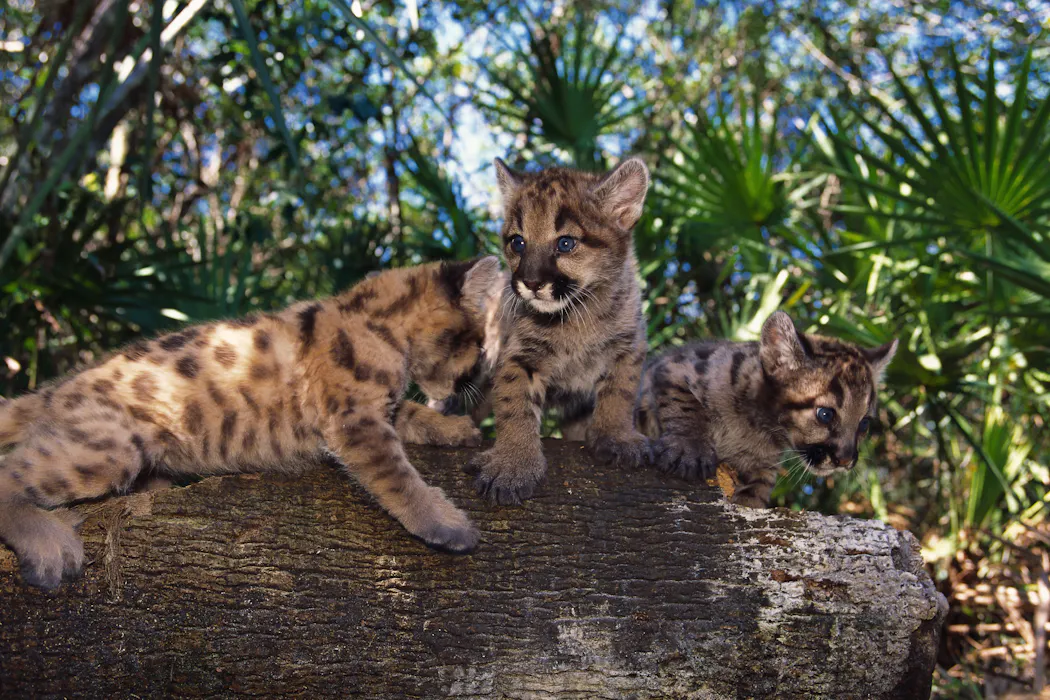
By the early 1990s, there were only around 20 Florida Panthers left on the planet.
A distinct and isolated population of the widespread Puma (Puma concolor), the Florida Panther was pushed to the edge of extinction by a range of threats. One major issue was their poor genetic health, a measure of how diverse an individual or population’s genes are and how related everyone is.
In 1995, researchers performed a daring “genetic rescue”. They introduced a handful of Texan Pumas to the Florida Panther population. These animals then interbred and helped the Panther population bounce back by bringing in new genetic material.
This example illustrates why genetic health matters. However, poor genetic health often gets overshadowed by other threats such as land clearing, invasive species, disease and climate change. That’s despite decades of research highlighting it as a crucial piece in the conservation puzzle.
A genetic health check
Scientists assess a species’ genetic health by taking small samples from individuals – of blood or hair for example – to compare the similarities and differences in their DNA.
This information helps us understand a species’ genetic makeup, including its levels of genetic diversity and inbreeding. These factors can indicate whether a species is more likely to flourish or go extinct.
The more genetic diversity a species has, the better. Diversity helps individuals and populations survive environmental changes such as disease, invasive species, bushfires and floods. A diverse population is more likely to already have individuals that can cope with the new conditions. Hence they pass down those very versions of genes that have helped them. This is the process of natural selection.
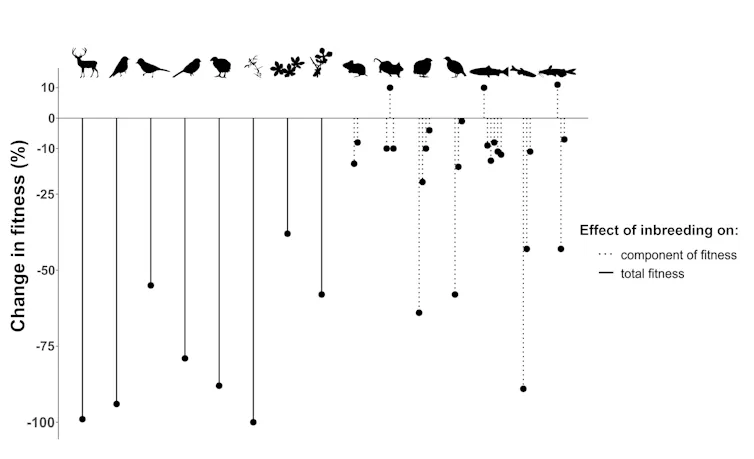
A related issue is inbreeding, where close relatives mate and produce offspring. Close relatives tend to carry the same harmful mutations in their genes, so their offspring can end up with no working copies of those genes. As shown by some historical royal families, the results can be disastrous – developmental problems, disease, lower fertility and early death.
These two factors – low genetic diversity and high inbreeding – combine to produce fewer offspring generation after generation.
Authors provided/Bioscience, CC BY
A threat to many species
Poor genetic health can dramatically increase a species’ risk of going extinct. Studies of common non-threatened species – mammals, birds and plants alike – show inbred individuals have fewer surviving offspring than non-inbred ones.
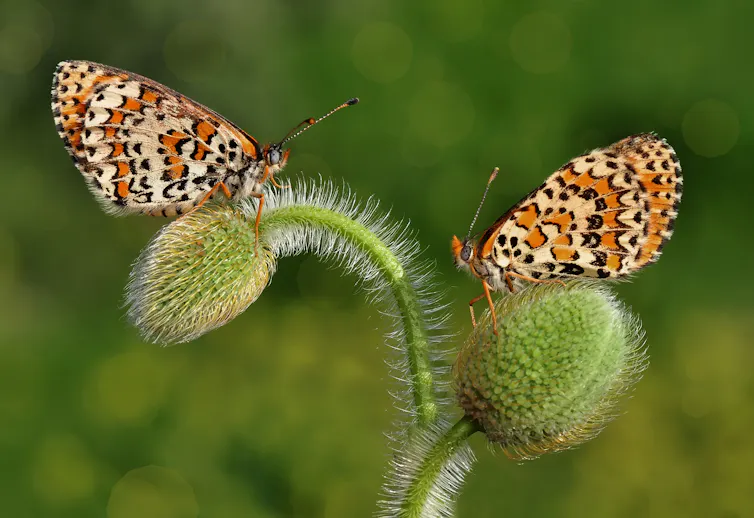
Experimental studies confirm this too. In 1998, researchers established new populations of the Glanville Fritillary Butterfly (Melitaea cinxia) in empty meadows in Finland. Two-thirds of the populations with good genetic health survived their first winter, while populations with poor genetic health were all wiped out.
In general, threatened species are at greatest risk of poor genetic health. These species often live in small, isolated populations that lose genetic diversity much faster than larger ones. Within a small population, there are also fewer options for mating, so it’s not long before relatives interbreed.
Mustafa Öztürk/Getty
Poor genetic health is a significant issue on its own. But it can also worsen other threats. For example, a series of heatwaves may drive a species into decline, triggering the loss of genetic diversity and an increase in inbreeding. This then means species may be less able to survive the next heatwave and so on, in a downward spiral towards extinction.
Despite this, genetic health is often overlooked in global recovery plans and conservation policies. This may be because of the perception that genetics is too complex or just isn’t relevant to conservation.
Not managing genetic health, due to inaction or legislative hurdles, can lead to extinction. Consider the Dusky Seaside Sparrow (Ammospiza maritima nigrescens). By the 1980s, only males remained, and they were successfully crossed with females of a related subspecies. But conservation legislation did not recognise the resulting “hybrid” offspring, meaning this conservation effort was abandoned. This sub-species is now extinct.
Jason Edwards/Getty
So, what can we do?
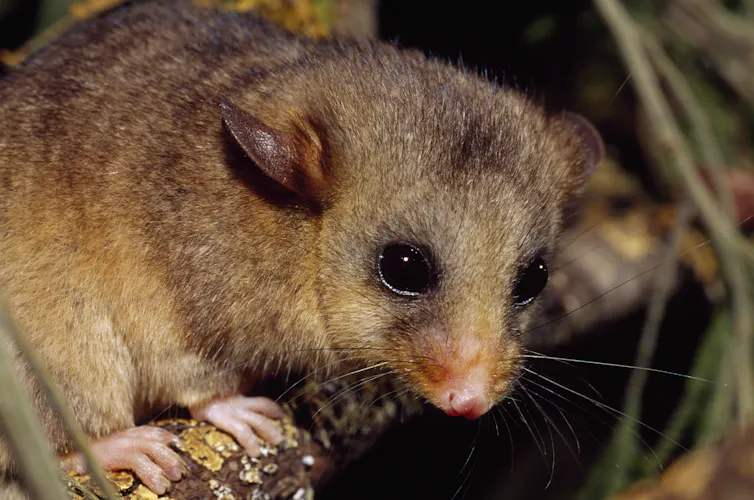
The case of the Florida Panther shows extinction is avoidable if we act before it’s too late. So do other examples such as the Helmeted Honeyeater (Lichenostomus melanops cassidix) and Mountain Pygmy Possum (Burramys parvus) in Australia. In each case, scientists carefully chose which individuals to move between distinct populations. The result was more offspring, better survival and populations starting to grow again.
To prioritise the genetic health of our most vulnerable plants and animals, threatened species managers should:
-
recognise the importance of genetic health, as outlined in our recent article
-
assess whether a species has poor, moderate or good genetic health. This helps identify which populations are most at risk, and what strategies will most effectively boost their genetic diversity
-
move small numbers of individuals between populations to reduce inbreeding and enhance genetic diversity, but only between populations of the same species that are from similar habitats. If their gene pools are too different, they won’t breed well. When done correctly, this simple action can have large and reliable benefits for survival and reproduction
-
create habitat corridors so individuals can move between different populations and limit inbreeding, effectively performing their own genetic rescues.
The public can contribute by:
-
getting involved with an environmental group or conservation organisation, and ensuring genetic health is part of any species recovery plan
-
advocating for habitat protection and government investment in species recovery.
We share our planet with a spectacular array of plants and animals. To help them thrive, it’s time we prioritise their genetic health and put it at the core of our conservation efforts.
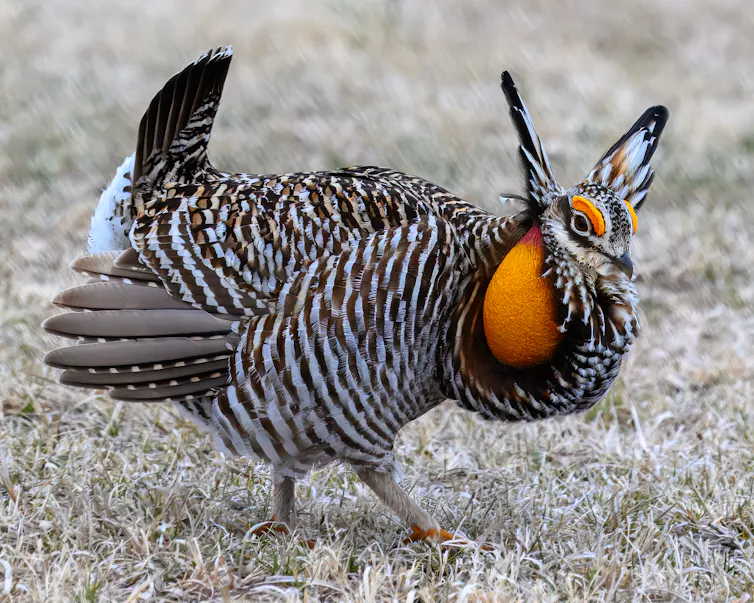
Aaron Seltzer/Getty
We would like to acknowledge Harry Hines (Queensland Parks and Wildlife Services and Partnerships) for his contribution to this article and as an author on the research paper on which it is based.

Nicholas Bail received research funding from the Ecological Society of Australia, the Skyrail Rainforest Foundation, Bioplatforms Australia’s Australian Amphibian and Reptile Genomics Consortium. He was supported during the writing of this work by an Australian government Research Training Program Scholarship at James Cook University, and has been employed at James Cook University to do genetic assessments as a research worker with funding from the Queensland Government. He is a member of the Genetics Society of AustralAsia.
Conrad Hoskin receives funding from the Department of the Environment, Tourism, Science and Innovation, the Australian Research Council, Bioplatforms Australia and the National Environment Research Program. He works at James Cook University and is also an Honorary Research Fellow with the Queensland Museum.
Megan Higgie receives research funding from Bioplatforms Australia’s Threatened Species Initiative and from the United Kingdom’s National Environmental Research Council.
Richard Frankham is affiliated with the Australian Museum, where he is a Research Associate.
Original source: https://analysis1.mil-osi.com/2026/08/16/poor-genetic-health-threatens-many-species-but-its-fixable/