

Source: The Conversation – Canada
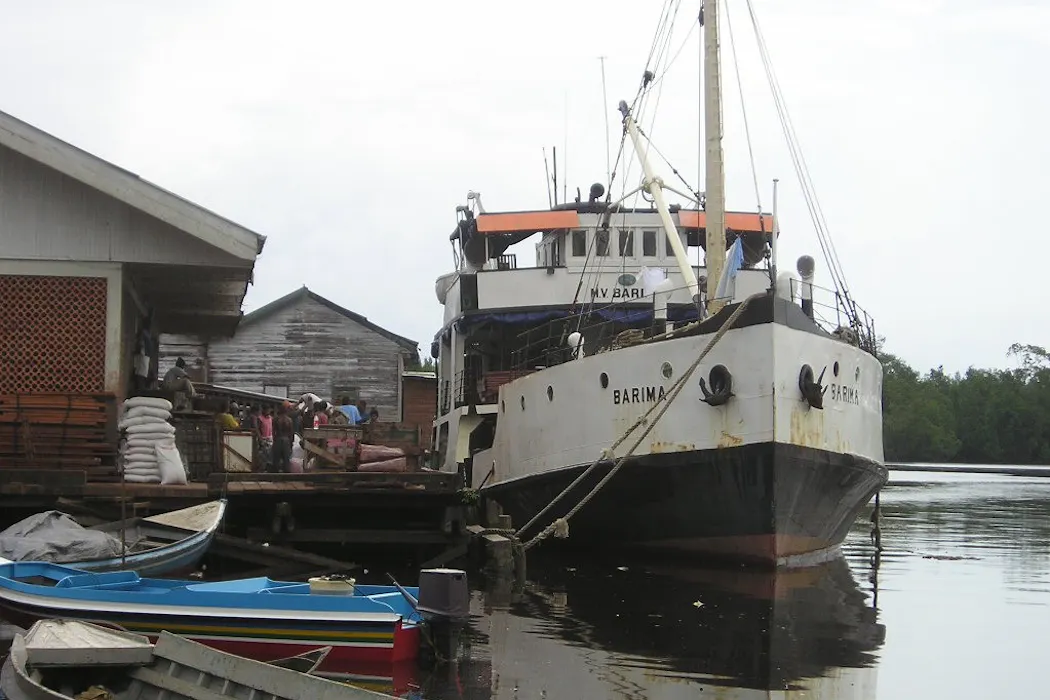
The MV Barima — an 87-year-old ferry owned and operated by the state of Guyana — recently sank off the country’s coast on its way from the country’s capital of Georgetown to Port Kaituma, a journey of about 18 to 24 hours.
Port Kaituma is a gateway to what’s known as the North West District that borders Venezuela, where outsider gold and manganese interests dominate Indigenous territory.
The ferry’s passengers — the majority are Indigenous people unable to afford the cost of speed boat or air travel — sleep on the floor among the cargo loaded for government and private-sector interests, or in hammocks slung wherever there is space.
In total, 76 passengers and crew survived, while 73 bodies were recovered before the government called off the search by French Navy divers for the estimated 30 to 50 people still missing.
Many of the passengers were Indigenous children returning home for school holidays.
Public outrage
The capsize and sinking occurred about 10 nautical miles offshore.
The probable timeline of events before, during and after the sinking shows the incoherence of an increasingly autocratic government insisting that it’s the sole decision-maker, but lacking the actual ability to plan and execute the co-ordinated executive functions of government.
Public outrage at the initial government preference to leave the wreck and bodies to sink deeper into the always-moving offshore mud banks sparked a reversal by the government.
It invited bids from qualified salvage contractors to raise the wreck, but with onerous requirements.
Search and rescue
The sequence of distress calls is still unclear because the ferry captain said that he didn’t have working transponders or an emergency position indicator beacon.
A signal with the vessel’s co-ordinates was detected by a receiver in the United States and retransmitted to the air traffic control tower in Guyana just before the capsize. The first five people were pulled from the sea some four hours later.
Dozens more people clinging to wreckage were rescued seven hours after the capsize. None of the passengers were wearing life jackets, and the operating certificates for the six 25-person inflatable life rafts had allegedly expired in 2022.
The aftermath
Media briefings were given by Prime Minister Mark Phillips and the minister of public works, not by the technical staff of the country’s Maritime Rescue Coordination Centre.
Phillips’ statement to Guyana’s National Assembly nine days after the sinking had a clearly incomplete timeline.
The government also made great efforts to bar journalists, opposition politicians and survivors from the media briefings.
The ferry captain, first mate and loading supervisor were quickly charged with 72 counts of murder on instruction from the country’s director of public prosecutions, although there were no allegations of malicious intent. The criminal charges against the three people best situated to provide a factual account of the sinking could cripple the separate investigations, including a presidential commission of inquiry.
Even that commission was immediately tarnished by allegations of conflicts of interest of five of the five commissioners, as well as its secretary.
It’s unclear if the paper trail of vessel maintenance and repair, loading records and voyage planning were immediately sealed to prevent interference.
Frequent travellers among the survivors and the relatives of the drowned have alleged a familiar story of overloading, unsecured cargo and engine failures.
It’s also unclear if the repairs and maintenance of the ferry were properly certified by inspectors before re-entry into service after extensive repairs in 2021 and 2022. Facebook photos show a ferry with very little freeboard, the vertical distance measured from the water’s surface up to the upper edge of the deck. A higher freeboard provides more buoyancy, meaning the boat is safer.
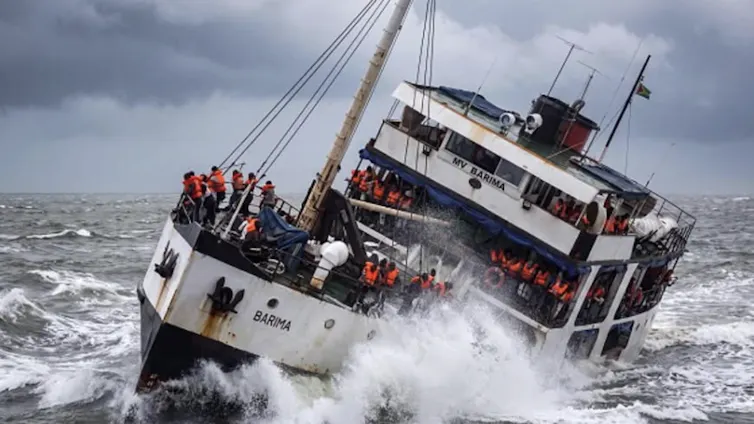
(Facebook)
Regulatory failure
Guyana is a signatory to the International Maritime Organization (IMO) Convention and acceded to the Safety of Life at Sea Convention in 1997.
Guyana signed the IMO’s various legal contracts in February 2019. An IMO country audit of Guyana in 2018 prompted the country’s Maritime Administration Department to prepare revised and new regulations by March 2019. Those regulations have not yet been debated, or passed, in the National Assembly.
A 253-page study by former U.S. Navy officer Robert Millington contained numerous recommendations; their implementation would represent a massive improvement to Guyana’s river and coastal ferry services.
The disaster has laid bare substantial issues in oil-rich Guyana, including:
- The privileging of coastal infrastructure, (highways and bridges), and the corresponding neglect of ferry and river transportation for roadless hinterland communities.
- Racialized realities: The neglect of the rights of Indigenous Peoples, who are the majority population in hinterland communities, versus the settler populations of the coast (East Indians and Africans).
Worlds that never meet
In the same Exclusive Economic Zone where a tragic maritime incident is presumed to have claimed the lives of more than 100 people — mostly Indigenous — just 10 miles from shore, a consortium comprising ExxonMobil, Chevron and China National Offshore Oil Corporation is pumping one million barrels of oil per day.
The consortium’s contract has been secretly extended beyond 2057.
In 2023, when 20 Indigenous children burned to death in a fire in a state-run school dormitory, the national response was muted. Then the government ignored the serial regulatory and operational failures and charged one child with 20 counts of murder. That standard government playbook is not working in the aftermath of the MV Barima tragedy.
This time around, the national outpouring of grief, as well as outrage over the government’s determination to continue with business as usual, is not dissipating since the tragic sinking of the ferry.

Janette Bulkan does not work for, consult, own shares in or receive funding from any company or organisation that would benefit from this article, and has disclosed no relevant affiliations beyond their academic appointment.
Original source: https://analysis1.mil-osi.com/2026/08/13/the-sinking-of-the-mv-barima-puts-guyanese-inequities-under-a-global-spotlight/