

Source: The Conversation (Au and NZ)
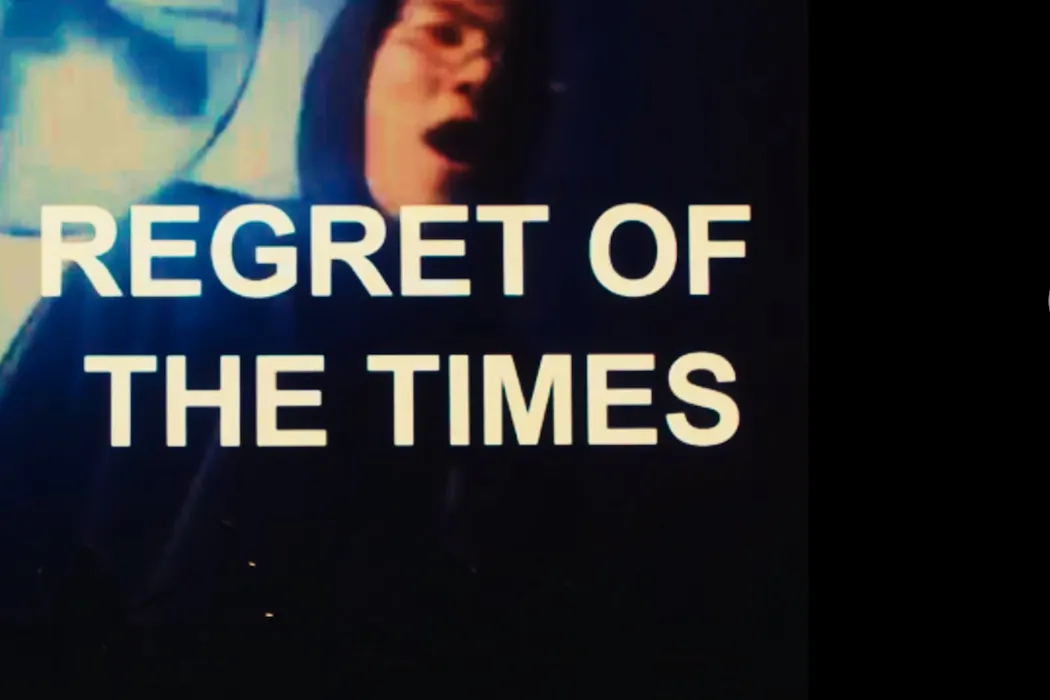
British band Massive Attack in their recent shows in Australia and around the world performed a cover of the Korean song Regret of the Times (sidae yugam), originally released by pop band Seo Taeji and Boys in 1995.
Massive Attack’s version is accompanied by images and footage from South Korea’s Gwangju Democratisation Movement in May 1980, a turning point for the Korean anti-authoritarian movement. Thousands of people were killed or wounded by police during these student-led protests.
The band, which said the song showed K-pop has its roots in political protest, has explained this cover was
an act of continuity, revival & solidarity with @seotaijicompany – K-pop progenitor – whose work defied state censorship while creating a global genre.
So what’s the history of this track and how did it become a protest song?
What was Regret of the Times by Seo Taiji and Boys?
The lyrics of this song express frustration with the establishment and political hypocrisy.
At the time, Korea’s Public Performance Ethics Committee called for negative political lyrics to be removed from the song. The band responded by releasing just an instrumental version.
Censorship was not new in South Korea. All cultural production had been closely monitored in rapidly industrialising Korea since the 1960s.
A large-scale petition from Seo Taiji and Boys fans sought to have the entire pre-release screening system overturned, which it was in 1996.
Massive Attack’s decision to set imagery from the Gwangju rallies against the soundtrack of Regret of the Times underscores the place this song holds in Korean music history as a symbol of protest.
What were the 1980 Gwangju protests about?
Following the assassination of Korean president Park Chung Hee in 1979, an army general named Chun Doo-hwan carried out a coup d’état later that year. He soon declared martial law.
Anti-martial law demonstrations gathered pace in Seoul in the 1980s, and civil unrest soon erupted in the regional city of Gwangju.
A violent, state-led suppression of civilian uprising soon followed. This ended up claiming the lives of hundreds (although some estimate the real death toll was much higher).
In the aftermath, reporting from the uprising was suppressed. Culture became one of the main vehicles through which anti-establishment protest spread.
Culture has always been central to Korean protest movements. In a country starkly divided by factional politics, Gwangju continues to be a reminder of state-sponsored violence and of pro-democracy activism (chiefly by students and young people).
“Remember Gwangju!” became one of the key rallying cries for the democracy movement in the 1980s that led to the first democratic elections in 1987.
For many Korean people, Gwangju is still a painful memory, commemorated in art, literature and cinema. It was also made famous by author Han Kang’s award-winning book Human Acts, which details the profound impact the Gwangju events had on seven characters.
In many ways, Gwangju was the founding moment of the Korean democracy movement, a moment when the state openly inflicted pain on its own people while the world looked on.
While Seo Tae-ji and the Boys’ did not directly reference Gwangju, their message focused on social issues that mattered to young people: discontent with society and leaders who seemed to be driven more by profit than public good.
How did K-pop evolve from there?
Looking at today’s K-pop idols, it may come as a surprise that the roots of some of the most creative Korean pop music are in the country’s protest movements.
The K-pop industry today aspires to be apolitical because it aims to appeal to large audiences, and is directly linked to the South Korean government’s soft power policy.
As key players in a huge multinational business, idols and band members tend to keep themselves out of political commentary.
Even when one of the biggest political domestic crisis engulfed South Korea in December 2024 with the president declaring a martial law (albeit only for a few hours), many K-pop idols felt unable to comment.
That said, K-pop fandom is not entirely apolitical. In fact, often global fandom activism has become a site of resistance.
As I’ve previously noted, many K-pop fans become strongly attached to their idols and this drives collective power.
Their collective pressure has enabled them to organise globally in climate activism, to support struggling tuk-tuk drivers in Thailand in 2021 and even impact electoral campaigning in Chile or disrupt a Donald Trump rally.
A sign of progress
Massive Attack has already performed their version of Regret of the Times, against a backdrop of footage from the Gwangju protests, at multiple concerts across the world.
In Korea, one opposition party councillor in the Incheon Metropolitan Council has called for an “audit” of the performance, after the band played this song at a concert in Korea earlier this year.
That said, the fact a foreign band played a cover of this song in Korea is a sign of just how far Korean democracy has come in just a few decades – and how culture continues to play an important role in it.

Joanna Elfving-Hwang’s research was supported by the Core University Program for Korean Studies through the Ministry of Education of the Republic of Korea and Korean Studies Promotion Service of the Academy of Korean Studies (AKS-2022-OLU-2250005). She is the president of the Korean Studies Association of Australasia, which is a non-partisan academic association run by volunteer academics in Australia and New Zealand.
Original source: https://analysis1.mil-osi.com/2026/08/12/massive-attack-deliver-history-lesson-on-k-pops-roots-in-political-protest/