

Source: The Conversation (Au and NZ)
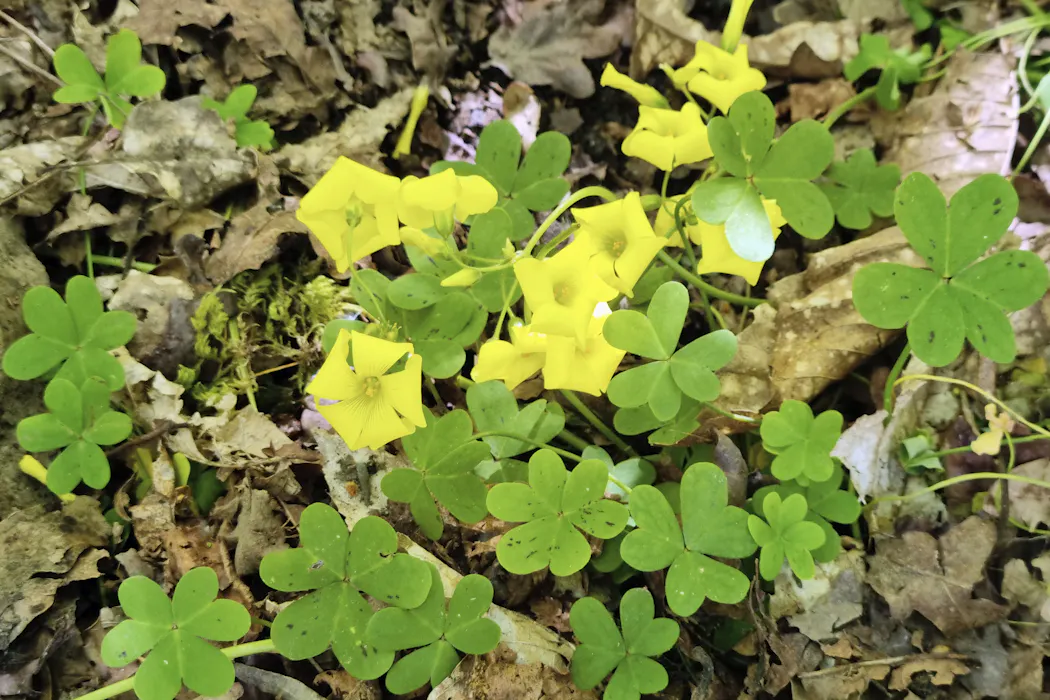
When you are out and about at this time of year in many parts of Australia, a cold and sometimes drab winter is relieved by a blaze of brilliant yellow: soursob.
It can look pretty, but sadly it’s an introduced weed that should have nothing to do with an Australian winter.
Soursob, Oxalis pes-caprae, is an introduced weed from Africa. It is also known as soursop, sourgrass and Cape sorrel, among other names. The name pes-caprae means goat’s foot and refers to the pattern formed by the leaves.
Soursob was first planted in Australian gardens for its flowers. These days the very mention of it would strike fear into the hearts of most gardeners – once it’s there, it’s very hard to get rid of.
Edible but problematic
Many people will know soursob from childhood.
I remember, as a child, we would eat the stems of these bright yellow, five-petalled flowers with a clover-like leaf – the taste is sour but not unpleasant.
The plant is as popular with little ones now. Posies are easily gathered, stalks tasted and taken home as a trophy of the day’s walk or visit to a playground.
The sour taste is due to the significant quantities of oxalic acid in soursob. Oxalic acid (H₂C₂O₄) is a small organic chemical that occurs naturally in humans as part of the metabolism of vitamin C and collagen.
It is found in many plants humans eat, including spinach, beans, potatoes and almonds. In other common foods such as rhubarb, peanuts and in a number of forage plants, oxalic acid adds flavour.
In its native South Africa, soursob has been widely used as a food or flavouring. A childhood dab on the tongue and the sour taste will do no harm, but taking things to excess can be problematic. The consumption of soursob in large amounts has been reported as a cause of death in hungry sheep.

Photos from Japan, Asia and of the of the world/Getty
Eradication – easier said than done
Given soursob can occur in great swards (meadows) in rural areas and is a very difficult garden pest to control, getting rid of it must be a priority.
But this is an Oxalis species we’re dealing with; getting rid of it is much easier said than done.
Soursob spreads by bulbs and the smaller bulbils (tiny bulbs that crowd around the main, larger bulb).
In its native South Africa the plant also seeds, but rarely does so in Australia because the introduced plants are usually infertile. This means the weed spreads more by bulbs and bulbils than by seed. We have dodged a bullet there, perhaps by sheer good luck.
On a large scale and in rural situations the only current way to effectively deal with soursob is to use herbicide or out-compete it with pasture or another crop that shades it out.
You cannot plough or cultivate the soil as this spreads the bulbs and bulbils. Whether you use herbicide or not, eradication will take several years and demands immense patience.
In home gardens, where many people are wisely reluctant to use chemicals, there are alternatives – but nearly all require an almost inhuman persistence.
The best time for control is just before flowering (early to mid-winter) when the bulbs are depleted and have put their resources into leaves and flower stalks and buds (sometimes called bulb exhaustion).
The idea is to starve the bulbs and bulbils over time. There are several approaches:
- don’t pull the plant out as this just spreads bulbils
- instead, simply remove all the leaves and flower buds and stalks; it’s not difficult to do by hand – but you have to keep doing it
- mow over soursob in your lawn – but you have to keep doing it
- plant over the soursob in an attempt to shade it out, which again can starve the bulbs – but you have to keep doing it
- attempt to smother and starve the plants with cardboard, carpet or plastic, but this is not good for your soils – and you have to keep doing it (I don’t recommend it).
All of these approaches take lots of time, effort and persistence. Adding a good layer of mulch (75-100mm deep) makes control and ultimate eradication much easier.
When it comes to a battle of persistence between a weed and a human, the weed will win most of the time. That is one of the things that makes a weed a weed.
Soursob is a persistent curse, but it can be beaten. It may take a few years, but in a garden I can attest that control and starvation does work.
What a sense of achievement – or is it victory? – you get when the dense swathe is diminished and then finally vanquished.

Gregory Moore does not work for, consult, own shares in or receive funding from any company or organisation that would benefit from this article, and has disclosed no relevant affiliations beyond their academic appointment.
Original source: https://analysis1.mil-osi.com/2026/08/11/soursob-weed-is-a-persistent-curse-but-it-can-be-beaten-heres-how/