

Source: The Conversation – UK
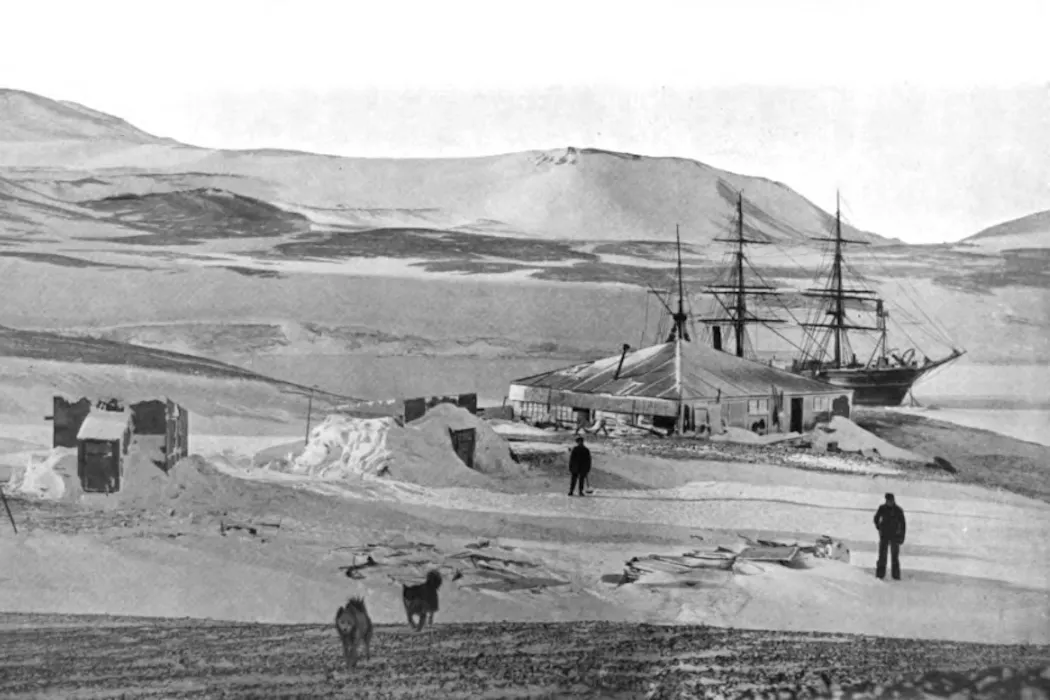
In August 1901 Robert Scott, Ernest Shackleton and more than 40 other men set sail to Antarctica for the first time. On their newly built ship, the Discovery, neither Scott nor Shackleton knew what to expect, nor whether they would come back alive. It was on this journey, the 1901 to 1904 Discovery Expedition, that both men became famous polar explorers.
Yet 125 years later, this expedition does not receive the attention it deserves. Scott and Shackleton’s later journeys attract far greater interest, particularly Scott’s dramatic death on the return from the South Pole in 1912 and Shackleton’s heroic leadership following the sinking of the Endurance in the Weddell Sea in November 1915. In my new book, I place the Discovery Expedition centre stage and show the important role it played in the careers of Scott and Shackleton and in Britain’s understanding of Antarctica.
The Discovery Expedition, officially the National Antarctic Expedition, was the first major British expedition to the southern continent since James Clark Ross’s landmark British Antarctic Expedition of 1839 to 1843. This previous expedition was conducted aboard HMS Erebus and HMS Terror, both of which would go on to be involved in the tragic Franklin expedition to the Arctic in 1845.
Organised by the Royal Geographical Society and the Royal Society, and partly funded by the government, the Discovery Expedition sought to explore both the coastline and the interior of Antarctica. Most of the crew were from the Royal Navy and few had any previous experience of polar exploration. This was due to the influence of the Royal Geographical Society’s president, Clements Markham, a former naval man himself.
After leaving Britain in August 1901 and stopping in South Africa and New Zealand, the expedition arrived in Antarctica in January 1902. Once there, the explorers conducted a maritime exploration of the Ross Ice Shelf roughly due south of New Zealand, discovering King Edward VII Land at its eastern end. They then established their winter quarters in McMurdo Sound, the southernmost navigable body of water in the world.
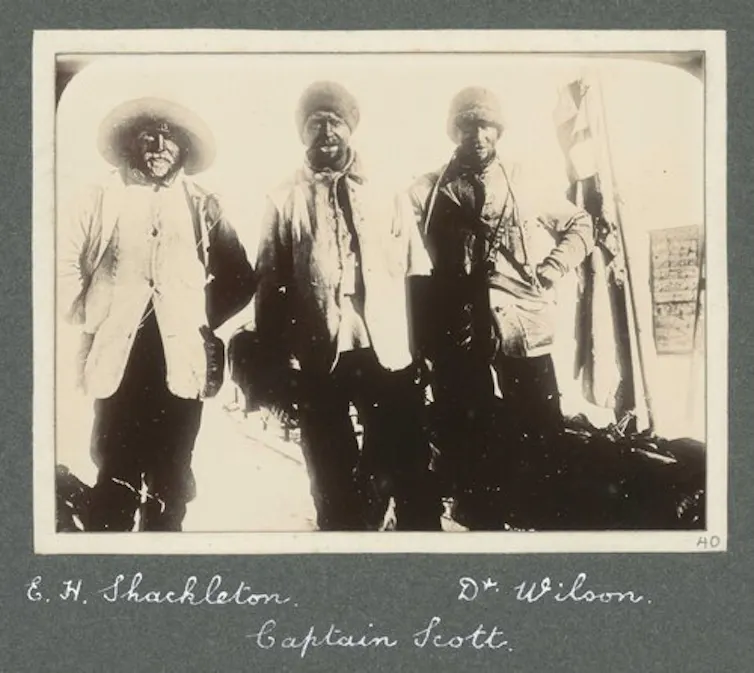
In spring, after spending the winter aboard their now ice-bound ship, Scott ordered the start of an ambitious programme of polar sledging. The most famous of these journeys was an attempt to reach the South Pole by Scott, Shackleton and Edward Wilson, a medical doctor who was a close confidante of Scott’s. They travelled farther south than anyone before them, but their sledge dogs soon weakened, and the men suffered from scurvy and food shortages. Meanwhile, Albert Armitage, second in command of the expedition after Scott, led a major sledging expedition up the Ferrar Glacier, finding the Polar Plateau at its summit.
In early 1903, the explorers were resupplied by a relief ship. Scott ordered that Shackleton return home with a group of sailors on the resupply vessel. Shackleton had suffered severe physical collapse and scurvy symptoms during the southern journey, and Scott thought he was not up to another winter in Antarctica. Shackleton spent some time in New Zealand before returning to Britain in June 1903.
National Antarctic Expedition/Royal Museums Greenwich, CC BY-NC
Those who remained on board the Discovery had to spend a second, unplanned winter in the south, as the sea ice surrounding their ship failed to break up. The following summer, Scott used his additional time on the continent to embark on another series of sledge journeys. He led a further expedition to the Polar Plateau and discovered the surreal landscapes of the McMurdo Dry Valleys on his return march.
Soon after Scott returned to the Discovery, two relief ships arrived with orders to bring the explorers home, even if this meant abandoning the vessel. At first, the ship’s prospects looked hopeless, but almost miraculously the ice around it began to break up and, with some help from explosives, the Discovery was able to sail northwards in February 1904.
What are the legacies of the expedition?
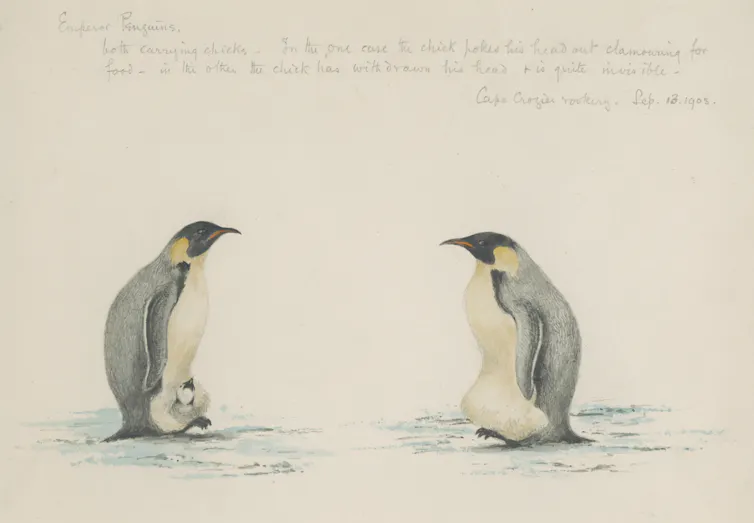
The Discovery Expedition made numerous geographical discoveries, mapping large areas of Antarctica. On the scientific front, the explorers collected a wealth of zoological and geological specimens, alongside extensive meteorological and magnetic data. Data collected during this period is still proving valuable to contemporary scientists seeking to understand how sea ice coverage around Antarctica has changed.
The aspect of the expedition that most captured public attention was the suffering and heroism displayed during Scott, Wilson and Shackleton’s journey towards the South Pole. By travelling farther south than any human before them, they demonstrated that long-distance Antarctic sledging was possible and that, with better supplies, equipment and draught animals, reaching the South Pole might well be achievable. The race to the South Pole was now on.
Shackleton’s early departure from the expedition also left him eager to lead another expedition to prove his strength and resilience. Scott and Shackleton had worked together as comrades and remained on good terms for some years afterwards. But the expedition also sowed the seeds of future rivalry between the two men. Shackleton eventually launched his own expedition in 1907, much to Scott’s annoyance.
Scott and Shackleton’s first journey to Antarctica shaped the composition of their later journeys. When they returned, both men recruited Discovery veterans, many of them working-class sailors and seamen. This included Frank Wild, Tom Crean and Edgar Evans. None of them would have become explorers without Markham’s insistence that the expedition be crewed by naval men. Their stories are every bit as interesting and eventful as those of the officers and scientists.
Wikimedia, CC BY-NC
The Discovery Expedition also shaped how we understand Antarctic heroism. Without it, British exploration in Antarctica might have been led by more experienced scientists and polar travellers rather than men like Scott and Shackleton who had to learn on the job. In some respects, this might have produced better scientific results and less suffering. However, stories of professionalism, preparedness and skill grip the imagination much less than those of heroism and sacrifice; so this period of exploration likely wouldn’t have the same lasting fascination.
If this expedition has gripped your imagination, then you can actually go and see the Discovery. After the expedition, it was sold to the Hudson’s Bay Company, a fur trading company. Amazingly, after numerous changes of ownership, the ship is still with us today, and visitors can even step aboard her at Discovery Point in Dundee, Scotland. Thanks to the hard work of the team preserving the vessel, it is still possible to gain some sense of what life must have been like for Scott, Shackleton and their companions on that first daring voyage to Antarctica.
This article features references to books that have been included for editorial reasons, and may contain links to bookshop.org. If you click on one of the links and go on to buy something, The Conversation UK may earn a commission.

Edward Armston-Sheret has received funding from the publishers of his book (Mudlark/HarperCollins) as well as from the Arts and Humanities Research Council, the Royal Historical Society, and the Historical Geography Research Group of the Royal Geographical Society. He works part-time at the Royal Geographical Society (with the Institute of British Geographers).
Original source: https://analysis1.mil-osi.com/2026/08/11/inside-the-antarctic-expedition-that-made-shackleton-and-scott-famous-and-paved-the-way-to-the-south-pole/