

Source: The Conversation – UK
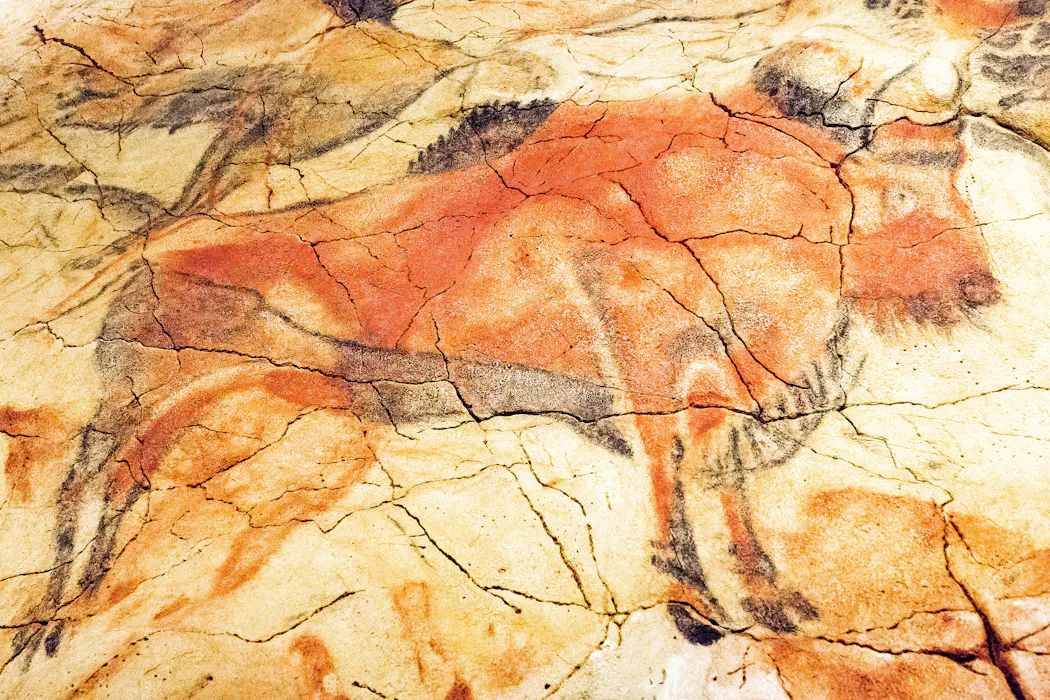
Perhaps the most evocative windows into the minds of our ancient ancestors are the images they painted on the walls of caves – renderings known simply as rock art or cave paintings.
Rock art, which is found across the world, offers snapshots of human history, preserving representations of cultural traditions, symbolic communication and social identity. Common subjects include animals, hunting scenes and hand stencils – thought to have been made by blowing pigment over the artist’s hand.
Scientists have wrestled with basic questions about the origins of rock art such as: what was used to produce it, when was it made, and who made it?
Now, a recent study of cave art from Spain and Portugal has shown that ancient human DNA can be recovered directly from the cave walls. We may therefore be edging closer to answering “who made it?”
Using this technique to link a specific painting to an ancient artist may be a step too far. But there are still important things it can tell us about the past.
Previously, researchers had made considerable progress in answering the “what” and “when” questions. Scientists can analyse what pigments are preserved in rock art using techniques such as X-ray fluorescence spectroscopy, which allows them to identify materials such as red ochre and charcoal.
Scientists can also estimate the age of the art using techniques such as carbon-14 dating, carried out on minute quantities of organic material, to determine when rock art was created.
For example, in 2026, researchers reported that a stencil of a human hand had been found in Southeast Sulawesi, Indonesia. The researchers used a laser to bore a microscopic hole and collect samples from a fine layer of calcium carbonate that had formed over the painting.
The research team then measured the degradation of radioactive uranium contained in these mineral deposits to assign a minimum age to the painting of 67,800 years – making it the world’s oldest known minimum date for cave art.
The age of this art fits within a period when modern humans (Homo sapiens) are thought to have migrated through the area. But the wider Indonesian archipelago was previously home to other human species, such as Homo erectus and Homo floresiensis (nicknamed “the Hobbits”), which complicates matters significantly.
While the stylistic and technical complexity of the art suggests authorship by Homo sapiens, we have no way to be certain who made it.
Identifying a human linked to a prehistoric item has an established methodology. For example, in 2023, researchers recovered ancient DNA from a deer-tooth pendant found in Denisova cave, southern Siberia.
Analysis of the genetic sequence showed that the pendant was probably worn by a 25,000-year-old woman belonging to an ancient population known as Ancient North Eurasians, who lived across Siberia in Palaeolithic times.
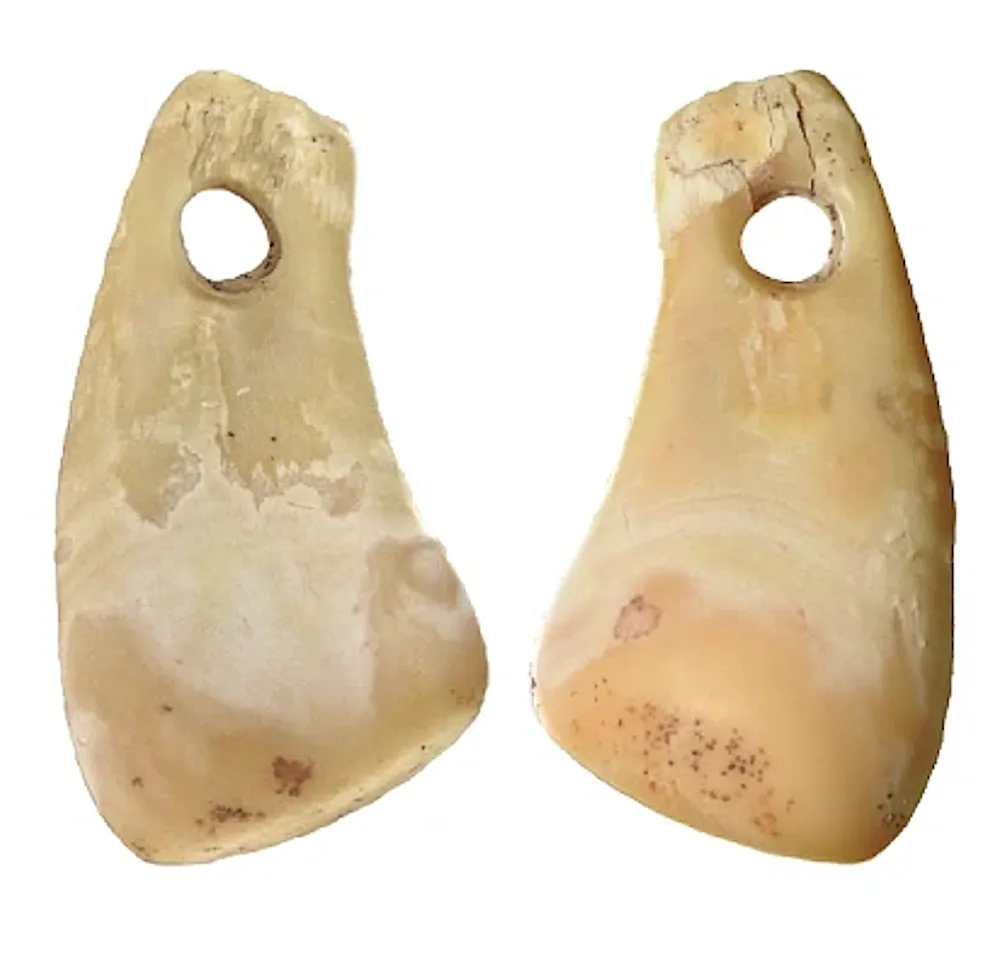
Essel, et al. Nature (2023), CC BY-NC-SA
Such discoveries transform otherwise anonymous objects into evidence of real people, giving us an intriguing glimpse into the lives of our prehistoric ancestors.
New genetic reservoirs
In the latest cave art study, scientists systematically sampled both painted and unpainted surfaces of cave walls at 11 sites across Spain and Portugal. Remarkably, they recovered ancient human DNA directly from the walls, demonstrating for the first time that these surfaces can act as reservoirs for genetic information.
Some of these cave wall samples were shown, through both genetic analysis and the archaeological context, to be at least 4,000 years old.
In two of the samples from Covarón cave in northern Spain, human DNA was sufficiently preserved to be identified as belonging to ancient western hunter-gatherers. These were populations that lived across much of Europe during Late Palaeolithic and Mesolithic times.
One of the samples from a pigmented part of a cave wall, in Escoural cave, Portugal, also yielded traces of ancient DNA, but it was not as well preserved as other samples.
Nevertheless, the research establishes a powerful new methodological framework and proof of concept. It raises the tantalising prospect of studying not only the images left behind, but also the communities of people who made them.
However, applying this technique successfully to identify the artist of specific ancient rock art is incredibly unlikely.

Bossoms Mesa, et al. (2026), CC BY-NC-SA
This research could, though, potentially resolve one of the most contentious debates in archaeology. This concerns a 66,700-year-old hand stencil discovered within Maltravieso cave in Extremadura, western Spain.
This controversial stencil appears to predate the arrival of modern humans in Europe. Some researchers have therefore argued that Neanderthals, not Homo sapiens, made the art.
Finding DNA from either species in this location, at similar times to the creation of the rock art, could offer a potential route for resolving the debate. But this too is much more difficult than it might seem.
Easy transfer
The presence of human DNA does not prove who created the rock art. DNA is easily transferred – actions as simple as breathing can transfer someone’s genetic material to a location or object. This is why DNA recovered from a knife cannot definitively conclude who committed a stabbing in a forensic case.
DNA establishes the association of someone with an item or location, not the actions they carried out during the deposition of their genetic material. Environmental activities such as rain can also transfer human DNA to these spaces, making it extremely difficult to identify a single person at a location.
Additional DNA can be deposited at very different times to when the painting was produced – by both modern and ancient humans. The potential for contamination is incredibly high, making it difficult to establish who may have been at a given location at a specific time.
Nonetheless, scientists can use this new research to explore important prehistoric questions such as the hominin species, population groups and sexes of those who entered specific cave systems, and their migration routes across landscapes.
In the general sense, we can also begin to connect prehistoric art with the people who created and lived with it.
Behind each rock-art hand stencil or hunting scene is evidence of a real person who, while separated from us by tens of thousands of years, felt the need to communicate their creativity – as we do today. Techniques such as this offer a vital opportunity to understand more thoroughly the human experience via our similarities with ancient people.

The authors do not work for, consult, own shares in or receive funding from any company or organisation that would benefit from this article, and have disclosed no relevant affiliations beyond their academic appointment.
Original source: https://analysis1.mil-osi.com/2026/08/10/can-dna-from-cave-paintings-tell-us-who-the-artists-were/