

Source: The Conversation – Canada
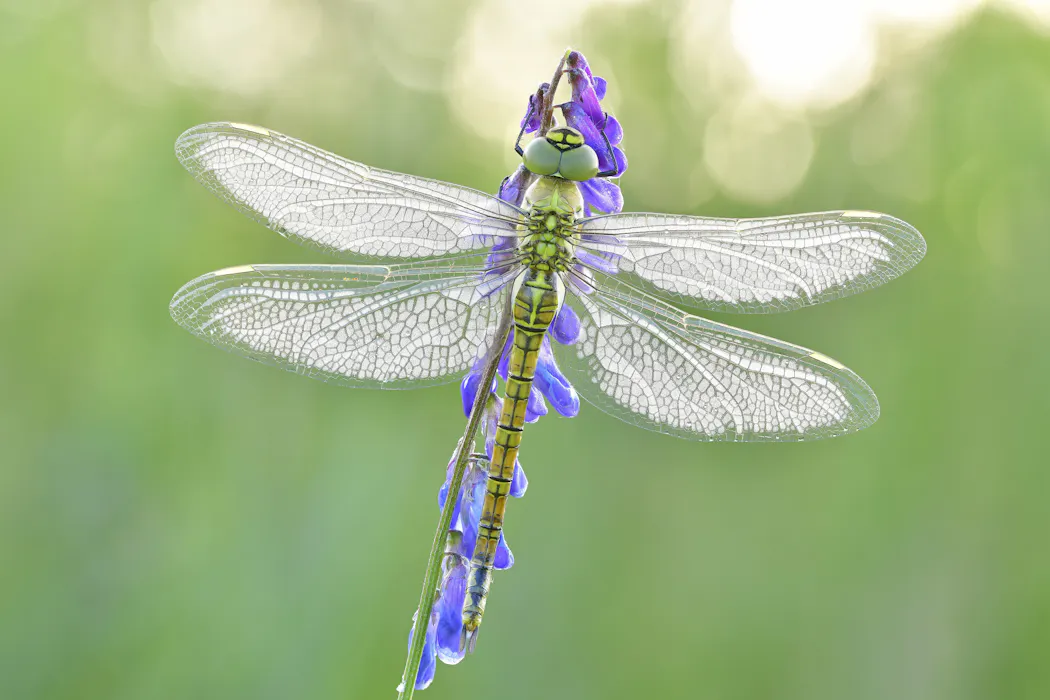
The dragonfly that perches delicately on your foot as you drift on the lake. The mosquito you swat at around the campfire. The ants that march your cracker crumbs away. The bees that produced your delicious wildflower honey.
We are surrounded by thousands of insects every day, some of them buzzing in our face, others almost invisible to our eyes.
They come in a wild variety of shapes, sizes and colours. And they perform a diversity of jobs, many of them essential to the sustainability of our ecosystem — from pollinating flowers to controlling garden pests, aerating soil and decomposing waste.
Taxonomists have discovered and described about one million insect species so far. Until now, the general consensus was that there must be around five to six million insect species in total on Earth, with some entomologists criticizing this number as too low.
Our new research reveals that this number was a vast underestimation. There are in fact anywhere between 13.3 million and 24.7 million insect species on Earth.
The challenge of estimation
In 1735, Carl Linneaus established a system of ranked biological classification that has become the foundation of modern taxonomy — the scientific study of naming and classifying groups of biological organisms based on shared characteristics.
Some 1.9 million species have been discovered and described since then, but a big question remains — how many species does our planet have?
We don’t have a definite answer but one of the most widely cited estimates, calculated back in 2011, is around 8.7 million species.
Estimating the number of insect species on Earth is especially challenging, due to their diversity, small size and frequent inaccessibility.

(Wikimedia Commons/Stephan Sprinz), CC BY
Learning from parasitic wasps
To obtain an improved estimate, my colleagues and I borrowed our study methodology from statistical epidemiology.
The first step was to test how well previous survey work had captured the diversity of parasitic wasps called Micrograstrinae in a particular species living in the Área de Conservación Guanacaste in Costa Rica.
To do that, the team used results from two different kinds of collecting methods, each tallying only a fraction of the total number of species living in the area. Statistical analysis revealed that these earlier extensive explorations had found only about 16 per cent of the total Microgastrine wasps that live in the area.

(Wikimedia Commons/Alandmanson), CC BY
This percentage was then applied to all known insect species in the park and further extrapolated using known park-to-Earth ratios for other diverse groups — trees, frogs, mammals and saturnid moths.
The result: there are anywhere between 13.3 million and 24.7 million insect species on Earth, with a conservative average estimate of 20.3 million species.
The research emphasizes that this figure is a lower-bound estimate. This means that our planet could be home to millions more undiscovered species.
Double the insect extinction loss
But is it really that important to know if we share this planet with millions or even billions of species?
The IPBES Global Assessment Report on Biodiversity and Ecosystem Services was released in 2019, and it found that around one million animal and plant species are threatened with extinction, many within decades.
The report forecast a 10 per cent species loss for insects alone. However, its authors worked under the assumption that Earth is home to eight million species, among those 5.5 million insect species.
Our estimate of some 20 million insect species will at least double the total number of species threatened with extinction.

(Wikimedia Commons/Sarah Swenty/USFWS), CC BY
Unknown, enigmatic, extinct
The tragedy? We won’t even get to know most of those before they disappear.
Remember, it took us close to 300 years to discover and describe 1.9 million species. Now, we are likely losing 10,000 to 100,000 species each year and many of those will remain completely enigmatic to us.
We won’t know where they lived, what they looked like, how they interacted with other species or what their loss truly means.

(Wikimedia Commons/ Charles J. Sharp), CC BY-SA
Will their disappearance cascade through a local ecosystem causing further extinctions because they were an important food resource or host for other species? What if they provided some crucial ecosystem service such as pollination or pest control?
Loss of biodiversity is no longer only an environmental issue, but also an economic, developmental, security and social issue as well.
An estimate of the true extent of diversity may prove to be highly valuable for any conservation measure. We can’t protect what we don’t know exists.

Dirk Steinke does not work for, consult, own shares in or receive funding from any company or organisation that would benefit from this article, and has disclosed no relevant affiliations beyond their academic appointment.
Original source: https://analysis1.mil-osi.com/2026/08/09/new-research-estimates-around-20-million-insect-species-on-earth-doubling-those-facing-extinction/