

Source: The Conversation – Canada
I’ve spent more than three decades studying how exercise and diet keep us healthy. But one thing keeps showing up in the data: living longer and living well are not in sync. While we’ve partly solved the first one, we are lagging behind at the second.
Over the past century, the average Canadian’s life expectancy has increased by 22 years, to roughly 80 for men and 84 for women. Medical and scientific research may push those numbers higher. However, the number of years we can expect to live in good health has been declining, and in Canada it now stands at about 67, down from a peak of about 70 years.
That means a lot of us are on track to spend close to two decades, sometimes longer, living with chronic illness, cognitive decline or lost mobility. That gap, not lifespan itself, is the real crisis. And almost nobody treats it like one.
This article is part of our ongoing series The Grey Revolution. The Conversation Canada and La Conversation are exploring the impact of the aging boomer generation on Canadian society, including housing, working, culture, nutrition, travelling and health care. The series explores the upheavals already underway and those looming ahead.
Longevity is the wrong score
Longevity is the word on everyone’s lips, with influencers discussing the possibility of three-digit lifespans. One wealthy biohacker was investing millions into his goal of 160 years of life, and inviting others to spend as much as US$1 million a year to join him. He recently announced he has developed an autoimmune condition.
Life has become an endurance event, and we need to push through to the bitter end.
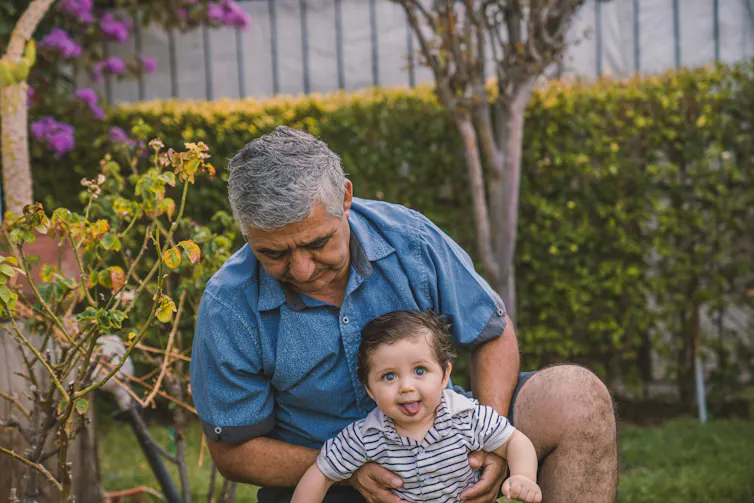
In contrast, picture the 80-year-old down the street who carries their own groceries, climbs their own stairs, drives their car and gets down on the floor to play with their grandchild. That’s the target worth chasing.
Ideally, good health and health-related quality of life would last our whole lives. The balance between the quality and quantity of our years is the idea behind healthspan: the period of our lives we spend in good health. Admittedly, good health is subjective, and it has been argued that healthspan may not be definable at a single age and is more accurately represented by an index.
However we measure it, it’s clear that closing the gap between healthspan and lifespan is both painfully necessary and maddeningly hard to pull off, which may explain the mismatch between how big the problem is and how little has been invested in fixing it: estimates put the ratio of treatment to prevention health spending at almost 12:1 in Canada.
Betting on healthspan
At McMaster University, the new McCall MacBain Kinesiology and Healthspan Institute aims to close the healthspan gap.
Kinesiology is the science of how the body moves, performs and functions. When paired with preventive medicine’s approach to disease, it can help keep people out of the clinic in the first place, not just treat them once they arrive.
The institute’s mandate prioritizes cross-disciplinary collaboration to advance research and teaching and to turn the results into meaningful action that materially benefits communities. Research alone doesn’t change lives; people armed with good evidence do.
(Unsplash/Alvaro Reyes)
We want to help Canadians and people well beyond our borders to spend more of their years in good health by delaying disease onset, preserving physical and cognitive function and building resilience before it’s needed.
Achieving this would improve quality of life while lowering the cost of treating cancer, stroke, heart disease, dementia, chronic pain and impaired mobility down the road.
The institute is the first of its kind, enabled by a $50 million donation from philanthropists Marcy and John McCall MacBain and their foundation. The investment backs a specific bet: that the broadest, most affordable, evidence-based interventions for healthspan are still there to be found and put into practice.
We aim to show exactly how committing time and resources across an entire life, starting in childhood, builds a reserve of health that can hold off the chronic problems that tend to compromise our final decades.
The wrong face of the wellness and longevity industries
The wellness and longevity industries and online biohackers have followers convinced that the ultimate goal is “maxxing” your life through pills, protocols and potions.
Not surprisingly, the major components of healthspan are already well known: regular exercise, better sleep, a healthy diet, real social connection, not smoking and going easy on alcohol.
By addressing these factors, you can put yourself in a much better position to fend off the diseases that dominate older age. The best way to treat chronic illness is still to delay it, or in the case of dementia and cognitive decline, avoid it altogether.
Canada spends close to $144 billion a year on wellness-related products, only to watch people slide into declining health at increasingly younger ages.
Here’s what the research actually tells us: there is no evidence that the supplements, peptides and “treatments” the longevity and wellness industries sell contribute anything to your healthspan.
Influential factors are widespread
Discussing this issue requires perspective. The factors with the greatest influence on healthspan are not a supplement stack or a peptide cocktail. These factors are complex, difficult to fix and aren’t evenly available across all sectors of society.
Safe streets and parks. Affordable food. A place to sleep. A neighbour to walk with. Predictable working hours. Access to childcare. None of these are luxuries, but they are a core foundational infrastructure of a longer healthspan, which for far too many Canadians is simply out of reach.
Income, education, housing, working conditions, neighbourhood safety, social isolation and discrimination weigh at least as heavily in who ages well as anything found in a missive on longevity.
Health research has moved beyond the question of whether we can live longer. We already do. The new question is whether we’re willing to invest seriously, equitably and early in living better. We may discover that pursuing a longer healthspan also leads to even greater longevity, for all. That’s definitely a goal worth pursuing.

Stuart Phillips receives funding from the Canadian Institutes of Health Research, the National Science and Engineering Research Council of Canada, the US National Institutes of Health, Nestlé Health Sciences, FrieslandCampina, the US National Dairy Council, Dairy Farmers of Canada and Cargill.
Original source: https://analysis1.mil-osi.com/2026/08/09/move-over-longevity-healthspan-is-what-we-should-be-chasing/